
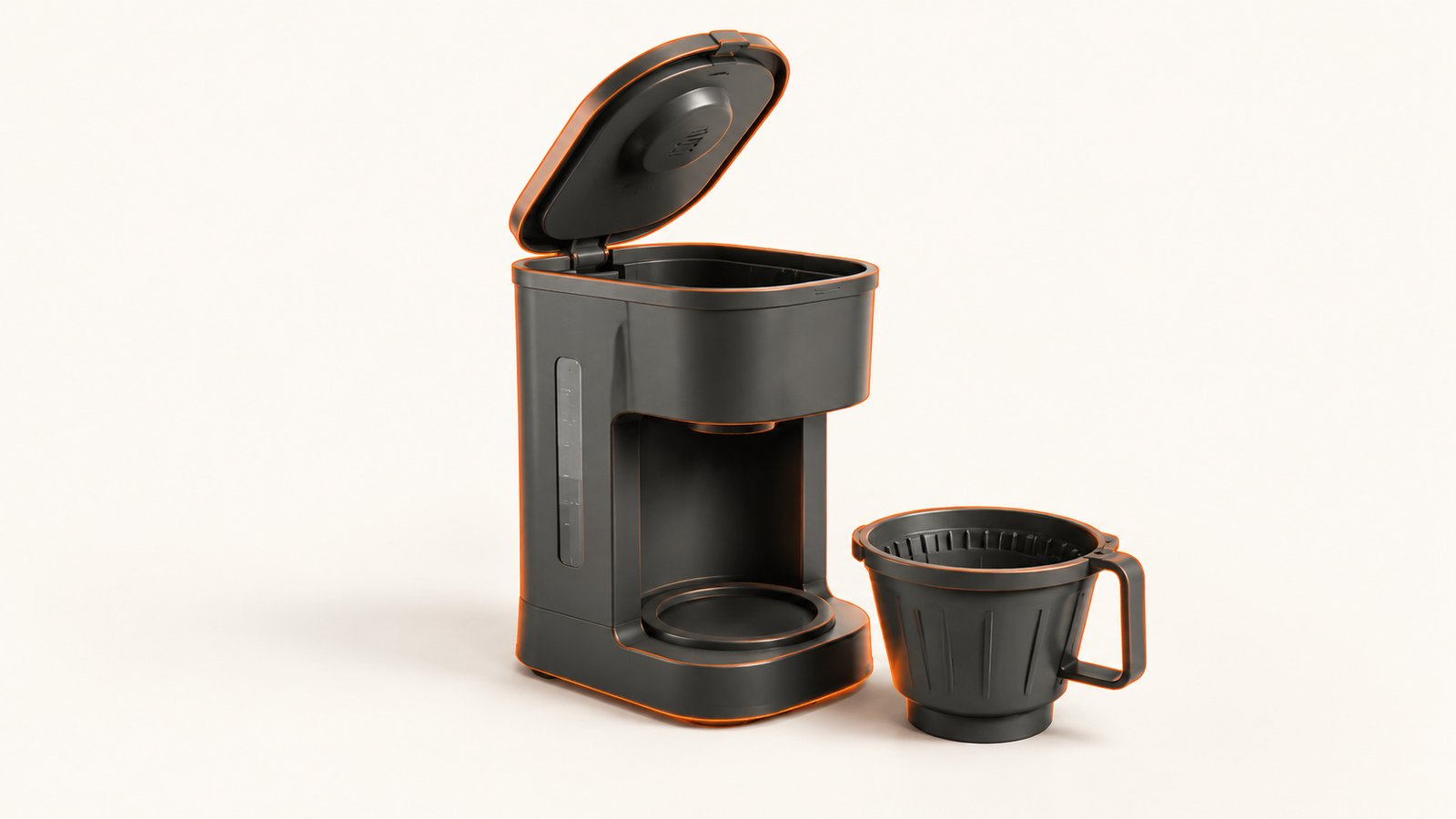
Where mold hides in a coffee maker, part by part
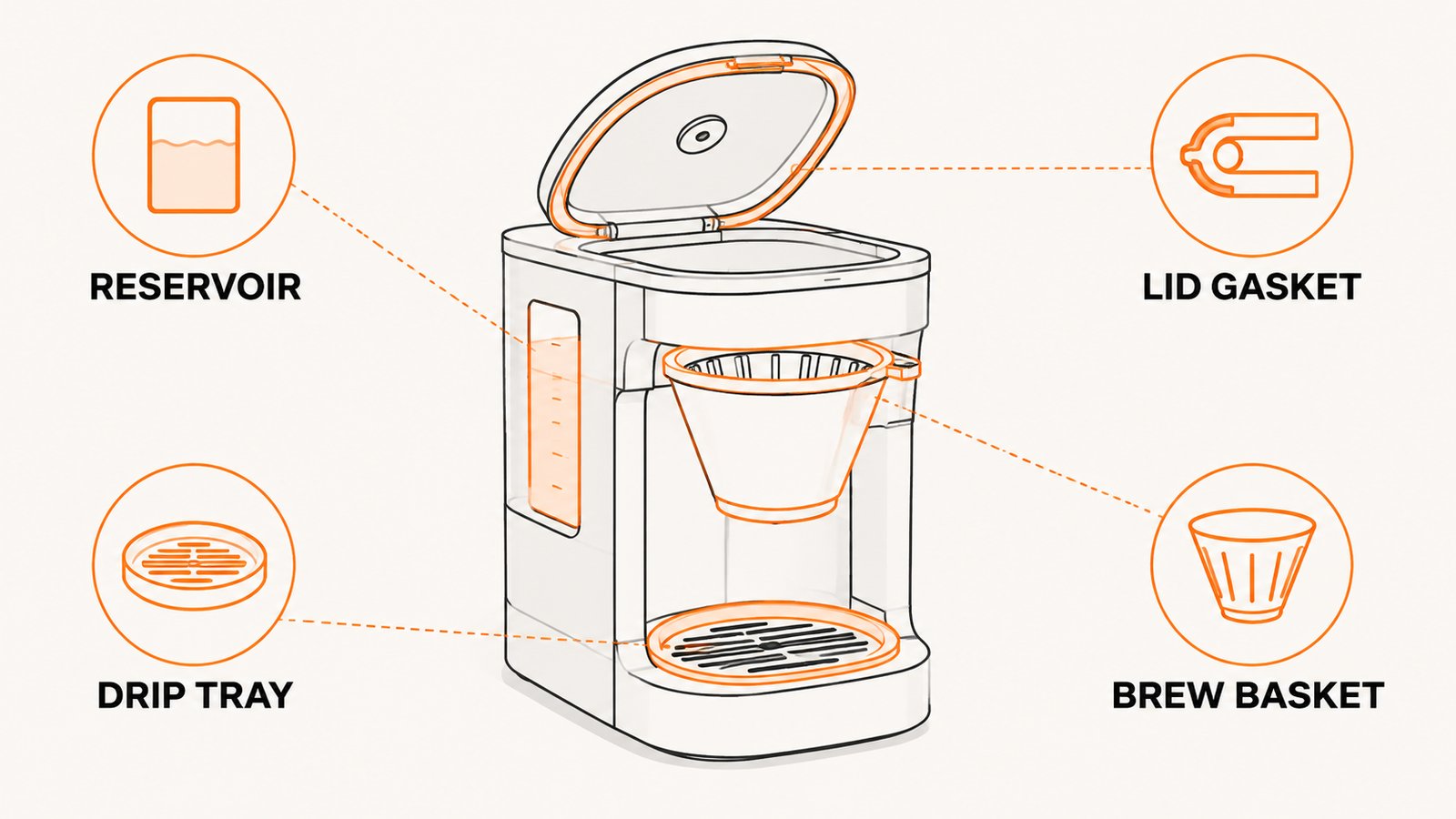
People look at the carafe. The carafe is the cleanest part of the machine, because it gets washed. The problems are in the pieces that stay wet and never get looked at.
| Part | Why it grows there | How often to clean it |
|---|---|---|
| Water reservoir | Standing water at room temperature, often for days, behind a closed lid. | Empty daily, wash weekly, dry with the lid open. |
| Reservoir lid and gasket | Condensation collects on the underside and in the rubber seal where nothing wipes it. | Weekly, and look at the seal every time. |
| Drip tray and waste bin | Spent coffee plus warm liquid. Research on capsule machines found a varied bacterial community in every waste reservoir sampled. | Empty daily, wash weekly. |
| Pod holder and exit needle | Grounds pack into the housing around the needle and stay wet. | Weekly, with the machine unplugged. |
| Brew basket and filter holder | Wet grounds left overnight are the fastest growth in the whole machine. | After every brew. |
| Carafe and thermal lid | Coffee oils build a film, and the lid mechanism traps liquid inside the threads. | Daily wash, and take the lid apart weekly if it comes apart. |
| Internal tubing and tank | You cannot see it or reach it. Scale and residue build where water sits. | Descale on the interval in your manual. |
The pattern is the same one that runs a washing machine: any part that holds water behind a closed lid is the part that grows something. If you also find growth on the counter or in the cabinet under the machine, that is a different problem, covered in mold in the kitchen.
Why a coffee maker is such good habitat
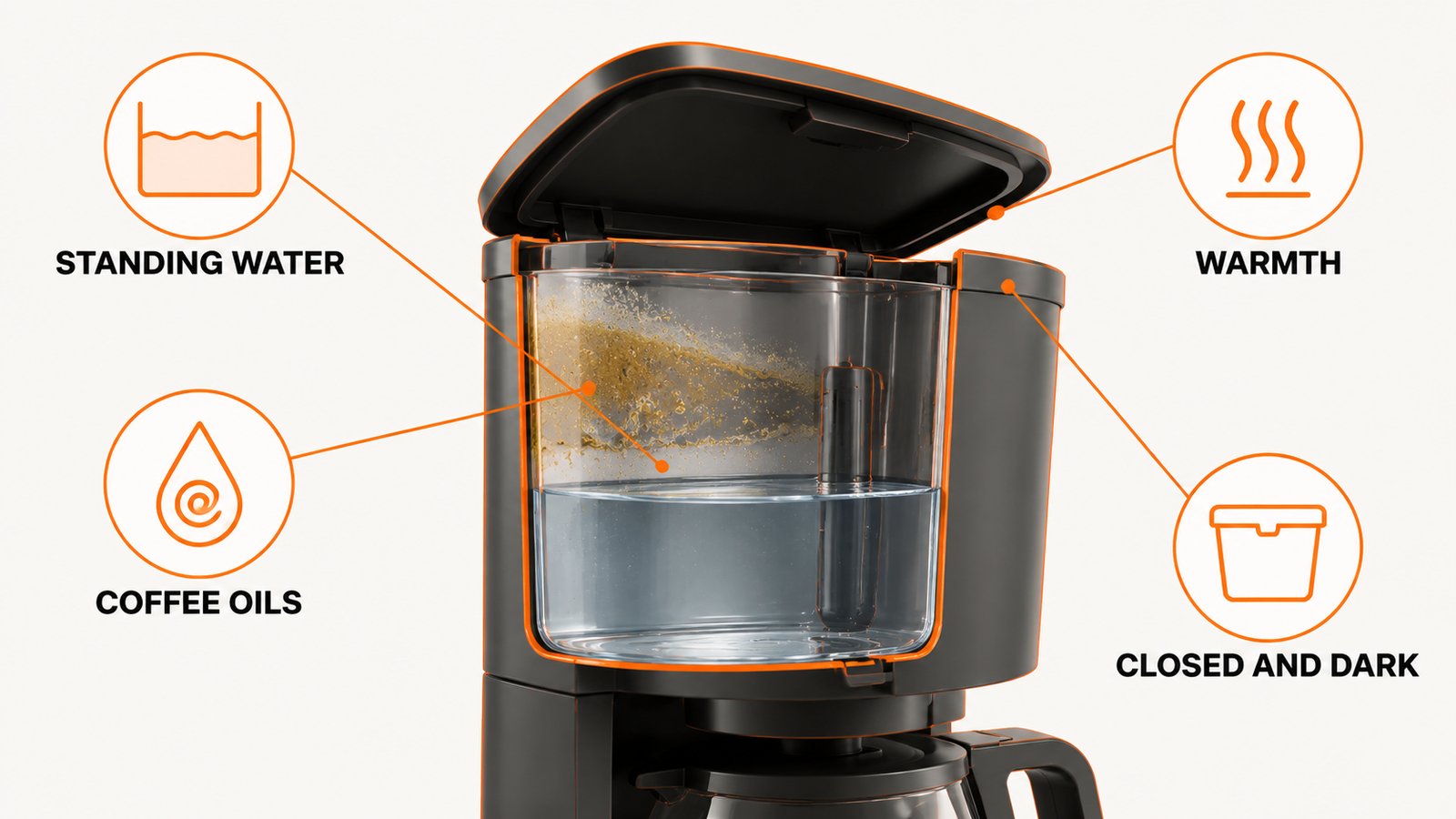
Every condition growth needs is supplied by design. Water sits in the tank at room temperature. The machine runs warm. Coffee is organic material, and its oils coat every surface the brew touches. The lid keeps it dark, and nothing dries out between uses.
How fast that becomes a community is measurable. Researchers at the University of Valencia sampled the coffee waste reservoirs of ten capsule machines and monitored a brand new machine as it was used. They found a varied bacterial community in every machine sampled and a rapid colonization of the coffee leach, moving from pioneering enterobacteria and other opportunists to a mature, coffee-adapted community. Caffeine has known antibacterial properties, and the machines were colonized anyway.
That study looked at bacteria. Fungal growth follows the same conditions, which is why the visible slime or fuzz usually turns up first in the reservoir corners, in the lid gasket and around the drip tray. The USDA also notes that molds tolerate salt and sugar better than most other food spoilers and grow even at refrigerator temperatures, so a countertop machine is a comfortable place by comparison.
One correction worth making: pink or orange film in a reservoir is usually a bacterium rather than a mold, the same organism people meet in a shower. It cleans off the same way, and our page on pink film covers what it is.
How to clean a drip coffee maker
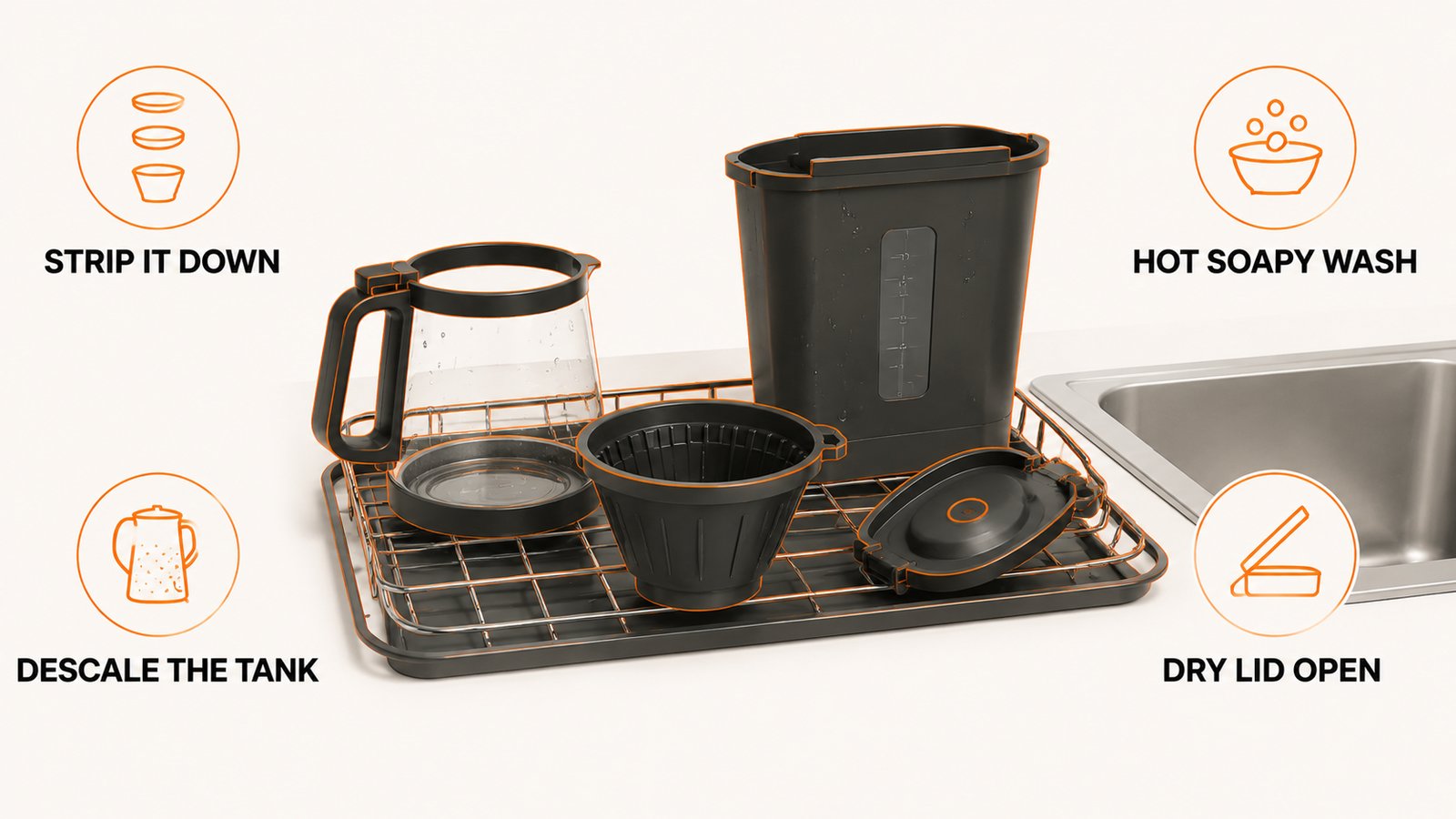
Step 1: unplug it and strip it. Reservoir if it lifts out, lid, brew basket, filter holder, carafe and carafe lid. Anything that separates, separate it.
Step 2: wash every removable part in hot soapy water. A bottle brush reaches the reservoir corners, and an old toothbrush gets the gasket groove and the basket ribs. Rinse well.
Step 3: descale the part you cannot reach. Manufacturers publish a descaling interval and a method for each model, and they differ, so follow your manual rather than a general rule from a web page. If yours permits white vinegar, the usual approach is a half-and-half vinegar and water fill, one brew cycle, a rest, then two or three full cycles of clean water until the smell is gone. Never mix a descaler with any other cleaning product.
Step 4: wipe the warming plate and the housing, including the underside of the top where the water exits.
Step 5: dry everything and leave the lid open. This is the step that decides whether you are back here next month. EPA's guidance for materials generally is that things dried within 24 to 48 hours will in most cases not grow mold, and an appliance you dry after every use never gets to hour one.
For the general argument about acetic acid on household surfaces, and where it does damage, see does vinegar kill mold.
Cleaning a pod machine
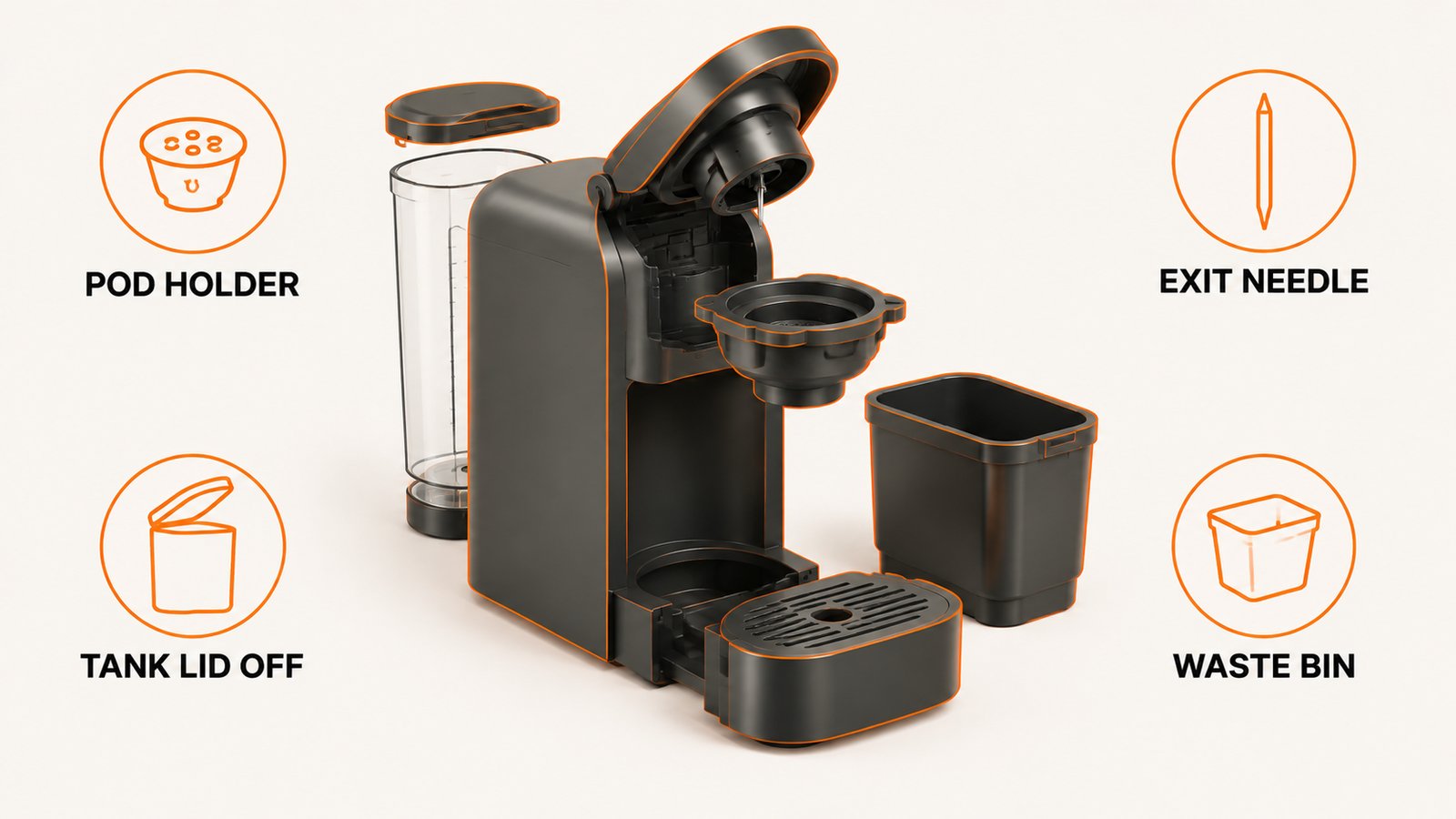
Pod brewers hide more of themselves, and the parts that matter come out with your hands.
- The waste bin and drip tray. Empty them daily. This is the reservoir the Valencia team sampled, and it was colonized in every machine they looked at.
- The pod holder. Lift it out and wash it. Grounds pack into the housing under the rim.
- The exit needle. With the machine unplugged, clear it with a paperclip or the tool that came with the brewer. A blocked needle is usually packed grounds, which stay wet.
- The water tank and its lid. Empty it daily rather than topping it up, wash it weekly, and dry it with the lid off. Topping up a half-full tank keeps the same water circulating for days.
- Descaling. Follow the interval and solution your manual specifies. Pod machines have narrow internal lines where scale and residue collect faster than in a drip machine.
If the reservoir already has visible growth in it, wash it, run two full water-only cycles, and throw away any pods stored in a damp spot near the machine.
Mold on coffee grounds and beans
Wet grounds left in the basket are the fastest growth in the kitchen. They are damp, warm and rich in organic material. Dump them after every brew and rinse the basket. If growth has already appeared, throw the grounds away rather than dumping them into a bin next to the machine, and clean the spot where they sat.
If a bag of beans or grounds shows growth, discard it. The USDA's rule for moldy food is direct: do not sniff the item, because inhaling spores can cause respiratory trouble, discard food that is covered with mold by bagging it and putting it in a covered trash can, then clean the spot where it was stored and check anything nearby it touched. Coffee is porous, and there is no trimming rule for porous food. The same reasoning puts bread and soft cheese in the discard column, which we cover in mold on cheese.
On the mycotoxin marketing, the data is reassuring. WHO lists coffee beans among the crops where mycotoxins occur, and ochratoxin A, produced by species of Aspergillus and Penicillium, is formed during storage of crops including coffee. A 2015 study in Food Chemistry and Toxicology measured 21 mycotoxins in coffee across brewing methods and calculated estimated daily intake for Spanish adolescents and adults. Its conclusion was that coffee intake does not represent a potential risk for consumers with respect to individual mycotoxin contamination. Brands selling a premium for mycotoxin-tested coffee are selling against a risk that published measurement did not find.
Store beans dry and sealed. An airtight container away from the stove and the sink, and a bag you finish rather than one that lives open on the counter for two months.
Stop it from coming back
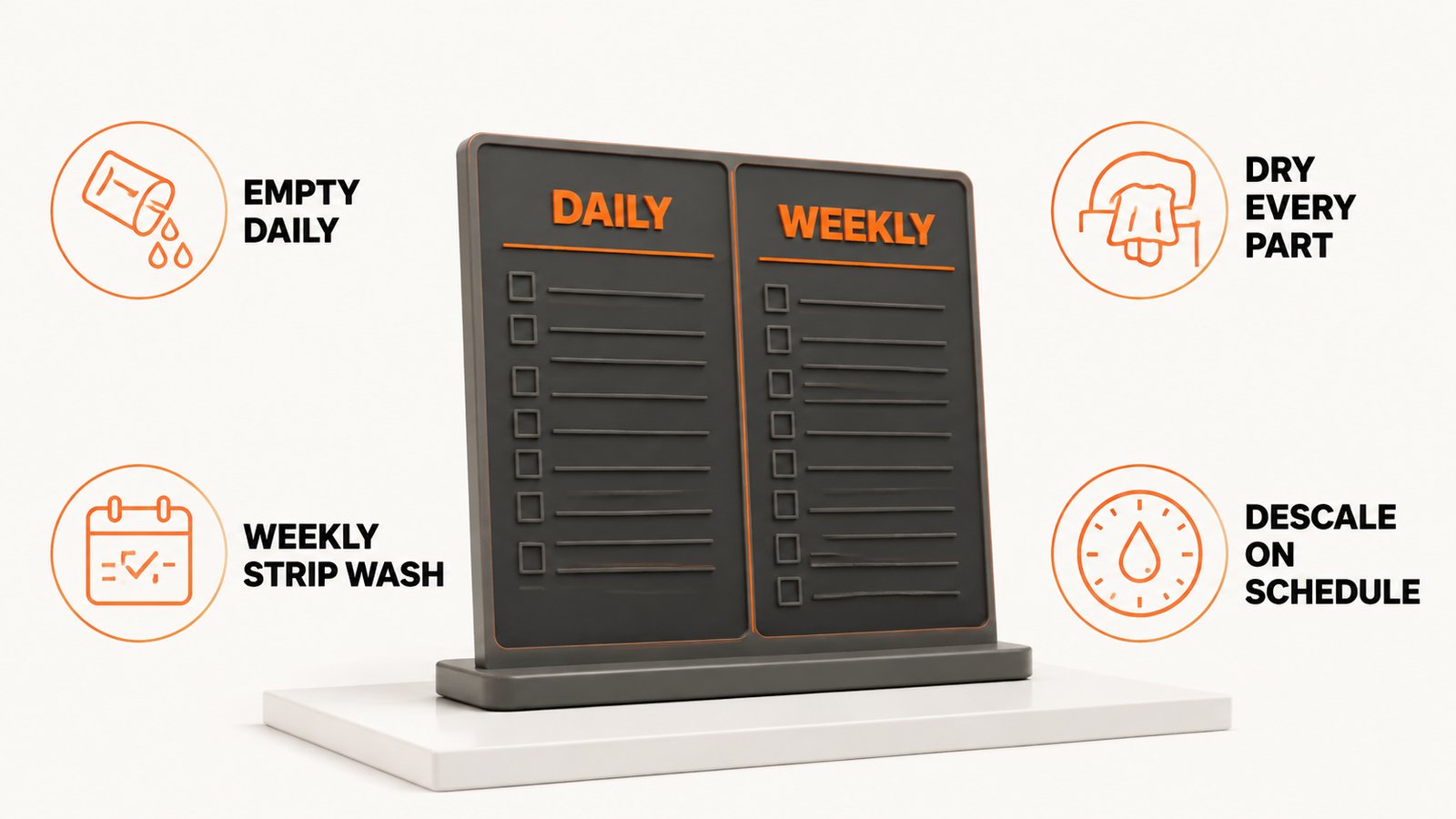
The routine is small and it is the whole answer.
- Daily: dump the grounds, empty the reservoir rather than topping it up, rinse the basket and the carafe, empty the drip tray.
- After every use: leave the reservoir lid and the brew head open so the inside can dry.
- Weekly: wash every removable part in hot soapy water, including the lid gasket and the pod holder.
- On the manual's interval: descale the internal tank and lines.
- Where it sits matters. A machine jammed under a cabinet in a humid corner dries slowly. EPA asks for indoor humidity below 60 percent and ideally between 30 and 50 percent, which is the same range that keeps the rest of the kitchen out of trouble.
- Keep the surroundings clean. The USDA recommends cleaning the spot where moldy food was stored and checking nearby items, because spores build up in the space around the source.
Broader prevention across the house is in how to prevent mold, and the appliance next door usually needs the same treatment: see mold in the fridge and mold in a water bottle.
When to replace the machine, and when to call a pro
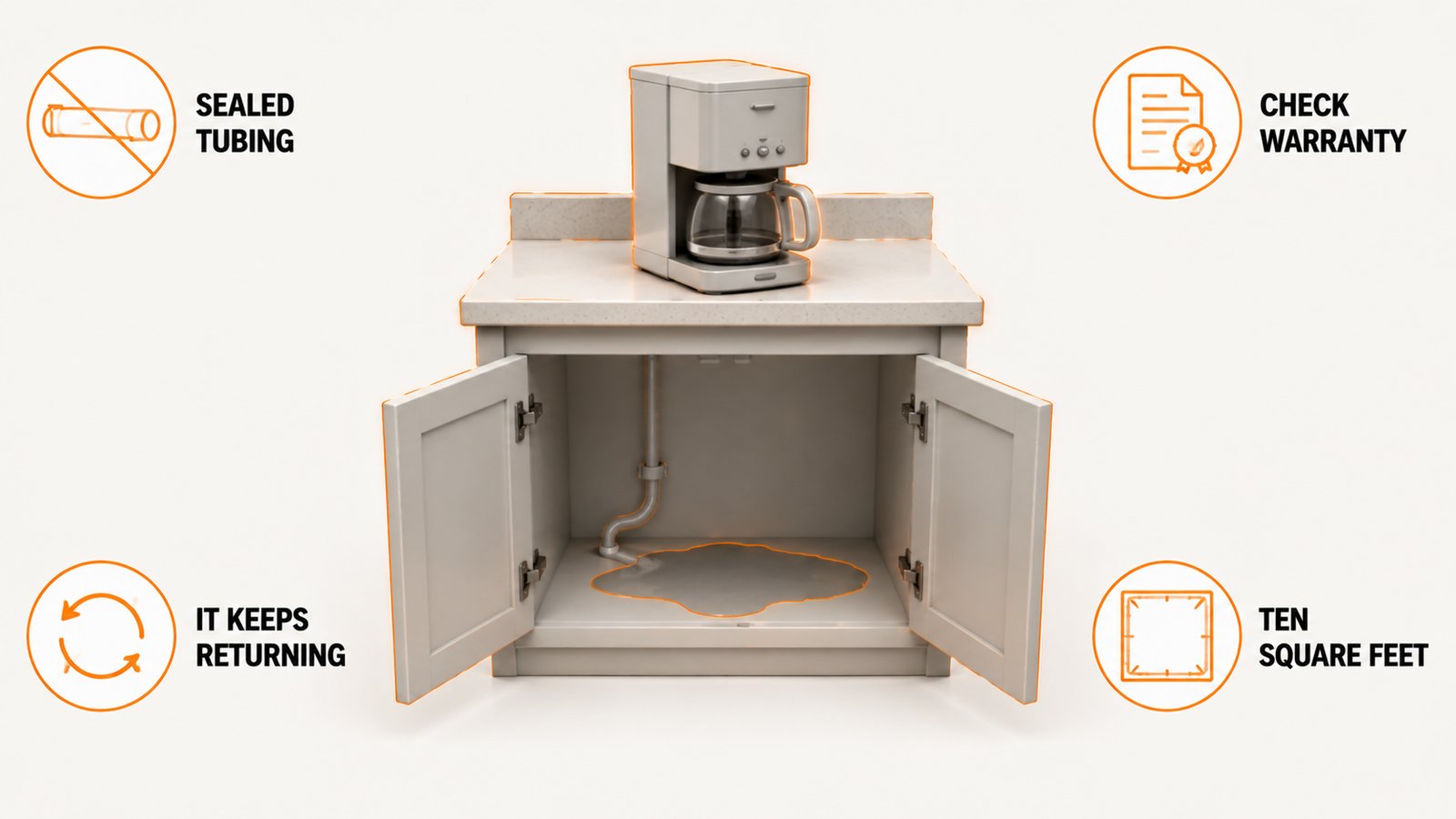
Replace the machine when the growth is somewhere you cannot reach. If visible growth is inside sealed tubing or under a tank you cannot remove, there is no cleaning routine that reaches it. A machine is a consumable. Contaminated tubing you cannot open is the end of its life.
Check the warranty before you take anything apart. Manufacturers service their own machines, and opening a sealed housing usually voids the coverage.
Stop and look at the room when growth keeps returning. If it is coming back on the counter, the backsplash or the cabinet under the machine within days of cleaning, that is a moisture problem in the kitchen rather than an appliance problem. A leaking supply line under the sink is the usual cause, covered in mold under the kitchen sink.
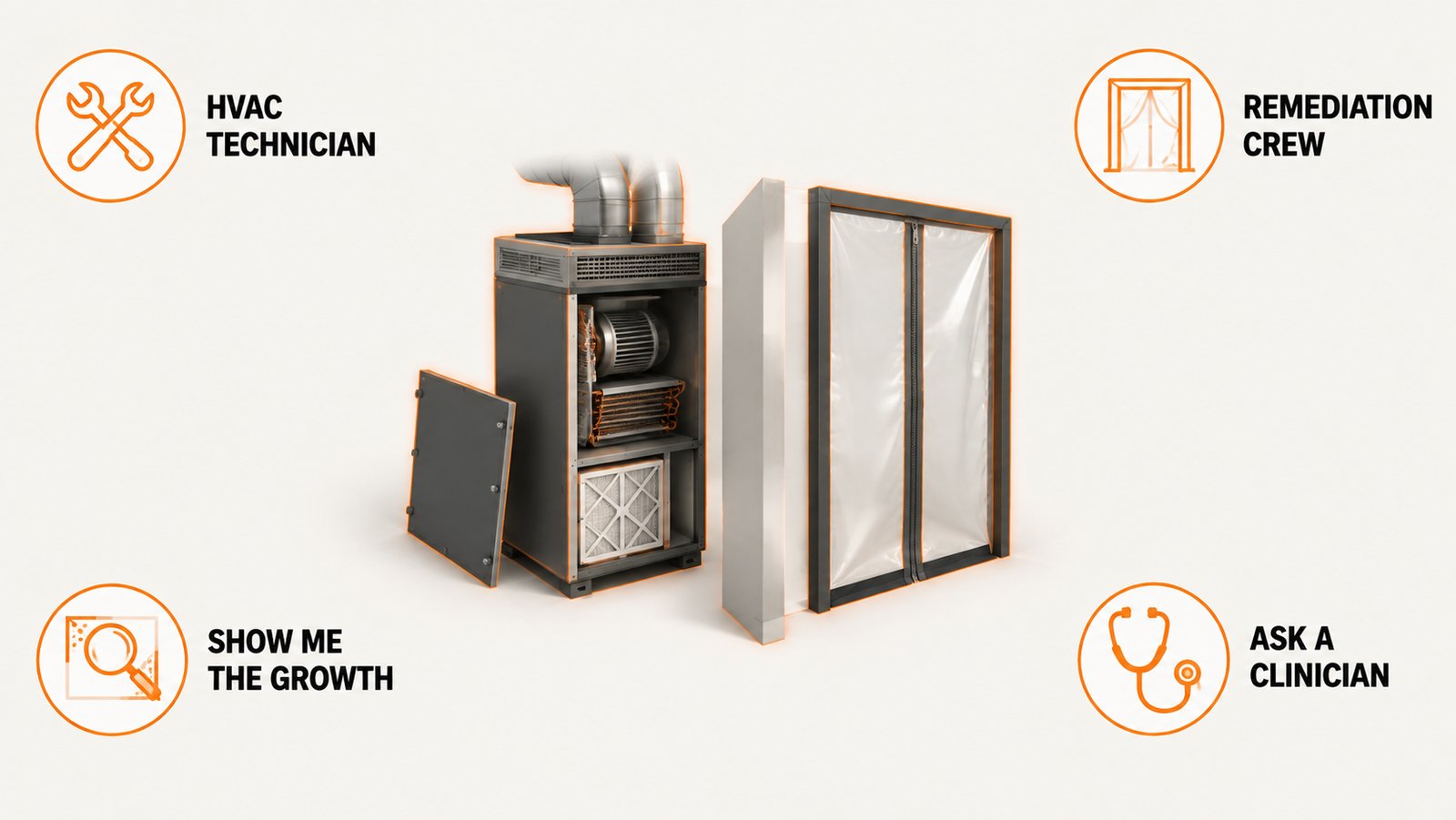
Call a remediation professional at EPA's threshold. Growth under about 10 square feet, less than roughly a 3 foot by 3 foot patch, is usually a job you can handle yourself. Past that, or after significant water damage, EPA recommends a contractor with mold experience who follows its remediation guide, the ACGIH guidelines or the IICRC standard, and it says damage from sewage or other contaminated water calls for a specialist.
Anything about a person goes to a clinician. CDC states that exposure to damp and moldy environments may cause a variety of health effects or none at all, that people with asthma or a mold allergy may have severe reactions, and that immune-compromised people and people with chronic lung disease may get lung infections. EPA advises consulting a health professional before starting cleanup if you have health concerns.
Frequently asked questions
How do I know if my coffee maker has mold in it?
Look at the parts nobody looks at. Lift the reservoir lid and check the corners and the underside of the lid, pull the rubber gasket back, take out the brew basket and the pod holder, and empty the drip tray. Visible slime, dark speckling or a musty smell in the water are the signals. A dark patch on the surface can be growth, mineral scale or coffee residue, and you do not need to tell them apart to clean it off.
Can I run vinegar through my coffee maker to kill mold?
Only if your manual allows it, because descaling instructions differ by model and some machines are damaged by acid. Where it is permitted, the usual method is a half-and-half vinegar and water fill, one brew cycle, a rest, then two or three full cycles of clean water. Never combine vinegar with any other cleaning product, and never with bleach.
How often should I clean a coffee maker?
Daily for anything that holds water or grounds: reservoir, brew basket, drip tray, carafe. Weekly for a full wash of every removable part including the lid gasket and pod holder. Descaling of the internal tank follows the interval in your manual, which depends on the model and on how hard your water is.
Is it safe to drink coffee from a machine that had mold in it?
This page cannot answer a medical question. What is clear is that the machine needs cleaning before it is used again: strip it, wash every removable part, run two full water-only cycles and discard grounds or pods that sat in the wet parts. If you feel unwell or you are worried, contact a licensed clinician rather than a web page.
Why is there pink slime in my coffee maker reservoir?
That is usually a bacterium rather than a mold, the same one that produces pink film on wet bathroom surfaces. It settles from the air onto anything that stays wet, which is why it appears in the reservoir, the shower and around a drain at the same time. Wash the surface mechanically, rinse and dry.
Does coffee contain mycotoxins?
Trace amounts can occur, and measured intake does not appear to be a problem. WHO lists coffee beans among the crops affected by mycotoxins, with ochratoxin A forming during storage. A 2015 study measured 21 mycotoxins in coffee across brewing methods and concluded that coffee intake does not represent a potential risk for consumers with respect to individual mycotoxin contamination.
Should I throw away moldy coffee grounds or can I still use them?
Throw them away. Coffee is porous, so there is no trimming rule the way there is for a block of hard cheese. The USDA's guidance for moldy food is not to sniff it, to bag it and put it in a covered trash can, then clean the spot where it was stored and check anything nearby that it touched.
Sources
Every claim on this page traces to one of these. Links open the primary document.