
The Nebraska humidity profile
Nebraska's five NOAA stations run east to west. Omaha and Lincoln report 70 percent annual mean relative humidity, Grand Island and North Platte 68, and Scottsbluff 60. Morning means run 72 to 83 percent, precipitation runs 15.7 inches at Scottsbluff to 31.9 at Omaha, and the calculated annual mean dew point runs 37 to 43 F. That is a 10-point humidity gradient and double the rainfall across one state.
The morning column peaks at 84 percent in August, when basement floors are still holding spring's cold, which is the standard Great Plains basement window. The daily mean peaks in December at 71 percent, which is the standard cold-air artifact, so Nebraska has the usual two seasons with opposite fixes.
What makes Nebraska distinct is the disaster profile. NOAA counts 66 billion-dollar disasters affecting the state from 1980 to 2024, and 44 of them are severe storm events, with 13 drought, 5 flooding, 2 freeze, 1 wildfire and 1 winter storm. The pace is accelerating: the 1980 to 2024 average is 1.5 events a year, but the 2020 to 2024 average is 4.4. Severe storms are the mold mechanism here because hail and wind open a roof or a window and bulk water gets into the assembly. Indoors, Nebraska DHHS points at the modern envelope: it notes that with rising energy costs new Nebraska homes are built airtight, that it is hard to bring fresh air into a home in this climate, and that when a house is closed up through a hot summer or a cold winter the air goes stale and pollutants build up, with mold developing wherever there is excessive humidity or water leakage.
Nebraska against the national picture
| Metric | Nebraska | What it means indoors | Source |
|---|---|---|---|
| Annual mean relative humidity | 60 to 70% | A 10-point east to west gradient across the state | NOAA NCEI Comparative Climatic Data |
| Morning mean relative humidity | 72 to 83% | Reaches 84 percent in August, the basement window | NOAA NCEI Comparative Climatic Data |
| Calculated annual mean dew point | 37 to 43 F | Six points higher in Omaha than in Scottsbluff | Calculated from NOAA 1991 to 2020 normals |
| Annual normal precipitation | 15.7 to 31.9 in | Double in the east compared with the panhandle | NOAA NCEI 1991 to 2020 normals |
Relative humidity figures are the mean of the morning and afternoon observations NOAA publishes for each first-order station, rounded to whole percent. Dew point is calculated from the NOAA normal mean temperature and that mean relative humidity using the Magnus formula, so treat it as a derived figure rather than a published one.
How much water the sky delivers, station by station
Omaha takes 31.9 inches a year against 15.7 at Scottsbluff. Bulk water is the mechanism behind most basement and crawl space mold, so the wettest station is the one to plan around.
View the data
| Station | Annual normal |
|---|---|
| Omaha | 31.9 in |
| Lincoln | 29.3 in |
| Grand Island | 26.6 in |
| North Platte | 21.1 in |
| Scottsbluff | 15.7 in |
Nebraska stations ranked by measured humidity
Methodology. Ranked by annual mean relative humidity, the one input that traces to a station record rather than an opinion. Relative humidity is the mean of NOAA's published morning and afternoon values. Mean dew point is calculated from the NOAA 1991 to 2020 normal mean temperature and that mean relative humidity. The humidity band names what the column measures and nothing more. Humidity is not the whole story: a burst supply line in the driest metro on this table soaks the same drywall as a humid August, and EPA guidance treats wet porous material as at risk of mold growth after 24 to 48 hours either way.
Every place on file, ranked by mean RH
Omaha reads 70% against 60% at Scottsbluff. The target for a basement is 50 percent, so every row on this chart sits above it.
View the data
| # | Place | Mean RH | Morning RH | Annual precip |
|---|---|---|---|---|
| 1 | Omaha | 70% | 81% | 31.9 in |
| 2 | Lincoln | 70% | 82% | 29.3 in |
| 3 | Grand Island | 68% | 81% | 26.6 in |
| 4 | North Platte | 68% | 83% | 21.1 in |
| 5 | Scottsbluff | 60% | 72% | 15.7 in |
| # | Station | Mean RH | Morning RH | Mean dew pt | Annual precip | Humidity band | Notes |
|---|---|---|---|---|---|---|---|
| 1 | Omaha | 70% | 81% | 43 F | 31.9 in | Humid | The state's wettest station at 31.9 inches and highest dew point at 43 F, plus the largest housing stock. |
| 2 | Lincoln | 70% | 82% | 43 F | 29.3 in | Humid | Same 70 percent and 43 F dew point as Omaha, on three inches less rain. |
| 3 | Grand Island | 68% | 81% | 42 F | 26.6 in | Humid | Central Nebraska at 68 percent, on the transition between the humid east and the semiarid west. |
| 4 | North Platte | 68% | 83% | 40 F | 21.1 in | Humid | The state's highest morning mean at 83 percent against a 53 percent afternoon, a 30-point daily swing. |
| 5 | Scottsbluff | 60% | 72% | 37 F | 15.7 in | Dry | Panhandle high plains. The driest station at 60 percent and 15.7 inches, closer to eastern Wyoming than to Omaha. |
Omaha
The state's wettest station at 31.9 inches and highest dew point at 43 F, plus the largest housing stock.
Lincoln
Same 70 percent and 43 F dew point as Omaha, on three inches less rain.
Grand Island
Central Nebraska at 68 percent, on the transition between the humid east and the semiarid west.
North Platte
The state's highest morning mean at 83 percent against a 53 percent afternoon, a 30-point daily swing.
Scottsbluff
Panhandle high plains. The driest station at 60 percent and 15.7 inches, closer to eastern Wyoming than to Omaha.
North Platte has the widest daily swing in the state and it is the row worth studying. An 83 percent morning against a 53 percent afternoon is a 30-point range, which means the air reaches near-saturation overnight and then dries hard. Surfaces that stay cool through the morning collect that water daily without any leak involved. That is the mechanism behind growth that appears in a house where nothing is obviously wrong.
Scottsbluff is a different state for these purposes. At 60 percent on 15.7 inches of rain, the panhandle behaves like eastern Wyoming: mold means something is leaking, and the diagnosis is the job. Omaha at 70 percent with a 43 F dew point and 31.9 inches behaves like Iowa, where humidity does real work on cool basement surfaces. Neighboring reports for Iowa, Kansas, South Dakota, Colorado, Wyoming and Missouri cover the six states Nebraska borders.
Common mold species in Nebraska homes
EPA and CDC name the same core genera for this climate. In Nebraska they concentrate in whatever a storm soaked and in basements through late summer, with a modern wrinkle the state itself flags.
Cladosporium
Cladosporium spp.The most commonly found indoor mold nationwide and the standard Nebraska basement and window-sill find. Olive-green to black, often a fine speckle on cool foundation walls. EPA lists it among the common allergenic indoor molds.
Stachybotrys chartarum
Stachybotrys chartarumThe species commonly called toxic black mold. It needs sustained wet cellulose, which after a Nebraska hail or wind event is exactly what a soaked wall assembly provides if the roof went unrepaired. Visible black slimy growth on water-stained drywall is the signature. Do not disturb it. Cut it out.
Penicillium
Penicillium spp.Blue-green and powdery, on cardboard, paper, carpet padding and stored fabric. August, at an 84 percent morning mean, is its window in a Nebraska basement. EPA lists Penicillium among the most frequently recovered genera in indoor air samples.
Aspergillus
Aspergillus spp.Black, green or brown depending on species. It wants steady moisture and organic dust, which in the airtight construction Nebraska DHHS describes means a bathroom with a weak fan and a house closed up through a hot summer. EPA and CDC flag Aspergillus species as allergens and, in rare cases, as a cause of aspergillosis in people who are immunocompromised.
Alternaria
Alternaria alternataDark green to black, on window tracks, shower stalls and condensation-prone surfaces. It is a common allergen panel entry and is often correlated with asthma flare-ups in sensitive individuals per EPA remediation guidance.
Chaetomium
Chaetomium spp.Olive to grey and cotton-textured. It requires chronic moisture, so finding it after a storm usually means the roof has been leaking for far longer than the last event rather than since it.
Species information is general and informational. Health responses vary. See a licensed physician for symptom evaluation. Species sources: EPA Mold Remediation in Schools and Commercial Buildings, EPA A Brief Guide to Mold Moisture and Your Home, CDC National Center for Environmental Health guidance.
What mold remediation costs in Nebraska
No Nebraska agency publishes a mold remediation price schedule. What Nebraska does have is the most actionable local resource in this part of the report: the Douglas County Health Department in Omaha offers visual assessment, an inspection letter to the property owner, mold testing, and local mold enforcement, and it describes that service as being provided due to the absence of Nebraska or federal regulations on mold. If you are in Douglas County, start there, because an official inspection letter to a property owner is worth more than a private report and costs less.
The Nebraska cost driver is the roof, because storm mold is a two-invoice problem. With 44 severe storm events among 66 billion-dollar disasters, hail and wind damage is the state's dominant water path, and a remediator who dries a wall under a roof that is still open has sold you a service with an expiry date. Sequence it and require each bidder to state in writing which part they are doing: stop the water, dry the assembly, remove affected material, rebuild.
The second driver is storm-chasing contractors, which the Attorney General's consumer protection office publishes guidance about for good reason. Verify a local address, verify the Nebraska Department of Labor contractor registration and a workers' compensation certificate, refuse to pay in full up front, and be suspicious of anyone who found your house because they were driving through after a hail storm.
The third is scope variance, since no mold credential exists. Get an itemized written scope from each bidder. Our national mold remediation cost guide covers what moves a quote in any market, and the cost estimator lets you scope your own job first.
On insurance: hail and wind damage to a roof is normally a covered peril, and water intrusion following a covered peril is often covered with it, while long-term seepage and humidity are usually excluded and many policies cap mold remediation at a fixed sublimit. File promptly, because a claim made a year after the storm that caused it is hard to prove. Take disputes to the Nebraska Department of Insurance, and read our guide to homeowners insurance and mold.
Mold remediation licensing in Nebraska: who can legally do the work
Nebraska does not license, certify or register mold assessors or mold remediators, and a county health department says so on the record.
Nebraska does not license, certify or register mold assessors or mold remediators, and a county health department says so on the record. The Douglas County Health Department in Omaha describes one of its own services as "Mold Enforcement Due to Absence of Nebraska or Federal Regulations on Mold", which is a local health authority stating plainly that neither the state nor the federal government regulates this.
What does apply is contractor registration with the Nebraska Department of Labor under the Contractor Registration Act, Neb. Rev. Stat. 48-2101 to 48-2117. Be clear about what that is: a registration, not a license, with no trade classifications, no exam and no scope of practice. Anyone earning under $5,000 a year from construction services is not even a contractor for purposes of the Act.
Nebraska DHHS publishes indoor air and mold consumer guidance through its Office of Environmental Health Hazards and Indoor Air, but it has no authority over who performs remediation. So a Nebraska homeowner's only verifiable check is whether the contractor holds a current Nebraska contractor registration and a workers' compensation certificate, both of which the Department of Labor lets you confirm.
Beyond that, build the private check: IICRC certification, whether the work will follow ANSI/IICRC S520, whether the same firm is doing the assessment and the remediation, and daily moisture readings by material. And in Douglas County, use the county health department's inspection service, because a government inspection letter to a property owner does more than any private report.
Nebraska mold laws and tenant rights
Nebraska has no mold-specific statute. A mold complaint runs through Neb. Rev. Stat. § 76-1419(1), part of the Uniform Residential Landlord and Tenant Act, which requires the landlord to substantially comply with applicable minimum housing codes materially affecting health and safety, to make all repairs and do whatever is necessary to put and keep the premises in a fit and habitable condition, and to maintain in good and safe working order all electrical, plumbing, sanitary, heating, ventilating and air conditioning facilities the landlord supplies.
Here is the Nebraska-specific wrinkle, and it decides cases: the duty to comply with codes and to make repairs is expressly conditioned on written or actual notice. In most states notice triggers the remedy; in Nebraska it triggers the duty itself. That makes putting it in writing, dated, with proof of delivery, more important here than almost anywhere. Where a minimum housing code applies, the landlord's maximum duty is set by that code, so your city's code is worth reading.
The remedy is § 76-1425. For a material noncompliance with the rental agreement, or a noncompliance with 76-1419 materially affecting health and safety, the tenant delivers written notice specifying the acts and omissions and stating that the agreement terminates on a date not less than thirty days after receipt if the breach is not remedied in fourteen days.
Under § 76-1425(2) the tenant may also recover damages and obtain injunctive relief, plus reasonable attorney's fees if the landlord's noncompliance is willful, though consequential damages are barred where the noncompliance is caused by conditions beyond the landlord's control. A repeat of substantially the same breach within six months lets the tenant terminate on fourteen days' notice. The willful-noncompliance attorney's fee provision is what makes a modest claim worth bringing, and it rewards a clean paper trail. Send the notice using our landlord letter generator, and read our guide to mold and apartment rights. Legal Aid of Nebraska is the referral the Douglas County Health Department's own mold page names.
General information, not legal advice. For your situation, talk to a Nebraska attorney, a legal aid office, or your local tenant council.
Nebraska-specific actions
A storm state with airtight houses and a notice-conditioned duty. Three moves cover most of it.
A. Inspect the roof after every hail event, not once a year
With 44 severe storm events among Nebraska's 66 billion-dollar disasters and a five-year average of 4.4 events a year, storm damage is the state's dominant water path. Hail bruises shingles without visibly breaking them, and the leak shows up two storms later. After any significant hail or high wind, look at the ceiling under every roof plane, get into the attic with a flashlight and look for daylight and dark staining on the sheathing, and check that soffit and ridge vents are still attached. Photograph what you find the same week, because a claim filed a year after the storm is hard to prove.
B. Ventilate the airtight house the state describes
Nebraska DHHS notes that with rising energy costs new Nebraska homes are built airtight, that it is hard to bring fresh air into a home in this climate, and that a house closed up through a hot summer or a cold winter goes stale and builds up pollutants. That is a state agency describing a design tradeoff. Use general and spot ventilation deliberately: bath and kitchen exhaust fans on timers, a dryer that vents outdoors, and, in a tight new build, a mechanical ventilation system that actually runs. Our indoor humidity calculator reports measured relative humidity plus calculated dew point.
C. Put every complaint in writing, because the duty depends on it
Neb. Rev. Stat. 76-1419 conditions the landlord's duty to comply with codes and make repairs on written or actual notice, which is stronger than the usual notice-triggers-the-remedy rule. Until you give notice, there may be no duty to breach. Date the notice, describe the condition and the water source specifically, and keep proof of delivery. Then the 14-day clock at 76-1425 runs, and if the noncompliance turns out to be willful, 76-1425(2) allows reasonable attorney's fees, which is what makes a modest claim worth bringing.
Seasonal risk profile for Nebraska
Monthly mean relative humidity across Nebraska's five NOAA stations, blending the humid east with the panhandle. The daily line is unusually flat and the morning line is not.
Nebraska relative humidity peaks in December
The monthly mean runs from 63 percent in April to 71 percent in December, a 8 point swing across the year.
View the data
| Month | Jan | Feb | Mar | Apr | May | Jun | Jul | Aug | Sep | Oct | Nov | Dec |
|---|---|---|---|---|---|---|---|---|---|---|---|---|
| Mean RH | 70% | 69% | 66% | 63% | 66% | 66% | 67% | 68% | 66% | 64% | 67% | 71% |
May through September is the storm and basement window. The morning mean runs 81 to 84 percent, peaking in August, and this is also the heart of severe storm season. The two overlap for the same reason they do in Oklahoma: the Gulf moisture that raises the dew point is the fuel for the storms. A roof breached in a May hail event meets the wettest mornings of the Nebraska year.
December and January are the indoor-moisture window. The daily mean reaches 70 to 71 percent while the air outside carries little water at a 37 to 43 F dew point. In a sealed, heated house, and especially in the airtight construction DHHS describes, the moisture comes from inside and condenses on cold glass and in cold wall cavities. Target roughly 30 to 35 percent indoor humidity and run the exhaust fans.
April and October are the working months. The daily mean sits at 63 to 64 percent, the lowest of the year, and neither the storm season nor the heating season is in full swing. If you need to open a wall, dry a structure or replace a roof, that is the window. The mold risk by ZIP tool gives you the local read.
Where to get help in Nebraska
Nebraska's most useful mold resource is a county health department rather than a state agency, and it says so itself. If you are in Douglas County, start there.
Questions on file
Does Nebraska require a license for mold remediation?
No, and a county health department says so on the record. The Douglas County Health Department in Omaha describes one of its own services as mold enforcement due to the absence of Nebraska or federal regulations on mold. What does apply is contractor registration with the Nebraska Department of Labor under the Contractor Registration Act, Neb. Rev. Stat. 48-2101 to 48-2117, which is a registration rather than a license, with no trade classifications, no exam and no scope of practice. Anyone earning under $5,000 a year from construction services is not even a contractor for purposes of the Act.
Source 4, Nebraska Department of LaborHow long does a Nebraska landlord have to fix mold?
Fourteen days from written notice, with termination at thirty. Under Neb. Rev. Stat. § 76-1425, for a material noncompliance or a noncompliance with 76-1419 materially affecting health and safety, the tenant delivers written notice specifying the acts and omissions and stating that the agreement terminates on a date not less than thirty days after receipt if the breach is not remedied in fourteen days. Section 76-1425(2) also allows damages, injunctive relief and reasonable attorney's fees where the landlord's noncompliance is willful.
Why does written notice matter more in Nebraska?
Because the duty itself is conditioned on it. Neb. Rev. Stat. § 76-1419(1) requires the landlord, after written or actual notice, to substantially comply with applicable minimum housing codes and to make all repairs necessary to keep the premises fit and habitable. In most states notice triggers the remedy; in Nebraska it triggers the duty. Until you give notice, there may be no duty to breach. Date the notice, describe the condition and the water source specifically, and keep proof of delivery.
Who inspects mold in Omaha?
The Douglas County Health Department, and it is the most actionable mold resource in the state. It offers visual assessment, an inspection letter to the property owner, mold testing, and local mold enforcement, and it refers tenants to Legal Aid of Nebraska. An official inspection letter to a property owner carries more weight than a private report and generally costs less. Outside Douglas County, check whether your own county or city health department offers something similar before paying for a private assessment.
Does modern Nebraska construction make mold worse?
Nebraska DHHS raises the tradeoff itself. It notes that with rising energy costs new Nebraska homes are built airtight, that it is hard to bring fresh air into a home in this climate, and that when a house is closed up through a hot summer or a cold winter the air goes stale and pollutants build up, with mold developing wherever there is excessive humidity or water leakage. A tight envelope saves energy and removes the accidental ventilation older houses had, so the ventilation has to be deliberate: exhaust fans on timers, a dryer vented outdoors, and in a very tight build a mechanical ventilation system that actually runs.
Source 3, Nebraska Department of Health and Human ServicesWhat is Nebraska's main mold mechanism?
Severe storms. NOAA counts 66 billion-dollar disasters affecting Nebraska from 1980 to 2024, and 44 of them are severe storm events, against 13 drought, 5 flooding, 2 freeze, 1 wildfire and 1 winter storm. The pace is accelerating from a 1.5 event annual average across the whole record to 4.4 a year over 2020 to 2024. Hail and wind open a roof or a window, bulk water gets into the assembly, and the mold follows. That is why roof inspection after every hail event, rather than once a year, is the highest-value habit in a Nebraska house.
Source register
Every source chip on this page points here. Agency and statute pages first, then the federal technical references.
Find the mold in your Nebraska home
The scanner is open. Get a detailed photo report, next steps, testing options and estimated cleanup costs.
Scan My Photo Get the free mold checklistRelated guides on Mold Scanner AI

All 51 State Reports
Humidity, licensing and tenant law for every state.
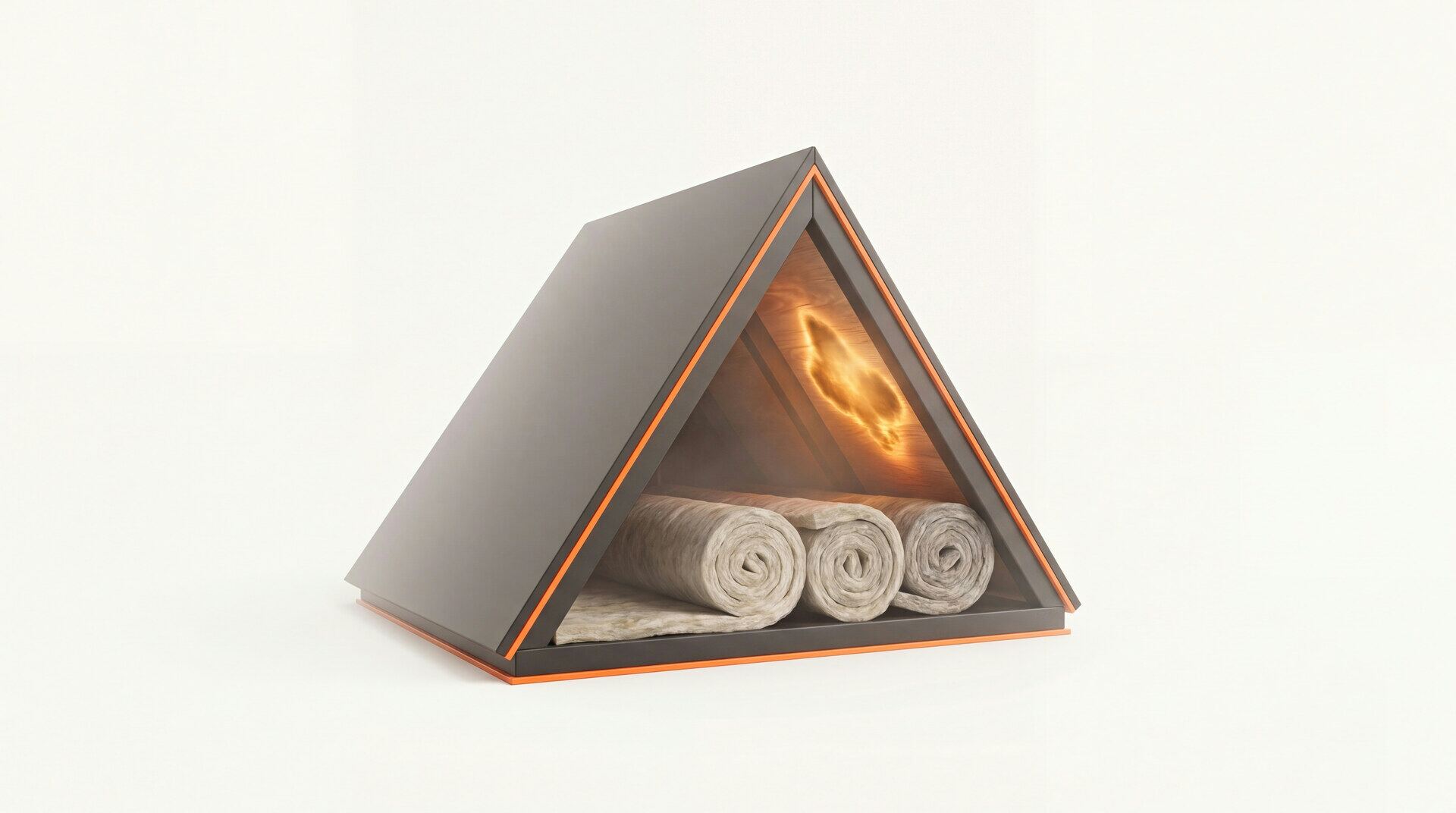
Mold in the Attic
Where Nebraska storm damage shows up first.
Mold on Drywall
What comes out after water damage and what can stay.

Insurance and Mold
Covered perils, exclusions, and sublimits.

Mold in Your Apartment
Renter rights, notice letters, and landlord duties.

What Remediation Costs
The drivers that actually move a quote.