
The Minnesota humidity profile
Minnesota's five NOAA humidity stations run from 69 percent at Minneapolis-St. Paul to 74 percent at Rochester, with morning means of 79 to 84 percent. Those are high numbers, but the calculated annual mean dew point tells you what kind of high: 29 F at International Falls, 37 F at the Twin Cities and Rochester. Cold air holds almost no water. A 74 percent reading in a Minnesota January is a small absolute amount of moisture in very cold air, and that is the whole point.
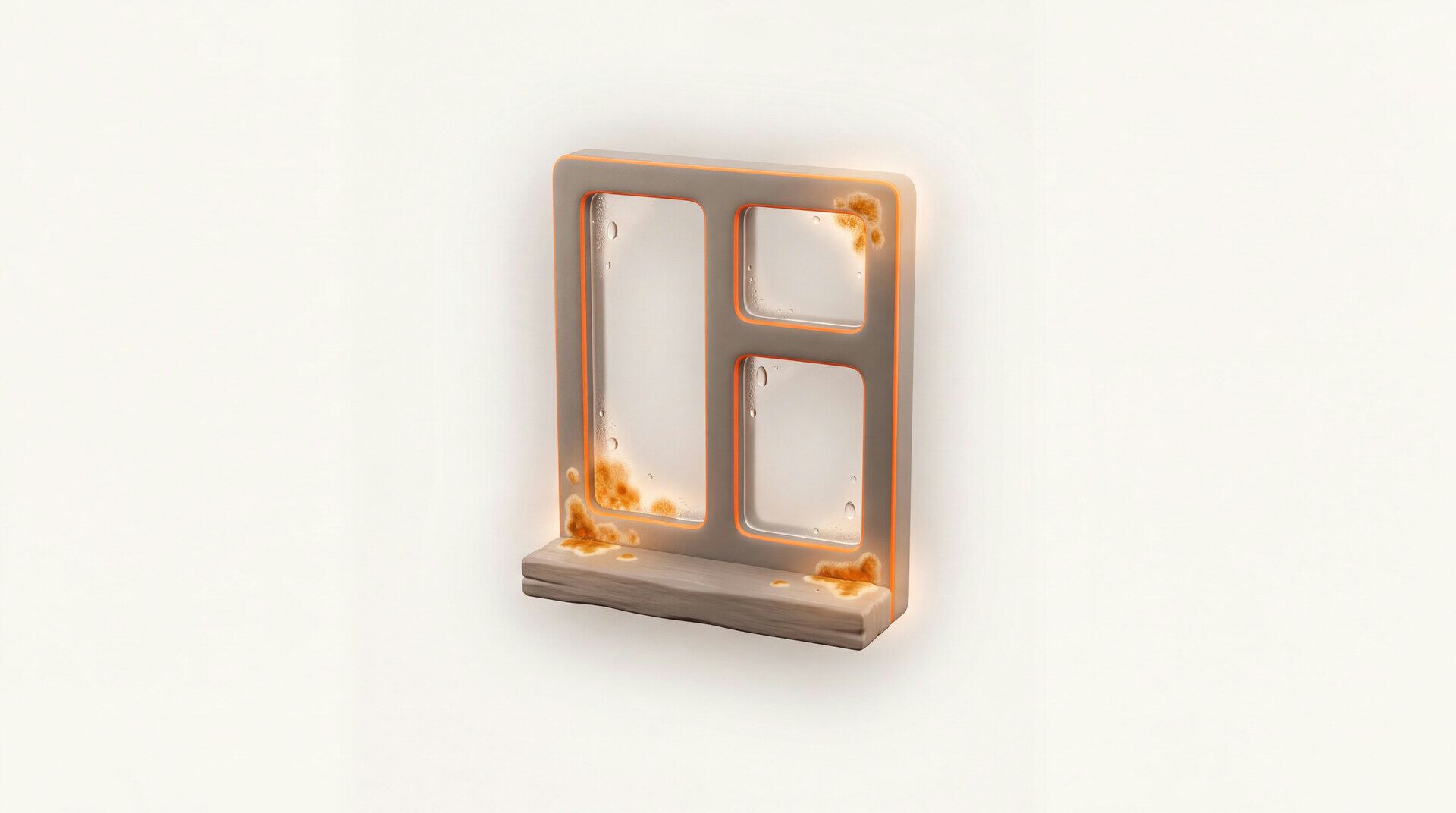
The mold mechanism follows directly. Relative humidity peaks in December at 78 percent, which is the month every house in the state is sealed and heated. The water that matters in a Minnesota winter is water you generate indoors: showers, cooking, laundry, houseplants, and people. It migrates toward the cold side of every assembly, reaches the dew point somewhere inside the wall or on the glass, and condenses. Window sills and the exterior corners of closets are the first visible evidence, and MDH names condensation on windows and exterior walls on its own mold page.
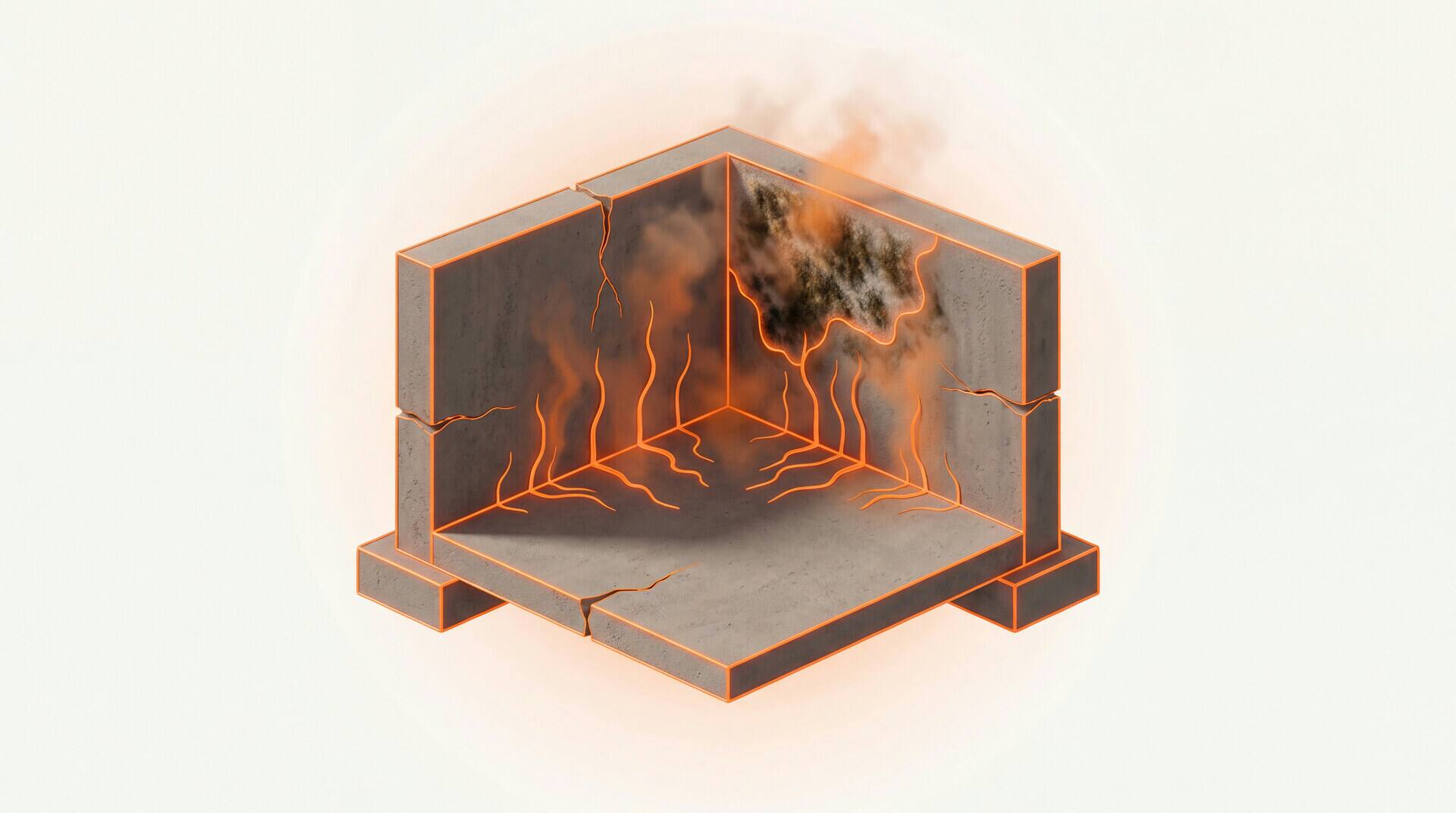
The second half is bulk water, and MDH names that too: leaking roofs and ice dams, basement flooding, and pooling water at the foundation. NOAA's State Climate Summary for Minnesota records annual precipitation above the 1895 to 2020 average of 26.4 inches in every year-period since 1990, with 2015 to 2019 the wettest 5-year stretch on record, and notes that since 2000 the number of very heavy rains of 6 inches or more in a day has run 2 to 3 times higher than in the 20th century. NOAA's billion-dollar disaster record counts 62 events affecting Minnesota from 1980 to 2024, including 6 floods and 38 severe storms. Wet basement, sealed house, six-month heating season. That sequence is the Minnesota mold problem.
Minnesota against the national picture
| Metric | Minnesota | What it means indoors | Source |
|---|---|---|---|
| Annual mean relative humidity | 69 to 74% | High, and highest in December rather than August | NOAA NCEI Comparative Climatic Data |
| Morning mean relative humidity | 79 to 84% | Peaks at 89 percent in August, when basements are coldest relative to the air | NOAA NCEI Comparative Climatic Data |
| Calculated annual mean dew point | 29 to 37 F | Very low, which is why winter moisture is generated indoors rather than imported | Calculated from NOAA 1991 to 2020 normals |
| Annual normal precipitation | 25.4 to 34.7 in | Below the national norm in total, but arriving in heavier single events than it used to | NOAA NCEI 1991 to 2020 normals |
Relative humidity figures are the mean of the morning and afternoon observations NOAA publishes for each first-order station, rounded to whole percent. Dew point is calculated from the NOAA normal mean temperature and that mean relative humidity using the Magnus formula, so treat it as a derived figure rather than a published one.
How much water the sky delivers, station by station
Rochester takes 34.7 inches a year against 25.4 at International Falls. Bulk water is the mechanism behind most basement and crawl space mold, so the wettest station is the one to plan around.
View the data
| Station | Annual normal |
|---|---|
| Rochester | 34.7 in |
| St. Cloud | 28.5 in |
| Duluth | 31.2 in |
| International Falls | 25.4 in |
| Minneapolis-St. Paul | 31.6 in |

Minnesota stations ranked by measured humidity
Methodology. Ranked by annual mean relative humidity, the one input that traces to a station record rather than an opinion. Relative humidity is the mean of NOAA's published morning and afternoon values. Mean dew point is calculated from the NOAA 1991 to 2020 normal mean temperature and that mean relative humidity. The humidity band names what the column measures and nothing more. Humidity is not the whole story: a burst supply line in the driest metro on this table soaks the same drywall as a humid August, and EPA guidance treats wet porous material as at risk of mold growth after 24 to 48 hours either way.
Every place on file, ranked by mean RH
Rochester reads 74% against 69% at Minneapolis-St. Paul. The target for a basement is 50 percent, so every row on this chart sits above it.
View the data
| # | Place | Mean RH | Morning RH | Annual precip |
|---|---|---|---|---|
| 1 | Rochester | 74% | 83% | 34.7 in |
| 2 | St. Cloud | 72% | 84% | 28.5 in |
| 3 | Duluth | 72% | 82% | 31.2 in |
| 4 | International Falls | 72% | 83% | 25.4 in |
| 5 | Minneapolis-St. Paul | 69% | 79% | 31.6 in |
| # | Station | Mean RH | Morning RH | Mean dew pt | Annual precip | Humidity band | Notes |
|---|---|---|---|---|---|---|---|
| 1 | Rochester | 74% | 83% | 37 F | 34.7 in | Very humid | The state's highest annual mean and highest precipitation. Bluff-country topography holds moisture in the valleys. |
| 2 | St. Cloud | 72% | 84% | 34 F | 28.5 in | Humid | The highest morning mean in the state at 84 percent, against a 60 percent afternoon reading. That 24-point daily swing is the condensation driver. |
| 3 | Duluth | 72% | 82% | 32 F | 31.2 in | Humid | Lake Superior keeps the air damp and the surfaces cold at the same time, which is the worst combination for condensation. |
| 4 | International Falls | 72% | 83% | 29 F | 25.4 in | Humid | The lowest dew point in the state at 29 F. A very cold, very dry-in-absolute-terms climate where all the moisture is indoor moisture. |
| 5 | Minneapolis-St. Paul | 69% | 79% | 37 F | 31.6 in | Humid | The lowest relative humidity in the state, largely urban heat island. The metro's mold problem is basements and ice dams, not the air. |
Rochester
The state's highest annual mean and highest precipitation. Bluff-country topography holds moisture in the valleys.
St. Cloud
The highest morning mean in the state at 84 percent, against a 60 percent afternoon reading. That 24-point daily swing is the condensation driver.
Duluth
Lake Superior keeps the air damp and the surfaces cold at the same time, which is the worst combination for condensation.
International Falls
The lowest dew point in the state at 29 F. A very cold, very dry-in-absolute-terms climate where all the moisture is indoor moisture.
Minneapolis-St. Paul
The lowest relative humidity in the state, largely urban heat island. The metro's mold problem is basements and ice dams, not the air.
The ranking inverts what most people expect. Minneapolis-St. Paul, the state's largest metro by a wide margin, sits last on this table at 69 percent. That is not because Twin Cities homes have less mold. It is because urban heat island keeps night temperatures higher, which lowers relative humidity while the absolute moisture stays put. The metro's calculated mean dew point of 37 F is tied for the highest in the state. Read the last row as "warmer," not "drier."
St. Cloud is the row worth studying. An 84 percent morning mean against a 60 percent afternoon mean is a 24-point daily swing, the widest in the state. A swing that size means the air reaches saturation every night and then dries out every afternoon, which is exactly the cycle that grows Cladosporium on a window sill without ever producing a visible leak. If your house shows growth with no water source you can find, look at the daily swing before you look for a pipe. Neighboring reports for Wisconsin and North Dakota cover the same mechanism under different law.
Common mold species in Minnesota homes
EPA and CDC name the same core genera for cold humid climates. In Minnesota housing they concentrate at the cold edges of a sealed building: window assemblies, exterior wall corners, attic sheathing above a leaky ceiling, and the basement.
Cladosporium
Cladosporium spp.The most commonly found indoor mold nationwide and the standard Minnesota window-sill find. Olive-green to black, usually a fine speckle on the sill and the lower sash where condensation collects every winter night. EPA lists it among the common allergenic indoor molds.
Penicillium
Penicillium spp.Blue-green and powdery. It lives on cardboard, paper, carpet padding and stored fabric, which is the contents of most Minnesota basements. It takes off in the August and September window when the basement is coldest relative to the outdoor air. EPA lists Penicillium among the most frequently recovered genera in indoor air samples.
Aspergillus
Aspergillus spp.Black, green or brown depending on species. It wants steady moisture and organic dust: bathroom grout in a house with a weak exhaust fan, the back of a closet on an exterior wall, the inside of a humidifier reservoir. EPA and CDC flag Aspergillus species as allergens and, in rare cases, as a cause of aspergillosis in people who are immunocompromised.
Stachybotrys chartarum
Stachybotrys chartarumThe species commonly called toxic black mold. It needs sustained wet cellulose, which in Minnesota means a ceiling that took weeks of ice dam meltwater or drywall that sat wet after a basement flood. Visible black slimy growth on water-stained material is the signature. Do not disturb it.
Alternaria
Alternaria alternataDark green to black, on window tracks, shower stalls and any surface that collects condensation. It is a common allergen panel entry and is often correlated with asthma flare-ups in sensitive individuals per EPA remediation guidance.
Aureobasidium
Aureobasidium pullulansPink to black, on caulk, grout and painted window frames. It is the growth most often mistaken for dirt on a bathroom window, because it starts as a pink film on the caulk bead and only darkens later.
Species information is general and informational. Health responses vary. See a licensed physician for symptom evaluation. Species sources: EPA Mold Remediation in Schools and Commercial Buildings, EPA A Brief Guide to Mold Moisture and Your Home, CDC National Center for Environmental Health guidance.
What mold remediation costs in Minnesota
No Minnesota agency publishes a mold remediation price schedule, so any state-specific dollar range you find online came from a contractor rather than from a public record. What Minnesota does publish is more useful than a price: MDH's Guidelines for Selecting an IAQ Consultant gives you the questions to ask before you hire, and states outright that MDH does not license the people you are choosing between.
The cost drivers here are cold-climate drivers. Ice dam damage sits at the wall-ceiling junction on the top floor, behind blown-in insulation, in an attic with limited working height. The remediation is small; the access is not. Basement damage sits behind finished walls with studs against masonry and, in older housing, behind knee walls and built-in cabinetry that has to come out to reach the wet material. In both cases you are paying for demolition and reconstruction more than for mold work.
The second driver is the underlying repair, and in Minnesota it is usually an insulation and air-sealing job rather than a roofing job. An ice dam is caused by warm air leaking into the attic. Remediating the ceiling without air-sealing the attic floor buys one winter. Ask any bidder to say in writing what they are doing about the cause, and treat a bid that is silent on the cause as an incomplete bid.
The third is that no state credential exists, so the bids will vary widely in scope as well as price. Get an itemized written scope from each. Our national mold remediation cost guide covers what moves a quote in any market, and the cost estimator lets you scope your own job first so you can tell whether two bids describe the same work.
On insurance: a sudden and accidental discharge such as a burst pipe is usually the covered event, ice dam damage is often covered, and gradual seepage and surface-water flooding usually are not. Many policies cap mold remediation at a fixed sublimit even when the water event is covered. Read the mold exclusion and any endorsement in your own policy, and see our guide to homeowners insurance and mold.
Mold remediation licensing in Minnesota: who can legally do the work
Minnesota does not license or certify mold assessors or mold remediators, and the Department of Health says so on its own consultant-selection page: "The Minnesota Department of Health does not endorse, license or regulate the providers listed on the websites below." It then points consumers toward private credentialing bodies, naming ACAC, IAQA, AIHA and IICRC. That is a state agency telling you plainly that the vetting is yours to do.
What does apply is the residential building contractor license from the Department of Labor and Industry, required of anyone who contracts with a homeowner to construct or improve a dwelling using more than one special skill. Minn. Stat. § 326B.805 exempts a person whose gross annual receipts from licensable specialty work do not exceed $15,000, but that person must hold a certificate of exemption and file an annual affidavit, and must surrender the exemption immediately on crossing $15,000. A specialty contractor providing only one special skill is also exempt.
That distinction matters for a remediation job. A firm that removes wet drywall, dries the cavity, insulates and rebuilds is using more than one special skill and needs the license. A firm that only does one of those things may legitimately be exempt. Either way the DLI license lookup is public, and DLI also runs complaints, enforcement actions and the Contractor Recovery Fund, which is a real avenue if a licensed contractor takes your money and disappears.
For the mold work itself, build the credential check MDH points you toward. Ask for IICRC certification and ask specifically whether the work will follow ANSI/IICRC S520, the industry consensus standard. Ask whether the firm doing the assessment is the firm doing the remediation, because Minnesota has no separation rule and the company sizing the problem may be the company billing to solve it. And use MDH's own list of questions: it is written by the state, it is free, and it is more useful than a certificate logo on a truck.
Minnesota mold laws and tenant rights
Minnesota has no mold-specific statute, but it has something better than most: Minn. Stat. § 504B.161 writes four covenants into every residential lease by operation of law, and expressly bars the parties from waiving or modifying them. The landlord covenants that the premises and common areas are fit for the intended use, that they will be kept in reasonable repair, that they will comply with applicable federal, state and local health and safety laws including rental licensing ordinances, and that heat will be supplied at a minimum of 68 degrees Fahrenheit from October 1 through April 30.
If it is not corrected within 14 days, the tenant may deposit rent with the court administrator along with an affidavit, and a judge then decides both the repairs and the money.
A mold complaint runs through the fit-for-intended-use and reasonable-repair covenants, and where a local housing code covers mold or dampness, through the health and safety compliance covenant. That third covenant is worth reading twice, because Minneapolis, St. Paul and many suburbs run rental licensing ordinances with their own inspection regimes, and a violation of the local ordinance is automatically a violation of the lease covenant.
The main remedy is the rent escrow action at Minn. Stat. § 504B.385. The tenant gives the landlord written notice specifying the violation. If it is not corrected within 14 days, the tenant may deposit rent with the court administrator along with an affidavit, and a judge then decides both the repairs and the money. Where the violation is a cited code violation, the tenant waits out the repair deadline the inspector set instead of the 14 days.
Rent escrow is a genuinely usable route because it does not require you to stop paying rent, which is what gets tenants evicted. The money goes to the court rather than to nobody. Send dated written notice first, using our landlord letter generator, and read MDH's own Mold in Rental Housing page, which walks tenants through the chapter 504B duties and the 14-day written repair request. The Attorney General's Landlords and Tenants handbook, which § 504B.181 subd. 2(b) requires landlords to tell tenants about, has a Repairs and Maintenance chapter. Our guide to mold and apartment rights covers the general playbook.
General information, not legal advice. For your situation, talk to a Minnesota attorney, a legal aid office, or your local tenant council.
Minnesota-specific actions
Minnesota's problem is a sealed house for six months and a wet basement for two. Three moves cover most of it.
A. Run indoor humidity DOWN in winter, not up
Minnesota's relative humidity peaks in December, and the moisture that matters then is the moisture you make. Target roughly 30 to 35 percent indoor relative humidity through the cold months, not 50, because anything higher condenses on cold glass and inside cold wall cavities. Run bath and kitchen exhaust fans on a timer, confirm the dryer vents outside and that the flap opens, and turn a furnace-mounted humidifier down in January. Window condensation running down onto the sill is the signal that you are above the line. Our indoor humidity calculator reports measured relative humidity plus calculated dew point.
B. Fix the ice dam at the attic floor, not at the gutter
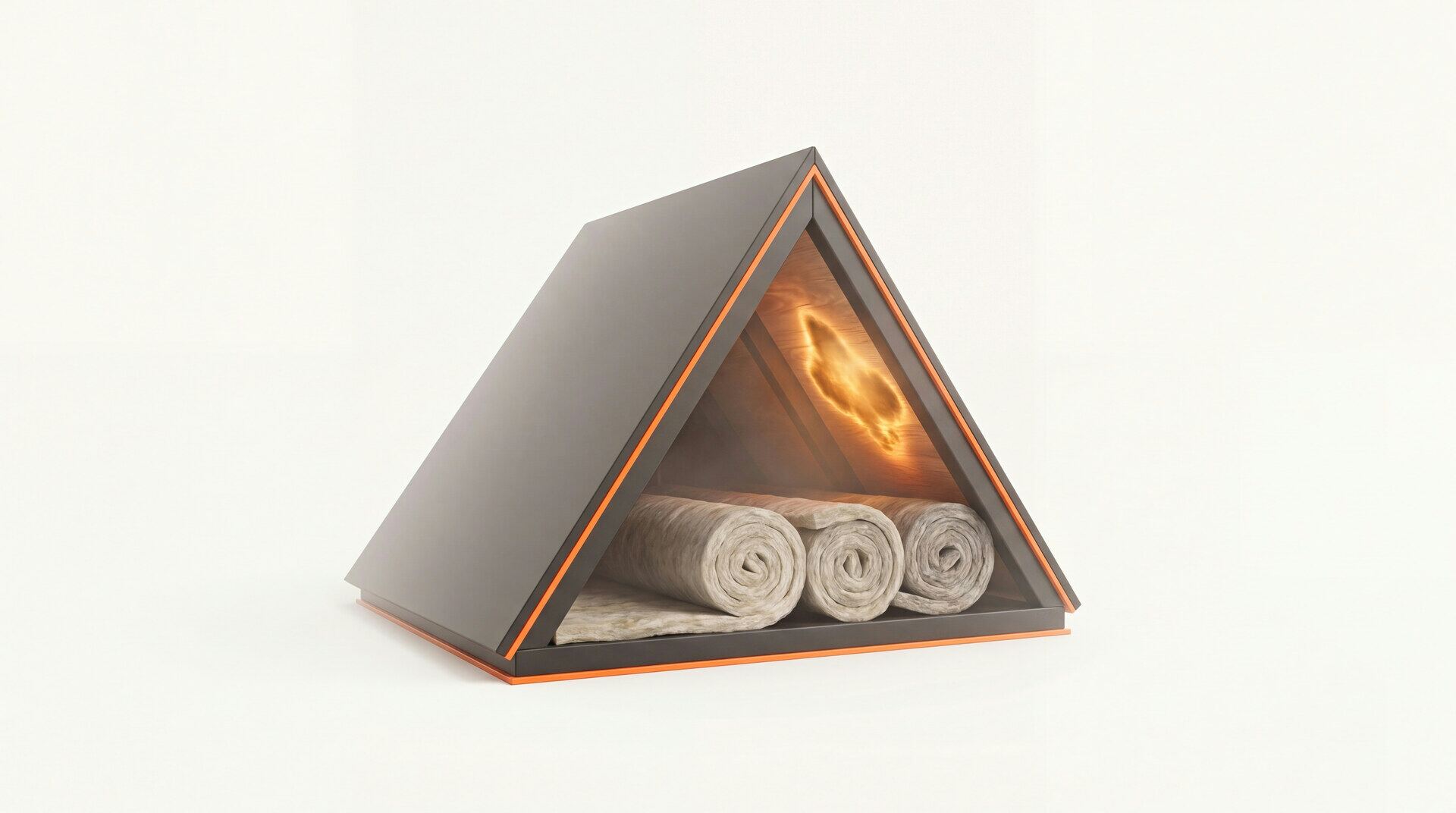
An ice dam is an air-sealing and insulation failure. Warm air leaks from the house into the attic, melts snow at the ridge, and the meltwater refreezes at the cold eave and backs up under the shingles. Heat cables and roof raking treat the symptom. Air-sealing the attic floor at every penetration, then bringing insulation up to depth, treats the cause. The tells in late winter are icicles on one section of eave, a snow-free stripe on the roof, and staining at the top of an exterior wall. Our guide on mold in the attic covers what to look for.
C. Own the basement from July through October
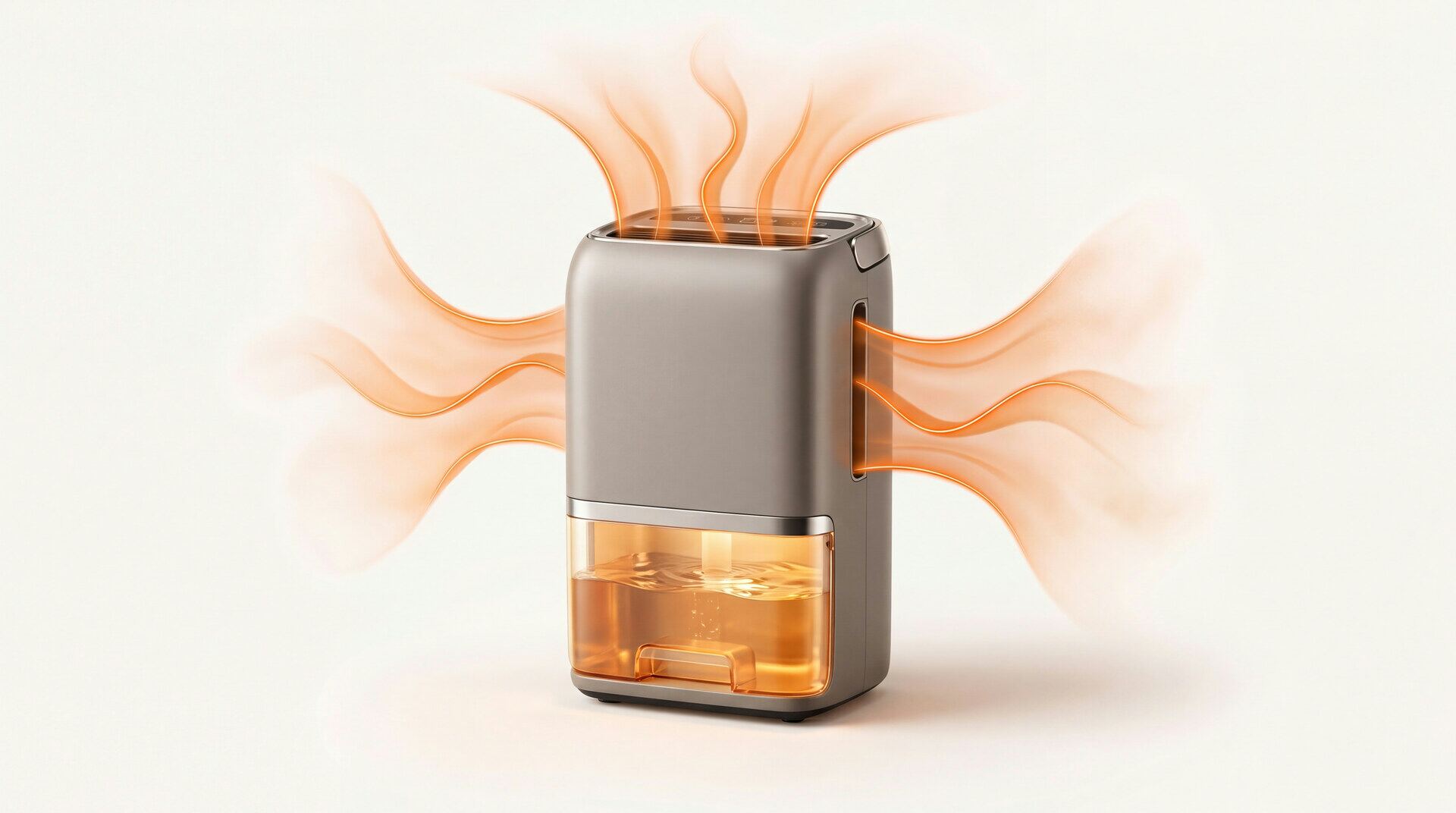
The morning mean hits 89 percent in August, and a Minnesota basement floor is the coldest surface in the house in that stretch. Opening a basement window on a humid August morning makes the wall wetter, not drier. Run a dehumidifier with a condensate pump and hold the basement below 50 percent. Outside, direct downspouts at least six feet from the foundation, grade soil away from the house, and check the sump pump and its backup before spring. MDH names pooling water at the foundation as a primary moisture route on its own mold page.
Seasonal risk profile for Minnesota
Monthly mean relative humidity across Minnesota's five NOAA stations. There is no dry season. There is a December relative-humidity peak driven by cold air, and an August morning peak driven by warm wet air meeting cold basements.
Minnesota relative humidity peaks in December
The monthly mean runs from 65 percent in April to 78 percent in December, a 13 point swing across the year.
View the data
| Month | Jan | Feb | Mar | Apr | May | Jun | Jul | Aug | Sep | Oct | Nov | Dec |
|---|---|---|---|---|---|---|---|---|---|---|---|---|
| Mean RH | 74% | 72% | 71% | 65% | 65% | 69% | 72% | 74% | 74% | 72% | 75% | 78% |
December through February is the indoor-moisture window. The daily mean sits at 74 to 78 percent, the house is sealed, and every cold surface is a condensation target. This is when window sills grow Cladosporium and closet corners on exterior walls go dark. The fix is ventilation and a lower indoor humidity target, not a dehumidifier fighting outdoor air.
August and September are the basement window. The morning mean reaches 89 and 88 percent while the basement is still holding winter's cold. That is the widest gap of the year between air moisture and surface temperature, and it is when Penicillium takes hold on stored cardboard and carpet padding. Run the dehumidifier through this stretch even if the upstairs feels comfortable.
April is the meltwater window. Snowmelt over still-frozen ground puts water against foundations that have been buried for months, and the Red River Valley in the northwest is one of the most flood-prone areas in the country. Walk the perimeter after the thaw, check the sump, and inspect the base of every basement wall within 48 hours of heavy rain. The mold risk by ZIP tool gives you the local read.
Where to get help in Minnesota
Minnesota runs no mold licensing but publishes some of the best state mold guidance in the country, including a page written specifically for renters. Start with MDH.
Questions on file
Does Minnesota require a license for mold remediation?
No. The Minnesota Department of Health states on its own consultant-selection page that it does not endorse, license or regulate mold and indoor air quality providers, and it points consumers to private credentialing bodies including ACAC, IAQA, AIHA and IICRC instead. What can apply is the Department of Labor and Industry residential building contractor license, required of anyone contracting with a homeowner to improve a dwelling using more than one special skill. Minn. Stat. § 326B.805 exempts a person under $15,000 in annual licensable receipts, though that person needs a certificate of exemption and an annual affidavit.
Source 2, Minnesota Department of HealthHow long does a Minnesota landlord have to fix mold?
Fourteen days from written notice, if you use the rent escrow route. Minn. Stat. § 504B.385 lets a tenant who has given written notice specifying the violation deposit rent with the court administrator after 14 days without a correction, along with an affidavit, and a judge then decides both the repairs and the money. Where a housing inspector has already cited the violation, you wait out the deadline the inspector set instead. Rent escrow is safer than simply withholding rent, because the money goes to the court rather than nowhere, which removes the landlord's strongest counterargument.
What does Minnesota law actually require of a landlord?
Minn. Stat. § 504B.161 writes four covenants into every residential lease by operation of law and forbids waiving them: the premises and common areas are fit for the intended use, the landlord keeps them in reasonable repair, the landlord keeps them in compliance with applicable federal, state and local health and safety laws including rental licensing ordinances, and heat is supplied at a minimum of 68 degrees Fahrenheit from October 1 through April 30. A mold complaint runs through the fit-for-intended-use and reasonable-repair covenants, and through the code-compliance covenant wherever a city ordinance covers dampness.
Why does Minnesota humidity peak in December?
Because relative humidity is relative to temperature, and cold air holds very little water. Minnesota's calculated annual mean dew point runs 29 F at International Falls and 37 F in the Twin Cities, so a 78 percent December reading is a small absolute amount of moisture in very cold air. Indoors that flips the problem around: the moisture that matters in a Minnesota winter is the moisture you generate from showers, cooking and laundry inside a sealed house, and it condenses on cold glass and inside cold wall cavities. The winter target is a lower indoor humidity, roughly 30 to 35 percent, not a higher one.
Should I test for mold in Minnesota?
Rarely as a first step. If you can see growth or smell it, you have a moisture problem, and the money goes further finding and fixing the water source. Testing earns its keep in narrower cases: a landlord or insurance dispute where you need a document, a physician who wants information, or a home purchase you cannot inspect fully. MDH publishes a Testing for Mold page as part of its mold hub. If you do test, hire someone who does not also sell the remediation, so the party sizing the problem is not the party billing to fix it.
Is the Twin Cities the driest part of Minnesota?
By relative humidity yes, at 69 percent against Rochester's 74, but that is misleading. The metro's calculated mean dew point of 37 F is tied for the highest in the state, so the air actually carries more water, not less. The lower relative humidity is largely urban heat island: warmer nights raise the temperature the humidity is measured against. Read the Twin Cities row as warmer rather than drier. The metro's mold problem is basements and ice dams rather than the outdoor air, which is true across most of the state.
Source register
Every source chip on this page points here. Agency and statute pages first, then the federal technical references.
Find the mold in your Minnesota home
The scanner is open. Get a detailed photo report, next steps, testing options and estimated cleanup costs.
Scan My Photo Get the free mold checklistRelated guides on Mold Scanner AI

All 51 State Reports
Humidity, licensing and tenant law for every state.
Mold in the Basement
The Minnesota failure mode, start to finish.
Mold in the Attic
Ice dams, air sealing, and what to look for.
Picking a Dehumidifier
Sizing, drain options, and the spec that matters.
Mold on Window Sills
The first visible sign of a winter humidity problem.

Mold in Your Apartment
Renter rights, notice letters, and landlord duties.