
The Missouri humidity profile
Missouri sits in the middle of the country where humid Gulf air meets the dry continental interior. The result is a humid continental climate in the north and a humid subtropical climate in the south, both marked by warm, muggy summers and cold winters. According to NOAA National Weather Service climatological normals for 1991 to 2020, every major Missouri metro posts an annual average relative humidity in the high 60s to low 70s percent. That is a few points above the U.S. national average and well above the 50 percent indoor-RH threshold EPA flags as the upper safe bound for household humidity. These figures are approximate climatological normals, not live readings.
Annual average dew points across the state run roughly 48 F to 54 F, but the number that matters for mold is the summer dew point. From June through September, Missouri dew points routinely sit above 65 F, the level the National Weather Service describes as muggy. Dew point is the more honest moisture metric because it does not move with temperature. A 68 F summer dew point means the air is fully saturated the moment any surface, wall cavity, or basement floor drops to 68 F. In a Missouri basement, where concrete stays in the 60s all summer, that condensation is routine.
Missouri is also a flood-prone state. It sits at the confluence of the Mississippi and Missouri rivers, and the National Weather Service ranks river and flash flooding among the state's top weather hazards. Spring snowmelt and heavy spring-into-summer thunderstorms saturate heavy clay soils that drain slowly, and FEMA has issued repeated major disaster declarations for Missouri flooding. Each event resets the bulk-water clock: EPA guidance says porous materials that stay wet longer than 24 to 48 hours are considered at risk of mold colonization.
Missouri vs U.S. average
| Metric | Missouri | U.S. average | Source |
|---|---|---|---|
| Annual avg relative humidity | 67-73% | ~65% | NOAA NWS 1991-2020 (approx) |
| Annual avg dew point | 48-54 F | ~50 F | NOAA NWS 1991-2020 (approx) |
| Summer dew point (Jun-Sep) | 65-70 F | varies | NOAA NWS 1991-2020 (approx) |
| Days/year above 70% RH | 140-190 | ~120 | NOAA NWS 1991-2020 (approx) |
| Homes with basements | Majority | ~30% | U.S. Census ACS housing |
Humidity and dew-point figures are approximate climatological normals from NOAA National Weather Service stations, not live or exact readings. They describe the typical climate, not the conditions inside any specific home.
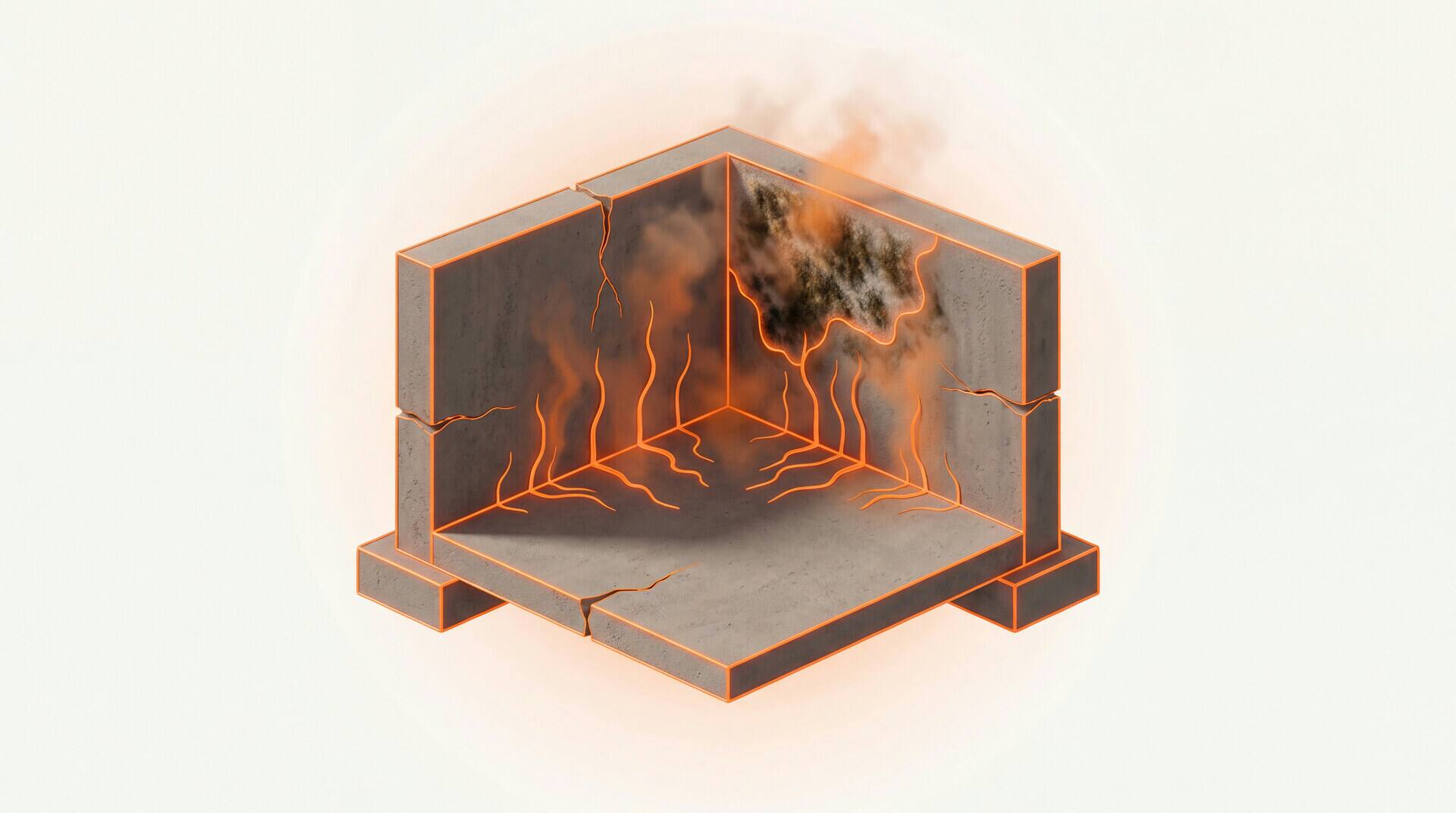
Missouri’s five metros ranked by mold risk
Methodology. Composite risk score = (annual avg RH) × (days/year above 70 percent RH) × (flood-and-basement exposure weight 1.0 to 1.4 based on NOAA NWS river-flood history and the local share of basement and clay-soil housing). All humidity inputs are approximate NOAA NWS 1991-2020 climatological normals for the official airport station serving each metro. Flood weighting from NOAA NWS Missouri flood records. These are climate estimates, not measurements of any individual home.
Every place on file, ranked by avg RH
Springfield reads 72% against 67% at Kansas City. The target for a basement is 50 percent, so every row on this chart sits above it.
View the data
| # | Place | Avg RH |
|---|---|---|
| 1 | St. Louis | 71% |
| 2 | Springfield | 72% |
| 3 | Joplin | 71% |
| 4 | Columbia | 70% |
| 5 | Kansas City | 67% |
| # | Metro | Avg RH | Avg dew pt | Risk band | Notes |
|---|---|---|---|---|---|
| 1 | St. Louis | 71% | 52 F | Very high | Mississippi and Missouri river confluence, heavy clay soils, dense older brick-and-wood housing with deep basements. |
| 2 | Springfield | 72% | 51 F | High | Southern humid-subtropical air with summer RH near 77 percent, Ozarks rainfall, and limestone-region basements. |
| 3 | Joplin | 71% | 51 F | High | Highest summer RH in the state (near 79 percent in May), severe-storm corridor, frequent roof-damage water intrusion. |
| 4 | Columbia | 70% | 50 F | High | Central Missouri humidity, wet spring season, mix of mid-century basements and newer slab construction. |
| 5 | Kansas City | 67% | 49 F | Moderate | Drier western-edge air pulls the annual average down, but Missouri River bottomland flooding and basement clay soils keep risk real. |
St. Louis
Mississippi and Missouri river confluence, heavy clay soils, dense older brick-and-wood housing with deep basements.
Springfield
Southern humid-subtropical air with summer RH near 77 percent, Ozarks rainfall, and limestone-region basements.
Joplin
Highest summer RH in the state (near 79 percent in May), severe-storm corridor, frequent roof-damage water intrusion.
Columbia
Central Missouri humidity, wet spring season, mix of mid-century basements and newer slab construction.
Kansas City
Drier western-edge air pulls the annual average down, but Missouri River bottomland flooding and basement clay soils keep risk real.
Why St. Louis tops the ranking. Three independent factors compound. First, geography: the metro sits at the confluence of the Mississippi and Missouri rivers, so spring high water raises the groundwater table even for homes outside the mapped floodplain. Second, soil: St. Louis sits on heavy clay that drains slowly and holds water against foundations, driving moisture through basement walls by hydrostatic pressure. Third, housing stock: the urban core is dominated by older brick and wood-frame homes with full, often unfinished basements built from porous masonry that wicks and stores moisture. Every wet spring and every burst-pipe winter feeds the same cool, damp basement air that mold needs.
Why Kansas City is the lowest in the state but still “moderate”. The western edge of Missouri sees drier continental air masses from the plains more often than the south and east, which pulls the annual RH average down a few points. The trade-off is the same as the rest of the state: clay soils, basements, and Missouri River bottomland flooding. When summer dew points spike into July and August, indoor basement RH catches up fast, and Kansas City still beats the national average for days above 70 percent RH.
Common mold species in Missouri homes
Every EPA indoor air quality guide lists the same core species for humid climates. Missouri homes, with their cool damp basements, concentrate five of them.
Cladosporium
Cladosporium spp.The most common indoor mold nationwide and a frequent find on Missouri basement walls, window frames, and HVAC surfaces. Olive-green to black. Tolerates cool surfaces, so it colonizes cold basement concrete and AC condensate areas. EPA lists it as a common allergenic mold.
Penicillium
Penicillium spp.Blue-green. Grows on carpet padding, cardboard storage boxes, wallpaper, and damp fabric, all common in finished and unfinished Missouri basements. The state's long humid shoulder seasons keep basement materials damp enough for year-round growth. EPA lists Penicillium species among the most frequently recovered genera in indoor air samples.
Aspergillus
Aspergillus spp.Often black, brown, or yellow-green. Prefers surfaces with high moisture and organic dust, so it shows up on bathroom grout, basement storage, and HVAC interiors. EPA and CDC flag Aspergillus species as allergens and, in rare cases, as a cause of aspergillosis in immunocompromised individuals.
Stachybotrys chartarum
Stachybotrys chartarumThe species commonly called “toxic black mold.” Requires sustained wet cellulose (wet drywall, wet ceiling tile, wet paper-faced insulation). Most common in Missouri homes after a flooded basement or a slow plumbing leak is left wet for 72 hours or more. When to worry: visible black slimy growth on water-stained drywall after a basement flood. Do not disturb. Contain and remediate.
Alternaria
Alternaria alternataDark green to black. Thrives on windowsills, in showers, and around any condensation-prone surface. Commonly flagged on allergenic panels, often correlating with asthma exacerbation in sensitive individuals. EPA Mold Remediation Guide identifies Alternaria as one of the dominant indoor genera in humid climates.
Species information is general and informational. Health responses vary. Consult a physician for symptom evaluation. Species sources: EPA Mold Remediation in Schools and Commercial Buildings, EPA A Brief Guide to Mold Moisture and Your Home, CDC National Center for Environmental Health guidance.
Missouri-specific actions
Three actions account for most of the mold risk reduction available to a Missouri homeowner. Each maps to an existing free Mold Scanner AI tool.
A. Treat the basement as the front line
Year-round: Run a basement dehumidifier sized to the space and drained to a pump or floor drain, target 40 to 50 percent RH on the basement floor, and keep stored items off the concrete on shelving or pallets. Before spring high water: Test the sump pump, add a battery backup, clear gutters and extend downspouts at least six feet from the foundation, and grade soil to slope away from the house. First 48 hours after any basement water event: Remove standing water, run air movers, photograph all damage for insurance, and cut out wet drywall a foot above the visible water line. Materials that still read above 16 percent moisture content after 72 hours of drying should be removed.
B. Keep indoor RH in the 40 to 50 percent band
Use a hygrometer in the basement and in one upstairs living zone. Add portable dehumidification in any room above 55 percent. EPA guidance: 30 to 50 percent indoor relative humidity. For Missouri, target 40 to 50 percent in summer and avoid letting winter air drop too far below 30 percent.
C. Scan quarterly, especially after storms and snowmelt
Missouri’s four high-risk quarters are April (spring rain and snowmelt flooding), July (peak summer dew points), September (lingering humidity with AC running less), and January (cold-surface condensation and frozen-then-burst pipe season).
Seasonal risk profile for Missouri
Approximate monthly average RH across the five reporting stations, based on NOAA NWS climatological normals 1991 to 2020. These are climate estimates, not live readings.
Missouri relative humidity peaks in August
The monthly mean runs from 66 percent in April to 74 percent in August, a 8 point swing across the year.
View the data
| Month | Jan | Feb | Mar | Apr | May | Jun | Jul | Aug | Sep | Oct | Nov | Dec |
|---|---|---|---|---|---|---|---|---|---|---|---|---|
| Mean RH | 72% | 70% | 68% | 66% | 73% | 73% | 72% | 74% | 74% | 71% | 72% | 73% |
Missouri average RH stays in the high 60s to mid 70s percent all year. The real driver is not the headline RH number but the gap between summer dew points and cold basement surfaces, plus spring flooding. Mold risk is continuous; storms and floods are accelerants, not the only cause.
Where to get help in Missouri
Missouri has no state-level mold disclosure or remediation licensing statute. Mold habitability questions are governed by court-recognized common law, not a mold-specific statute. The agencies below are the authoritative starting points.
Questions on file
Is mold a common problem in Missouri homes?
Yes. Missouri has a humid continental and humid subtropical climate with warm muggy summers. NOAA humidity normals put annual average relative humidity across Missouri metros between roughly 67 and 73 percent, and summer dew points routinely climb above 65 F. Combine that with the state's high share of finished and unfinished basements, heavy clay soils, and spring river flooding, and most Missouri homes see at least one moisture event per year that can support mold growth on cellulose surfaces.
Source 5, , National Oceanic and Atmospheric AdministrationWhat Missouri mold species are most common?
Cladosporium and Penicillium dominate indoor air samples in Missouri homes, with Aspergillus common on damp surfaces and Stachybotrys chartarum (black mold) appearing after sustained water intrusion, such as a flooded basement left wet for days. Alternaria rounds out the typical panel. EPA notes all molds can cause reactions in sensitive people. See a physician for symptom evaluation. This page is general information, not medical advice.
Do Missouri homes need a dehumidifier?
In most cases the basement does. EPA recommends keeping indoor relative humidity below 50 percent to suppress mold growth. Missouri summers push outdoor dew points above 65 F from June through September, and basement air cools that moisture below its dew point on concrete and ductwork. A basement dehumidifier sized to the space, drained to a pump or floor drain, is standard guidance for Missouri. Above-grade living areas usually stay in range with air conditioning, but shoulder seasons in spring and fall are when AC runs less and indoor RH can creep up.
Does Missouri have a mold law for landlords and tenants?
General information only. Missouri has no statute that sets mold limits, requires mold disclosure, or licenses mold remediators. Missouri courts recognize an implied warranty of habitability through case law, which can require a landlord to fix conditions that materially affect a tenant's health and safety, and hazardous mold can fall under that warranty. Tenant remedies such as rent withholding are narrow and require written notice and a chance to repair. Read your lease and consult a licensed Missouri attorney. The Missouri Department of Health and Senior Services publishes mold guidance.
What is the best humidity level for a Missouri home?
EPA guidance is 30 to 50 percent indoor relative humidity. For Missouri, aim for 40 to 50 percent in living areas and watch the basement closely, since basement air is colder and condenses moisture more easily. In winter, very dry indoor air can drop below 30 percent, so the goal is a stable middle band rather than chasing the lowest number. Use a hygrometer in the basement and in one upstairs living zone and add dehumidification anywhere that reads above 55 percent for more than a few hours.
Does my renters or homeowners insurance cover mold in Missouri?
General information only. Missouri policies vary widely on mold. Most standard policies exclude mold unless it results from a covered sudden and accidental water event, such as a burst pipe. Damage from river flooding or surface water is typically excluded from standard homeowners policies and requires a separate NFIP flood policy, which matters in the Mississippi and Missouri river valleys. Read your own policy and consult a licensed Missouri insurance agent or attorney. The Missouri Department of Commerce and Insurance publishes consumer guides.
How much does mold remediation cost in Missouri?
Typical professional remediation in Missouri runs about 1,500 to 6,000 USD for contained areas under a few hundred square feet, with St. Louis area pricing often quoted near 9 to 18 USD per square foot. A flooded finished basement that needs drywall, insulation, flooring, and structural drying can reach 10,000 to 25,000 USD or more. Always use contractors who follow the IICRC S520 standard. Missouri does not license mold remediators, so verify credentials and references directly. See our remediation cost guide for a detailed breakdown.
Is there help for mold cleanup after a Missouri flood?
FEMA Individual Assistance can cover some post-disaster cleanup and temporary housing when the President declares a federal disaster, which Missouri has seen repeatedly after major river flooding. The State Emergency Management Agency (SEMA) coordinates state recovery, and MU Extension publishes free flood-cleanup and mold guides. Check disasterassistance.gov and SEMA after any declared event. Eligibility depends on the specific disaster declaration.
Source register
Every source chip on this page points here. Agency and statute pages first, then the federal technical references.
Find the mold in your Missouri home
The scanner is open. Get a detailed photo report, next steps, testing options and estimated cleanup costs.
Scan My Photo Get the free mold checklistRelated guides on Mold Scanner AI

Mold Risk by ZIP Code
Type your ZIP, get climate based mold risk.

Water Damage Documentation Helper
Record accessible water-event conditions without a risk score.
Picking the Right Dehumidifier
Sizing, drain options, and the spec that matters.
Mold Growth Timeline
Hour by hour: when spores germinate and colonies appear.
Indoor Humidity from Your Phone
What works, what does not, and a free alternative.

Stop Mold in a Closed Up House
Vacation home, rental, second property.