
The Iowa humidity profile
Iowa's four NOAA humidity stations run tight: 70 percent at Des Moines, 71 at Sioux City, 73 at both Waterloo and Dubuque. The morning means are the number that matters, at 81 to 84 percent, and they climb to 89 percent in August. The calculated annual mean dew point runs 39 to 41 F. That combination, a high morning saturation over a moderate annual moisture load, is the classic humid continental profile, and it produces its mold on cold surfaces rather than out of the air.
The dominant mechanism, though, is water arriving from rivers. NOAA puts it plainly: from 1955 to 1997 Iowa ranked first among all states in flood losses. The state is bounded by the Mississippi on the east and the Big Sioux and Missouri on the west, with cities and farmland built along the same waterways. In the first two weeks of June 2008, heavy rain on already saturated ground produced record flooding. Numerous long-term stations reported more than 10 inches in two weeks, the Cedar River beat its previous record crest by more than 11 feet, 83 of Iowa's 99 counties were declared disaster areas, and damages ran to almost $10 billion.
The long record shows the same volatility. Statewide annual precipitation has ranged from 20.2 inches in 1910 to 47.9 inches in 1993, the year of the other great Midwest flood. NOAA's billion-dollar disaster record counts 86 events affecting Iowa from 1980 to 2024, with flooding accounting for 8 events and roughly 38 percent of total losses. Every one of those events starts the same clock indoors: EPA guidance treats porous materials that stay wet longer than 24 to 48 hours as at risk of mold growth.
Iowa against the national picture
| Metric | Iowa | What it means indoors | Source |
|---|---|---|---|
| Annual mean relative humidity | 70 to 73% | Consistently high, with no dry season in any month | NOAA NCEI Comparative Climatic Data |
| Morning mean relative humidity | 81 to 84% | Reaches 89 percent in August, which is when basements are coldest relative to the air | NOAA NCEI Comparative Climatic Data |
| Calculated annual mean dew point | 39 to 41 F | Moderate, so the summer problem is condensation rather than imported moisture | Calculated from NOAA 1991 to 2020 normals |
| Annual normal precipitation | 29.3 to 38.2 in | Swings hard by year, from 20.2 inches in 1910 to 47.9 inches in 1993 | NOAA NCEI 1991 to 2020 normals |
Relative humidity figures are the mean of the morning and afternoon observations NOAA publishes for each first-order station, rounded to whole percent. Dew point is calculated from the NOAA normal mean temperature and that mean relative humidity using the Magnus formula, so treat it as a derived figure rather than a published one.
How much water the sky delivers, station by station
Dubuque takes 38.2 inches a year against 29.3 at Sioux City. Bulk water is the mechanism behind most basement and crawl space mold, so the wettest station is the one to plan around.
View the data
| Station | Annual normal |
|---|---|
| Waterloo | 36.3 in |
| Dubuque | 38.2 in |
| Sioux City | 29.3 in |
| Des Moines | 36.5 in |

Iowa stations ranked by measured humidity
Methodology. Ranked by annual mean relative humidity, the one input that traces to a station record rather than an opinion. Relative humidity is the mean of NOAA's published morning and afternoon values. Mean dew point is calculated from the NOAA 1991 to 2020 normal mean temperature and that mean relative humidity. The humidity band names what the column measures and nothing more. Humidity is not the whole story: a burst supply line in the driest metro on this table soaks the same drywall as a humid August, and EPA guidance treats wet porous material as at risk of mold growth after 24 to 48 hours either way.
Every place on file, ranked by mean RH
Waterloo reads 73% against 70% at Des Moines. The target for a basement is 50 percent, so every row on this chart sits above it.
View the data
| # | Place | Mean RH | Morning RH | Annual precip |
|---|---|---|---|---|
| 1 | Waterloo | 73% | 84% | 36.3 in |
| 2 | Dubuque | 73% | 83% | 38.2 in |
| 3 | Sioux City | 71% | 82% | 29.3 in |
| 4 | Des Moines | 70% | 81% | 36.5 in |
| # | Station | Mean RH | Morning RH | Mean dew pt | Annual precip | Humidity band | Notes |
|---|---|---|---|---|---|---|---|
| 1 | Waterloo | 73% | 84% | 41 F | 36.3 in | Very humid | The state's highest morning mean at 84 percent. Cedar River valley, and the 2008 flood of record ran straight through it. |
| 2 | Dubuque | 73% | 83% | 39 F | 38.2 in | Very humid | The wettest station in the state at 38.2 inches, on the Mississippi bluffs where cold basements and river humidity meet. |
| 3 | Sioux City | 71% | 82% | 39 F | 29.3 in | Humid | The driest of the four at 29.3 inches, but still an 82 percent morning mean. Missouri River flooding is the local mechanism. |
| 4 | Des Moines | 70% | 81% | 41 F | 36.5 in | Humid | The lowest relative humidity of the four, partly urban heat island. Raccoon and Des Moines River confluence flooding is the local risk. |
Waterloo
The state's highest morning mean at 84 percent. Cedar River valley, and the 2008 flood of record ran straight through it.
Dubuque
The wettest station in the state at 38.2 inches, on the Mississippi bluffs where cold basements and river humidity meet.
Sioux City
The driest of the four at 29.3 inches, but still an 82 percent morning mean. Missouri River flooding is the local mechanism.
Des Moines
The lowest relative humidity of the four, partly urban heat island. Raccoon and Des Moines River confluence flooding is the local risk.
Four stations, three points apart, and that is the finding. Iowa is climatically uniform in a way most states are not. There is no wet corner and no dry corner: every station reports a morning mean in the low 80s and an annual mean in the low 70s. What separates one Iowa house from another is not where it sits on this table. It is whether it sits in a flood plain and whether its basement is finished.
Precipitation is where the state does split. Dubuque takes 38.2 inches a year and Sioux City takes 29.3, a nine-inch gap across 300 miles, which follows the general east-to-west drying trend across the Midwest. But river flooding is not driven by local rain. It is driven by rain upstream, which is why a dry summer in Sioux City is no protection when the Missouri basin has a wet spring. Neighboring reports for Nebraska, Illinois and Minnesota cover the upstream side of the same rivers.
Common mold species in Iowa homes
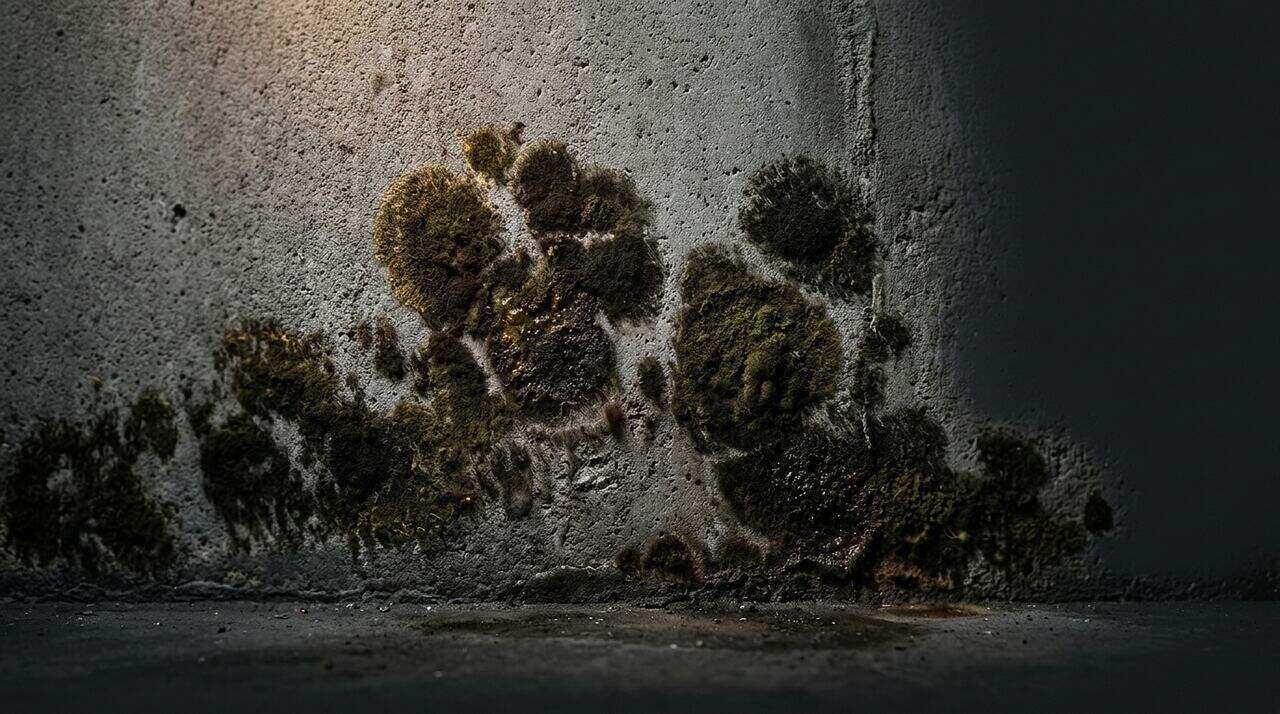
EPA and CDC name the same core genera for humid continental climates. In Iowa housing they concentrate in the basement, because that is where the flooding lands and where the coldest surfaces are in August.
Cladosporium
Cladosporium spp.The most commonly found indoor mold nationwide and the standard Iowa basement and window-sill find. Olive-green to black. In a farmhouse basement with block walls and no vapor barrier, it colonizes the joists and the cold face of the foundation. EPA lists it among the common allergenic indoor molds.
Penicillium
Penicillium spp.Blue-green and powdery. It lives on cardboard, paper, carpet padding and stored fabric, which is what fills most Iowa basements, and it takes off in the August window when the basement floor is coldest relative to the air. EPA lists Penicillium among the most frequently recovered genera in indoor air samples.
Stachybotrys chartarum
Stachybotrys chartarumThe species commonly called toxic black mold. It needs sustained wet cellulose, which after an Iowa river flood is exactly what a finished basement provides: paper-faced drywall standing in water for days. Visible black slimy growth on water-stained drywall is the signature. Do not disturb it. Cut it out.
Aspergillus
Aspergillus spp.Black, green or brown depending on species. It prefers steady moisture and organic dust, which describes bathroom grout, the back of a closet on an exterior wall, and a humidifier reservoir. EPA and CDC flag Aspergillus species as allergens and, in rare cases, as a cause of aspergillosis in people who are immunocompromised.
Alternaria
Alternaria alternataDark green to black, on window tracks, shower stalls and condensation-prone surfaces. It is a common allergen panel entry and is often correlated with asthma flare-ups in sensitive individuals per EPA remediation guidance.
Chaetomium
Chaetomium spp.Olive to grey and cotton-textured. It is a signal species: it grows on chronically wet drywall and framing, so finding it after a flood usually means the material was never properly dried the last time, rather than that it got wet this week.
Species information is general and informational. Health responses vary. See a licensed physician for symptom evaluation. Species sources: EPA Mold Remediation in Schools and Commercial Buildings, EPA A Brief Guide to Mold Moisture and Your Home, CDC National Center for Environmental Health guidance.
What mold remediation costs in Iowa
No Iowa agency publishes a mold remediation price schedule. Iowa HHS runs mold as public education only, through a downloadable FAQ rather than a program, and it states in that FAQ that it does not recommend testing for mold at all, for four stated reasons including that there are no regulatory levels to compare results against. That is the state's whole contribution to your cost question, and it is worth taking seriously: money spent on testing before you have found the water is usually money not spent on the water.
In Iowa the cost driver above all others is whether the basement was finished. An unfinished basement that floods is a pressure wash, a dehumidifier and time. A finished basement that floods is demolition: drywall out, studs exposed, carpet and padding gone, cabinetry out, and then a rebuild. The mold work is a small line on that invoice. The reconstruction is most of it, which is why two Iowa houses on the same street can face wildly different numbers after the same flood.
The second driver is how fast you started. Materials that go 72 hours wet are usually removal candidates rather than drying candidates, and the difference between calling on day one and calling on day five can be the difference between drying a wall and rebuilding one. Iowa's flooding is often forecast days ahead, which means the equipment is spoken for before the water arrives. Knowing who you would call, before you need to call them, is worth real money in a state with this flood record.
The third is that nobody has to be licensed to quote you, so the spread between bids will be wide. Get an itemized written scope from each bidder. Our national mold remediation cost guide covers the drivers that move a quote in any market, the cost estimator lets you scope your own job first, and mold inspection cost covers the assessment side.
On insurance, the Iowa-specific point is the one people learn too late: a standard homeowners policy does not cover flood. River flooding and surface water are excluded, and the coverage for that is the National Flood Insurance Program, which has a 30-day waiting period, so it cannot be bought once the forecast turns. Sewer and drain backup is usually a separate endorsement too. Sudden and accidental discharge from a burst pipe is normally covered. Take coverage questions to the Iowa Insurance Division, and read our guide to homeowners insurance and mold.
Mold remediation licensing in Iowa: who can legally do the work
Iowa does not license, certify or register mold assessors or mold remediators.
Iowa does not license, certify or register mold assessors or mold remediators. The Iowa Department of Inspections, Appeals, and Licensing publishes its complete list of licenses, permits and registrations, sixteen categories running from Alarms and Fire Safety to Tattoo, and there is no mold entry on it. A search of the full DIAL sitemap returns zero mold URLs.
What does apply is contractor registration under Iowa Code chapter 91C. Every contractor doing business in Iowa registers with DIAL, and § 91C.1 exempts only a person who earns less than $2,000 a year from construction or who works solely on their own property. Registration requires proof of workers' compensation coverage and an Iowa Workforce Development employer account number, and out-of-state contractors must post a $25,000 surety bond.
Read that for what it is: registration is a filing, not a competency test. It tells you the company carries workers' compensation and has an employer account, which is genuinely useful after a flood when out-of-state crews arrive. It tells you nothing about whether they know how to dry a wall. The $25,000 out-of-state bond is the single most useful part of it, because post-flood contractor fraud is a real Iowa problem and a bond is something you can claim against.
For the mold work itself, build the credential check yourself. Ask for IICRC certification and ask specifically whether the work will follow ANSI/IICRC S520, the industry consensus standard for professional mold remediation. Ask for the moisture readings, not just a verbal assurance that it is dry: a legitimate restoration firm documents moisture content by material and by day, and that log is what proves the job was finished rather than merely stopped. And verify registration on the DIAL lookup before you sign, especially for any crew that arrived in the state after the water did.
Iowa mold laws and tenant rights
Iowa has no mold-specific statute. A mold complaint runs through the Uniform Residential Landlord and Tenant Law. Iowa Code § 562A.15 requires the landlord to comply with applicable building and housing codes materially affecting health and safety, make all repairs and do whatever is necessary to put and keep the premises fit and habitable, keep common areas clean and safe, and maintain electrical, plumbing, sanitary, heating, ventilating and air-conditioning facilities in good and safe working order. Where a building code duty is greater than another duty in the section, the code duty controls.
The remedy at Iowa Code § 562A.21 gives you the shortest clock in the region. On a material noncompliance materially affecting health and safety, the tenant delivers written notice specifying the acts and omissions, and the lease terminates on a date not less than 7 days after the notice unless the landlord fixes it within those 7 days. The tenant may also recover damages and obtain injunctive relief.
There is a second provision worth knowing. If substantially the same failure recurs within six months, the tenant may terminate on 7 days' notice without giving the landlord another cure period. That matters for mold specifically, because mold that was painted over rather than remediated comes back, and the repeat-violation clause is the answer to a landlord who keeps applying the same non-fix.
Two limits. A tenant cannot use these remedies for a condition the tenant or a guest caused, so expect that argument if the growth followed a shower with no working fan. And the notice must be written and must specify the acts and omissions, which means "there is mold in the bathroom" is weaker than "there is black growth on the drywall below the window in the second bedroom, the window frame leaks during rain, and I reported the leak on the following dates." Our landlord letter generator produces a notice in that form, and our guide to mold and apartment rights covers the general playbook.
General information, not legal advice. For your situation, talk to a Iowa attorney, a legal aid office, or your local tenant council.
Iowa-specific actions
In the state that led the nation in flood losses for four decades, three moves cover most of the controllable risk.
A. Know your flood status before the forecast, not after
The National Flood Insurance Program has a 30-day waiting period, so flood coverage cannot be bought once a crest is forecast. Find out today whether your property is in a mapped flood plain and whether you carry flood coverage and a sewer-and-drain-backup endorsement, because standard homeowners policies exclude both. If you are in a flood plain with a finished basement, the highest-value change you can make is not a dehumidifier, it is moving what matters out of the basement and accepting that the finished space is a consumable.
B. Run the 48-hour clock, and document before you demolish
After any flood or backup, remove standing water the same day. Pull saturated carpet padding, and cut wet drywall back a foot above the high water line rather than trying to dry it in place. Get air movers and a dehumidifier running. Photograph every room and every material before you remove anything, because the insurance conversation and any FEMA individual assistance conversation both run on those photographs. Materials that still read above 16 percent moisture content after 72 hours should come out, not stay in.
C. Own the basement in August
Iowa's morning mean hits 89 percent in August, and the basement floor is the coldest surface in the house that month. Opening a basement window on a humid August morning makes the walls wetter, not drier. Run a dehumidifier with a condensate pump and hold the basement below 50 percent. Outside, direct downspouts at least six feet from the foundation, grade soil to slope away, and test the sump pump and its battery backup before spring. Our indoor humidity calculator shows measured relative humidity plus calculated dew point.
Seasonal risk profile for Iowa
Monthly mean relative humidity across Iowa's four NOAA stations. The daily mean peaks in December, but the morning mean peaks in August and September, and the morning number is the one that decides whether a cold surface sweats.
Iowa relative humidity peaks in December
The monthly mean runs from 67 percent in April to 77 percent in December, a 10 point swing across the year.
View the data
| Month | Jan | Feb | Mar | Apr | May | Jun | Jul | Aug | Sep | Oct | Nov | Dec |
|---|---|---|---|---|---|---|---|---|---|---|---|---|
| Mean RH | 74% | 74% | 72% | 67% | 67% | 70% | 73% | 75% | 73% | 69% | 72% | 77% |
August and September are the basement window. The morning mean reaches 89 and 88 percent while the basement is still holding spring's cold. That is the widest gap of the year between the moisture in the air and the temperature of the surfaces it touches, and it is when Penicillium takes hold on stored cardboard. Run the dehumidifier through this stretch even when upstairs feels comfortable.
June is the flood window. The 2008 disaster ran in the first two weeks of June, and June sits at the intersection of a wet month and saturated ground from spring melt. If you are in a river valley, this is the month to watch the forecast and the river gauges rather than the calendar.
December and January are the indoor-moisture window. The daily mean sits at 74 to 77 percent, the house is sealed, and interior moisture from showers and cooking condenses on cold glass and inside cold wall cavities. The fix in this stretch is ventilation and a lower indoor humidity target, roughly 30 to 35 percent, not a dehumidifier. The mold risk by ZIP tool gives you the local read.
Where to get help in Iowa
Iowa's mold content is a single downloadable FAQ rather than a program, so the useful agencies here are the ones that register contractors and handle disaster money.
Questions on file
Does Iowa require a license for mold remediation?
No. The Iowa Department of Inspections, Appeals, and Licensing publishes its complete list of licenses, permits and registrations, sixteen categories from Alarms and Fire Safety to Tattoo, and mold is not one of them. What does apply is contractor registration under Iowa Code chapter 91C, which every contractor doing business in the state must hold, with an exemption at § 91C.1 for anyone earning under $2,000 a year from construction. Registration proves workers' compensation coverage and an employer account, not competence. Out-of-state contractors must post a $25,000 surety bond, which is worth verifying after a flood.
Source 4, Iowa Department of Inspections, Appeals, and LicensingHow long does an Iowa landlord have to fix mold?
Seven days from written notice, which is the shortest clock in the region. Under Iowa Code § 562A.21, on a material noncompliance materially affecting health and safety, the tenant delivers written notice specifying the acts and omissions, and the lease terminates on a date not less than 7 days after the notice unless the landlord fixes it in that time. The tenant may also recover damages and obtain injunctive relief. If substantially the same failure recurs within six months, the tenant may terminate on 7 days' notice without giving another cure period, which is the provision that answers a landlord who keeps painting over the same growth.
Does homeowners insurance cover flood mold in Iowa?
Not the flood part. A standard homeowners policy excludes river flooding and surface water entirely, and the coverage for that is the National Flood Insurance Program, which carries a 30-day waiting period and therefore cannot be bought once a crest is forecast. Sewer and drain backup is usually a separate endorsement as well. Sudden and accidental discharge, such as a burst supply line, is normally covered, and mold that follows a covered event is often covered up to a fixed sublimit. In a state NOAA ranked first in flood losses from 1955 to 1997, checking which of those you carry is worth doing before the season, not during it.
Should I test for mold in Iowa?
Iowa HHS says no as a first step, and gives four reasons in its own mold FAQ, including that there are no regulatory levels or guidelines to compare a result against. If you can see growth or smell it, you already know you have a moisture problem, and the money is better spent finding the water. Testing earns its keep in narrower cases: a landlord or insurance dispute where you need a document, or a physician who wants information. If you do test, use someone who does not also sell you the remediation.
Source 3, Iowa Department of Health and Human ServicesWhat should I do first after an Iowa basement flood?
Photograph everything before you touch it, then remove standing water the same day. Pull saturated carpet padding, cut wet drywall back about a foot above the high water line rather than trying to dry it in place, and get air movers and a dehumidifier running. EPA guidance treats porous materials wet longer than 24 to 48 hours as at risk of mold growth, and materials still reading above 16 percent moisture content after 72 hours of drying should be removed rather than kept. The photographs matter because both the insurance conversation and any FEMA individual assistance conversation run on them.
Is one part of Iowa more mold-prone than another?
Barely, by humidity. All four of Iowa's NOAA stations report an annual mean within three points of each other, from 70 percent at Des Moines to 73 at Waterloo and Dubuque, with morning means in the low 80s everywhere. Precipitation does split east to west, 38.2 inches at Dubuque against 29.3 at Sioux City. But river flooding is driven by rain upstream rather than by local rain, so a dry summer where you live is no protection when the basin above you has a wet spring. What separates Iowa houses is flood-plain position and whether the basement is finished, not which station is nearest.
Source register
Every source chip on this page points here. Agency and statute pages first, then the federal technical references.
Find the mold in your Iowa home
The scanner is open. Get a detailed photo report, next steps, testing options and estimated cleanup costs.
Scan My Photo Get the free mold checklistRelated guides on Mold Scanner AI

All 51 State Reports
Humidity, licensing and tenant law for every state.
Mold in the Basement
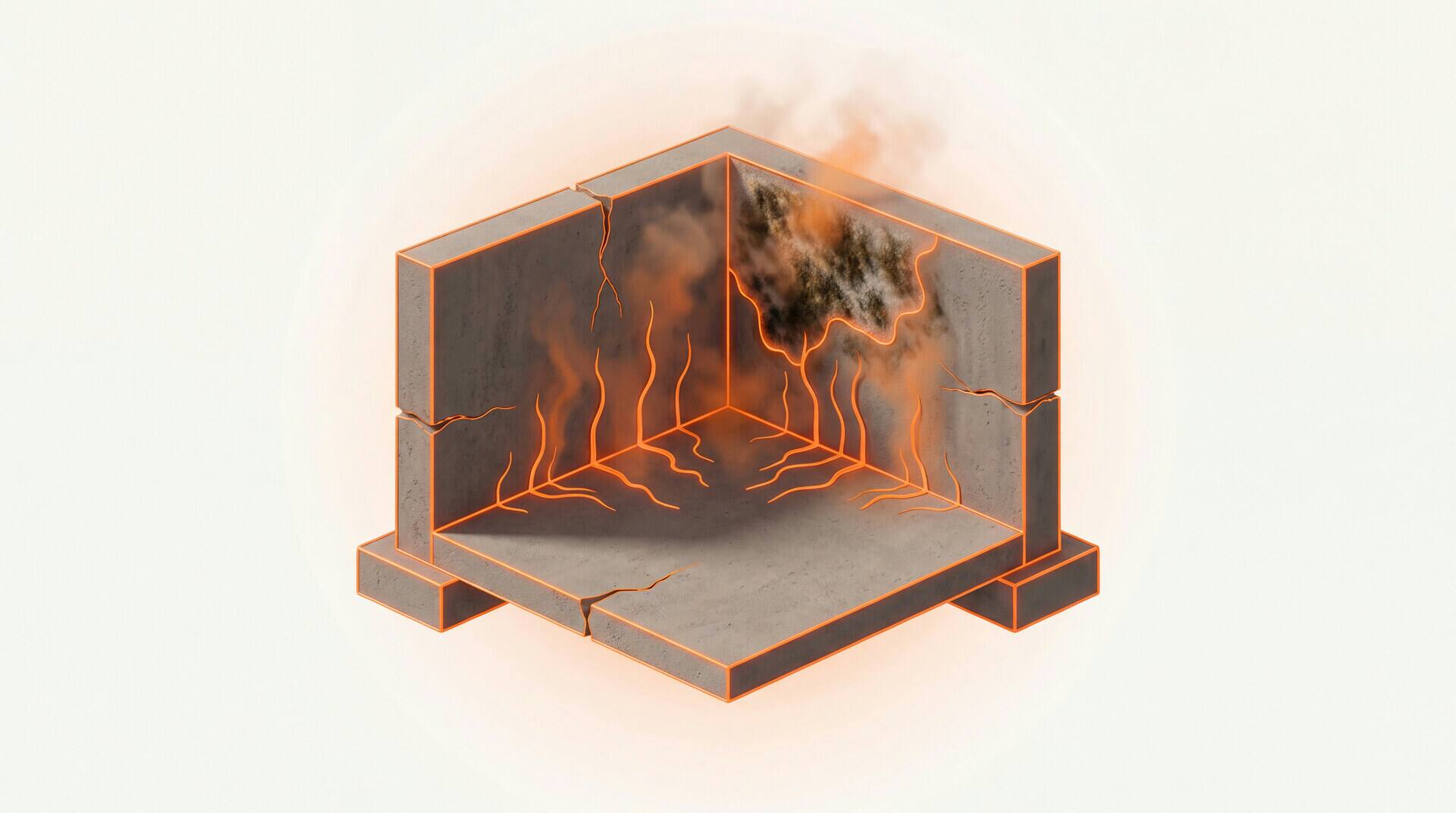
The Iowa failure mode, start to finish.
Mold in Carpet
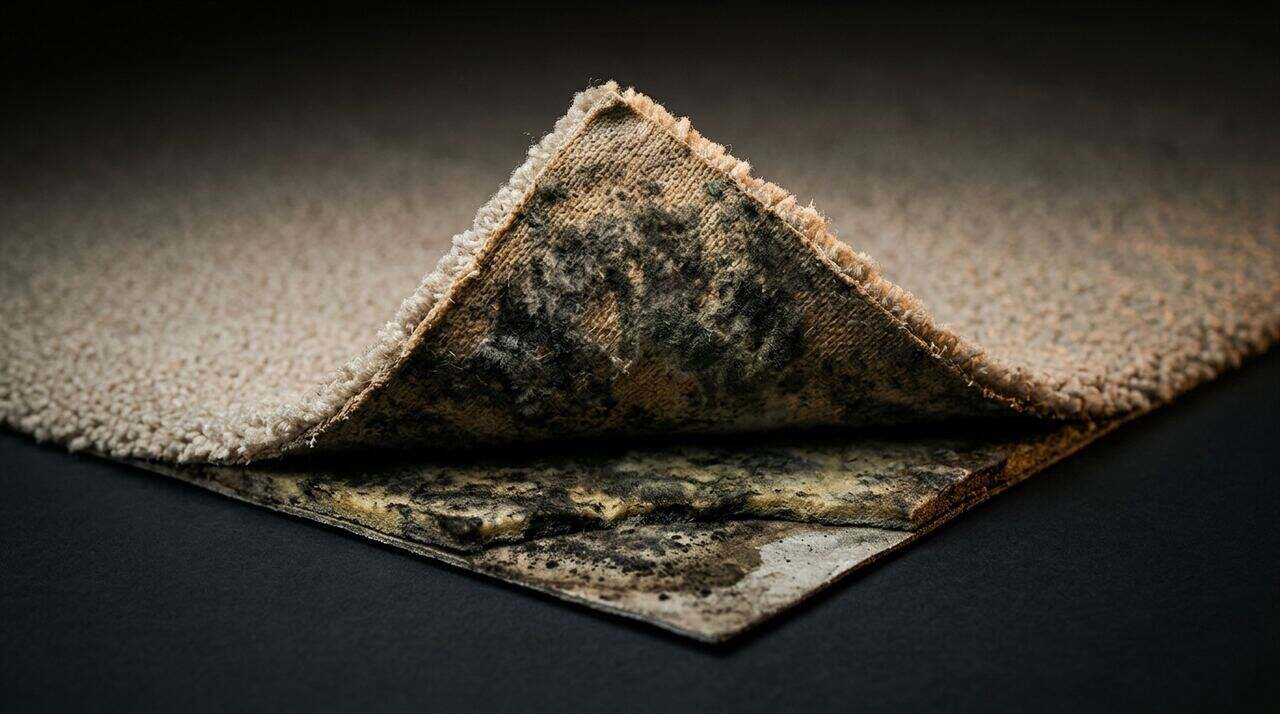
Why padding comes out and carpet sometimes does not.
Mold Inspection Cost
What an assessment includes and what testing adds.

Insurance and Mold
Why flood is excluded and what NFIP covers.

Mold in Your Apartment
Renter rights, notice letters, and landlord duties.