
The Wyoming humidity profile
Wyoming's four NOAA stations report 52 to 60 percent annual mean relative humidity, with Sheridan highest at 60 and Lander lowest at 52. Precipitation runs 12.2 to 15.4 inches at these stations, against a statewide long-term average NOAA puts at 15.9 inches, and long-term station totals across the state range from 5.51 inches in the north central region to 32.82 inches in Yellowstone. The calculated annual mean dew point is 29 to 32 F. This is a semiarid, high-elevation state, and outdoor air here does not wet indoor surfaces.
The monthly shape confirms it. Relative humidity peaks in January and December at 62 percent and bottoms out in August at 44 percent, which is the reverse of a humid state's calendar and is a cold-air artifact rather than a moisture increase. The morning mean never exceeds 68 percent in any month. There is no season in Wyoming when the air alone will grow mold indoors.
The disaster record says the same thing. Of 32 billion-dollar weather disasters affecting Wyoming from 1980 to 2024, 11 were drought, 11 were severe storm and 9 were wildfire, and not one was a flood. Where outdoor water does arrive suddenly, it arrives from snowmelt: NOAA singles out Chinook winds, the warm dry downslope winds off the eastern slope of the Continental Divide, which produce large winter temperature jumps that melt snow rapidly and can cause flooding. Total annual precipitation and the count of one-inch extreme precipitation events have both been trending upward since 2000. So the Wyoming mold conversation is about pipes, appliances, roofs under snow load, and the occasional Chinook thaw, not about the weather.
Wyoming against the national picture
| Metric | Wyoming | What it means indoors | Source |
|---|---|---|---|
| Annual mean relative humidity | 52 to 60% | Semiarid across the whole state, so ambient air is not the source | NOAA NCEI Comparative Climatic Data |
| Morning mean relative humidity | 60 to 69% | Never above 68 percent in any month at any station | NOAA NCEI Comparative Climatic Data |
| Calculated annual mean dew point | 29 to 32 F | Around 30 F, which is why indoor water is the entire story | Calculated from NOAA 1991 to 2020 normals |
| Annual normal precipitation | 12.2 to 15.4 in | Among the lowest in the country at these stations | NOAA NCEI 1991 to 2020 normals |
Relative humidity figures are the mean of the morning and afternoon observations NOAA publishes for each first-order station, rounded to whole percent. Dew point is calculated from the NOAA normal mean temperature and that mean relative humidity using the Magnus formula, so treat it as a derived figure rather than a published one.
How much water the sky delivers, station by station
Cheyenne takes 15.4 inches a year against 12.2 at Casper. Bulk water is the mechanism behind most basement and crawl space mold, so the wettest station is the one to plan around.
View the data
| Station | Annual normal |
|---|---|
| Sheridan | 14.9 in |
| Casper | 12.2 in |
| Cheyenne | 15.4 in |
| Lander | 13.2 in |
Wyoming stations ranked by measured humidity
Methodology. Ranked by annual mean relative humidity, the one input that traces to a station record rather than an opinion. Relative humidity is the mean of NOAA's published morning and afternoon values. Mean dew point is calculated from the NOAA 1991 to 2020 normal mean temperature and that mean relative humidity. The humidity band names what the column measures and nothing more. Humidity is not the whole story: a burst supply line in the driest metro on this table soaks the same drywall as a humid August, and EPA guidance treats wet porous material as at risk of mold growth after 24 to 48 hours either way.
Every place on file, ranked by mean RH
Sheridan reads 60% against 52% at Lander. The target for a basement is 50 percent, so every row on this chart sits above it.
View the data
| # | Place | Mean RH | Morning RH | Annual precip |
|---|---|---|---|---|
| 1 | Sheridan | 60% | 69% | 14.9 in |
| 2 | Casper | 54% | 65% | 12.2 in |
| 3 | Cheyenne | 53% | 61% | 15.4 in |
| 4 | Lander | 52% | 60% | 13.2 in |
| # | Station | Mean RH | Morning RH | Mean dew pt | Annual precip | Humidity band | Notes |
|---|---|---|---|---|---|---|---|
| 1 | Sheridan | 60% | 69% | 32 F | 14.9 in | Dry | The state's highest humidity at 60 percent, on the eastern flank of the Bighorns where upslope flow adds moisture. |
| 2 | Casper | 54% | 65% | 30 F | 12.2 in | Dry | Central Wyoming, on the North Platte. The driest precipitation total of the four at 12.2 inches. |
| 3 | Cheyenne | 53% | 61% | 31 F | 15.4 in | Dry | The wettest of the four at 15.4 inches, from High Plains summer thunderstorms, but still only 53 percent humidity. |
| 4 | Lander | 52% | 60% | 29 F | 13.2 in | Dry | The state's lowest humidity at 52 percent and lowest calculated dew point at 29 F. Wind River Basin. |
Sheridan
The state's highest humidity at 60 percent, on the eastern flank of the Bighorns where upslope flow adds moisture.
Casper
Central Wyoming, on the North Platte. The driest precipitation total of the four at 12.2 inches.
Cheyenne
The wettest of the four at 15.4 inches, from High Plains summer thunderstorms, but still only 53 percent humidity.
Lander
The state's lowest humidity at 52 percent and lowest calculated dew point at 29 F. Wind River Basin.
Every station on this table is dry, and the ranking barely matters. Eight points separate the wettest from the driest, and all four are well below the level at which ambient humidity wets an indoor surface. In a humid state you can reasonably ask whether growth came from the air. In Wyoming you cannot. When mold appears here, water came from somewhere specific, and finding it is the whole job.
What this table cannot show is elevation. NOAA's long-term station record for the state ranges from 5.51 inches in the north central region to 32.82 inches in Yellowstone, a sixfold spread these four airport stations do not capture. A cabin at 8,000 feet in the Tetons under heavy snow load has a roof and ice-dam problem that Lander does not. Read this table as describing Wyoming's populated basins. Neighboring reports for Colorado, Montana, Idaho and Utah cover the same mountain-west mechanism.
Common mold species in Wyoming homes
EPA and CDC name the same core genera everywhere, but in a semiarid state the mix skews toward species that exploit one specific wet spot rather than general dampness.
Cladosporium
Cladosporium spp.The most commonly found indoor mold nationwide, and in Wyoming the usual find on window sills where winter interior moisture condenses on very cold glass, and inside washing machine door gaskets. Olive-green to black. EPA lists it among the common allergenic indoor molds.
Aspergillus
Aspergillus spp.Black, green or brown depending on species. It needs steady moisture and organic dust, which in a dry state means a bathroom with no working exhaust fan, a humidifier reservoir, or the cabinet under a slow-leaking sink. EPA and CDC flag Aspergillus species as allergens and, in rare cases, as a cause of aspergillosis in people who are immunocompromised.
Penicillium
Penicillium spp.Blue-green and powdery, on cardboard, paper and damp fabric. In Wyoming it turns up where a supply line has wicked into carpet padding, which can go unnoticed for months because there is no ambient dampness to make the room feel wrong. EPA lists Penicillium among the most frequently recovered genera in indoor air samples.
Stachybotrys chartarum
Stachybotrys chartarumThe species commonly called toxic black mold. It needs sustained wet cellulose, so in a semiarid climate it is a strong signal that water has been present for a long time: a pipe inside a wall, or a roof that has been leaking under snow for several winters. Visible black slimy growth on water-stained drywall is the signature. Do not disturb it.
Chaetomium
Chaetomium spp.Olive to grey and cotton-textured. Like Stachybotrys it needs chronic moisture, so finding it in Wyoming almost always dates the problem to seasons rather than weeks. Treat it as evidence the leak is older than you assumed.
Alternaria
Alternaria alternataDark green to black, on shower stalls, window tracks and any surface that collects condensation. It is a common allergen panel entry and is often correlated with asthma flare-ups in sensitive individuals per EPA remediation guidance.
Species information is general and informational. Health responses vary. See a licensed physician for symptom evaluation. Species sources: EPA Mold Remediation in Schools and Commercial Buildings, EPA A Brief Guide to Mold Moisture and Your Home, CDC National Center for Environmental Health guidance.
What mold remediation costs in Wyoming
No Wyoming agency publishes a mold remediation price schedule, and Wyoming publishes no state mold guidance at all. There is no Department of Health mold page. The most substantive mold document produced by any Wyoming public institution is a five-page fact sheet from the University of Wyoming's Risk Management and Safety office, and it is candid that there is no accepted national standard for mold contamination. Teton County publishes an indoor air quality page that names mold as a home air pollutant, and that is close to the extent of it.
In a dry state, the cost that matters most is diagnosis, and it is usually cheap relative to what it saves. Because ambient humidity cannot be the explanation here, a remediator who cannot tell you where the water came from has not finished the assessment. Pay for the moisture meter survey, the look inside the wall, the check of the supply lines and the appliance connections. A quote that starts at demolition without a source is a quote for something that will recur.
The second driver is remoteness, and Wyoming has the least population of any state. Restoration equipment and crews cluster around Cheyenne, Casper and Jackson, and a job in a small town can carry meaningful travel and mobilization. Ask about it explicitly rather than being surprised by it on the invoice.
The third is that the state licenses nothing here, so bids differ in scope as much as in price. Get an itemized written scope from each bidder. Our national mold remediation cost guide covers the drivers that move a quote in any market, and the cost estimator lets you scope your own job first.
On insurance: a sudden and accidental discharge such as a burst supply line during a cold snap is normally the covered event, and in a state with Wyoming's winters that is the common claim. Long-term seepage is usually excluded, and many policies cap mold remediation at a fixed sublimit even when the water event is covered. Take coverage questions to the Wyoming Department of Insurance, and read our guide to homeowners insurance and mold.
Mold remediation licensing in Wyoming: who can legally do the work
Wyoming does not license, certify or register mold assessors or mold remediators, and it does not license general contractors either.
Wyoming does not license, certify or register mold assessors or mold remediators, and it does not license general contractors either. The Wyoming Business Council, a state agency, states it plainly: "Contractor licensing (except electrical) is not done by the state of Wyoming. Rather, the option to license contractors is deferred to the local jurisdiction where the construction activity is to take place."
The Department of Workforce Services publishes the official list of licensed occupations in Wyoming, roughly 95 of them from acupuncturists to water well drilling contractors, and the only construction trade on it is electrician. There is no mold assessor entry, no mold remediator entry and no general contractor entry. That list is the positive proof rather than an absence of evidence, and it is worth looking at yourself.
So the licensing question in Wyoming is a municipal question. A mold remediation firm is regulated by the city or town where the work happens, and the Business Council points contractors to the Wyoming Association of Municipalities member list to find the right local office. Before you sign, call your city or town clerk and ask what contractor licensing they require, then confirm the company holds it. Do not accept a license number without knowing which body issued it.
For the mold work itself the whole check is yours. Ask for IICRC certification and ask whether the job will follow ANSI/IICRC S520, the industry consensus standard. Ask whether the same firm is doing the assessment and the remediation. Ask for daily moisture readings by material. And above all in this climate, ask them to tell you where the water came from before they tell you what the work costs, because in a state with a 30 F mean dew point, a remediation without a diagnosis is a remediation that will be repeated.
Wyoming mold laws and tenant rights
Wyoming has no mold-specific statute. A mold complaint runs through Wyo. Stat. Ann. §§ 1-21-1202 and 1-21-1203. Section 1-21-1202(a) requires every owner renting a residential rental unit to maintain it in a safe and sanitary condition fit for human habitation, with operational electrical, heating and plumbing and hot and cold running water. Section 1-21-1203(a) adds that the owner shall not rent a unit unless it is reasonably safe, sanitary and fit for human occupancy, shall maintain common areas, and shall maintain electrical, plumbing, heating and hot and cold water.
The notice mechanism is unusually specific and it is easy to get wrong. Under § 1-21-1203(b), a renter who is current on rent and has reasonable cause supported by evidence must advise the owner in writing, must specify the remedial action requested, and must serve it by certified mail. Within a reasonable time the owner must either begin correcting the condition or dispute the claim in writing. Miss the certified mail step and you have not started the process the statute describes.
If nothing happens, § 1-21-1206(b) provides a second notice. The renter serves a "notice to repair or correct condition" that recites the first notice and states the owner has three days to begin reasonable corrective action before suit. The renter may then sue in circuit court for costs, damages and affirmative relief, including an order to make repairs or termination of the lease.
Two limits are worth knowing before you start. Section 1-21-1203(d) lets the owner refuse to repair and terminate the lease with 10 to 20 days' notice if the repair costs are unreasonable against the rent charged, which is a real risk on a large remediation in a low-rent unit. And § 1-21-1203(e) says the owner is not liable under this article for claims of mental suffering or anguish, so the damages available are property and cost damages rather than distress. Send the first notice properly, by certified mail, with the remedial action specified. Our landlord letter generator produces that notice, and our guide to mold and apartment rights covers the general playbook.
General information, not legal advice. For your situation, talk to a Wyoming attorney, a legal aid office, or your local tenant council.
Wyoming-specific actions
In the driest state in this report, everything comes down to finding indoor water fast. Three moves cover most of it.
A. Treat every mold spot as a leak until you have proven otherwise
At a 29 to 32 F calculated mean dew point and under 16 inches of rain, Wyoming air does not grow mold on a wall. If growth appears, something is wet: a supply line in an exterior wall that froze and split, a water heater, an ice maker line, a washing machine hose, a dishwasher, a slow toilet supply, or a roof penetration. Shut off every fixture and watch the water meter for 30 minutes. If it moves, you have a leak and finding it is the job. Cleaning the surface without finding the source in a dry climate is the clearest possible waste of money.
B. Winterize against the burst pipe, which is the state's main mold event
Wyoming's mold problems overwhelmingly begin with a freeze. Insulate supply lines in exterior walls, in crawl spaces and in unheated garages. Disconnect and drain hose bibs before the first hard freeze. Know where the main shutoff is and make sure everyone in the house does. If you leave a property empty in winter, either keep the heat on above 55 F or drain the system properly, because a split line in an empty house runs for days. Check the washing machine hoses while you are at it, since burst hoses are one of the most common household water events anywhere.
C. Manage winter interior humidity, and watch the Chinook thaw
Wyoming's relative humidity peaks in December and January because the air is cold, not because it is wet. Indoors that means the moisture that matters is the moisture you make, and it condenses on very cold glass. Target roughly 30 to 35 percent indoor relative humidity in the cold months and run exhaust fans. Separately, NOAA identifies Chinook winds as a Wyoming flood mechanism: warm downslope winds that melt snow rapidly. After a big thaw, check the roof for ice dam evidence, check the foundation perimeter, and look in the basement or crawl space within 48 hours. Our indoor humidity calculator shows measured relative humidity plus calculated dew point.
Seasonal risk profile for Wyoming
Monthly mean relative humidity across Wyoming's four NOAA stations. The winter peak is a cold-air artifact, and the August low of 44 percent is the lowest monthly reading in this report.
Wyoming relative humidity peaks in January
The monthly mean runs from 44 percent in August to 62 percent in January, a 18 point swing across the year.
View the data
| Month | Jan | Feb | Mar | Apr | May | Jun | Jul | Aug | Sep | Oct | Nov | Dec |
|---|---|---|---|---|---|---|---|---|---|---|---|---|
| Mean RH | 62% | 60% | 57% | 54% | 56% | 52% | 46% | 44% | 48% | 53% | 60% | 62% |
December and January read highest and mean the least. The daily mean reaches 62 percent while the calculated dew point sits near 30 F, so the air holds almost no water. What the winter does produce is condensation on cold single-pane and older double-pane glass from interior moisture, and burst supply lines during hard freezes. Both are indoor problems with indoor fixes.
July and August are the driest months in this report at 44 to 46 percent. That is the window for any work needing a dry structure: opening a wall, drying a crawl space, replacing subfloor. The ambient air is doing the drying for you, which is a genuine advantage over a humid state.
Spring is the snowmelt window, and Chinooks can move it. NOAA identifies Chinook winds as a Wyoming flood mechanism because they produce large winter temperature jumps that melt snow rapidly. A February thaw can put meltwater against a foundation that is still frozen. Walk the perimeter after any big warm-up rather than waiting for April. The mold risk by ZIP tool gives you the local read.
Where to get help in Wyoming
Wyoming has no state health department mold page, and that is a finding rather than a gap in this list. The most useful documents come from the university and from one county.
Questions on file
Does Wyoming require a license for mold remediation?
No, and Wyoming does not license general contractors either. The Wyoming Business Council states it directly: contractor licensing except electrical is not done by the state of Wyoming, and the option to license contractors is deferred to the local jurisdiction where the construction activity takes place. The Department of Workforce Services publishes the official list of roughly 95 licensed occupations in the state, and the only construction trade on it is electrician. The licensing question here is a municipal one: call your city or town clerk, ask what contractor licensing they require, and confirm the company holds it.
Source 2, Wyoming Business CouncilHow do I give a Wyoming landlord notice about mold?
By certified mail, in writing, specifying the remedial action you want, while you are current on rent, with reasonable cause supported by evidence. That is what Wyo. Stat. Ann. § 1-21-1203(b) requires, and missing the certified mail step means you have not started the process the statute describes. Within a reasonable time the owner must either begin correcting the condition or dispute the claim in writing. If nothing happens, § 1-21-1206(b) lets you serve a second notice to repair or correct condition that recites the first and gives the owner three days to begin reasonable corrective action before you sue in circuit court.
Does Wyoming have a state mold page?
No. The Wyoming Department of Health publishes no mold or indoor air quality page, and the Department of Environmental Quality's Air Quality Division regulates outdoor air and asbestos rather than indoor mold. The most substantive mold document from any Wyoming public institution is a five-page fact sheet from the University of Wyoming's Risk Management and Safety office, which is candid that there is no accepted national standard for mold contamination. Teton County publishes an indoor air quality page naming mold as a home air pollutant. For homeowner guidance, EPA's brief guide to mold, moisture and your home is the federal document most state pages summarize anyway.
Can mold grow in a climate as dry as Wyoming's?
Yes, but essentially never from the outdoor air. Wyoming's four NOAA stations report 52 to 60 percent annual mean relative humidity with a calculated mean dew point of 29 to 32 F, and the morning mean never exceeds 68 percent in any month. Ambient air at those levels does not wet indoor surfaces. When mold appears in a Wyoming house, water came from a specific indoor source: a frozen and split supply line, a water heater, an appliance hose, a slow toilet supply, or a roof penetration. That is good news, because the diagnosis is usually findable and the fix is usually permanent.
Does Wyoming flood?
Rarely from rain and occasionally from snowmelt. Of 32 billion-dollar weather disasters affecting Wyoming from 1980 to 2024, 11 were drought, 11 were severe storm and 9 were wildfire, and none was a flood. NOAA does identify a Wyoming flood mechanism, though: Chinook winds, the warm dry downslope winds off the eastern slope of the Continental Divide, produce large winter temperature jumps that melt snow rapidly and can cause flooding. After a big midwinter thaw, walk the foundation perimeter and check the basement or crawl space within 48 hours rather than waiting for spring.
Why is Wyoming humidity highest in January?
Because relative humidity is measured against temperature, and cold air holds very little water. The daily mean reaches 62 percent in December and January while the calculated annual mean dew point sits near 30 F, so that reading represents a tiny absolute amount of moisture. August, at 44 percent, is the lowest monthly reading anywhere in this report and is the best month for drying out a structure. Indoors, the winter problem is interior moisture from showers and cooking condensing on very cold glass, which is a ventilation fix rather than a dehumidifier fix.
Source register
Every source chip on this page points here. Agency and statute pages first, then the federal technical references.
Find the mold in your Wyoming home
The scanner is open. Get a detailed photo report, next steps, testing options and estimated cleanup costs.
Scan My Photo Get the free mold checklistRelated guides on Mold Scanner AI

All 51 State Reports
Humidity, licensing and tenant law for every state.
Mold in a Washing Machine
A common indoor water source in dry climates.
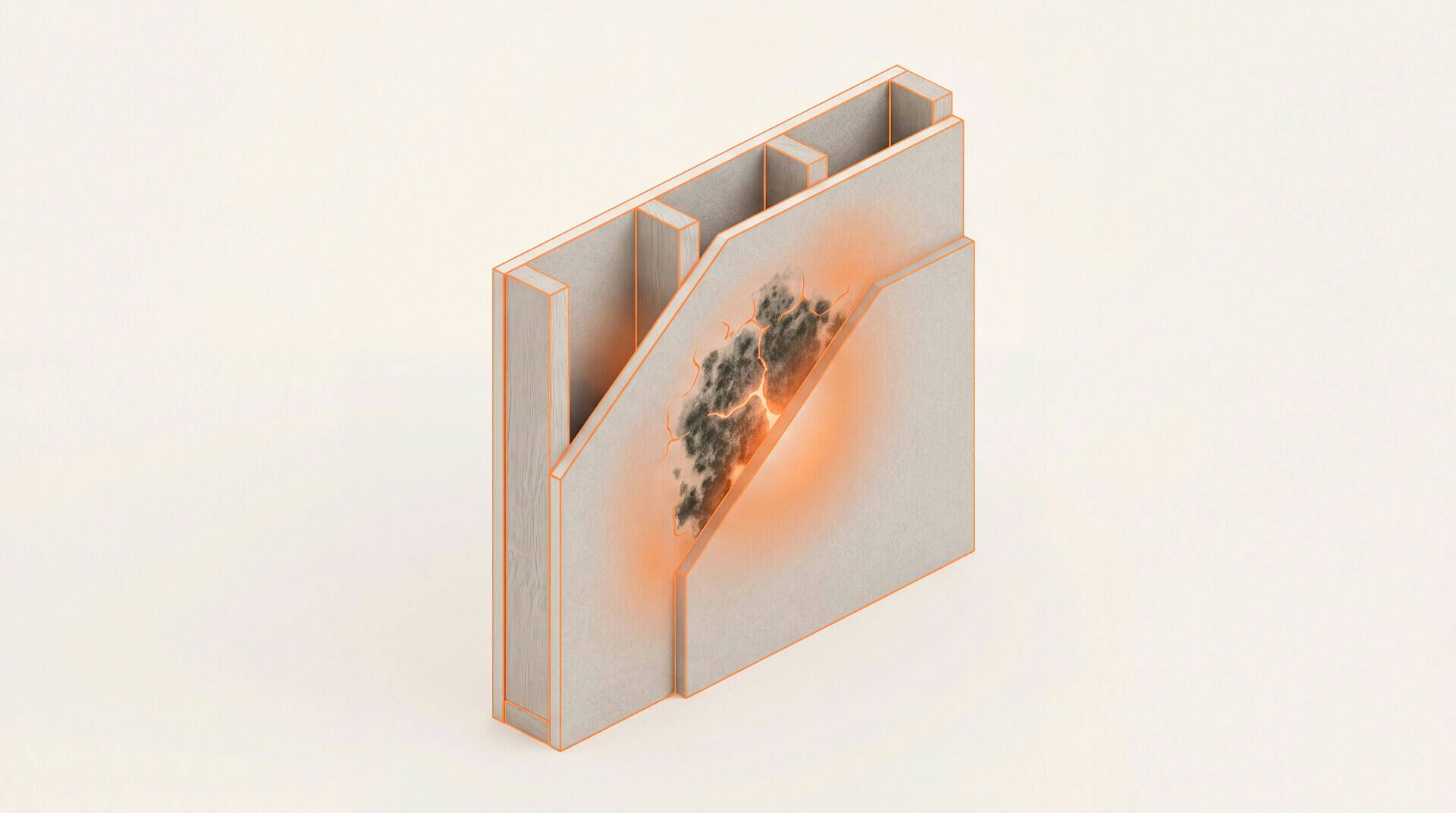
Mold Behind Walls
Signs of hidden growth from a split supply line.
Signs of Mold
What to look for when the air is not the cause.

What Remediation Costs
The drivers that actually move a quote.

Mold in Your Apartment
Renter rights, notice letters, and landlord duties.