What does a professional mold inspection include?
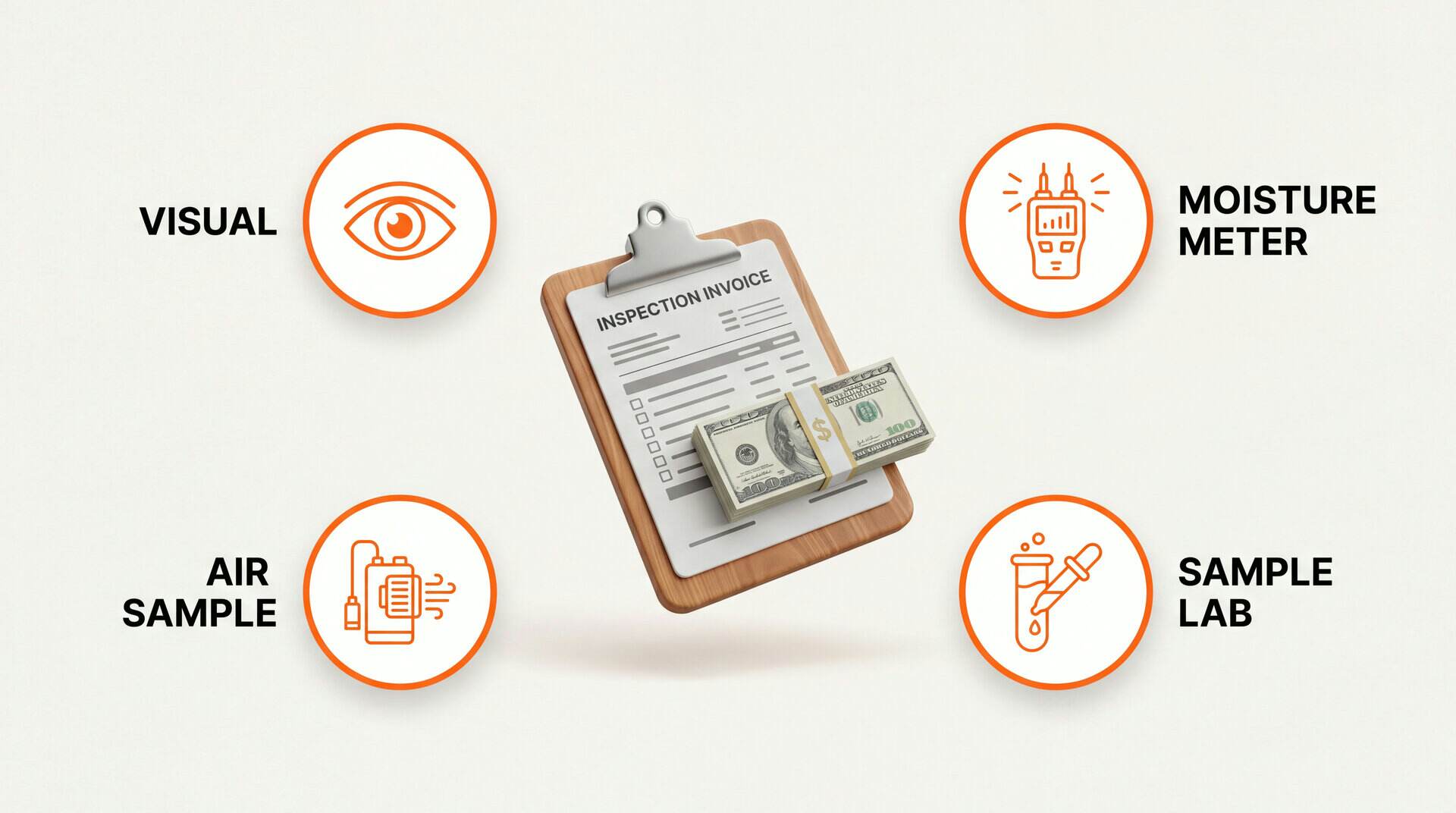
A professional mold inspection should have a defined scope and documented methods. Ask what is included before hiring.
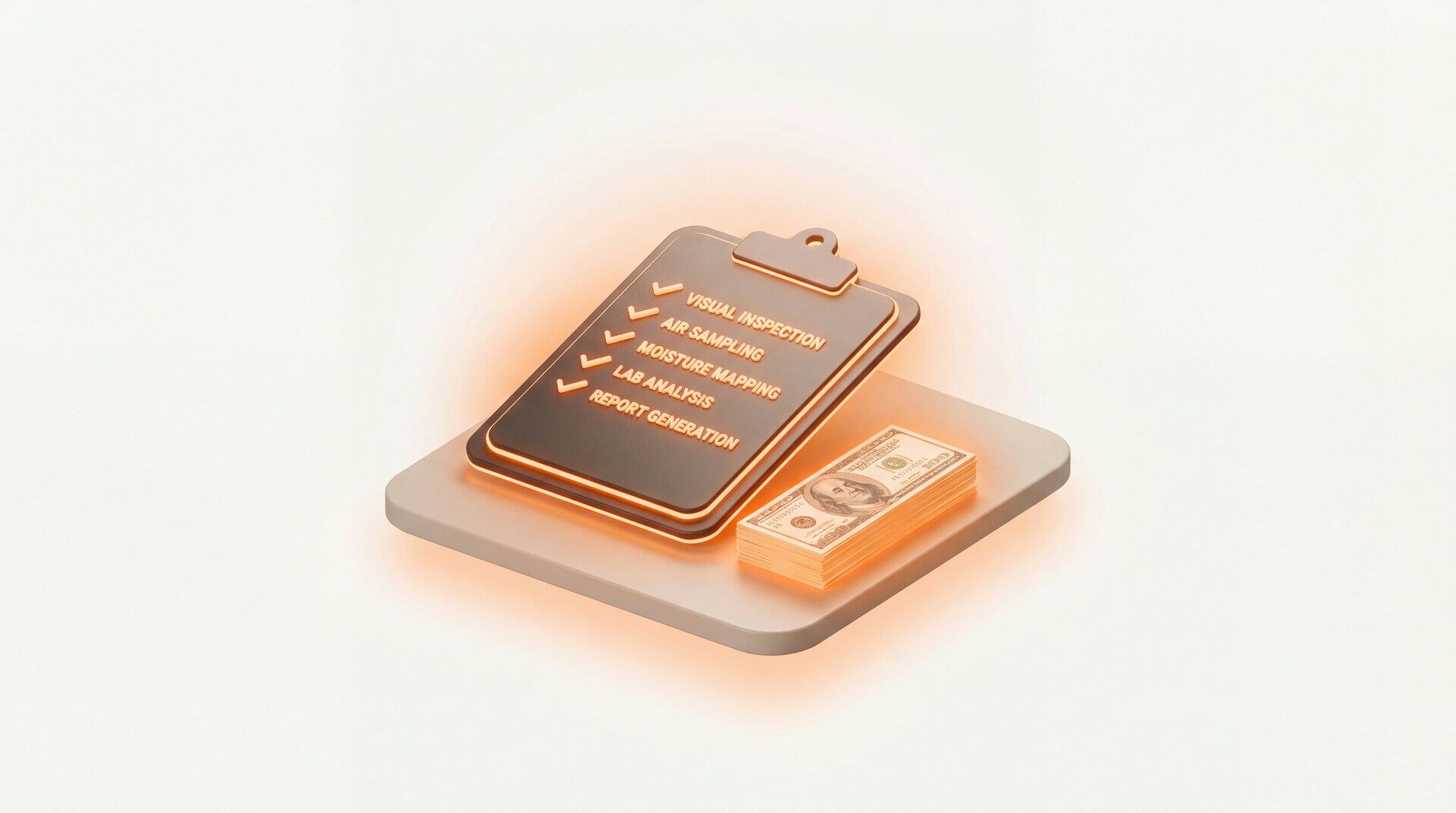
Visual inspection: The inspector reviews accessible areas for visible growth, water staining, damaged materials, and other moisture indicators. Access limits should be stated in the report.
Moisture meter readings: Pin or pinless meters can help compare materials and locate areas for follow-up. A reading depends on the material, device, and reference conditions; it is not proof of mold by itself.
Thermal imaging camera: Infrared images show temperature differences, not mold or moisture directly. An anomaly may guide follow-up with an appropriate moisture measurement.
Air sampling: A calibrated pump and cassette can collect airborne particles for laboratory analysis. Results represent the sampling conditions and time window, not every area of the building.
Surface sampling: A tape lift or swab may help a laboratory characterize material from a specific spot. The level of identification depends on the method and sample quality, and the result does not establish a health-risk ranking.
Written report: The report should distinguish observations, measurements, laboratory findings, limitations, and professional interpretation. Ask which conclusions each method can and cannot support.
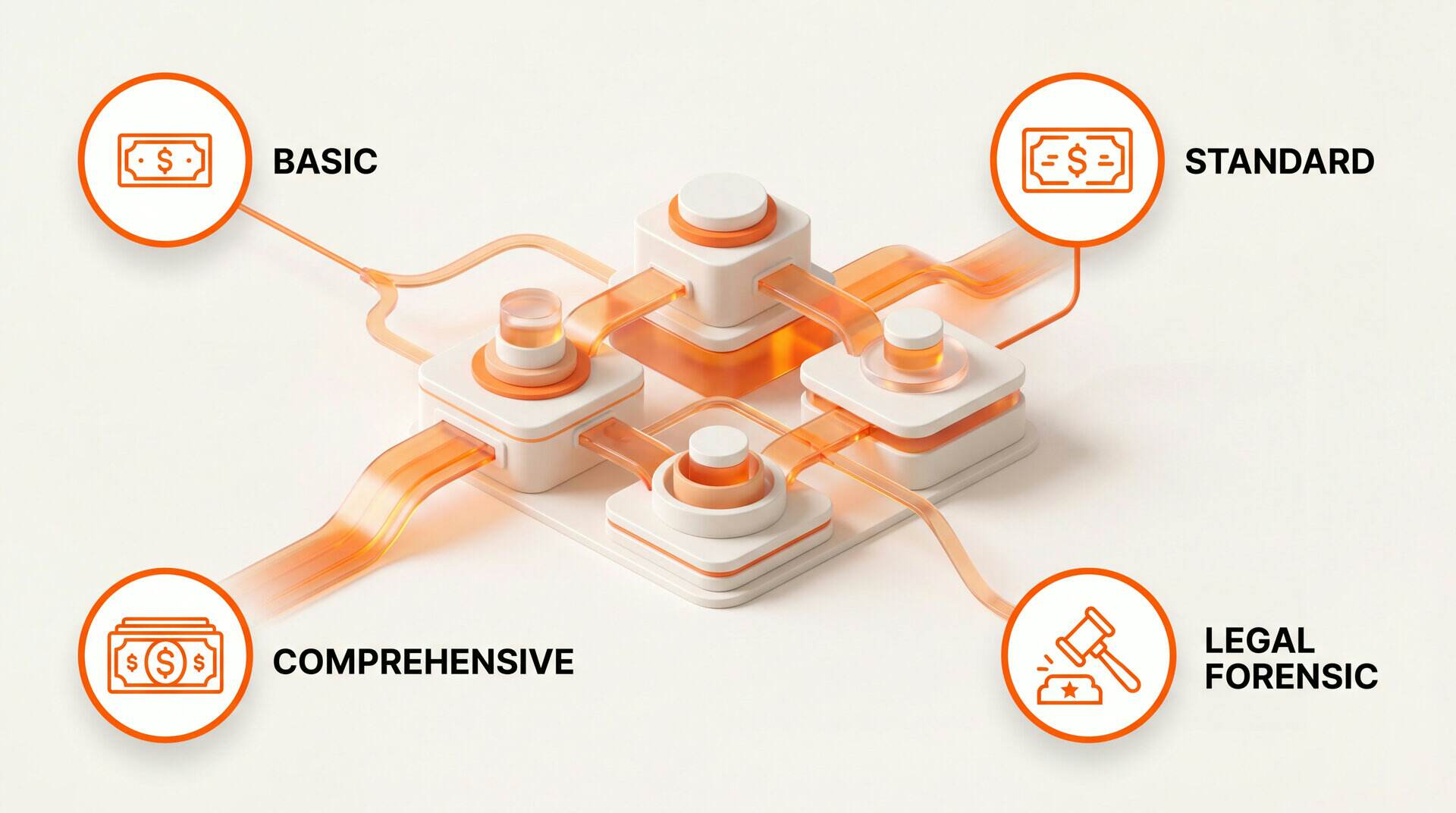
Cost breakdown by service
Basic visual inspection with moisture meter: $200 to $400. This may cover an accessible-area walkthrough, moisture readings, and a written report. Confirm the exact scope and exclusions.
Inspection with air sampling: $300 to $600. Sampling plans, laboratory fees, and turnaround times vary. Ask why each sample is being collected and how it will answer the building question.
ERMI dust testing: About $300 for some kits and laboratory services. ERMI is a research index based on DNA measured in settled dust. It is not a universal pass-or-fail test, health diagnosis, or safety and re-entry threshold. Ask a qualified professional whether settled-dust analysis is appropriate for the specific purpose.
Inspection with multiple sampling methods: $500 to $900 in some markets. More methods do not automatically produce a better answer; the scope should match a defined question.
Large or complex homes: $800 to $1,500 or more. Larger buildings, extensive water damage, difficult access, and additional samples can increase the price. Obtain a current written quote.
ERMI vs air sampling: which test is better?
Air sampling: Collects airborne particles during a defined time and under specific conditions. Results can vary with airflow, activity, weather, sampling location, and the analytical method.
ERMI testing: Measures selected mold DNA in settled dust and calculates a research index. It answers a different question from an air sample. ERMI and HERTSMI-2 scores do not establish a universal health, safety, or re-entry threshold.
Which is better? Neither method is universally best. A qualified professional should start with the building history, moisture investigation, accessible observations, and the decision the sample is meant to inform.
What testing cannot do: No single air, surface, or dust result can prove that a building is safe, find every concealed condition, or determine whether a person's symptoms were caused by mold.
Why your inspector must be independent
An independent assessment can reduce conflicts of interest when one company also sells remediation.
Ask who performs the assessment, who defines the remediation scope, who collects any verification samples, and whether any party is paid based on the amount of work recommended.
Requirements vary by jurisdiction and project. Check applicable licenses and credentials, request a sample report, and get the inspection and remediation scopes in writing before hiring.
Our app: a first-pass visible-surface screen
Not every situation calls for a professional inspection right away. Mold Scanner AI can be an educational first step for visible surfaces.
The app offers 266 guided photo prompts across 19 rooms, with 38 in Quick and 129 in Standard. It returns an AI-assisted visual screening result for one photo at a time, and processing time varies.
The result cannot confirm active mold, identify species, find hidden growth, or assess health, liability, or legal questions. For insurance, real-estate, legal, health, or other high-stakes decisions, retain a credentialed inspector or appropriate laboratory. See our disclaimer.
Frequently asked questions
How much does a professional mold inspection cost?
A professional mold inspection costs $300 to $600 on average for a standard home. This includes a visual inspection, moisture meter readings, and a written report. Air sampling and lab analysis add $100 to $300 more. Larger homes or homes with extensive water damage can cost $800 to $1,000 or more.
What is the difference between ERMI testing and air sampling?
ERMI testing uses a dust sample and air sampling captures airborne particles on a cassette. They answer different questions and results depend on sampling and interpretation. Ask a qualified professional which method is appropriate for the situation.
Should the mold inspector also do the remediation?
An independent assessment can help avoid conflicts of interest. Ask about credentials, scope, sampling, reporting, and whether the company also sells remediation before you hire.
Can I inspect for mold myself before hiring a professional?
You can review safely accessible visible surfaces, but a self-check cannot confirm mold, inspect hidden areas, measure moisture, or determine that a professional inspection is unnecessary. Mold Scanner AI offers 266 guided photo prompts across 19 rooms for AI-assisted visual screening only.
Sources
Every claim on this page traces to one of these. Links open the primary document.