Does sunlight kill mold on surfaces?
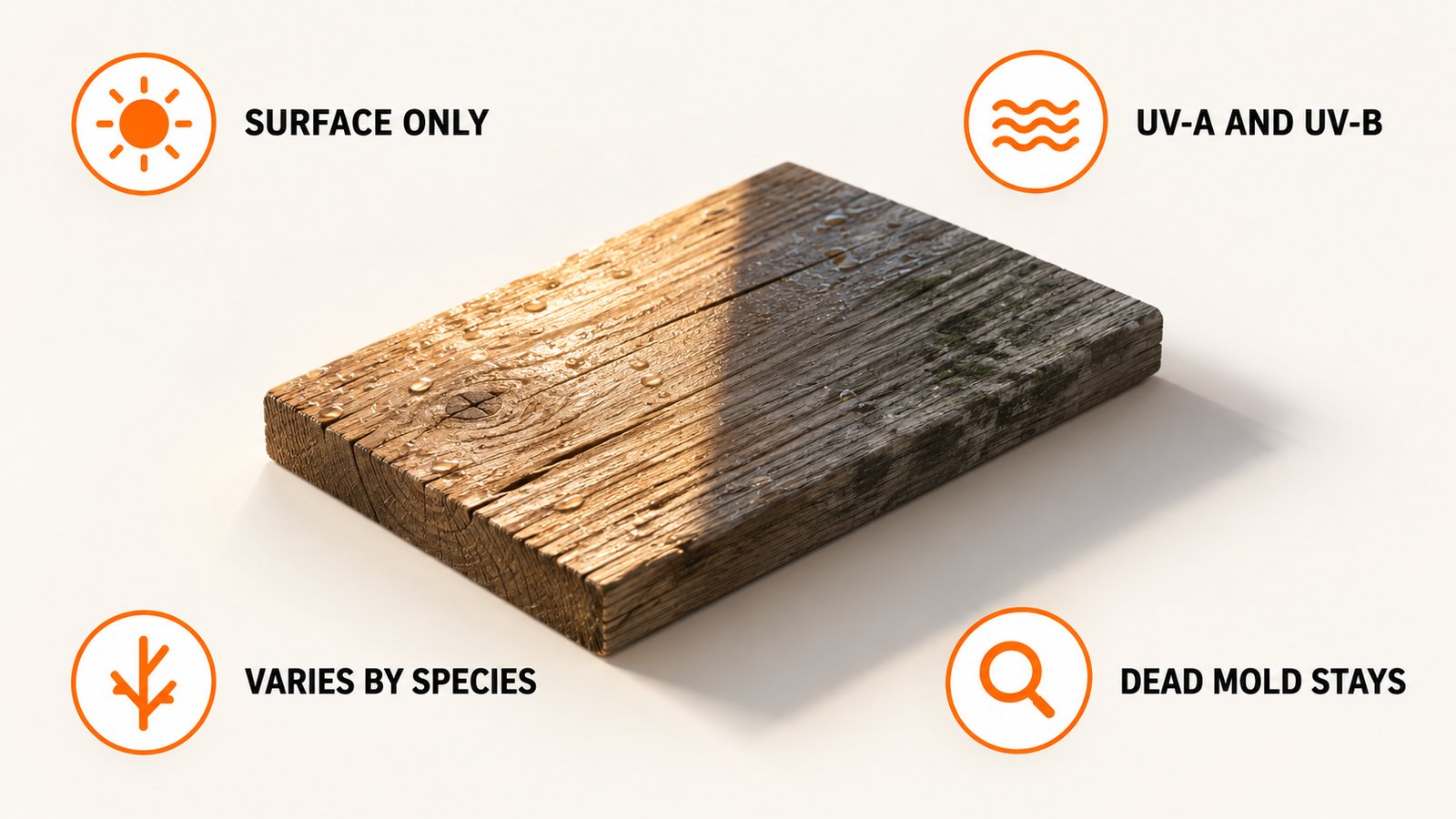
Some mold spores on a surface the sun directly reaches can be killed, but sun is not a reliable cleaner. The best research we found is on fungal spores in general. A review in Current Genetics reports that direct exposure to solar radiation for a few hours can kill the spores of most fungal species, and that both UV-A and UV-B in sunlight do the damage. The same review says the effects are diverse and often depend on the species.
That last part matters. In a 2001 test in Logan, Utah, researchers exposed spores of one fungus to four hours of full sunlight. Culturability dropped by about 30 percent in one strain and by 100 percent in two others. Same fungus, same afternoon, very different results. That fungus is a soil organism used for pest control, not a household mold, so treat the numbers as a picture of how variable sun is, not as a dose for your bathroom.
Why sun is not a cleaning method
- It only reaches what it lights. Light does not bend around corners or soak into drywall, wood, or foam. Mold under the surface, behind a cushion cover, or in a shaded crack gets nothing.
- It does not remove mold. The EPA says dead mold may still cause allergic reactions in some people. A dead colony is still there until you clean it off.
- The dose changes with the weather and the time of day. We did not find a source that gives a reliable exposure time for a home, so we won't make one up.
The real value of sun is the second job it does: it dries things out. Mold needs moisture, and the EPA says none of the many types of mold will grow without water or moisture. We come back to that below.
Does sunlight kill white mold?
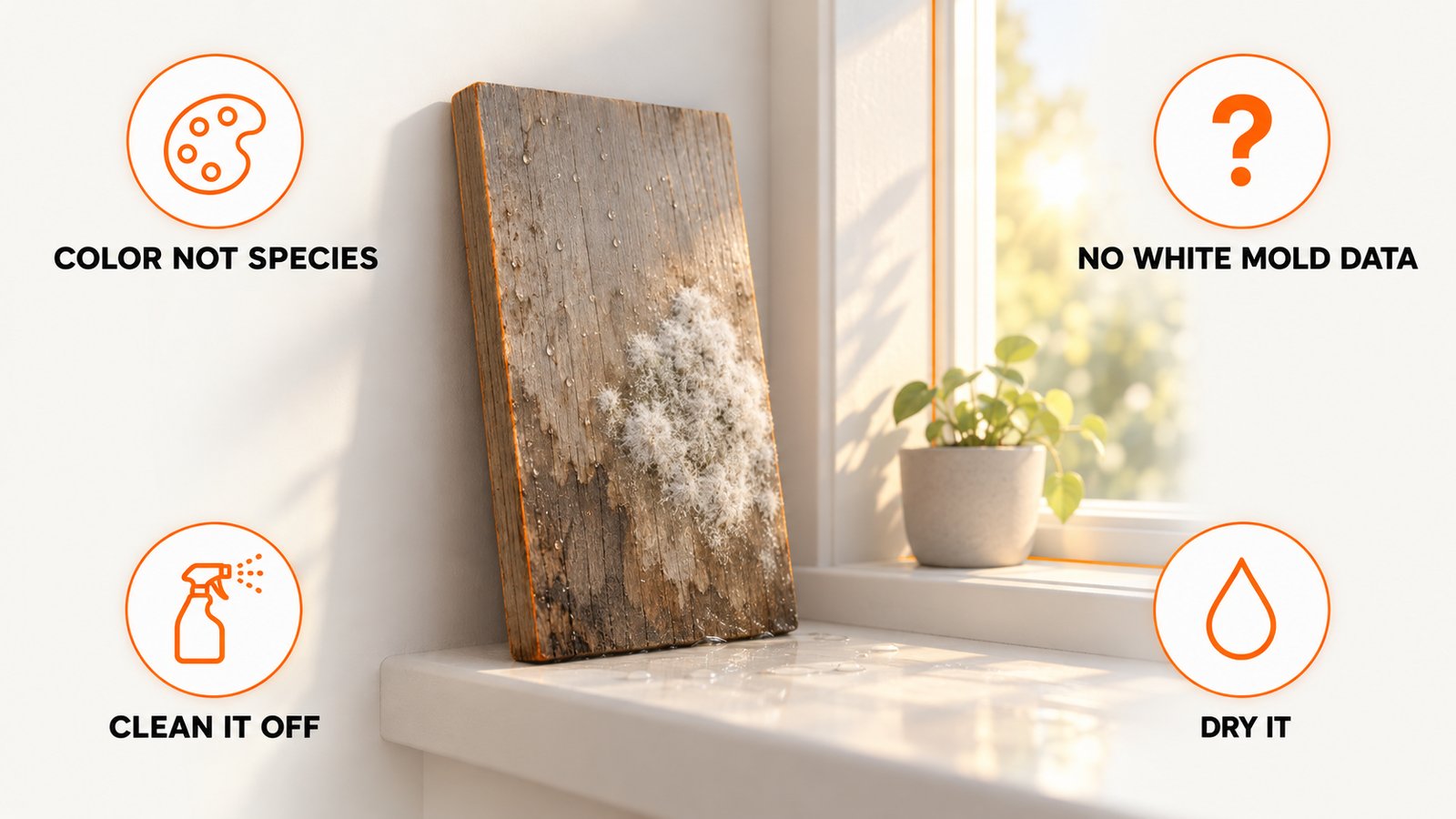
Maybe, on the surface, but we found no research that tests sunlight on white mold as its own group. White is a color, and many different molds and even non-mold deposits look white. Because tolerance to solar UV varies by species and strain, there is no single answer for every white patch.
If you are not sure what you are looking at, read our guides on white mold and mold vs mildew, or use Is this mold? to compare what you see. Then treat it the usual way. Wear protective gear, clean the area, dry it fully, and find the moisture source. Sun can be the drying step, not the cleaning step.
The same goes for black, green, and every other color. Our guide on how to get rid of mold covers cleaning by surface, and mold removal explains when the job is bigger than a spray bottle.
Can you put moldy clothes in the sun?
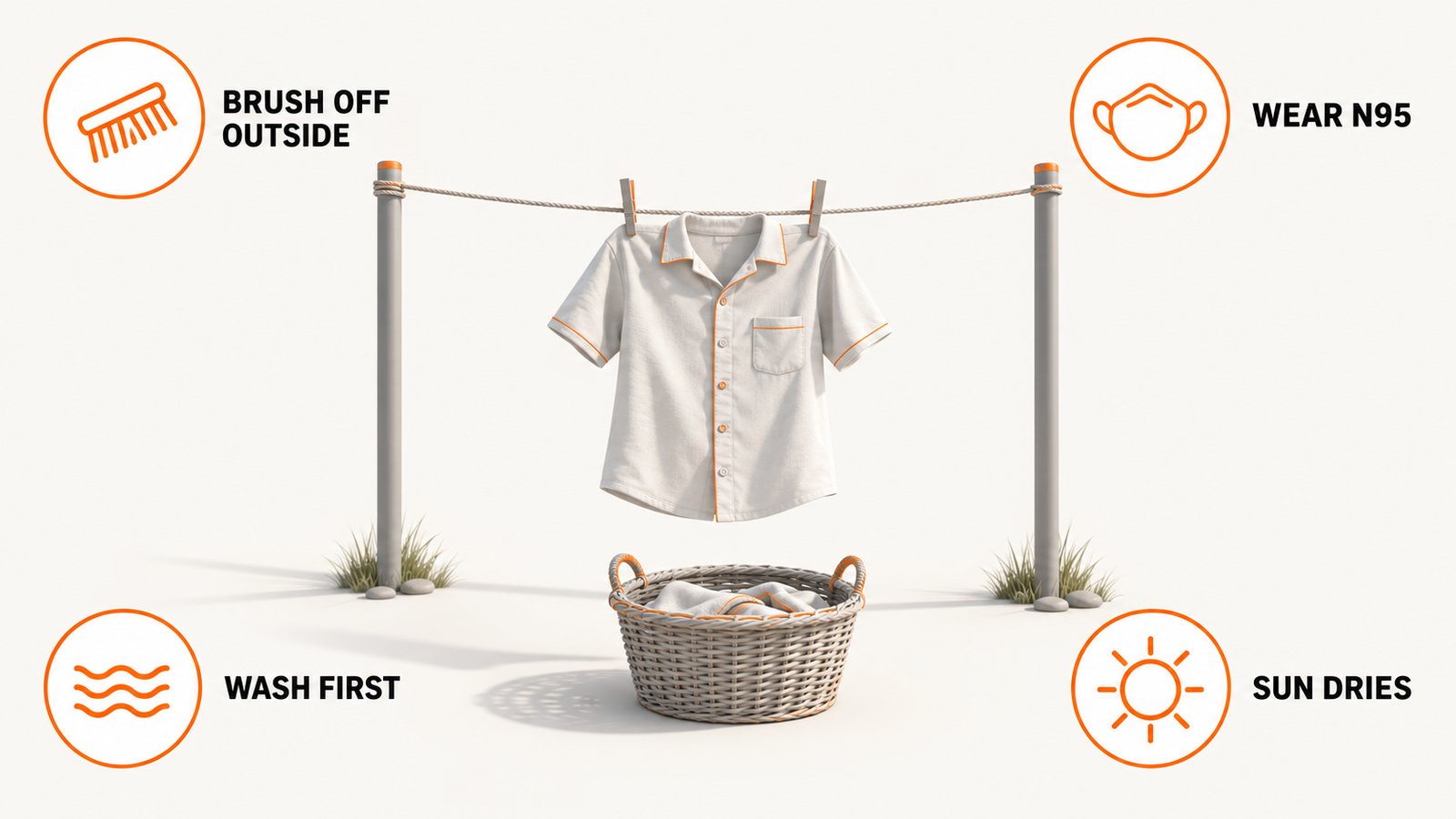
Yes, and it is a good last step. The order matters more than the sun. University of Georgia Extension's stain guide lists drying in direct sunlight as part of treating mildewed fabric, after the stain treatment, not instead of it.
- Take it outside and brush off the loose growth. Do not shake a moldy item inside the house.
- Wear protective gear. The CDC says to wear at least a NIOSH Approved N95 respirator, protective gloves, and goggles that provide complete eye protection. Do not touch mold or moldy items with bare hands.
- Wash it the way the care label allows. Our mold on clothes guide has the wash steps, and getting the musty smell out of clothes covers odors that linger.
- Dry it completely, sun or dryer. The sun helps here, but check the label. Strong sun can fade colors and weaken some fibers.
If the item still has stains or a smell after washing, the cleaning did not finish the job. Another hour on the clothesline will not fix it. Leather and delicate pieces are a different case, so see mold on leather before you put one in the sun.
Does sun kill mold on rugs and cushions?
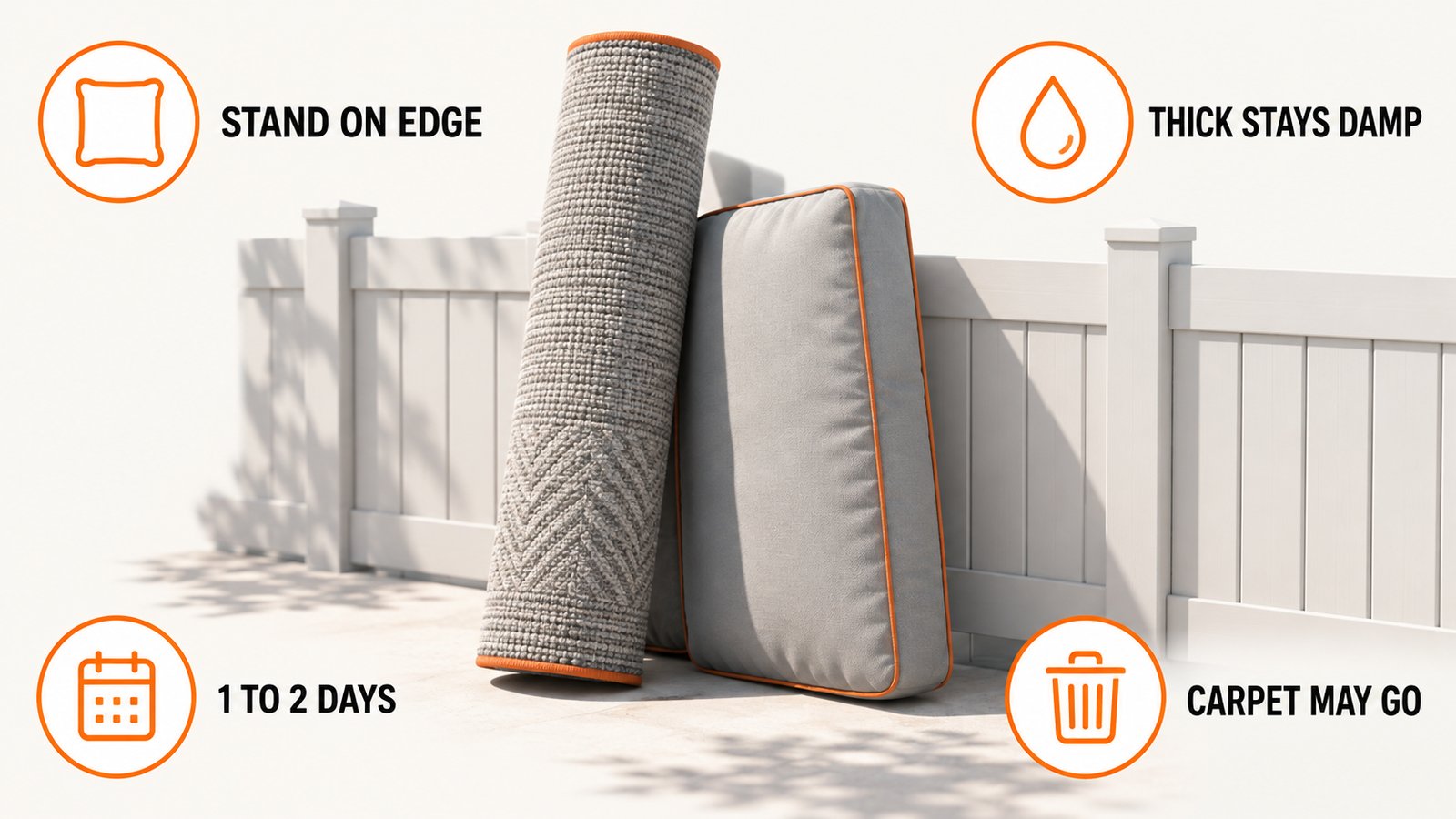
Sun helps rugs and cushions dry, and it may weaken surface mold, but thick material is where it falls short. University of Georgia Extension tells readers to open draperies to let the sun reach a mildewed carpet and to allow one or two days of direct sunlight. That is the extension's guidance for mildew on carpet, not a measured kill time, and it assumes the carpet is dry underneath.
Outdoor cushions and patio furniture
Brush off the growth, wash the cover or surface, rinse, and set it where air moves around all sides. Stand cushions on edge so the underside dries too. Foam holds water, and a cushion that stays damp in the middle will grow mold again no matter how much sun the top gets. If it smells musty after it dries, the fill is probably affected and replacing the cushion is cheaper than more cleaning.
Rugs, carpet, and mattresses
Rugs and carpet are porous. The EPA says absorbent or porous materials, such as ceiling tiles and carpet, may have to be thrown away if they become moldy. Wet carpet that stayed wet for days is usually past saving. Read mold on carpet before you decide, and see mold on a mattress and mold on furniture for the same call on other pieces.
Does sunlight stop mold from growing?
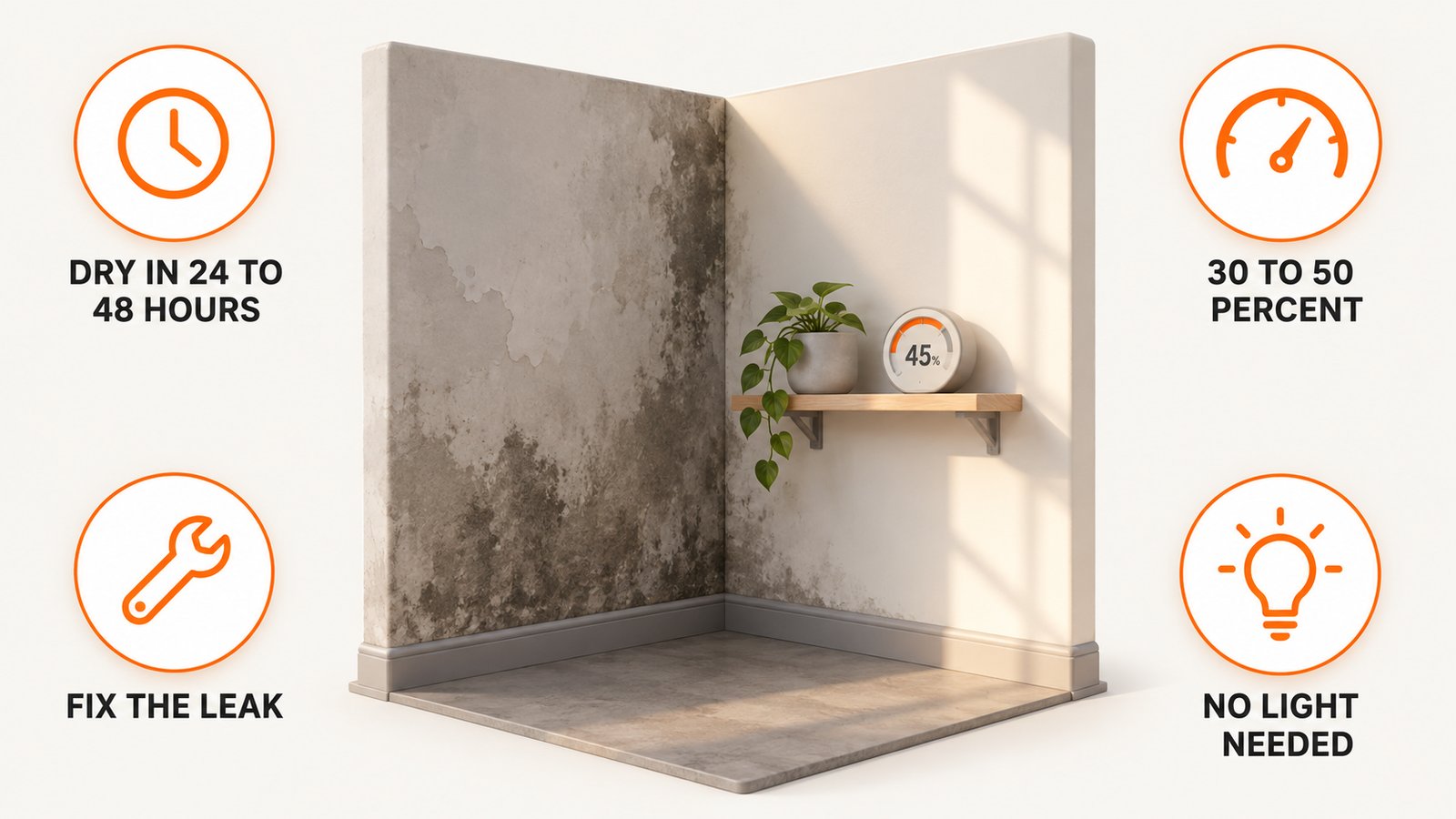
The help is indirect, and it comes from drying. The EPA's Brief Guide to Mold, Moisture and Your Home says the key to mold control is moisture control, and that it is important to dry water-damaged areas and items within 24 to 48 hours to prevent mold growth. Its mold course adds that items dried within that window will not become moldy in most cases.
A few ways to use that:
- Dry wet items fast. Hang wet towels and gear in the sun and moving air. Do not leave them in a pile.
- Let light and air reach damp spots. University of Georgia Extension notes that shade trees planted close to a house, cutting off sunlight and creating constant dampness, are a common cause of mildew and moss growth.
- Watch indoor humidity. The EPA says to keep indoor humidity below 60 percent, ideally between 30 and 50 percent. A dehumidifier does this better than a sunny window.
- Fix the leak. No amount of light dries a wall that keeps getting wet. How to prevent mold covers the full list.
A sunny window does not protect the closet, basement, or crawl space next to it. Mold doesn't need light to grow. The EPA's mold course says it can grow in dark areas and on hidden surfaces. If a room stays damp, the basement and similar spots are where it shows up first.
Sunlight vs UV light for mold
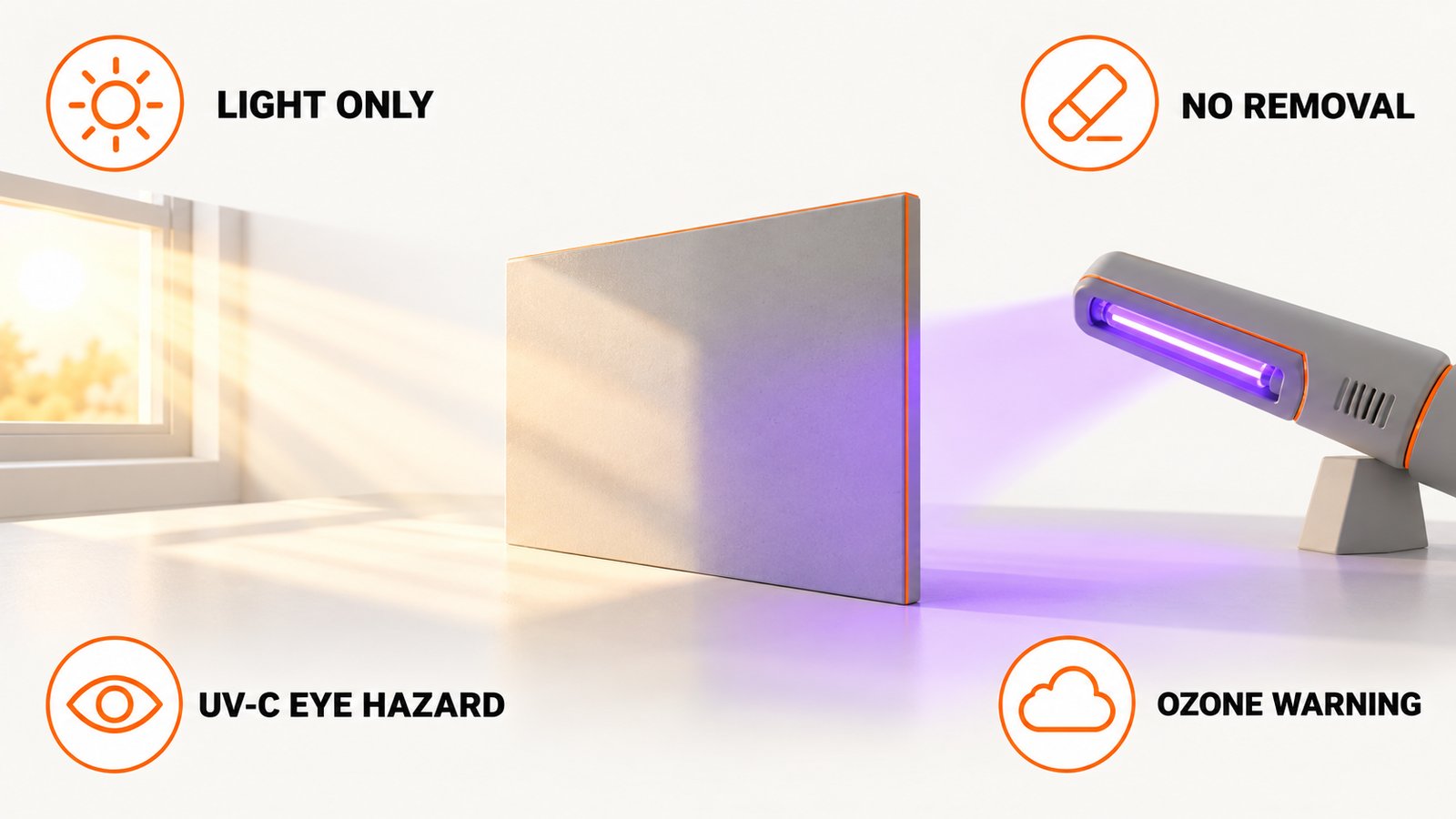
The sun and a UV lamp share one limit: they only work on what they light, and neither one cleans anything. Sunlight is a broad mix of light that includes UV-A and UV-B. Consumer UV lamps are two different products, a black light that makes some things glow and a germicidal UV-C lamp that is a skin and eye hazard if you point it at people. Our page on UV light for mold explains what each one does and does not do, including the ozone warning the EPA gives for some UV devices.
The short version: a lamp is not a better version of the sun. If you want to find or clean mold, the better tools are a flashlight, a moisture meter, and a cleaning plan. See best moisture meter for mold.
When sunlight is not enough
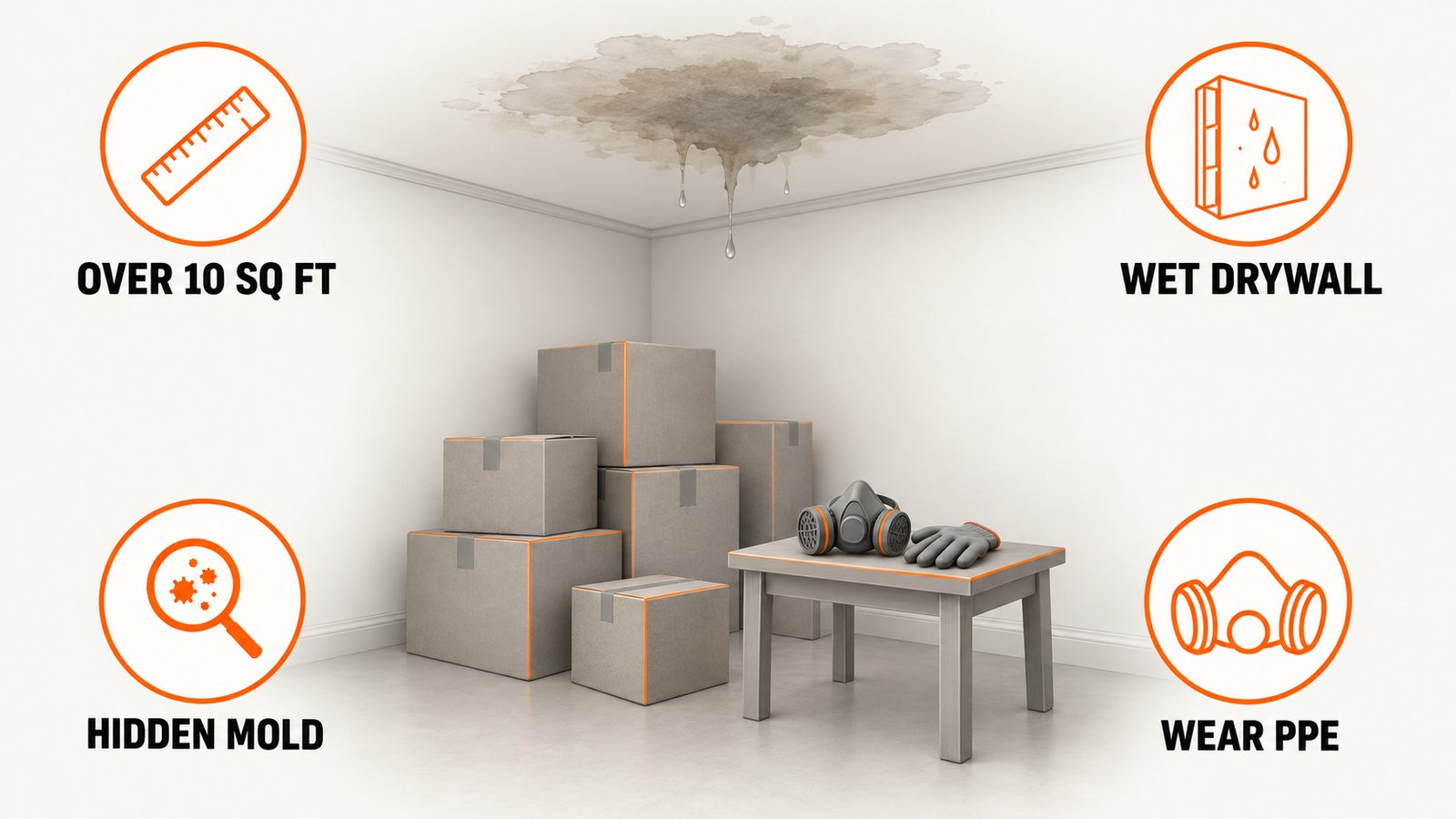
Sun is not enough when the mold is large, hidden, or inside porous material. The EPA says that if the moldy area is less than about 10 square feet, you can in most cases handle the job yourself. Past that size, it points to its guide for schools and commercial buildings, which is a sign to bring in someone with experience. Our mold remediation page explains what professionals do.
Skip the sun and call for help when
- The patch is bigger than about 10 square feet.
- It is on drywall, a ceiling, or insulation that stayed wet.
- You smell mold but cannot see where it is.
- There was flooding or a sewage leak.
For smaller jobs, the cleaning basics are the same as always: protective gear first, then a cleaner that suits the surface. Does vinegar kill mold? and does bleach kill mold? compare the common choices, and bleach vs vinegar for mold puts them side by side. Never mix cleaning products.
Frequently asked questions
Does sunlight kill mold?
Sometimes, on the surface the light actually reaches. Research on fungal spores finds that a few hours of direct sun can kill the spores of many species, but results vary a lot by species, and the studies are not about household mold on a couch or a rug. Sun also leaves the mold in place, so you still have to clean it off.
Does sunlight kill black mold?
There is no research we found that tests sunlight on black mold on a house surface. The general finding is that tolerance to solar UV varies by species and strain. Treat a black patch like any other mold: wear protective gear, clean it off, dry the spot, and fix the moisture source. Do not count on sun to handle it.
How long does it take sunlight to kill mold?
There is no safe number to give. The studies we read measured fungal spores in controlled outdoor tests, and the results ranged from a 30 percent drop in one strain to 100 percent in two others after four hours of full sun. University of Georgia Extension suggests one or two days of direct sunlight for a mildewed carpet, but your light, your fabric, and your mold are different.
Can I put moldy clothes in the sun?
Yes, as a drying step after you brush the mold off outdoors and wash the item. Sun helps the fabric dry fully, and drying matters because mold needs moisture. Check the care label first, since strong sun can fade colors. Sun alone does not remove mold stains or the musty smell.
Does sunlight kill mold on outdoor furniture?
Sun dries outdoor cushions and frames faster, which helps, but it does not wipe off the growth that is already there. Brush it off, wash the surface with soap and water or a cleaner made for the material, rinse, and let it dry in the sun. Shaded, damp corners are where mold usually returns.
Is sunlight the same as a UV light for mold?
No. Sunlight carries UV-A and UV-B and works over hours. A germicidal UV-C lamp is a different product with its own limits, and both only reach surfaces they directly light. Our UV light for mold page covers the lamps in detail.
Does dead mold still matter?
Yes. The EPA says dead mold may still cause allergic reactions in some people. That is why the job is not finished when the mold dies. It has to be cleaned off, and the item has to be dry.
Sources
Every claim on this page traces to one of these. Links open the primary document.