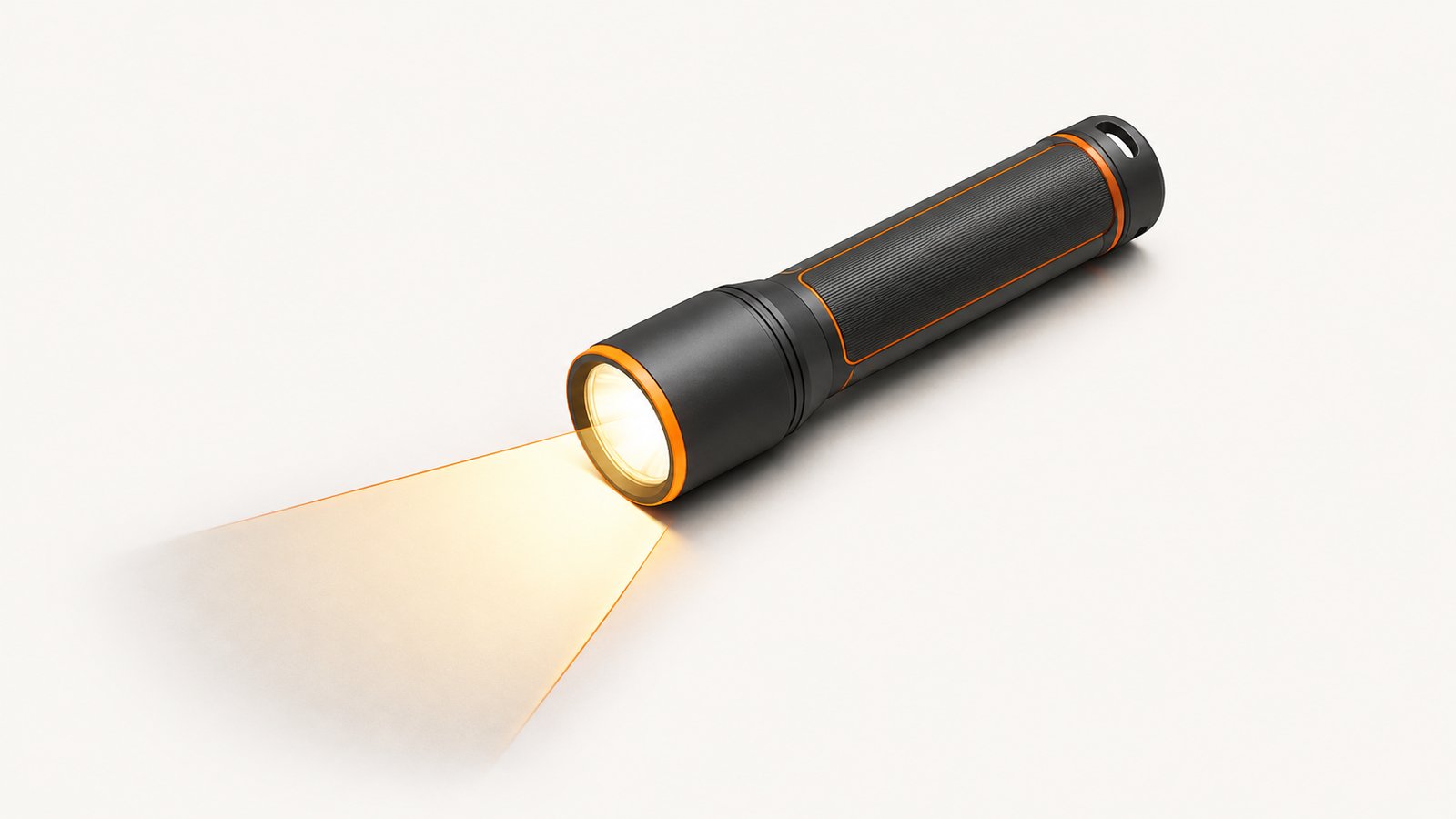
Two Different Products, One Search Term
Search this phrase and you get two categories of product that share nothing but a letter.
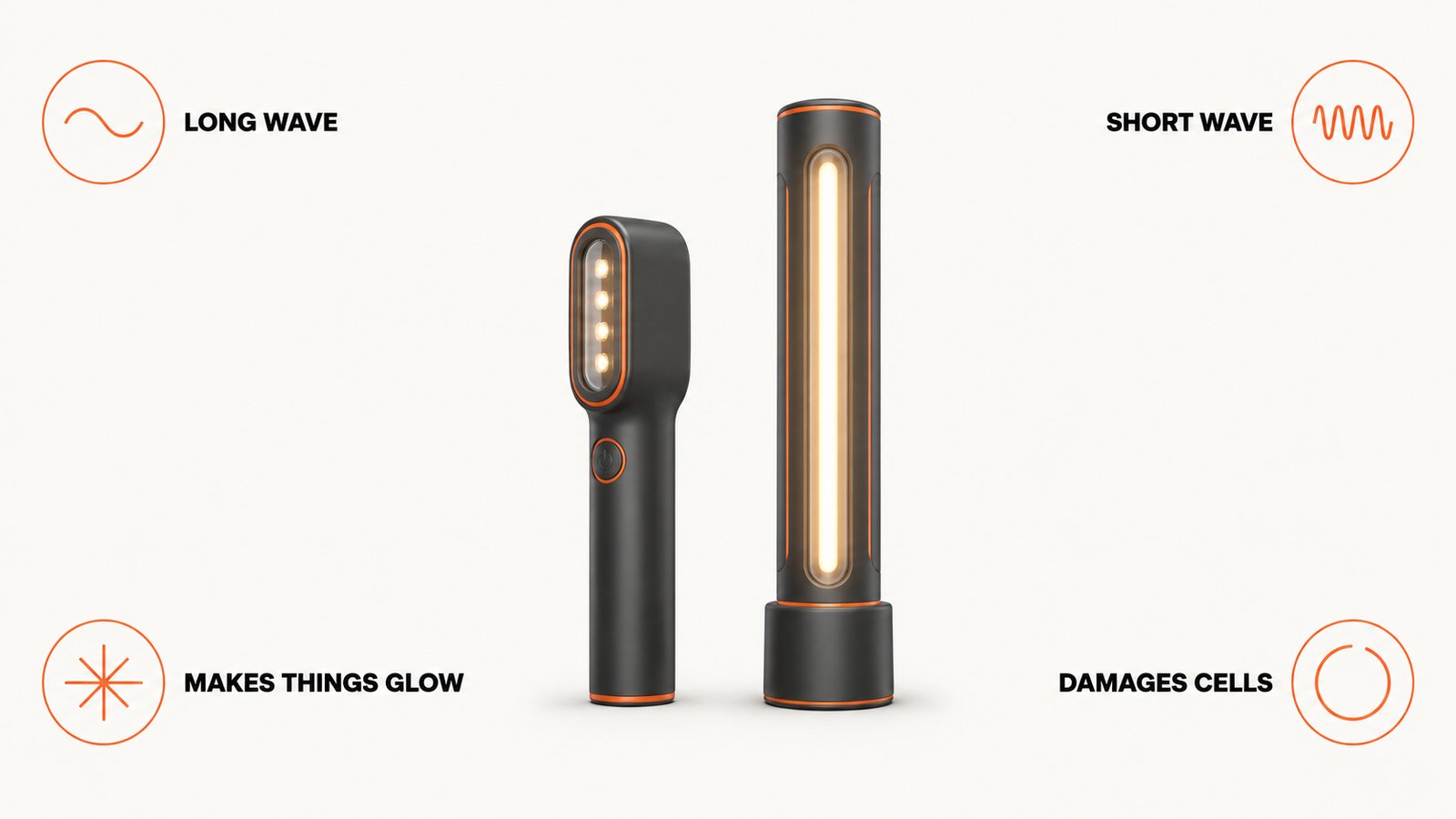
Black lights emit long-wave ultraviolet, the near-visible band around 365 nanometers. They are cheap, handheld, and sold for finding pet stains, scorpions, and counterfeit currency. Nothing in a black light kills anything. It makes certain compounds fluoresce, which is a different job entirely.
Germicidal UV-C lamps emit short-wave ultraviolet, typically around 254 nanometers. This is the band that damages nucleic acids, and it is genuinely used in hospitals, laboratories, and water treatment. It is also what sits inside the in-duct fixtures marketed for heating and cooling systems. UV-C is not something to point at your own skin or eyes.
So one product claims to find mold and the other claims to kill it. Neither claim survives contact with how mold actually lives in a building, and the reason is the same for both: mold grows in the dark, inside things, out of the light path. The EPA states it directly in its own training material. Mold does not need light to grow, and it can grow in dark areas and on hidden surfaces such as the backside of drywall, wallpaper, paneling, and the top side of ceiling tiles.
A tool that only works on what it can illuminate is the wrong tool for an organism that specializes in living where light does not reach. That is the whole argument, and everything below is detail on it.
Does a Black Light Detect Mold?
Some fungal growth does fluoresce under long-wave ultraviolet. That much is real. What does not follow is that a black light is a mold detector, and there are three reasons.
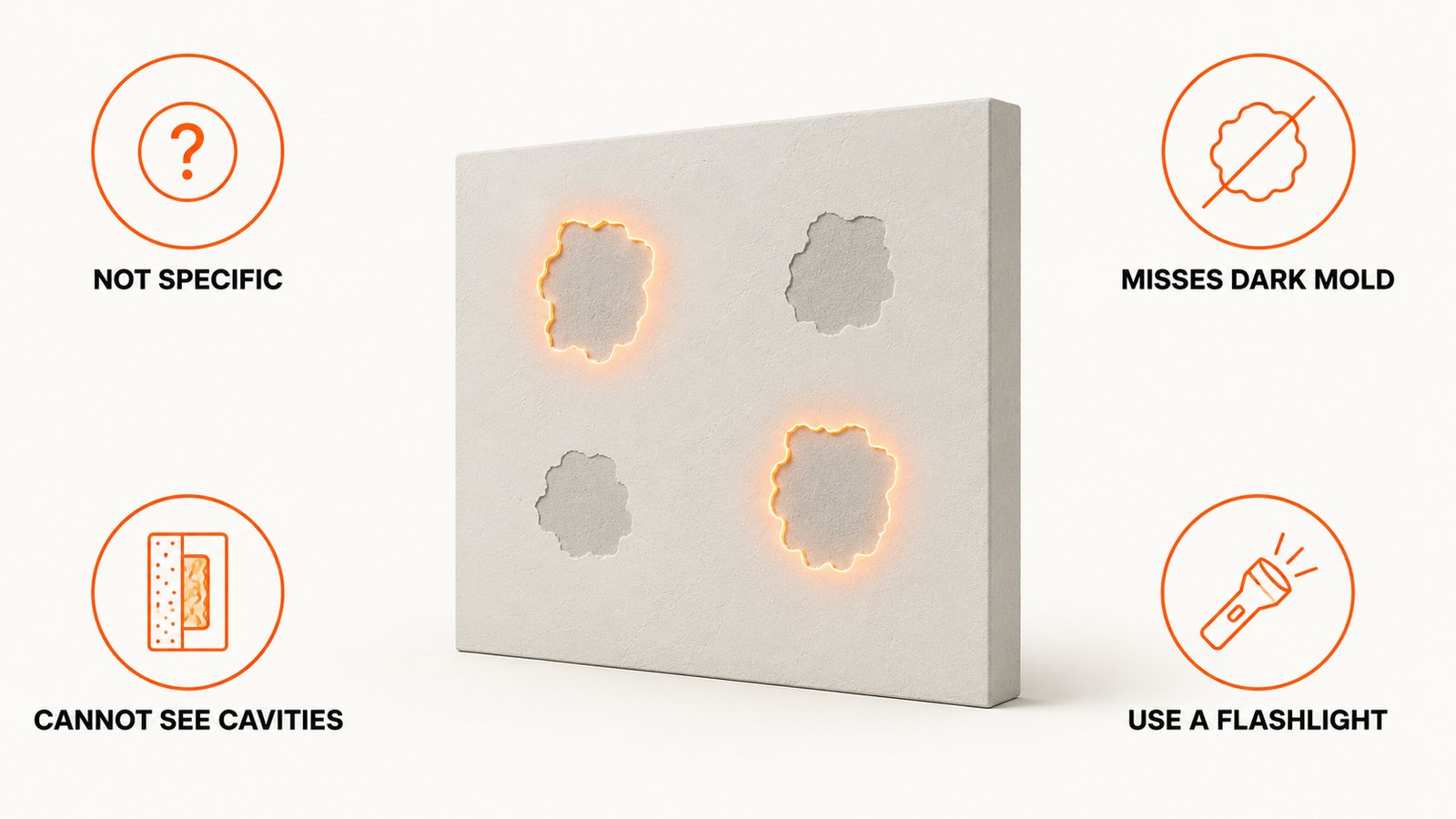
Fluorescence is not specific. Plenty of things in a house glow under a black light: pet urine, laundry detergent residue, certain adhesives, some paints and plastics, mineral deposits, tonic water. A patch that lights up tells you a compound is present, not which compound. You cannot separate a mold colony from a dried spill by the glow alone.
Plenty of mold does not fluoresce. Whether a colony glows depends on the species, the pigments it is producing, its age, and what it is growing on. A dark, mature colony on drywall can read as nothing at all. Absence of a glow proves absence of nothing.
The mold you care about is not in the light path. This is the one that ends the argument. The growth that matters is on the far side of drywall, inside a wall cavity around a leaking pipe, under a carpet pad, above a ceiling tile, or inside a duct. A lamp in your hand illuminates a room surface. It does not illuminate a cavity.
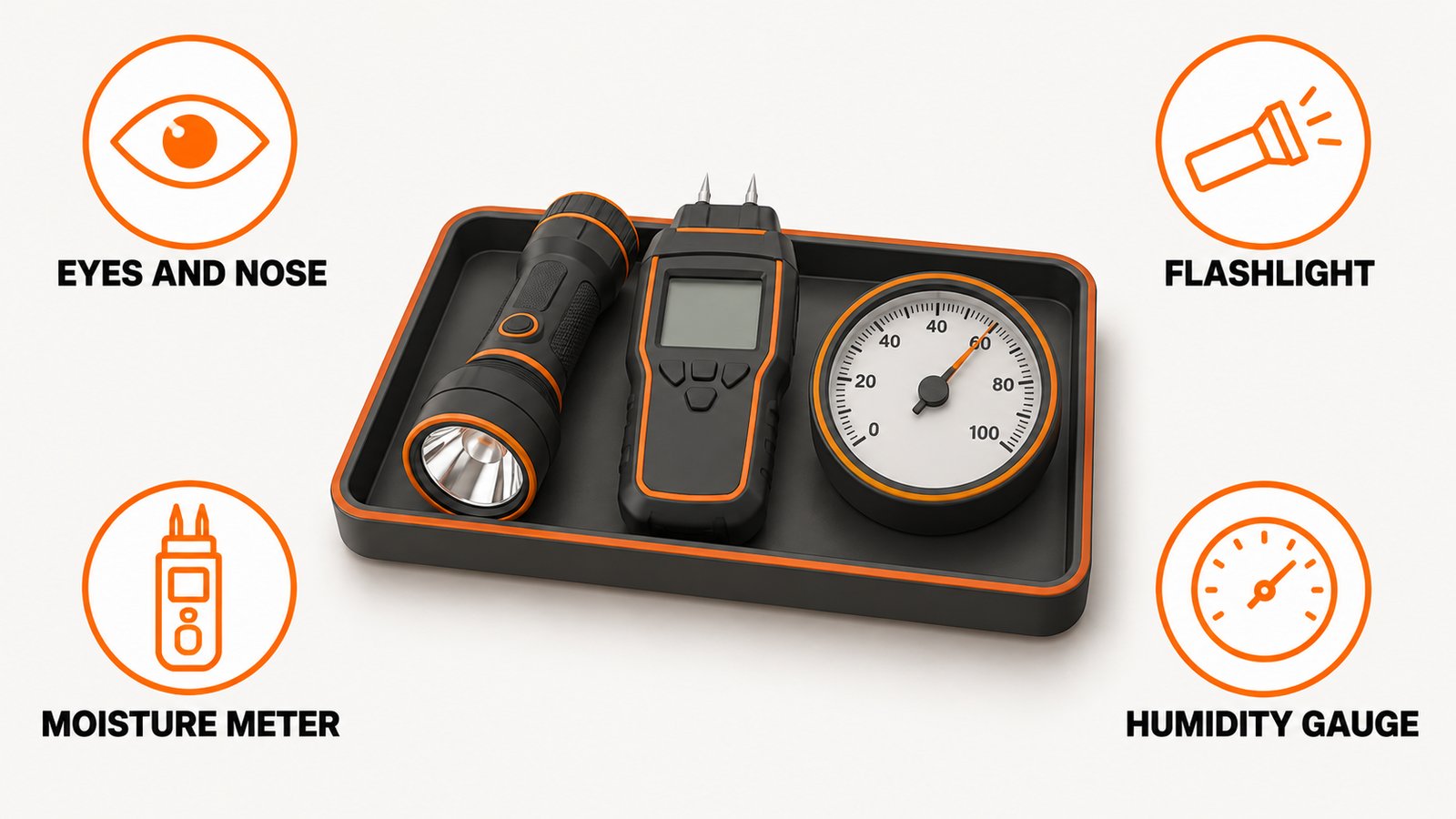
Look at what the EPA actually lists as investigation equipment in its own mold course. In general, the most important equipment is your own eyes and nose, although a good flashlight may help. Then borescopes for looking behind walls through a small drilled hole, humidity gauges for monitoring the building, and moisture meters for finding wet areas where mold may be growing. Ultraviolet lamps appear nowhere on that list. An agency that wrote a full training chapter on finding hidden mold did not name the tool this article exists to evaluate.
The honest use for a black light is narrow: as a supplement to a normal flashlight in a dark crawl space or attic, where it might make a faint patch easier to notice on a light-colored surface. Treat anything it shows you as something to look at more closely, never as an identification. Our mold detector roundup covers what does work.
Does UV-C Light Kill Mold?
UV-C damages the genetic material of microorganisms, and at a high enough dose it does inactivate fungal spores. The physics is not in dispute. The problem is delivering that dose to a real surface in a real house.
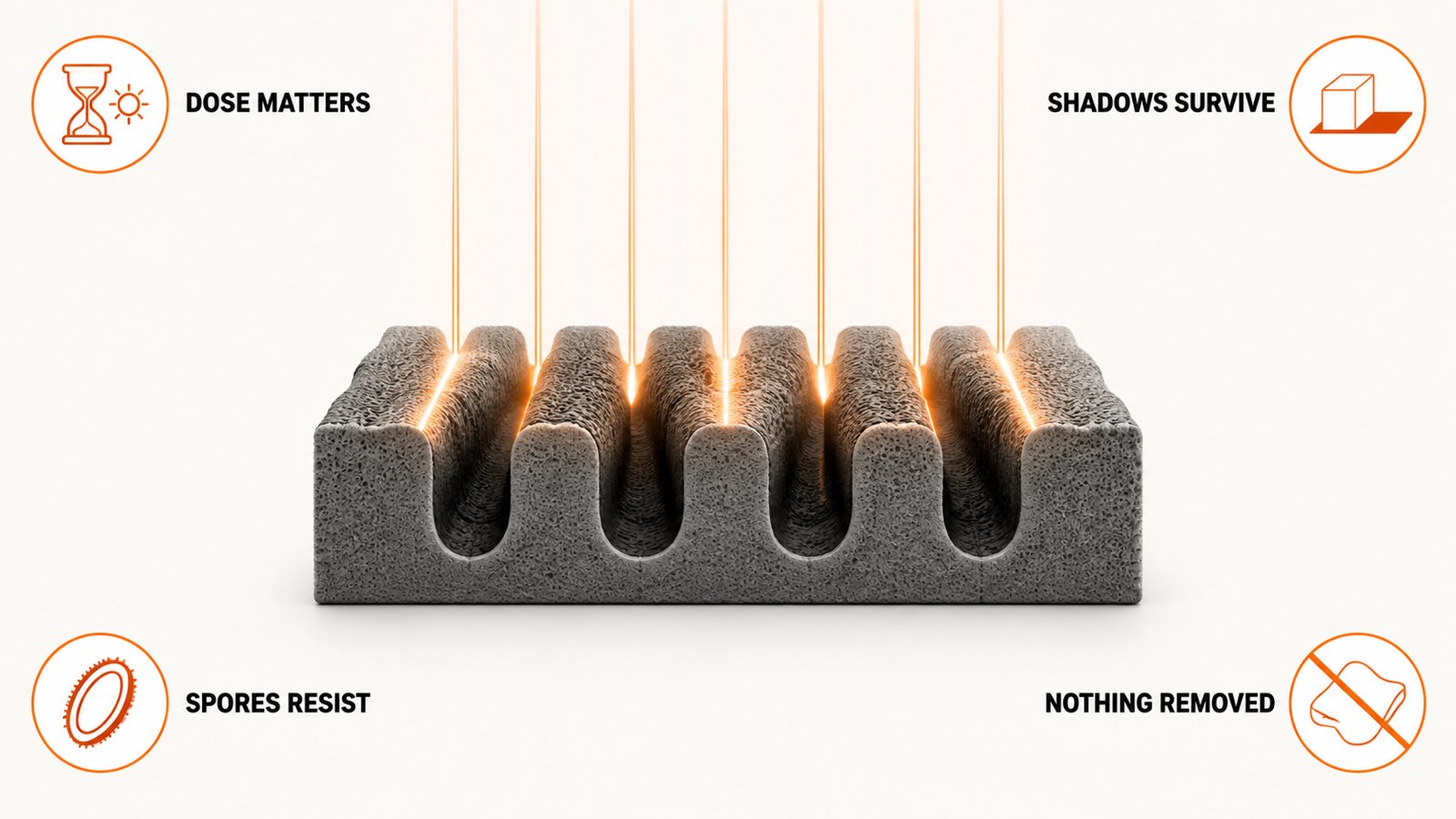
Dose is intensity multiplied by time, and both are usually wrong. A portable wand held near a surface for a few seconds delivers a tiny fraction of what a laboratory protocol uses. Fungal spores are also substantially harder to inactivate than bacteria, because pigmented spore walls absorb and block ultraviolet. Whatever number a consumer device quotes, it was almost certainly measured on an easier organism.
Line of sight is absolute. Ultraviolet travels in straight lines and does not bend around corners. Anything in shadow receives nothing. On a textured surface like grout, unfinished wood, or a popcorn ceiling, every pit is a shadow, and inside porous material the growth is behind a layer of the material itself.
It does not remove anything. Even at a fully effective dose, UV-C leaves the colony physically in place. The EPA is explicit that dead mold may still cause allergic reactions in some people, so it is not enough to kill the mold, it must also be removed. A treatment that changes nothing you can see and nothing you can wipe off is not a cleanup.
It does not touch the water. The EPA's position on air cleaning devices and mold is unusually blunt. Asked whether portable air cleaners and furnace filters can solve mold problems, its answer is no. They do not address the cause of mold and musty odors, because mold is caused by a water or moisture problem in the building, and to solve a mold problem you get rid of the source of the moisture and clean up the mold. It adds that such devices may remove some of the particles generated by mold and may help reduce odors, but will not resolve a mold and moisture problem.
In-duct UV-C has a narrower and more defensible use: keeping a cooling coil and drain pan clear of biofilm, which is a real maintenance benefit in a system that stays damp. That is a different claim from cleaning the air in your house, and it does nothing for growth already inside the ducts downstream. Mold in air ducts covers that system, and air purifiers for mold covers filtration.
The Ozone Problem
There is a specific hazard attached to some UV devices, and the EPA names it directly.
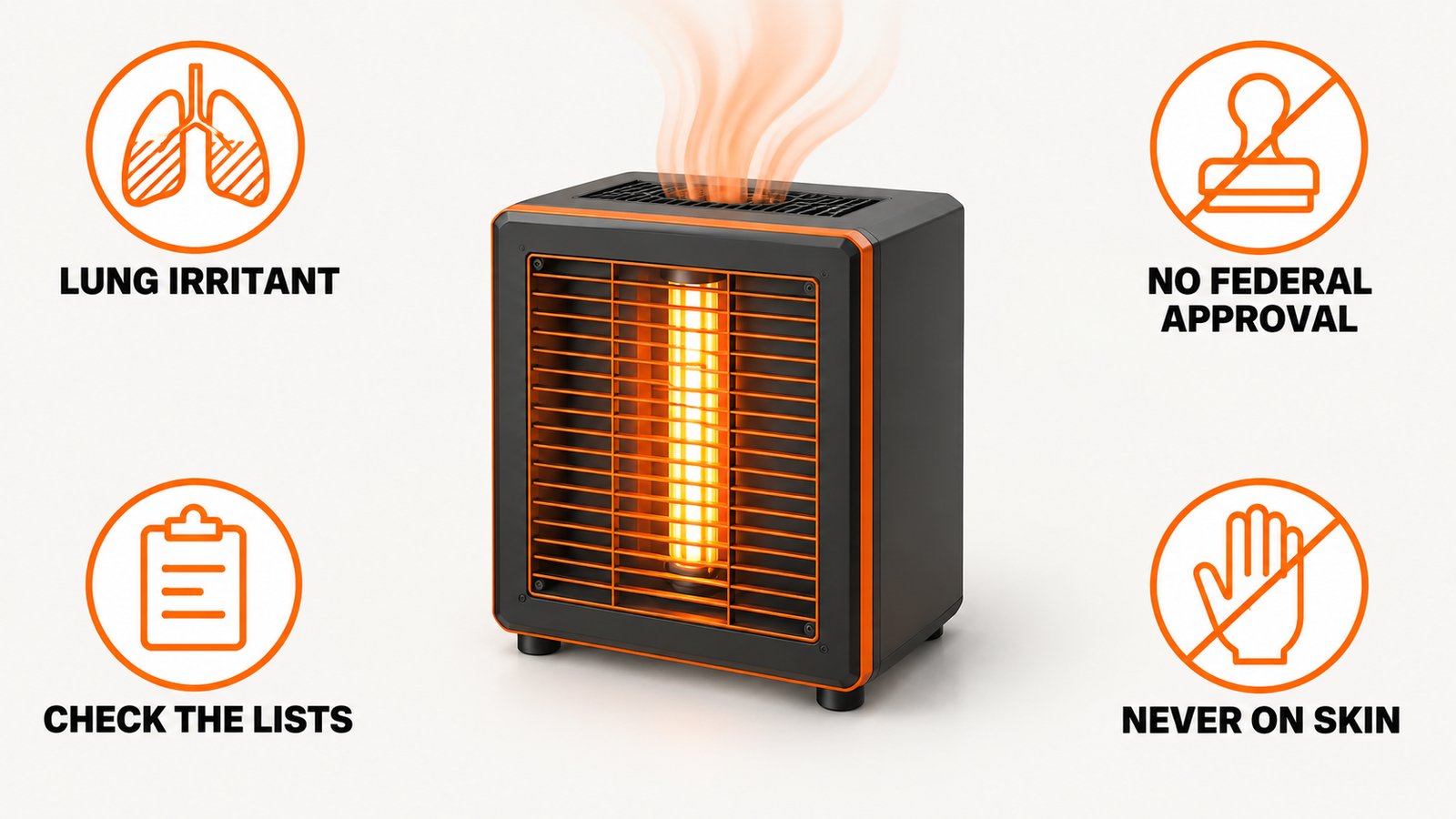
In its guidance on air cleaners, the agency warns readers to avoid portable air cleaners and furnace or HVAC filters that intentionally produce ozone, because ozone is a lung irritant. It then flags the accidental case: air cleaners containing electrostatic precipitators, ionizers, ultraviolet lights without adequate lamp coatings, and plasma air cleaners may have the potential to emit ozone. The phrase without adequate lamp coatings is doing real work there, and no consumer product tells you which side of it your lamp is on.
On devices sold specifically for producing ozone, the EPA's language is stronger. Some vendors suggest these devices have been approved by the federal government for use in occupied spaces. To the contrary, no agency of the federal government has approved these devices for use in occupied spaces. It also notes that vendors use misleading terms such as energized oxygen or pure air, and that ozone is a toxic gas with vastly different chemical and toxicological properties from oxygen.
Two practical steps if you are buying anything with a UV lamp in it:
- Check the ozone lists. The EPA points to the California Air Resources Board and the Association of Home Appliance Manufacturers, both of which maintain lists of air cleaners tested and shown to emit little or no ozone.
- Never expose skin or eyes to UV-C. Germicidal lamps are shielded or interlocked for a reason. A handheld wand that runs while pointed at a person is a burn risk to skin and cornea.
If a product's pitch leans on generating ozone as a feature, that is a reason to stop reading, not a selling point. Ozone generators for mold covers that category on its own.
What Actually Finds and Removes Mold
Here is the sequence the EPA's own material supports, and none of it needs a lamp.
- Look and smell. Most mold is found by simply looking, and the agency names your eyes and nose as the most important equipment, with a good flashlight as the helper. Look in wet or damp places and in places that smell moldy or musty, and remember mold comes in many colors, not just black.
- Confirm what you are looking at. A dark patch is often efflorescence, soap scum, or old staining. Photographing the surface for a visual screen is free and takes seconds, and it is the step that stops people buying products for a problem they do not have.
- Meter the moisture. Moisture meters find wet areas where mold may be growing, work on carpet, wallboard, wood, brick, and concrete, and also let you monitor whether drying is working. Take a dry baseline elsewhere in the house, then compare. Our moisture meter guide covers pin against pinless.
- Watch the humidity. Humidity gauges are on the EPA's equipment list too, and the agency advises keeping indoor humidity below 60 percent, ideally between 30 and 50 percent.
- Open it up carefully, or hire someone. Borescopes let an investigator inspect inside a wall through a small drilled hole. The EPA cautions that investigating hidden mold requires care, because disturbing moldy areas may spread mold through the building, and notes that opening and closing air handlers can send high levels of dust and mold into the air.
- Clean and dry, then replace what is porous. Scrub mold off hard surfaces with detergent and water and dry completely. Absorbent or porous materials may have to be thrown away, because mold fills the crevices and can be impossible to remove completely.
Hand it to a professional once the affected area passes about 10 square feet, roughly a 3 foot by 3 foot patch, or after extensive water damage, or when sewage or floodwater is involved, or when the growth is inside the heating and cooling system, or when it keeps coming back in the same place. If anyone in the home is immune-compromised or has chronic lung disease, the CDC notes people in those groups may get infections in their lungs from mold, which makes it a physician's question and a professional's job. This page covers detection tools, cleaning, and protective equipment only, and gives no medical advice. How to get rid of mold covers the removal sequence.
Frequently asked questions
Can a UV light or black light detect mold?
Not reliably. Some fungal growth fluoresces under long-wave ultraviolet, but so do pet urine, detergent residue, some adhesives, paints, and mineral deposits, and plenty of mold does not fluoresce at all. A glow tells you a compound is present, not which one. The EPA's own list of mold investigation equipment is eyes, nose, a good flashlight, borescopes, humidity gauges, and moisture meters. Ultraviolet lamps are not on it.
Does UV-C light kill mold?
At a high enough dose, on a surface it directly illuminates, yes. In a house, both conditions usually fail. Ultraviolet travels in straight lines, so anything in shadow or inside porous material receives nothing, and consumer wands deliver a small fraction of a laboratory dose. It also leaves the colony physically in place, and the EPA states dead mold may still cause allergic reactions, so it must be removed rather than only killed.
Is a UV light in my HVAC system worth it?
For keeping a cooling coil and drain pan clear of biofilm in a system that stays damp, it has a real and narrow maintenance case. For cleaning the air in your house, the EPA's answer on air cleaning devices and mold is no: they do not address the cause, because mold is caused by a water or moisture problem, and solving it means removing the moisture source and cleaning up the mold.
Can UV lights produce ozone?
Some can. The EPA warns that air cleaners containing electrostatic precipitators, ionizers, ultraviolet lights without adequate lamp coatings, and plasma air cleaners may have the potential to emit ozone, and that ozone is a lung irritant. It points to lists maintained by the California Air Resources Board and the Association of Home Appliance Manufacturers of cleaners tested and shown to emit little or no ozone.
Are ozone generators approved for killing mold in an occupied room?
No. The EPA states that although some vendors suggest these devices have been approved by the federal government for use in occupied spaces, to the contrary no agency of the federal government has approved them for that use. It also notes vendors use misleading terms such as energized oxygen, and that ozone is a toxic gas with vastly different properties from oxygen.
Why does mold hide where a light cannot reach it?
Because it does not need light. The EPA states that mold does not need light to grow and can grow in dark areas and on hidden surfaces, listing the backside of drywall, wallpaper, paneling, the top side of ceiling tiles, wall cavities around pipes, acoustic liners in ventilation ducts, and roof materials above ceiling tiles. Every one of those is outside the reach of a lamp.
What should I use instead of a UV light to find mold?
Your eyes and nose first, with a good flashlight, which is what the EPA names as the most important equipment. Then a moisture meter to find the wet material behind the growth, and a humidity gauge to monitor the room. A borescope, or a professional, for anything that means opening a wall, because disturbing moldy areas can spread mold through a building.
Sources
Every claim on this page traces to one of these. Links open the primary document.