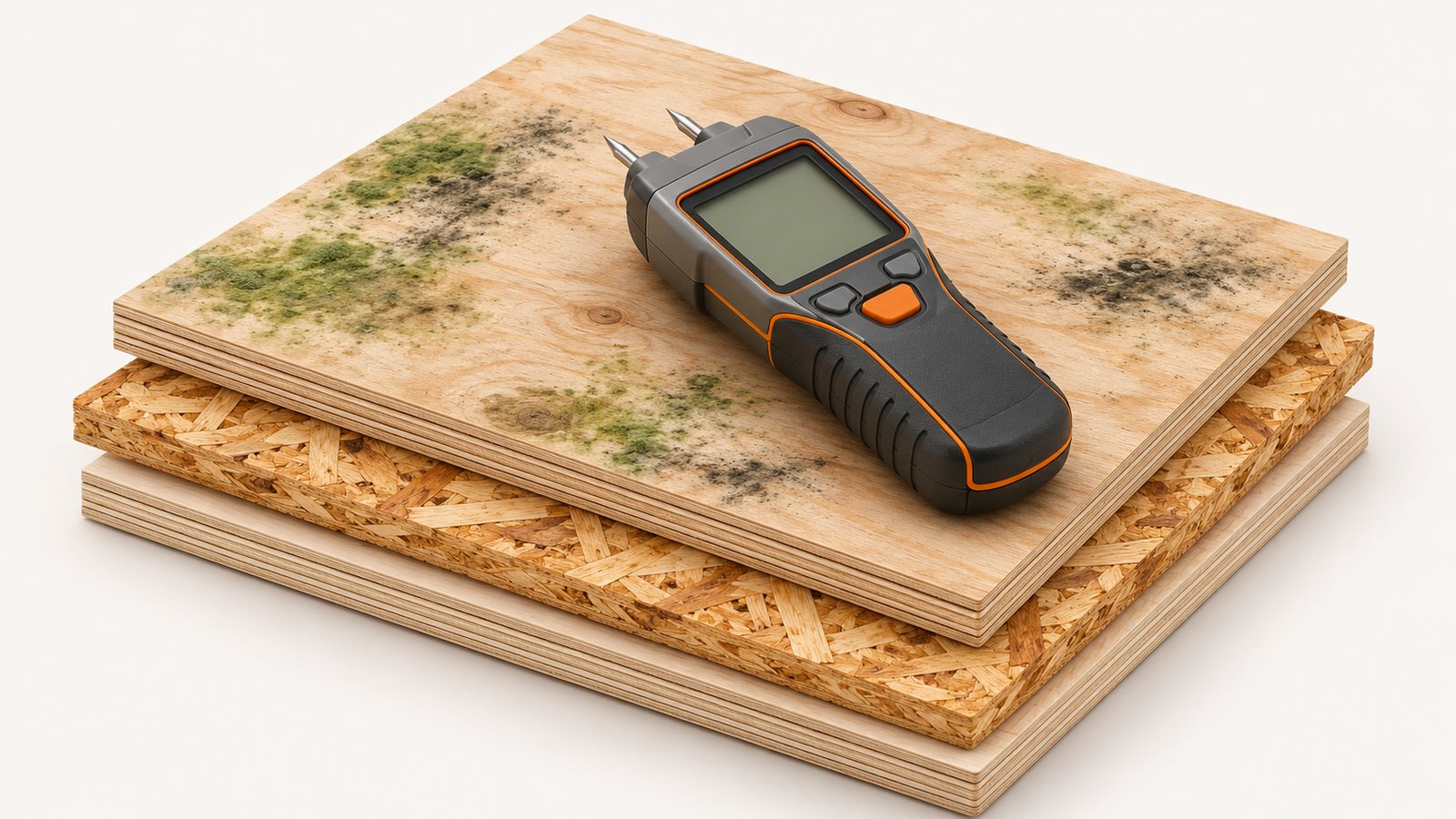
What Does Black Mold Look Like on Plywood?
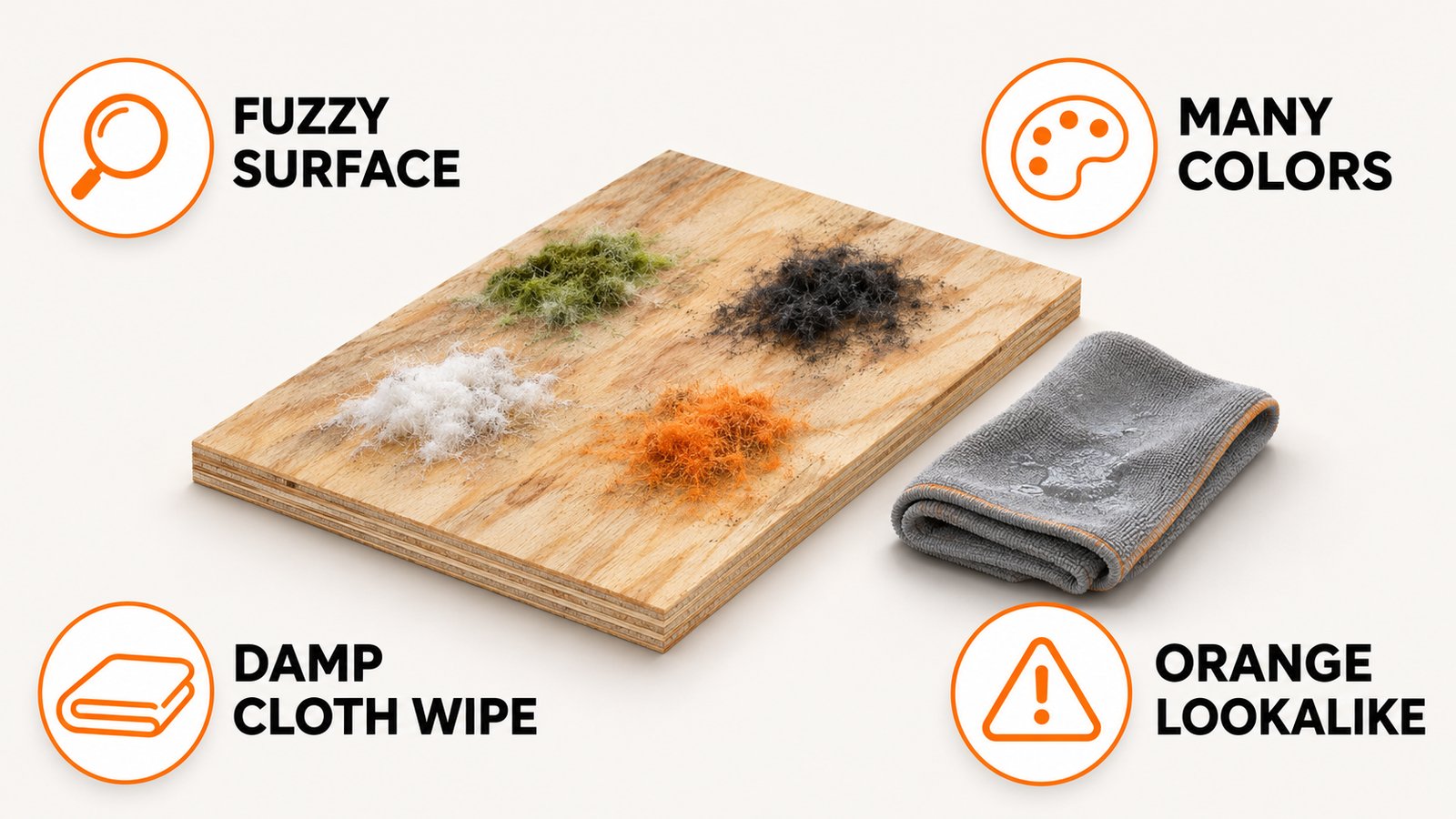
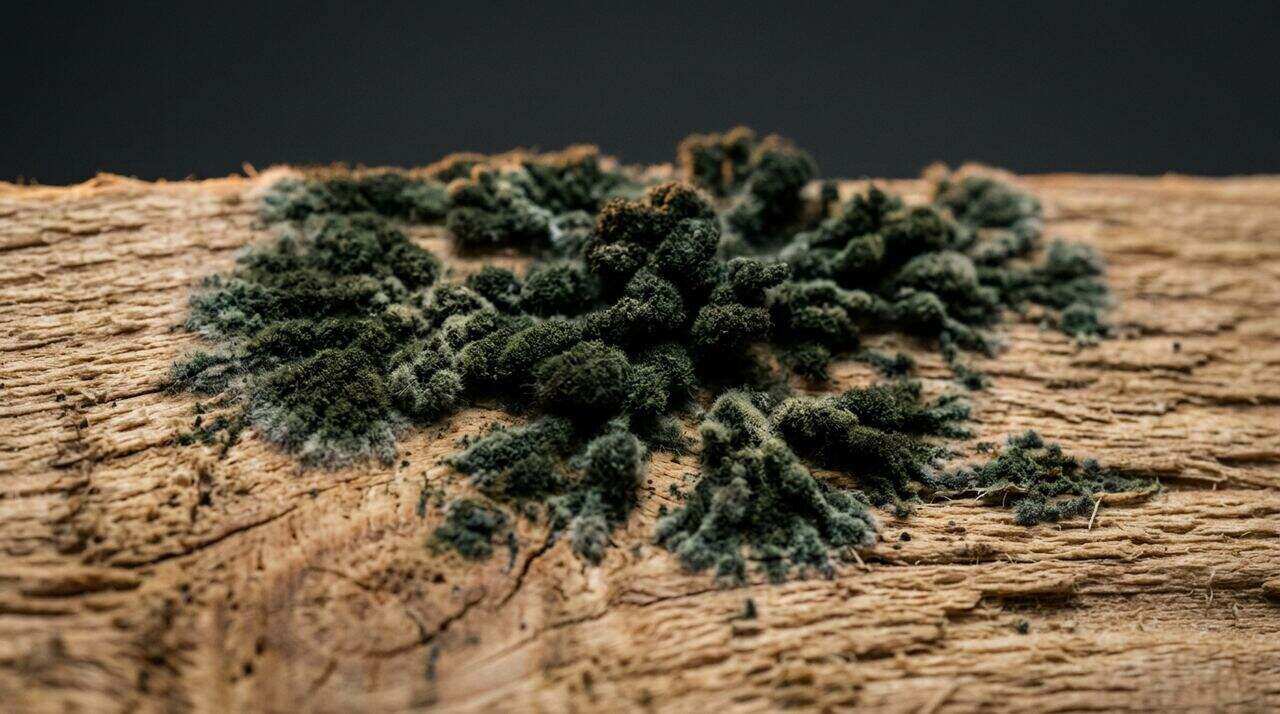
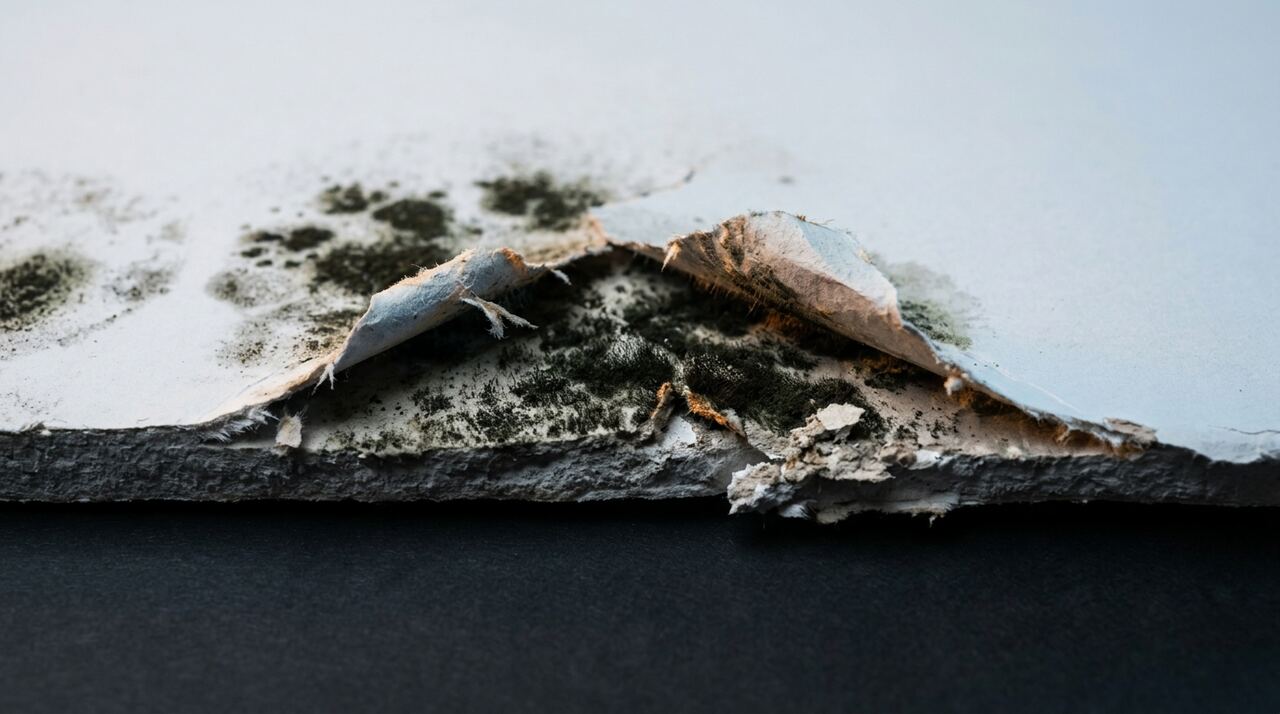
The USDA Forest Products Laboratory says mold on wood shows up as fuzzy or powdery surface growth, with colors from light shades to black, and that green and yellowish hues are common among the brighter ones. CDC says mold can look like spots of many different colors and can smell musty. So green, black, white and orange growth on plywood or OSB all mean the same thing for now: possible mold, and a panel that has been damp.
"Black mold" is not one species. Color and smell cannot tell you which mold it is or how risky it is, and CDC says you do not need to know the type. See green mold, black mold versus regular mold and white mold.
Orange needs a second look. The lab says surface growth from wood-decay fungi is usually white or brown but can be strikingly yellow or orange. Decay is not mold, so test the panel for softness (see below). Our orange mold page has more.
A wipe check. In gloves and an N95, wipe a small spot with a damp cloth. Color that smears onto the cloth sits on the surface. Color that stays may have soaked in. Neither result proves a spot is or is not mold, and a thin, flat spot can still be growth. The photo scan helps tell whether a spot looks like mold and what to do next. It does not identify species or toxicity. See how to tell if it is mold from a photo.
Why Mold Grows on Plywood and OSB
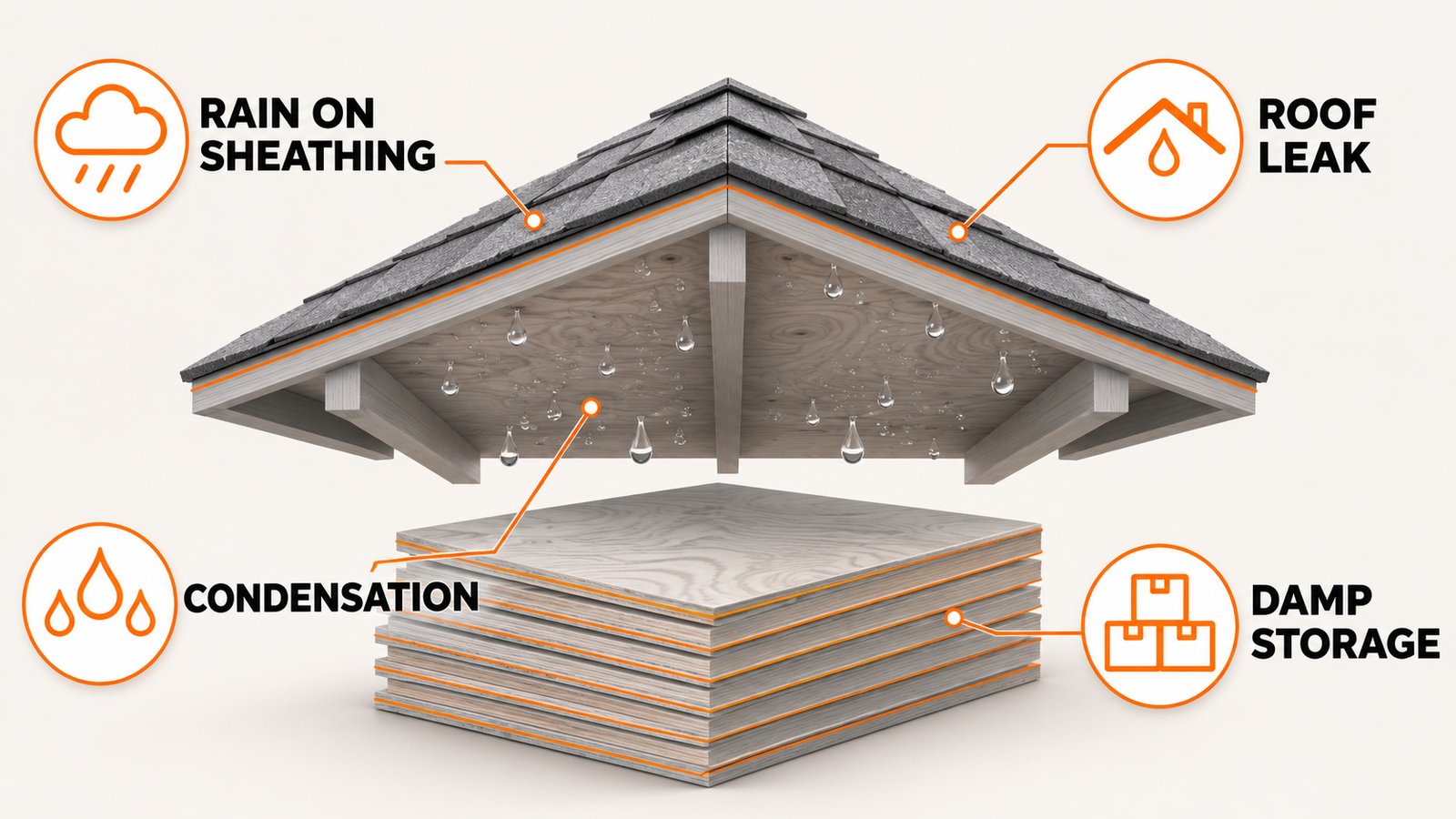
EPA says the key to mold control is moisture control, and that no mold grows without water or moisture. Mold starts when spores land on a wet surface.
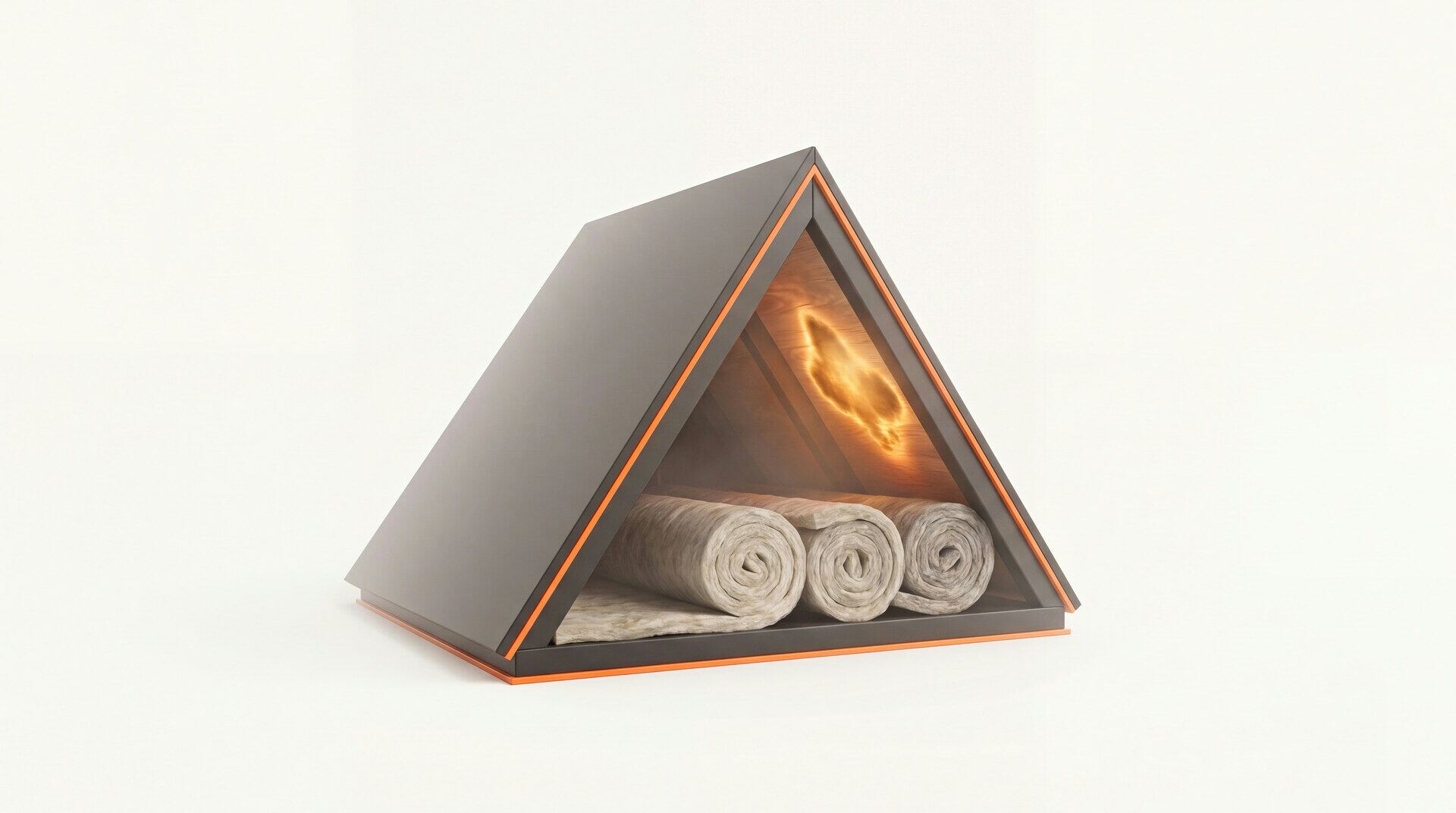
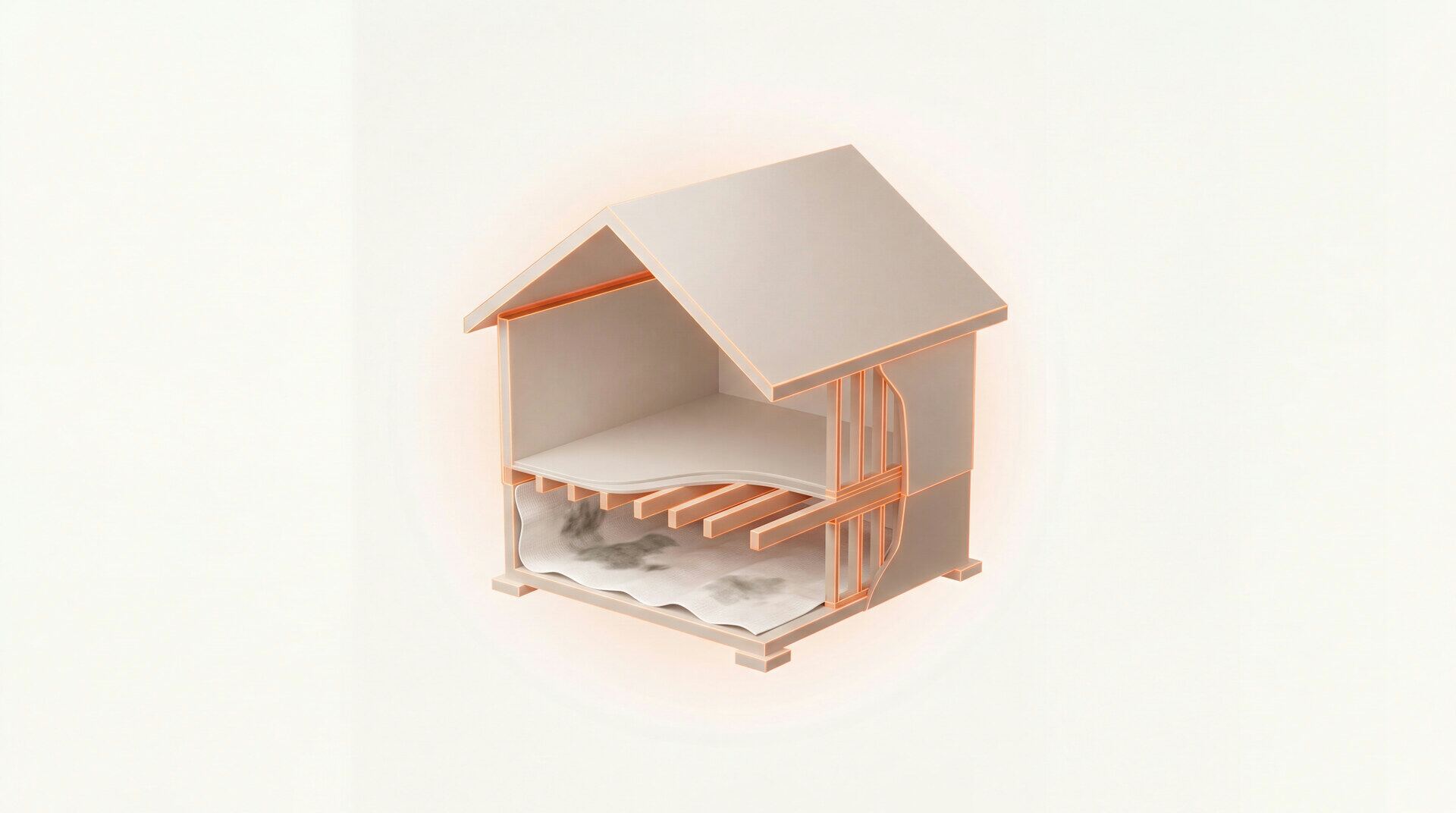
Panels get wet in predictable ways: rain on sheathing or subfloor before the building is closed in, a roof or plumbing leak, and warm indoor air condensing on cold sheathing. A Building Science Corporation report on unvented roofs names mold or decay of roof sheathing in cold weather as the failure to watch.
The lab explains why a new house can have this. Most construction plywood sold in North America is Exposure 1, made for uses not permanently exposed to weather. It may be rain-wetted during construction but is expected to be protected once the building is enclosed. APA, The Engineered Wood Association, says its panels tolerate limited moisture during construction delays and recommends covering sheathing as soon as possible.
The lab says freshly cut or unseasoned lumber piled during warm, humid weather may be noticeably discolored within 5 or 6 days. Our reading is that stacked sheets left damp deserve the same caution.
You do not need a leak. The lab says water vapor in humid air will not wet wood enough for significant decay, but it will permit some mold fungi to develop. See mold in the attic and mold in a crawl space.
What Kills Mold on Plywood?
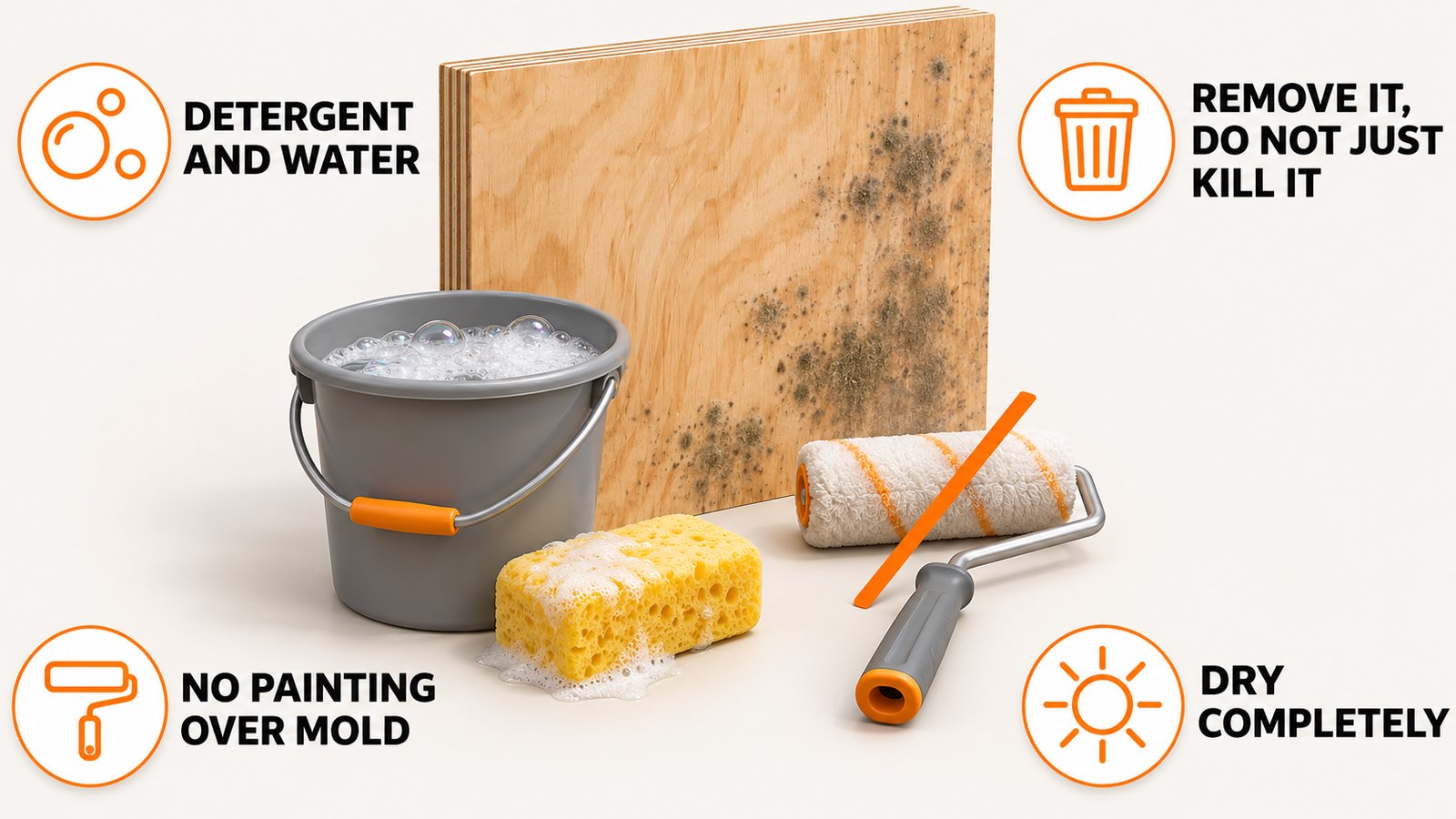
Killing mold is not the goal. EPA says dead mold may still cause allergic reactions in some people, so it must also be removed. EPA does not recommend a biocide such as chlorine bleach as a routine part of cleanup, and for hard surfaces says to scrub with detergent and water and dry completely. CDC says hard surfaces can be cleaned with household products, soap and water, or no more than 1 cup of household laundry bleach in 1 gallon of water. Never mix bleach with ammonia or other cleaners.
Plywood adds a catch, and this is our own reasoning: it is a wood panel that takes up water, so a soaking cleaning job puts moisture into what you are trying to dry. The lab says plywood has minimal irreversible thickness swelling if wetted, unlike most panels made from particles. Building Science Corporation's report puts about 28 percent moisture content as the start of some irreversible thickness swelling in OSB. Use a damp cloth, not a hose, and dry the panel right away.
Do not paint or caulk over it. EPA says paint applied over moldy surfaces is likely to peel. See painting over mold, vinegar, bleach and our wood and drywall product guide. A product's own label decides what it can claim.
How to Get Mold Off Plywood
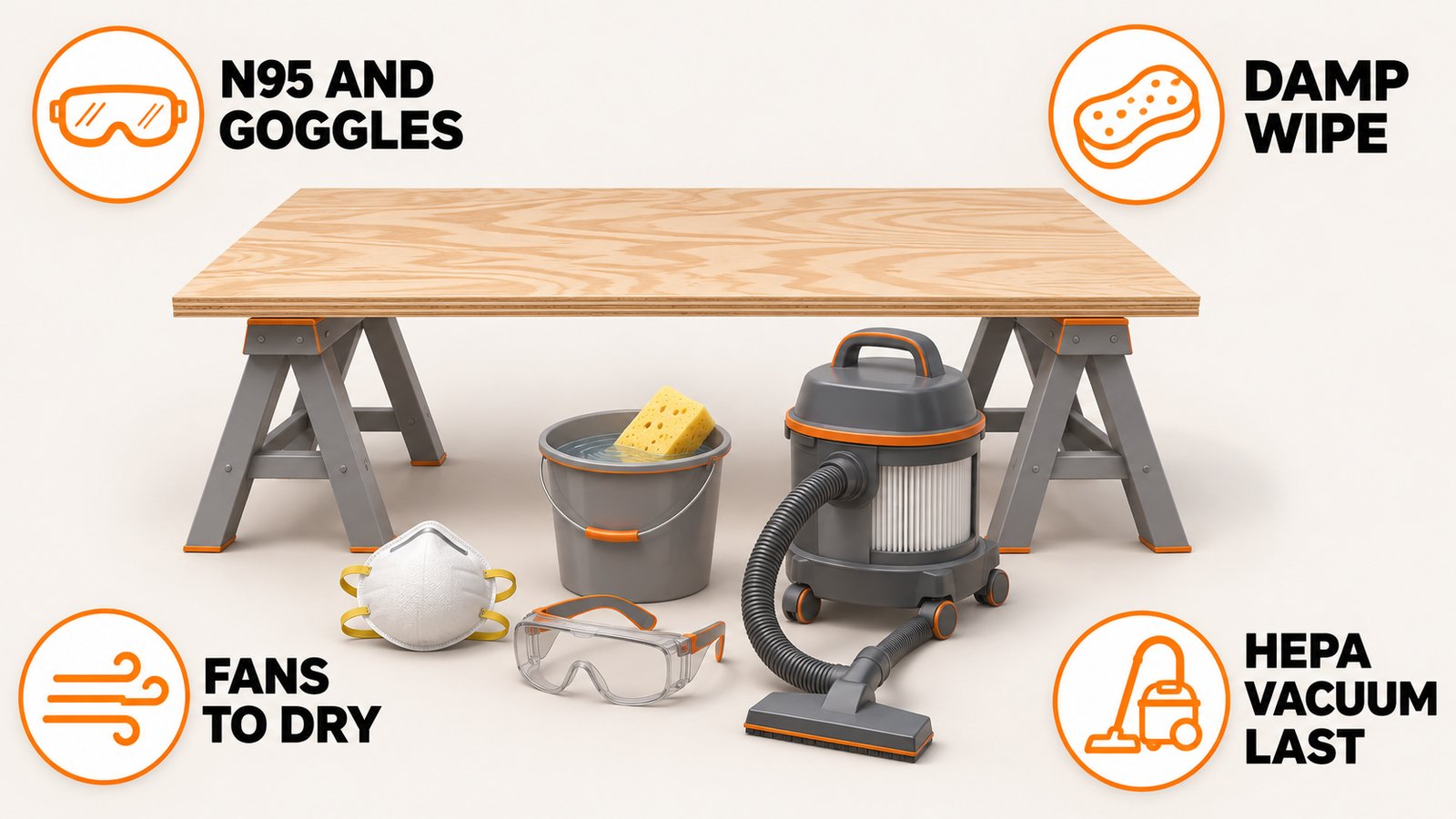
EPA says an area under about 10 square feet, roughly 3 feet by 3 feet, is in most cases a job you can handle yourself. For a small area, in order:
- Stop the water. EPA says if you clean the mold but do not fix the water problem, it will most likely come back.
- Gear up. EPA says you may want to wear an N95 respirator, and it recommends gloves reaching mid-forearm and goggles without vent holes.
- Damp wipe. EPA says mold can generally be removed from hard surfaces by wiping or scrubbing with water and detergent. Rinse the cloth often and bag it.
- Dry it. EPA says to use dehumidifiers, fans and gentle heat on wood.
- HEPA vacuum last. EPA recommends it for final cleanup after materials are thoroughly dry.
EPA says mold can leave stains cleaning cannot remove. We do not suggest sanding panel faces, since it throws dust into the air. Ask a remediation professional. For solid lumber, see mold on wood, and for the big picture, how to get rid of mold.
Can You Save Moldy Plywood or Do You Replace It?
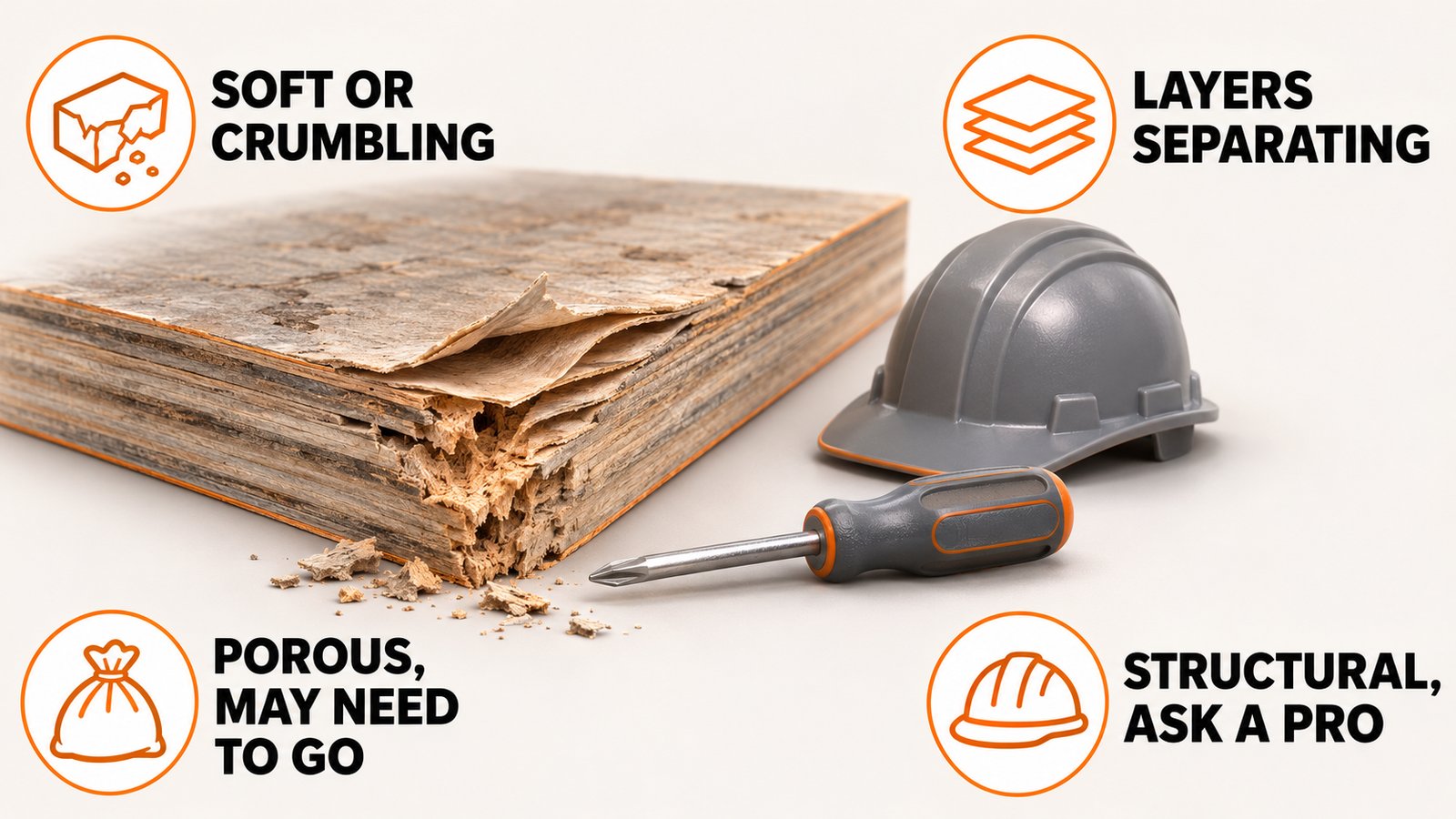
EPA says porous materials may have to be thrown away because mold can fill their empty spaces, so it may be impossible to remove completely. New York State's health department says hard surfaces that are not decayed can be cleaned. Look at the panel's condition, not just the fuzz.
| What you see | What the sources point to |
|---|---|
| Light growth, panel hard and dry | Clean with detergent and water, dry completely (EPA). |
| Soft, crumbling, changed color | The lab says late decay shows definite changes in color and properties. That is rot, not surface mold. |
| Layers lifting or swollen | Water got in. Have it looked at. |
| Growth through edges and both faces | Full removal may be impossible (EPA). Replacement is likelier. |
| Subfloor, sheathing or roof deck | A qualified builder, roofer, engineer or remediation professional decides. |
The sources say two things about strength. The lab says mold and stain fungi do not seriously affect most mechanical properties of wood, but that pieces with mold should be examined closely for decay if used structurally. EPA says a roof that leaks long enough lets molds weaken floors and walls by feeding on wet wood, and that a structural engineer or similar professional should be consulted. This page cannot tell you whether your floor or roof is sound.
How to Dry Plywood and Stop Mold Coming Back
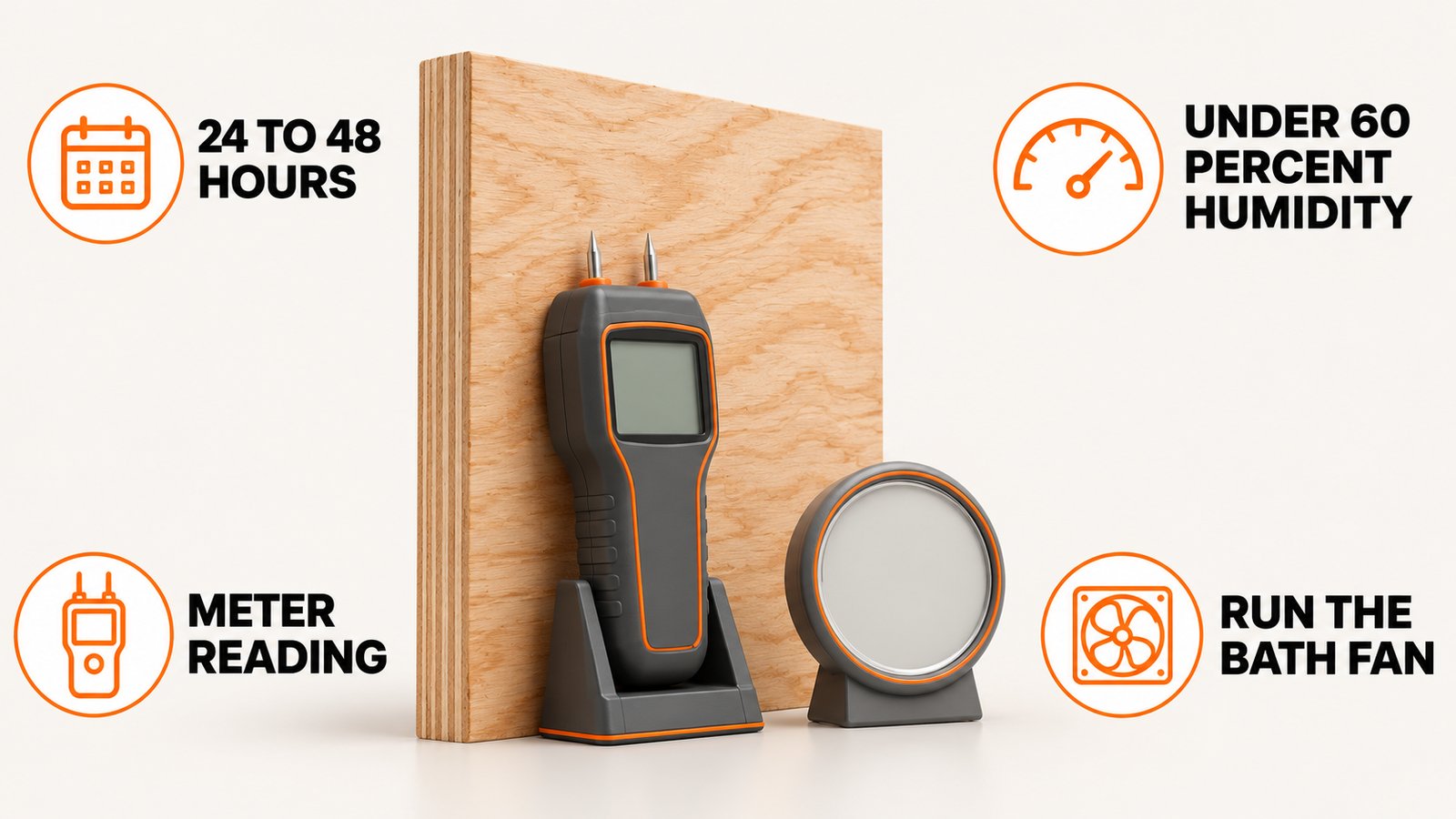
EPA says that if wet materials are dried within 24 to 48 hours, mold will in most cases not grow. EPA lists wood among the materials a moisture meter works on. A panel can feel dry on the face and hold water inside.
Sources draw different lines for different jobs, so ask your builder which applies.
- APA says wood normally settles at 6 to 14 percent in service, and that mold and decay can follow if it stays around 20 to 25 percent or higher for a prolonged period.
- APA says sheathing should dry to less than 18 percent before a cavity is closed in.
- The lab says fully air-dried wood usually does not exceed 20 percent.
APA warns vapor-impermeable layers can slow drying, so never seal a damp panel inside a wall, roof or paint film.
EPA advises indoor humidity below 60 percent, ideally 30 to 50, and CDC says no higher than 50. EPA also recommends running the bathroom fan and venting dryers outside. Try the humidity risk calculator and the HVAC moisture maintenance checklist, plus dehumidifiers and moisture meters.
Is Mold on Plywood Dangerous?
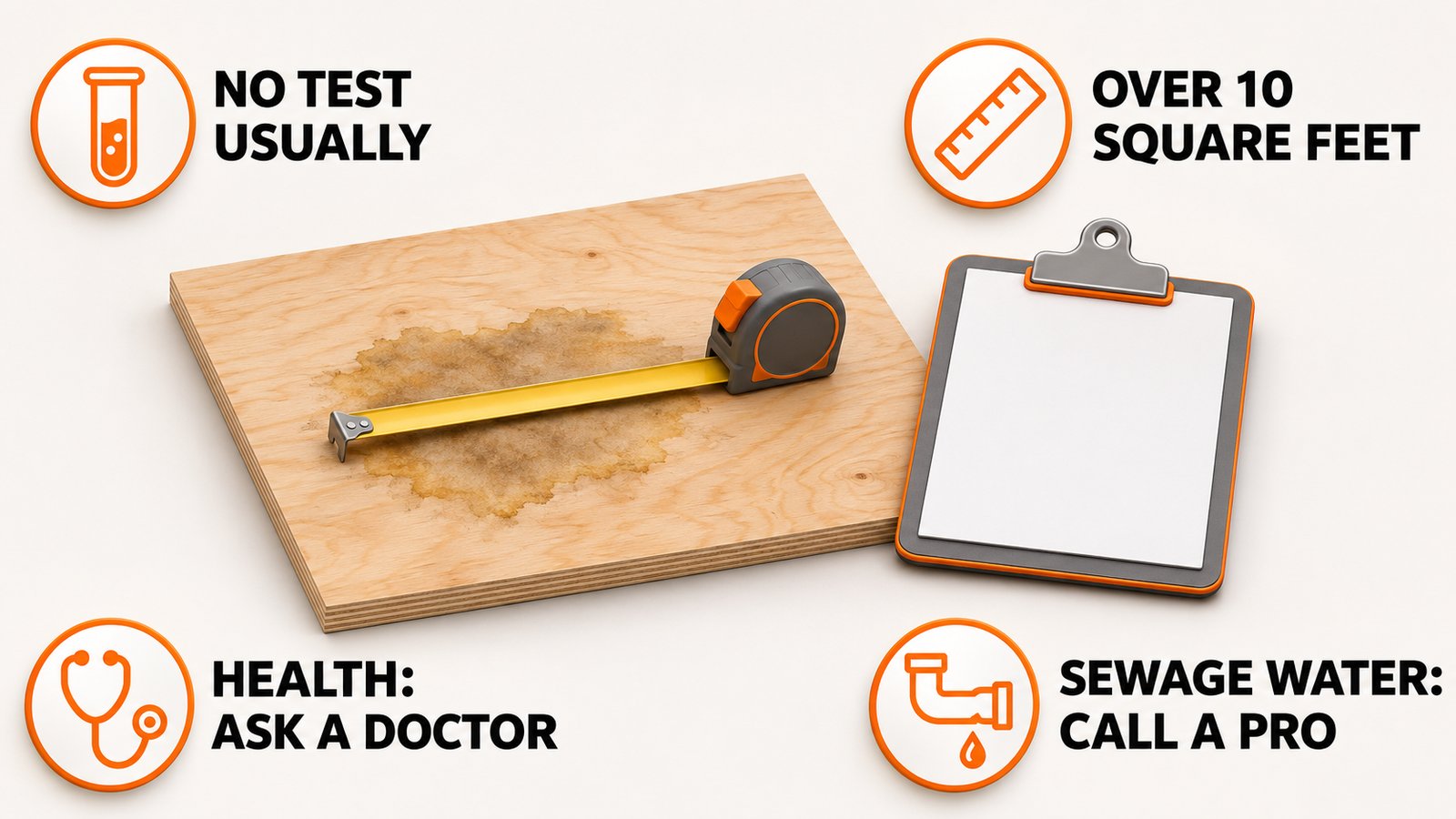
CDC says damp and moldy environments may cause a variety of health effects, or none at all. For some people it can cause a stuffy nose, sore throat, coughing or wheezing, burning eyes, or skin rash, and people with asthma or mold allergy may react severely. Whether one panel affects one person is a question for a physician.
A test? EPA says that in most cases, if you can see growth, sampling is unnecessary, and CDC does not recommend mold testing. See mold inspection for when an inspector helps.
We suggest a professional if the growth is more than about 10 square feet, the water was sewage, you suspect the HVAC system, or you have health concerns. The EPA's wording differs by case: past about 10 square feet it points to its guide for larger jobs, for sewage it says to call in a professional, for a suspected HVAC problem it says not to run the system, and for health concerns it says to consult a health professional before cleanup. Also call one for any subfloor, sheathing or roof deck you cannot confirm is sound. See mold behind walls and mold remediation.
Frequently asked questions
Is green mold on plywood different from black mold?
You cannot tell by color. CDC says mold can look like spots of many different colors and that you do not need to know the type. Green, black, white and orange growth all call for the same job: find the moisture, remove the growth, and dry the panel.
What kills mold on plywood?
EPA says killing is not enough, because dead mold may still cause allergic reactions in some people. The growth must be removed. For hard surfaces EPA says scrub with detergent and water and dry completely. Use a damp cloth, not a soaking spray.
Can I paint or seal over mold on plywood?
No. EPA says not to paint or caulk moldy surfaces, and that paint over mold is likely to peel. Clean and dry the panel first, and never close a damp panel into a wall or roof.
How wet is too wet for plywood or OSB?
APA says sheathing should dry to less than 18 percent before a cavity is closed, and that 20 to 25 percent or higher for a prolonged period can lead to mold and decay. The Forest Products Laboratory says fully air-dried wood usually stays at or under 20 percent.
Do I need a mold test for moldy plywood?
Usually not. EPA says that in most cases, if visible mold growth is present, sampling is unnecessary, and CDC does not recommend mold testing. Spend the effort on finding the water and drying.
When should I call a professional?
Call one if the growth covers more than about 10 square feet, if sewage was involved, if you suspect the HVAC system, or if you have health concerns. Also call one for any subfloor, sheathing or roof deck you cannot confirm is sound.
Sources
Every claim on this page traces to one of these. Links open the primary document.