How to pick a mold killer for wood or drywall
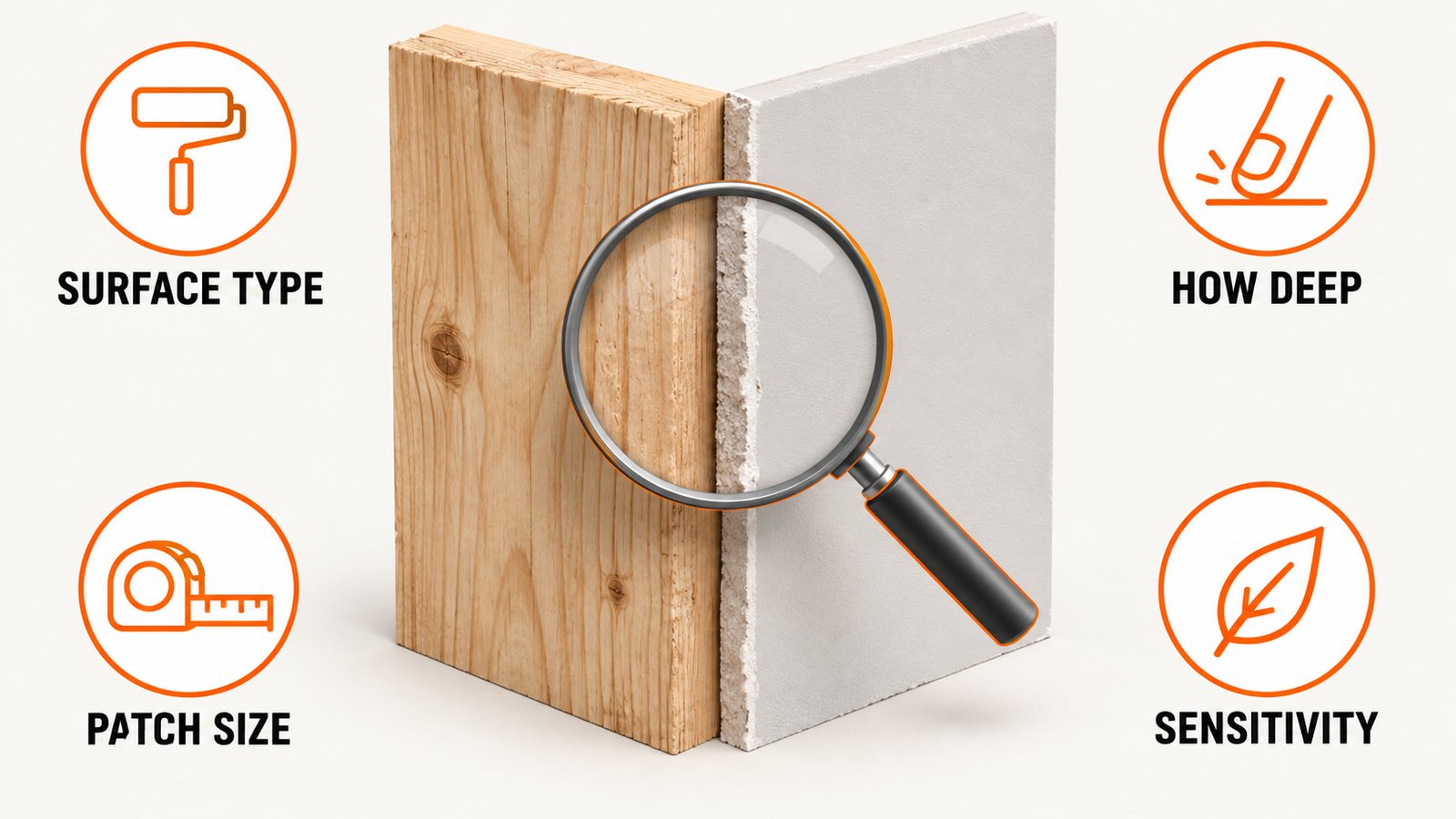
Three things decide which product actually reaches the mold on your wood or drywall: how porous the surface is, how deep the growth has gone, and how big the patch is.
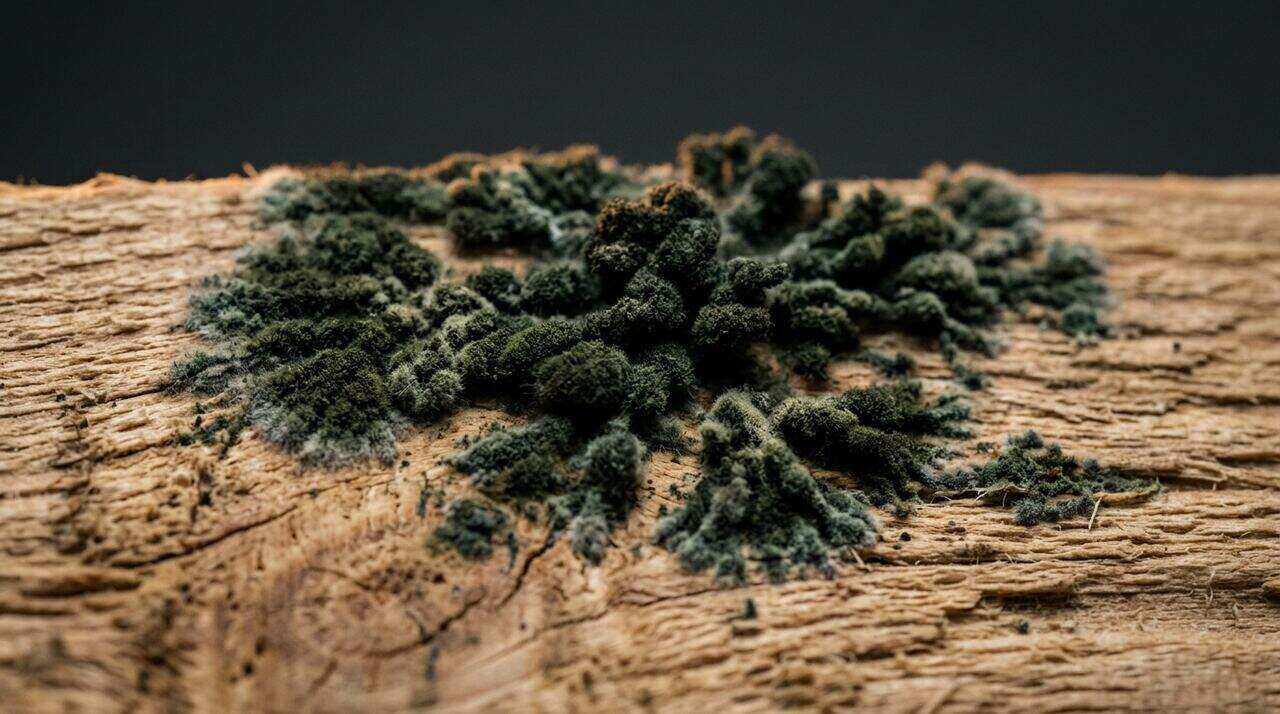
Surface first. Painted, primed, sealed, or varnished wood and drywall behave almost like a hard surface, since the finish keeps mold on top. Bare wood and unpainted drywall paper are porous enough that hyphae, mold's root-like threads, can work a short way beneath what you see, which is why an EPA-registered killer built for porous material matters there.
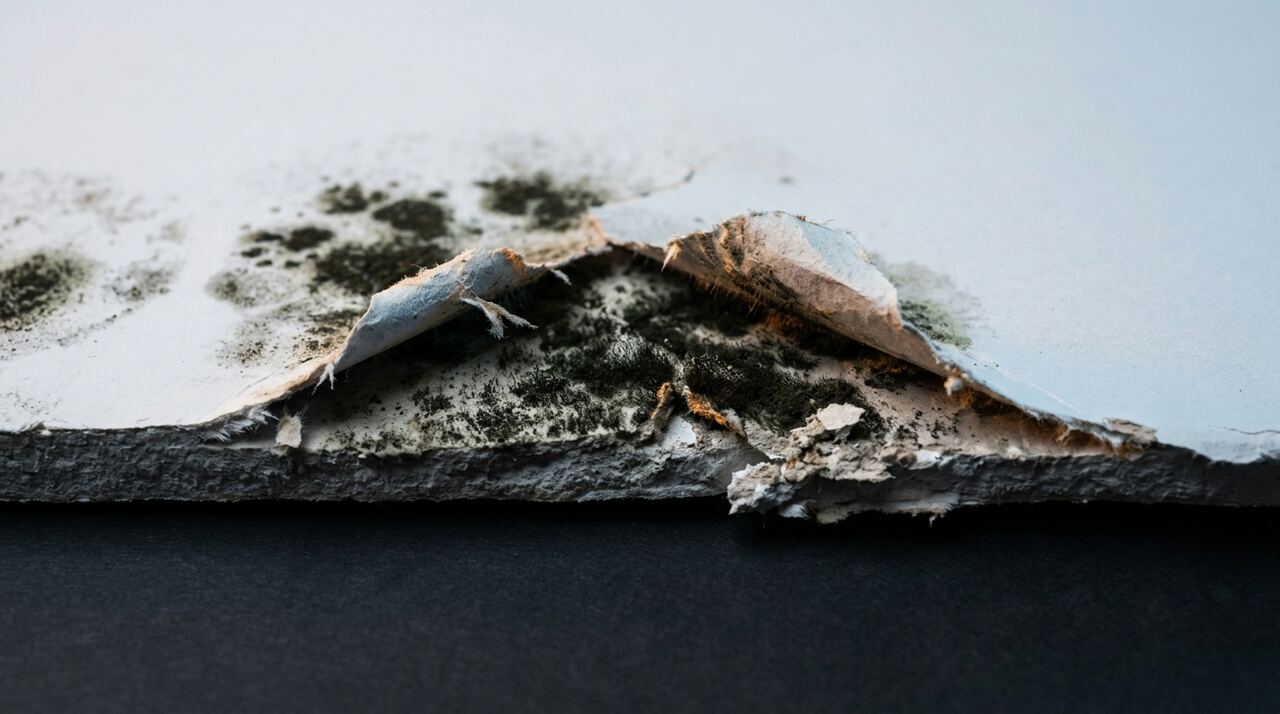
Then check how deep it went. Press the spot with your thumb. Wood that feels soft or spongy, or drywall that dents under light pressure, has damage no spray reverses. That piece needs replacing, not cleaning. Our mold on wood and mold on drywall guides walk through that call in detail.
Size sets the last boundary. The EPA draws the DIY line at about 10 square feet, roughly a 3 foot by 3 foot patch. Bigger, and the job belongs to a remediation pro who follows the IICRC S520 standard.
One product that shows up constantly in these searches is not a killer at all. RMR-86's own manufacturer states plainly on its product page that RMR-86 does not kill mold, it only removes the stains mold and mildew leave behind. It is a fast, useful stain remover for a surface you have already treated, and it is not one of the ranked picks below. Read our full RMR-86 review for where it does earn a place in the job.
The 5 picks at a glance
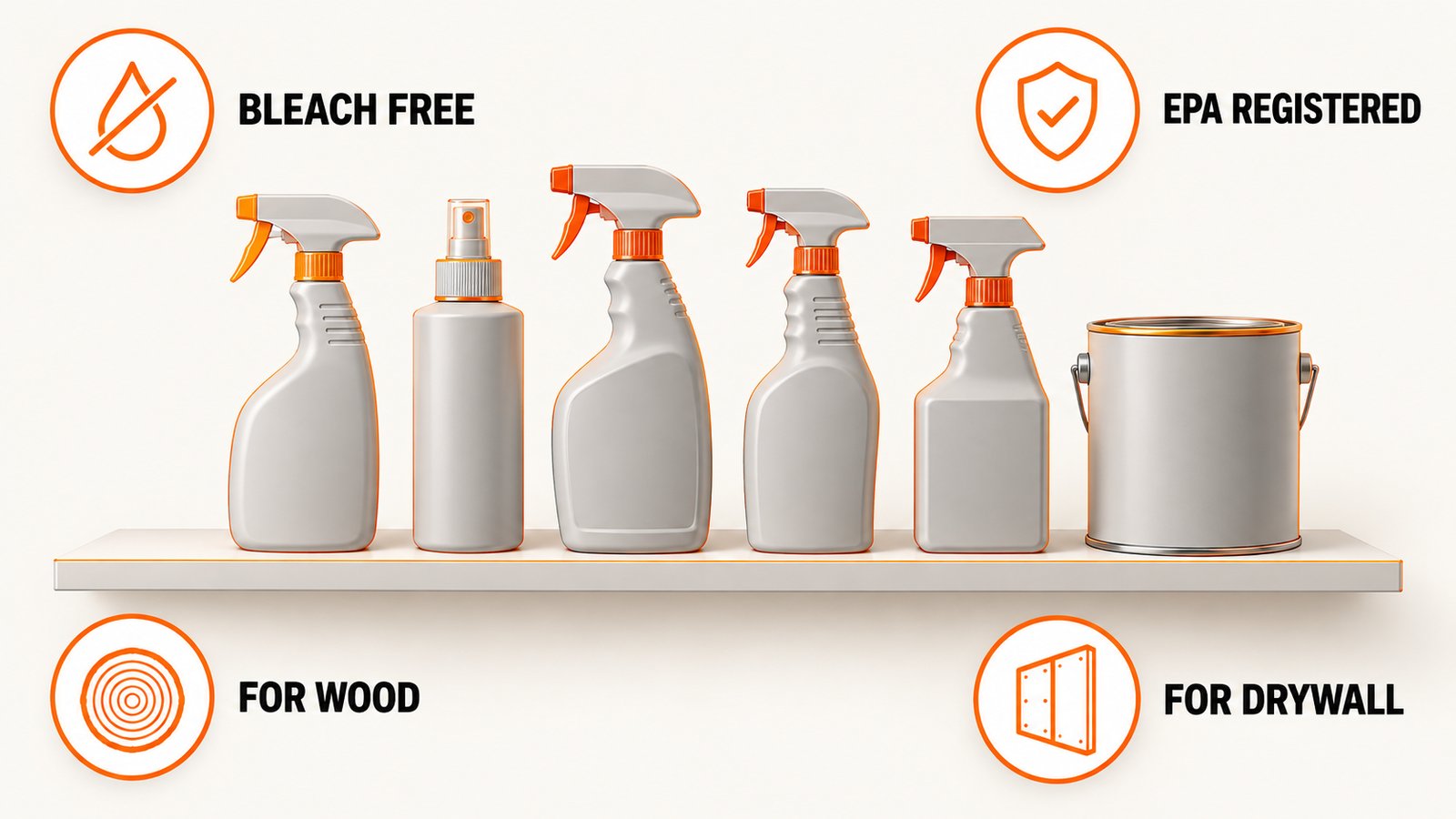
Every listing below was checked live this session: the Amazon page returned an add-to-cart button and an In Stock availability block, not just a 200 status, and each mold or mildew claim was confirmed on the manufacturer's own label or product page.
| Product | EPA status | Best for | Note |
|---|---|---|---|
| Concrobium Mold Control | EPA-registered | Bare wood, painted drywall | No bleach, forms a film as it dries |
| Benefect Botanical Disinfectant | EPA-registered | Bare, porous wood | Thyme-oil fungicide, 1 gallon size |
| BenzaRid | EPA-registered | Painted drywall, sealed wood | Hard-surface fungicide, kills Aspergillus niger in 10 minutes |
| RMR-141 | EPA-registered | Whole-house jobs | Currently sold in a 4-gallon case |
| Zinsser Mold Killing Primer | EPA-registered | Prevention only | A primer, not a killer of existing growth |
We are not publishing prices, because they change too often to trust on the page. Check the live listing before you order.
The 5 picks, ranked
Heads up: the Amazon links below are affiliate links, and buying through them may earn Mold Scanner AI a small commission at no extra cost to you.
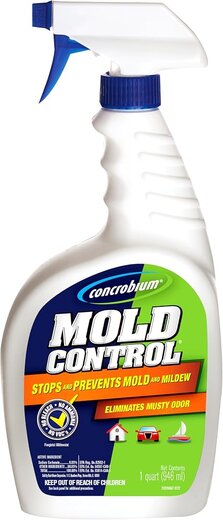
Concrobium Mold Control, 32 oz Spray
No bleach, no ammonia, EPA-registered for mold control when used as directed. It works into bare wood and painted drywall, forms a thin mineral film as it dries, and leaves a barrier that slows regrowth. It cannot rescue drywall where mold has already eaten through the paper backing. Full review: Concrobium Mold Control review.
Benefect Botanical Decon 30, 1 Gallon
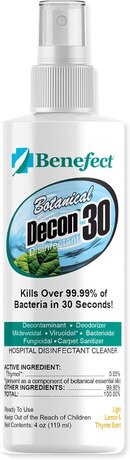
A plant-based disinfectant built on thymol from thyme oil, EPA-registered as a fungicide and mildewstat effective against Aspergillus, Trichophyton, and Candida. It works into porous material without harsh fumes, which is why remediation crews reach for it on bare studs and joists. Full review: Benefect Decon 30 review.
BenzaRid Professional Disinfectant Fungicide, 1 Gal + 32 oz
An EPA-registered hospital-grade fungicide and mildewstat, EPA Reg. No. 10324-85-88904. Its own label states it kills fungi in 10 minutes and controls mold such as Aspergillus niger for 7 days, on hard, non-porous surfaces. That makes it a strong pick for painted drywall and sealed or finished wood, not for bare, unpainted material.
RMR-141 EPA Registered Mold and Mildew Killer
The actual mold killer in the RMR product line, EPA-registered as a disinfectant and fungicide. Unlike its cosmetic sibling RMR-86, RMR-141 is built to kill mold, mildew, bacteria, and viruses, not just lift a stain. It is currently sold on Amazon in a 4-gallon case, which suits a whole-house job better than one bathroom spot.
Zinsser Mold Killing Primer, Quart
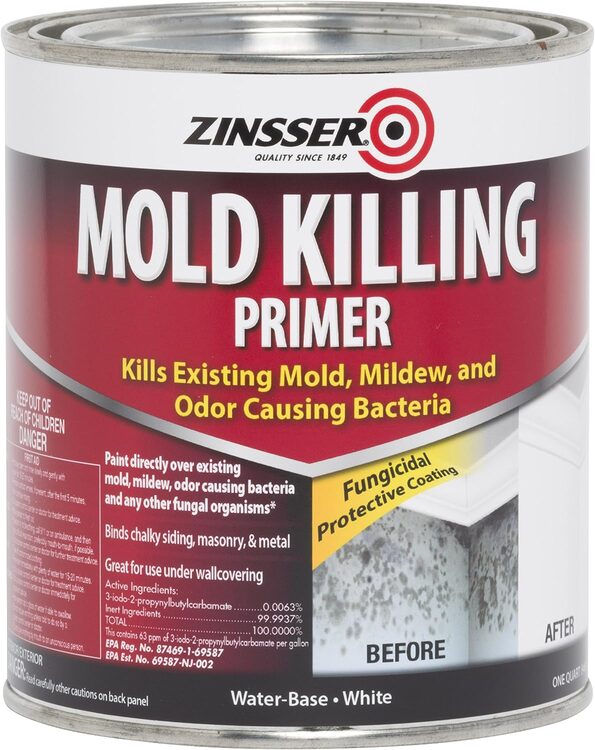
Not a mold killer for existing growth. This EPA-registered fungicidal primer, EPA Reg. No. 87,469-1-69587, goes on after you have already cleaned and dried a surface, and leaves an antimicrobial film that resists new growth. It will not reach mold rooted deep inside porous drywall paper or bare wood. Full review: Zinsser Mold Killing Primer review.
Affiliate disclosure: the Amazon links above are affiliate links. If you buy through them, Mold Scanner AI may earn a small commission at no extra cost to you. We verified this session that every listing carried a working add-to-cart button and an In Stock availability block; those change, confirm before you order.
When wood or drywall needs to be cut out, not sprayed
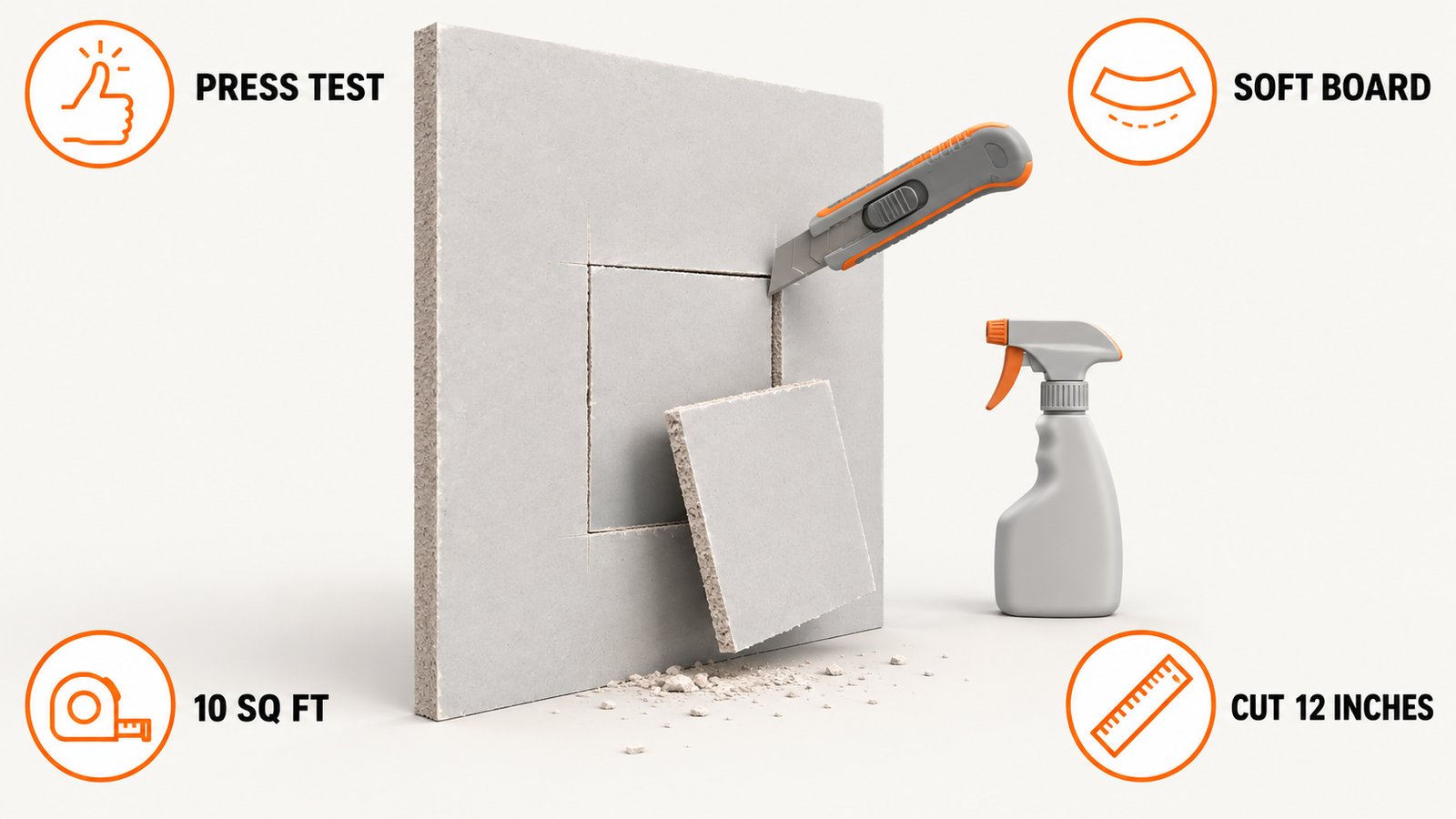
None of the five products above can rescue drywall where mold has grown through the paper face, or wood that has gone soft. That is not a product failing. It is what the material does once fungus gets past the surface.
Drywall is gypsum wrapped in paper, and paper is cellulose, mold's favorite food. Once hyphae root into that paper, a spray cannot reach all of it. EPA's own guidance on porous material is direct: absorbent or porous materials may have to be thrown away if they become moldy, because mold can grow into the empty spaces of the material until it is difficult or impossible to remove completely. A stained wall board that fails the press test, feeling soft, spongy, or crumbly, is in that category.
Run the same test on wood. If a screwdriver sinks into a stud or a floorboard, or the fibers crumble under light pressure, cleaning will not bring back what rot took. That piece gets replaced.
Size matters too. EPA puts the DIY line at about 10 square feet, a patch roughly 3 feet by 3 feet. Past that, or if you find heavy growth once you open a wall, stop and call a remediation professional who follows the IICRC S520 standard. Our mold on drywall guide walks through the full cut-and-patch steps, including the rule to cut 12 inches past the visible edge, and mold on wood covers when structural framing needs a contractor instead of a cleaner.
Is Mold Armor a good mold killer for wood or drywall?
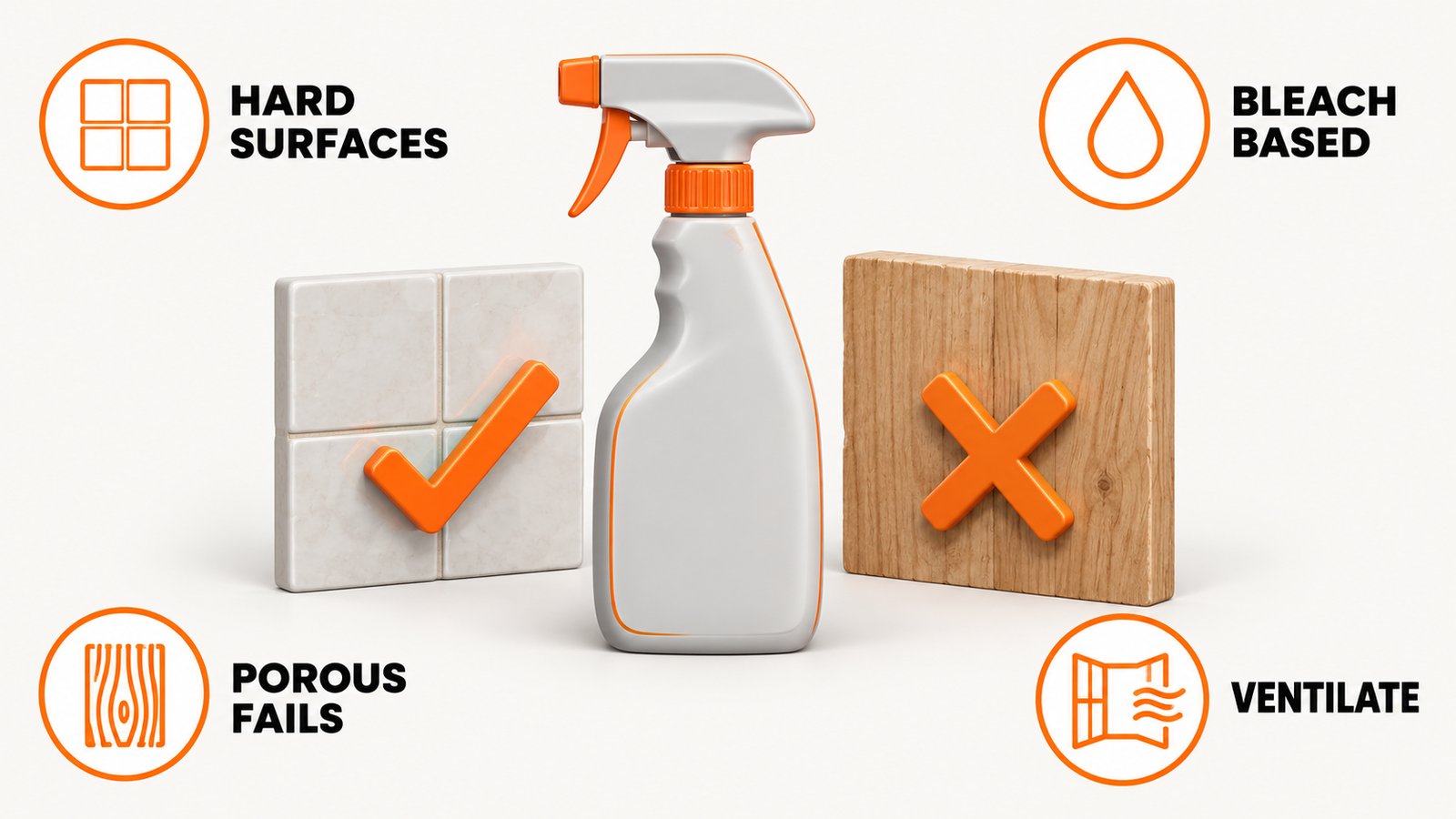
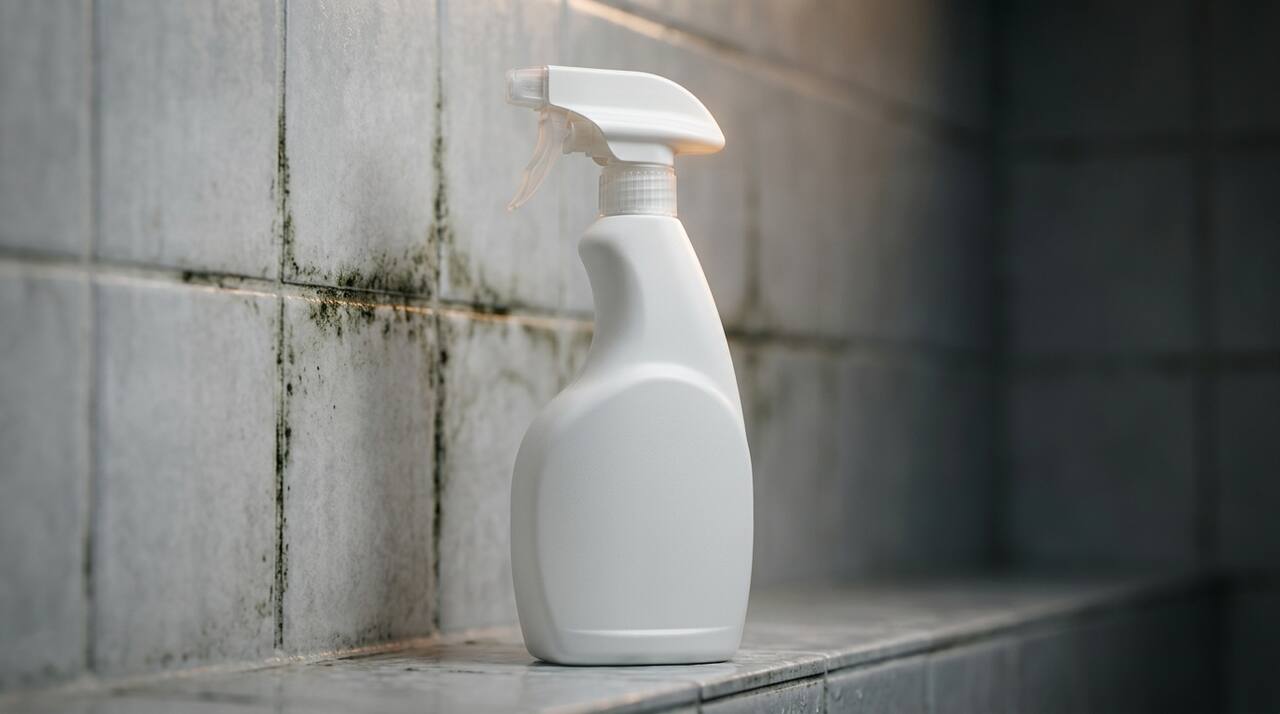
Mold Armor shows up in a lot of searches next to this list, so here is the direct answer. Mold Armor's mold and mildew killer sprays are bleach-based, and bleach-based cleaners work fast on hard, non-porous surfaces: tile, tubs, sealed grout, vinyl siding. Our full Mold Armor review is blunt about the rest: on porous drywall and bare wood, it fails, because the chlorine stays on the surface while the water underneath soaks into the material and feeds the roots you were trying to kill. That is also why EPA does not recommend bleach as a routine mold cleanup tool.
If you are choosing between Mold Armor and a bleach-free option for a specific wall or floor, our Concrobium vs Mold Armor comparison breaks it down surface by surface. The short version for this page: for painted, hard, non-porous spots, Mold Armor or BenzaRid are reasonable options. For bare wood or unpainted drywall, reach for Concrobium or Benefect instead.
The best mold killer for porous surfaces
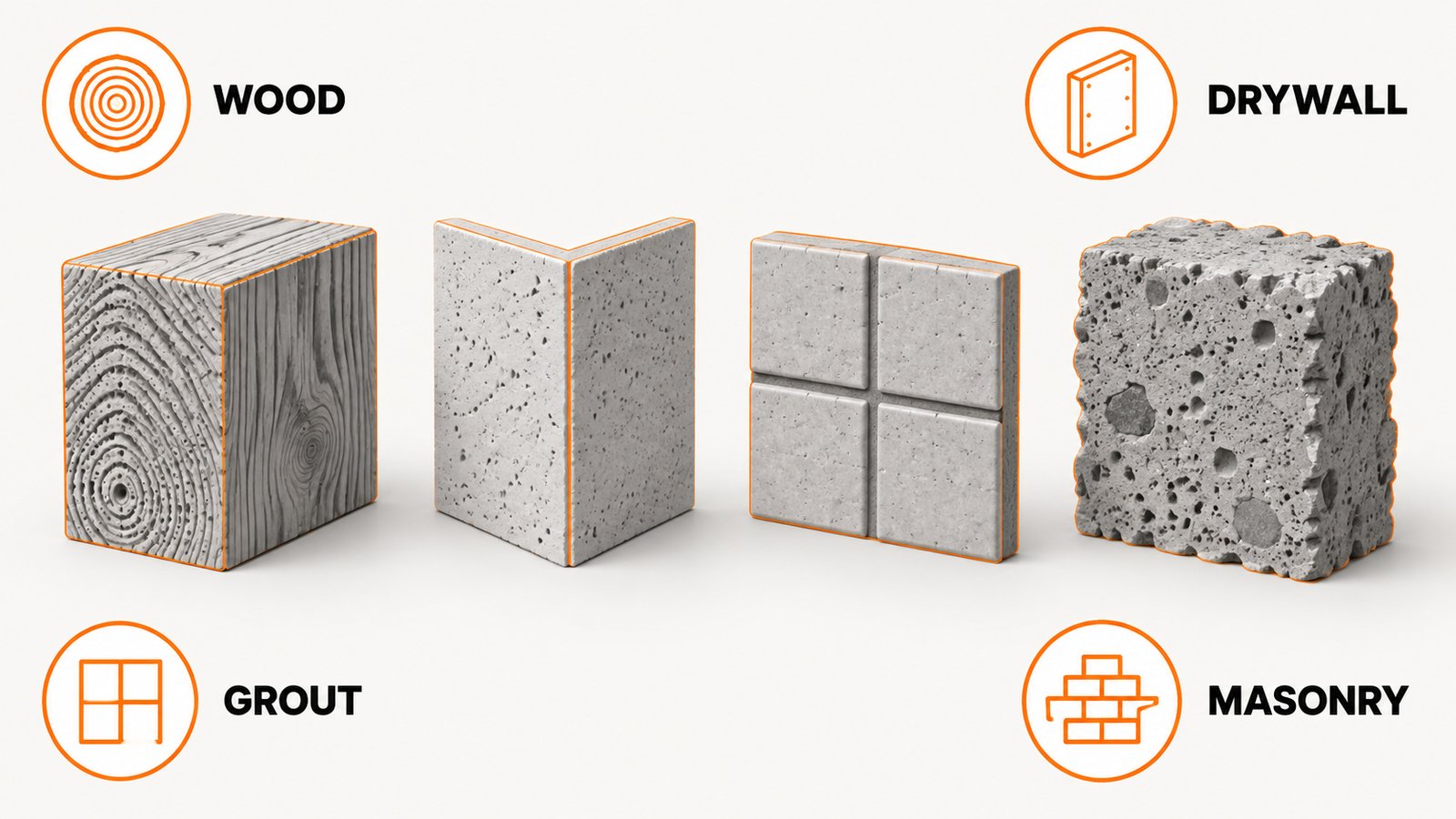
"Porous surface" covers more than wood and drywall. Grout, unsealed masonry, unfinished concrete, and raw lumber all share the same problem: mold can work a short way beneath the surface, so a product that only sits on top does not finish the job.
The two picks on this page built for that job are Concrobium Mold Control, an EPA-registered film that cures into a barrier, and Benefect Botanical Disinfectant, the thyme-oil formula many remediation crews use for the same reason. Both handle porous material without leaving harsh residue behind. BenzaRid and RMR-141 are strong EPA-registered killers, but their own labels point them at hard, non-porous, or sealed surfaces rather than raw porous wood.
Whatever you pick, the fix is only half chemical. A dehumidifier holding humidity below 50 percent does more for a porous surface long term than any single spray. Our dehumidifier for mold guide has sizing and placement, and mold cleaning products has the full surface-by-surface list.
Frequently asked questions
What is the best mold killer for wood?
Concrobium Mold Control is the best mold killer for wood in most cases. It is EPA-registered, has no bleach, and works into bare or painted wood without damaging the grain. For deep, porous wood like exposed framing, Benefect Botanical Disinfectant is the EPA-registered natural alternative many remediation crews use instead.
What is the best mold killer for drywall?
For painted drywall with surface mold, Concrobium Mold Control is the best mold killer for drywall, and BenzaRid is a strong EPA-registered alternative for the same painted, sealed surface. Neither product can save drywall where mold has grown through the paper backing. That section has to be cut out.
Does RMR-86 kill mold?
No. RMR-86's own manufacturer states plainly on its product page that RMR-86 does not kill mold, it only removes the stains mold and mildew leave behind. It is a fast, useful stain remover, not a mold killer, which is why it is not one of the ranked picks on this page.
Does Mold Armor work on wood or drywall?
Not reliably. Mold Armor's bleach-based sprays work fast on hard, non-porous surfaces like tile and sealed grout. On bare wood or unpainted drywall, the chlorine stays on the surface while the water in the product soaks into the material, so the stain often returns.
How do I know if wood or drywall mold needs to be cut out instead of cleaned?
Press the spot with your thumb or a screwdriver. Wood or drywall that feels soft, spongy, or crumbly has damage no spray reverses, so cut it out. Solid material with a light surface stain can usually be cleaned. Also check the size: past about 10 square feet, the EPA recommends a remediation professional instead of a DIY spray.
What is the best mold killer for porous surfaces?
For porous surfaces like bare wood, unpainted drywall paper, grout, and unsealed masonry, Concrobium Mold Control and Benefect Botanical Disinfectant are the two best options on this page, since both are EPA-registered to work into the material rather than sit on top of it.
Can you use Concrobium Mold Control on drywall?
Yes, if the mold has not gone through the paper backing. Concrobium works on painted or primed drywall and reaches a short way into the material as it dries. If the paper feels soft or you see growth on both sides of the board, cut out the section plus 12 inches past the visible edge instead.
Sources
Every claim on this page traces to one of these. Links open the primary document.