
The Oklahoma humidity profile
Oklahoma's two NOAA stations, Tulsa and Oklahoma City, both report a 68 percent annual mean relative humidity. That is above the national middle but not extreme. The number that tells the real story is the morning mean of 80 to 81 percent, and the calculated annual mean dew point of 50 to 51 F, which is the highest in the Great Plains. A 51 F mean dew point means that across the whole year, the average moment carries enough water to condense on any surface below 51 F. In July and August the outdoor dew point sits far higher than that, which is why an Oklahoma air conditioner runs as a dehumidifier for four months and why the duct system is the first place mold appears.
The mechanism that separates Oklahoma from a steadily humid Gulf state is impact. NOAA's State Climate Summary for Oklahoma records statewide annual precipitation swinging from 20.3 inches in 1910 to 53.7 inches in 2015, and the frequency of 2-inch extreme precipitation days has run above the long-term average of 2.6 days since 1985. NOAA's billion-dollar disaster record counts 115 events affecting Oklahoma from 1980 to 2024, of which 76 were severe storms and 6 were floods. Hail opens a roof, wind opens a soffit, and the next thunderstorm puts water into an attic that was dry that morning.
The third factor is freezing rain, particularly in the southeast, which loads a roof and bursts supply lines. February 2021 made the point statewide. Every one of these events starts the same clock: EPA guidance treats porous materials that stay wet longer than 24 to 48 hours as at risk of mold growth. Oklahoma's problem is not that it is damp. It is that it gets wet suddenly, in a climate warm enough to grow whatever lands on the wet material.
Oklahoma against the national picture
| Metric | Oklahoma | What it means indoors | Source |
|---|---|---|---|
| Annual mean relative humidity | 68% | Above the national middle, and steady across the whole year | NOAA NCEI Comparative Climatic Data |
| Morning mean relative humidity | 80 to 81% | Around 80 percent, so cool surfaces condense on most mornings | NOAA NCEI Comparative Climatic Data |
| Calculated annual mean dew point | 50 to 51 F | The highest in the Great Plains, which is what loads an air conditioner | Calculated from NOAA 1991 to 2020 normals |
| Annual normal precipitation | 36.4 to 41.0 in | Wide swings by year, delivered in fewer, heavier storms | NOAA NCEI 1991 to 2020 normals |
Relative humidity figures are the mean of the morning and afternoon observations NOAA publishes for each first-order station, rounded to whole percent. Dew point is calculated from the NOAA normal mean temperature and that mean relative humidity using the Magnus formula, so treat it as a derived figure rather than a published one.
How much water the sky delivers, station by station
Tulsa takes 41 inches a year against 36.4 at Oklahoma City. Bulk water is the mechanism behind most basement and crawl space mold, so the wettest station is the one to plan around.
View the data
| Station | Annual normal |
|---|---|
| Tulsa | 41 in |
| Oklahoma City | 36.4 in |

Oklahoma stations ranked by measured humidity
Methodology. Ranked by annual mean relative humidity, the one input that traces to a station record rather than an opinion. Relative humidity is the mean of NOAA's published morning and afternoon values. Mean dew point is calculated from the NOAA 1991 to 2020 normal mean temperature and that mean relative humidity. The humidity band names what the column measures and nothing more. Humidity is not the whole story: a burst supply line in the driest metro on this table soaks the same drywall as a humid August, and EPA guidance treats wet porous material as at risk of mold growth after 24 to 48 hours either way.
Every place on file, ranked by mean RH
Tulsa reads 68% against 68% at Tulsa. The target for a basement is 50 percent, so every row on this chart sits above it.
View the data
| # | Place | Mean RH | Morning RH | Annual precip |
|---|---|---|---|---|
| 1 | Tulsa | 68% | 81% | 41 in |
| 2 | Oklahoma City | 68% | 80% | 36.4 in |
| # | Station | Mean RH | Morning RH | Mean dew pt | Annual precip | Humidity band | Notes |
|---|---|---|---|---|---|---|---|
| 1 | Tulsa | 68% | 81% | 51 F | 41.0 in | Humid | Slightly wetter and warmer than Oklahoma City. Arkansas River flooding and the eastern woodlands raise the local dew point. |
| 2 | Oklahoma City | 68% | 80% | 50 F | 36.4 in | Humid | Drier by four inches of rain a year, but the same 80 percent morning humidity and the same hail exposure. |
Tulsa
Slightly wetter and warmer than Oklahoma City. Arkansas River flooding and the eastern woodlands raise the local dew point.
Oklahoma City
Drier by four inches of rain a year, but the same 80 percent morning humidity and the same hail exposure.
Two stations, one climate, and a gradient NOAA does not show here. Tulsa and Oklahoma City are 100 miles apart and differ by four inches of annual rain and one point of dew point. What this table cannot show you is the west. Oklahoma spans the humid-to-semiarid transition, and the panhandle at Boise City is a different climate entirely, closer to the western Kansas profile than to Tulsa. NOAA's Comparative Climatic Data carries no first-order humidity station out there, so rather than estimate one, this report says plainly that the table describes central and eastern Oklahoma.
Why the ranking barely matters here. In a state where the two measured stations agree to within a point, humidity is not the variable that decides who has a mold problem. Roof condition is. A 2015-vintage roof that took the 2023 hail season and never got inspected is a bigger predictor than which side of the state you live on. Get the roof looked at after every significant hail event, and read our guide on mold in the attic, which is where Oklahoma storm damage shows up first.
Common mold species in Oklahoma homes
EPA and CDC name the same core genera for warm humid climates. In Oklahoma housing they concentrate in the HVAC system, because the air conditioner runs long enough to keep coils and drain pans wet for months, and in whatever the last storm soaked.
Cladosporium
Cladosporium spp.The most commonly found indoor mold nationwide and the standard find on Oklahoma evaporator coils, drain pans, and the halo of dark speckle around supply registers. Olive-green to black. Air conditioning runs five or six months a year in most of the state, so condensate stays available that whole time. EPA lists it among the common allergenic indoor molds.
Aspergillus
Aspergillus spp.Black, green or brown depending on species. It prefers steady moisture and organic dust, which describes duct interiors, bathroom grout and washing machine gaskets in a humid climate. EPA and CDC flag Aspergillus species as allergens and, in rare cases, as a cause of aspergillosis in people who are immunocompromised.
Stachybotrys chartarum
Stachybotrys chartarumThe species commonly called toxic black mold. It needs sustained wet cellulose: wet drywall, wet ceiling tile, wet paper-faced insulation. In Oklahoma it appears after storm damage that went unrepaired, after a burst pipe in a hard freeze, and after river flooding. Visible black slimy growth on water-stained drywall is the signature. Do not disturb it.
Penicillium
Penicillium spp.Blue-green and powdery. It grows on carpet padding, wallpaper and damp fabric, and it takes off in the shoulder seasons when the air conditioner barely runs but the morning humidity is still above 80 percent. EPA lists Penicillium among the most frequently recovered genera in indoor air samples.
Alternaria
Alternaria alternataDark green to black, on window tracks, shower stalls and any condensation-prone surface. It is a common allergen panel entry and is often correlated with asthma flare-ups in sensitive individuals per EPA remediation guidance.
Chaetomium
Chaetomium spp.Olive to grey, cotton-textured, and a signal rather than a nuisance. It grows on chronically wet drywall and framing, so finding it usually means water has been present for a long time rather than since last week's storm. Treat it as evidence that the leak is older than you thought.
Species information is general and informational. Health responses vary. See a licensed physician for symptom evaluation. Species sources: EPA Mold Remediation in Schools and Commercial Buildings, EPA A Brief Guide to Mold Moisture and Your Home, CDC National Center for Environmental Health guidance.
What mold remediation costs in Oklahoma
No Oklahoma agency publishes a mold remediation price schedule, and unlike most states, Oklahoma does not publish a mold page at all. We checked the full oklahoma.gov sitemap rather than assuming: there are zero mold URLs on it. So the honest answer on cost is that the state offers you no benchmark, and any dollar range you find attached to an Oklahoma city is contractor marketing.
So the honest answer on cost is that the state offers you no benchmark, and any dollar range you find attached to an Oklahoma city is contractor marketing.
What actually moves the number here is the repair underneath the remediation. Oklahoma mold is usually storm mold, which means the remediation invoice sits on top of a roofing invoice, an HVAC invoice, or both. A remediator who removes wet insulation and dries the attic without the roof being repaired has sold you a service with an expiration date. Sequence it: stop the water, then dry, then remediate, then rebuild. Ask any bidder to state in writing which of those four they are doing.
The second driver is the HVAC system, and it is the one Oklahomans most often underestimate. If growth is in the ducts, the scope is not a wall. It is a cleaning of the entire distribution system, coil and drain pan service, and often a fix to the reason condensate was standing in the first place, which is usually a clogged or improperly sloped drain line. Our guide to mold in air ducts covers what a legitimate duct scope includes and which upsells to refuse.
The third is that nobody has to be licensed to quote you, so the spread between bids will be wide and will not mean what you think it means. Get an itemized written scope from each bidder before comparing. Our national mold remediation cost guide covers the drivers that move a quote in any market, and the cost estimator lets you scope your own job first.
On insurance: hail and wind damage to a roof is normally a covered peril, and the water intrusion that follows a covered peril is often covered with it, while long-term seepage and humidity are usually excluded. Many policies cap mold remediation at a fixed sublimit regardless. Oklahoma sees enough storm claims that post-disaster repair fraud is a standing warning from the Attorney General's Consumer Protection Unit. Take coverage disputes to the Oklahoma Insurance Department, and read our guide to homeowners insurance and mold.
Mold remediation licensing in Oklahoma: who can legally do the work
Oklahoma does not license, certify or register mold assessors or mold remediators.
Oklahoma does not license, certify or register mold assessors or mold remediators. The Oklahoma Construction Industries Board publishes its complete list of regulated trades and it contains exactly six: building inspectors, electrical, home inspectors, mechanical, plumbing and roofing. The Oklahoma State Department of Health's Consumer Health Service licensure page lists its full set of twelve programs, from bedding to x-ray, and mold is not among them. Anyone can legally sell mold assessment or mold remediation in Oklahoma with no state credential at all.
What that means in practice is that the licensing question moves to the repair rather than the remediation. A firm doing roof work needs a roofing registration. A firm touching the air conditioner needs a mechanical license. A firm rerouting a condensate drain may need a plumbing license. All three are verifiable through the Construction Industries Board's public lookups, and all three are worth checking, because the repair is the part that decides whether the mold comes back.
For the remediation itself, you are building the credential check yourself. Ask for IICRC certification and specifically for firms that state they work to ANSI/IICRC S520, the industry consensus standard for professional mold remediation. ACAC and AIHA credentials on the assessment side carry similar weight. Ask whether the same company is both assessing and remediating, because in a state with no separation rule, the firm sizing the problem may be the firm billing to solve it. That is not illegal in Oklahoma. It is a conflict you should price in.
One more Oklahoma-specific check. Storm chasing is a real problem in a state with 76 billion-dollar severe storm events since 1980, and the Attorney General publishes consumer resources on disaster repair scams for exactly that reason. Verify a local address, verify the roofing registration on the CIB lookup, refuse to pay in full up front, and be suspicious of anyone who found your house because they were driving through after a hail storm.
Oklahoma mold laws and tenant rights
Oklahoma has no mold-specific statute. A mold complaint runs through the Oklahoma Residential Landlord and Tenant Act. Under 41 O.S. § 118 the landlord must, at all times during the tenancy, make all repairs and do whatever is necessary to keep the unit and premises fit and habitable, keep common areas clean, safe and sanitary, and maintain electrical, plumbing, sanitary, heating, ventilating and air-conditioning facilities in good and safe working order. Mold claims run through the fit-and-habitable duty and, in an air conditioning state, through the HVAC and plumbing duty.
If the condition materially affects health or safety and is not fixed within 14 days, the lease terminates on a date at least 30 days after the notice.
The remedies at 41 O.S. § 121 give you a real clock, which many states do not. The tenant delivers written notice specifying the breach. If the condition materially affects health or safety and is not fixed within 14 days, the lease terminates on a date at least 30 days after the notice. If the repair costs one month's rent or less, the tenant may fix it after the same 14 days and deduct the actual reasonable cost from rent. If the condition makes the unit uninhabitable or is an imminent threat to health and safety and is not fixed as promptly as conditions require, the tenant may terminate immediately on written notice.
The sentence that decides most Oklahoma cases: no right under § 121 exists until the tenant gives written notice. A phone call to the property manager starts nothing. Date the notice, describe the condition and the water source specifically rather than writing "there is mold," keep a copy, and send it in a way that produces a delivery record. Our landlord letter generator produces a notice in that form.
Note also what Oklahoma does not give you. There is no state agency that will come and inspect a rental for mold, because there is no state mold program. Enforcement is through the courts and through whatever local housing code your city runs. Our guide to mold and apartment rights covers the general renter playbook, and a local legal aid office is the right first call if the landlord disputes the claim.
General information, not legal advice. For your situation, talk to a Oklahoma attorney, a legal aid office, or your local tenant council.
Oklahoma-specific actions
In a storm state with an air conditioning season, three moves cover most of the controllable risk.
A. Inspect the roof after every hail event, not once a year
Oklahoma's dominant mold mechanism is water entering from above through damage nobody looked for. Hail bruises shingles without obviously breaking them, and the leak shows up two storms later. After any significant hail or high wind, look at the ceiling under every roof plane, look in the attic with a flashlight for daylight and for dark staining on the sheathing, and check that soffit vents and ridge vents are still attached. Photograph what you find the same week, because an insurance claim filed a year after the storm is a hard claim to win.
B. Service the condensate path before the first hot week
In a state with a 51 F mean dew point, the air conditioner is the largest dehumidifier in the house and the drain line is the weakest part of it. Before the first hot week, clear the condensate line, check that the drain pan is not standing full, and look at the evaporator coil for the dark speckle that is usually Cladosporium. A pan that holds water for four months is a mold generator wired directly into the duct system. Our guide on mold in air ducts covers what to look for and what a duct cleaning should include.
C. Run the 48-hour clock after a freeze or a flood
A hard freeze that bursts a supply line and a flash flood produce the same problem on the same clock. Remove standing water the same day. Pull saturated carpet padding, and cut wet drywall back a foot above the water line rather than trying to dry it in place. Get air moving and run a dehumidifier. Photograph every room before you remove anything. Materials that still read above 16 percent moisture content after 72 hours of drying should come out rather than stay in. The Oklahoma Department of Emergency Management publishes recovery resources after declared events.
Seasonal risk profile for Oklahoma
Monthly mean relative humidity across Oklahoma's two NOAA stations. The annual line is unusually flat, which is the point: Oklahoma has no dry season, it has a storm season on top of a permanently moderate baseline.
Oklahoma relative humidity peaks in May
The monthly mean runs from 64 percent in March to 72 percent in May, a 8 point swing across the year.
View the data
| Month | Jan | Feb | Mar | Apr | May | Jun | Jul | Aug | Sep | Oct | Nov | Dec |
|---|---|---|---|---|---|---|---|---|---|---|---|---|
| Mean RH | 68% | 68% | 64% | 65% | 72% | 72% | 67% | 67% | 69% | 67% | 66% | 68% |
May and June are the peak. Daily mean humidity reaches 72 percent and the morning mean hits 84 to 85 percent, and that is also the heart of severe storm season. The two overlap for a reason: the same Gulf moisture that raises the dew point fuels the storms. A roof breached in a May hail storm meets the wettest six weeks of the Oklahoma year, which is why unrepaired spring damage becomes a mold job by July.
September is the second window. Morning humidity returns to 84 percent while the air conditioning load drops, so the system that had been dehumidifying the house for four months stops doing it. Indoor humidity drifts up, and the shoulder season is when Penicillium takes hold on carpet padding and in closets. Keeping a dehumidifier running through September and October is cheap insurance.
Winter is the burst-pipe window rather than a humid one. Freezing rain in the southeast and hard freezes statewide are the mechanism, and February 2021 showed what a multi-day freeze does to a housing stock built for heat. Insulate exposed supply lines, know where the main shutoff is, and use the mold risk by ZIP tool for the local read.

Where to get help in Oklahoma
Oklahoma runs no state mold program, so the useful agencies are the ones that license the underlying trades and handle the money. There is no state health department mold page to link, and that absence is itself worth knowing.
Questions on file
Does Oklahoma require a license for mold remediation?
No. The Oklahoma Construction Industries Board regulates exactly six trades: building inspectors, electrical, home inspectors, mechanical, plumbing and roofing. Mold is not one of them, and the Oklahoma State Department of Health's full list of twelve consumer health licensure programs does not include it either. Anyone can legally sell mold assessment or remediation in Oklahoma with no state credential. Where licensing does bite is the repair underneath: roof work needs a roofing registration and HVAC work needs a mechanical license, and both are verifiable on the CIB lookup.
Source 3, Oklahoma Construction Industries BoardHow long does an Oklahoma landlord have to fix mold?
Fourteen days from written notice, under 41 O.S. § 121. The tenant delivers written notice specifying the breach, and if the condition materially affects health or safety and is not fixed within 14 days, the lease terminates on a date at least 30 days after the notice. If the repair costs one month's rent or less, the tenant may fix it after those same 14 days and deduct the actual reasonable cost from rent. The critical limit is that no right under § 121 exists until written notice is given, so a phone call starts nothing. Date the notice and describe the condition and the water source specifically.
Why does mold show up in Oklahoma air ducts so often?
Because the air conditioner runs for months in a climate with a 50 to 51 F calculated mean annual dew point, which is the highest in the Great Plains. Every hour the system runs, the evaporator coil is below the dew point and water is condensing on it. That water is supposed to leave through the condensate drain. When the line clogs or the pan is not sloped properly, water stands inside the air handler for the whole season, and the dust that passes through gives Cladosporium the food it needs. Clearing the condensate line and checking the pan before the first hot week is the highest-value maintenance in an Oklahoma house.
Does Oklahoma have a state mold page or hotline?
No. We searched the full oklahoma.gov sitemap rather than assuming, and it contains zero mold URLs. There is no state mold program, no state mold guidance page, and no state agency that will inspect a home or a rental for mold. For guidance, use EPA's brief guide to mold, moisture and your home, which is the federal document most state pages summarize anyway. For a rental dispute, the route is written notice under 41 O.S. § 121, your city's housing code if it has one, and the courts.
Will homeowners insurance cover mold after an Oklahoma hail storm?
Often for the storm damage, and sometimes for the mold that follows it, but with a cap. Hail and wind damage to a roof is normally a covered peril, and water intrusion that follows a covered peril is frequently covered with it, while long-term seepage and humidity are usually excluded. Many policies also cap mold remediation at a fixed sublimit even when the underlying event is covered. Timing matters more in Oklahoma than most places: file promptly, because a claim made a year after the storm that caused it is a hard claim to prove. Take disputes to the Oklahoma Insurance Department.
Is mold risk the same across Oklahoma?
No, and this report is honest about what it can and cannot show. Tulsa and Oklahoma City both report a 68 percent annual mean relative humidity and are the only two long-record NOAA humidity stations in the state. Western Oklahoma and the panhandle sit on the semiarid side of the transition and are considerably drier, closer to western Kansas than to Tulsa. Rather than estimate numbers for stations that do not exist, this page says plainly that the table describes central and eastern Oklahoma. In the west, assume mold arrives with a plumbing failure or a roof breach rather than with the weather.
Source register
Every source chip on this page points here. Agency and statute pages first, then the federal technical references.
Find the mold in your Oklahoma home
The scanner is open. Get a detailed photo report, next steps, testing options and estimated cleanup costs.
Scan My Photo Get the free mold checklistRelated guides on Mold Scanner AI

All 51 State Reports
Humidity, licensing and tenant law for every state.
Mold in Air Ducts
The Oklahoma failure mode, and what a real scope covers.
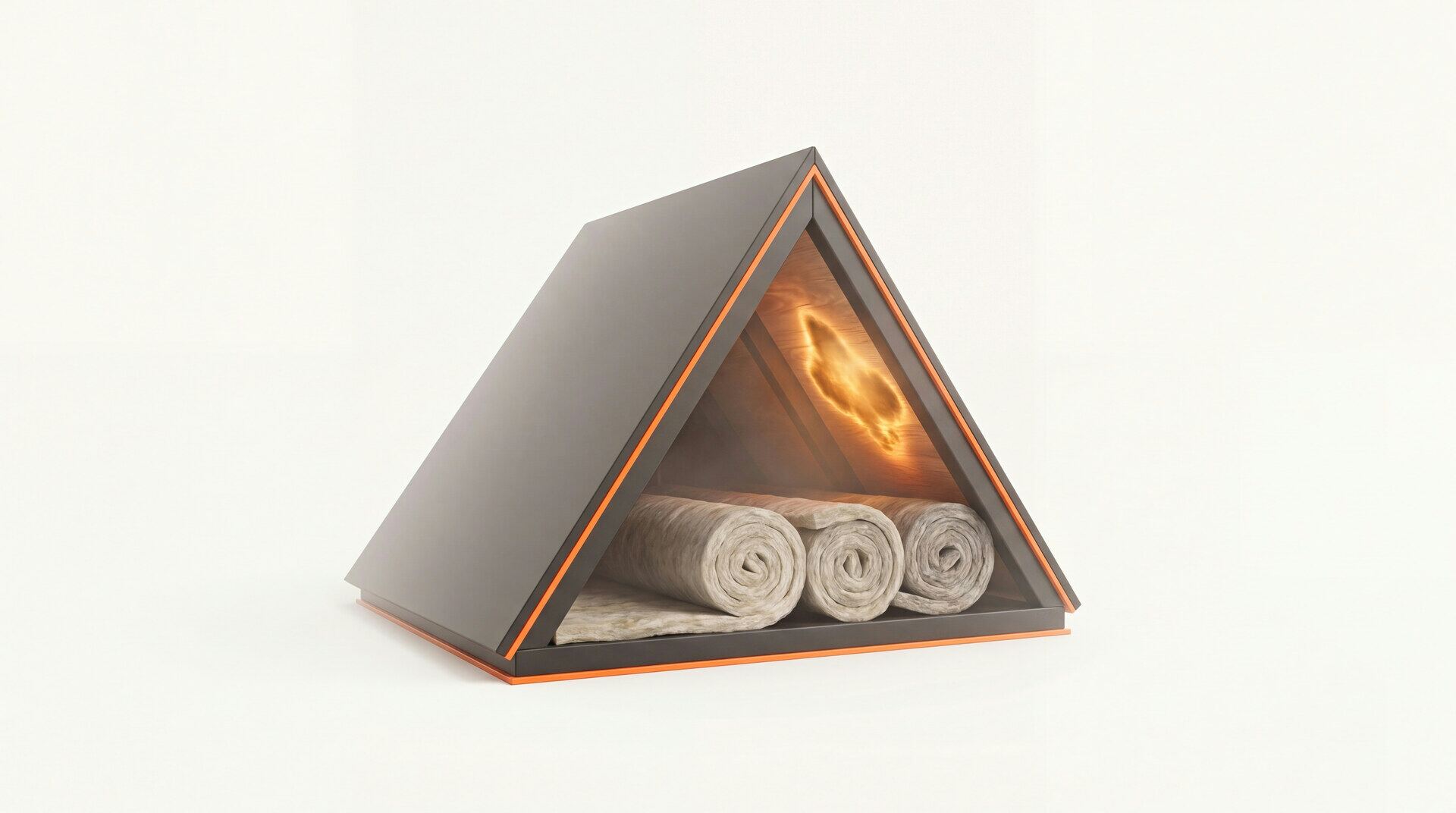
Mold in the Attic
Where storm damage shows up first.
Insurance and Mold
Covered perils, exclusions, and sublimits.

What Remediation Costs
The drivers that actually move a quote.

Mold in Your Apartment
Renter rights, notice letters, and landlord duties.