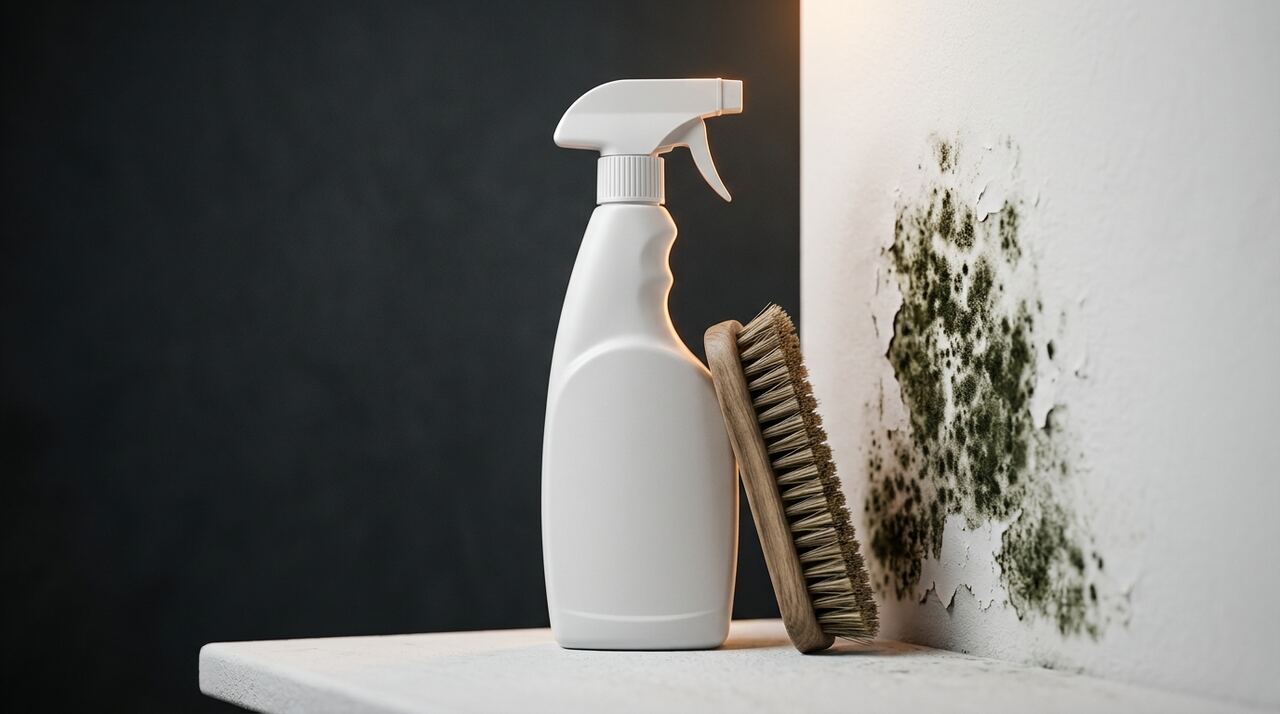
Does steam kill mold?
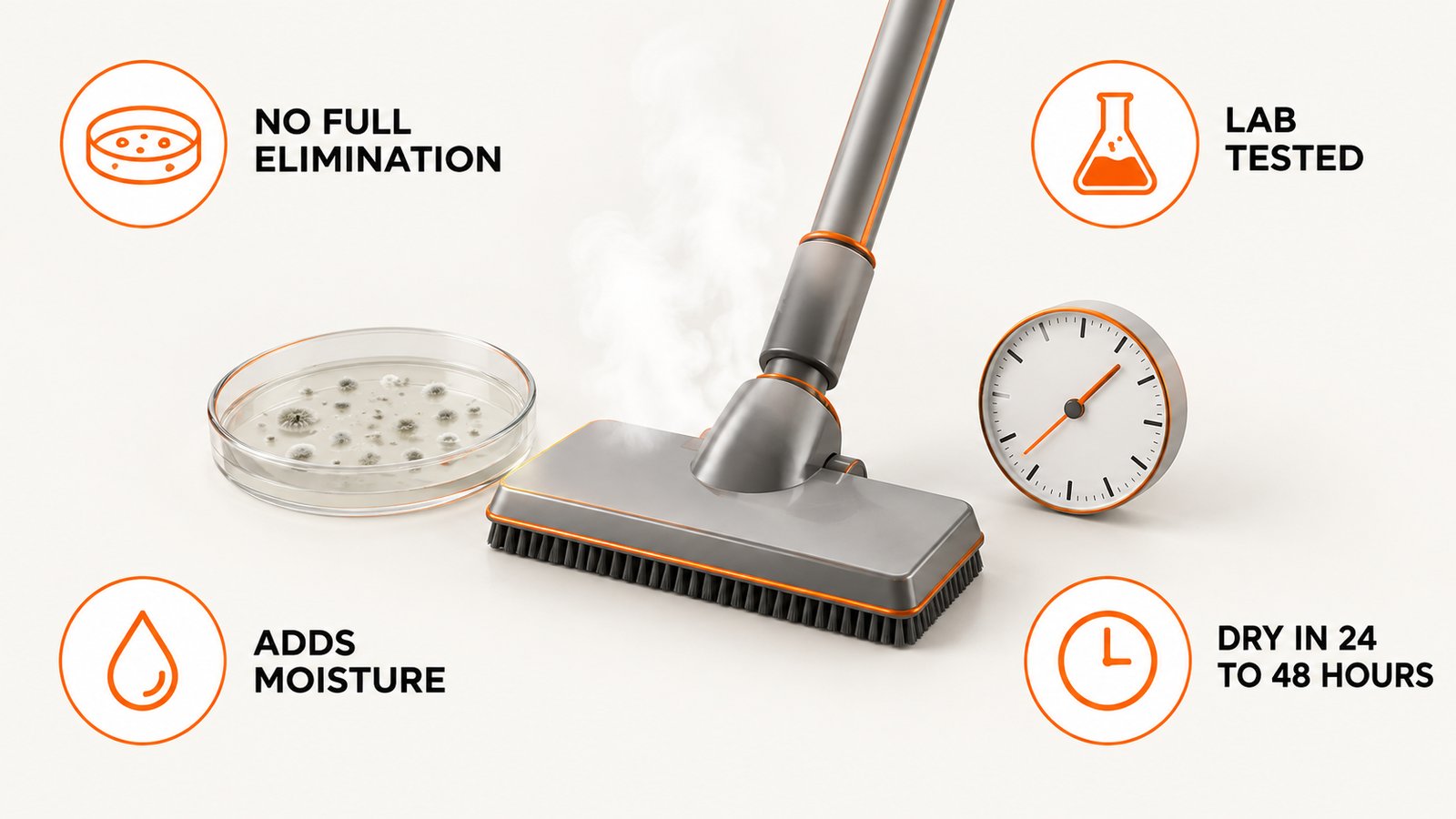
Not reliably. The best evidence we found is a peer-reviewed lab study in the Journal of Occupational and Environmental Hygiene. Researchers put mold spores on paper, cloth, wood and carpet, then tried three cleanup methods. Steam cleaning did not completely eliminate any of the spore species tested. It lowered counts of Penicillium chrysogenum on all four materials, Chaetomium globosum on wood and carpet, and Stachybotrys chartarum on wood only. A detergent and bleach wash did better overall.
That is one lab study from 2004, so treat it as a data point, not the last word. It matches what the EPA says about the bigger picture, though. In its remediation guide the agency writes that it is necessary to clean up mold contamination, not just to kill the mold, because dead mold is still allergenic. Killing is only half the job. The mold has to come off.
Steam brings a second problem: water. Mold needs moisture, and a steam cleaner puts moisture on the surface. The EPA says to dry water-damaged areas and items within 24 to 48 hours to prevent mold growth. If you steam a wall and leave it damp, you may have made the next patch of mold easier to grow.
We looked for a published temperature and contact time that kills household mold on a wall. We found none from the EPA or a university, so this page does not give you a number.
Does a steam cleaner kill mold?
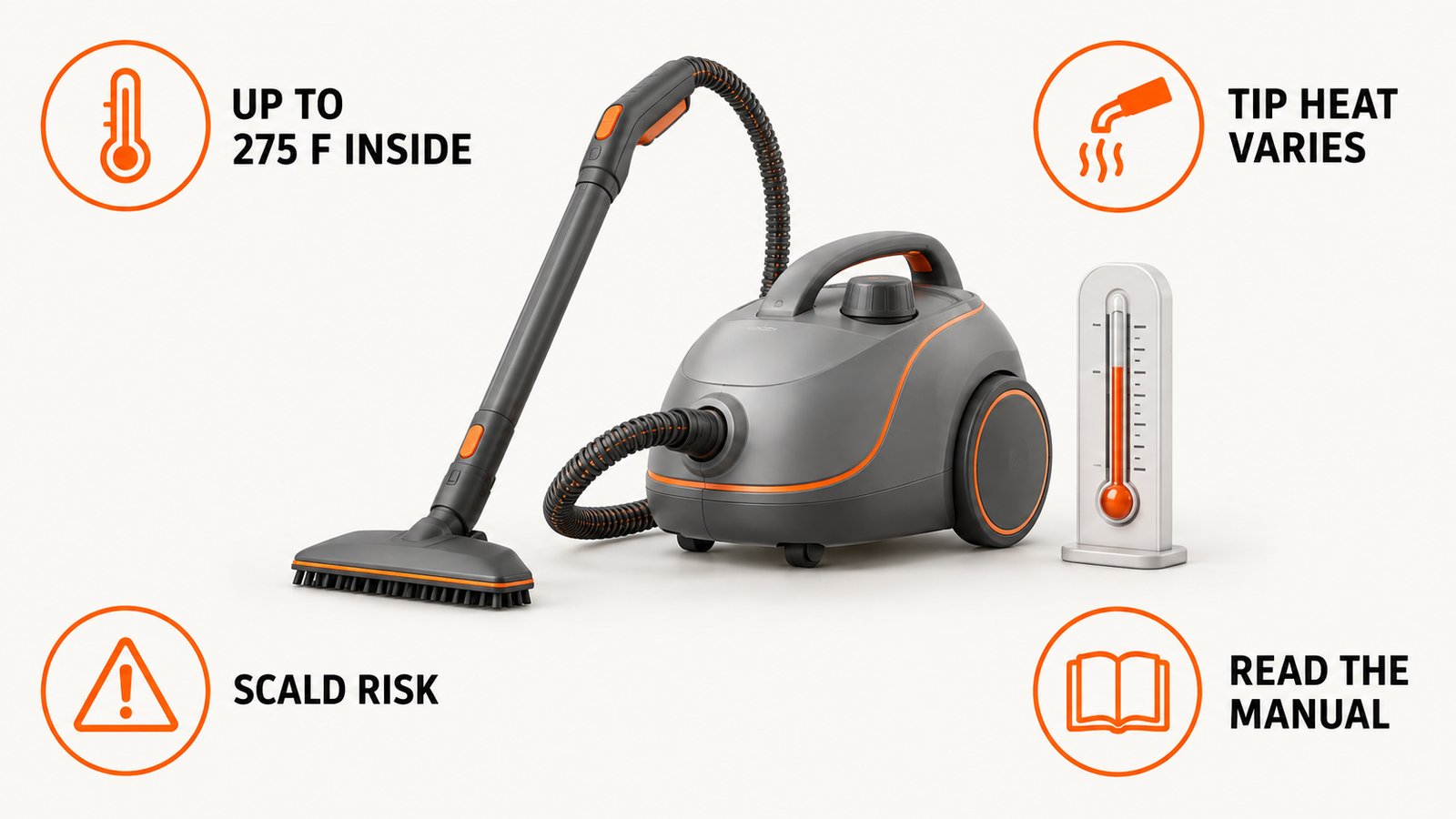
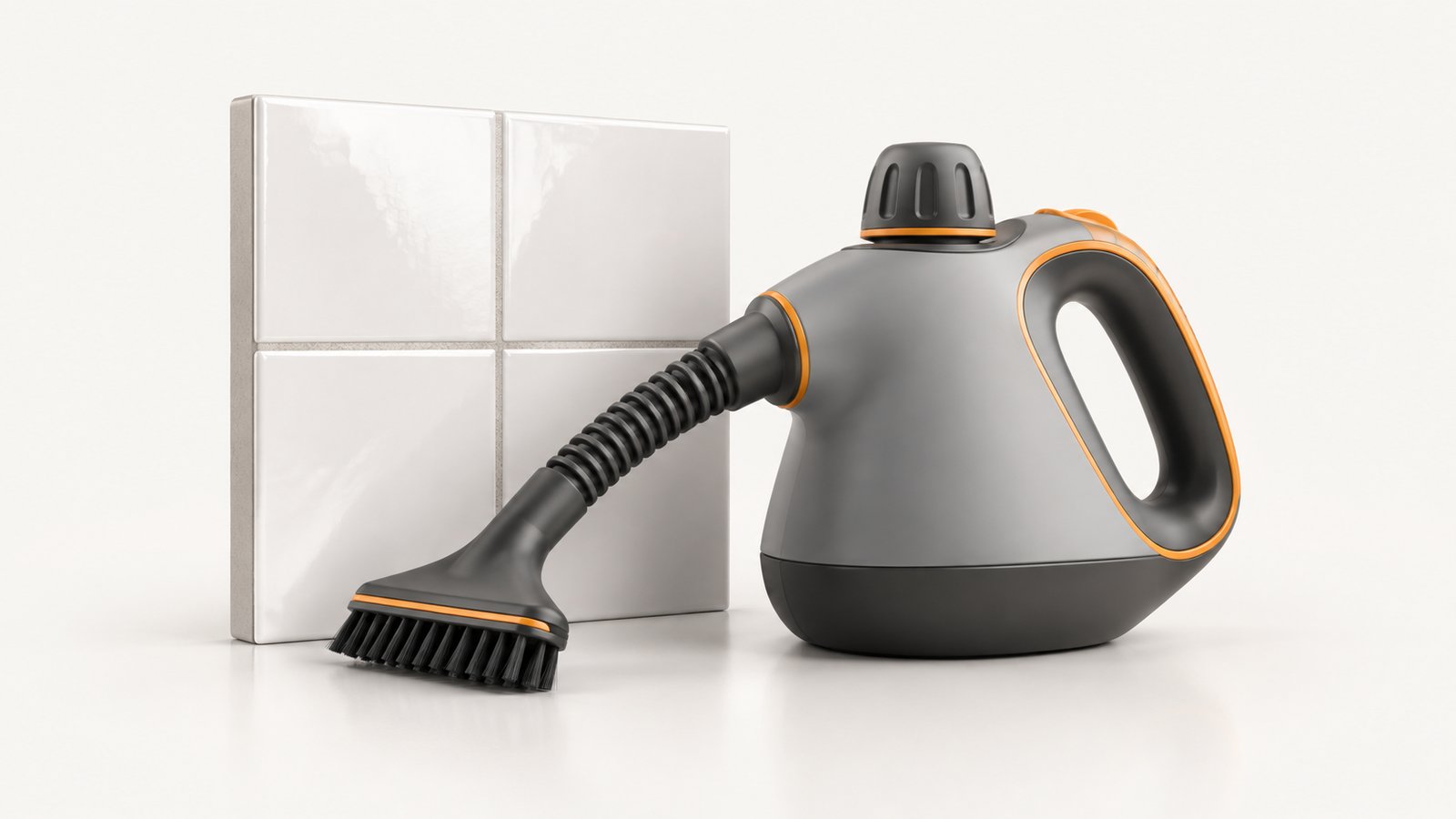
A steam cleaner can lower the amount of mold on some hard surfaces, and it can loosen grime so it wipes off easier. That is a different claim from "kills mold." The lab result above is about the best we can say: some reduction, no full elimination.
Part of the confusion is the temperature on the spec sheet. Dupray says its Neat steam cleaner produces steam internally at up to 275 degrees F (135 degrees C). The same page says the steam temperature at the exit point depends on the accessory used, and on whether the accessory is covered with a thick cloth. So the 275 on the box is not the temperature at your wall.
Other machines have other specs. Look at your own manual. We are not going to guess at the output of a model we did not check.
The practical takeaway is simple. Use steam, if you use it at all, as a way to loosen mold from a hard surface. Then do the part the EPA describes: scrub mold off hard surfaces with detergent and water, and dry completely. The scrubbing and the drying are what get rid of the mold. The steam is optional.
Does steam kill mold on drywall and other porous surfaces?
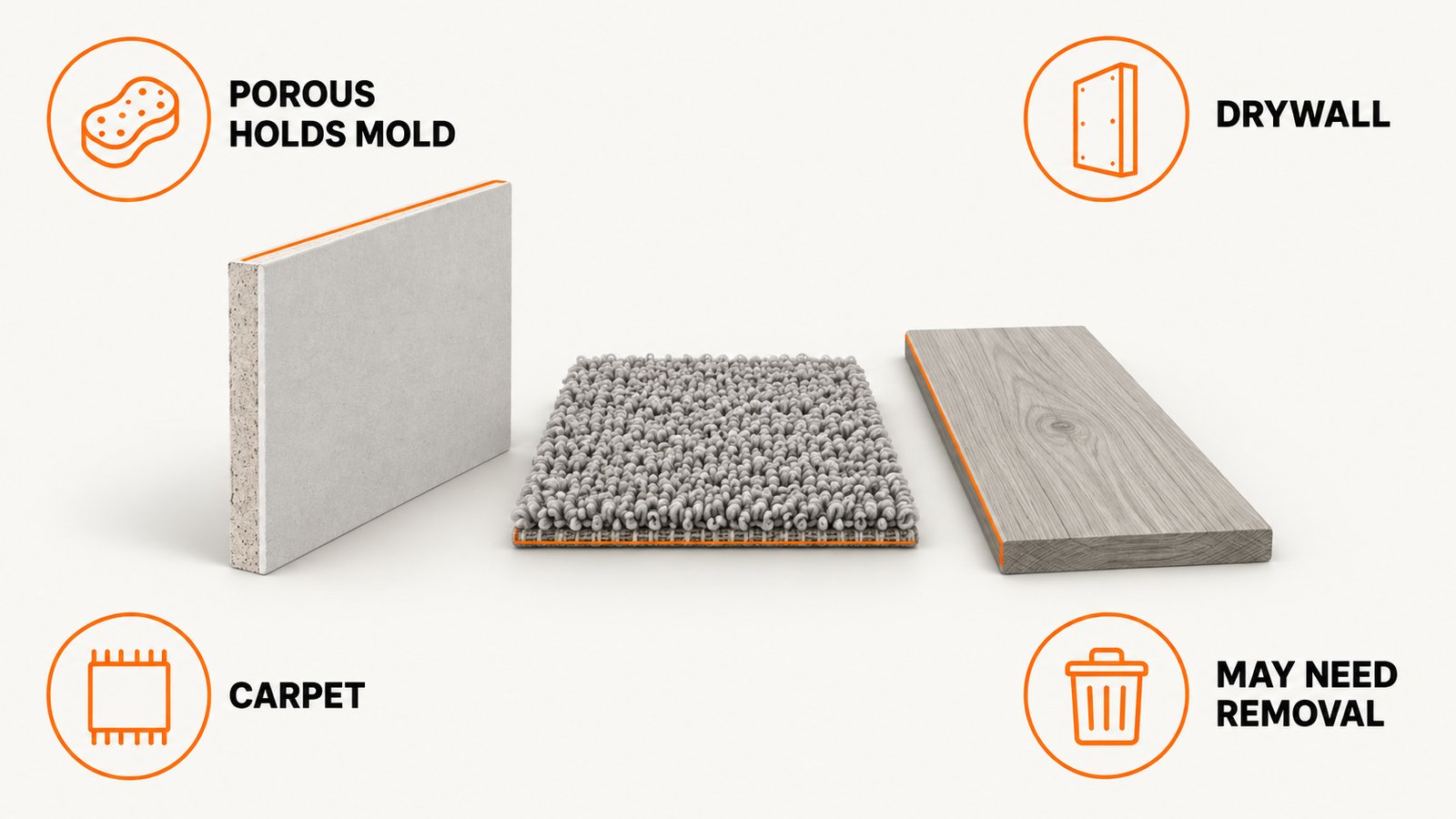
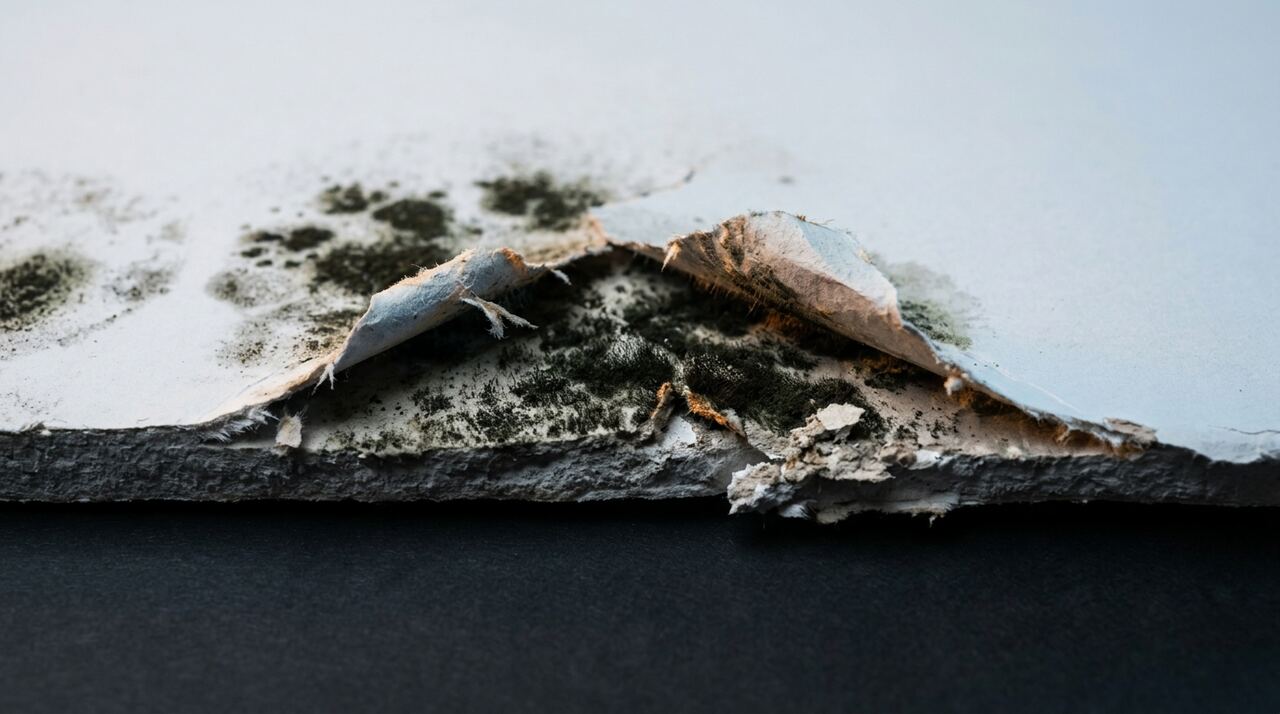
This is where steam is the weakest choice. The EPA says that absorbent or porous materials, such as ceiling tiles and carpet, may have to be thrown away if they become moldy. Its reason is worth reading twice: mold can grow on or fill in the empty spaces and crevices of porous materials, so it may be difficult or impossible to remove completely.
Now picture steam on that. Hot water vapor hits drywall paper, some of it condenses, and the board gets wetter than before. In the lab study, steam did lower Stachybotrys counts on wood but not on paper, cloth or carpet, and no species was fully eliminated on any material.
For these surfaces, the better questions are how deep the mold goes and how long the material was wet. Our guides cover the specifics for mold on drywall, mold on carpet, mold on wood and mold on a mattress. Skip steam on a mattress in particular, since it holds water and dries slowly.
One more thing the EPA is clear about: do not paint over it. Its brief guide says to clean up the mold and dry the surfaces before painting. Our page on whether you can paint over mold explains why.
Steam cleaner for bathroom mold
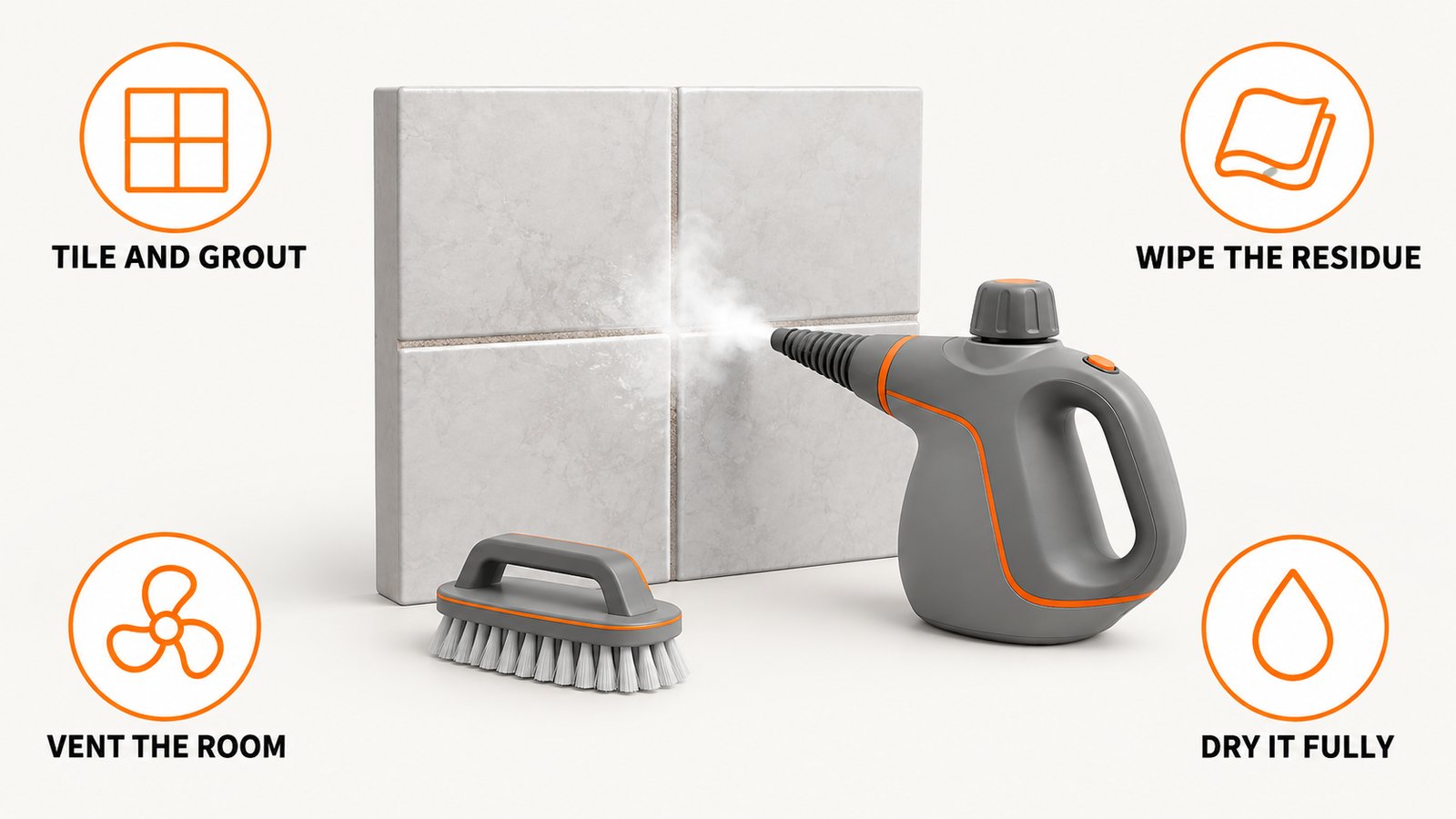
If you are going to steam anything for mold, a bathroom is the likeliest place. Glazed tile, a fiberglass shower pan and a tub are hard surfaces, the kind the EPA's scrub-and-dry method is written for. Grout is rougher and more porous than tile, so it takes more work. Our pages on mold on grout, mold in the shower and mold in the bathroom go deeper on each spot.
A sensible order for a small patch
- Open the window or run the fan.
- Put on the gear in the next section.
- Use the steam as a loosening step on the tile or grout, keeping the tool moving. Check your manual for what to avoid.
- Scrub with a brush and detergent and water, then wipe the residue up with a cloth you can throw out or wash hot.
- Dry the surface, the floor and the nearby walls. The EPA's 24 to 48 hours is the outer limit for wet building materials, not a target.
- Look for the water source. A leak or a weak fan will bring the mold back.
Be careful near caulk, painted drywall and the ceiling. A moldy bathroom ceiling is its own project, covered in our bathroom ceiling mold guide. For products that are made for the job, see our roundup of the best mold remover for shower use.
We have no tested steam cleaner to recommend, so we are not linking to any.
How to steam clean mold safely
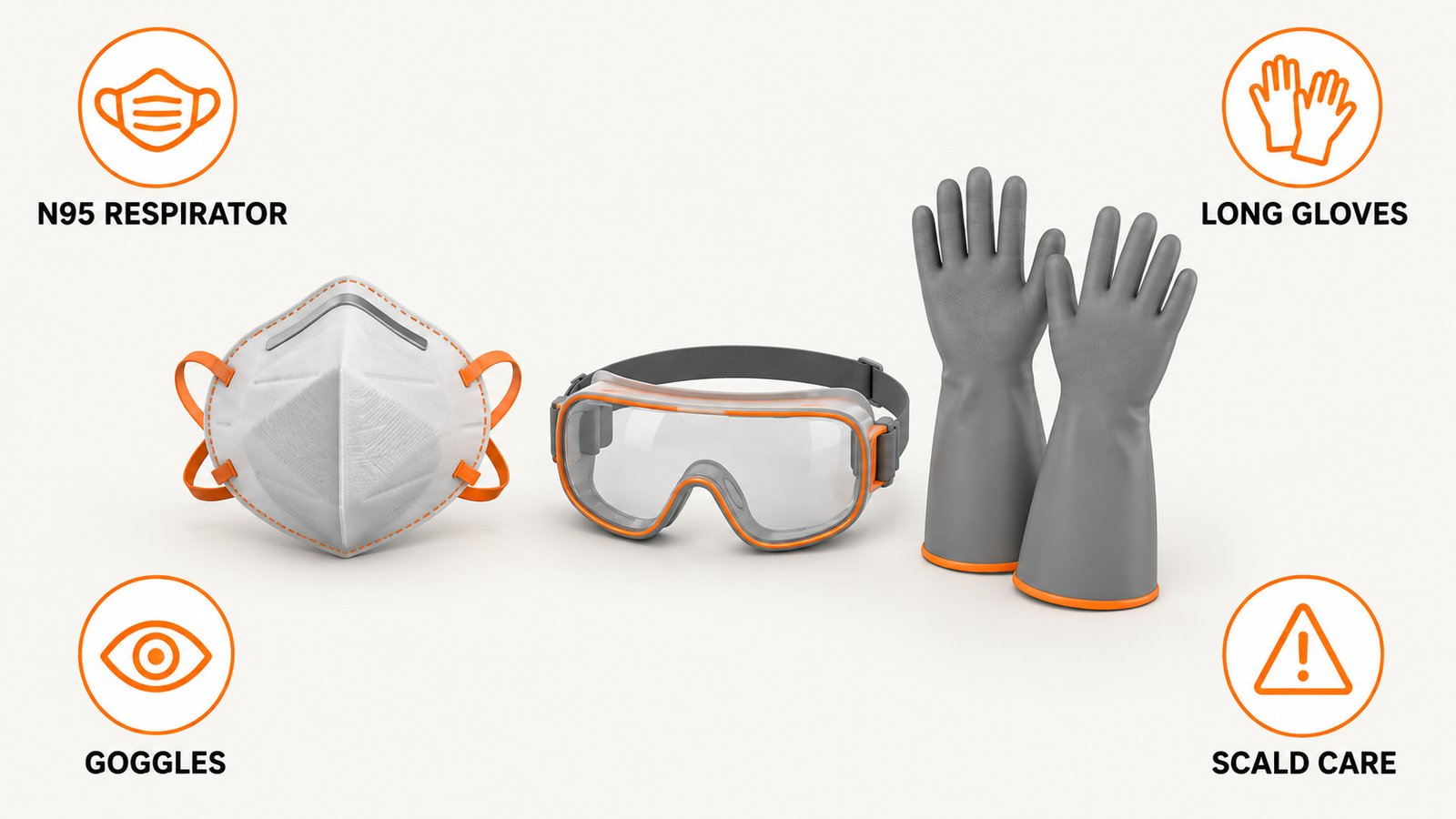
Cleaning mold stirs up spores, and a steam cleaner adds a burn risk on top. Plan for both.
Protect yourself from the mold
The EPA's brief guide lists the basic gear: gloves, goggles and an N-95 respirator. It recommends long gloves that reach the middle of the forearm, and notes that ordinary household rubber gloves work with water and a mild detergent. A respirator only helps if it fits.
Protect yourself from the steam
- Steam can scald. Keep your free hand, your face and other people out of the line of the nozzle.
- Follow your model's manual for pressure caps, fill levels and attachments. Do not defeat a safety lock.
- Keep children and pets out of the room while you work.
Do not mix chemicals with it
If you follow steam with a cleaner, pick one. The EPA warns against mixing bleach with other cleaners or detergents that contain ammonia, because toxic fumes can result. Our pages on bleach, vinegar and hydrogen peroxide cover each one. If you want to get rid of loose dust and spores afterward, a HEPA vacuum is the usual tool.
Steam vs other ways to clean mold
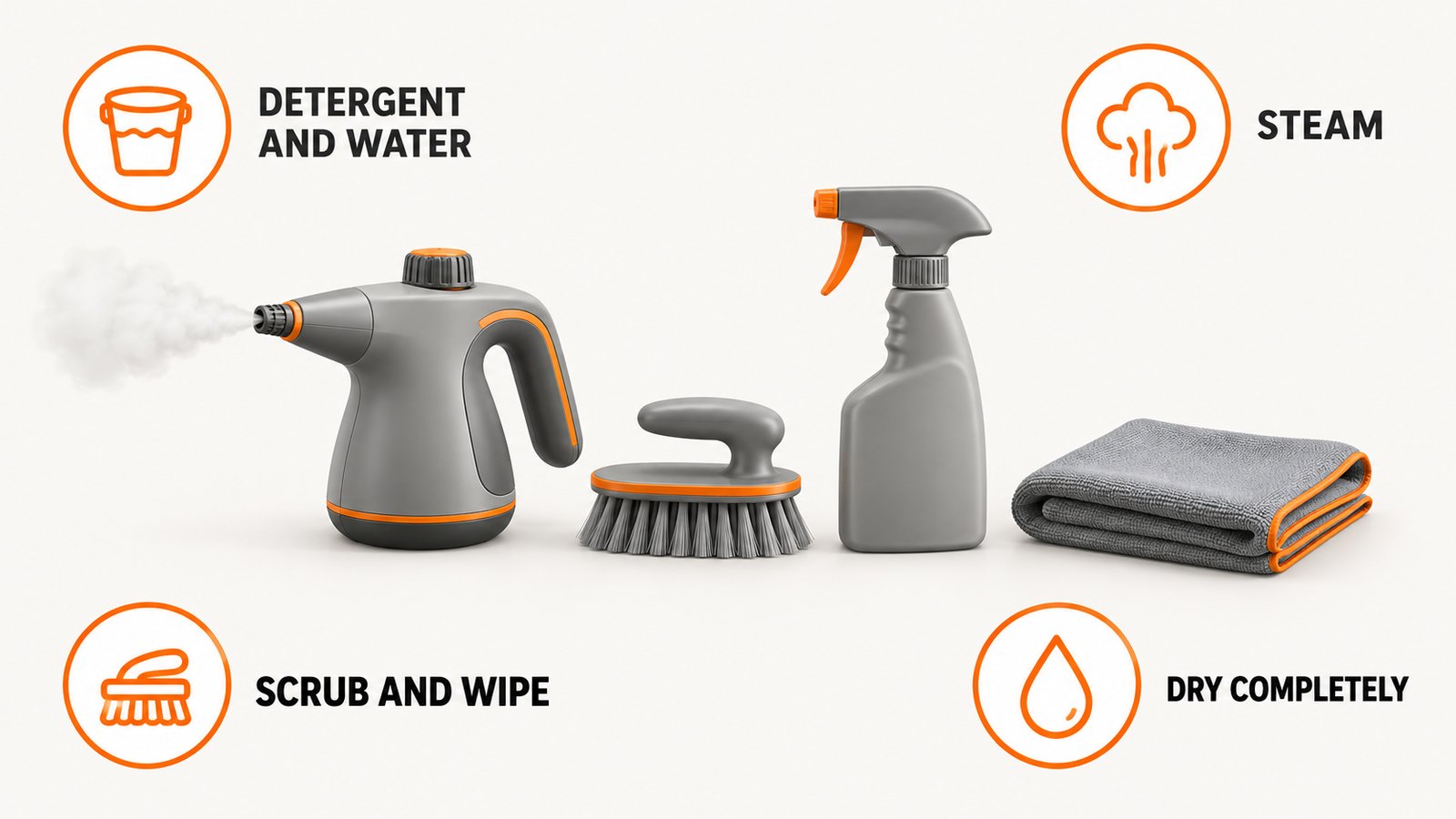
Here is how steam stacks up against the usual choices. Nothing here is a ranking of products. It is a look at what the EPA and the lab study support.
| Method | What the sources say | Watch for |
|---|---|---|
| Steam | Lowered some spore counts in a lab test, eliminated none, and did not inactivate the mycotoxins tested | Added moisture, burns, porous materials |
| Detergent and water, scrub, dry | The EPA method for mold on hard surfaces | Drying completely, throwing out the cloths |
| Bleach | The EPA says a biocide such as chlorine bleach is not recommended as a routine practice in remediation | Fumes, mixing with ammonia, porous surfaces. See our bleach page |
| Vinegar or peroxide | Covered on our own pages, with the same drying rule | Surface damage, small patches only. See vinegar |
The bleach row comes from the same EPA chapter that says dead mold is still allergenic. In the lab study, a detergent and bleach wash was the strongest of the three methods compared. Both facts can be true: a method can work in a lab and still not be the first thing to reach for at home.
For the full picture of what to try, start with our guide on how to get rid of mold, and see mold removal for the bigger jobs.
When to call a pro instead of steaming mold
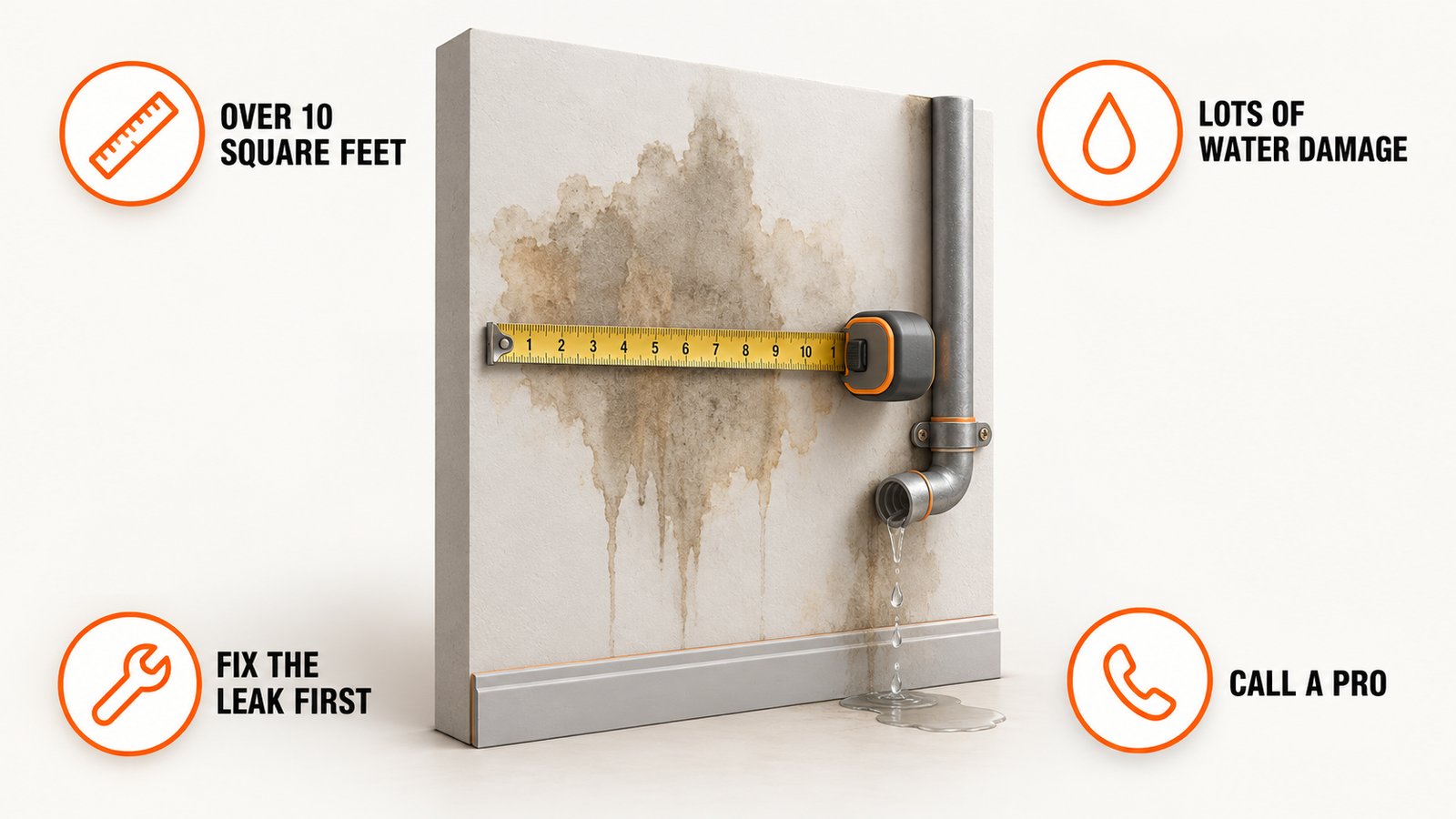
Steam is a small-job tool at best. The EPA says that if the moldy area is less than about 10 square feet, roughly a 3 foot by 3 foot patch, you can in most cases handle the job yourself. If there has been a lot of water damage, or the mold covers more than 10 square feet, the agency points you to its remediation guide for larger jobs.
These are good reasons to stop and call someone:
- The patch is bigger than a 3 foot by 3 foot square.
- The mold is on drywall, carpet, insulation or ceiling tile, and it keeps coming back.
- The wall or floor stayed wet longer than 48 hours.
- You are not sure where the water is coming from.
High humidity feeds mold. The EPA's remediation guide says to maintain indoor humidity below 60%, ideally 30 to 50%, if possible. A dehumidifier helps in damp rooms, and our mold prevention guide covers the rest. For what a pro does, see mold remediation.
Frequently asked questions
Does steam kill mold?
Not reliably. In a peer-reviewed lab study, steam cleaning did not completely eliminate any of the mold spore species tested, though it lowered some counts on some materials. The EPA also says dead mold can still cause allergic reactions, so the mold has to be removed, not only killed.
Does a steam cleaner kill mold on walls?
It can lower mold on a hard, painted wall, but it is a weak choice for drywall. Drywall is porous, steam adds water, and the EPA says porous materials that stay wet and moldy may have to be thrown away. Dry the wall within 24 to 48 hours if you steam it.
Can I use a steam cleaner for bathroom mold?
Yes, on a small patch of hard surface like tile, with the fan on and proper gear. Use steam to loosen the mold, scrub with detergent and water, wipe the residue and dry the room.
Does steam kill mold spores?
In the lab study, steam did not eliminate any spore species completely. It reduced some counts, such as Penicillium chrysogenum on all tested materials. Results varied by species and material.
How hot is the steam from a steam cleaner?
It depends on the model. One manufacturer, Dupray, states steam up to 275 degrees F inside the unit and says the temperature at the exit point depends on the accessory. The number on the box is not the temperature at the surface. Check your own manual.
What gear do I need to steam clean mold?
The EPA lists gloves, goggles and an N-95 respirator for mold cleanup, with long gloves recommended. Steam adds a burn risk, so keep the nozzle pointed away from your hands, face and other people, and follow the manual for your machine.
How long should the area dry after steaming mold?
The EPA says to dry water-damaged areas and items within 24 to 48 hours to prevent mold growth. Steam adds moisture, so use a fan, open a window or run a dehumidifier, and make sure the surface is fully dry before you close the room up.
Should I steam clean mold on a carpet or mattress?
We would not. Both soak up water and dry slowly, and the EPA says porous materials such as carpet may have to be thrown away if they become moldy. See our pages on mold on carpet and mold on a mattress for what to do.
Sources
Every claim on this page traces to one of these. Links open the primary document.