What actually works on shower mold, and what does not
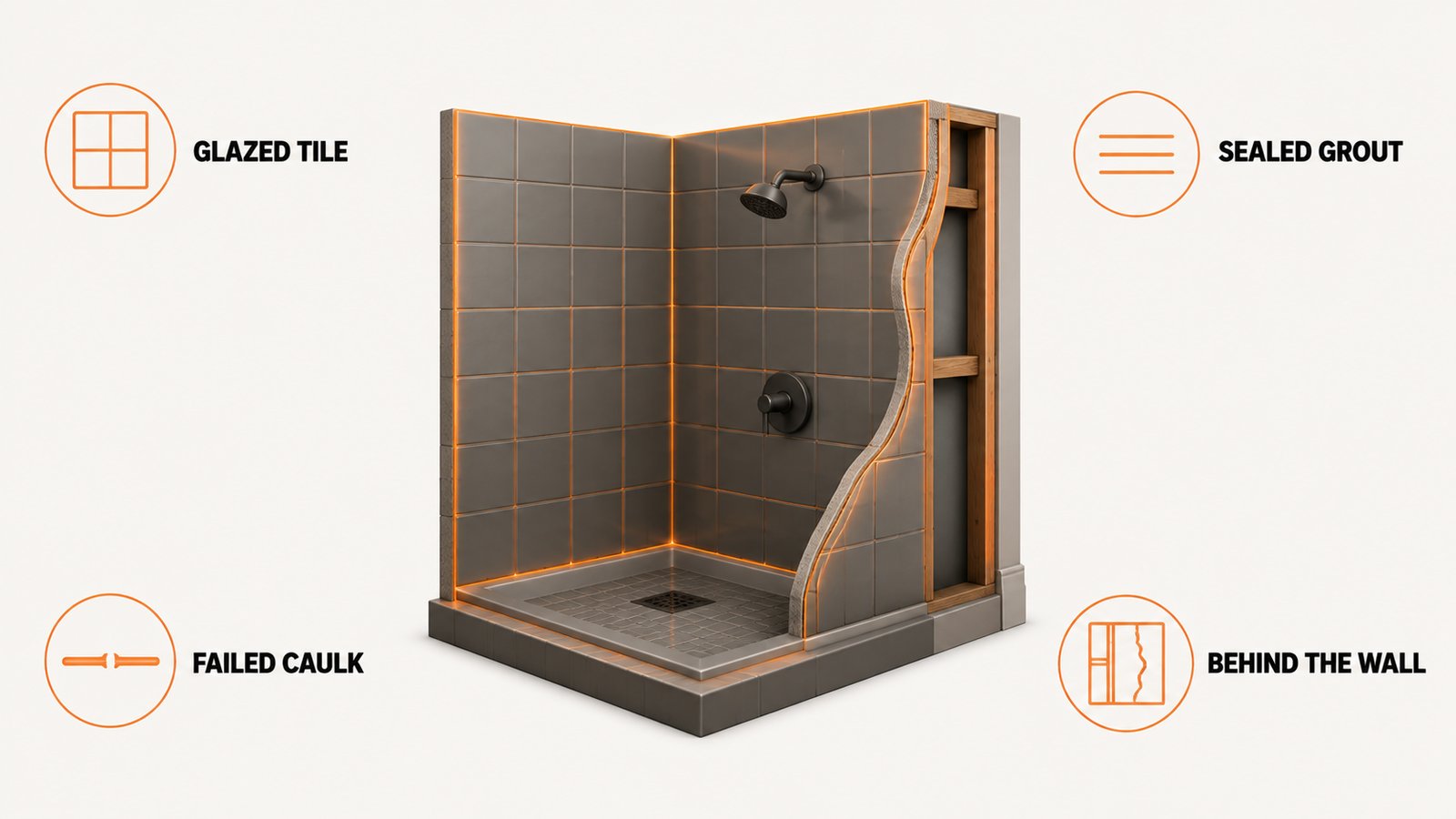
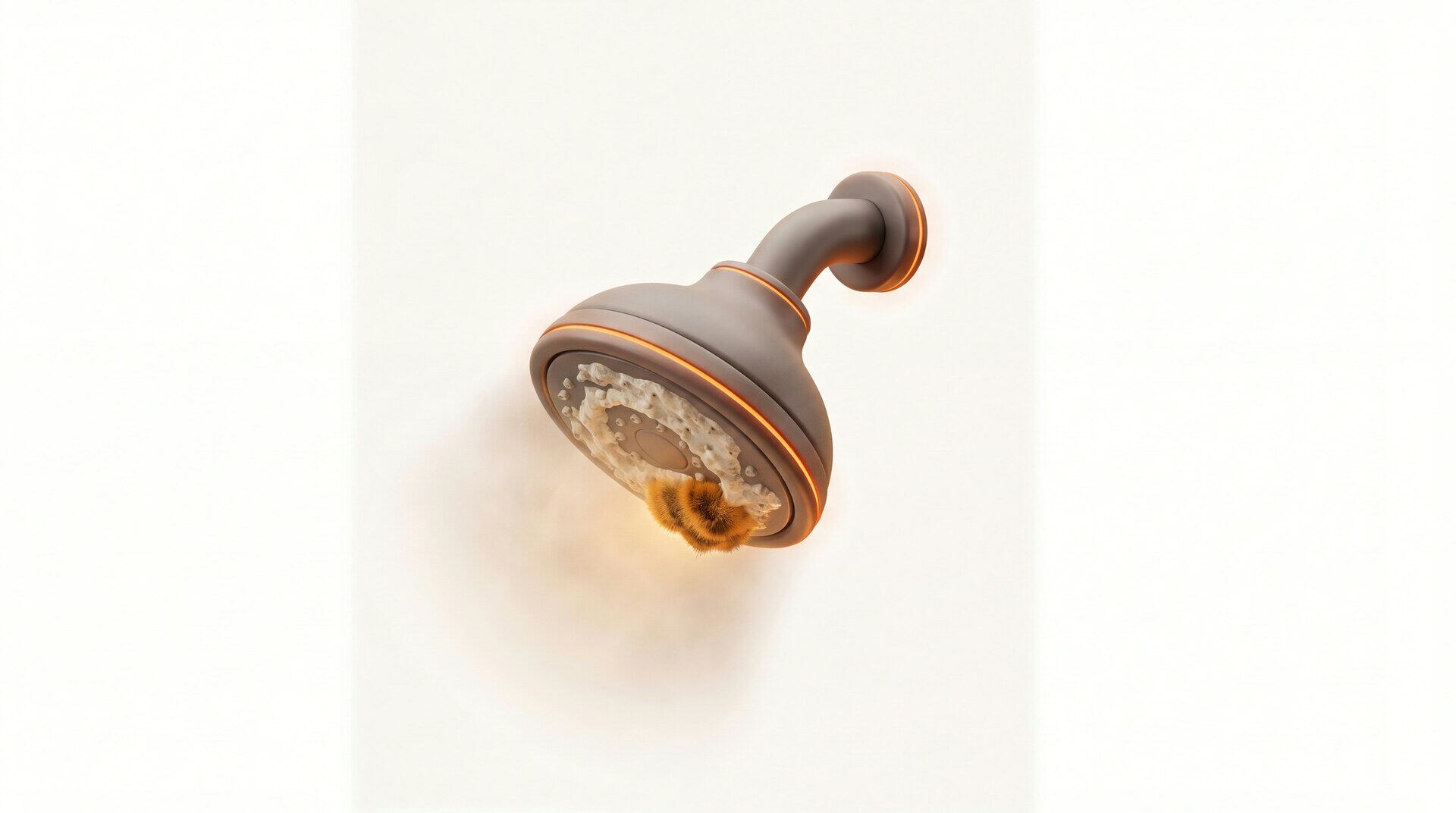
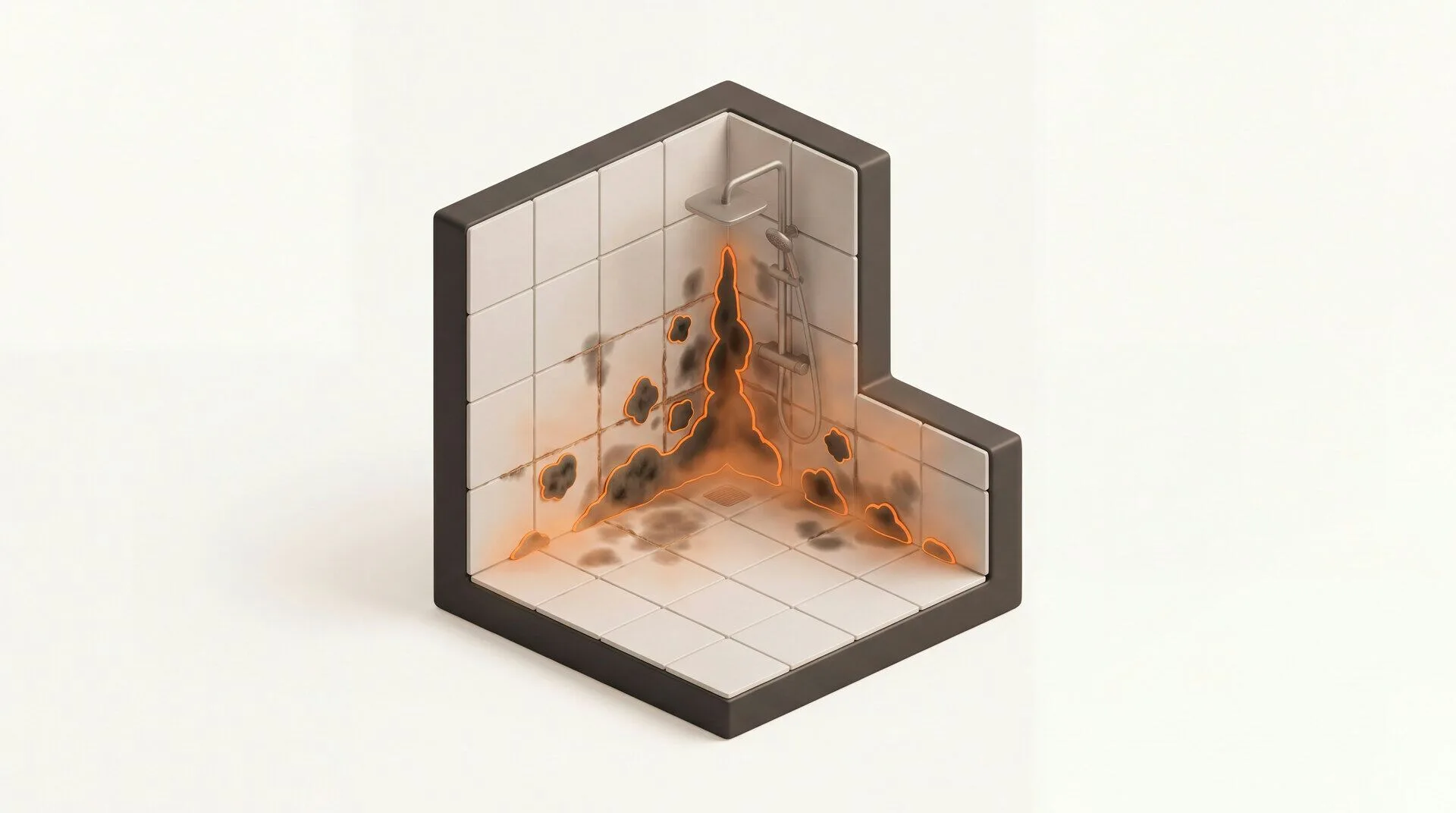
A shower has three different problems wearing one name, and only two of them are a cleaning job.
Glazed tile, glass, and enamel. Non-porous, so growth sits on top. Any product on this page handles it, and so does detergent and water, which is what EPA actually instructs for hard surfaces.
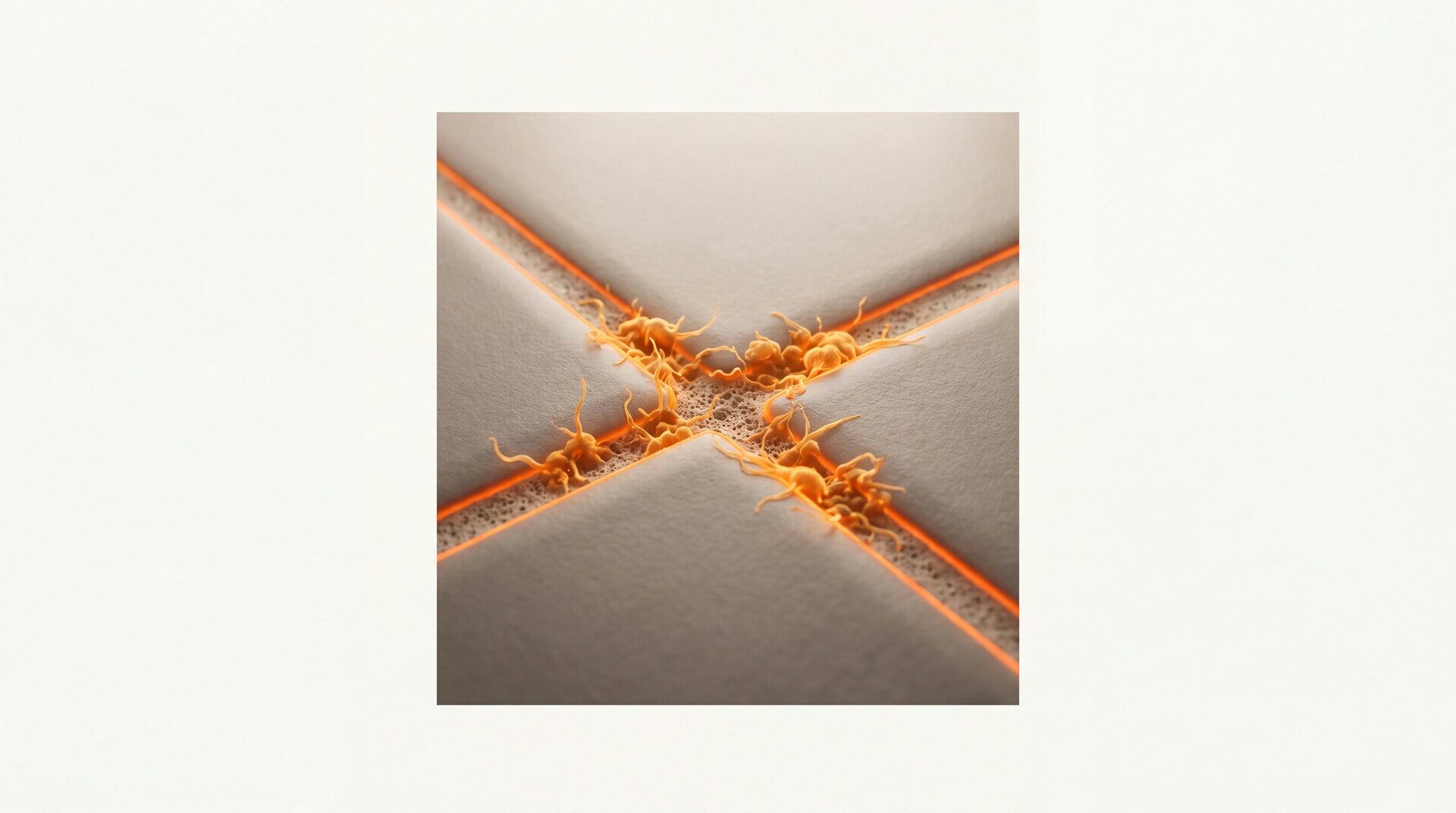
Grout. Sealed grout behaves like a hard surface. Unsealed or worn grout is porous, and a spray reaches the film but not the depth. This is where a stain remover earns its money, because the growth dies and the gray shadow stays.
Silicone caulk at the tub or pan joint. Once growth is inside the bead, nothing topical gets it out. The bead comes out and a new one goes in. Our page on mold on caulk covers that replacement, and mold on grout covers when to seal versus regrout.
There is a fourth case that is not a cleaning job at all. If the wall behind the tile is soft, if tiles sound hollow, or if growth keeps coming back in the same seam within weeks, water is getting behind the surround. That is a leak, and cleaning it is treating a symptom. See mold in the shower for how the failure usually starts, and dark growth in the bathroom for why the color tells you nothing about what to do next.
Pink or orange slime in the same shower is usually not mold at all. See pink mold in the shower before you buy anything for it.
The 4 best mold removers for shower, at a glance
Every product below was checked on its live Amazon listing on September 2, 2026: the page returned HTTP 200, the product title matched, and the rating and rating count came off the listing's own review widget.
| Product | Chemistry | Rating | Best for |
|---|---|---|---|
| RMR-86 Instant Mold and Mildew Stain Remover | Bleach-based, no-scrub stain remover | 4.4 out of 5 from 66,510 ratings | The stain left behind in grout and caulk |
| Concrobium Mold Control | Bleach-free, EPA-registered, no VOCs | 4.1 out of 5 from 2,422 ratings | A bathroom you cannot ventilate well |
| Clorox Plus Tilex Mold and Mildew Remover | Sodium hypochlorite bleach | 4.8 out of 5 from 1,731 ratings | Shower walls, tile, and sealed grout |
| Mold Armor Mold and Mildew Killer + Quick Stain Remover | Bleach-based disinfectant and cleaner | 4.6 out of 5 from 4,931 ratings | Hard, non-porous surfaces you want disinfected too |
Ratings and rating counts read off the live Amazon listing for each ASIN on September 2, 2026. We are not publishing prices, because the price element on those pages did not return a value we could trust on every listing. Check the live listing before you order.
None of the four is a substitute for fixing a leak, and none of them makes porous material safe to keep. EPA is direct that there is no practical way to eliminate all mold and mold spores indoors, and that the way to control indoor growth is to control moisture.
The 4 picks, ranked
Heads up: the Amazon links below are affiliate links, and buying through them may earn Mold Scanner AI a small commission at no extra cost to you.
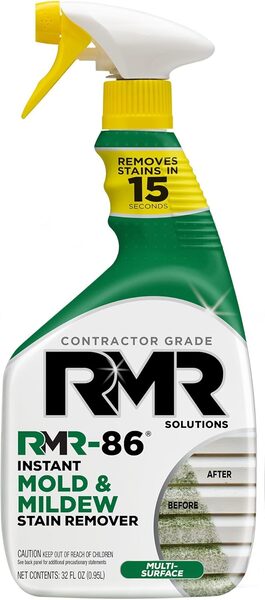
RMR-86 Instant Mold and Mildew Stain Remover Spray, 32 Fl Oz
4.4 out of 5 stars from 66,510 ratings, far and away the deepest review history of anything in this category. It is a stain remover first: the listing is built around removing the staining black mold and mildew leave behind, on a spray-and-wait basis with no scrubbing. That maps exactly onto the shower problem, where the growth is usually gone after one clean but the gray shadow in the grout is not. The listing itself tells you to use ventilation and protective equipment for every application, which is the tell that this is a strong formula rather than a mild one. Our full RMR-86 review covers where it falls short.
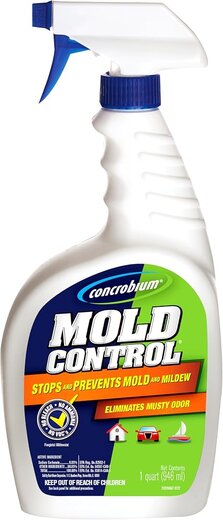
Concrobium Mold Control, 32 oz Spray
4.1 out of 5 stars from 2,422 ratings. This is the one to reach for in a bathroom with a weak fan or no window. Its listing states it is registered with the US Environmental Protection Agency for mold control when used as directed, and that it contains no bleach, no ammonia and no volatile organic compounds. It also claims to leave an invisible barrier that helps prevent future growth, which is a different mechanism from a one-shot kill. It is listed as safe on drywall, wood, tile, grout, concrete and fabric. Read our Concrobium Mold Control review for how the film actually behaves.
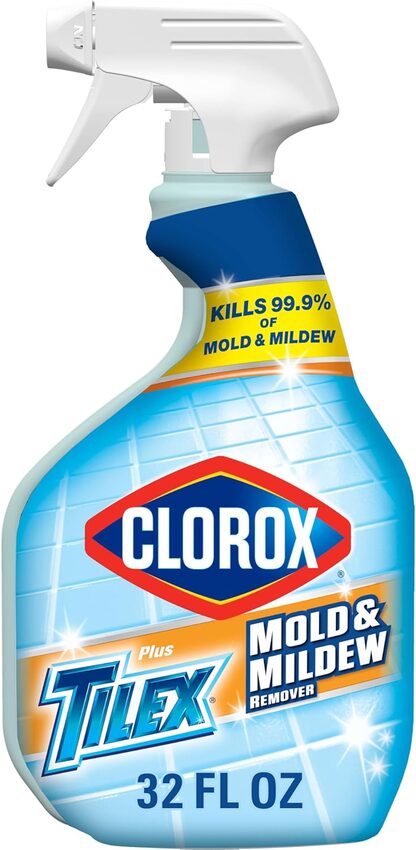
Clorox Plus Tilex Mold and Mildew Remover with Bleach, 32 Fl Oz
4.8 out of 5 stars from 1,731 ratings, the highest score of the four. The listing is specific about where it belongs: shower walls, sinks, counters, tub and tile, and hard non-porous surfaces, with a warning to avoid prolonged contact with metal and old porcelain. It is a bleach product, so it needs the window open and it must never meet another cleaner. Our Tilex review has the surface-by-surface detail.
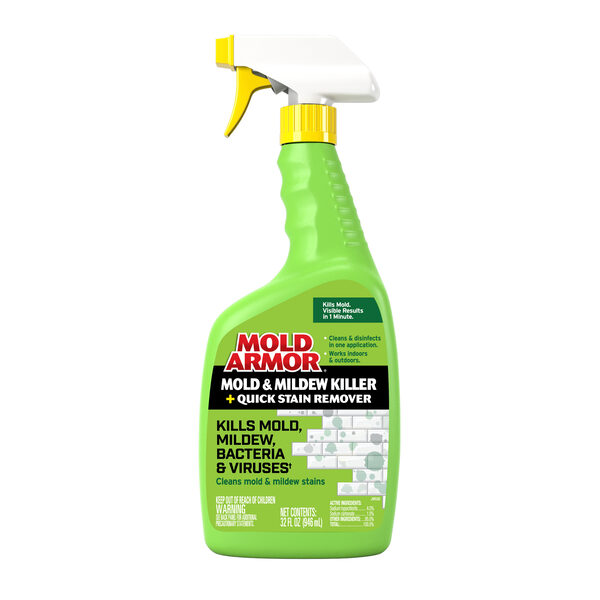
MOLD ARMOR Mold and Mildew Killer + Quick Stain Remover, 32 oz
4.6 out of 5 stars from 4,931 ratings. A bleach-based formula that the listing describes as cleaning and disinfecting in one application, for use on hard non-porous surfaces including bathtubs, shower doors, toilet seats, countertops, sinks and sealed grout. Note the phrase sealed grout. Unsealed grout is porous, and porous is where every product on this page runs out of road. Our Mold Armor review goes through the label instructions.
Two more we checked and did not rank. Star Brite Professional Grade Mold and Mildew Stain Remover, 4.5 out of 5 from 1,552 ratings, is a buffered-bleach formula aimed at marine and outdoor fabric, which is a different job from a tiled shower. CLR Mold and Mildew Stain Remover, 4.1 out of 5 from 3,534 ratings, is bleach-free and lists participation in the EPA Safer Choice program, which is a formulation program and not a mold efficacy registration. Both resolve and both have real review histories; neither beat the four above for a shower specifically.
Affiliate disclosure: the Amazon links above are affiliate links. If you buy through them, Mold Scanner AI may earn a small commission at no extra cost to you. We verified that every listing resolved and that the product title, rating and rating count matched on September 2, 2026; those change, confirm before you order.
Bleach or bleach-free: which one for your shower
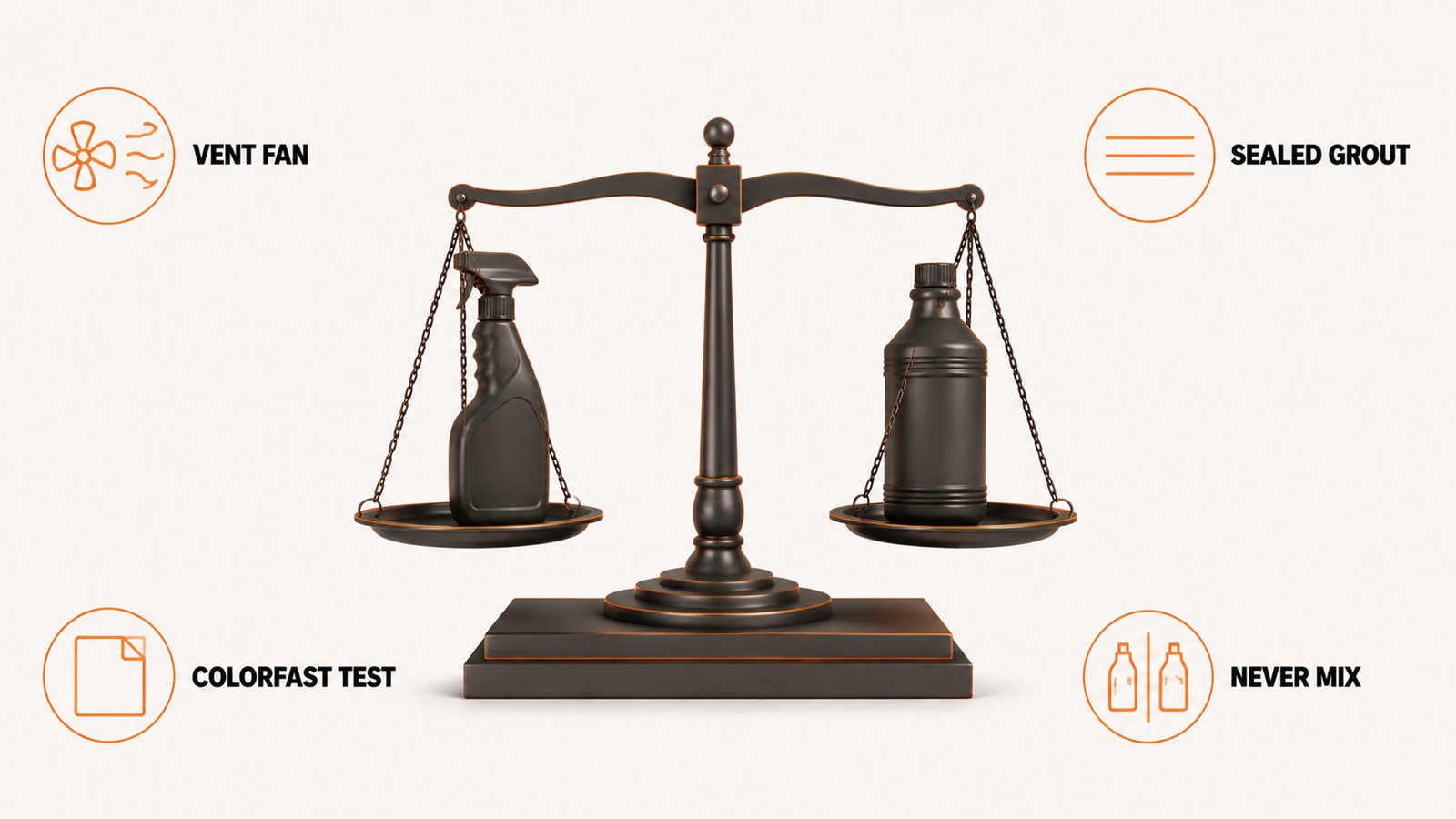
Three questions settle it.
Can you ventilate? A bleach product in a windowless bathroom with a weak fan is unpleasant and avoidable. That is the case for Concrobium, whose listing states it contains no bleach, no ammonia and no volatile organic compounds and is EPA-registered for mold control when used as directed.
Is the surface sealed? Bleach-based products are written for hard, non-porous surfaces, and Mold Armor's own listing says sealed grout specifically. On unsealed grout the liquid soaks in and the growth in the depth is untouched, which is why the stain returns and people conclude the product failed.
Is anything in the shower going to react? The Tilex listing warns against prolonged contact with metal and old porcelain. Test a hidden corner on colored grout, natural stone, and anything with a metal finish.
Whatever you pick, the safety rule is absolute. CDC states never to mix bleach with ammonia or other cleaners, because it produces a poisonous gas. That includes the glass cleaner already on the shelf. Use one product at a time and rinse in between. We ran the underlying question down separately on does bleach kill mold, and the answer is more complicated than the bottle suggests.
How to use any of them without wrecking the bathroom
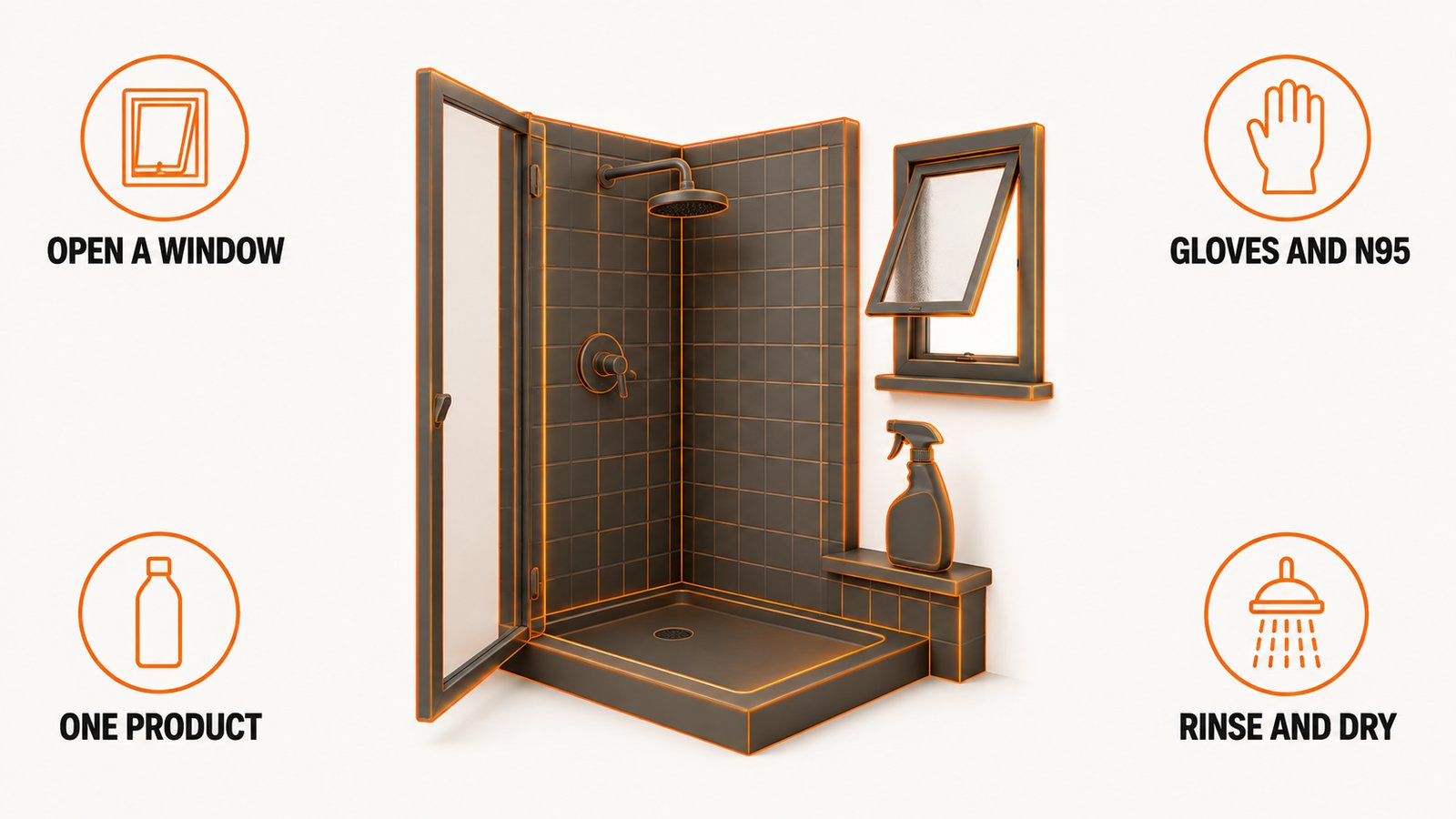
Ventilate before you spray, not after. Open the window, run the fan, and leave the door open. The RMR-86 listing calls for proper ventilation and protective equipment on every application, and that is a reasonable floor for all four.
Wear gloves and eye protection. For a small shower clean that is enough. If you are also disturbing growth on a larger area, EPA's protective-equipment guidance for a small job is an N95 respirator, gloves, and goggles.
Clear the shower first. Bottles, razors, a bath mat, anything fabric. Overspray on textiles is where colorfast complaints come from.
Let it dwell, then rinse. These are spray-and-wait products, not scrub products. Rushing to a brush after 20 seconds is how people decide a formula does not work.
Dry the surface completely. Both EPA and CDC end their cleaning instruction the same way. Squeegee the walls, run the fan for another 20 minutes, and keep indoor humidity in the 30 to 60 percent band EPA recommends. That is the step that decides whether you are back here in a month.
Never mix, never layer. One product per session. If you want to try a second, rinse the surface, dry it, and wait.
When a shower cleaner is the wrong tool
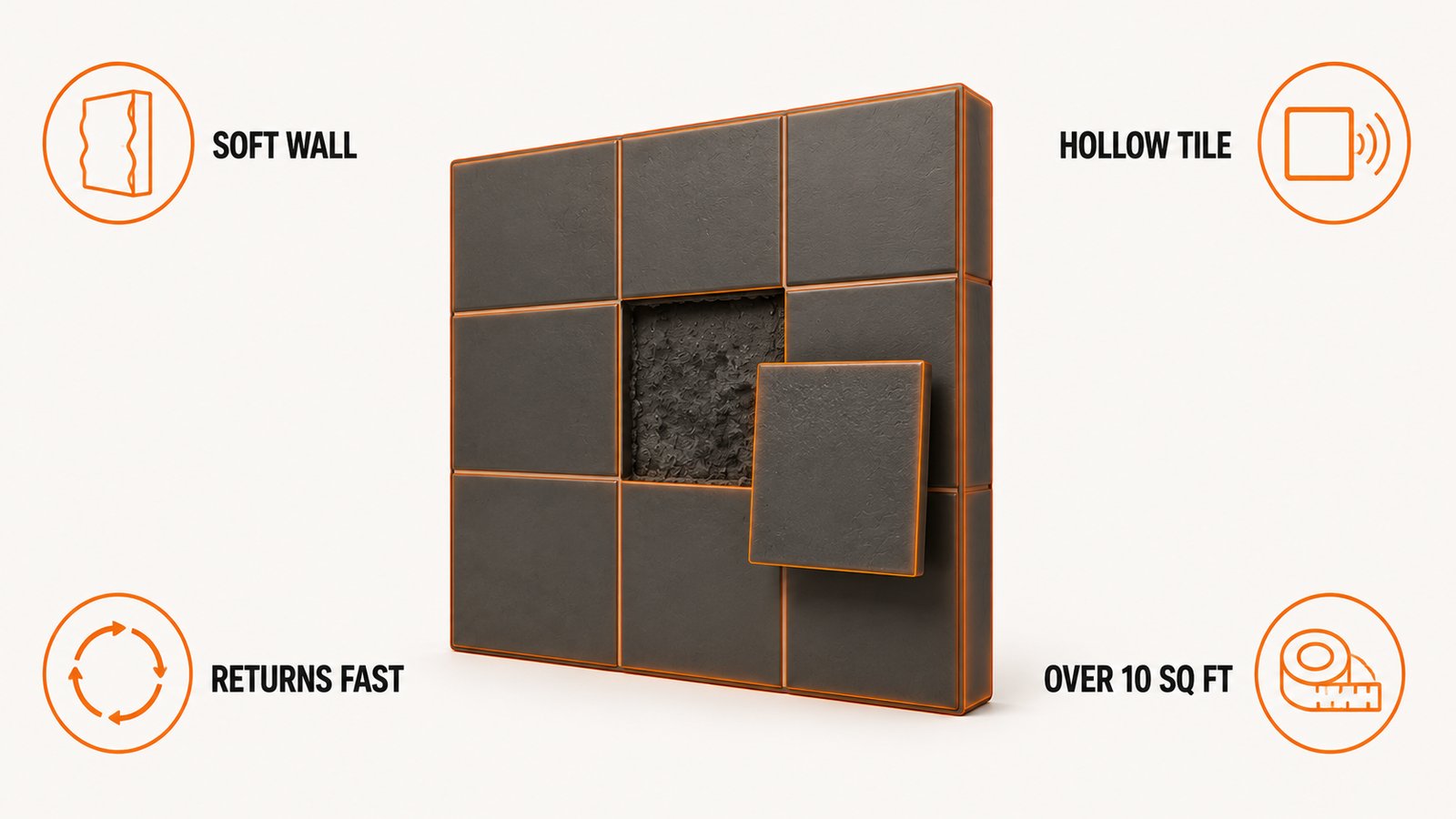
No spray on this page fixes any of the following, and using one anyway just delays the real repair.
The affected area is bigger than about 10 square feet. EPA's line for consumer cleanup, above which it points readers to its professional remediation guide.
The wall behind the tile is soft, or tiles sound hollow. Water is behind the surround. That is a tile and waterproofing repair, and the growth is a symptom.
It comes back within weeks in the same seam. Regrowth on that schedule is a moisture verdict. Something is still wet, and EPA's guidance is that controlling indoor growth means controlling moisture.
Someone in the home reacts to it. CDC says exposure to damp and moldy environments may cause a variety of health effects or none at all, that people with asthma or a mold allergy may have severe reactions, and that immune-compromised people and people with chronic lung disease may get lung infections from mold. Keep them out of the room while you work and ask a licensed clinician about symptoms.
If it turns out to be a repair rather than a clean, our 2026 price tables are on mold remediation cost. If you would rather compare the whole category first, best mold removal products covers foggers, concentrates and outdoor formulas as well as sprays.
Frequently asked questions
What is the best mold remover for a shower?
For the gray staining left in grout and caulk, RMR-86 Instant Mold and Mildew Stain Remover has by far the deepest review history of anything in the category at 4.4 out of 5 from 66,510 ratings, and it is built as a spray-and-wait stain remover rather than a scrub. If you cannot ventilate the bathroom well, Concrobium Mold Control is the bleach-free alternative and its listing states it is EPA-registered for mold control when used as directed.
Do I need bleach to remove shower mold?
No. EPA's own instruction for hard surfaces is detergent and water, scrubbed and dried completely. Bleach products work on hard non-porous surfaces and are convenient, but they need ventilation and they must never be mixed with another cleaner. A bleach-free product is the better choice in a bathroom with no window and a weak fan.
Why does the stain stay after the mold is gone?
Because staining goes deeper than the growth does, especially in unsealed grout and silicone caulk. Killing the colony does not lift the pigment. That is the specific job a stain remover such as RMR-86 is written for. If the caulk bead itself is discolored through, replacement is the only real fix.
Is it safe to use these products in a small bathroom?
With ventilation, yes, and one product at a time. Open the window, run the exhaust fan, leave the door open, and wear gloves and eye protection. CDC warns never to mix bleach with ammonia or other cleaners because it produces a poisonous gas, and household glass cleaners are a common ammonia source.
Will a shower spray stop the mold coming back?
Only if the shower dries out between uses. EPA states there is no practical way to eliminate all mold and mold spores indoors and that the way to control growth is to control moisture, with indoor humidity held between 30 and 60 percent. Squeegee the walls, run the fan after every shower, and check that the fan vents outside rather than into the attic.
Can I use these on natural stone or colored grout?
Test a hidden corner first. The Tilex listing warns against prolonged contact with metal and old porcelain, and bleach-based products can lighten colored grout and etch some stone. A bleach-free product is the safer starting point on anything you cannot replace easily.
How long should the product sit before I rinse?
These are dwell-time products rather than scrub products, so follow the label on the bottle you bought and give it the full time. Rinsing after 20 seconds is the most common reason people decide a formula did not work. Rinse thoroughly afterward and dry the surface completely.
When is shower mold a job for a professional?
When the affected area is larger than about 10 square feet, which is EPA's line for consumer cleanup, when the wall behind the tile is soft or tiles sound hollow, or when growth returns in the same seam within weeks. The first is a scope problem and the other two are leaks. Cleaning any of them is treating a symptom.
Sources
Every claim on this page traces to one of these. Links open the primary document.