What Does Mildew Smell Like?
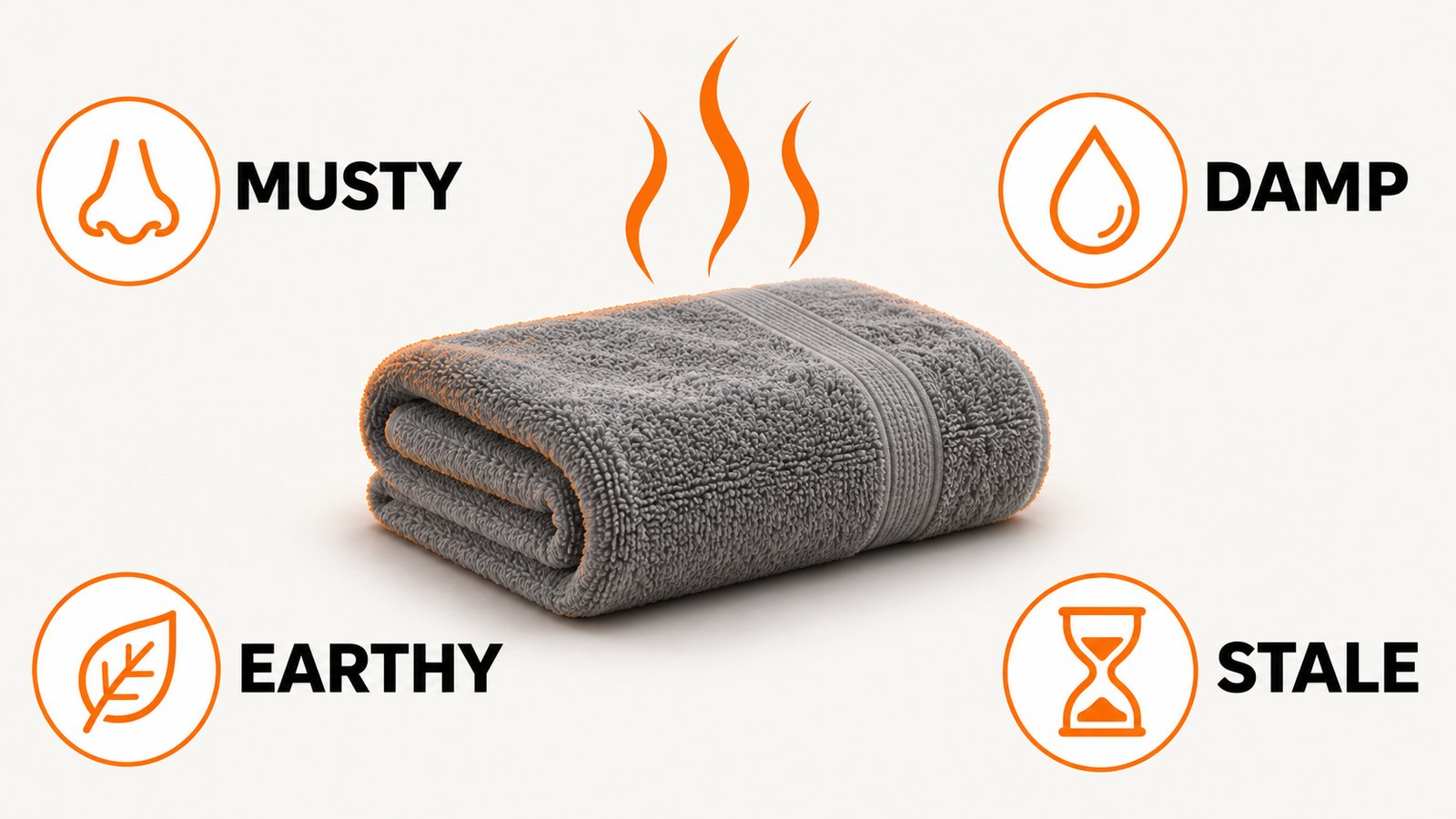
Mildew smells musty. That is the word the agencies use. The CDC says "Mold can look like spots of many different colors, and it can smell musty." New York State's health department says "Most molds produce musty odors that are the first indication of a problem."
People add their own words. Musty, earthy and stale are the ones our mold smell in a house guide uses. No agency we read publishes an odor chart to match a smell against.
Mildew shows up where things stay damp. Our guides to mold in the shower, mold in a closet and getting a mold smell out of clothes each cover one of those places.
Your nose adjusts. Our window air conditioner guide says a unit's odor is strongest in the first minute or two. A smell you stop noticing has not gone away.
Is a Mildew Smell Different From a Mold Smell?
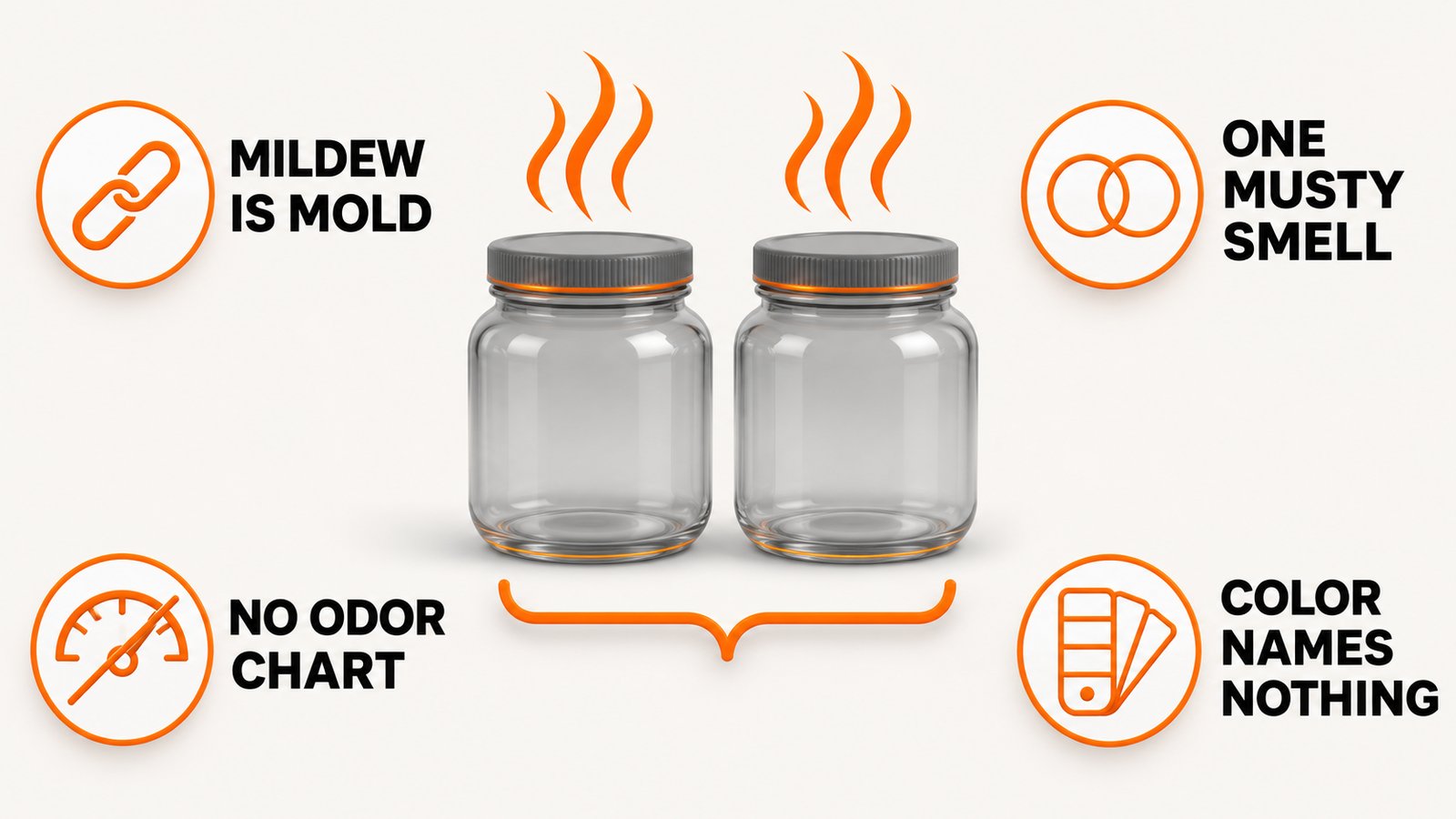
On a mildew vs mold smell question, the honest answer is that we found no agency source describing two different smells. The EPA's mold course describes molds this way: "Also called fungi or mildew, molds are neither plants nor animals; they are part of the kingdom Fungi." In everyday talk, mildew means flat, powdery growth on a surface. Our mold vs mildew and black mold vs mildew pages cover how the words are used.
So why does the smell exist at all? The EPA's mold course explains: "Some compounds produced by molds have strong smells and are volatile and quickly released into the air. These compounds are known as microbial volatile organic compounds (mVOCs). Because mVOCs often have strong or unpleasant odors, they can be the source of the 'moldy odor' or musty smell frequently associated with mold growth."
| What you may hear | What the sources say |
|---|---|
| Mildew has its own smell | Mildew is a casual word for mold. The CDC, EPA and New York State describe a musty odor, not a second one. |
| The smell tells you the type of mold | The CDC says you do not need to know the type of mold. The EPA says color or looks cannot show what a mold produces. |
| No smell means no mold | The EPA lists places mold can hide, such as the back side of drywall and the top side of ceiling tiles. |
None of the agency pages we read ties how strong a smell is to the size or risk of a problem. Do not use smell to sort one from the other.
What Does a Mildew Smell Tell You?
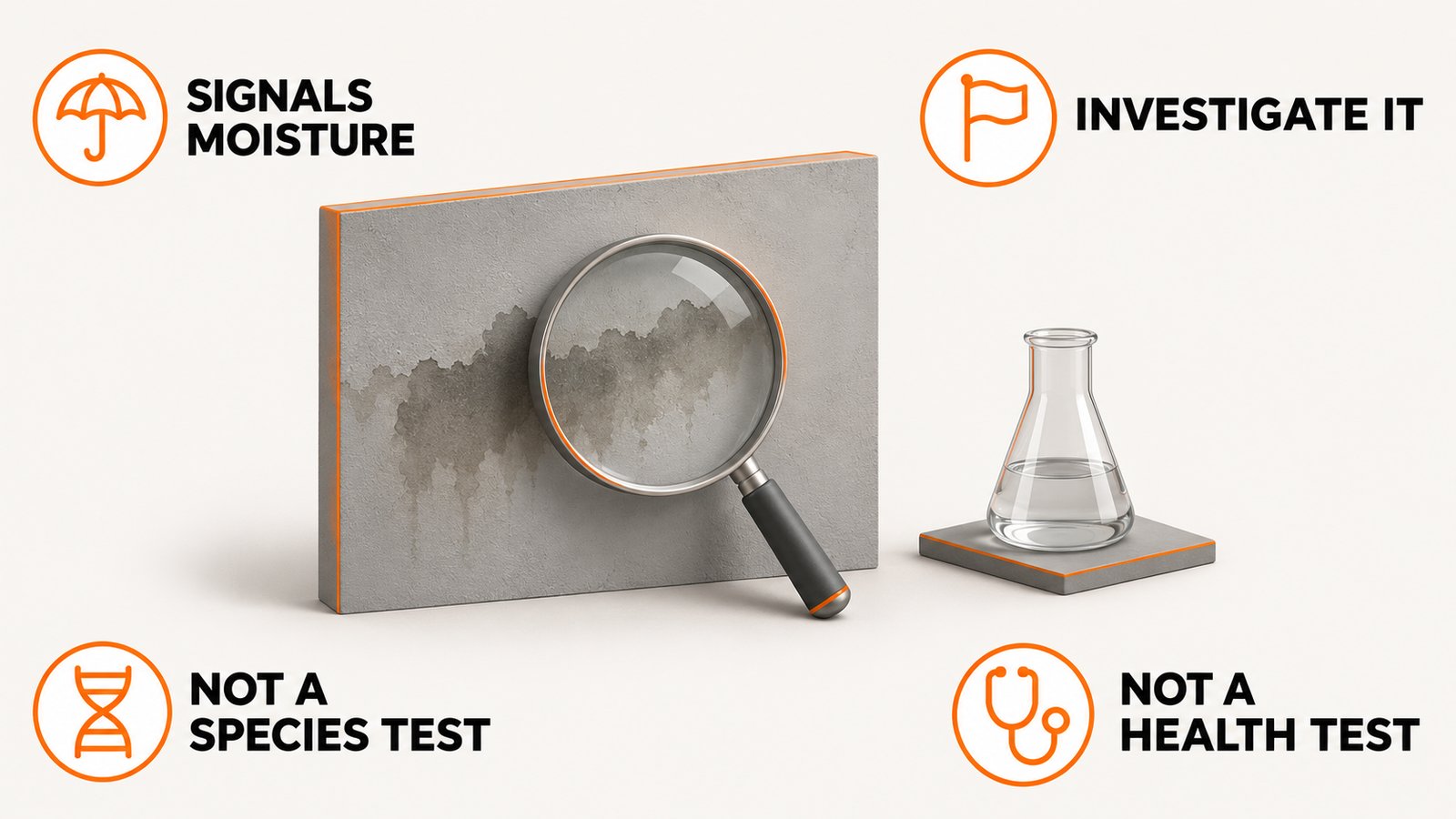
A moldy smell is a clue, and the EPA treats it as one worth acting on. Its mold course says "A moldy odor suggests that mold is growing in the building and should be investigated." It adds that "damp or musty odors suggest that water is or was present and mold growth is likely." The EPA's guide for homeowners says you may suspect hidden mold "if a building smells moldy, but you cannot see the source."
The smell says to look for water. It cannot do more than that:
- Name the mold. The CDC says "You do not need to know the type of mold."
- Show how much there is or where it sits. The EPA says hidden growth can sit on the back of drywall, inside walls around pipes, or inside ductwork.
- Measure health risk. The EPA's mold course says "The health effects of inhaling mVOCs are largely unknown" and that more research is needed.
- Replace a look at the surface. The EPA says "In most cases, if visible mold growth is present, sampling is unnecessary." If you can see growth, you do not need a lab to tell you it is there.
For symptoms, see a licensed physician. The EPA says "If you have health concerns, consult a health professional before starting cleanup." Our mold allergy symptoms page stays inside the agency wording.
Why Does My Window AC Smell Like Mildew?
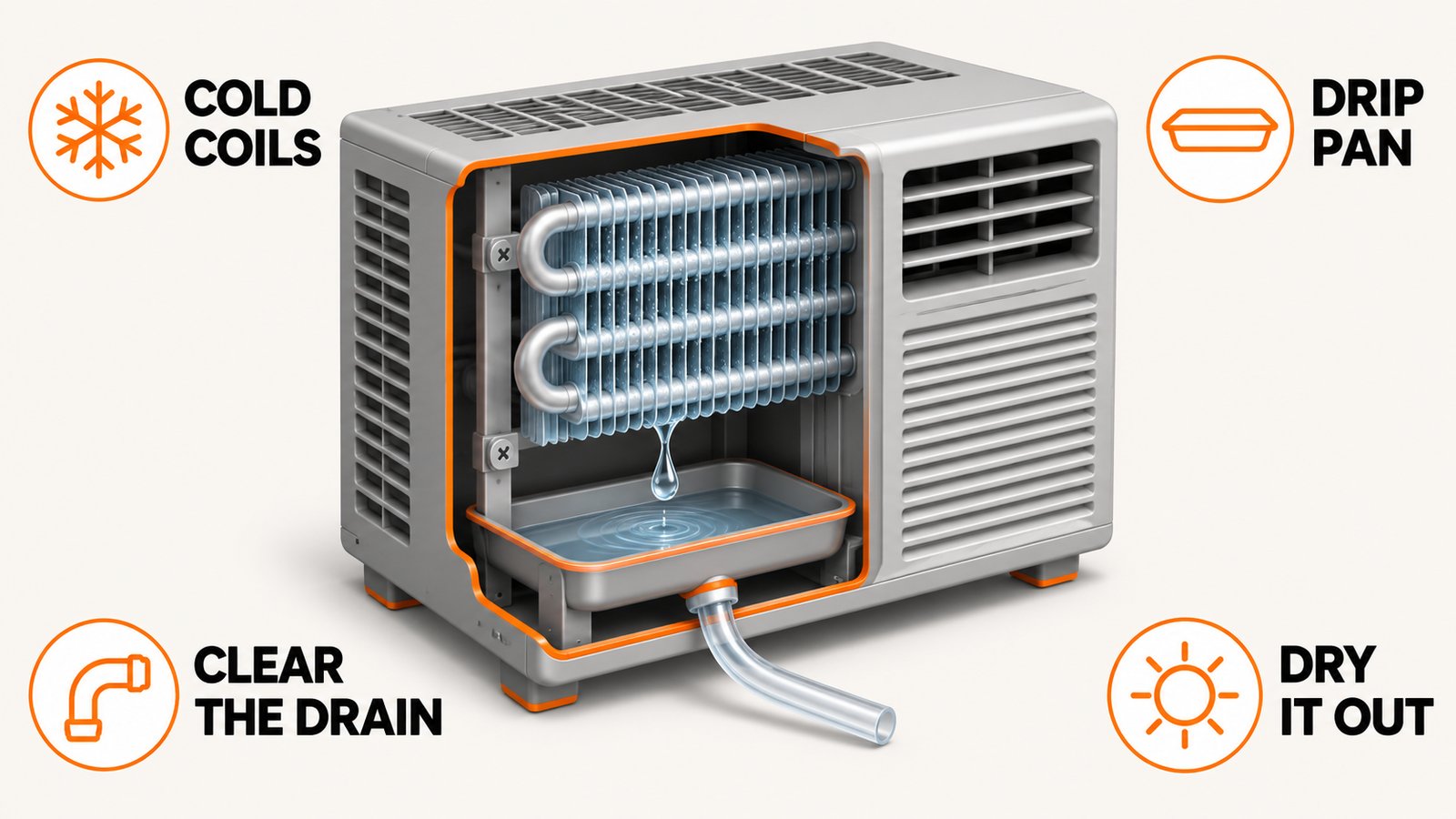
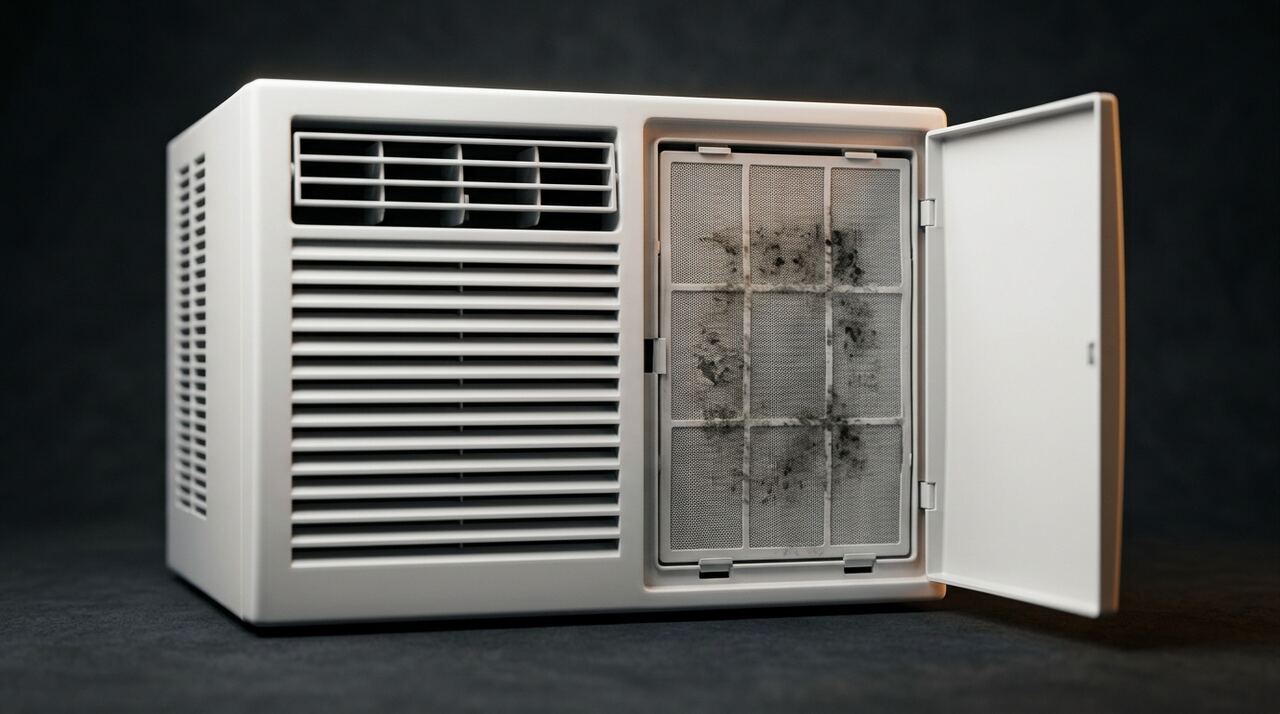
A window air conditioner is one place the sources name directly. New York State's health department lists "surfaces on and around air conditioners" among the places in a home that are always susceptible to mold growth and belong in routine cleaning. The EPA tells you to "Keep air conditioning drip pans clean and the drain lines unobstructed and flowing properly."
A cooling coil is cold, warm room air hits it, and water collects. If that water sits in a pan or soaks a filter or foam, the smell can come back each time the unit starts.
Our window air conditioner guide covers the coils, the pan and the foam. Unplug the unit before you open it. For a central system, see mold in an air conditioner and the HVAC moisture maintenance checklist. The EPA adds one caution: if you know or suspect the HVAC system is contaminated with mold, do not run it, because it could spread mold throughout the building.
How Do You Find Where a Mildew Smell Is Coming From?

Start with a notebook. Write down which rooms smell, when, and whether it changes after rain, a shower or when the HVAC runs. Our mold smell in house page covers that, and signs of mold in the house lists what else to look for.
Then go where water goes. New York State's advice is to "look for signs of mold growth, water staining, warping, or to follow your nose to the source of the odor," and to check behind and underneath surfaces such as carpets, wallpaper and cabinets. The EPA's mold course says areas that are often damp, such as bathrooms, laundry rooms and basements, are common places for mold growth.
Measure the air. The EPA says to keep indoor humidity below 60 percent, ideally between 30 and 50 percent, and says a humidity meter costs $10 to $50 at many hardware stores. Our humidity risk calculator turns a reading into a plain picture.
A damp-cloth wipe check on a visible spot only tells you whether a mark lifts off the surface. It cannot name the substance, and we do not teach a bleach swab as a test. Do not tear into a wall to chase an odor. The EPA warns that removing wallpaper "can lead to a massive release of spores if there is mold growing on the underside of the paper."
How Do You Get Rid of a Mildew Smell?
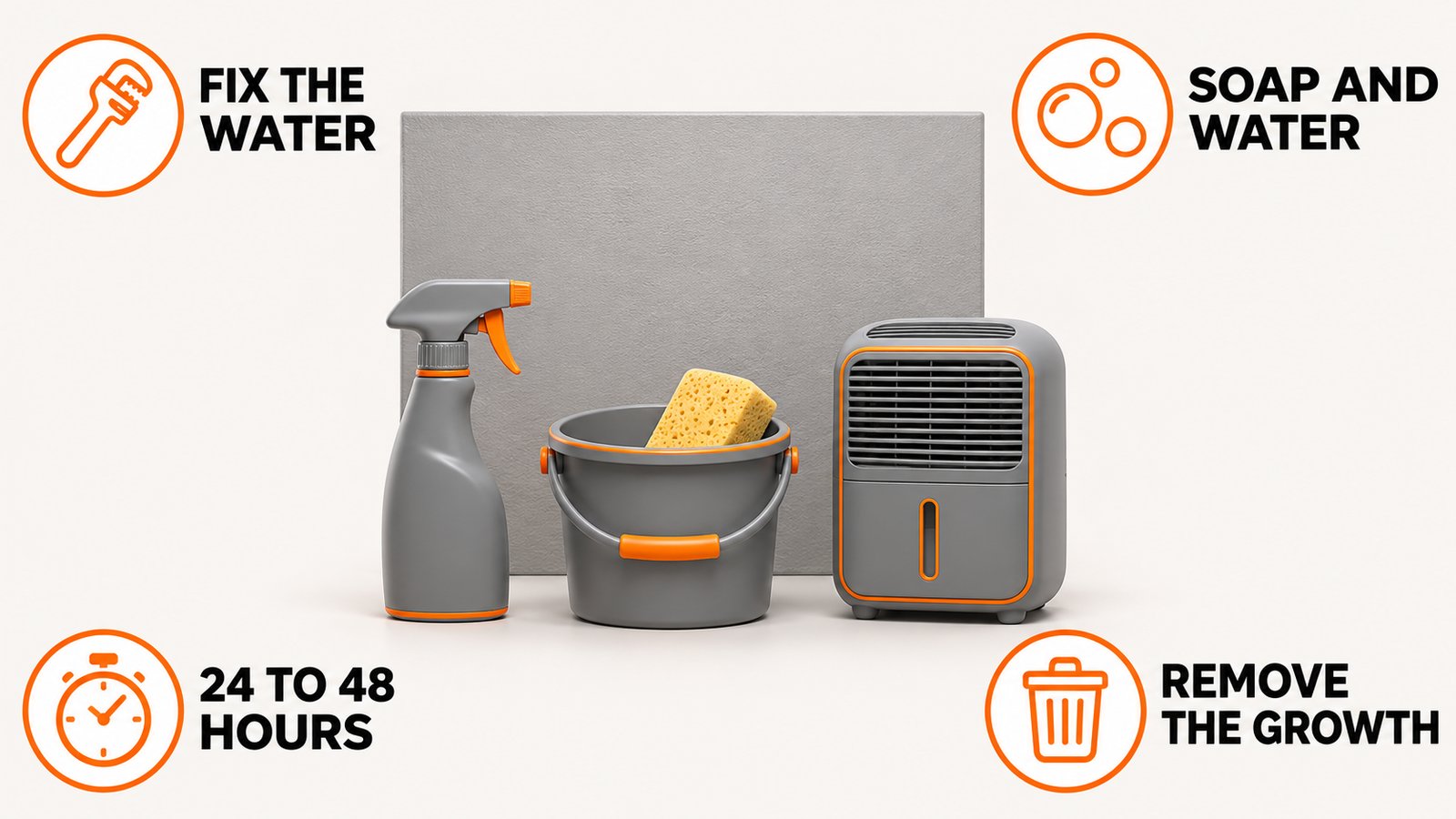
An air freshener hides a smell and leaves the cause in place. The CDC's instruction is short: "If you see or smell mold, you should remove it." The EPA states "The key to mold control is moisture control," and it says to dry water-damaged areas and items within 24 to 48 hours. If you clean but do not fix the water problem, "most likely, the mold problem will come back."
For a small patch on a hard surface, the CDC says mold can be removed with household products, soap and water, or a bleach solution of no more than 1 cup of household laundry bleach in 1 gallon of water. It also says to never mix bleach with ammonia or other cleaners, because that makes a poisonous gas. The EPA adds that using bleach or another biocide "is not recommended as a routine practice during mold cleanup," and that dead mold may still cause allergic reactions, so "it must also be removed." See does bleach kill mold and how to get rid of mold.
Porous materials are harder. New York State says porous materials with extensive mold growth, such as drywall, carpeting, paper and ceiling tiles, should be discarded, and so should wet materials that cannot be cleaned and dried thoroughly. It recommends rubber gloves and an N95 mask.
Run a dehumidifier where the air stays damp, and see how to prevent mold. The EPA's test for a finished cleanup: "Visible mold and moldy odors should not be present." If the smell is still there, look for more moisture.
When Should You Call a Pro About a Mildew Smell?
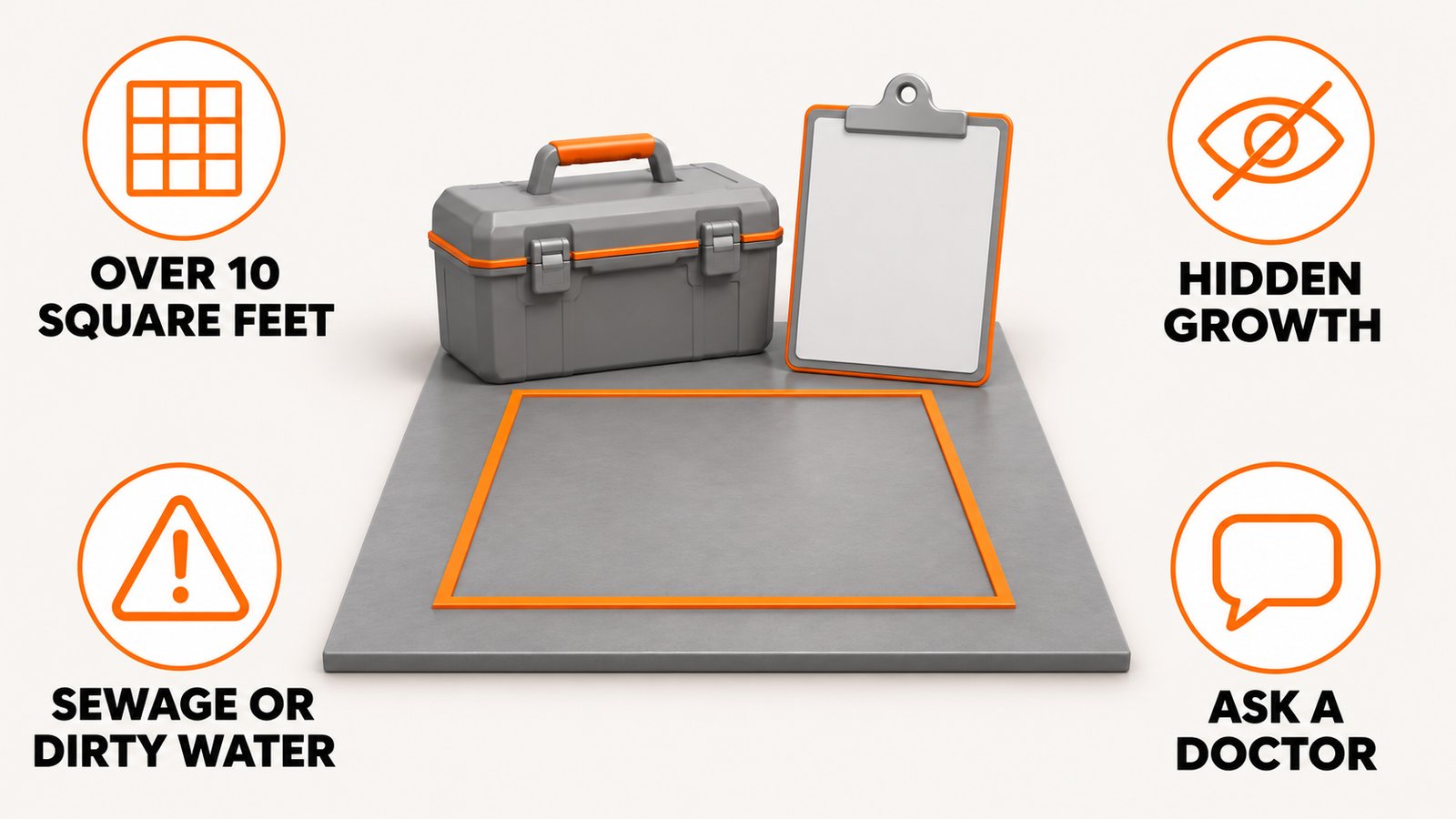
The EPA says a moldy area under about 10 square feet, roughly a 3 foot by 3 foot patch, can in most cases be handled by you. Past that, or with a lot of water damage, it points you to a separate remediation guide for larger jobs. New York State uses the same 10 square feet for hiring a licensed contractor, and also names people who are highly sensitive to mold.
Call for help if:
- You smell it but cannot find the source. The EPA says to consider hiring an experienced professional for a suspected hidden problem. See mold inspection.
- The water came from sewage or other contaminated water. The EPA says to call a professional with experience in that kind of damage.
- You think the HVAC system is involved. Do not run it, and follow the EPA's duct guidance.
- Someone in the home has health concerns. Talk to a licensed physician first, as the EPA advises.
See the mold remediation process for what a professional job includes, and is this mold or what does mold look like to sort a visible spot from dirt.
Frequently asked questions
What does mildew smell like?
Mildew smells musty. The CDC says mold can smell musty, and New York State says most molds produce musty odors that are the first sign of a problem. People add words like earthy or stale. The smell is a clue to look for moisture, not a test.
Does mildew smell different from mold?
We found no agency source that describes two smells. The EPA's mold course says molds are also called fungi or mildew. The sources describe one musty odor, and smell cannot sort mildew from mold or name the type.
Is a mildew smell dangerous?
The smell alone does not show a danger level. The EPA's mold course says the health effects of inhaling the compounds behind moldy odors are largely unknown. If a smell or a symptom worries you, see a licensed physician and check the building for moisture separately.
Why does my house smell like mildew when I can't see anything?
The EPA says you may suspect hidden mold if a building smells moldy but you cannot see the source. Look for water, stains or warping, measure humidity, and consider a professional. Do not open walls yourself.
How do I get a mildew smell out of a window AC?
Unplug it, then check the filter, coils, drip pan and drain. The EPA says to keep drip pans clean and drain lines flowing. Foam that stays moldy may need replacing. Our window air conditioner guide has the steps.
Will bleach remove a mildew smell?
It does not fix the cause. The CDC says mold on hard surfaces can come off with soap and water or no more than 1 cup of bleach per gallon of water, and never to mix bleach with ammonia. The EPA says the moisture must be fixed or the problem returns.
Sources
Every claim on this page traces to one of these. Links open the primary document.