Mold Smell in House: What That Musty Odor Means and How to Find It

MS
Mold Scanner AI Editorial Team
Published April 15, 2026. Reviewed from leading expert protocols and federal agency guidelines.
Basement mold that creates musty smell throughout the home
Real mold photo. Source: Wikimedia Commons.
On this page
  1. What causes that musty smell
  2. Where hidden mold hides (the top sources of musty smell)
  3. How to find the mold when you can only smell it
  4. When musty smell means danger
  5. How to get rid of the musty smell permanently
  6. Think you might have mold?
Quick Answer

A musty smell in your house means mold is actively growing somewhere. The odor comes from mold VOCs (microbial volatile organic compounds). Common hiding spots: behind walls, inside HVAC ducts, under sinks, and in crawl spaces. 52% of contaminated homes pass a visual inspection, so smell is often your first warning.

What causes that musty smell
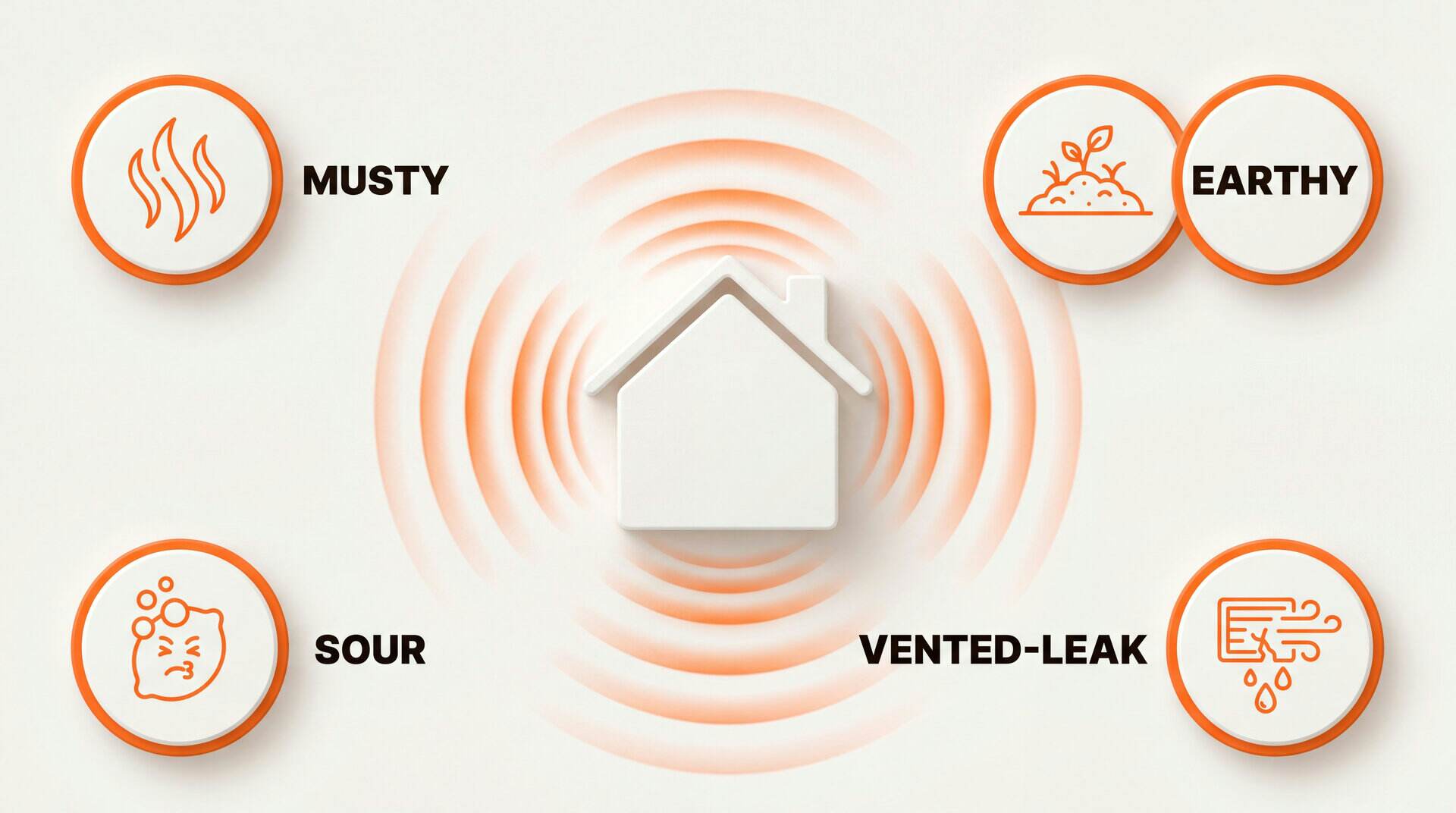
The musty smell in your house has a specific scientific cause. As mold grows and digests organic materials like wood, drywall paper, and dust, it releases gases called microbial volatile organic compounds (MVOCs). These are the waste products of mold metabolism. Different mold species produce different MVOCs, but they all share that distinctive earthy, damp, musty quality.

People describe the smell in different ways: wet socks, rotting wood, damp basement, old books, or stale earth. If you walk into a room and notice any of these smells, mold is almost certainly growing somewhere in that space. The smell does not lie.

Here is what makes MVOCs important beyond just being unpleasant. These compounds are themselves irritants. Even before you consider the mycotoxins that mold produces, the MVOCs alone can cause headaches, dizziness, nausea, and respiratory irritation. If you have been getting headaches in a specific room, and that room has even a faint musty smell, those two facts are probably connected.

The EPA confirms that indoor air is typically 5 times worse than outdoor air. In a home with active mold growth, that ratio gets much worse. The MVOCs accumulate in enclosed spaces, which is why basements and closets tend to have the strongest musty smells.

Where hidden mold hides (the top sources of musty smell)

Behind walls: This is the most common hidden mold location. A slow plumbing leak inside a wall can feed mold for months or years without any visible sign. The mold grows on the back side of the drywall, inside the wall cavity. You smell it but cannot see it. MVOCs seep through electrical outlets, gaps around baseboards, and anywhere the drywall is not perfectly sealed. According to leading mold illness research, 52% of mold contaminated homes pass a visual inspection.

HVAC system: Remediation science experts say the HVAC evaporator coil is always wet. It is the coldest surface in the system and condensation collects on it constantly. This makes it a primary mold colony site. When your HVAC runs, it pushes air over the moldy coil and distributes spores and MVOCs to every room through the ductwork. If you smell mold in multiple rooms, the HVAC system is the most likely source.

Crawl space: Dirt floor crawl spaces are mold factories. Ground moisture evaporates into the crawl space air, creating a damp environment that feeds mold on floor joists, subflooring, and insulation. The musty smell rises into the living space above through gaps in the flooring, HVAC returns, and plumbing penetrations.

Under sinks: The cabinet under your kitchen or bathroom sink is a common mold spot. Slow drips from supply lines, P-trap connections, and garbage disposals create just enough moisture for mold. The dark, enclosed cabinet provides the perfect environment. If you smell mold in the kitchen, open the cabinet under the sink first.

Behind furniture: Large furniture pushed tight against exterior walls traps warm, humid air between the furniture and the cold wall. This creates a condensation zone. Over time, mold grows on the wall behind the furniture and on the back of the furniture itself. Pull beds, dressers, and bookshelves away from exterior walls by at least 2 inches.

How to find the mold when you can only smell it

Hidden mold discovered under corkboard material

Step 1: Follow your nose. Walk through every room slowly. Get close to walls, floors, and corners. The smell will be strongest near the source. Pay attention to which rooms have the smell and which do not. If only one room smells, the source is likely in that room or the walls around it.

Step 2: Check the high probability spots. Open every cabinet under every sink. Pull the fridge away from the wall. Look behind the washing machine. Check inside closets, especially corners against exterior walls. Inspect around every toilet base. Look at ceiling corners in bathrooms. These are the spots where 80% of hidden mold is found.

Step 3: Use a moisture meter. A pin-type moisture meter costs $20 to $40 at any hardware store. Press it against suspicious walls. Normal drywall reads 5 to 12% moisture. Anything above 17% indicates a moisture problem that likely has mold growing behind it. Test walls in the smelly areas, especially around plumbing and exterior walls.

Step 4: Check the HVAC. Remove a supply register cover and look inside the duct. Use a flashlight and phone camera. Look at the evaporator coil access panel if you can reach it. Black or green growth on the coil or inside the ductwork means your HVAC is distributing mold throughout the house.

Step 5: If you still cannot find it. Hire a professional mold inspector with a thermal imaging camera. Thermal cameras show temperature differences in walls that indicate moisture problems. A cold spot on an interior wall usually means moisture, which usually means mold. Make sure the inspector is independent from any remediation company.

When musty smell means danger

A musty smell is always a sign that mold is growing. But some situations are more urgent than others.

Urgent: You smell mold and someone in the house has health symptoms (fatigue, brain fog, sinus congestion, respiratory problems). Especially if those symptoms get better when you leave the house for a few days and worse when you return. This is the CIRS gold standard for environmental mold illness. Act now.

Urgent: The smell appeared after a water event (flooding, roof leak, pipe burst) and you are not sure all the water was properly dried. Mold starts growing within 24 to 48 hours of a water event. If the smell appeared within a few weeks of the event, you have active mold growth.

Urgent: You smell mold coming from the HVAC vents. This means every room in the house is being contaminated with every cycle. Turn off the HVAC and hire a professional immediately.

Less urgent but still important: Faint musty smell only in the basement. Seasonal smell that appears in humid months. Smell only in one specific closet or cabinet. These situations still need investigation, but you likely have more time to plan your response.

How to get rid of the musty smell permanently

Air fresheners, candles, and odor sprays do not solve the problem. They mask the MVOCs while the mold keeps growing. The only way to eliminate the musty smell permanently is to find and remove the mold source.

Step 1: Find the mold using the steps above.

Step 2: Fix the water source that is feeding it. This is always step one in any mold remediation. No exception.

Step 3: Remove the mold. For areas under 10 square feet, DIY with Concrobium and proper PPE. For larger areas, hire an IICRC S520 certified professional.

Step 4: Run HEPA air purifiers to clear the remaining MVOCs from the air. MVOCs dissipate once the source mold is removed, but it can take several days for the smell to clear completely. A HEPA purifier with an activated carbon filter speeds this up. The carbon adsorbs the VOC molecules.

Step 5: Maintain humidity below 50% with a dehumidifier. This is the ongoing prevention step. Mold cannot grow when humidity stays below 50%. A dehumidifier with a built in humidistat is the best tool for this.

EPA CDC WHO Harvard Berkeley Lab IICRC

Find hidden mold with your phone

Our app walks you through 160 professional mold hotspots room by room. Same checklist every IICRC certified inspector uses. AI powered verdict in 5 minutes.

Get Early Access

Frequently Asked Questions

Indoor wall with visible mold discoloration and water staining

What does mold smell like in a house?

Mold smells musty, earthy, and damp. People describe it as the smell of wet socks, rotting wood, or a damp basement. The smell comes from microbial volatile organic compounds (MVOCs) that mold releases as it digests organic materials. If any room in your home has this smell, mold is almost certainly growing somewhere nearby.

Can you smell mold behind walls?

Yes. Mold growing behind walls produces MVOCs that seep through drywall, electrical outlets, and gaps around trim and baseboards. You may smell mold even when you cannot see it. According to leading mold illness research, 52% of contaminated homes pass a visual inspection, meaning the mold is hidden but the smell gives it away.

Is a musty smell dangerous?

A musty smell means mold is actively growing and releasing MVOCs. These compounds can cause headaches, dizziness, and respiratory irritation on their own. More importantly, where there is mold smell there is mold, and mold produces mycotoxins that cause serious health problems for the 24% of people who are genetically susceptible.

How do I find hidden mold that I can only smell?

Start with a systematic visual inspection of the 160 professional hotspots our app covers. Check behind furniture, under sinks, inside closets, and around HVAC registers. Use a moisture meter on suspicious walls. Look for water stains, bubbling paint, and soft drywall. If you still cannot find the source, hire an inspector with a thermal camera that can see moisture inside walls.

Related guides

135K/mo searches
Black Mold
Musty smell often means hidden mold.
27.1K/mo searches
Toxic Mold Symptoms
When the smell comes with health symptoms.
60.5K/mo searches
Mold Testing Kits
Confirm what the smell is telling you.
90.5K/mo searches
Dehumidifier for Mold
Control humidity, control the smell.

Keep Reading

Black Mold: What It Is, How to Spot It, and What to Do
Read more
Toxic Mold Symptoms: The Complete Checklist from Mold Doctors
Read more
Mold Testing Kits: DIY vs Professional Testing Compared
Read more
Best Dehumidifier for Mold Prevention: Size Guide + Expert Tips
Read more

Think you might have mold?

Scan 160 hotspots with your phone. Get a forensic grade AI verdict in 5 minutes. No $670 inspector needed.

Scan Your Home Free