
The Utah humidity profile
NOAA's Comparative Climatic Data carries one long-record humidity station for Utah, at Salt Lake City, and it reports a 53 percent annual mean relative humidity with a 63 percent morning mean and 15.5 inches of precipitation. NOAA's Utah climate summary puts the state's range at 6.2 inches in the driest areas to 20.3 inches in the wettest, describing a state shielded by mountains from both Pacific and Gulf moisture and among the driest in the country.
The monthly pattern is the most extreme in this report and it is the opposite of a humid state's. Relative humidity reaches 74 percent in December and January and falls to 34 percent in July, a 40-point annual swing. Part of that is the ordinary cold-air effect, but part of it is specifically Utah: the Salt Lake Valley inversion traps cold, moist air at ground level under a warm layer for days or weeks at a time in winter. That is why a Salt Lake basement can feel clammy in January in a state that is a desert in July.
The bulk-water record confirms that mold here is an event rather than a season. NOAA counts 25 billion-dollar weather and climate disasters affecting Utah from 1980 to 2024, and 22 of them were drought or wildfire, with just one flooding event and no tropical cyclones. Yet the Utah Division of Emergency Management identifies flooding as the state's most common and most expensive natural hazard, driven by spring snowmelt, cloudbursts on burn scars and rapid runoff on hard ground. Both things are true: floods here are small and local rather than billion-dollar, and they are still the thing most likely to wet your house. EPA guidance treats porous materials wet longer than 24 to 48 hours as at risk of mold growth, and that clock runs the same in a desert.
Utah against the national picture
| Metric | Utah | What it means indoors | Source |
|---|---|---|---|
| Annual mean relative humidity | 53% | Among the lowest annual means in the country, with a 40-point seasonal swing | NOAA NCEI Comparative Climatic Data |
| Morning mean relative humidity | 63% | Well below the level at which ambient air wets an indoor surface | NOAA NCEI Comparative Climatic Data |
| Calculated annual mean dew point | 38 F | Low year-round, so indoor water is essentially always the cause | Calculated from NOAA 1991 to 2020 normals |
| Annual normal precipitation | 15.5 in | Among the lowest in the country, and concentrated in winter snow | NOAA NCEI 1991 to 2020 normals |
Relative humidity figures are the mean of the morning and afternoon observations NOAA publishes for each first-order station, rounded to whole percent. Dew point is calculated from the NOAA normal mean temperature and that mean relative humidity using the Magnus formula, so treat it as a derived figure rather than a published one.
Utah stations ranked by measured humidity
Methodology. Ranked by annual mean relative humidity, the one input that traces to a station record rather than an opinion. Relative humidity is the mean of NOAA's published morning and afternoon values. Mean dew point is calculated from the NOAA 1991 to 2020 normal mean temperature and that mean relative humidity. The humidity band names what the column measures and nothing more. Humidity is not the whole story: a burst supply line in the driest metro on this table soaks the same drywall as a humid August, and EPA guidance treats wet porous material as at risk of mold growth after 24 to 48 hours either way.
| # | Station | Mean RH | Morning RH | Mean dew pt | Annual precip | Humidity band | Notes |
|---|---|---|---|---|---|---|---|
| 1 | Salt Lake City | 53% | 63% | 38 F | 15.5 in | Dry | The only long-record NOAA humidity station in the state, 1948 to 2018. The valley inversion drives the winter reading, not extra moisture. |
Salt Lake City
The only long-record NOAA humidity station in the state, 1948 to 2018. The valley inversion drives the winter reading, not extra moisture.
One station is a real limitation and this page will not paper over it. NOAA's Comparative Climatic Data holds a single first-order humidity station for Utah. Salt Lake City sits at about 4,200 feet in a valley with a lake to its northwest and an inversion problem in winter, which makes it unrepresentative in both directions. St. George, at 2,800 feet in the Mojave transition, is hotter and drier. Park City and the Wasatch Back, above 6,500 feet, carry snow load and ice dams that the valley does not. A Cache Valley farmhouse has its own inversion.
What holds across all of them is the dew point. Utah's calculated annual mean dew point at Salt Lake City is 38 F, and NOAA's statewide precipitation range tops out at 20.3 inches in the wettest areas. Nowhere in the state does ambient air routinely wet an indoor surface. So wherever you are in Utah, the diagnosis is the same: growth means water arrived from somewhere specific. Neighboring reports for Arizona, Colorado, Nevada and Idaho cover the same mountain-west mechanism.
Common mold species in Utah homes
EPA and CDC name the same core genera everywhere. In a dry state the mix skews toward species that exploit one specific wet spot rather than general dampness, which is useful diagnostically: what you find tells you roughly how long the water has been there.
Cladosporium
Cladosporium spp.The most commonly found indoor mold nationwide, and in Utah the usual find on window sills where winter interior moisture condenses on cold glass during an inversion, and in humidifier reservoirs. Olive-green to black. EPA lists it among the common allergenic indoor molds.
Aspergillus
Aspergillus spp.Black, green or brown depending on species. It needs steady moisture and organic dust, which in a dry state means a bathroom with a weak exhaust fan, the cabinet under a slow-leaking sink, or an evaporative cooler left connected too long. EPA and CDC flag Aspergillus species as allergens and, in rare cases, as a cause of aspergillosis in people who are immunocompromised.
Penicillium
Penicillium spp.Blue-green and powdery, on cardboard, paper and damp fabric. In Utah it appears where a supply line has wicked into carpet padding, which can run unnoticed for months because there is no ambient dampness to make the room feel wrong. EPA lists Penicillium among the most frequently recovered genera in indoor air samples.
Stachybotrys chartarum
Stachybotrys chartarumThe species commonly called toxic black mold. It needs sustained wet cellulose, so in a desert climate it is strong evidence that water has been present for a long time: a pipe inside a wall, or drywall flooded and never removed. Visible black slimy growth on water-stained drywall is the signature. Do not disturb it.
Chaetomium
Chaetomium spp.Olive to grey and cotton-textured. Like Stachybotrys it needs chronic moisture, so finding it in Utah almost always dates the problem to seasons rather than weeks. Treat it as evidence the leak is older than you assumed.
Alternaria
Alternaria alternataDark green to black, on shower stalls, window tracks and any surface that collects condensation. It is a common allergen panel entry and is often correlated with asthma flare-ups in sensitive individuals per EPA remediation guidance.
Species information is general and informational. Health responses vary. See a licensed physician for symptom evaluation. Species sources: EPA Mold Remediation in Schools and Commercial Buildings, EPA A Brief Guide to Mold Moisture and Your Home, CDC National Center for Environmental Health guidance.
What mold remediation costs in Utah
No Utah agency publishes a mold remediation price schedule, and we could not locate a Utah state health or environmental agency mold page at all. What that means for cost is simple: there is no state benchmark, and every dollar figure attached to a Utah city online came from a contractor.
What that means for cost is simple: there is no state benchmark, and every dollar figure attached to a Utah city online came from a contractor.
In a dry state the cost that matters most is diagnosis, and it is the cheapest part of the job. Because ambient humidity cannot be the explanation at a 38 F mean dew point, a remediator who cannot tell you where the water came from has not finished the assessment. Pay for the moisture-meter survey, the look behind the wall, the check of supply lines and appliance connections. A quote that begins at demolition without a source is a quote for work that will recur.
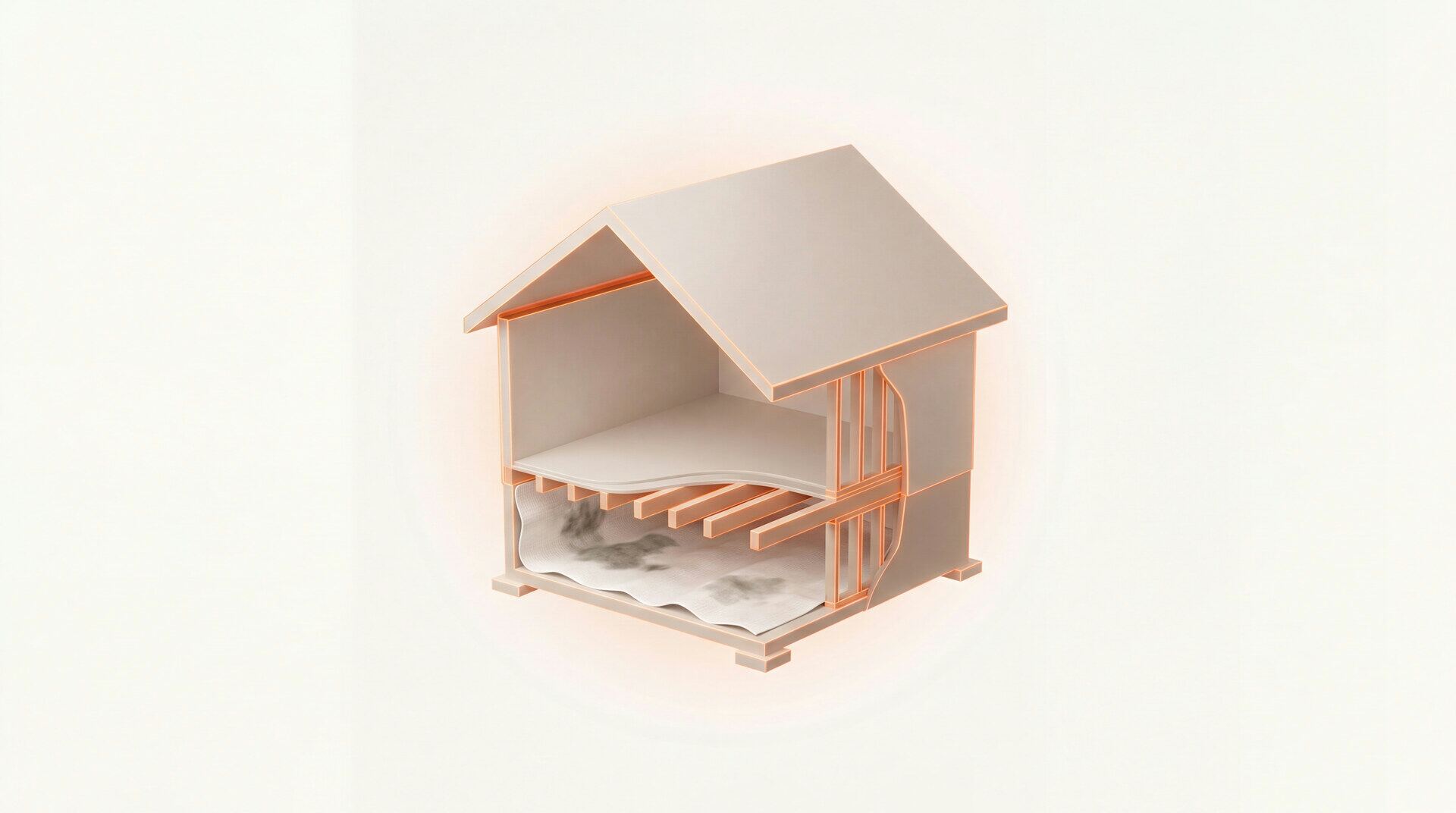
The second driver is what Utah houses are built on. Slab-on-grade is common across the Wasatch Front, and a supply-line failure inside or under a slab spreads laterally through flooring and up into base plates while showing almost nothing on the surface. Locating it can need leak-detection equipment, and repairing it can mean rerouting rather than opening the slab. That repair, not the mold work, is usually the large number.
The third is elevation. A Wasatch Back property with snow load, ice dams and a seasonal occupancy pattern has a different problem from a Salt Lake Valley rambler, and it usually costs more because access and travel are worse. Ask about mobilization explicitly.
Get an itemized written scope from each bidder before comparing numbers. Our national mold remediation cost guide covers what moves a quote in any market, and the cost estimator lets you scope your own job first. On insurance, a sudden and accidental discharge such as a burst supply line is normally covered while long-term seepage usually is not, and flooding, including snowmelt and burn-scar flooding, is not covered by a standard homeowners policy at all. Take coverage questions to the Utah Insurance Department, and read our guide to homeowners insurance and mold.
Mold remediation licensing in Utah: who can legally do the work
We could not verify whether Utah licenses mold professionals, and this page will not guess. Utah's official code site is unreachable from our network entirely: DNS resolves consistently across four separate resolvers, but the ports are filtered and every request times out. The Utah Division of Professional Licensing site returns a bot-protection block to every method we tried, including a real browser, and the one DOPL surface that does load, the Licensee Lookup and Verification System, renders its profession list through JavaScript we could not read. So the honest answer is unknown, not no.
Here is what to do about it, and it takes five minutes. Open the DOPL Licensee Lookup and Verification System yourself, in an ordinary browser, and look for a mold profession in the list. If one exists, search the company you are considering by name. If none exists, you now know the answer for your own situation, from the state's own system, which is better than taking a website's word for it, including ours.
What is verified is narrower. Utah regulates housing conditions through the Utah Fit Premises Act at Utah Code Title 57, Chapter 22, and the Utah state publications on renter rights and flood cleanup that we could reach describe mold as a maintenance and habitability problem without referring to any state mold credential. That is consistent with the state not licensing mold work, and it is not proof of it.
Whatever the answer turns out to be, the private-credential check is the same one you would run anywhere. Ask for IICRC certification and ask whether the work will follow ANSI/IICRC S520, the industry consensus standard for professional mold remediation. Ask whether the same firm is doing the assessment and the remediation. Ask for daily moisture readings by material. And in this climate, ask them to tell you where the water came from before they tell you what the job costs. A remediation without a diagnosis in a desert is a remediation you will pay for twice.
Utah mold laws and tenant rights
A Utah mold complaint runs through the Utah Fit Premises Act, Utah Code Title 57, Chapter 22, which Utah Legal Services describes as the Utah law that governs housing conditions and which requires a landlord to provide safe and livable housing that is up to code. Mold is not named in the Act, so a tenant frames it as an unsafe or unsanitary condition, usually alongside the plumbing failure or water leak that caused it.
The tenant must notify the landlord in writing, and for seven specific problem areas the landlord must begin corrective action within 3 days of the written request.
The mechanics come from the Utah Department of Workforce Services Renter's Toolkit, which sets them out plainly. The tenant must notify the landlord in writing, and for seven specific problem areas the landlord must begin corrective action within 3 days of the written request. Those seven are unsafe or unsanitary conditions, deficient electrical, deficient heating, deficient plumbing, a deficiency in hot and cold water, deficient air conditioning, and unsafe or unsanitary common areas. Where the rental agreement specifically names appliances or facilities that were working at move-in, the correction period is 10 days instead.
Two conditions decide most Utah cases. The tenant must be current on rent to use the procedure, and the toolkit is explicit that the tenant must keep paying rent even while conditions are deficient, because non-payment is independently grounds for eviction. That is the trap: withholding rent to force a mold repair in Utah hands the landlord an eviction case that has nothing to do with the mold.
So the sequence is: write the notice, date it, describe the unsafe or unsanitary condition and the water source specifically, keep paying rent, and keep a copy. Our landlord letter generator produces a notice in that form. Our guide to mold and apartment rights covers the general playbook. One note on citations: we verified the Fit Premises Act at the chapter level from Utah Legal Services and the Workforce Services toolkit. We could not reach Utah's official code site to confirm individual section numbers, so this page cites the chapter rather than sections it has not read.
General information, not legal advice. For your situation, talk to a Utah attorney, a legal aid office, or your local tenant council.
Utah-specific actions
In a desert with a winter inversion, the game is finding indoor water fast and managing one strange season. Three moves cover most of it.
A. Treat every mold spot as a leak until you prove otherwise
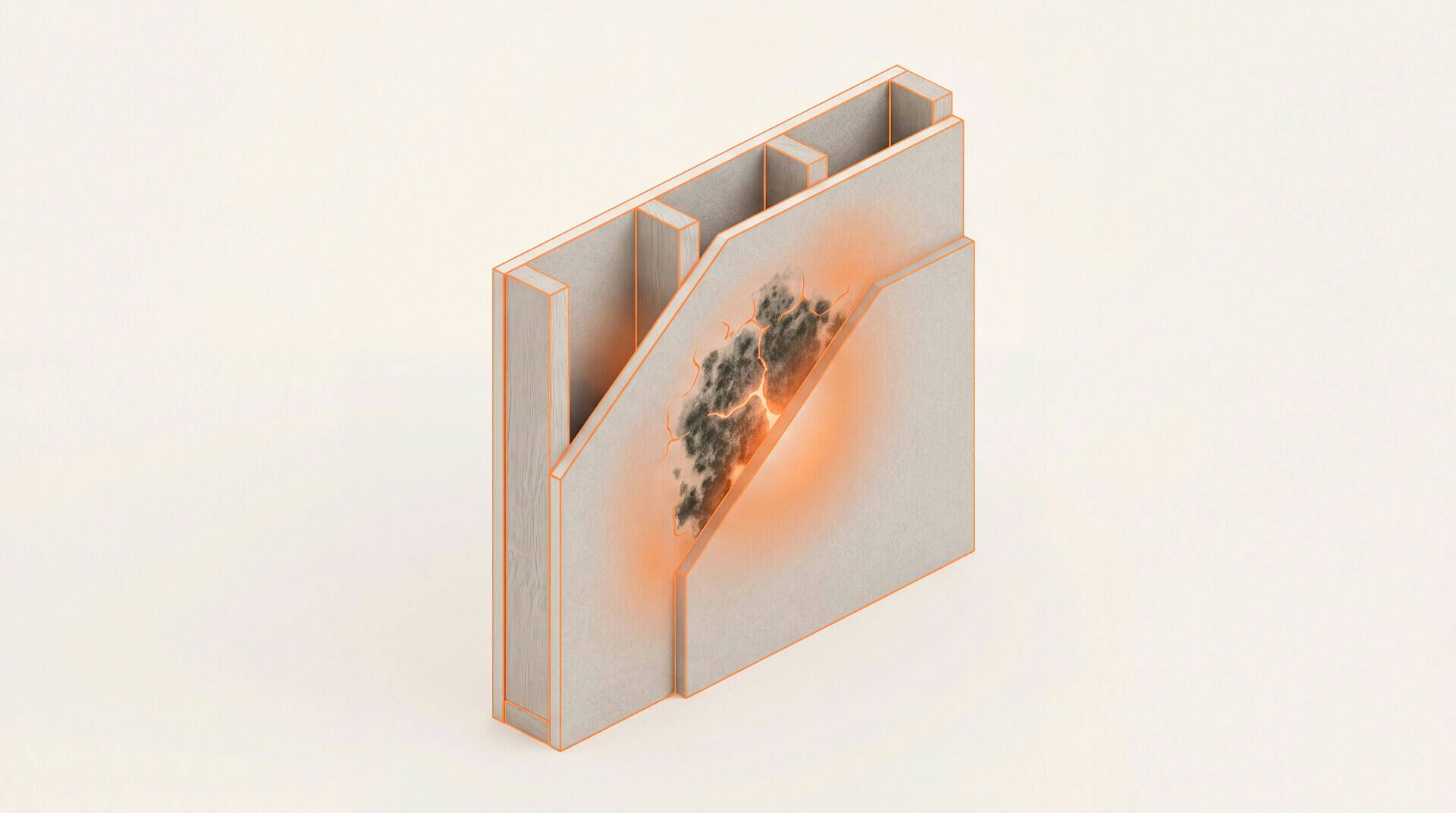
At a 38 F calculated mean dew point and 15.5 inches of annual precipitation, Utah air does not grow mold on a wall. If growth appears, something is wet: a supply line in a wall or under a slab, a water heater, an ice maker line, a washing machine hose, a dishwasher, a slow toilet supply, or a roof penetration. Shut off every fixture and watch the water meter for 30 minutes. If it moves, you have a leak, and finding it is the job. Cleaning the surface without finding the source in a dry climate is the clearest waste of money there is.
B. Manage the winter inversion rather than fighting it
Salt Lake City's relative humidity reaches 74 percent in December and January, and the valley inversion traps cold moist air at ground level for days at a time. Indoors that means condensation on cold glass and in cold wall cavities from your own interior moisture. Target roughly 30 to 35 percent indoor relative humidity through the inversion months, run bath and kitchen exhaust fans, and turn a whole-house humidifier down in January. Do not add moisture to a house during an inversion. Our indoor humidity calculator reports measured relative humidity plus calculated dew point.
C. Know your snowmelt and burn-scar exposure before spring
The Utah Division of Emergency Management identifies flooding as the state's most common and most expensive natural hazard, driven by spring snowmelt, cloudbursts on burn scars and rapid runoff on hard ground. Those are small, local, fast events rather than billion-dollar ones, which is exactly why people are unprepared for them. Know whether you are downstream of a recent fire or in a flood-prone drainage, understand that a standard homeowners policy does not cover flood at all, and remember the National Flood Insurance Program's 30-day waiting period.
Seasonal risk profile for Utah
Monthly mean relative humidity at Salt Lake City, from NOAA. This is the widest seasonal swing in this report, 74 percent in January against 34 percent in July, and both ends of it matter for different reasons.
Utah relative humidity peaks in January
The monthly mean runs from 34 percent in July to 74 percent in January, a 40 point swing across the year.
View the data
| Month | Jan | Feb | Mar | Apr | May | Jun | Jul | Aug | Sep | Oct | Nov | Dec |
|---|---|---|---|---|---|---|---|---|---|---|---|---|
| Mean RH | 74% | 67% | 56% | 50% | 46% | 39% | 34% | 36% | 42% | 52% | 66% | 74% |
December and January are the inversion window. The daily mean reaches 74 percent, and the Salt Lake Valley inversion holds cold damp air at ground level under a warm layer for days at a time. Indoors, interior moisture condenses on cold glass and in cold wall cavities. Window sills grow Cladosporium in a state that is a desert six months later. Ventilate, and keep indoor humidity nearer 30 to 35 percent.
July and August are the driest months in this report at 34 to 36 percent. That is a genuine advantage: if you need to dry a structure, open a wall or replace subfloor, the ambient air is doing the work for you. Schedule remediation for the summer where you can.
April and May are the snowmelt window. Humidity is falling but the mountains are releasing, and rapid runoff on hard ground is one of the flood mechanisms Utah emergency management names. Walk the foundation perimeter after the melt, check downspout discharge, and look at the crawl space or basement within 48 hours of any heavy runoff. The mold risk by ZIP tool gives you the local read.
Where to get help in Utah
Utah has no state mold page that we could verify, so this list is the reachable, checkable set rather than a mold program. The first link is the one to use before hiring anyone.
Questions on file
Does Utah license mold remediation contractors?
We do not know, and rather than guess, this page tells you how to check in five minutes. Utah's official code site is unreachable from our network, and the Division of Professional Licensing site returns a bot-protection block to every method we tried including a real browser, so we could not enumerate Utah's licensed professions. Open the DOPL Licensee Lookup and Verification System yourself in an ordinary browser and look for a mold profession in the list, then search any company you are considering by name. Whatever the answer, ask for IICRC certification and whether the work will follow ANSI/IICRC S520.
Source 3, Utah Division of Professional LicensingHow long does a Utah landlord have to fix mold?
Three days to begin corrective action, for seven specified problem areas, after written notice. The Utah Department of Workforce Services Renter's Toolkit sets out the mechanics of the Utah Fit Premises Act: the tenant notifies the landlord in writing, and for unsafe or unsanitary conditions, deficient electrical, heating, plumbing, hot and cold water, air conditioning, or unsafe common areas, the landlord must begin corrective action within 3 days. Where the rental agreement specifically names appliances or facilities that worked at move-in, the period is 10 days. Mold is not named in the Act, so it is framed as an unsafe or unsanitary condition.
Source 2, Utah Department of Workforce ServicesCan I withhold rent over mold in Utah?
That is the mistake to avoid. The Utah Department of Workforce Services Renter's Toolkit is explicit that the tenant must be current on rent to use the Fit Premises Act procedure and must keep paying rent even while conditions are deficient, because non-payment is independently grounds for eviction. Withholding rent to force a mold repair in Utah hands the landlord an eviction case that has nothing to do with the mold. Write the notice, date it, describe the condition and the water source specifically, keep paying, and keep a copy. Talk to Utah Legal Services or a Utah attorney about your situation.
Source 2, Utah Department of Workforce ServicesCan mold grow in a climate as dry as Utah's?
Yes, but essentially never from the outdoor air. Salt Lake City's calculated annual mean dew point is 38 F, and NOAA puts statewide precipitation between 6.2 and 20.3 inches a year, among the lowest in the country. Ambient air at those levels does not wet indoor surfaces. When mold appears in a Utah house, water came from a specific indoor source: a supply line inside or under a slab, a water heater, an appliance hose, a slow toilet supply, or a roof penetration. That is good news, because the diagnosis is findable and the fix is usually permanent.
Why is Utah humidity so high in winter?
Two reasons stacked. Cold air holds very little water, so the same absolute moisture reads as a much higher percentage, which is true everywhere cold. On top of that, the Salt Lake Valley inversion traps cold moist air at ground level under a warm layer for days or weeks at a time, which is specifically Utah. The result is a 74 percent January reading in a state that reads 34 percent in July, the widest seasonal swing in this report. Indoors it means condensation on cold glass, so keep indoor humidity nearer 30 to 35 percent through the inversion months and do not run a humidifier into it.
Does Utah flood?
Not in the billion-dollar sense, and yes in the sense that matters to your house. NOAA counts 25 billion-dollar weather and climate disasters affecting Utah from 1980 to 2024, and 22 were drought or wildfire, with just one flooding event. But the Utah Division of Emergency Management identifies flooding as the state's most common and most expensive natural hazard, driven by spring snowmelt, cloudbursts on burn scars and rapid runoff on hard ground. Those events are small and local, which is exactly why people are unprepared. A standard homeowners policy covers none of it, and the National Flood Insurance Program has a 30-day waiting period.
Source register
Every source chip on this page points here. Agency and statute pages first, then the federal technical references.
Find the mold in your Utah home
The scanner is open. Get a detailed photo report, next steps, testing options and estimated cleanup costs.
Scan My Photo Get the free mold checklistRelated guides on Mold Scanner AI

All 51 State Reports
Humidity, licensing and tenant law for every state.
Mold Behind Walls
Signs of hidden growth from a slab or supply leak.
Mold in a Crawl Space
Where a dry-climate leak concentrates.
How to Test for Mold
When testing is worth it and when it is not.
What Remediation Costs
The drivers that actually move a quote.

Mold in Your Apartment
Renter rights, notice letters, and landlord duties.