
Why front loaders are mold factories
Front loader washing machines are more water efficient than top loaders. They use less water and tumble clothes through a shallow pool instead of filling a full tub. That is great for your water bill but terrible for mold. The rubber boot seal around the front loading door is designed to keep water inside during the wash cycle. The problem is that it also traps water after the cycle ends.
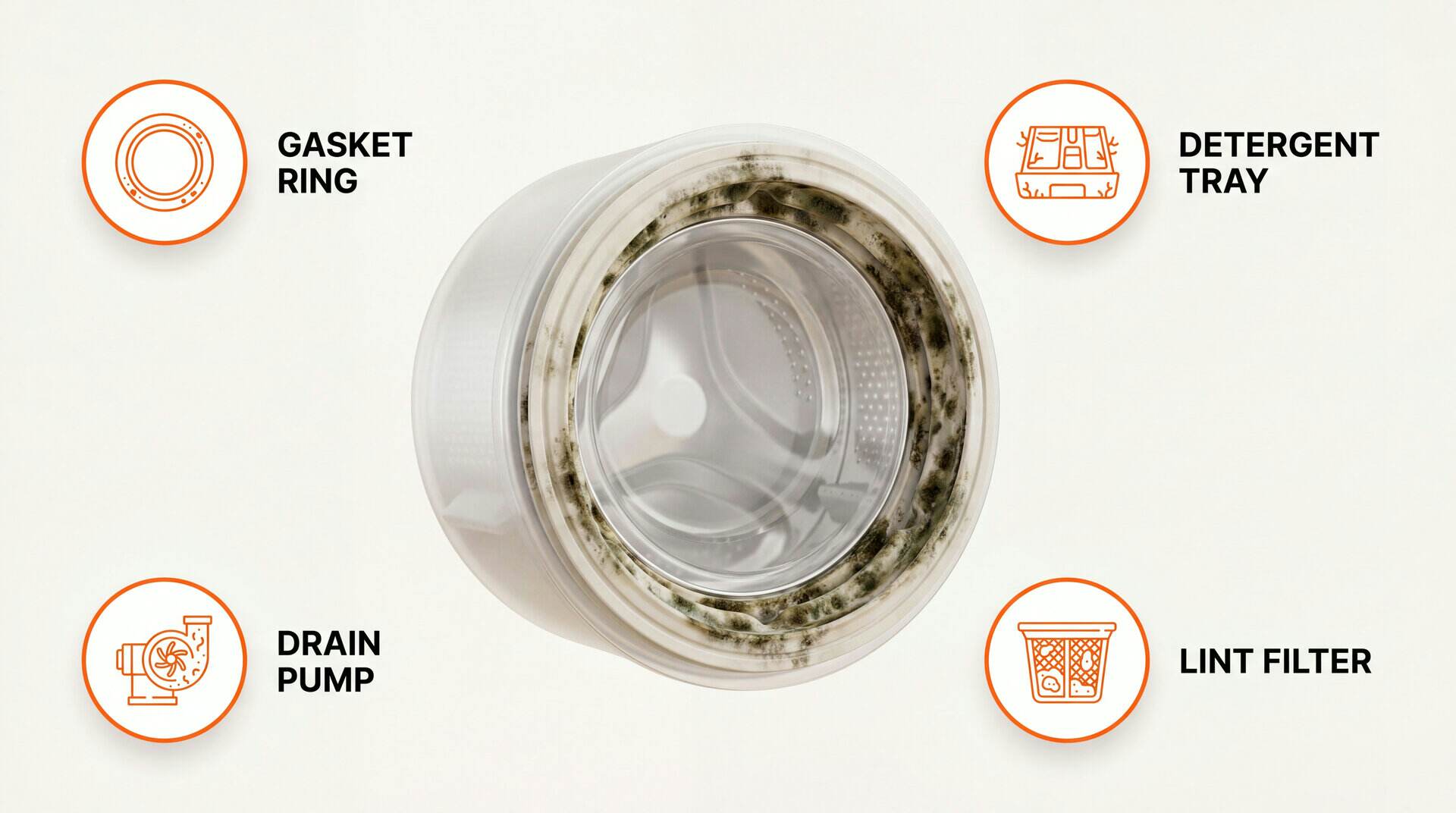
Pull back the folds of your front loader gasket right now. You will likely find standing water, lint, hair, and possibly black mold. The warm, dark, wet folds of that seal are the perfect mold habitat. And because most people close the door after removing their laundry, the moisture has no way to evaporate. The mold colony grows bigger every day.
The drum itself also holds residual water, especially around the outer drum shell that you cannot see. Detergent residue builds up in the hoses, the pump filter, and the dispenser drawer. All of it contributes to that musty smell everyone associates with front loader washers.
How to clean a moldy washing machine
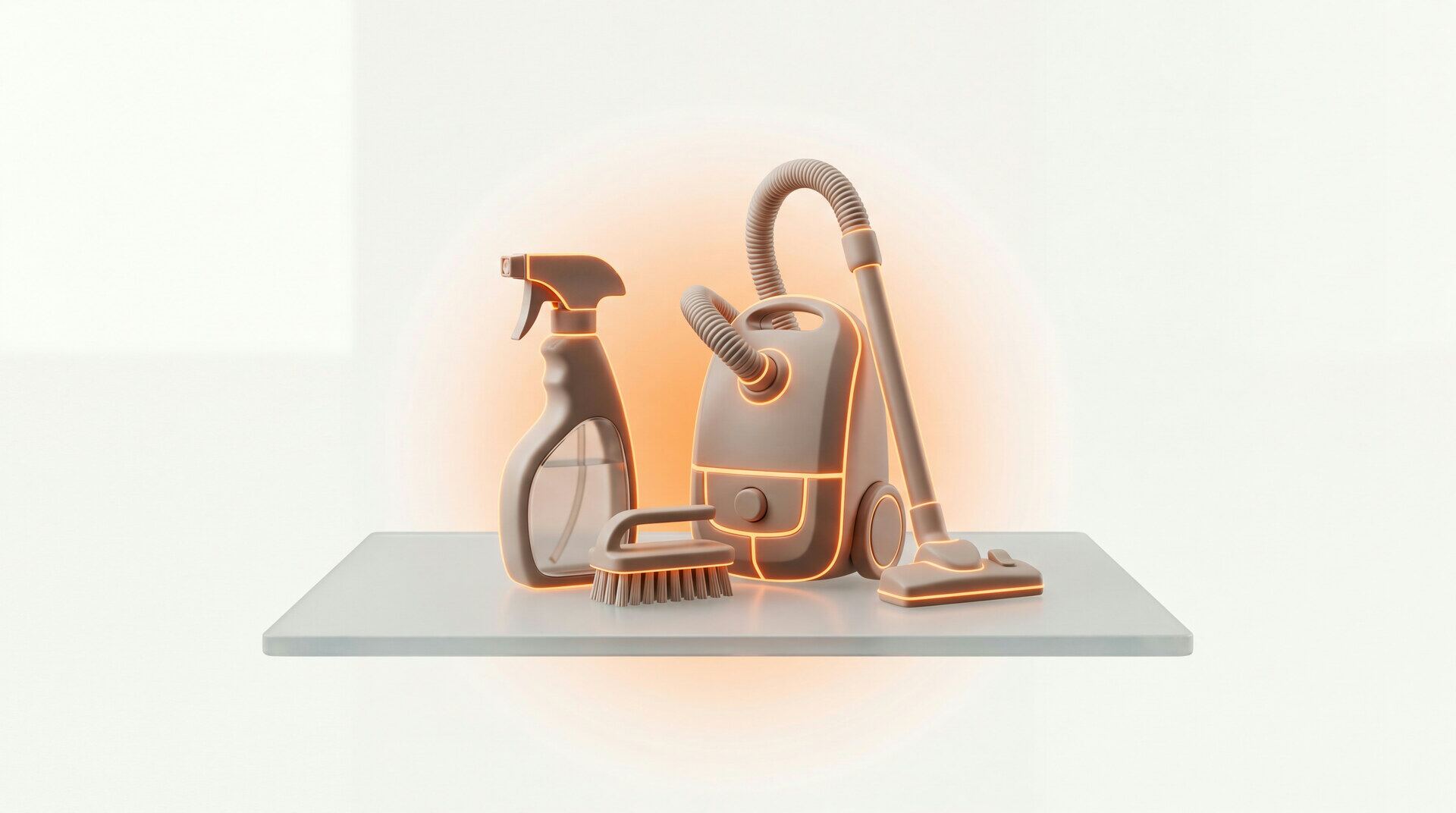
The gasket: Pull back every fold of the rubber door seal. Wipe out all standing water, lint, and debris. Spray hydrogen peroxide or a 1:1 mix of white vinegar and water into the folds. Let it sit 15 minutes. Scrub with a stiff brush or old toothbrush. For heavy mold, pack a paste of baking soda and hydrogen peroxide into the folds, wait 30 minutes, then scrub. Wipe clean and dry completely.
The drum: Run the machine's built in clean cycle if it has one. If not, run an empty cycle on the hottest setting with 2 cups of white vinegar. Then run a second empty hot cycle with 1/2 cup of baking soda. This dissolves detergent residue and kills mold inside the drum, hoses, and pump.
The detergent dispenser: Pull the entire dispenser drawer out (most slide out by pressing a release tab). Scrub it in the sink with hot water and a brush. Clean the cavity where the drawer sits. Mold and detergent buildup hide in the back corners of this cavity.
The pump filter: Located behind a small door at the bottom front of most machines. Place a towel and shallow pan underneath, then open the filter cap. Water will drain out. Remove the filter, clean off lint and debris, scrub, and replace. Clean every 3 months.
When to replace the gasket: If the gasket has deep black staining that does not come out with cleaning, or if it is cracked, torn, or pulling away from the drum, replace it. A replacement gasket costs $50 to $150 plus labor if you hire someone. It is a straightforward DIY job with a YouTube tutorial and about 30 minutes.
Preventing washing machine mold: the daily habit

Leave the door open. This is the single most important thing. After every load, leave the front loader door ajar so air circulates through the drum and gasket. The moisture evaporates instead of feeding mold. If you have kids or pets and worry about safety, leave it open just 2 to 3 inches.
Wipe the gasket dry. After removing your last load of the day, take a towel and wipe down the inside folds of the boot seal. This takes 15 seconds and prevents 90% of gasket mold.
Pull the detergent drawer open. Same concept. Let the dispenser drawer air out between uses.
Use the right amount of detergent. Too much detergent leaves residue that feeds mold. High efficiency (HE) machines need HE detergent, and you probably need less than you think. Follow the markings on the detergent cap for HE machines.
Monthly cleaning cycle. Run an empty hot cycle with 2 cups of white vinegar or a commercial washer cleaner tablet (like Affresh) once a month. This flushes detergent residue and kills mold buildup throughout the system.
Skip liquid fabric softener. Fabric softener leaves a waxy residue on the drum and gasket that mold feeds on. Use dryer sheets or wool dryer balls instead.
Frequently asked questions
Why does my front loader washing machine smell like mold?
Front loader washers have a rubber boot seal (gasket) around the door that traps water, lint, hair, and detergent residue after every cycle. When you close the door, that moisture sits in the folds of the seal with no air circulation. Mold starts growing within days. The smell comes from mold colonies living inside the gasket folds and sometimes behind the drum where you cannot see.
How do I clean mold from a washing machine gasket?
Pull back the rubber gasket folds and wipe out all visible debris, lint, and slime. Spray the entire gasket with hydrogen peroxide or a 1:1 mix of white vinegar and water. Let it sit for 15 minutes. Scrub with a stiff brush or old toothbrush. Wipe clean with a dry cloth. For severe mold, make a paste of baking soda and hydrogen peroxide and pack it into the gasket folds for 30 minutes before scrubbing.
Should I leave the washing machine door open?
Yes. Always leave the door open after every load. This is the single most important thing you can do to prevent washing machine mold. An open door lets the drum and gasket dry out between uses. A closed door traps moisture inside, creating the exact environment mold needs. Also pull the detergent dispenser drawer open to let it dry.
How often should I run a cleaning cycle on my washer?
Run a cleaning cycle once a month. Use the machine's built in clean cycle if it has one, or run an empty hot water cycle with 2 cups of white vinegar or a commercial washer cleaner like Affresh. This dissolves detergent buildup, kills mold in the drum and hoses, and prevents musty odors.
Sources
Every claim on this page traces to one of these. Links open the primary document.