
The Delaware humidity profile
Wilmington is Delaware's only long-record NOAA humidity station, and it reports a 66 percent annual mean relative humidity, a 78 percent morning mean, a calculated mean dew point of 44 F and 45.3 inches of precipitation. NOAA puts statewide annual average precipitation at 45.9 inches for 1991 to 2020, with interannual swings from 27.4 inches in 1930 to 60.1 inches in 1948, and projects that precipitation and the number and intensity of extreme precipitation events will both increase.
The monthly shape puts the pressure on autumn. The morning mean reaches 84 percent in September and October, the highest sustained pair in this report outside the deep South, and it lands in the gap between the cooling season and the heating season when nothing mechanical is drying the house. That is the Delaware basement and crawl space window.
The structural fact that separates Delaware from its neighbors is elevation. This is a coastal plain state with a high water table, and NOAA notes that sea level rise here has run ahead of the global figure because the land itself is subsiding, leaving the state's low-elevation areas highly vulnerable. FEMA's Delaware record holds 26 declarations of all types, of which 20 are major disaster declarations, and hurricanes are the largest single category at 7, ahead of 4 severe storms, 3 snowstorms and 2 floods. NOAA counts 35 billion-dollar disasters affecting Delaware from 1980 to 2024, including 8 tropical cyclones. Delaware is a chronic-moisture state rather than an event-driven one, and the chronic part is groundwater.
Delaware against the national picture
| Metric | Delaware | What it means indoors | Source |
|---|---|---|---|
| Annual mean relative humidity | 66% | Moderate as a percentage, on a coastal plain with a high water table | NOAA NCEI Comparative Climatic Data |
| Morning mean relative humidity | 78% | Reaches 84 percent in September and October, the crawl space window | NOAA NCEI Comparative Climatic Data |
| Calculated annual mean dew point | 44 F | 44 F, warm enough that below-grade surfaces condense for much of the year | Calculated from NOAA 1991 to 2020 normals |
| Annual normal precipitation | 45.3 in | Well above the national norm, and projected to rise further | NOAA NCEI 1991 to 2020 normals |
Relative humidity figures are the mean of the morning and afternoon observations NOAA publishes for each first-order station, rounded to whole percent. Dew point is calculated from the NOAA normal mean temperature and that mean relative humidity using the Magnus formula, so treat it as a derived figure rather than a published one.

Delaware stations ranked by measured humidity
Methodology. Ranked by annual mean relative humidity, the one input that traces to a station record rather than an opinion. Relative humidity is the mean of NOAA's published morning and afternoon values. Mean dew point is calculated from the NOAA 1991 to 2020 normal mean temperature and that mean relative humidity. The humidity band names what the column measures and nothing more. Humidity is not the whole story: a burst supply line in the driest metro on this table soaks the same drywall as a humid August, and EPA guidance treats wet porous material as at risk of mold growth after 24 to 48 hours either way.
| # | Station | Mean RH | Morning RH | Mean dew pt | Annual precip | Humidity band | Notes |
|---|---|---|---|---|---|---|---|
| 1 | Wilmington | 66% | 78% | 44 F | 45.3 in | Moderate | Delaware's only long-record NOAA humidity station, 1948 to 2018. Northern New Castle County, so it understates the humidity of Sussex County and the beaches. |
Wilmington
Delaware's only long-record NOAA humidity station, 1948 to 2018. Northern New Castle County, so it understates the humidity of Sussex County and the beaches.
One station, and it is the least coastal part of the state. Wilmington sits at the northern tip of Delaware, where the coastal plain meets the Piedmont, and its 66 percent annual mean is the driest reading you will get anywhere in Delaware. Kent and Sussex counties run flatter, lower and closer to open water, with a higher water table and a narrower daily humidity swing. Rehoboth, Lewes and the inland bays sit in marine air. Read the Wilmington row as Delaware's floor.
What holds statewide is the water table, and it is rising. NOAA is explicit that Delaware's sea level rise outpaces the global figure because the land is subsiding, which raises groundwater across the coastal plain regardless of what the humidity does. That is why a Delaware crawl space is a different problem from a Pennsylvania basement, and why encapsulation and drainage matter more here than dehumidifier size. Neighboring reports for Maryland, New Jersey and Pennsylvania cover the states Delaware borders.
Common mold species in Delaware homes
EPA and CDC name the same core genera for humid temperate climates. In Delaware they concentrate in crawl spaces and slab-edge conditions, because that is where the groundwater is closest to the building.
Cladosporium
Cladosporium spp.The most commonly found indoor mold nationwide and the standard Delaware crawl space find, on joists and subfloor where 84 percent morning air meets cool framing. Olive-green to black. EPA lists it among the common allergenic indoor molds.
Penicillium
Penicillium spp.Blue-green and powdery, on cardboard, paper, carpet padding and stored fabric. September and October are its window in a Delaware house. EPA lists Penicillium among the most frequently recovered genera in indoor air samples.
Aspergillus
Aspergillus spp.Black, green or brown depending on species. It wants steady moisture and organic dust, which describes crawl space ductwork, bathroom grout and the back of a closet on an exterior wall. EPA and CDC flag Aspergillus species as allergens and, in rare cases, as a cause of aspergillosis in people who are immunocompromised. Delaware's Division of Public Health names immunocompromised people, infants, children, the elderly and people with asthma among those who react more severely.
Stachybotrys chartarum
Stachybotrys chartarumThe species commonly called toxic black mold. It needs sustained wet cellulose, which after a coastal storm or a crawl space that has been wet for a season is exactly what a soaked subfloor provides. Visible black slimy growth on water-stained material is the signature. Do not disturb it.
Chaetomium
Chaetomium spp.Olive to grey and cotton-textured. It requires chronic moisture, so finding it in a Delaware crawl space usually means the groundwater condition has been there for seasons rather than since the last storm.
Alternaria
Alternaria alternataDark green to black, on window tracks, shower stalls and condensation-prone surfaces. It is a common allergen panel entry and is often correlated with asthma flare-ups in sensitive individuals per EPA remediation guidance.
Species information is general and informational. Health responses vary. See a licensed physician for symptom evaluation. Species sources: EPA Mold Remediation in Schools and Commercial Buildings, EPA A Brief Guide to Mold Moisture and Your Home, CDC National Center for Environmental Health guidance.
What mold remediation costs in Delaware
No Delaware agency publishes a mold remediation price schedule. The Division of Public Health publishes a homeowner information sheet on mold that carries no licensing requirement and no regulatory threshold, which tells you what the state does and does not do here.
The Delaware cost driver is the crawl space, and it is a groundwater problem rather than a humidity one. A crawl space over a high water table is not fixed by a bigger dehumidifier. It is fixed by a heavy vapor barrier across the ground and up the walls, sealed vents, an air-sealed rim joist, a dedicated dehumidifier that drains to a pump, and, outside, grading and gutter work so bulk water is not arriving. That package is a bigger number than a remediation and it is the one that holds.
The second driver is coastal exposure. Sussex County beach properties and inland bay communities sit lower, closer to open water, and in FEMA flood zones, and they often sit empty for weeks at a time in the shoulder seasons with nothing running. A closed-up house in a 84 percent October morning is a mold generator. If you own a second home here, a humidistat-controlled dehumidifier is cheaper than one remediation.
The third is that no state credential exists, so bids differ in scope. Get an itemized written scope from each. Our national mold remediation cost guide covers what moves a quote in any market, and the cost estimator lets you scope your own job first.
On insurance: a sudden and accidental discharge such as a burst pipe is usually covered, gradual seepage and groundwater intrusion generally are not, and coastal flooding is excluded from a standard homeowners policy entirely. With 10 hurricane declarations on the FEMA record, National Flood Insurance Program coverage is the relevant product for much of the state, and it carries a 30-day waiting period. Take coverage questions to the Delaware Department of Insurance, and read our guide to homeowners insurance and mold.
Mold remediation licensing in Delaware: who can legally do the work
Delaware does not license, certify or register mold assessors or mold remediators.
Delaware does not license, certify or register mold assessors or mold remediators. The complete list of boards and commissions under the Division of Professional Regulation contains no mold board, and it also contains no general contractor board. Delaware licenses electricians, plumbing and HVACR contractors, home inspectors and manufactured home installers, but a company doing mold remediation needs no trade license from the state.
What it does need is a Delaware business license from the Division of Revenue, which has a specific contractor category for resident and non-resident contractors. That is a tax registration rather than a competency credential, but it is checkable and it is the one thing the state requires, so verify it. A remediation firm operating in Delaware without one is not registered to do business here.
Because the state offers no credential, the private check carries the whole weight. Ask for IICRC certification and ask whether the work will follow ANSI/IICRC S520, the industry consensus standard. Ask whether the same firm is doing the assessment and the remediation, since nothing separates those roles here. Ask for daily moisture readings by material.
For a Delaware crawl space specifically, ask two more questions. First, what is their plan for the moisture source, given that a high water table cannot be dehumidified away? Second, will they encapsulate rather than ventilate? The old advice to add crawl space vents fails in a climate with 84 percent October mornings, because opening the space pushes saturated air onto framing that is cooler than the air. A contractor who proposes more vents in Delaware has not understood the problem.
Delaware mold laws and tenant rights
Delaware has no mold provision in its landlord-tenant code. We searched the full text of Title 25, Chapter 53 and it contains zero occurrences of the word. A mold complaint runs through 25 Del. C. § 5305, the landlord's obligations relating to the rental unit.
That section requires the landlord, at all times during the tenancy, to comply with all applicable state or local statutes, codes, regulations and ordinances governing the maintenance, construction, use or appearance of the rental unit; to provide a unit that does not endanger the health, welfare or safety of the tenants and is fit for the purpose for which it is expressly rented; to keep all common areas clean and sanitary; to make all repairs and arrangements necessary to keep the unit in as good a condition as it was or ought by law to have been at the start of the tenancy; and to maintain all electrical, plumbing and other landlord-supplied facilities in good working order. A mold complaint runs through the fitness and health-endangerment language and, where a local housing code applies, through the code-compliance duty.
The remedy at 25 Del. C. § 5306 is clean and short. The tenant gives the landlord written notice of a condition that deprives the tenant of a substantial part of the benefit or enjoyment of the bargain, and if the landlord does not remedy it within 15 days of receiving the notice, the tenant may terminate the rental agreement. Where the condition renders the premises uninhabitable or poses an imminent threat to health, safety or welfare, the tenant may terminate immediately after giving notice, without going to a Justice of the Peace Court.
One provision cuts the other way and it is worth knowing before you file anything: evidence of compliance with applicable building and housing codes is prima facie evidence that the landlord has complied with the chapter. So a landlord holding a clean local inspection starts ahead. Your counter is documentation: dated written notice, photographs of the growth and the water source, and, if you can get it, a local code inspection of your own. Our landlord letter generator produces the notice, and our guide to mold and apartment rights covers the general playbook.
General information, not legal advice. For your situation, talk to a Delaware attorney, a legal aid office, or your local tenant council.
Delaware-specific actions
A coastal plain with rising groundwater and an autumn with nothing running. Three moves cover most of it.
A. Seal the crawl space, do not ventilate it
The old guidance to add crawl space vents assumes outdoor air is drier than the crawl space, and in a state with 84 percent September and October mornings it usually is not. Opening the space pushes saturated air onto framing that is cooler than the air, and it condenses on the joists. Seal it instead: a heavy vapor barrier across the ground and up the walls, vents closed, rim joist air-sealed, and a dedicated dehumidifier draining to a pump. Fix grading and gutters outside first so bulk water is not arriving. Our guide on mold in a crawl space covers the sequence.
B. Treat the water table as a permanent condition, not an event
NOAA notes Delaware's sea level rise outpaces the global figure because the land itself is subsiding, which raises groundwater across the coastal plain regardless of the weather. A wall or crawl space that started weeping in the last decade may be responding to that rather than to a leak, and no amount of remediation fixes it. The work is drainage: perimeter grading, downspout discharge well away from the foundation, a functioning sump with a backup, and in some cases exterior waterproofing. Find out your flood zone while you are at it.
C. If the house sits empty, control it remotely
Delaware's beach and inland bay communities are full of properties that sit closed for weeks in spring and autumn, which are the exact months with the highest morning humidity. A closed house with no air movement in an 84 percent October is where the worst Delaware mold jobs start. Leave a humidistat-controlled dehumidifier running with a condensate pump, set the thermostat rather than switching it off, and have someone check it monthly. It costs less than one remediation.
Seasonal risk profile for Delaware
Monthly mean relative humidity at Wilmington. The daily mean barely moves across the year, which is the coastal plain signature, and the morning mean peaks at 84 percent in September and October.
Delaware relative humidity peaks in September
The monthly mean runs from 61 percent in April to 70 percent in September, a 9 point swing across the year.
View the data
| Month | Jan | Feb | Mar | Apr | May | Jun | Jul | Aug | Sep | Oct | Nov | Dec |
|---|---|---|---|---|---|---|---|---|---|---|---|---|
| Mean RH | 67% | 65% | 62% | 61% | 65% | 66% | 66% | 69% | 70% | 70% | 68% | 68% |
September and October are the worst pair in the Delaware year. The morning mean holds 84 percent for two straight months while neither the air conditioning nor the heat is running. Crawl spaces, slab edges and below-grade walls are all cooler than that air, so they condense. Run the dehumidifier through this stretch even when the living space feels comfortable.
Late summer into autumn is also the tropical window. Ida in 2021, Isaias in 2020 and two separate Sandy declarations in 2012 all landed in this part of the year. A storm during the wettest weeks means wet material plus a saturated atmosphere, which is the worst possible drying condition.
April is the driest month at 61 percent and the right time to work. If you are going to encapsulate a crawl space, open a wall or dry a structure, spring is when ambient air helps rather than fights. The mold risk by ZIP tool gives you the local read.
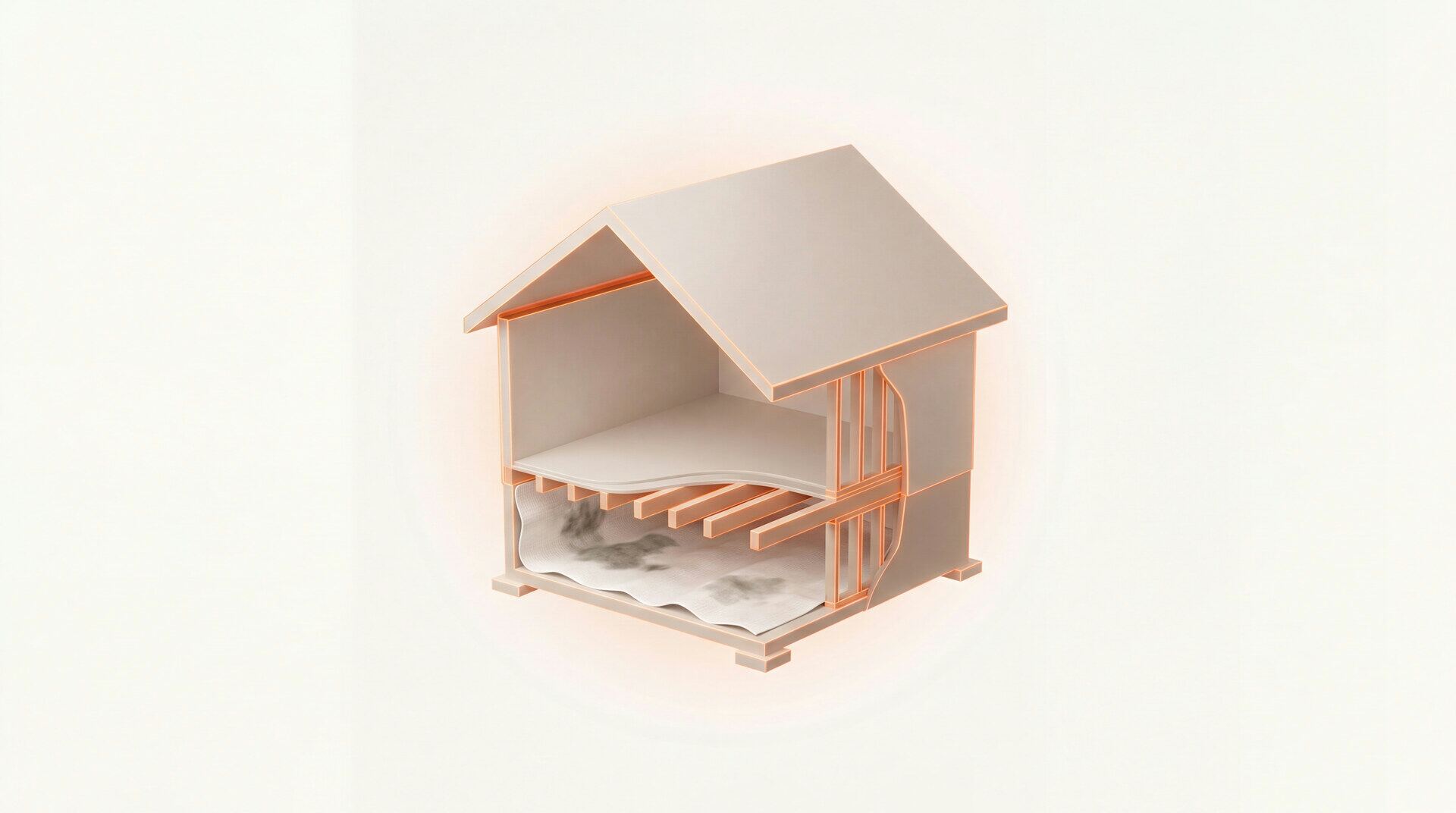
Where to get help in Delaware
Delaware runs mold as a public health information sheet rather than as a program, and its contractor route is a business license rather than a trade license. These are the starting points.
Questions on file
Does Delaware require a license for mold remediation?
No, and Delaware does not license general contractors either. The complete list of boards and commissions under the Division of Professional Regulation has no mold board and no general contractor board. Delaware licenses electricians, plumbing and HVACR contractors, home inspectors and manufactured home installers, and that is the extent of it for building trades. What a mold remediation company does need is a Delaware business license from the Division of Revenue, which has a specific contractor category for resident and non-resident contractors. Verify that, then run the private checks: IICRC certification and ANSI/IICRC S520.
Source 8, Institute of Inspection, Cleaning and Restoration CertificationHow long does a Delaware landlord have to fix mold?
Fifteen days from written notice, under 25 Del. C. § 5306. The tenant gives written notice of a condition that deprives the tenant of a substantial part of the benefit or enjoyment of the bargain, and if the landlord does not remedy it within 15 days of receiving that notice, the tenant may terminate the rental agreement. Where the condition renders the premises uninhabitable or poses an imminent threat to health, safety or welfare, the tenant may terminate immediately after giving notice, without going to a Justice of the Peace Court.
Does a clean inspection protect a Delaware landlord?
Partly, and this is the provision to know before you file anything. Under Delaware's Residential Landlord-Tenant Code, evidence of compliance with applicable building and housing codes is prima facie evidence that the landlord has complied with the chapter. A landlord holding a clean local inspection therefore starts ahead. Your counter is documentation: dated written notice, photographs of the growth and the water source, a record of every response, and where possible a local code inspection of your own that finds the condition.
Should I vent or seal a Delaware crawl space?
Seal it. The old advice to add vents assumes outdoor air is drier than the crawl space, and with a morning mean of 84 percent in September and October it usually is not. Opening the space pushes saturated air onto framing that is cooler than the air, and it condenses on the joists. The modern approach is a heavy vapor barrier across the ground and up the walls, vents closed, rim joist air-sealed, and a dedicated dehumidifier that drains to a pump. Fix the grading and gutters outside first so bulk water is not arriving.
Why is Delaware's water table rising?
Two things at once. Sea level is rising, and NOAA notes that in Delaware it has run ahead of the global figure because the land itself is subsiding, leaving the state's low-elevation areas highly vulnerable. On a flat coastal plain that raises groundwater across a wide area rather than just at the shoreline. The practical consequence is that a crawl space or basement wall that started weeping in the last decade may be responding to a permanent change rather than to a leak, and the work is drainage and waterproofing rather than remediation.
What should I do with a Delaware beach house that sits empty?
Leave a humidistat-controlled dehumidifier running with a condensate pump, and set the thermostat rather than switching it off. Delaware's morning humidity peaks at 84 percent in September and October, which are exactly the months a seasonal property is most likely to be closed up with nothing moving air. A closed house in that condition is where the state's worst mold jobs start. Have someone check it monthly. The cost of running a dehumidifier through a shoulder season is a fraction of one remediation.
Source register
Every source chip on this page points here. Agency and statute pages first, then the federal technical references.
Find the mold in your Delaware home
The scanner is open. Get a detailed photo report, next steps, testing options and estimated cleanup costs.
Scan My Photo Get the free mold checklistRelated guides on Mold Scanner AI

All 51 State Reports
Humidity, licensing and tenant law for every state.
Mold in a Crawl Space
The Delaware failure mode, and why sealing beats venting.

Mold in Your Apartment
Renter rights, notice letters, and landlord duties.
Picking a Dehumidifier
Sizing, drain options, and the spec that matters.

What Remediation Costs
The drivers that actually move a quote.

Insurance and Mold
Covered perils, exclusions, and sublimits.