
The New Jersey humidity profile
New Jersey is a humid state that does not feel like one until you read the numbers. According to NOAA National Weather Service station normals, morning relative humidity sits in the low-to-mid 70s across most of the state and climbs into the mid-to-high 80s along the shore. The Atlantic City reporting station posts an annual average morning relative humidity near 81 percent and afternoon near 59 percent, which is among the highest coastal readings in the Northeast. Newark runs lower, near 73 percent in the morning and 53 percent in the afternoon, and the central and northern interior around Trenton and Paterson lands in between, in the mid-70s for daily morning humidity.
Why this matters: EPA flags 50 percent as the upper safe bound for indoor relative humidity, and New Jersey morning readings clear that bound nearly every day of the year. The state is cooler than the Gulf Coast, so annual average dew points are far lower, generally in the mid-40s F as a yearly average rather than the low-60s F seen in Louisiana. The catch is summer. During July and August, New Jersey dew points routinely reach the low-to-mid 70s F, which is the same oppressive, mold-friendly air the Deep South lives in, just concentrated into three months instead of spread across the year.
The other half of the New Jersey picture is water that arrives in bulk. The state sees nor'easters in the cooler months, heavy convective rain and the remnants of tropical systems in late summer, and a long coastline plus tidal rivers that flood. Atlantic City has recorded its highest tidal-flood-day counts in recent years as sea level has risen. Each soaking event resets the bulk-water clock, and EPA guidance says porous materials that stay wet longer than 24 to 48 hours are at risk of mold colonization. In New Jersey that water almost always ends up in the same place: the basement.
New Jersey vs U.S. average
| Metric | New Jersey | U.S. average | Source |
|---|---|---|---|
| Annual avg morning relative humidity | 73-81% | ~70% | NOAA NWS station normals |
| Annual avg afternoon relative humidity | 53-59% | ~55% | NOAA NWS station normals |
| Summer (Jul-Aug) dew point | low-to-mid 70s F | ~60 F | NOAA NWS / NJ State Climatologist |
| Share of homes with a basement | high (most homes) | varies | U.S. Census housing characteristics |
| Median home age | among the oldest in the U.S. | ~40 yrs | U.S. Census ACS housing data |
Humidity figures are long-term station normals from NOAA NWS reporting stations (Atlantic City, Newark, and the central-NJ corridor). They are approximate climatological averages, not live or exact readings. Treat them as the typical baseline a New Jersey home faces, not a forecast.
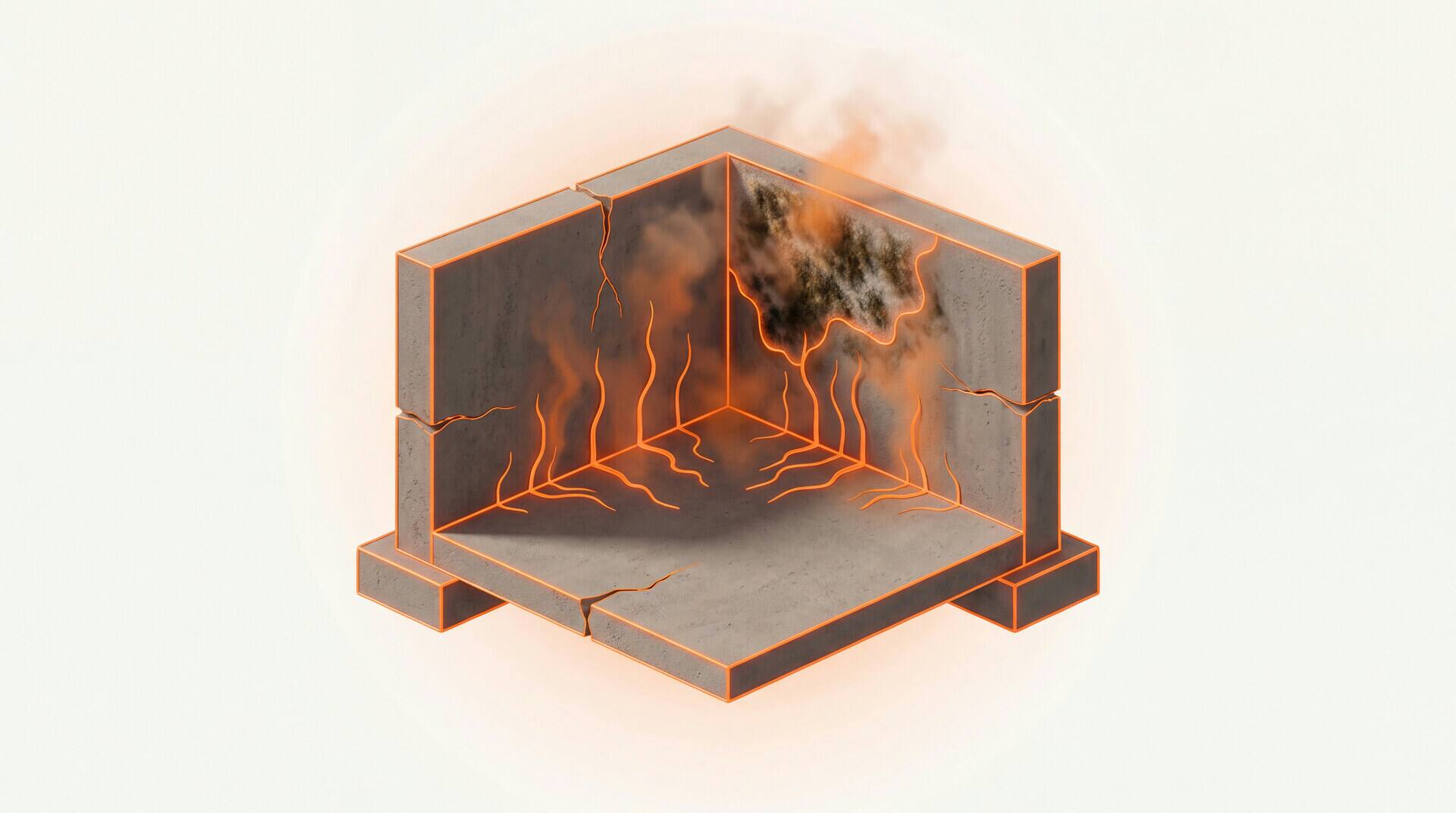
New Jersey’s five metros ranked by mold risk
Methodology. Composite risk score = (annual avg morning RH) × (days/year above 70 percent RH) × (basement-and-coastal exposure weight 1.0 to 1.5 based on share of below-grade living space, median housing age, and proximity to tidal or riverine flooding). Humidity inputs are approximate NOAA NWS station normals for the airport or coop station nearest each metro. Housing-age and basement-prevalence inputs from U.S. Census American Community Survey housing data. This is a relative ranking among New Jersey metros, not a clinical or insurance score.
Every place on file, ranked by avg morning RH
Paterson reads ~75% against 73% at Newark. The target for a basement is 50 percent, so every row on this chart sits above it.
View the data
| # | Place | Avg morning RH | Avg morning RH |
|---|---|---|---|
| 1 | Jersey City | ~74% | 74% |
| 2 | Newark | 73% | 73% |
| 3 | Paterson | ~75% | 75% |
| 4 | Elizabeth | ~74% | 74% |
| 5 | Trenton | ~75% | 75% |
| # | Metro | Avg morning RH | Summer dew pt | Risk band | Notes |
|---|---|---|---|---|---|
| 1 | Jersey City | ~74% | low-70s F | Extreme | Dense, old, low-lying Hudson waterfront. Brownstones and pre-war multifamily over damp basements, plus repeated tidal and storm-surge flooding along the river. |
| 2 | Newark | 73% | low-70s F | Extreme | Largest city, old multifamily stock, low-lying Passaic River and Ironbound flood exposure. Aging HVAC and deferred maintenance push indoor RH up. |
| 3 | Paterson | ~75% | low-70s F | Very high | Passaic River runs through the city and floods repeatedly. Dense 19th-century mill-era housing with stone foundations that wick groundwater. |
| 4 | Elizabeth | ~74% | low-70s F | Very high | Coastal Union County, tidal Arthur Kill exposure, dense older housing. Low elevation makes basement seepage the default condition. |
| 5 | Trenton | ~75% | low-70s F | High | State capital on the Delaware River. Mid-70s annual humidity, older row housing, and riverside flood zones. Drier afternoons than the shore but persistent basement damp. |
Jersey City
Dense, old, low-lying Hudson waterfront. Brownstones and pre-war multifamily over damp basements, plus repeated tidal and storm-surge flooding along the river.
Newark
Largest city, old multifamily stock, low-lying Passaic River and Ironbound flood exposure. Aging HVAC and deferred maintenance push indoor RH up.
Paterson
Passaic River runs through the city and floods repeatedly. Dense 19th-century mill-era housing with stone foundations that wick groundwater.
Elizabeth
Coastal Union County, tidal Arthur Kill exposure, dense older housing. Low elevation makes basement seepage the default condition.
Trenton
State capital on the Delaware River. Mid-70s annual humidity, older row housing, and riverside flood zones. Drier afternoons than the shore but persistent basement damp.
Why the Hudson and Passaic cities top the ranking. Three factors compound in Jersey City, Newark, Paterson, and Elizabeth. First, humidity: morning relative humidity sits in the 70s most of the year, and summer dew points reach the low 70s F. Second, water: all four are low-lying and near tidal water or a flood-prone river, so storm surge, nor'easters, and river overflow repeatedly push water into basements and ground floors. Third, housing stock: northern New Jersey has some of the oldest, densest housing in the country, much of it built before modern vapor barriers, with stone or block foundations that wick groundwater and finished basements that trap it. Every flood event in this corridor, from Hurricane Floyd to Hurricane Ida, produced documented widespread basement mold.
Why Trenton ranks lowest in this group but is still “high”. Trenton sits inland on the Delaware and sees slightly drier afternoon air than the coastal cities, which pulls its risk band down a notch. The trade-off is the same old housing stock, the same persistent mid-70s morning humidity, and a riverfront with its own flood history. Its basements stay damp in the long humid shoulder seasons even when no storm has hit. No New Jersey metro escapes the basement problem.
Atlantic City is not in the top five by population, but its shore station posts the highest humidity in the state (annual morning RH near 81 percent). Any shore home faces coastal-grade humidity and tidal-flood exposure on top of the statewide basement risk.
Common mold species in New Jersey homes
Every EPA indoor air quality guide lists the same core species for humid temperate climates. New Jersey homes, and especially their basements, concentrate five of them.
Cladosporium
Cladosporium spp.The most common indoor mold nationwide and the one most often found on New Jersey basement walls, window frames, and HVAC evaporator coils. Olive-green to black. It tolerates cool surfaces, so it thrives on the cold concrete and ductwork that define a New Jersey basement. EPA lists it as a common allergenic mold.
Penicillium
Penicillium spp.Blue-green. Grows on damp carpet padding, wallpaper, cardboard, and stored fabric, all of which pile up in basements and closets. New Jersey’s long humid shoulder seasons give it a year-round habitat. EPA lists Penicillium species among the most frequently recovered genera in indoor air samples.
Aspergillus niger
Aspergillus nigerBlack or dark-brown. Prefers surfaces with high moisture and organic dust, which is why it shows up on bathroom grout, caulking, and washing-machine gaskets. EPA and CDC flag Aspergillus species as allergens and, in rare cases, as a cause of aspergillosis in immunocompromised individuals.
Stachybotrys chartarum
Stachybotrys chartarumThe species commonly called “toxic black mold.” Requires sustained wet cellulose such as wet drywall, wet ceiling tile, or wet paper-faced insulation. In New Jersey it most often follows a flooded basement, a burst winter pipe, or a roof leak left wet for days. When to worry: visible black slimy growth on water-stained drywall after flooding. Do not disturb. Contain and remediate.
Alternaria
Alternaria alternataDark green to black. Thrives in windows, shower stalls, and around any condensation-prone surface, which is exactly what New Jersey cold-window winters produce. Commonly flagged on allergenic panels, often correlating with asthma exacerbation in sensitive individuals. EPA identifies Alternaria as one of the dominant indoor genera in humid climates.
Species information is general and informational. Health responses vary. Consult a physician for symptom evaluation. Species sources: EPA Mold Remediation in Schools and Commercial Buildings, EPA A Brief Guide to Mold Moisture and Your Home, CDC National Center for Environmental Health guidance.
New Jersey-specific actions
Three actions account for most of the mold risk reduction available to a New Jersey homeowner or renter. Each maps to an existing free Mold Scanner AI tool.
A. Treat the basement as the front line, year-round
Every season: Run a basement dehumidifier set to hold relative humidity below 50 percent, and keep a hygrometer down there. Spring and summer: Do not open basement windows on muggy days, because warm humid air hits the cool concrete and condenses. Grade soil away from the foundation and clear gutter downspouts at least 6 feet from the wall. After any storm or flood: Remove standing water fast, cut out wet drywall a foot above the visible water line, pull saturated carpet padding and insulation, and run air movers. Materials that still read above 16 percent moisture content after 72 hours of drying should be removed, per restoration-standard guidance.
B. Keep indoor RH below 50 percent, and watch the winter flip
Use a hygrometer on each living level and in the basement. In summer, dehumidify. In winter, New Jersey heating dries the air but pushes condensation onto cold windows, exterior-wall corners, and unheated closets, so check those cold spots. EPA guidance is 30 to 50 percent indoor relative humidity. Aim for the lower half of that band in the basement.
C. Scan quarterly, and after every flood or freeze event
New Jersey’s four high-risk windows are March (snowmelt and spring rain into basements), August (peak humidity and dew point), October (nor'easter and tropical-remnant season), and January (frozen-pipe and cold-window condensation risk). Scan after any of them.
Seasonal risk profile for New Jersey
Monthly average morning relative humidity blended across the state’s reporting stations, which tracks how often indoor surfaces sit near the growth threshold. Based on long-term NOAA NWS station normals. Approximate climatological averages, not live readings.
New Jersey relative humidity peaks in September
The monthly mean runs from 71 percent in April to 82 percent in September, a 11 point swing across the year.
View the data
| Month | Jan | Feb | Mar | Apr | May | Jun | Jul | Aug | Sep | Oct | Nov | Dec |
|---|---|---|---|---|---|---|---|---|---|---|---|---|
| Mean RH | 75% | 75% | 73% | 71% | 74% | 76% | 78% | 81% | 82% | 81% | 78% | 76% |
Every month of the year, New Jersey’s blended morning humidity sits above 70 percent. The late-summer and early-fall peak (August through October) lines up with both maximum dew point and the start of nor'easter and tropical-remnant flooding. Winter humidity stays high outdoors while heating dries indoor air, which moves the risk to cold-surface condensation instead.
Where to get help in New Jersey
New Jersey has no statewide mold disclosure law, no mold exposure limit, and no licensing program for mold inspectors or remediators as of 2026. A proposed Mold Safe Housing Act has been introduced in several legislative sessions but has not been enacted. What protects renters instead is the implied warranty of habitability, which New Jersey courts read into every residential lease and which cannot be waived, plus local property-maintenance codes enforced through the Department of Community Affairs. The agencies and resources below are the authoritative starting points.
Questions on file
Is mold a big problem in New Jersey?
Yes. New Jersey combines humid summers, a long shoulder season, and one of the oldest housing stocks in the country. NOAA station normals put morning relative humidity in the 70s across most of the state and into the 80s along the shore at Atlantic City. Most New Jersey homes also have basements, and damp basements are the single most common indoor mold habitat in the Northeast. The risk is high statewide, just driven by different causes than the Gulf Coast.
Source 2, , National Oceanic and Atmospheric AdministrationDoes New Jersey have a mold law for landlords?
General information only, not legal advice. As of 2026, New Jersey has no statewide statute that requires mold disclosure, sets a mold exposure limit, or licenses mold inspectors and remediators. A proposed Mold Safe Housing Act has been introduced in multiple sessions but has not become law. What does apply is the implied warranty of habitability, which New Jersey courts read into every residential lease and which cannot be waived. A serious mold condition that makes a unit unfit can breach that warranty. Local property-maintenance and housing codes also apply. Consult the New Jersey Department of Community Affairs and a tenant attorney.
Why do New Jersey basements get moldy?
Most New Jersey homes have full basements, and basements sit below grade where soil moisture, foundation seepage, and cool surfaces meet humid summer air. When warm humid air contacts a cool concrete wall or floor, water condenses, and EPA notes mold can begin on damp porous materials within 24 to 48 hours. Spring snowmelt, heavy summer rain, nor'easters, and coastal flooding all push extra water toward the lowest point of the house. A dehumidifier kept below 50 percent RH is the standard defense.
What mold species are common in New Jersey homes?
Cladosporium and Penicillium are the genera most often recovered from New Jersey indoor air, especially in basements and around HVAC. Aspergillus shows up on damp bathroom and kitchen surfaces. Stachybotrys chartarum (black mold) appears after sustained water intrusion on wet drywall or paper-faced insulation, common after a flooded basement or burst pipe. Alternaria is frequent around windows and showers. EPA notes all molds can cause reactions in sensitive people. See a physician for symptom evaluation. This page is general information, not medical advice.
Does my renters or homeowners insurance cover mold in New Jersey?
General information only. New Jersey policies vary widely. Most standard homeowners and renters policies exclude mold unless it results from a covered sudden and accidental water event, such as a burst pipe. Flood damage from coastal flooding, nor'easters, or river overflow is typically excluded from standard policies and requires separate NFIP flood coverage. Read your own policy and consult a licensed New Jersey insurance agent or attorney. The New Jersey Department of Banking and Insurance publishes consumer guides.
What is the best humidity level for a New Jersey home?
EPA guidance is 30 to 50 percent indoor relative humidity. In New Jersey, run a dehumidifier in summer to hold the basement and main living areas below 50 percent, and in winter watch for the opposite problem, where heating dries the air and condensation forms on cold windows and exterior walls. Use a hygrometer in the basement and on each living level and act whenever any zone holds above 55 percent for more than a few hours.
How much does mold remediation cost in New Jersey?
Typical professional remediation in New Jersey runs about 500 to 6,000 USD, with many residential jobs landing in the 1,500 to 3,500 USD range for contained areas. A moldy basement often runs 2,000 to 8,000 USD, attic remediation 1,500 to 6,000 USD, and a whole-house or crawl-space job after major water intrusion can reach 10,000 to 20,000 USD. New Jersey does not license mold remediators, so use contractors who follow the IICRC S520 standard and carry proof of insurance. See our remediation cost guide for a detailed breakdown.
Can a New Jersey tenant withhold rent over mold?
General information only, not legal advice. New Jersey recognizes the implied warranty of habitability, and courts have allowed remedies such as rent abatement and repair-and-deduct when a serious defect makes a unit unfit, after the tenant gives the landlord written notice and a reasonable chance to fix it. Mold severe enough to affect habitability can qualify. The rules are specific and the risk of doing it wrong is real, so get the notice in writing and consult Legal Services of New Jersey or a tenant attorney before withholding anything.
Source register
Every source chip on this page points here. Agency and statute pages first, then the federal technical references.
Find the mold in your New Jersey home
The scanner is open. Get a detailed photo report, next steps, testing options and estimated cleanup costs.
Scan My Photo Get the free mold checklistRelated guides on Mold Scanner AI

Mold Risk by ZIP Code
Type your ZIP, get climate based mold risk.

Water Damage Documentation Helper
Record accessible water-event conditions without a risk score.
Picking the Right Dehumidifier
Sizing, drain options, and the spec that matters.
Mold Growth Timeline
Hour by hour: when spores germinate and colonies appear.
Indoor Humidity from Your Phone
What works, what does not, and a free alternative.

Stop Mold in a Closed Up House
Vacation home, rental, second property.