Does Pine-Sol kill mold?
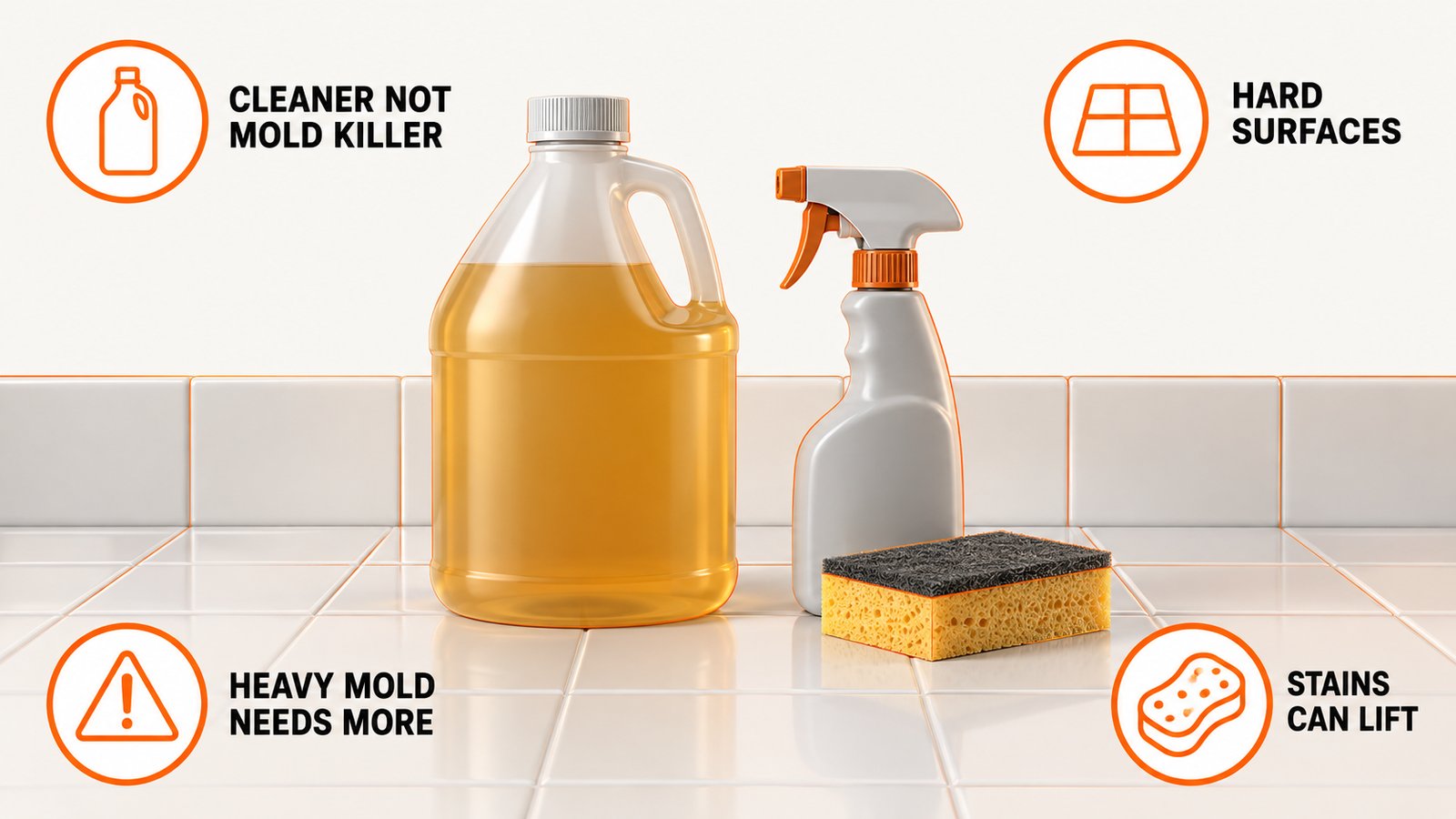
No, Pine-Sol is not labeled to kill mold. It is sold as a household cleaner, and Pine-Sol's own FAQ answers the question in one sentence: "Pine-Sol can help remove visible mold and mildew stains from hard, non-porous surfaces by cleaning away buildup, but it is not a dedicated mold killer; for persistent or heavy mold, a product specifically labeled for mold and mildew removal is recommended."
Removing a stain and killing a colony are two different jobs. A cleaner lifts dirt and residue off a surface. A disinfectant has been tested against specific organisms, and the label has to name them. Pine-Sol's label names bacteria and viruses. It does not name mold or mildew. So if you searched "will Pine-Sol kill mold" hoping the jug on your laundry shelf was the answer, the label says it is a cleaning product, and the maker points you to a mold-specific product for anything heavy.
That doesn't make it useless. On a sealed hard surface with a light film or a few spots, scrubbing with a household cleaner and drying the area is the same basic approach the EPA describes for small jobs. The rest of this page covers which Pine-Sol is which, what the EPA record says, where it fits, and where it doesn't.
Which Pine-Sol products carry an EPA registration?
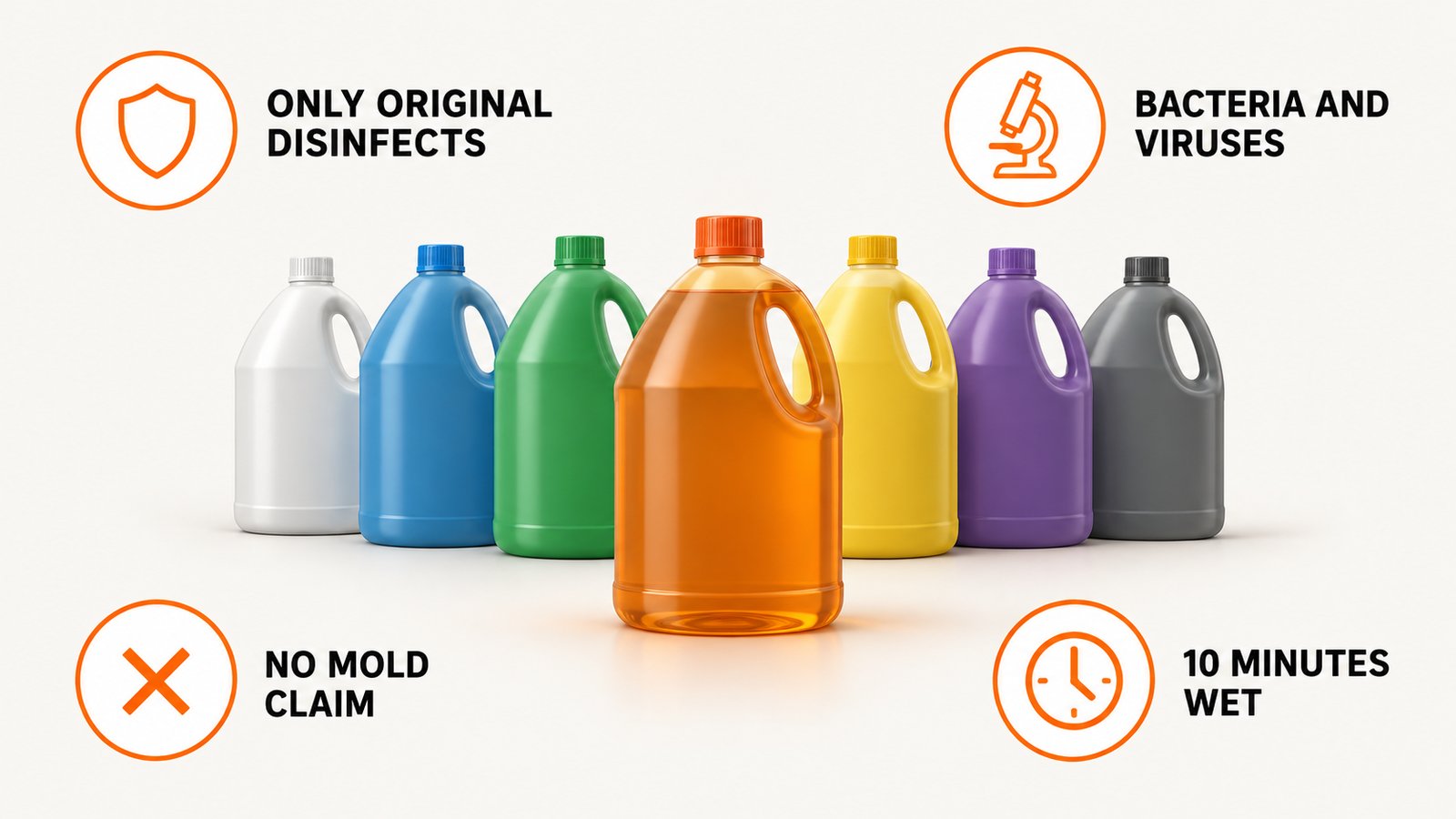
Only one. Pine-Sol's FAQ says it directly: Original Pine Multi-Surface Cleaner cleans and disinfects when used as directed, while all other Pine-Sol formulas are cleaners only and do not kill germs. The scented lines on the product page are Lemon Fresh, Apple Cinnamon, Tropical Breeze, Cherry Blossom, Lavender Clean and Refreshing Clean.
| Product | What the label says it is | Organisms named | Mold or mildew claim |
|---|---|---|---|
| Original Pine-Sol Multi-Surface Cleaner | Cleaner and EPA-registered disinfectant (EPA Reg. No. 5813-101) | 2 bacteria and 7 viruses, 10 minute contact time on hard, nonporous surfaces | None on the label |
| Other Pine-Sol scents | Cleaner only, per Pine-Sol's FAQ | None. They don't disinfect. | None claimed |
Here is what I found on the EPA side. In EPA's Pesticide Product Label System, registration 5813-101 is filed under the product name TUCK 3, with "Original Pine Sol Multi-Surface Cleaner" listed as an alternate brand name. The active ingredient on file is glycolic acid at 1.75 percent. The EPA-accepted label dated April 11, 2023 has an organism table for disinfection on hard, nonporous surfaces: Staphylococcus aureus and Salmonella enterica, plus human coronavirus, influenza A, respiratory syncytial virus, SARS-CoV-2, adenovirus type 2 and rotavirus, each at 10 minutes. A second table covers sanitizing non-food contact surfaces at 5 minutes. I searched the full label text for "mold" and "mildew" and found neither word.
One detail for the careful reader: EPA's index page for the registration also lists a pest category called "animal pathogenic fungi." The label's own organism table names no fungus, and neither the label text nor Pine-Sol's FAQ makes a mold or mildew claim. That is why this page says Pine-Sol is labeled as a cleaner for mold purposes, and doesn't say it kills mold.
The directions on the label are specific. To disinfect, apply it full strength on a hard, nonporous surface, keep the surface visibly wet for 10 minutes, then rinse. Visibly soiled surfaces need a pre-clean first. Pine-Sol's product page adds that the concentrate can also be mixed at 1 cup per half gallon of water for disinfecting, and at one-eighth cup per gallon for everyday cleaning.
Does Pine-Sol kill mold and mildew in the bathroom?
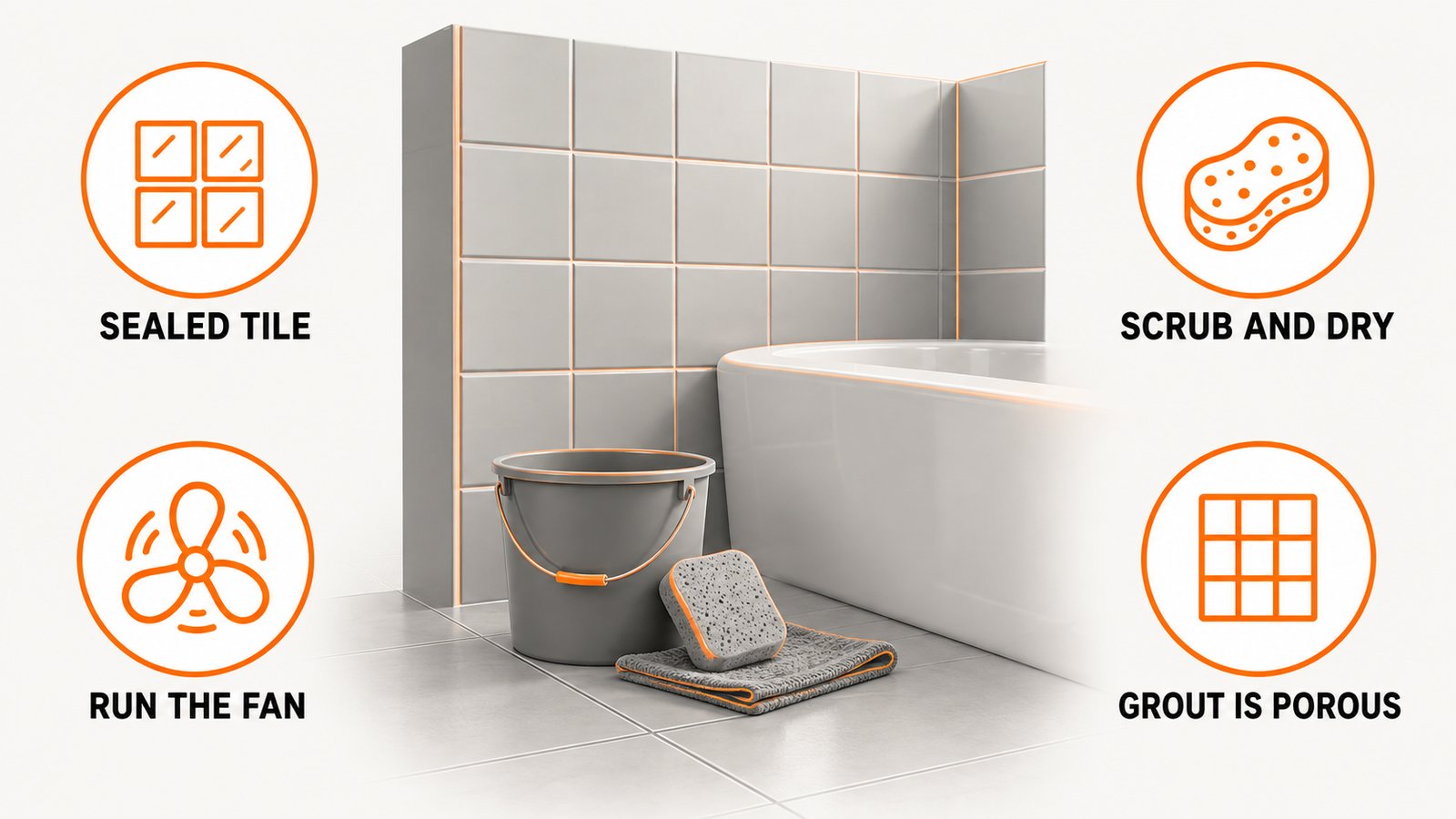
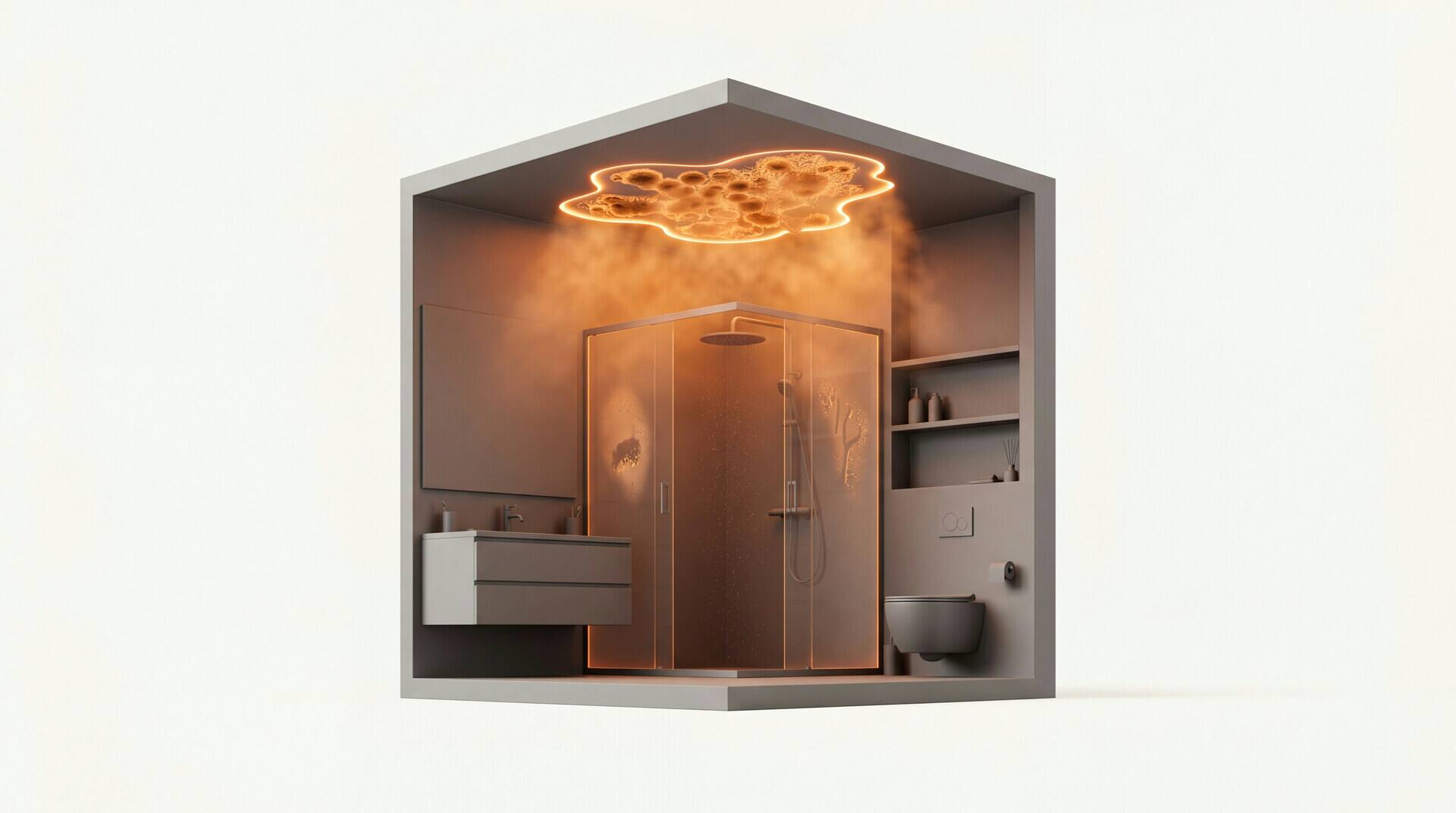
Pine-Sol lists bathrooms among the places to use it, and a sealed tile wall, a tub or a vanity top is the kind of hard, non-porous surface its directions are written for. So it's a reasonable choice for wiping soap scum and light surface film. What it isn't is a mold treatment. The label doesn't claim to kill mold or mildew, and the maker says a product labeled for mold and mildew removal is the better pick for persistent growth.
If you're using it on a bathroom spot, treat the job as a cleaning job. The EPA's mold guidance for small areas says to scrub mold off hard surfaces with detergent and water and dry completely. Its bathroom tips add that if mold in the shower or elsewhere keeps reappearing, increasing ventilation by running a fan or opening a window, and cleaning more frequently, will usually prevent it from recurring or at least keep it to a minimum.
Grout and caulk are the weak spot. They are porous or hard to reach, so a quick wipe may leave growth behind. If dark spots return within days in the same place, that's a sign the surface or the moisture needs attention, not a stronger soak. Our guides on mold in the bathroom, mold in the shower and mold on grout walk through those cases, and mold vs mildew explains what the two words mean in practice.
Will Pine-Sol kill mold on walls, wood and fabric?
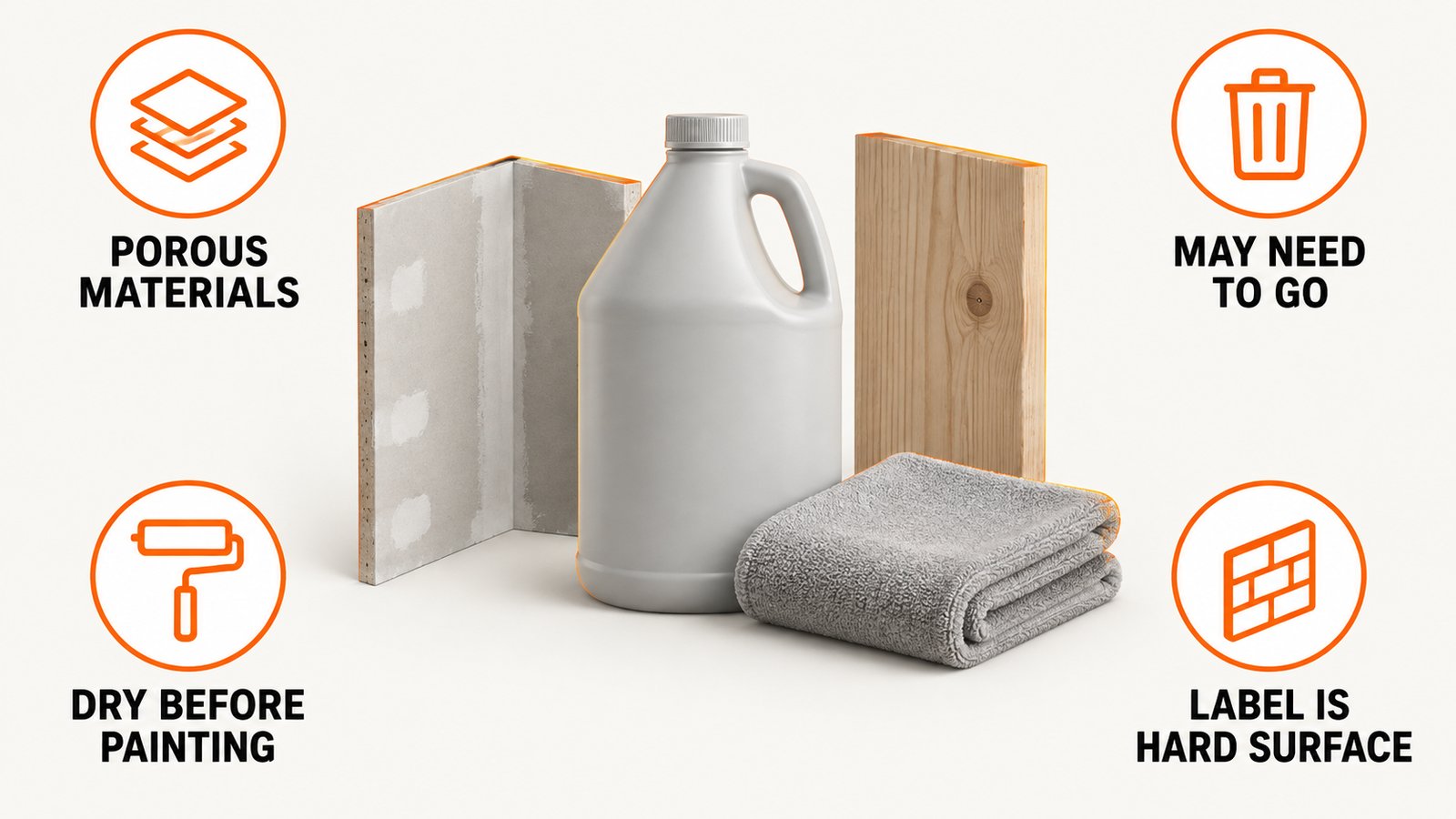
The disinfecting directions on Original Pine-Sol apply to hard, nonporous surfaces. Drywall, bare wood, carpet and fabric are porous, which is the category where the EPA says mold is hardest to get out. Its cleanup tips note that absorbent or porous materials, such as ceiling tiles and carpet, may have to be thrown away if they become moldy, because mold can grow on or fill in the empty spaces of the material and may be difficult or impossible to remove completely.
On laundry, Pine-Sol's directions say to add one-quarter cup to the wash with your regular detergent, use it only on white or colorfast fabrics, and never pour it directly onto clothes. Those directions are for extra cleaning and deodorizing. They aren't a mold claim. Our pages on mold on clothes, mold on wood and mold on drywall cover each material.
Two shortcuts to skip. First, don't use a pine scent as proof the job is done. The label says the product deodorizes, and a smell that comes back means the source is still there. Second, don't paint over a cleaned spot too soon. The EPA says to clean up the mold and dry the surface before painting, since paint applied over moldy surfaces is likely to peel. See can you paint over mold before you pick up a roller.
What to use on mold instead of Pine-Sol
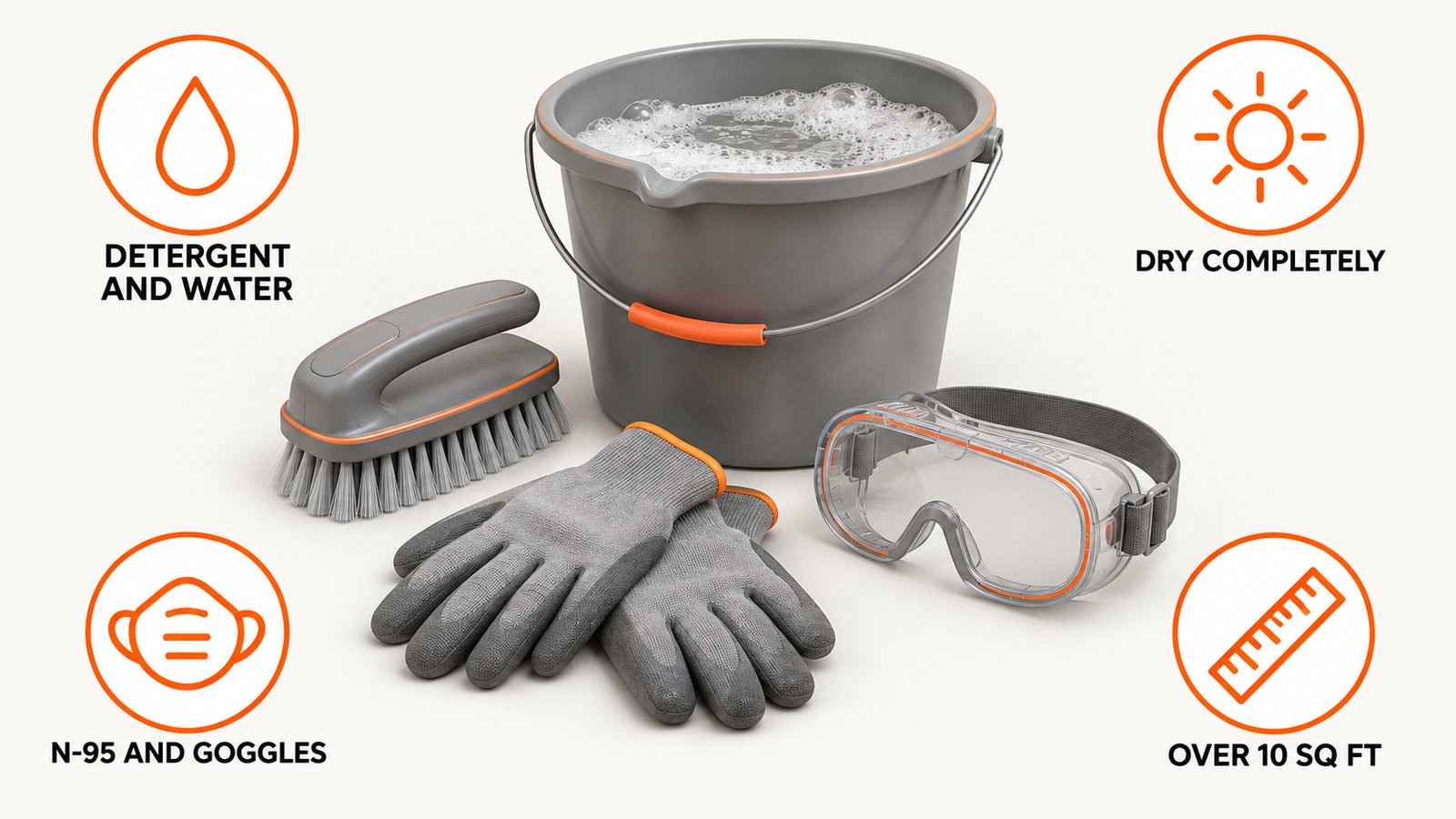
For a small patch on a hard surface, the EPA's method is plain: scrub with detergent and water, then dry completely. The EPA calls an area under about 10 square feet, roughly a 3 foot by 3 foot patch, something you can usually handle yourself. If water damage is extensive, or mold covers more than 10 square feet, the EPA points to its guide for larger jobs, and a contractor with mold experience is the usual route. Sewage or contaminated water damage is a job for a professional.
Protect yourself while you work. CDC's mold cleanup guide says to wear an N-95 respirator at a minimum, goggles and protective gloves.
If you want a product with mold on its label, read the label before you buy and match it to the surface. Our mold cleaning products guide sorts the options by surface, and these pages cover the common household choices one by one: does vinegar kill mold, does bleach kill mold, bleach vs vinegar and does Concrobium kill mold. For the full process, start with how to get rid of mold. If the job is big, mold remediation cost and mold removal explain what a pro does.
Not sure whether what you're looking at is mold at all? The Mold Scanner app gives an AI-assisted visual screening of what is visible in a photo. Processing time varies. It is a screening of the frame, not a lab test or an inspection, so use it to decide whether to clean or call a pro.
Never mix Pine-Sol with bleach
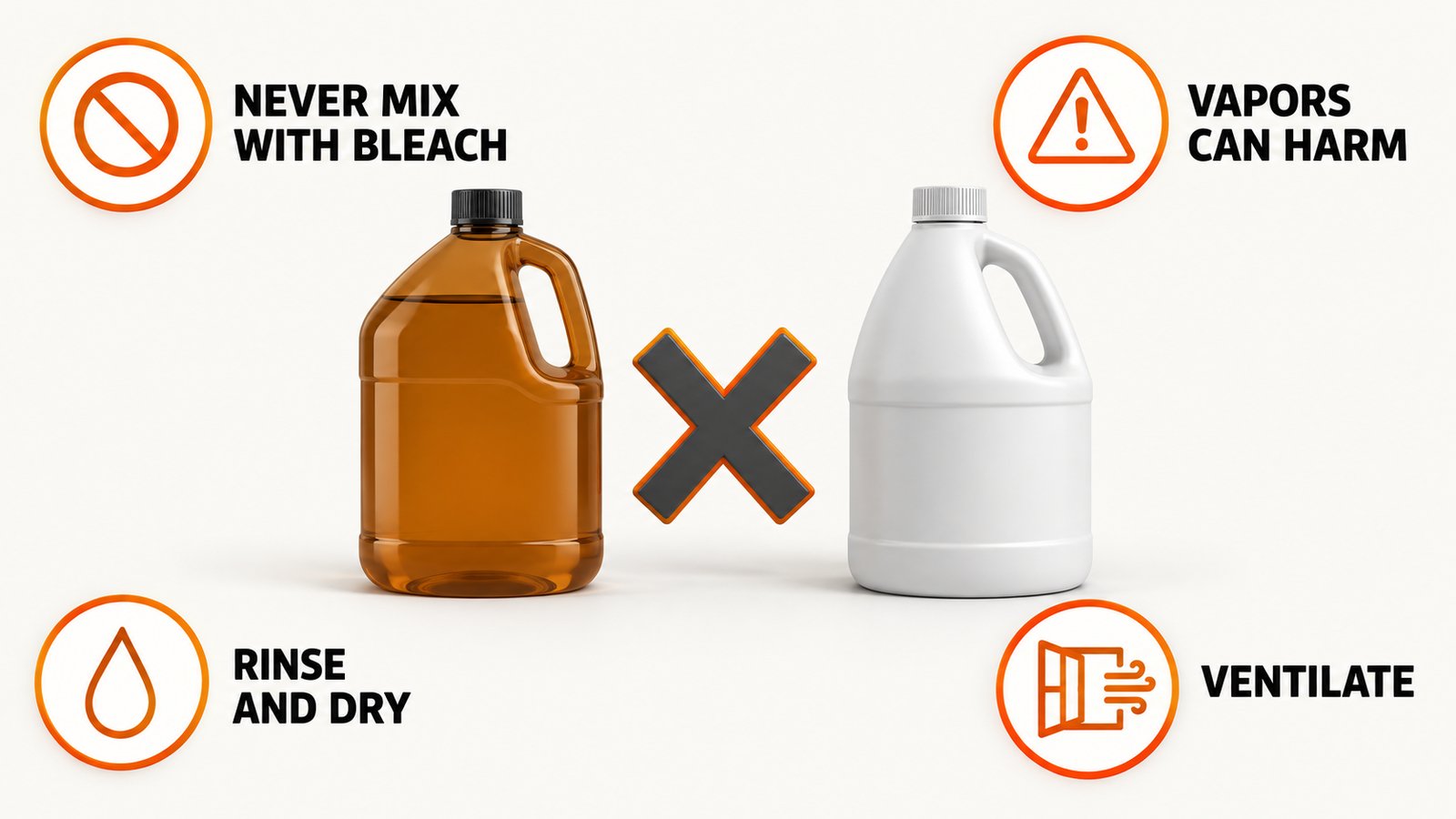
This is the one safety rule worth memorizing. The Pine-Sol label's hazard statement reads: "Do not use or mix with bleach-containing products or other [household] cleaners." The CDC says the same thing about bleach from the other direction: "Never mix household bleach (or any disinfectants) with any other cleaners or disinfectants." It adds that mixing can release vapors that may be very dangerous to breathe in.
That matters because the usual plan for a stubborn spot is to hit it with a second product. Don't. Finish with one product, rinse the surface with water, let it dry, and keep the room ventilated before you try anything else. Our bleach and mold guide has the full bleach safety rules.
Fix the moisture source first
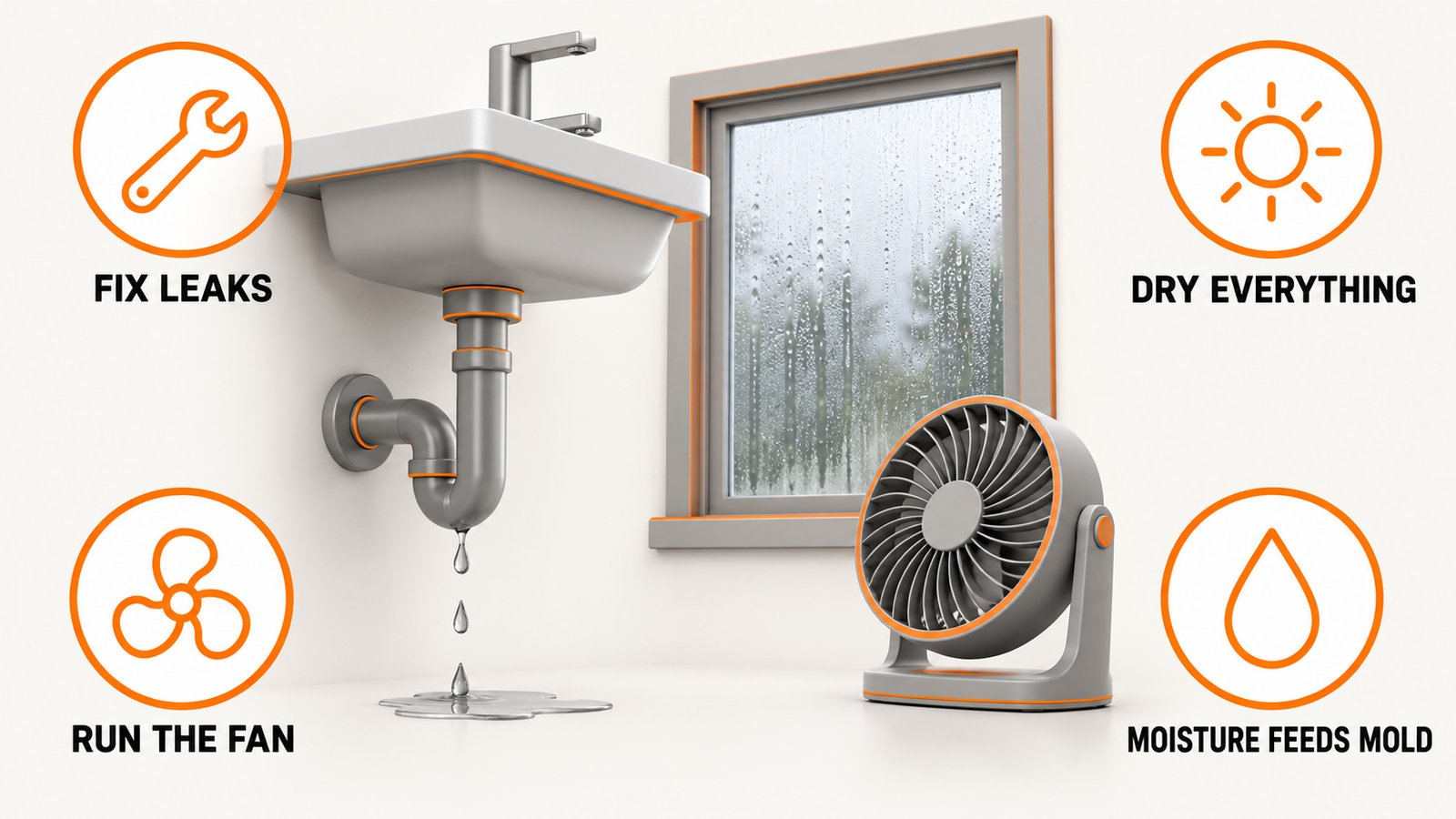
Whatever you clean with, the mold comes back if the water is still there. CDC puts it simply: mold will grow where there is moisture, such as around leaks in roofs, windows or pipes, or where there has been a flood. The EPA's tip is the first thing on its list: fix plumbing leaks and other water problems as soon as possible, and dry all items completely.
In practice that means fixing the drip, running the bathroom fan during and after showers, and keeping damp rooms dry. A dehumidifier can help in a basement or closet, and our how to prevent mold guide covers the habits that matter. You can also check a room against our humidity and mold risk calculator. If you've cleaned the same spot three times, the problem isn't the cleaner.
Frequently asked questions
Will Pine-Sol kill mold?
No. Pine-Sol is labeled as a household cleaner. Its own FAQ says it can help remove visible mold and mildew stains from hard, non-porous surfaces by cleaning away buildup, but that it is not a dedicated mold killer. For persistent or heavy mold, the maker recommends a product specifically labeled for mold and mildew removal.
Does the Pine-Sol label list mold or mildew?
Not according to its label. The EPA-accepted label for Original Pine-Sol lists bacteria and viruses in its disinfection table. It names no mold or mildew. The other Pine-Sol scents are cleaners only and don't carry a disinfectant registration.
Is Pine-Sol a disinfectant?
Only Original Pine-Sol Multi-Surface Cleaner is, under EPA Reg. No. 5813-101. It must stay visibly wet on a hard, nonporous surface for 10 minutes, then be rinsed. All other Pine-Sol formulas are cleaners only, according to Pine-Sol's FAQ.
Can I use Pine-Sol to clean mold off a shower?
You can use it to wipe a sealed, hard shower surface, but treat it as cleaning, not mold treatment. The EPA's method for small areas is to scrub hard surfaces with detergent and water and dry them completely. If the mold keeps returning, look for the moisture source and improve ventilation.
Is it safe to mix Pine-Sol with bleach?
No. The Pine-Sol label says not to use or mix it with bleach-containing products or other household cleaners. The CDC says never to mix household bleach with any other cleaners or disinfectants, because mixing can release vapors that may be very dangerous to breathe in.
What should I use instead of Pine-Sol on mold?
For small patches on hard surfaces, the EPA suggests detergent and water, then complete drying. If you want a product, choose one whose own label mentions mold or mildew and fits your surface. Wear an N-95 respirator at a minimum, goggles and protective gloves, per CDC. Areas over about 10 square feet are a job to hand to a professional.
Can Pine-Sol stop mold from coming back?
The label makes no claim that it prevents mold. Mold returns when moisture stays, so fix leaks, dry wet items completely and ventilate damp rooms. Cleaning removes what is on the surface, and the water problem decides whether it grows back.
Sources
Every claim on this page traces to one of these. Links open the primary document.