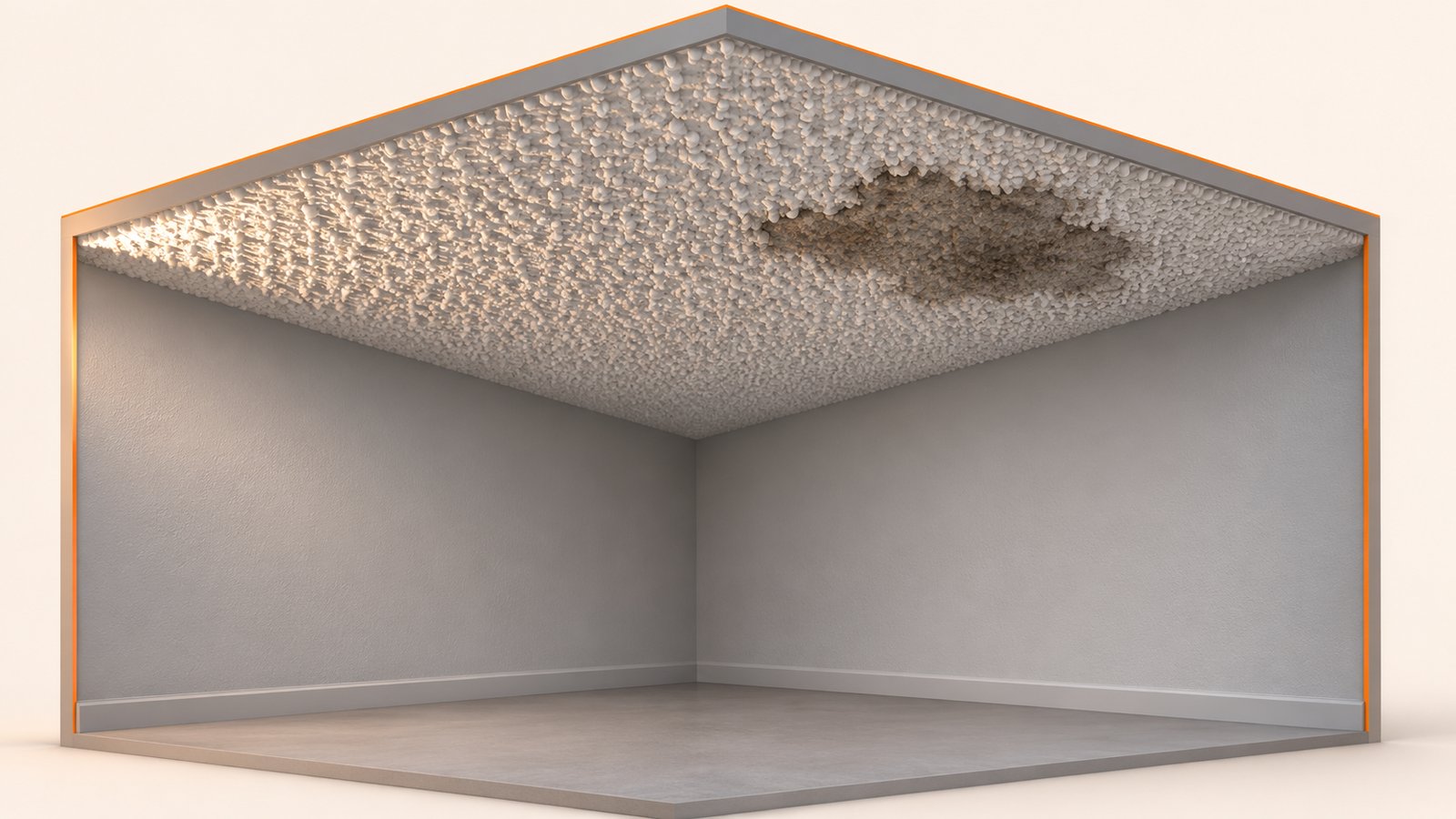
Is It Mold on a Popcorn Ceiling or a Stain?
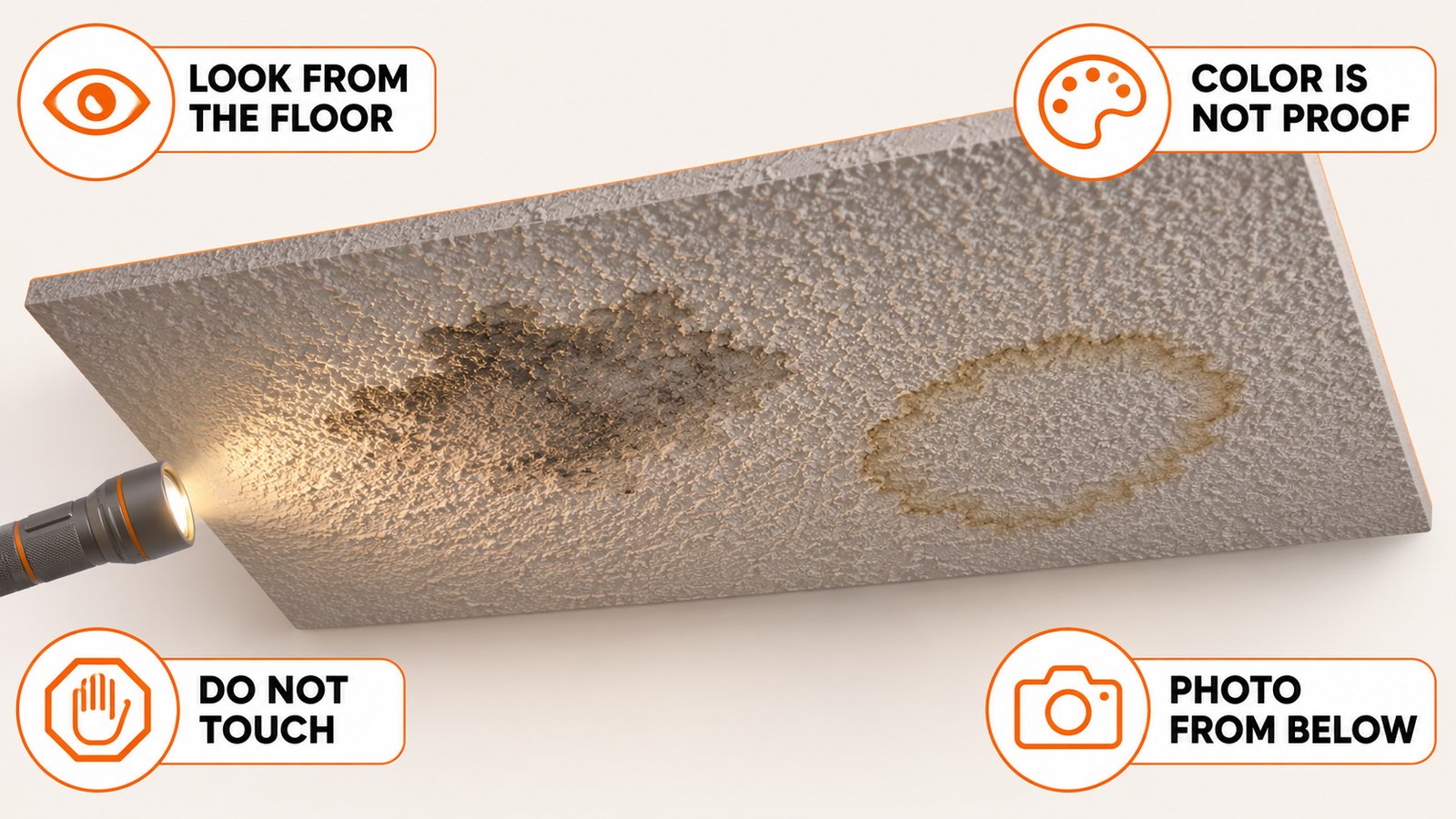
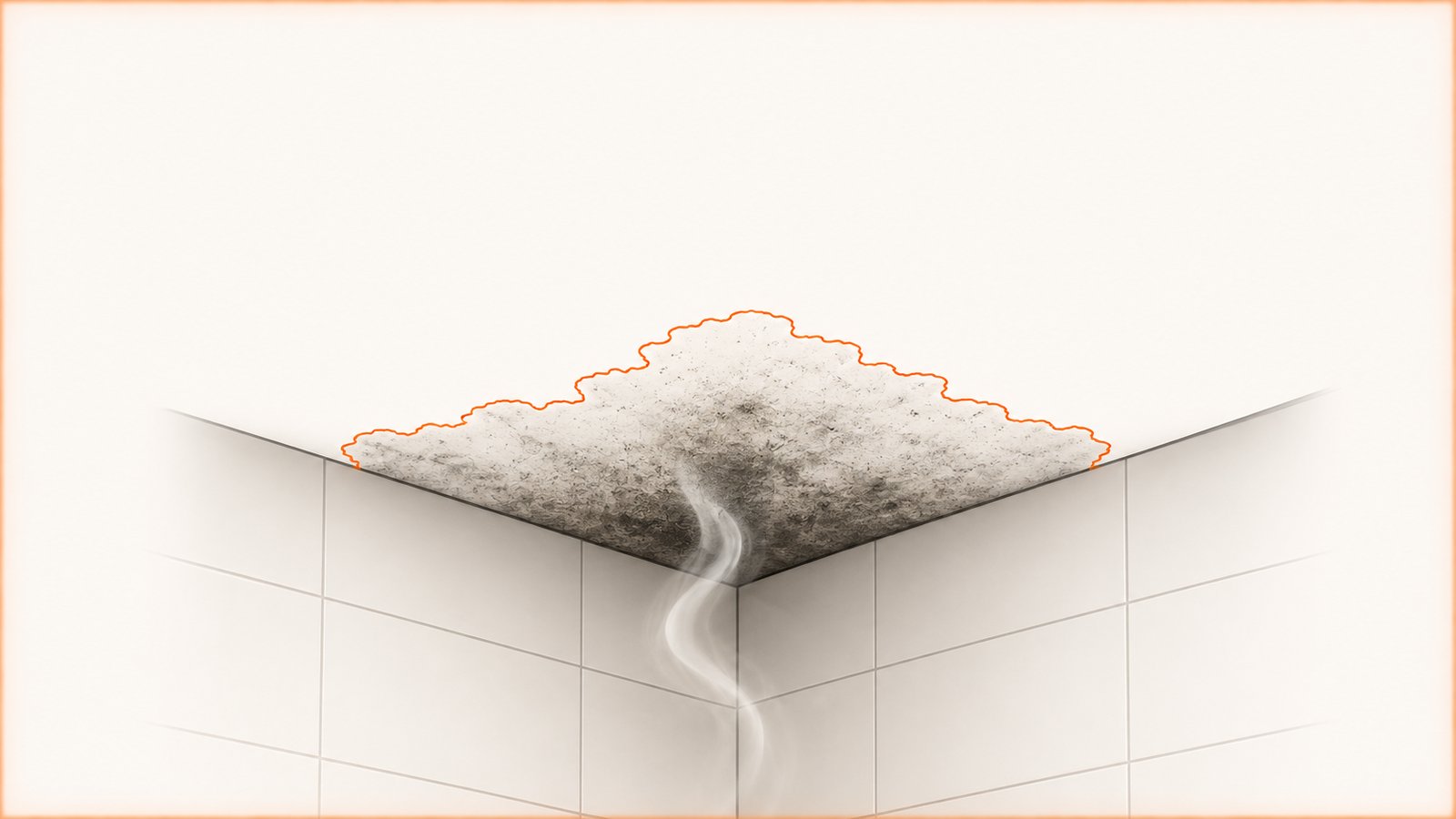
You cannot settle it by eye. The EPA mold course says molds come in many colors including white, and that "black mold" is not a species. A gray, brown, green or black patch on texture is a reason to look closer, not a verdict. Look from the floor.
- Skim a flashlight along the ceiling. Light at a low angle shows height and shadow. Fuzzy or speckled growth looks different from a smooth ring.
- Note where it is. Mold follows moisture. The EPA mold course lists leaking roofs, leaking pipes and condensation among the common moisture problems.
- Check for wet, soft or sagging spots. Do not press them. If the ceiling is wet or sagging, stay out from under it and read the last section.
- Take a photo from below. The scanner's AI-assisted visual screening helps tell whether a spot looks like mold and what to do next. It does not name a species or measure toxicity.
Skip the wipe check in mold or dirt. On a popcorn ceiling it means rubbing the texture, which you should not do (see the asbestos section). A flat-looking spot is not automatically harmless. See also what mold looks like. For visible growth, the EPA says sampling is unnecessary in most cases. Testing the texture for asbestos is a separate question.
Why Does Mold Grow on a Popcorn Ceiling?
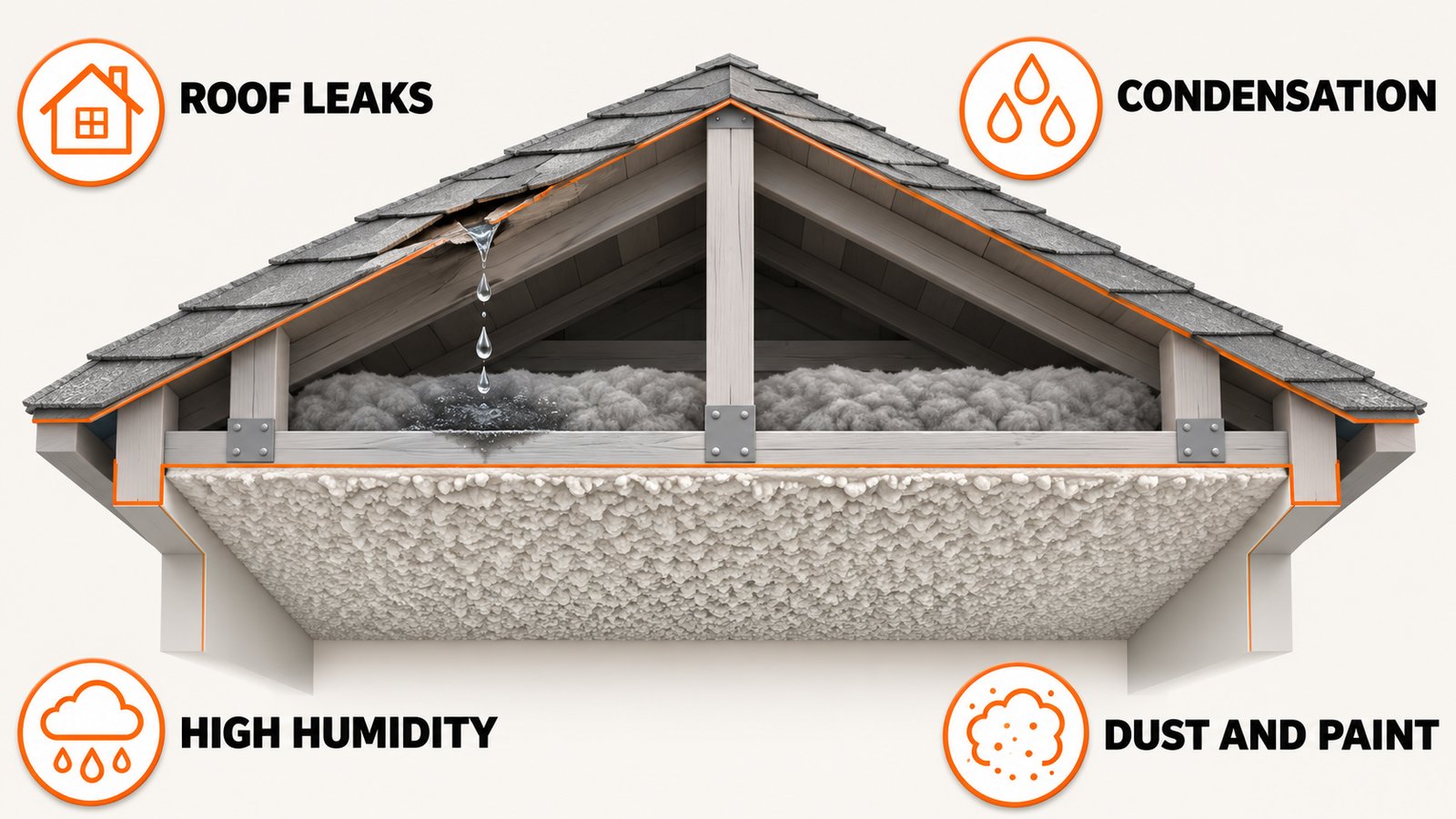
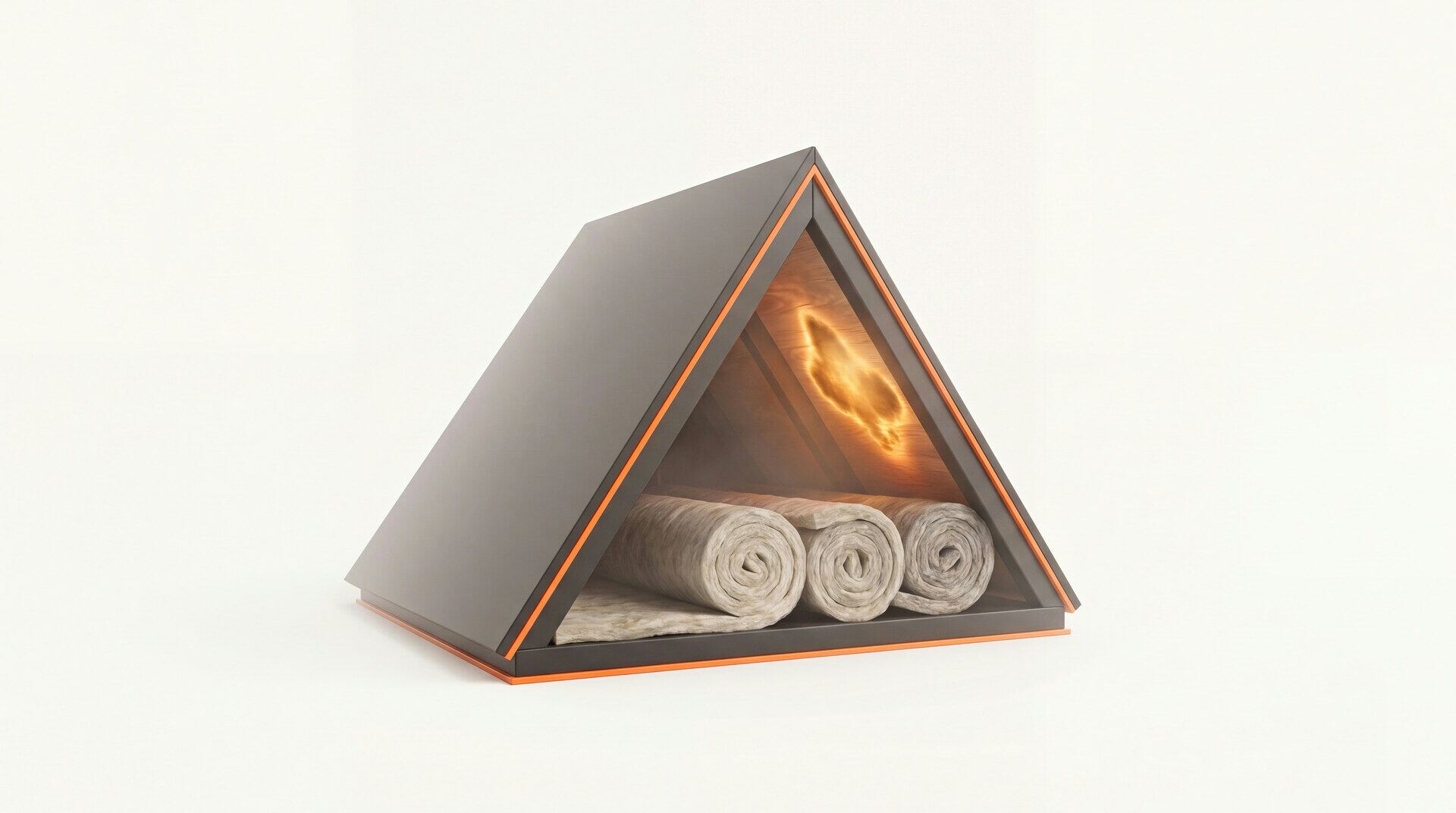
Mold needs water. The EPA says none of the many types of mold grow without water or moisture, and that hidden mold can sit in roof materials above ceiling tiles because of roof leaks or insufficient insulation. The spot you see from below may be the end of a bigger wet area above it. Our mold on ceiling guide treats stain location as a clue, not proof.
Then the surface. The CDC says mold can grow in dust and paints. A sprayed texture is bumpy, with more area and more small ridges than a flat ceiling. In our reading, that gives dust and moisture more places to sit and makes it harder to wipe clean. No agency page measures this for ceilings, so it is the site's reasoning, not a finding.
Wet sources to check:
- A roof or flashing leak. A stain that changes after rain is a clue. See mold in attic.
- A plumbing leak above, such as under a bathroom or kitchen.
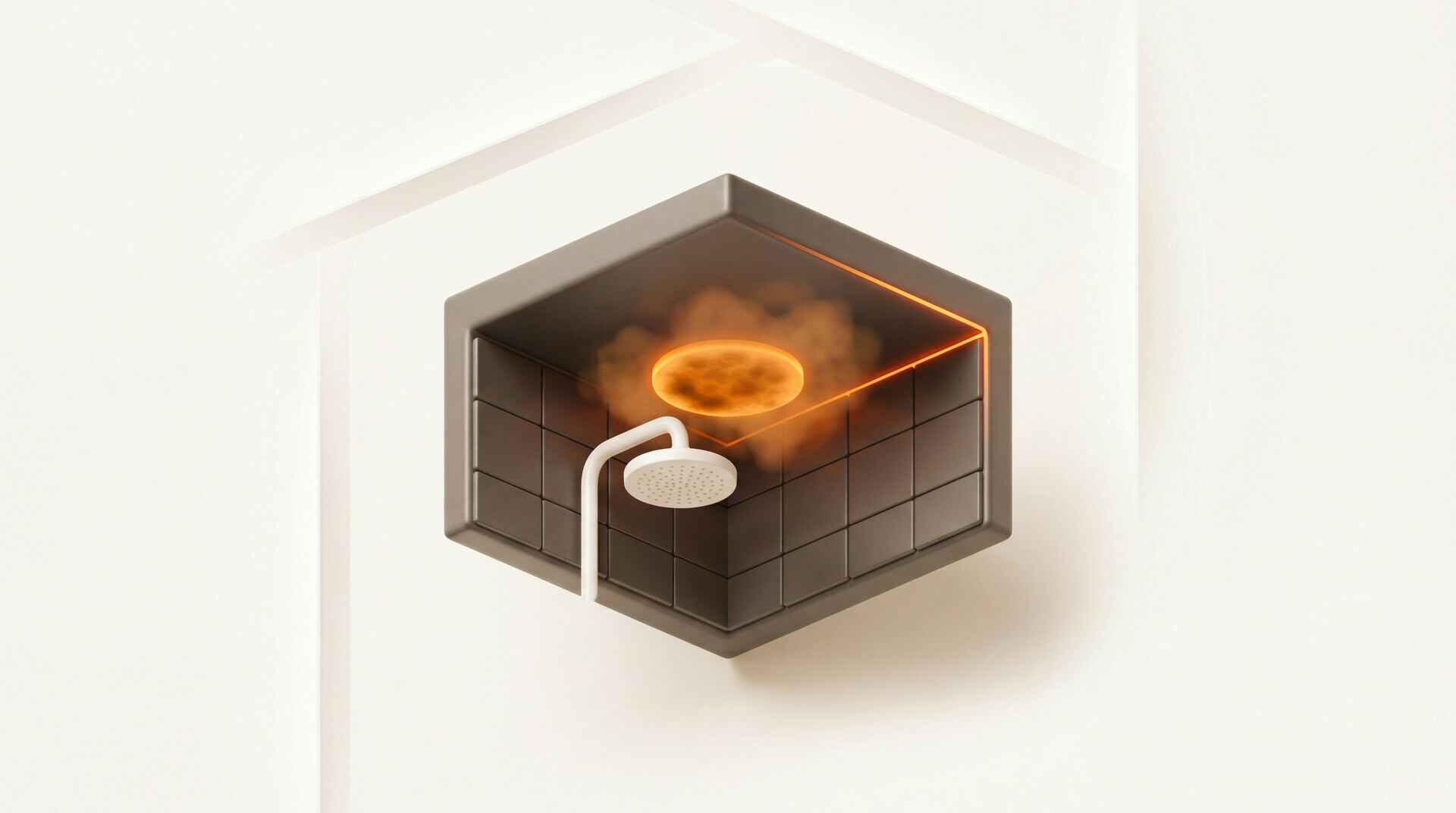
- Steam from a weak bathroom fan. See bathroom ceiling mold.
- Condensation. The EPA mold course says when warm, humid air contacts a cold surface, condensation may form, and it can be a sign of high humidity.
Can You Clean Mold Off a Popcorn Ceiling?
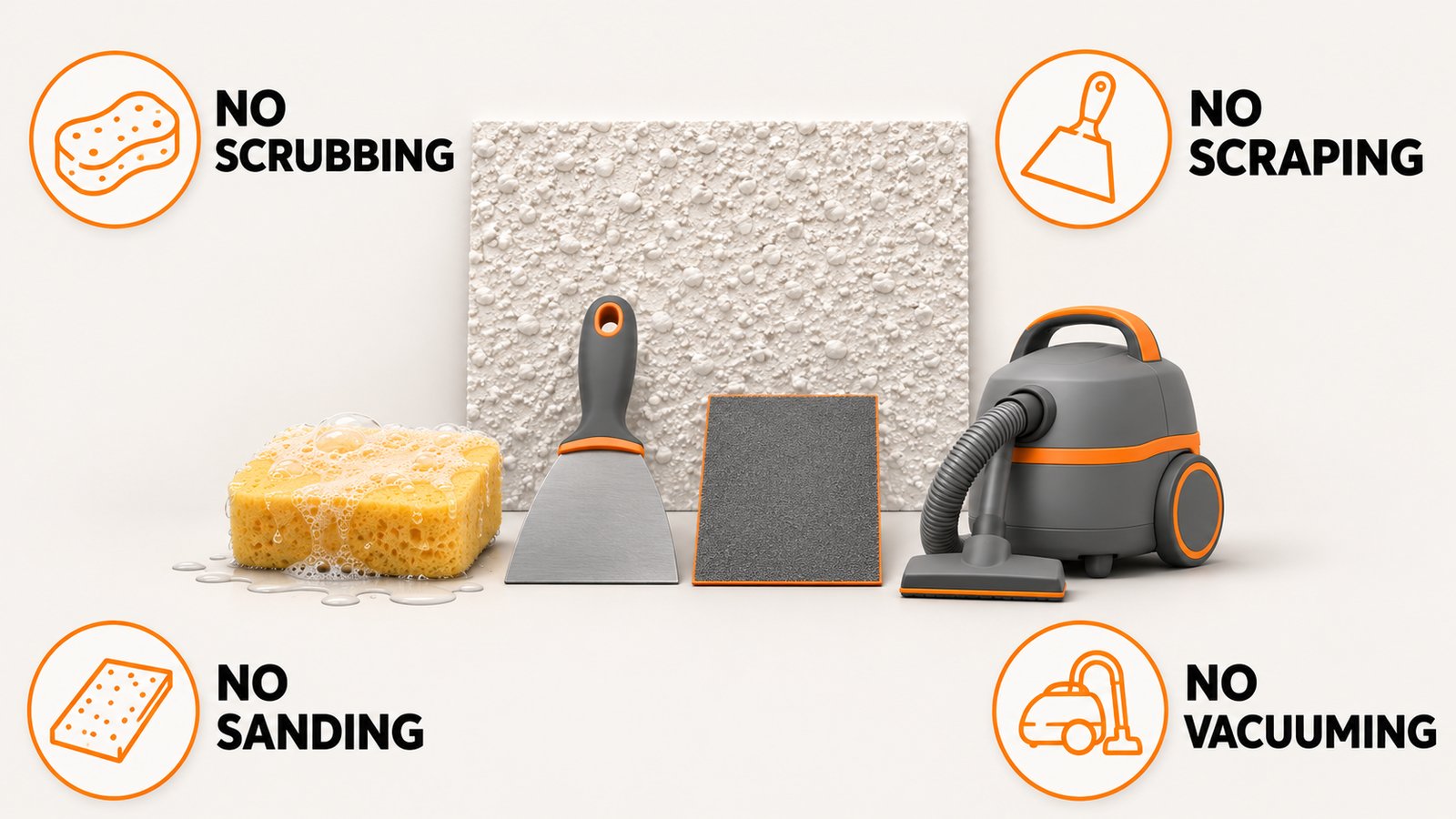
On a flat ceiling, the EPA says to scrub mold off hard surfaces with detergent and water and dry completely. A popcorn ceiling is a different job, and we are not giving you a cleaning method for the texture. Here is why.
- It cannot be scrubbed like a flat surface. Scrubbing or scraping a bumpy sprayed layer rubs the layer itself, not just the mold. That is our reading of how it behaves.
- It may be porous. The EPA says porous materials, such as ceiling tiles, may have to be thrown away when moldy, because mold fills their empty spaces and may be impossible to remove completely. We cannot tell from here whether your texture counts as porous.
- It may contain asbestos. The CPSC says sanding, drilling or scraping sprayed decorative material on ceilings can release fibers, and not to dust, sweep or vacuum debris that may contain asbestos. More in the next section.
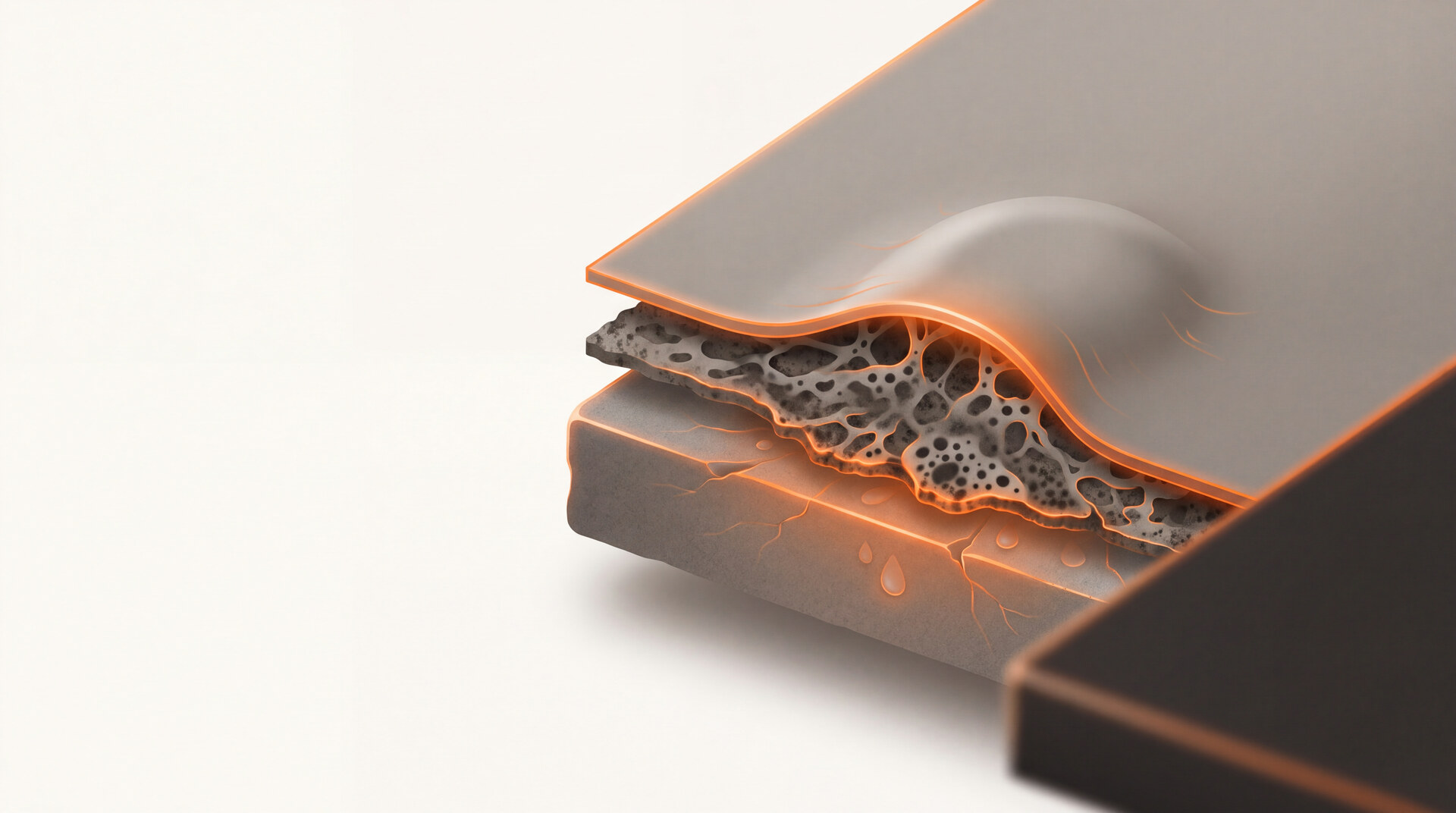
- Paint does not fix it. The EPA says do not paint or caulk moldy surfaces, because paint applied over mold is likely to peel. See paint over mold.
- Bleach is not the answer. The EPA says bleach is not recommended as routine, and dead mold may still cause allergic reactions, so it must be removed. See does bleach kill mold.
Visible growth on the texture is a job for a professional, after the texture has been checked. A flat wall is covered in mold on walls.
Is There Asbestos in a Popcorn Ceiling?

Maybe. Only a lab test can say. Here is what the two federal sources say.
The Consumer Product Safety Commission writes: "Asbestos may be present in textured paint and in patching compounds used on wall and ceiling joints. Their use was banned in 1977." It also lists "soundproofing or decorative material sprayed on walls and ceilings," and says loose, crumbly or water-damaged material may release fibers, as will sanding, drilling or scraping. The EPA lists "textured paint and patching compounds used on walls and ceilings" among places asbestos may be found.
Neither page uses the words "popcorn ceiling," and the 1977 date is about the materials CPSC names, not a promise about your ceiling. Do not use a year to decide. The CPSC says you cannot tell whether a material contains asbestos by looking at it, unless it is labeled. If in doubt, treat it as if it contains asbestos, or have it sampled and analyzed by a qualified professional.
The EPA says exposure may occur only when asbestos-containing material is disturbed or damaged so that fibers reach the air, and that exposure increases the risk of lung disease. The CPSC says the best thing to do with material in good condition is leave it alone, and lists water damage as a sign of damage. A moldy, water-stained ceiling is the case where testing before anyone touches it makes sense. The CPSC also says:
- A professional should take samples. Done incorrectly, sampling can be more hazardous than leaving the material alone, and taking samples yourself is not recommended.
- Samples go to an asbestos laboratory accredited by the National Voluntary Laboratory Accreditation Program (NVLAP). Your state or local health department may also help.
- Do not saw, sand, scrape or drill asbestos materials. If material is more than slightly damaged or will be disturbed, repair or removal by a professional is needed.
Do not scrape or sand the ceiling to find out what is in it.
What to Do About Mold on a Popcorn Ceiling
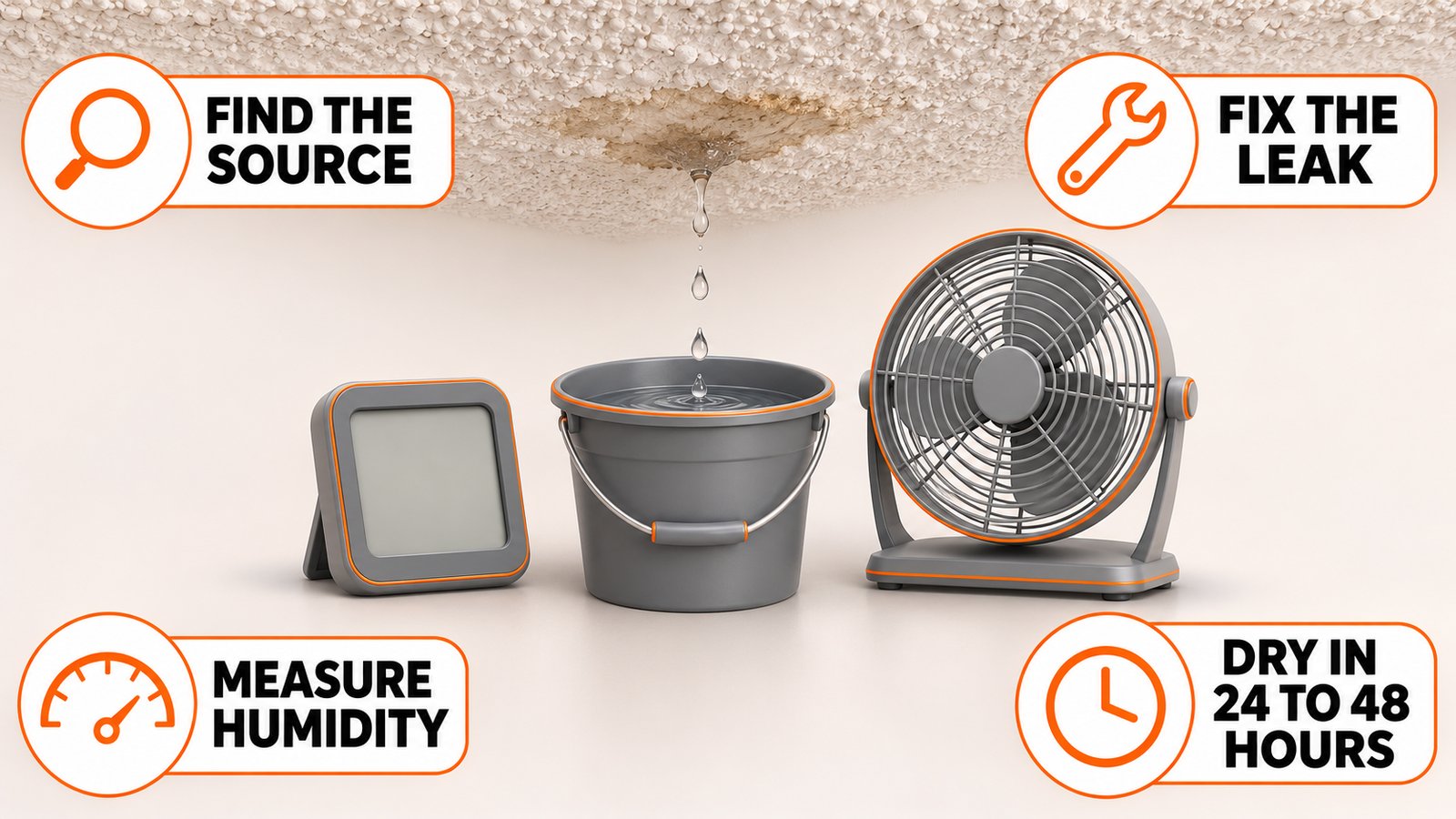
The EPA says if you clean up mold but do not fix the water problem, the mold will most likely come back. Here the cleaning waits for a professional. The water part does not.
- Stay clear of wet or sagging spots. Do not press, poke or cut a wet ceiling, and do not climb up to look.
- Find the water. Check the roof, plumbing above and bathroom fan. The EPA mold course says investigating hidden mold can be difficult and may need a professional, and that disturbing moldy areas can spread mold through the building. See mold behind walls.
- Fix the source. A roof leak needs a roofer.
- Dry the room. The EPA says damp materials dried within 24 to 48 hours, in most cases, will not grow mold. See the dehumidifier guide.
- Measure humidity. The EPA says below 60 percent, ideally 30 to 50, and a meter costs $10 to $50. Our humidity risk calculator turns the reading into a risk picture, and the HVAC moisture maintenance checklist covers the air conditioner.
- Leave the texture alone. No scrubbing, scraping, sanding, vacuuming or painting until a qualified professional has had it tested.
The EPA says if you have health concerns, consult a health professional before starting cleanup. See how to prevent mold and signs of mold in a house.
When to Call a Pro for a Moldy Ceiling
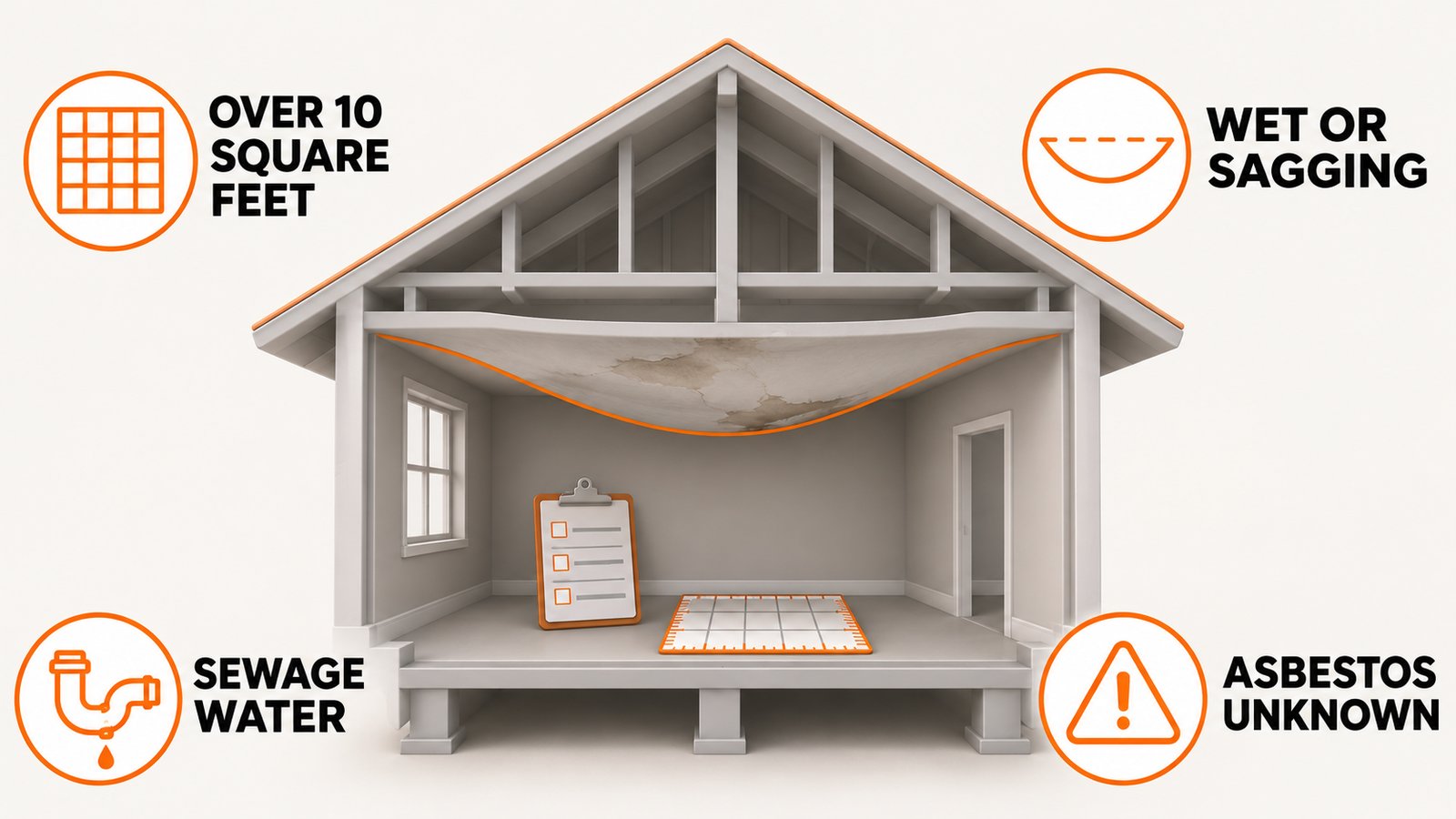
Call a professional when any of these is true.
- The area is over about 10 square feet. That is roughly a 3 foot by 3 foot patch. Past that size the EPA points to its guide for larger jobs, and we suggest a professional. The EPA mold course says a remediation manager should be selected for medium or large jobs.
- The ceiling is wet, soft or sagging. Isolate the area below and arrange a qualified building inspection.
- You do not know what the texture is. The CPSC says treat it as if it contains asbestos, or have a professional sample it.
- Sewage or contaminated water was involved. The EPA says to call in a professional experienced with that.
- You suspect the HVAC system. The EPA says do not run it if you know or suspect it is contaminated with mold.
- The source is out of reach. A roof or attic leak calls for a roofer first.
Choose someone with mold cleanup experience. For asbestos, the CPSC says hire professionals who are trained, experienced, reputable and accredited. See mold remediation, mold inspection, mold remediation certification and mold remediation cost. Renters should read apartment rights, and the EPA says to report leaks immediately to the building owner or manager.
Frequently asked questions
Is it mold or a water stain on my popcorn ceiling?
You cannot tell from color or a photo alone. The EPA says molds come in many colors. A stain near a leak, vent or outside wall means moisture reached the ceiling, which is what mold needs. Look from the floor, take a photo, and do not touch or scrub the texture.
Can I scrub mold off a popcorn ceiling?
Do not. The CPSC says sanding, drilling or scraping sprayed ceiling material may release asbestos fibers if it contains asbestos, and not to vacuum debris that may contain it. Have the texture checked by a qualified professional first.
Does a popcorn ceiling have asbestos?
It might. The CPSC says asbestos may be present in textured paint and in patching compounds used on wall and ceiling joints, and that their use was banned in 1977. You cannot tell by looking. If in doubt, treat it as if it contains asbestos, or have a qualified professional sample it for an accredited lab.
Can I paint over mold on a popcorn ceiling?
No. The EPA says not to paint or caulk moldy surfaces, because paint applied over mold is likely to peel. Paint also does not fix the moisture. Fix the water and get the texture tested before anything touches it.
Why does my popcorn ceiling have dark spots?
Mold grows where there is moisture. The EPA lists leaking roofs, leaking or condensing pipes and high humidity as common moisture problems, and the CDC says mold can grow in dust and paints. Spots may also be water staining, so find the water either way.
Do I need to test the mold on my popcorn ceiling?
Usually not for the mold. The EPA says that in most cases, if visible mold growth is present, sampling is unnecessary. The texture is a separate question: the CPSC says a qualified professional should take any asbestos samples.
When should I call a professional?
If the mold covers more than about 10 square feet, the ceiling is wet or sagging, sewage was involved, the HVAC system may be contaminated, or you do not know whether the texture contains asbestos.
Sources
Every claim on this page traces to one of these. Links open the primary document.