Does Mold Grow on Metal?
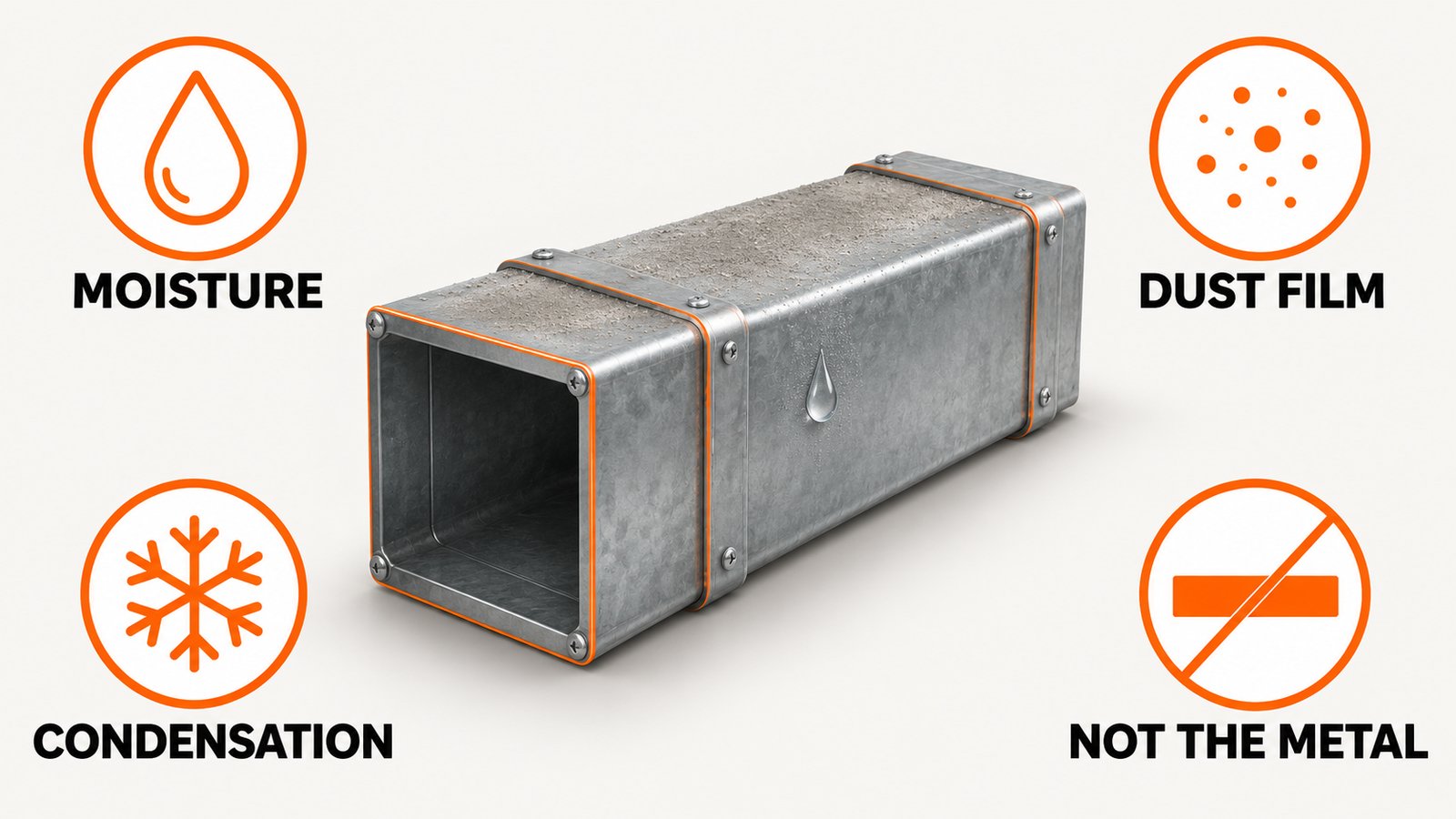
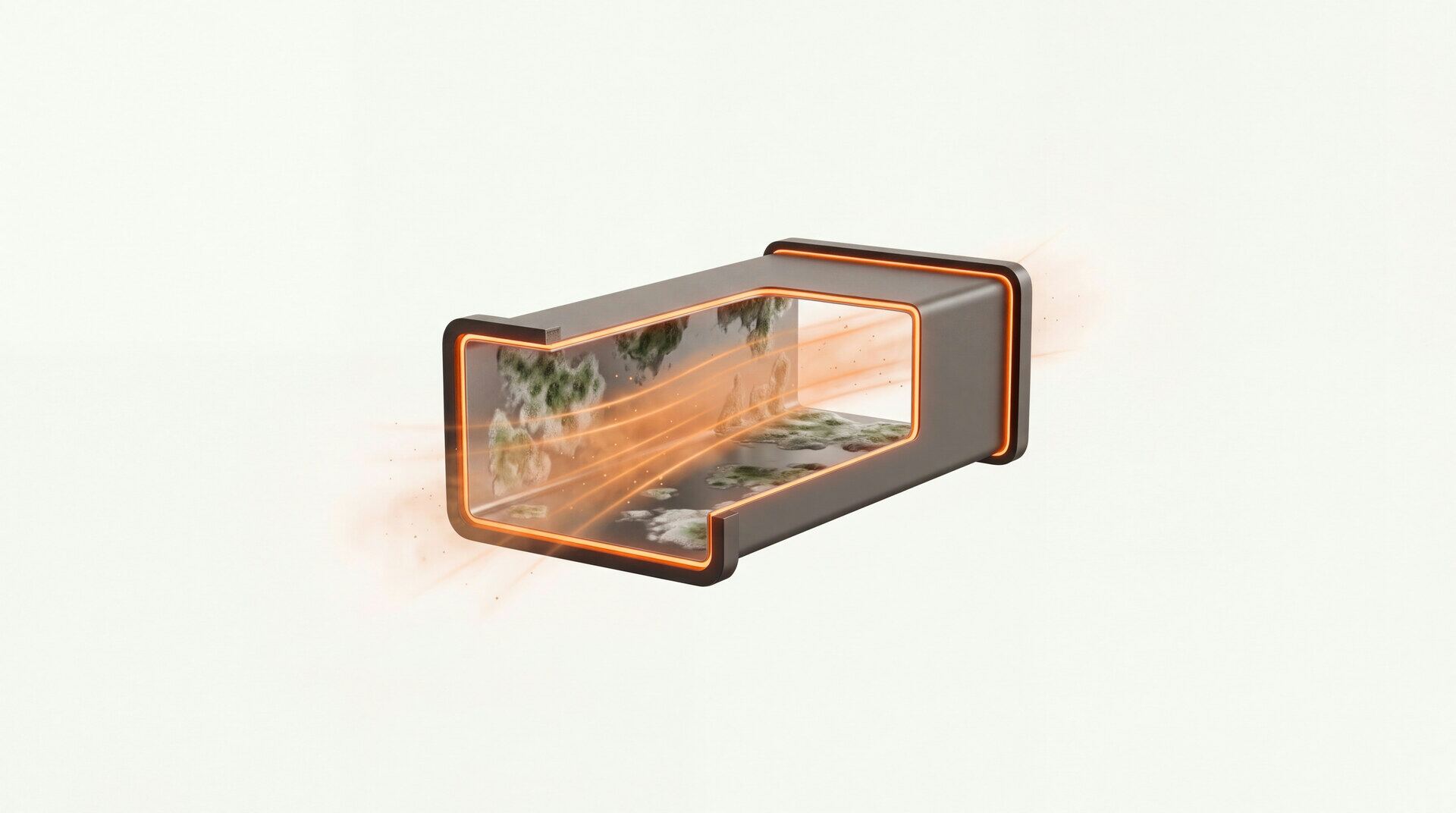
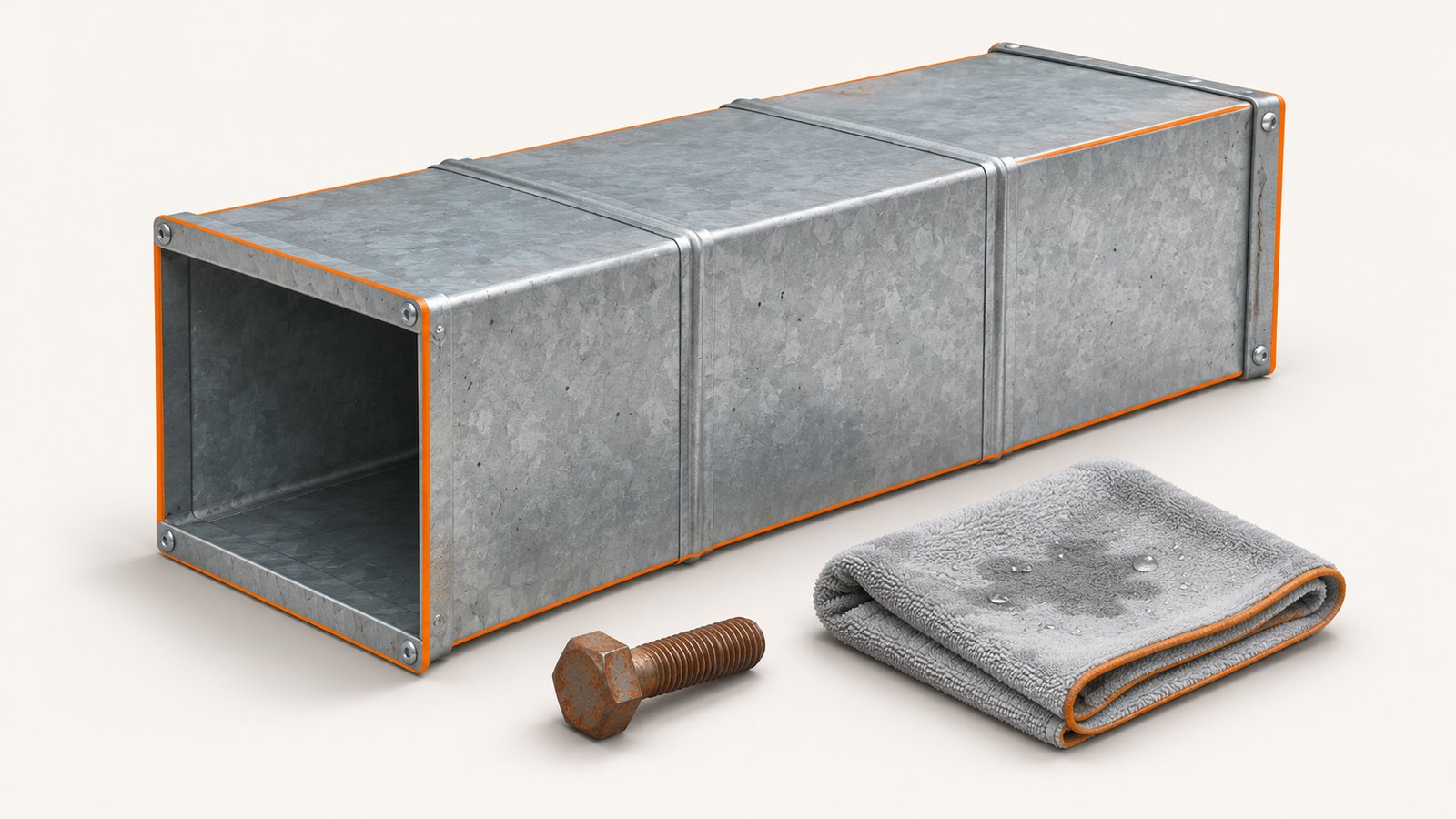
Yes, mold can grow on metal, but not on the metal itself. The EPA says mold needs moisture and food, and that it can grow on virtually any organic substance, with paper, cloth, wood, plant material and soil as examples. Steel, aluminum and copper are not on that list.
What sits on the metal can be. A building-science conference paper on duct board, archived by Oak Ridge National Laboratory, says dust and dirt provide the food source for mold growth when combined with water. The EPA duct guide agrees that if enough dirt and moisture enter a duct system, bare sheet metal ducts can grow microbes about as much as lined ones. Our own rule of thumb, not an agency finding, is that grease, soap scum or pollen can serve as food too.
Metal is also good at delivering moisture. The Building America Solution Center at Pacific Northwest National Laboratory says warm, humid air meeting a cold duct can condense and cause rust in the ducts and mold in nearby insulation and framing. The EPA says a little condensation can be enough for mold, and shows a rusty drainpipe as a sign of condensation.
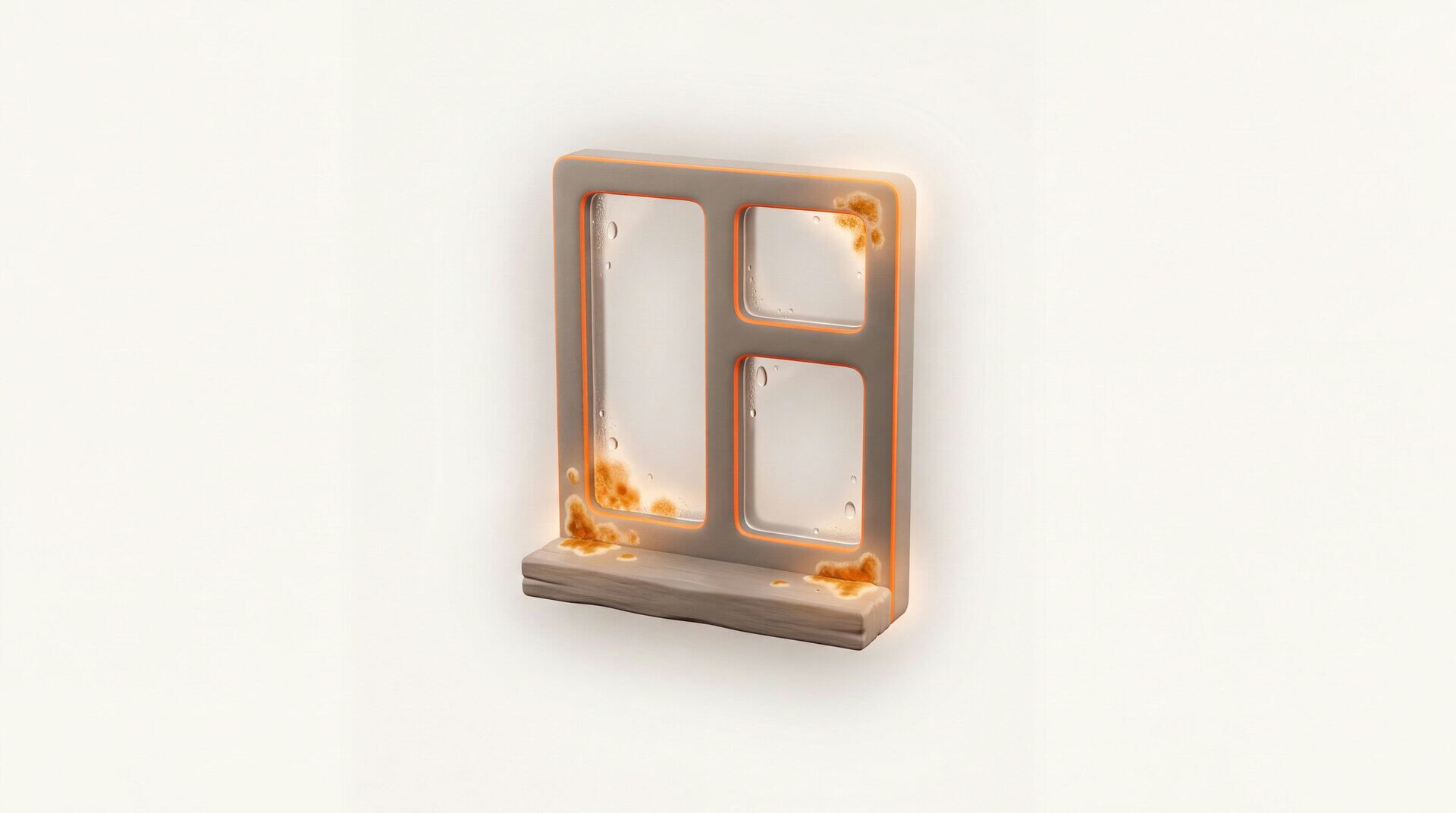
Check ducts and vent covers, cold water pipes, window frames, shelving in a basement or garage, and appliance parts. Our guides to mold in air ducts, window air conditioners, garages and RVs cover the damp spaces around the metal. The same food-and-water logic on masonry is in mold on concrete.
What Does Mold on Metal Look Like?
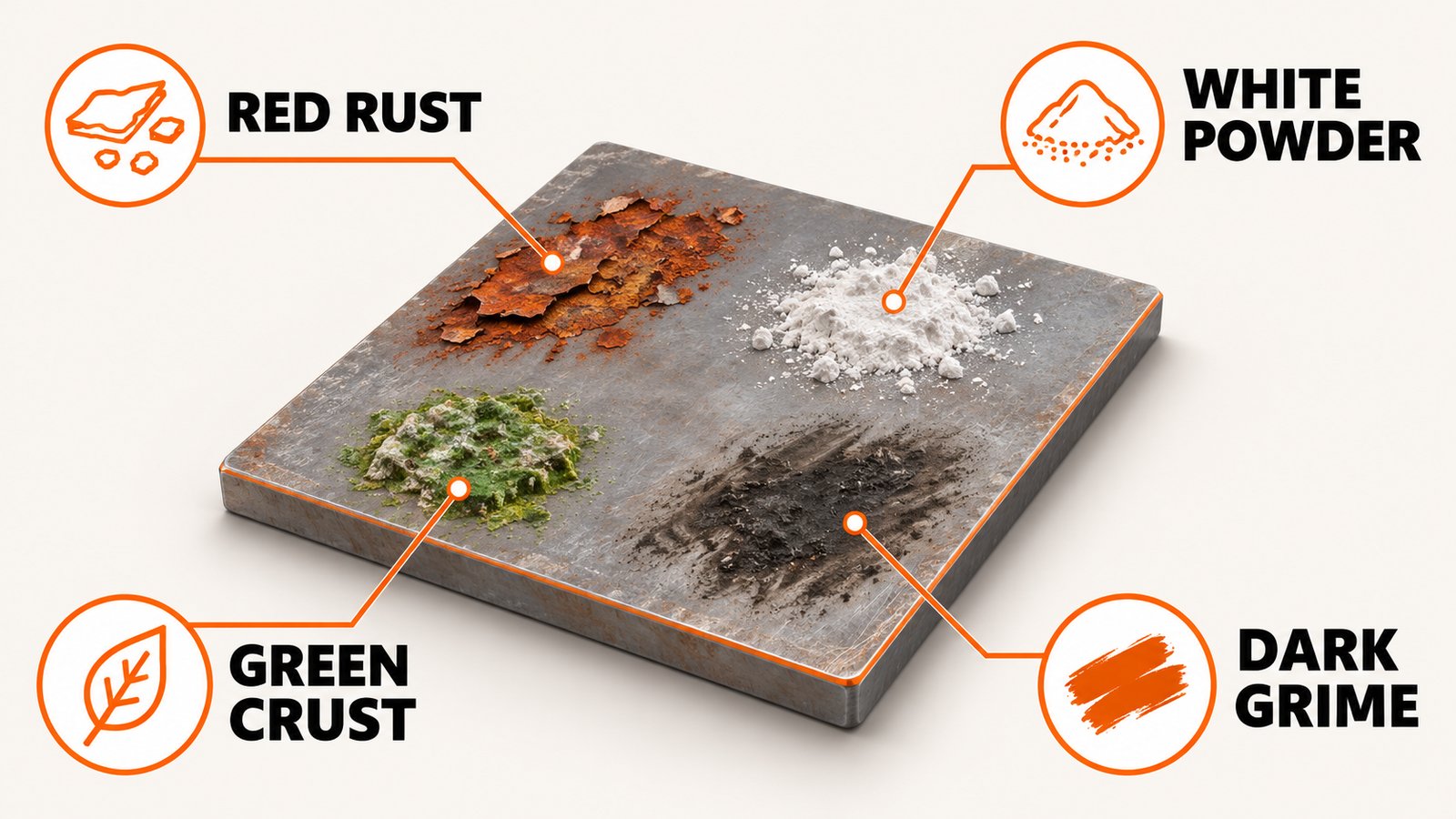
Molds come in many colors, including white, and no one can tell what a mold produces just by looking, the EPA says. Color and smell alone never tell you the type or how dangerous it is. Metal adds suspects, because metal corrodes.
| What you see | What it may be | What the sources say |
|---|---|---|
| Fuzzy or slimy patch in a damp spot | Mold on the film that sits on the metal | Our rule of thumb: it smears on a damp cloth and returns if the damp stays. |
| Red-brown flakes or stains | Rust on steel or iron | The FAA says steel corrosion is easily recognized as red rust. |
| White or gray powder on aluminum | Aluminum corrosion | The FAA says tiny pits show once the powder is cleaned away. |
| Bulky white crust on galvanized steel | Zinc coating corrosion | The American Galvanizers Association calls it wet storage stain. |
| Green crust on copper-colored metal | Patina, a corrosion product | The National Park Service says outdoor bronze gets a green patina of corrosion products. |
| Flat dark film that wipes off | Dirt, soot or oil | See mold or dirt and soot vs mold. |
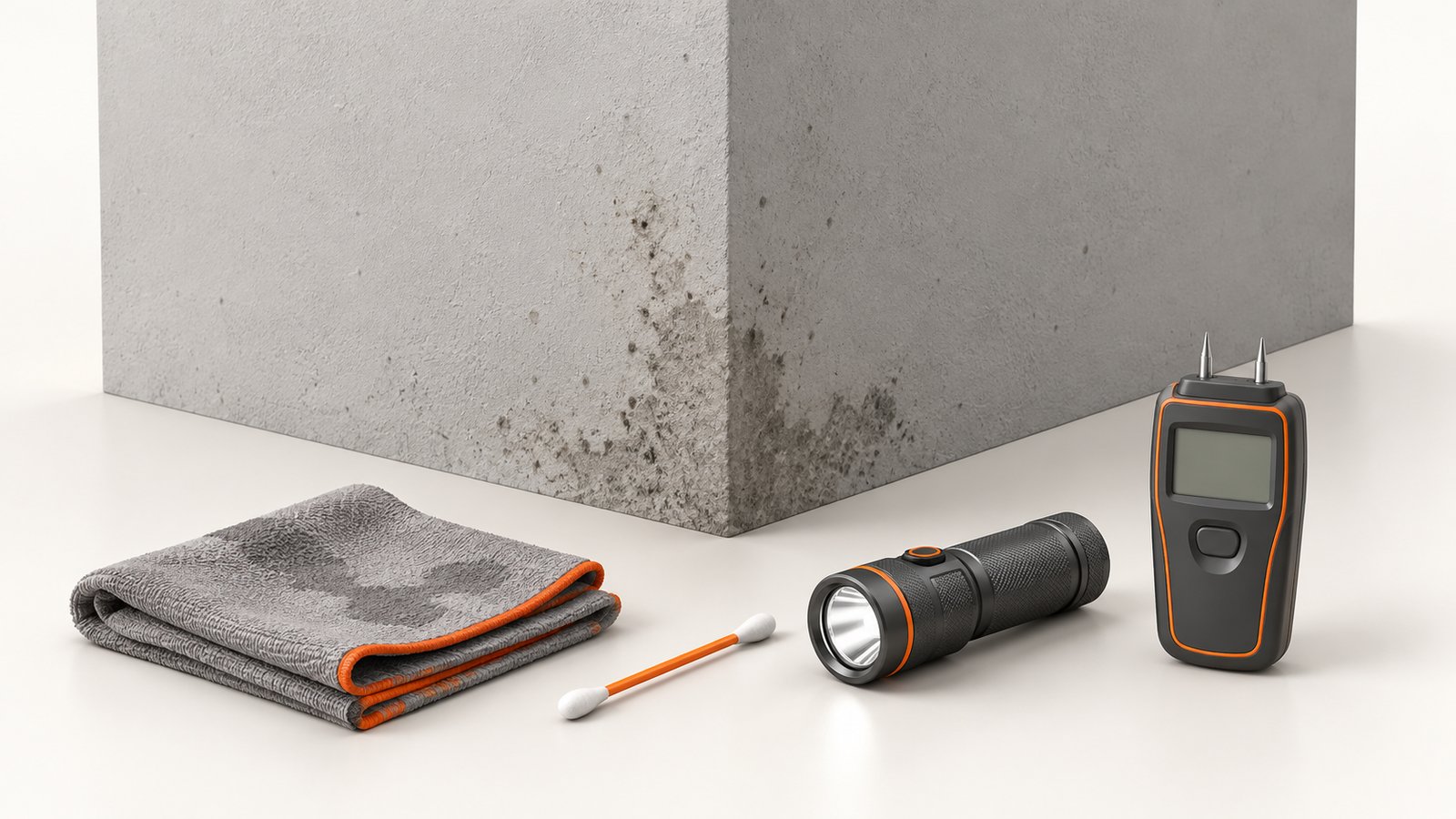
Try a damp-cloth wipe check on one small spot, wearing gloves and an N95 respirator. A flat film that lifts off and stays gone points to dirt. Mold can wipe off too, so it is one clue, not an answer. Look at where the spot sits, whether it returns, and what the metal looks like underneath. Pits or rough bare metal under a deposit point to corrosion.
The EPA duct guide says a substance may look like mold, but only an expert can make a positive determination, sometimes with lab analysis. The EPA Brief Guide and its Mold Testing or Sampling page say that when visible growth is present, sampling is unnecessary in most cases. For a photo, the Mold Scanner AI app gives an AI-assisted visual screening that helps tell whether a spot looks like mold and what to do next. It does not name a species or rate danger.
White Mold on Metal
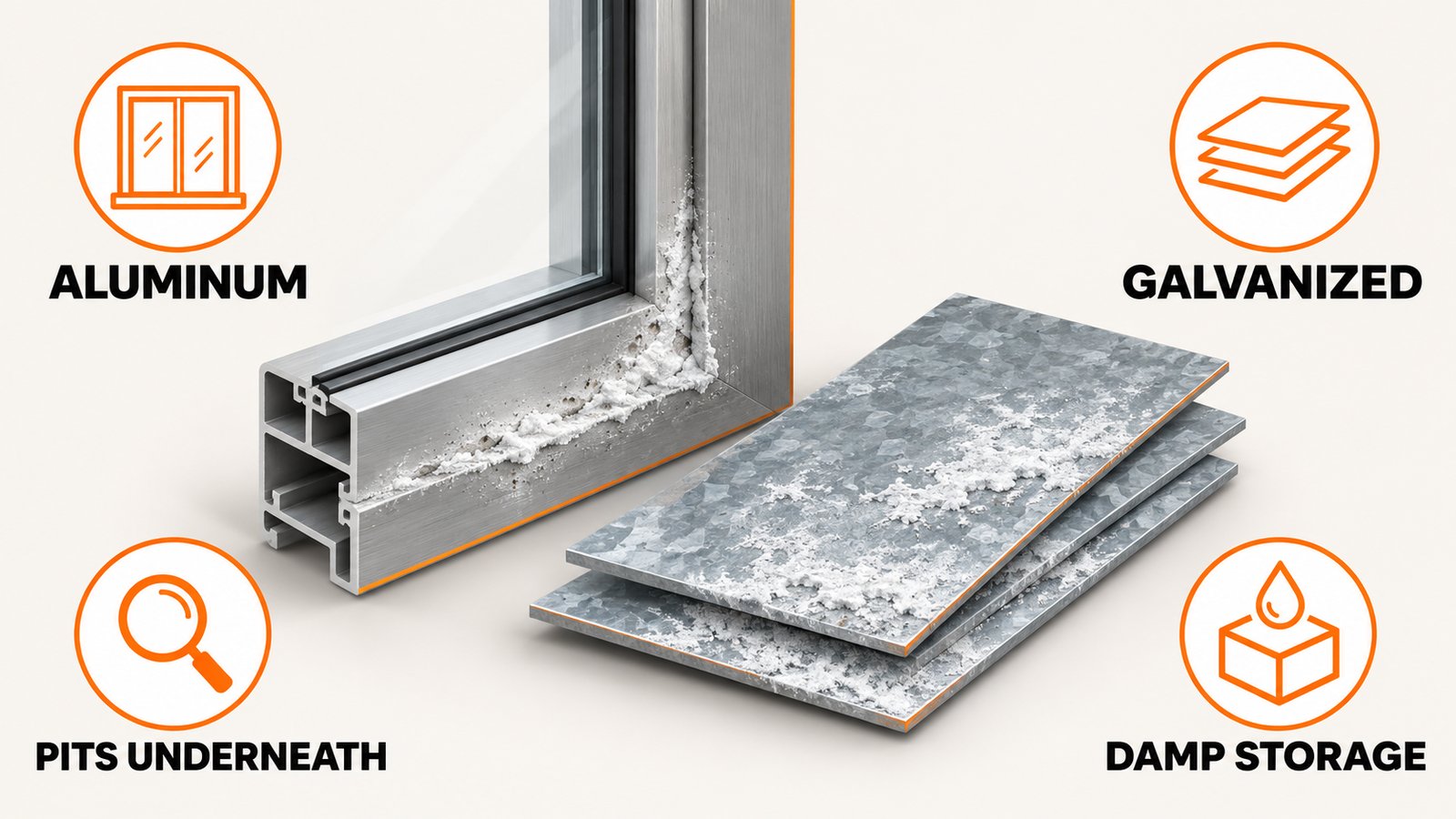
White mold on metal is real, since the EPA lists white among mold colors. Our white mold guide and white mold safety page cover the growth. But white powder is also what corrosion looks like on some metals.
Aluminum. The FAA says pitting corrosion on aluminum is first noticeable as a white or gray powdery deposit, similar to dust, and that cleaning it away reveals tiny pits or holes. Chalky patches over rough, pitted metal are a corrosion question first.
Galvanized steel. The American Galvanizers Association describes wet storage stain as a bulky white or gray deposit from corrosion of the zinc coating when new galvanized items sit packed together in damp, poorly ventilated conditions. Prevention is airflow, no tight stacking and no standing water.
Our rule of thumb: white that is soft, fuzzy and raised, in a damp spot, is worth treating as possible mold. A white film that wipes off clean from smooth metal was likely residue.
Green Mold on Metal
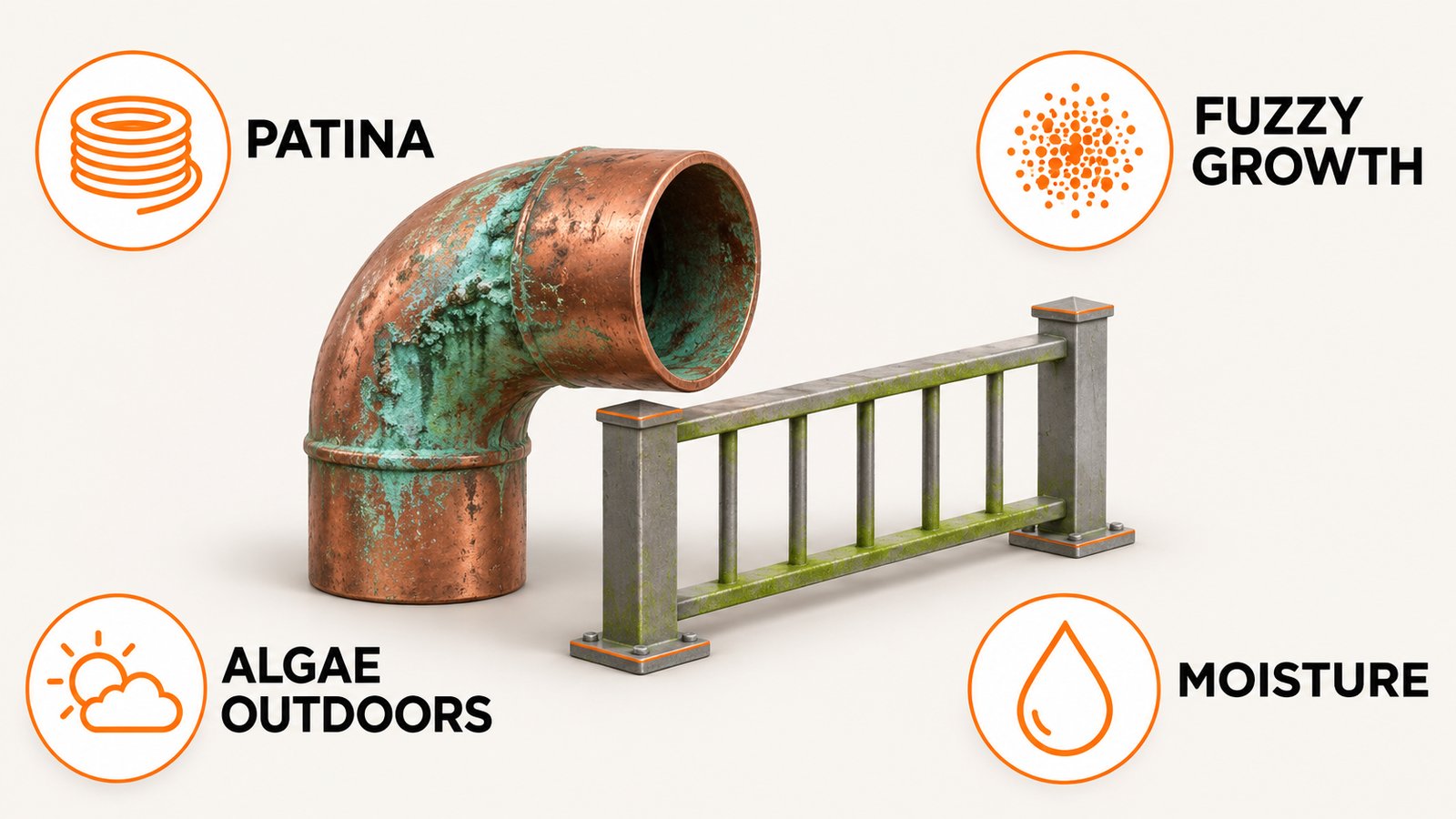
Green mold on metal happens where metal is damp and carries a film of dust or grime. Color does not name the species or the risk, as our green mold guide explains.
Patina. A green crust on copper-colored metal can be corrosion. The National Park Service says unprotected outdoor bronze gains a green patina of corrosion products, usually copper sulfates and carbonates, and that corrosion is usually an ongoing process. A green crust on a copper pipe joint is a plumbing matter, not a mold cleanup.
Algae. Green slime on an outdoor railing or gutter can be algae. Our moss vs mold guide sorts out moss, algae, lichen and mold.
Does Black Mold Grow on Metal?
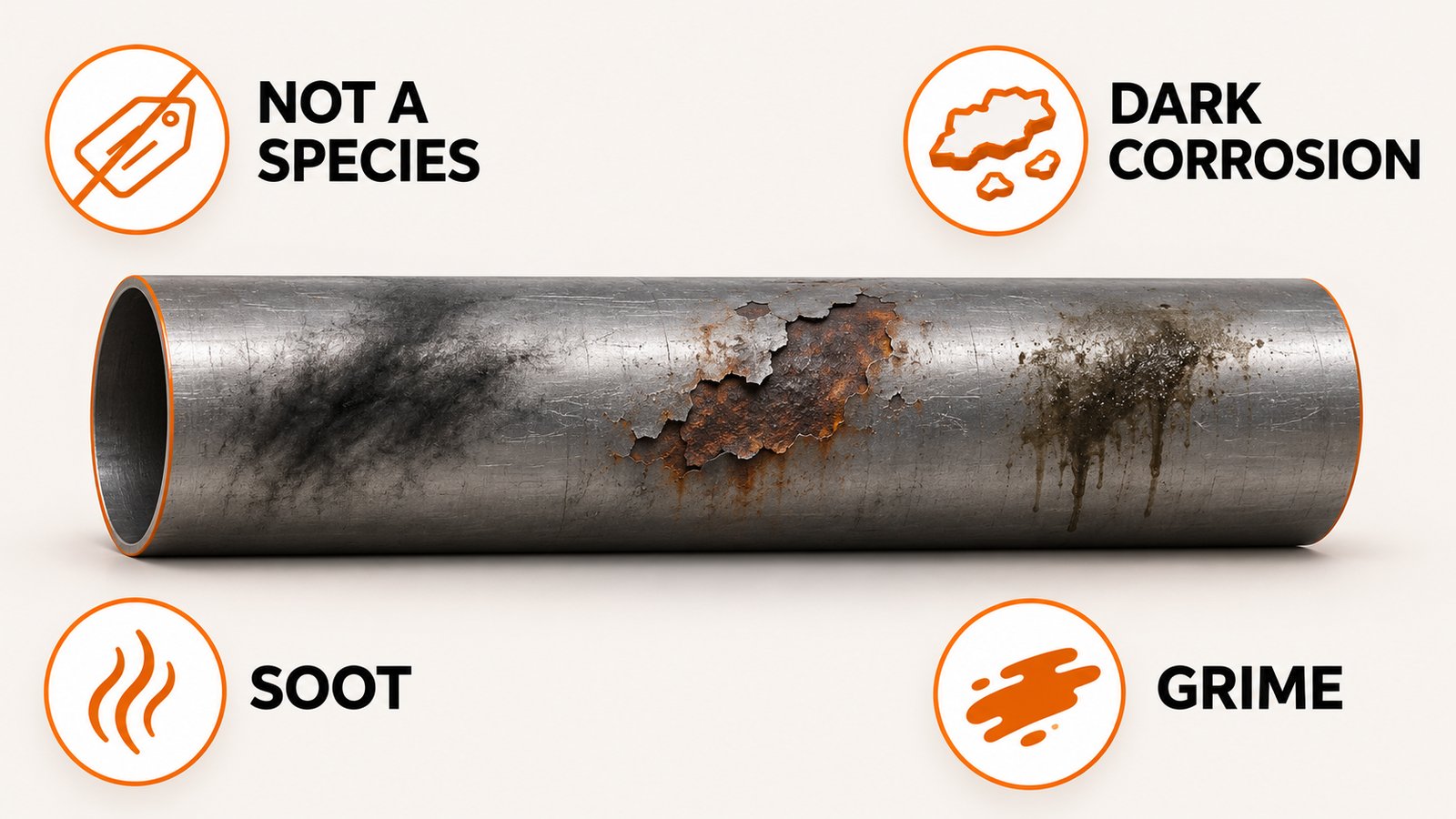
Dark mold can grow on the film on metal. But the EPA course states that "black mold" is not a species or specific kind of mold, and neither is "toxic mold". See our black mold guide and black mold vs regular mold.
Dark spots also have other causes. The FAA says that when iron-based alloys corrode, dark corrosion products usually form first, and with moisture they convert to red rust. Soot and grime leave dark marks too. Whatever the color, the response is the same: fix the moisture, clean, dry and watch whether it returns.
How to Clean Mold off Metal
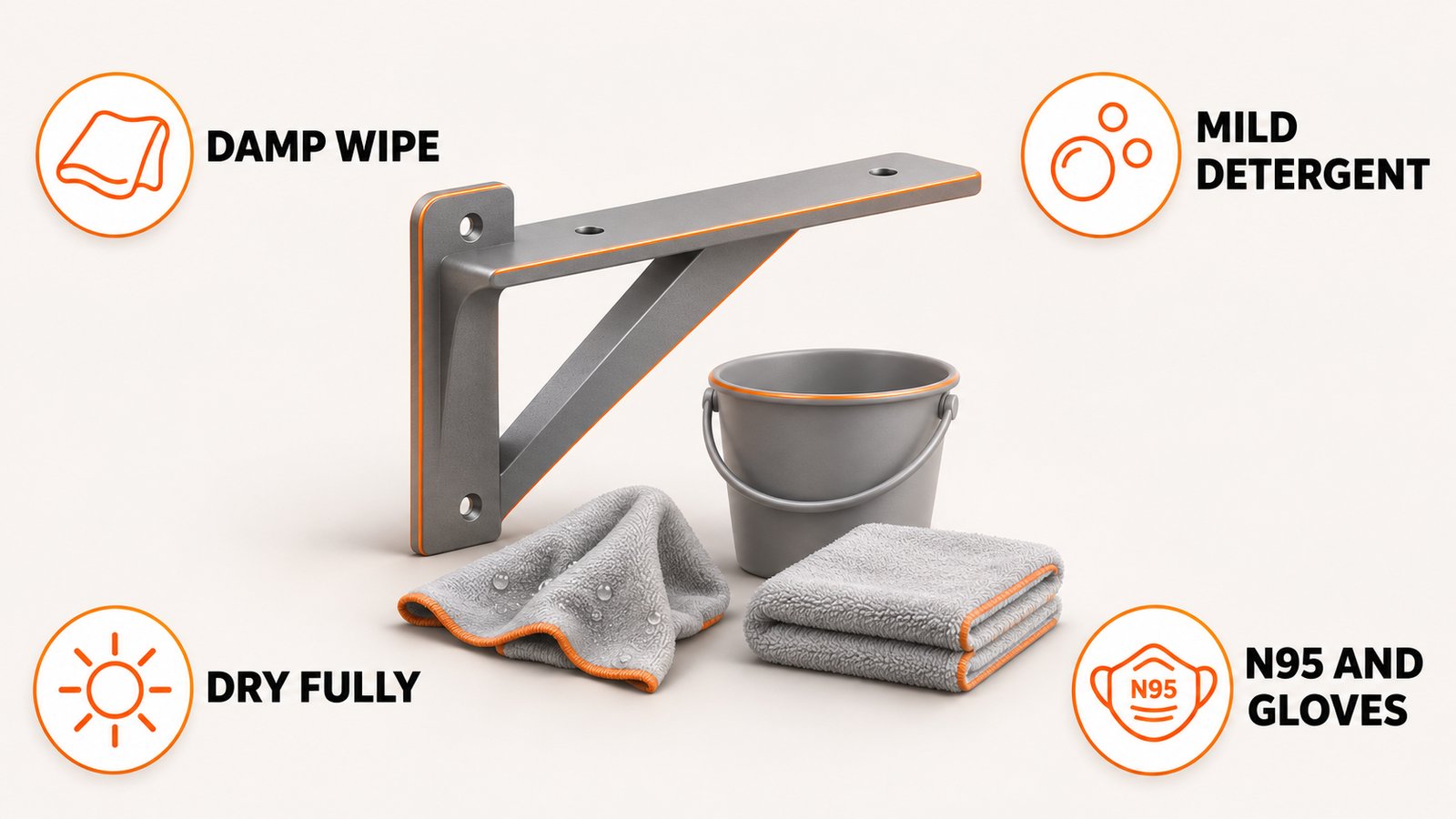
Metal is the easy case. The EPA course says non-porous, hard surfaces such as plastics and metals should be vacuumed or damp wiped with water and mild detergent, then allowed to dry, with scrubbing if needed.
- Fix the water first. If you clean the mold but not the water problem, the EPA says the mold will most likely come back.
- Gear up. The EPA says you may want to wear an N-95 respirator, and it recommends gloves to mid-forearm and goggles without vent holes.
- Wipe or scrub with detergent and water. Follow any product label. Dead mold can still cause allergic reactions in some people, so remove the growth, do not just kill it.
- Dry completely. Do not paint over it, because paint over a moldy surface is likely to peel.
The EPA says a biocide such as chlorine bleach is not recommended as a routine part of mold cleanup. Never mix bleach with ammonia. The National Park Service warns that metal cleaners with ammonia can streak and stain metal, and that repeated use of commercial cleaners may remove original finishes, so follow the maker's instructions for tools and fixtures.
For sheet metal ducts, the EPA says to consider cleaning when substantial mold is visible inside, and not to run a system you suspect is contaminated. Lined ducts that get moldy cannot be cleaned effectively. Read mold in air ducts first.
How to Stop Mold Coming Back on Metal
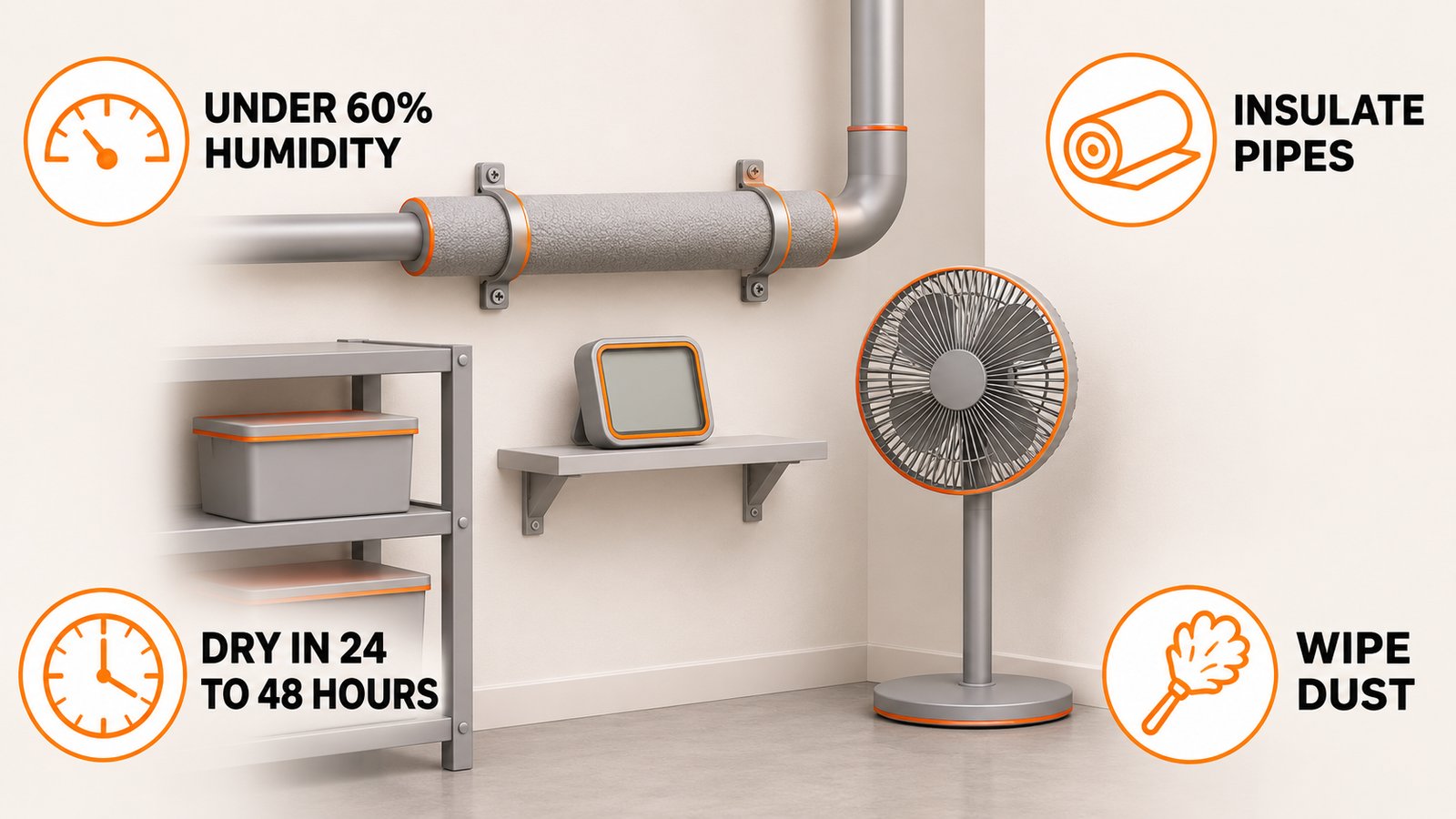
The EPA says that if wet materials are dried within 24 to 48 hours, in most cases mold will not grow, and advises keeping indoor humidity below 60 percent, ideally 30 to 50 percent.
- Stop condensation. The EPA suggests insulating cold surfaces such as cold water pipes, increasing air movement and raising air temperature.
- Fix drips. Keep air conditioning drip pans clean and drain lines flowing.
- Wipe dust off on a schedule. Our rule of thumb, built on that paper's point that dust and dirt feed growth when wet.
- Give stored metal air. The American Galvanizers Association advises against tight stacking in damp conditions.
Turn a meter reading into a plain picture with our humidity risk calculator. For ducts and air handlers, use the HVAC moisture maintenance checklist. A damp garage may need a dehumidifier, covered in our dehumidifier guide.
When to Call a Pro
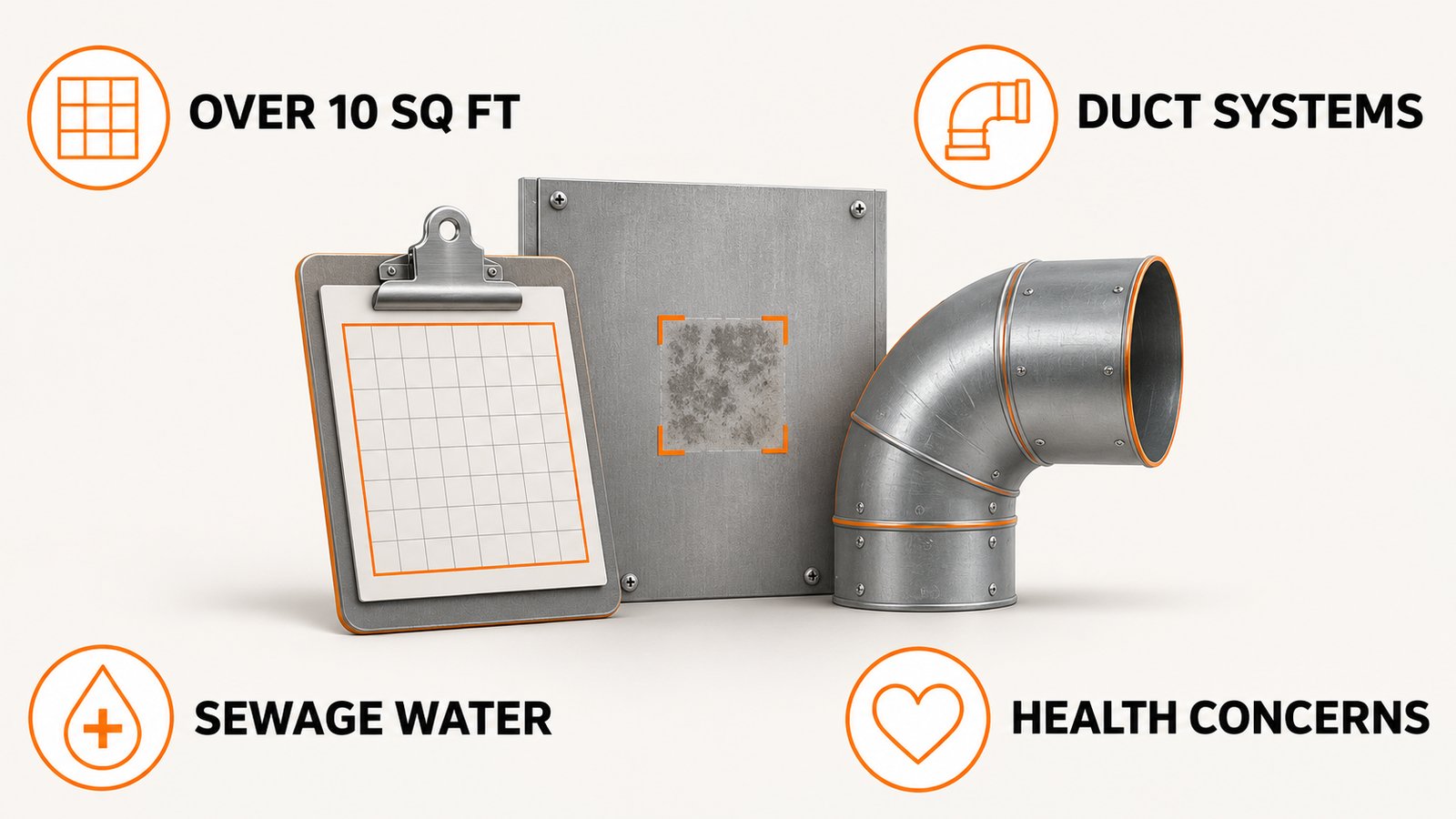
- More than about 10 square feet of growth, roughly a 3-foot by 3-foot patch. Past that size the EPA points to its guide for larger jobs, and we suggest a professional.
- A suspected HVAC problem. Do not run the system.
- Sewage or contaminated water. The EPA says to call a professional experienced with it.
- Health concerns. The EPA says to consult a health professional before cleanup.
Deep pitting or heavy corrosion is a metal question, not a mold question. For hiring, see mold remediation and mold inspection.
Frequently asked questions
Can mold grow on metal?
Yes, but not on the metal itself. The EPA says mold needs moisture and food. Dust and dirt on metal can serve as food when the surface stays damp.
Does black mold grow on metal?
Dark mold can grow on the film on metal, but the EPA says "black mold" is not a species. Dark spots can also be soot, grime or early corrosion.
What does mold on metal look like?
It can be fuzzy, speckled or slimy, and white, green, gray or dark. Color and smell alone do not identify the type or the danger. Rust and corrosion can look similar.
Is white powder on metal mold or corrosion?
It can be either. The FAA describes aluminum corrosion as a white or gray powder with tiny pits underneath once cleaned away. Galvanized steel can show a white wet storage stain.
How do I clean mold off metal?
The EPA says to damp wipe non-porous surfaces such as metals with water and mild detergent, scrub if needed, then dry. It says you may want to wear an N-95 respirator and recommends gloves and goggles, and it says to fix the moisture source.
Is it mold or rust?
The FAA says steel corrosion is easily recognized as red rust. Mold grows as a film or fuzz on dust and grime. Both need moisture, so they can appear together.
Do I need a mold test for spots on metal?
Usually not. The EPA says that when visible growth is present, sampling is unnecessary in most cases. Separately, the EPA duct guide says a substance may look like mold, but only an expert can make a positive determination, sometimes with lab analysis.
Sources
Every claim on this page traces to one of these. Links open the primary document.