Why Mold in a Garage Is So Common
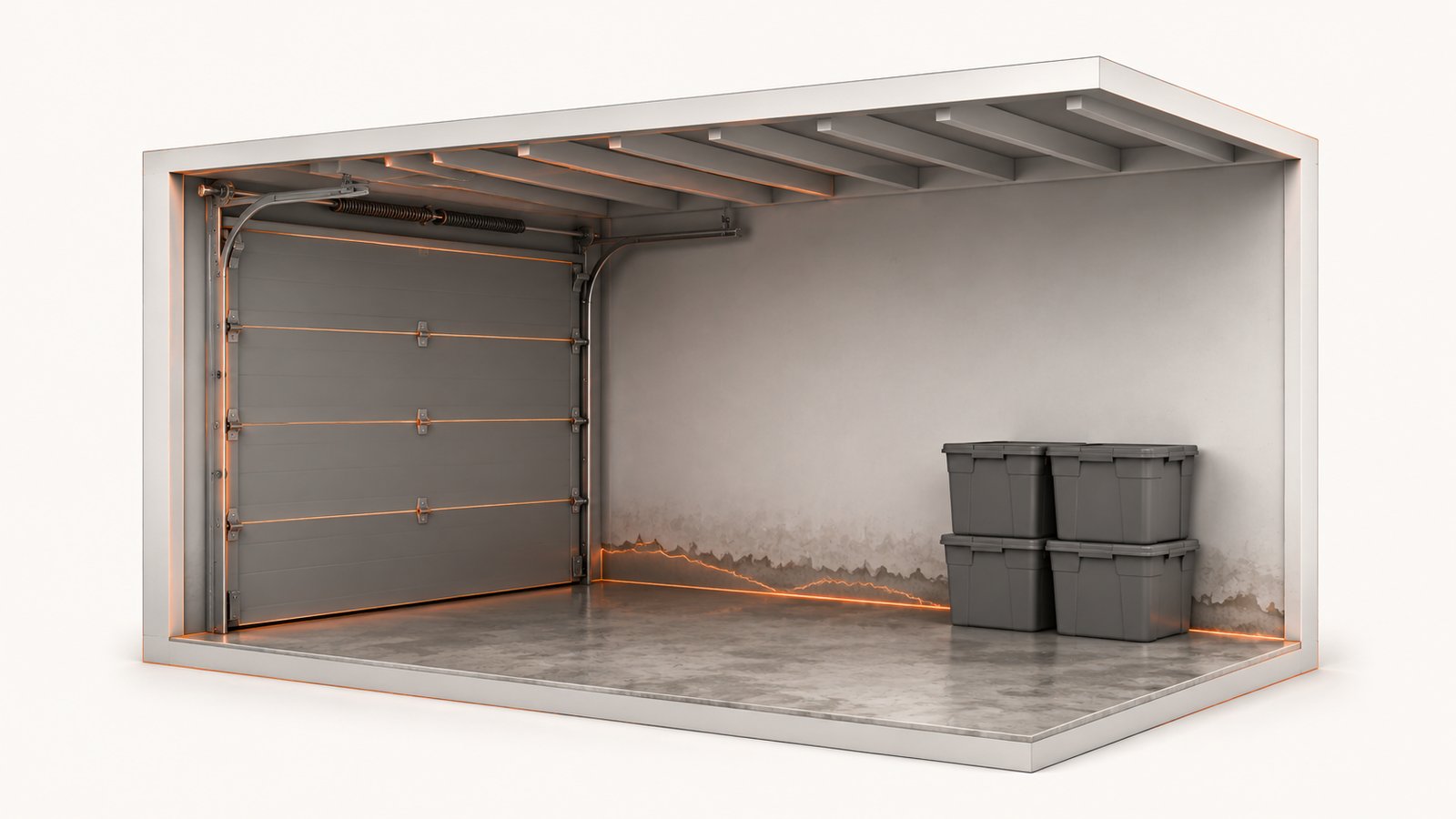
A garage is a room built to a lower standard than the rest of the house and then asked to handle more water than any other space in it. Six things stack up.
- It is unconditioned. No heating and no cooling means no dehumidification, so the air inside tracks the outdoor dew point. In a humid summer, that puts the space over the line for weeks at a time.
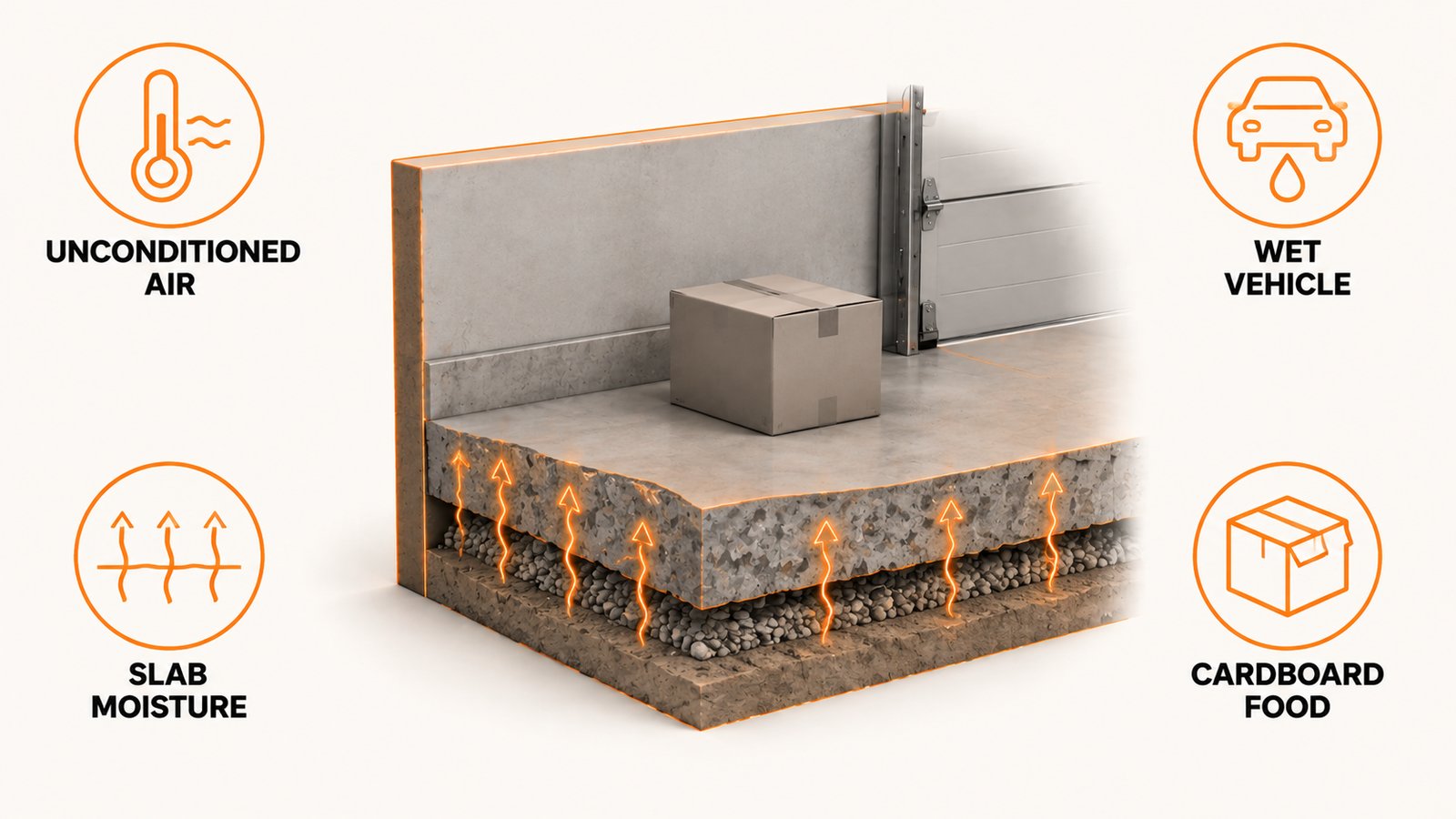
- The slab is a moisture source. A concrete floor sitting on ground with no vapor barrier, or a failed one, moves water upward continuously. The EPA's prevention guidance says not to let foundations stay wet, to provide drainage, and to slope the ground away from the foundation. Most driveways slope toward the garage, not away from it.
- The car brings water in. A vehicle parked wet after rain or snow sheds several gallons onto a slab in a room with no exhaust fan. Salt, grit, and organic debris come with it.
- Someone vented the dryer into it. The EPA names this directly in its list of common moisture problems: unvented combustion appliances such as clothes dryers vented into a garage, adding that clothes dryers and other combustion appliances should be vented to the outside. A dryer load dumps a large volume of warm water vapor into an unventilated room.
- Cardboard is the food supply. Storage boxes, paper, and old furniture are cellulose sitting directly on a damp slab. The CDC lists paper, cardboard, and wood among the materials mold grows on.
- The shared wall is cold. On an attached garage, the wall between the garage and the house is often insulated on one side only, which makes the garage face a cold surface in winter. The EPA notes that when warm, humid air contacts a cold surface, condensation may form, and that mold is frequently found on walls in cold corners.
Notice that five of those six are moisture, not cleanliness. The EPA's summary of the whole subject applies exactly here: the way to control indoor mold growth is to control moisture. A tidy garage with a wet slab still grows mold. Mold on concrete covers the slab itself.
Where to Look First
Work the room in this order, with a flashlight. The EPA names your eyes and nose as the most important investigation equipment, with a good flashlight as the helper.
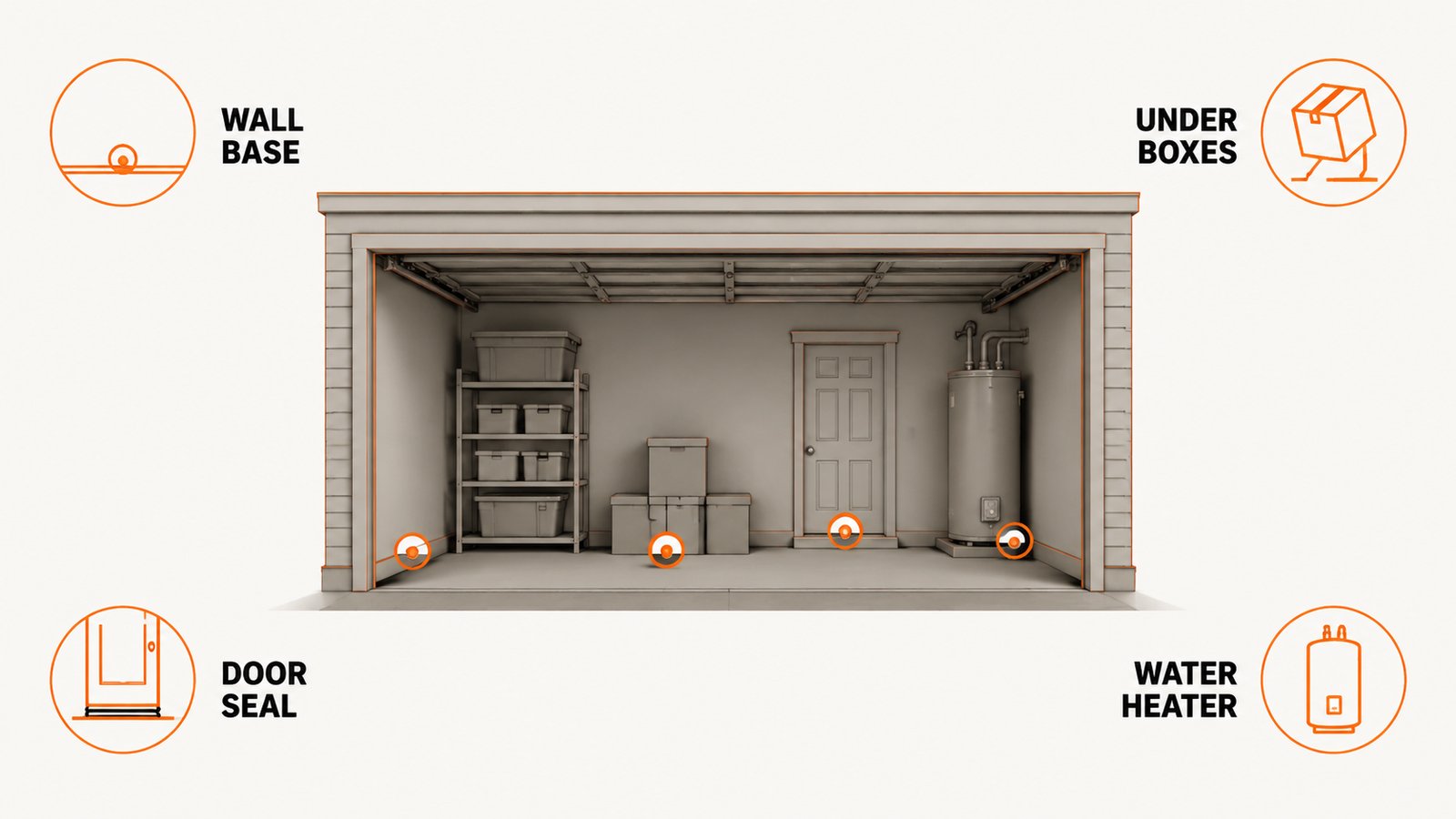
- The bottom 18 inches of every wall. Water sits on the slab and wicks up into drywall paper or bare studs. Pull anything stored against a wall away from it and look behind it.
- Behind and under cardboard. Lift every box that has been on the floor. The underside of a box on a damp slab is the single most reliable place to find growth in a garage.
- The garage door bottom seal and the two side jambs. A failed sweep lets rain track in under the door, and the wood or metal jamb right beside it stays wet.
- Around and under the water heater. Look for a rust ring, a stained pan, or a stain radiating from the base. Slow tank weeps run for months.
- The shared wall with the house, especially cold corners. This is the condensation wall.
- The ceiling, if there is living space above. A bathroom or laundry room over a garage is a plumbing run passing through an unheated ceiling cavity.
- Windows, frames, and any exterior penetration. Hose bibs, dryer vents, and electrical penetrations all leak eventually.
- Behind the drywall if the smell is there and the surface is not. The EPA says you may suspect hidden mold if a building smells moldy but you cannot see the source.
Take moisture readings while you look. The EPA lists moisture meters as the tool investigators use to find wet areas where mold may be growing, and they work on carpet, wallboard, wood, brick, and concrete. Take a dry baseline on an interior house wall first, then compare. Our moisture meter guide covers pin against pinless, and mold behind walls covers what a wet reading with nothing visible means.
How to Clean Mold in a Garage
Most garage growth is on hard, non-porous surfaces, which is the easiest case there is.
- Fix the water first. A garage you clean before you fix the door seal is a garage you will clean again in six weeks.
- Gear up. The EPA calls for gloves, goggles without ventilation holes, and an N95 respirator, and notes those respirators cost roughly $12 to $25. Long gloves to mid-forearm, and open the garage door for ventilation while you work.
- Bag the trash first. Moldy cardboard, old carpet, and soaked insulation are not cleaning jobs. The EPA states that absorbent or porous materials may have to be thrown away, because mold can fill the crevices and be impossible to remove completely. Bag them where they sit rather than carrying them across the room.
- Scrub the hard surfaces. The EPA's own instruction is to scrub mold off hard surfaces with detergent and water, and dry completely. Concrete, painted block, metal, and sealed wood all qualify. Note that the agency also says a chemical or biocide that kills organisms such as mold, chlorine bleach for example, is not recommended as a routine practice during mold cleanup.
- Remove the residue. Dead mold may still cause allergic reactions in some people, so it is not enough to kill it, it has to come off the surface.
- Dry the room hard. Fans, the door open on a dry day, and a dehumidifier if the space stays closed. This is the step that decides whether it returns.
- Do not paint over it. The EPA says not to paint or caulk moldy surfaces, to clean up the mold and dry the surfaces first, and that paint applied over moldy surfaces is likely to peel.
Bare drywall in a garage is the exception to the easy case. If the paper face is wet and colonized, that section comes out. Mold on drywall covers where the cut line falls, and how to get rid of mold covers the sequence on any surface.

How to Keep It From Coming Back
The EPA's prevention list translates almost line for line into a garage plan.
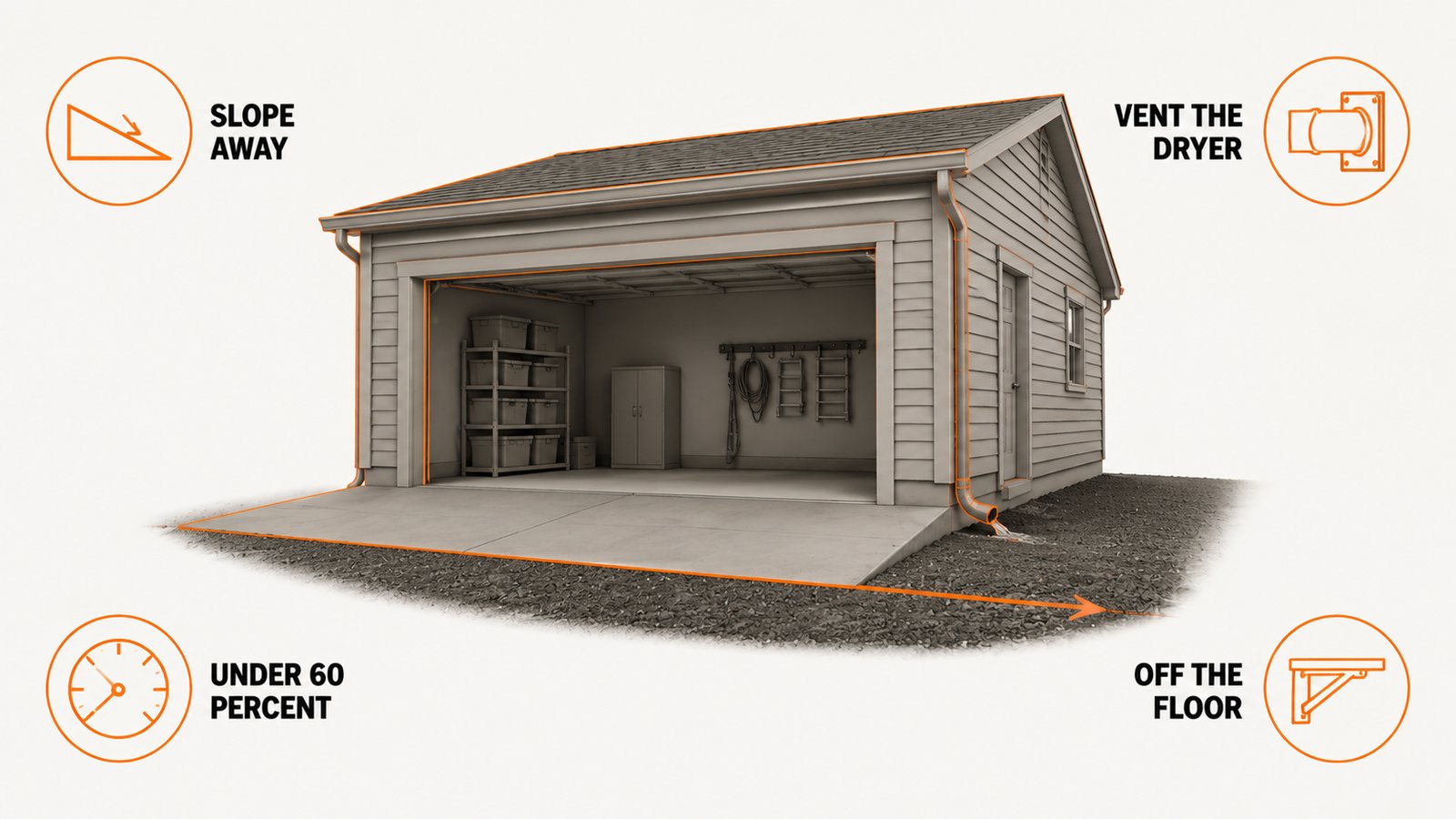
- Keep water off the slab. Do not let foundations stay wet. Provide drainage and slope the ground away from the foundation. Extend downspouts past the apron, clear the gutter above the door, and replace the bottom seal when it stops sitting flat.
- Vent the dryer outside. If a dryer discharges into the garage, that is the first fix on the list, and the EPA names it as a common moisture problem in its own right.
- Hold humidity under 60 percent. The agency advises maintaining low indoor humidity, below 60 percent relative humidity and ideally 30 to 50 percent, and notes that above 60 percent condensation is likely, which leads to mold growth. A humidity gauge costs less than $50 at a hardware store by the EPA's own estimate. Check yours with our free humidity and mold risk calculator.
- Attack condensation two ways. The EPA's method is to increase surface temperature or reduce the moisture level in the air. To raise surface temperature, insulate or increase air circulation. To reduce moisture, repair leaks and increase ventilation when outside air is cold and dry, or dehumidify when outdoor air is warm and humid.
- Get everything off the floor. Shelving and pallets break the contact between cardboard and a damp slab. Better still, move paper storage into plastic bins with lids.
- Dry the car before you close the door. Or leave the door open twenty minutes after parking a wet vehicle. Trapped evaporation has to go somewhere.
- Clean and dry wet materials within 24 to 48 hours. That is the EPA window, and it applies to a garage flood the same as a kitchen leak.
A dehumidifier is the highest-value single purchase for an enclosed garage in a humid climate, provided the space is reasonably sealed. In an open, drafty garage it will run forever and accomplish nothing, so fix the envelope first. Dehumidifiers for mold covers sizing, and how to prevent mold covers the rest of the house.
When a Garage Problem Becomes a House Problem
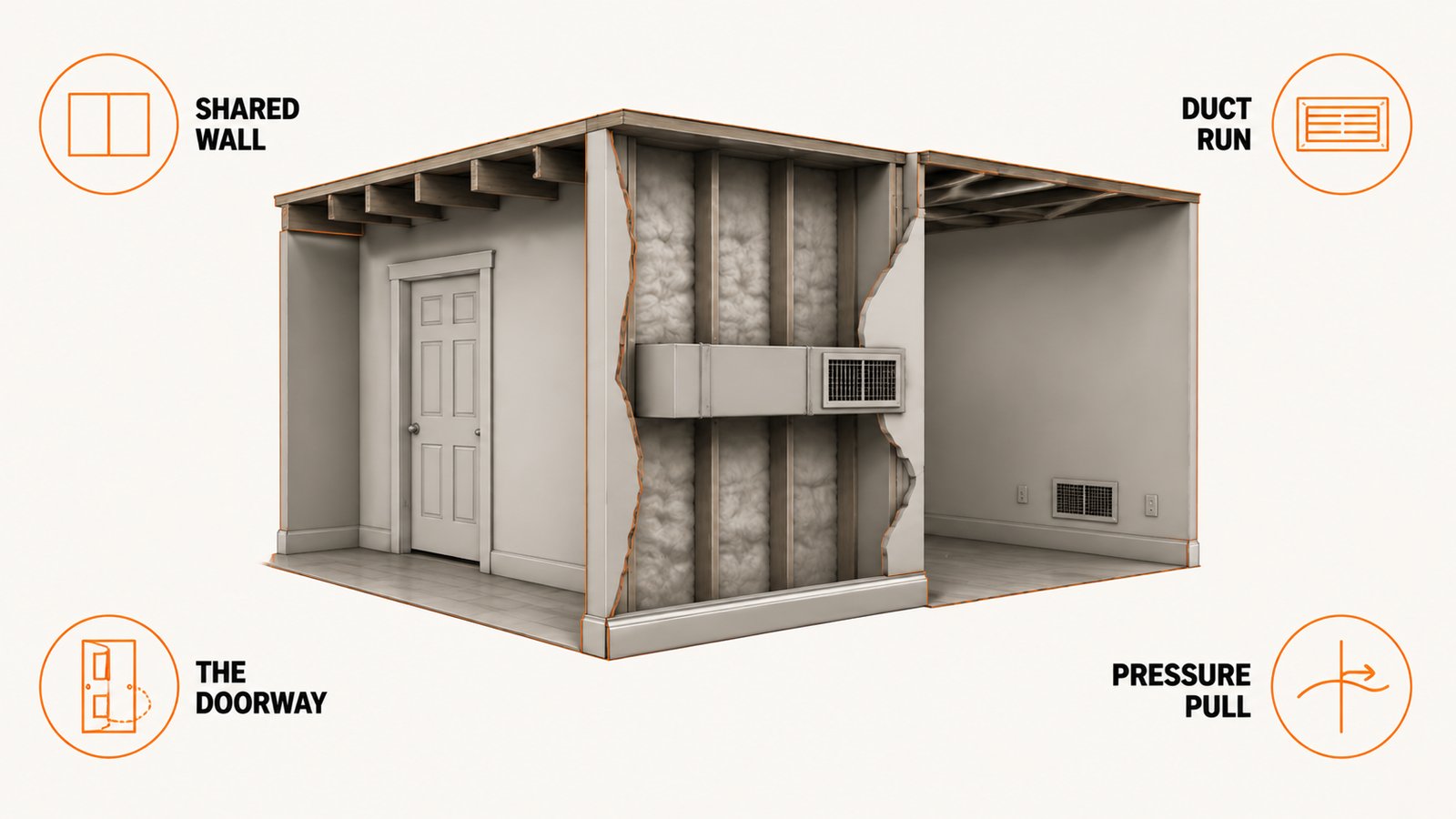
An attached garage is not a separate building. It shares a wall, usually a ceiling, and often a duct run with the living space, which is why a garage problem becomes a house problem faster than people expect.
Three paths connect them:
- The shared wall assembly. Growth on the garage face of that wall is inside the same cavity as the drywall in your hallway. The EPA lists the back side of drywall among the places hidden mold turns up.
- Ductwork passing through. If any supply or return runs through the garage ceiling, a leak in that run moves garage air into the house. The EPA notes that mold in a ventilation system may be spread throughout the building.
- The door between them. Pressure differences pull garage air inside every time the house runs its blower, especially if that door does not seal.
Hand it to a professional when:
- The affected area is larger than about 10 square feet, roughly a 3 foot by 3 foot patch, which is the EPA's own line for handling cleanup yourself.
- There has been extensive water damage, or the water came from sewage or floodwater.
- Growth is inside the heating and cooling system or in ducts passing through the garage.
- It returns in the same place after cleaning, which means the moisture source is still running.
- The wall framing or the sill plate is soft. That is structural repair, not remediation.
- Anyone in the home is immune-compromised or has chronic lung disease. The CDC notes people in those groups may get infections in their lungs from mold, which makes it a physician's question and a professional's job.
The EPA also notes that if you are not experienced with building repairs, you may want to consult a professional for the repairs themselves or for mold-prevention changes to the building. This page covers cleaning, moisture control, and protective equipment only, and gives no medical advice. Mold remediation covers what a professional job includes.
Frequently asked questions
Why does my garage keep getting moldy?
Almost always moisture rather than dirt. A garage is unconditioned, so its air tracks outdoor humidity, the slab moves ground water upward, wet cars shed water into a room with no exhaust, and cardboard storage on the floor supplies the food. The EPA's summary of the whole subject is that the way to control indoor mold growth is to control moisture.
Is mold in a garage dangerous to the rest of the house?
An attached garage shares a wall, usually a ceiling, and often duct runs with the living space, so air and spores move between them. The EPA notes mold in a ventilation system may be spread throughout the building, and lists the back side of drywall among hidden mold locations. Treat garage growth on a shared wall as a house problem, not a storage problem.
Can I vent my clothes dryer into the garage?
No, and this is one of the few garage-specific items the EPA names directly. Its list of common moisture problems includes unvented combustion appliances such as clothes dryers vented into a garage, and it states that clothes dryers and other combustion appliances should be vented to the outside.
What humidity should a garage be kept at?
The EPA advises maintaining low indoor humidity, below 60 percent relative humidity and ideally between 30 and 50 percent, and notes that relative humidity above 60 percent is likely to result in condensation, which can lead to mold growth. It also notes that a gauge measuring both temperature and humidity is generally available for less than $50 at hardware stores.
Should I use bleach to clean mold off garage walls?
It is not the default. The EPA states that using a chemical or biocide that kills organisms such as mold, chlorine bleach for example, is not recommended as a routine practice during mold cleanup. Its own instruction is to scrub mold off hard surfaces with detergent and water and dry completely, then physically remove the residue, because dead mold may still cause allergic reactions.
Do I have to throw out moldy cardboard boxes?
Usually yes. The EPA states that absorbent or porous materials may have to be thrown away if they become moldy, because mold can grow on or fill in the empty spaces and crevices of porous materials, making it difficult or impossible to remove completely. Cardboard on a damp slab is the clearest example of that in a garage.
Will a dehumidifier fix a moldy garage?
Only if the space is reasonably sealed and the leaks are fixed first. In an enclosed garage in a humid climate it is the highest-value single purchase, because it holds the room under the EPA's 60 percent line. In a drafty garage with a failed door seal it will run continuously and accomplish very little, so repair the envelope before you buy one.
Sources
Every claim on this page traces to one of these. Links open the primary document.