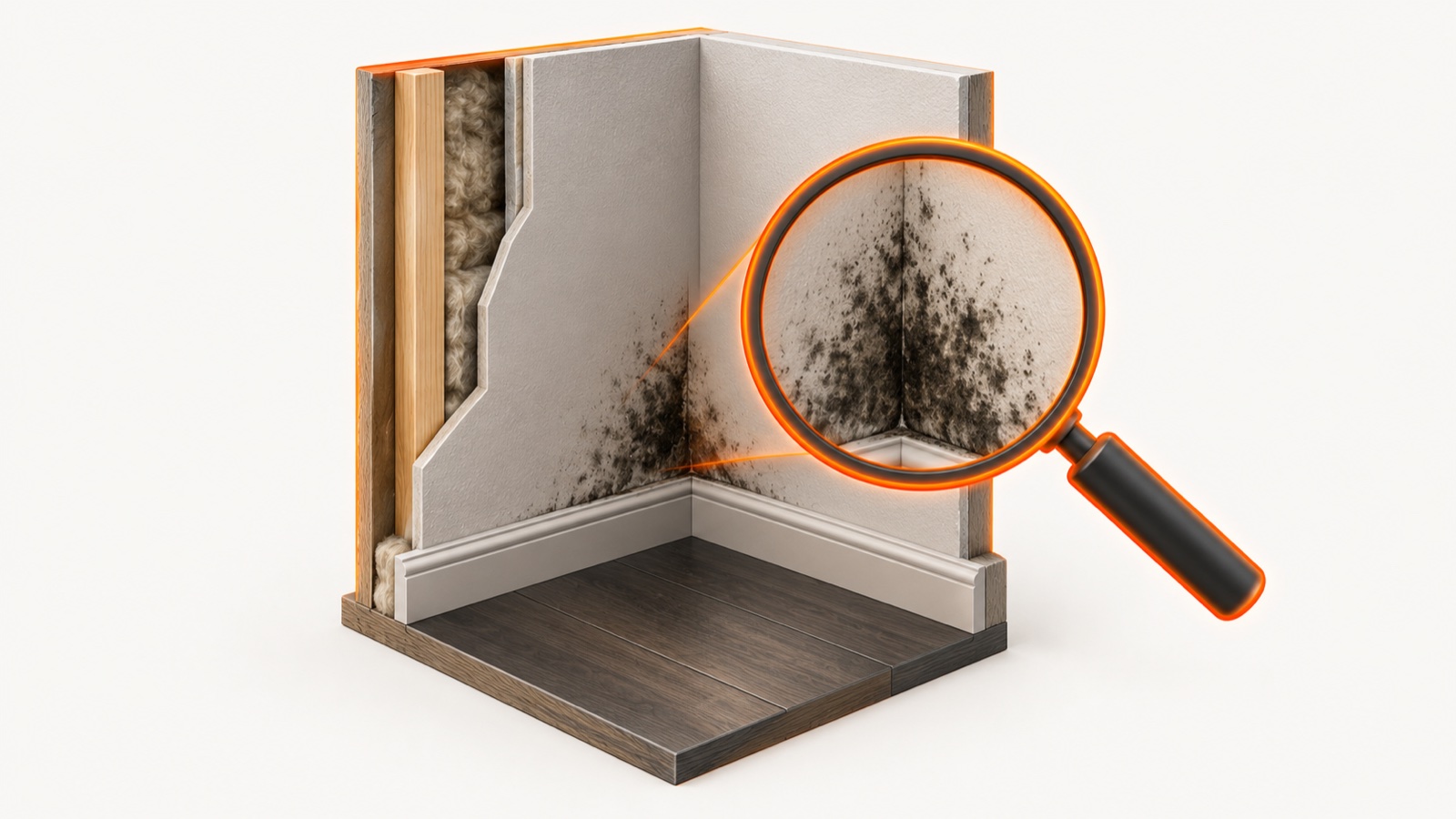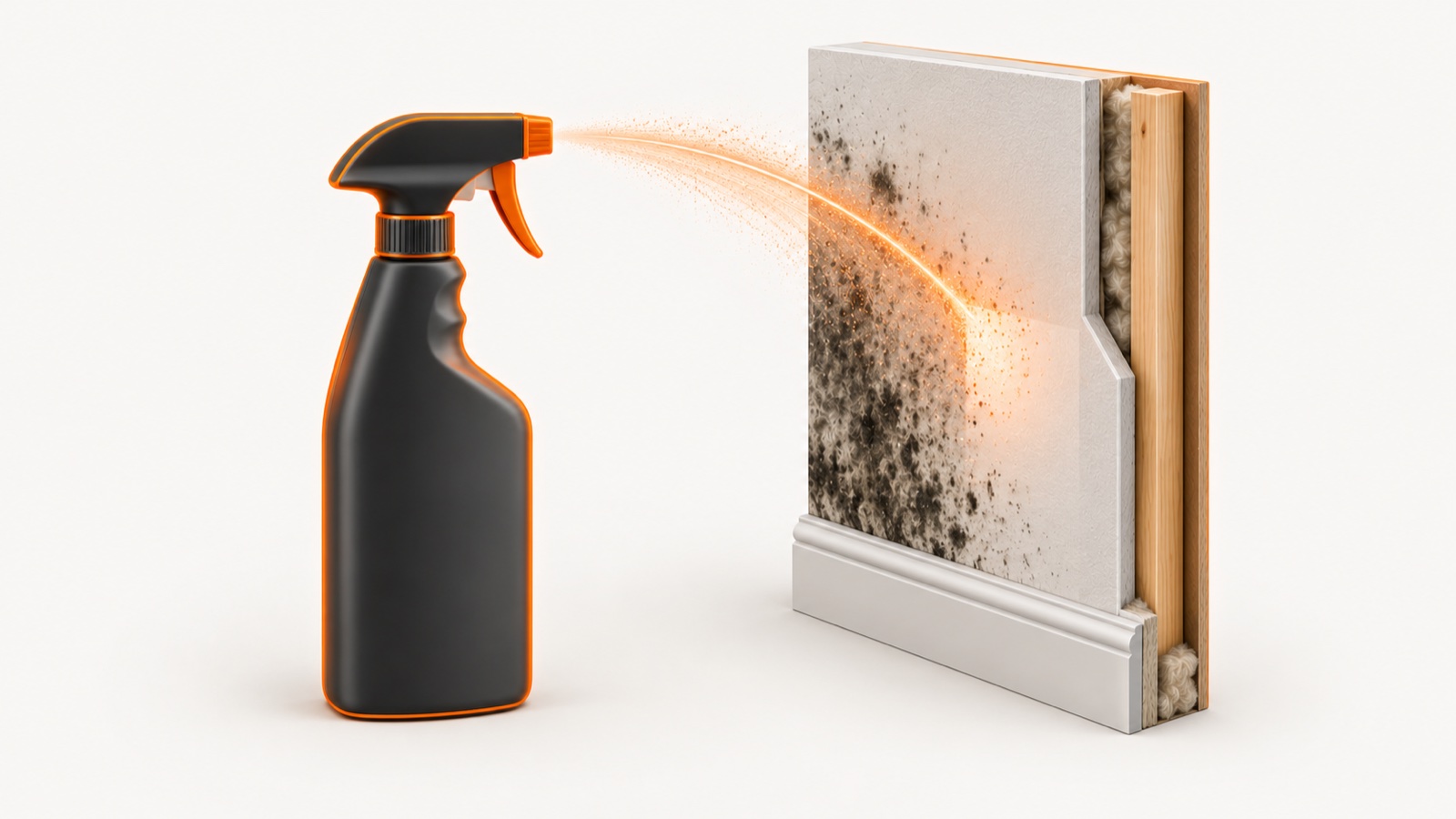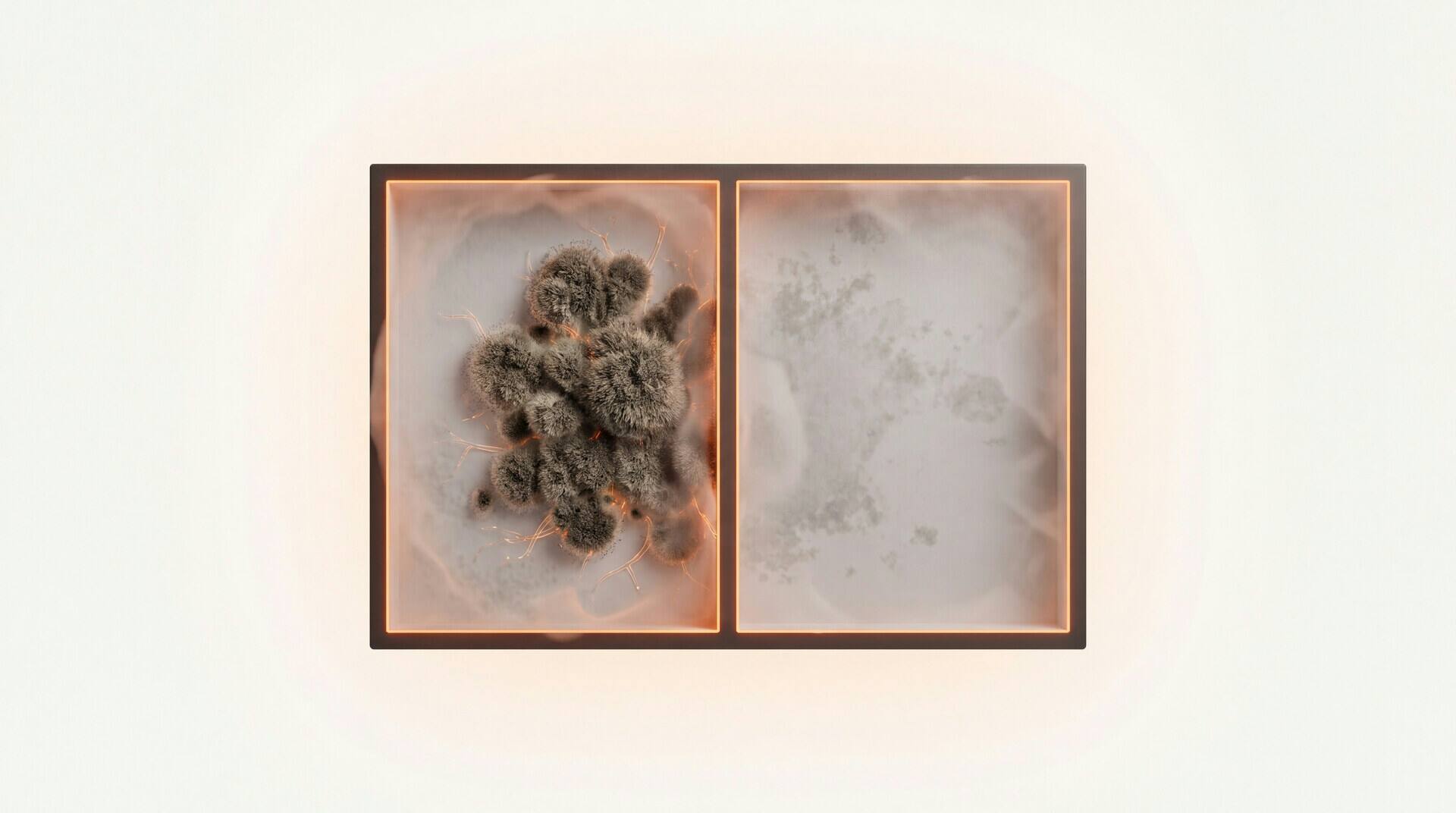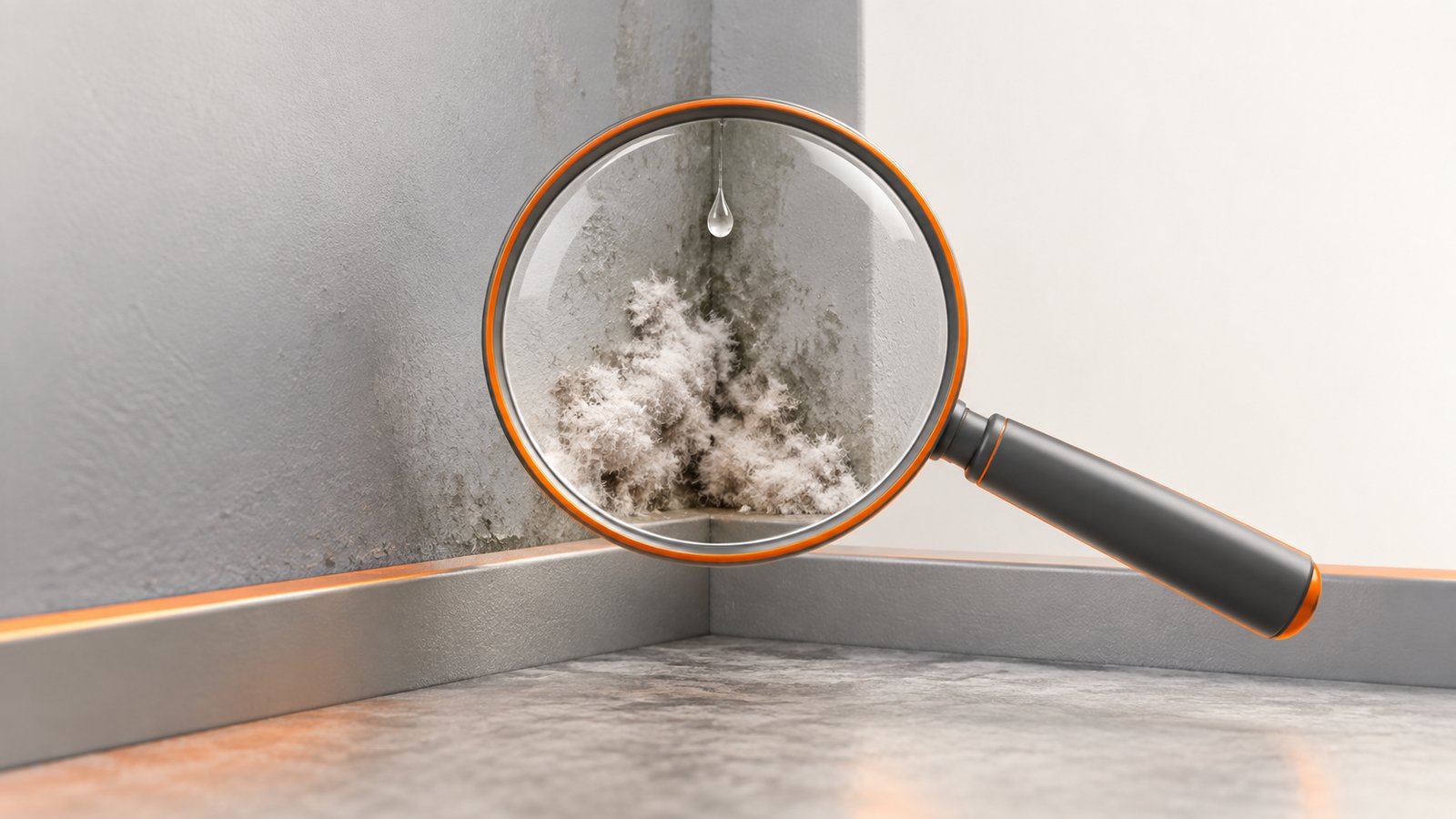
Focus on the moisture source, the material affected, and the total area of growth, not the color. And before you clean anything, confirm it's actually mold: on masonry, a lot of what looks like white mold is efflorescence, a mineral salt deposit that isn't mold at all.
What White Mold Can and Cannot Tell You
"White mold" is one of the most searched mold terms there is. The color itself tells you almost nothing on its own. It's a description of how a surface looks right now, under whatever light you happen to be looking at it in, not a species, a toxicity rating, or a measurement of risk.
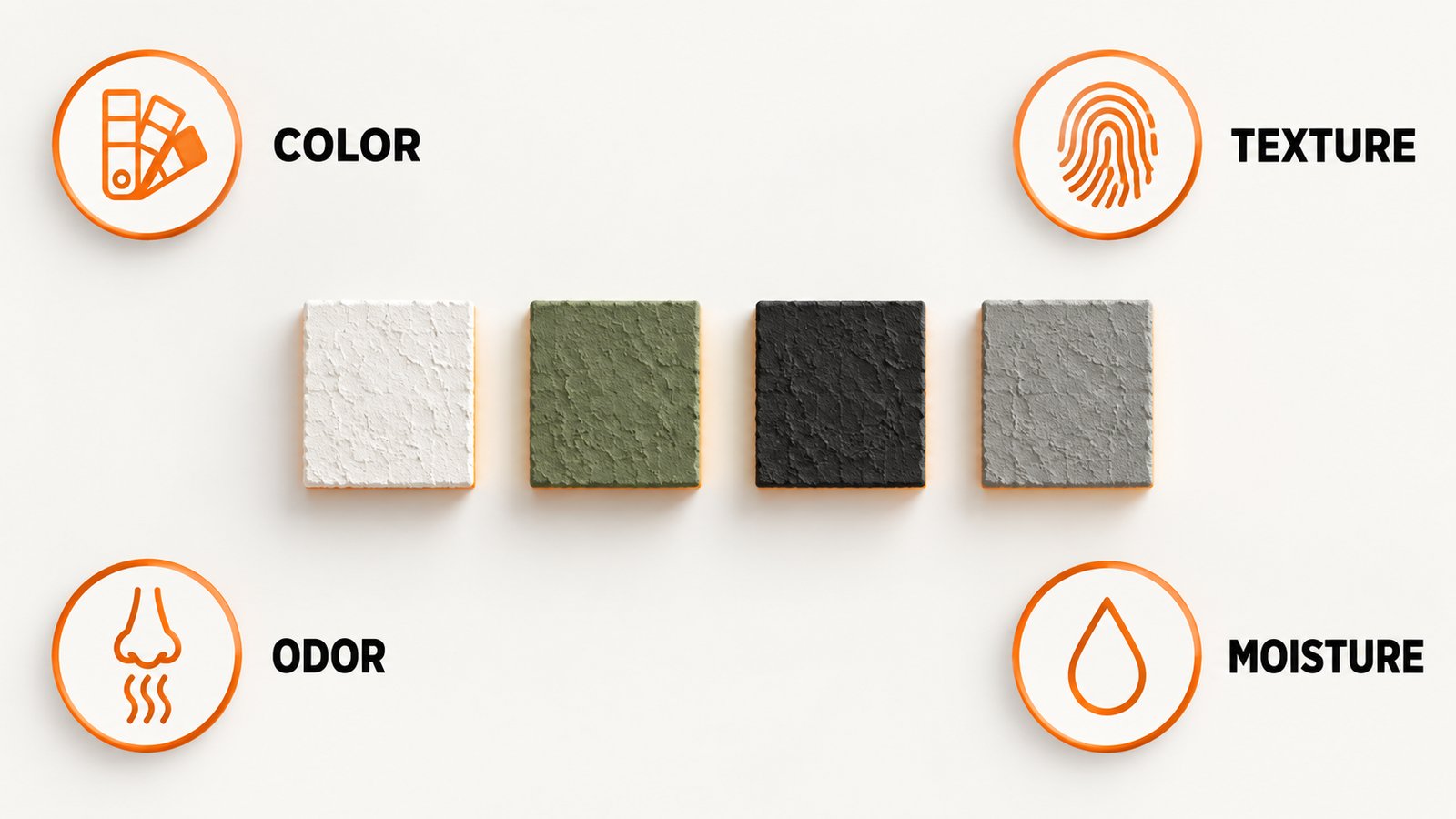
| Observation | What it can document | What it cannot determine |
|---|---|---|
| White color | How a surface appears under current lighting | Mold, species, toxicity, or health risk |
| Fuzzy or powdery texture | A visible surface pattern | The organism, source, or exposure |
| Musty odor | A reason to investigate dampness | The location, species, amount, or symptom cause |
| Leak or condensation nearby | A moisture condition that needs correction | Hidden extent or safe occupancy |
CDC and NIOSH guidance is direct about this: "the color of mold does not necessarily indicate that it is more or less dangerous." That single line does most of the work. A white patch is not automatically safer than a black or green one, and it is not automatically worse either. The same holds when two colors turn up on the same patch. Green and white mold sharing one spot on wood or drywall usually just means more than one organism, or one organism at more than one growth stage, is living on the same damp surface. It does not add up to a higher risk than either color on its own.
Many common indoor molds, including Penicillium, Aspergillus, and Cladosporium, can appear pale or white, and several species start out white and darken later as they produce spores. None of that can be read from a photo. For what white mold looks like on different surfaces and how it's identified, see our full white mold guide. For how color performs as an identifier more broadly, see what color can and cannot tell you about black mold and why color cannot identify mold types.
Is White Fuzzy Mold Dangerous?
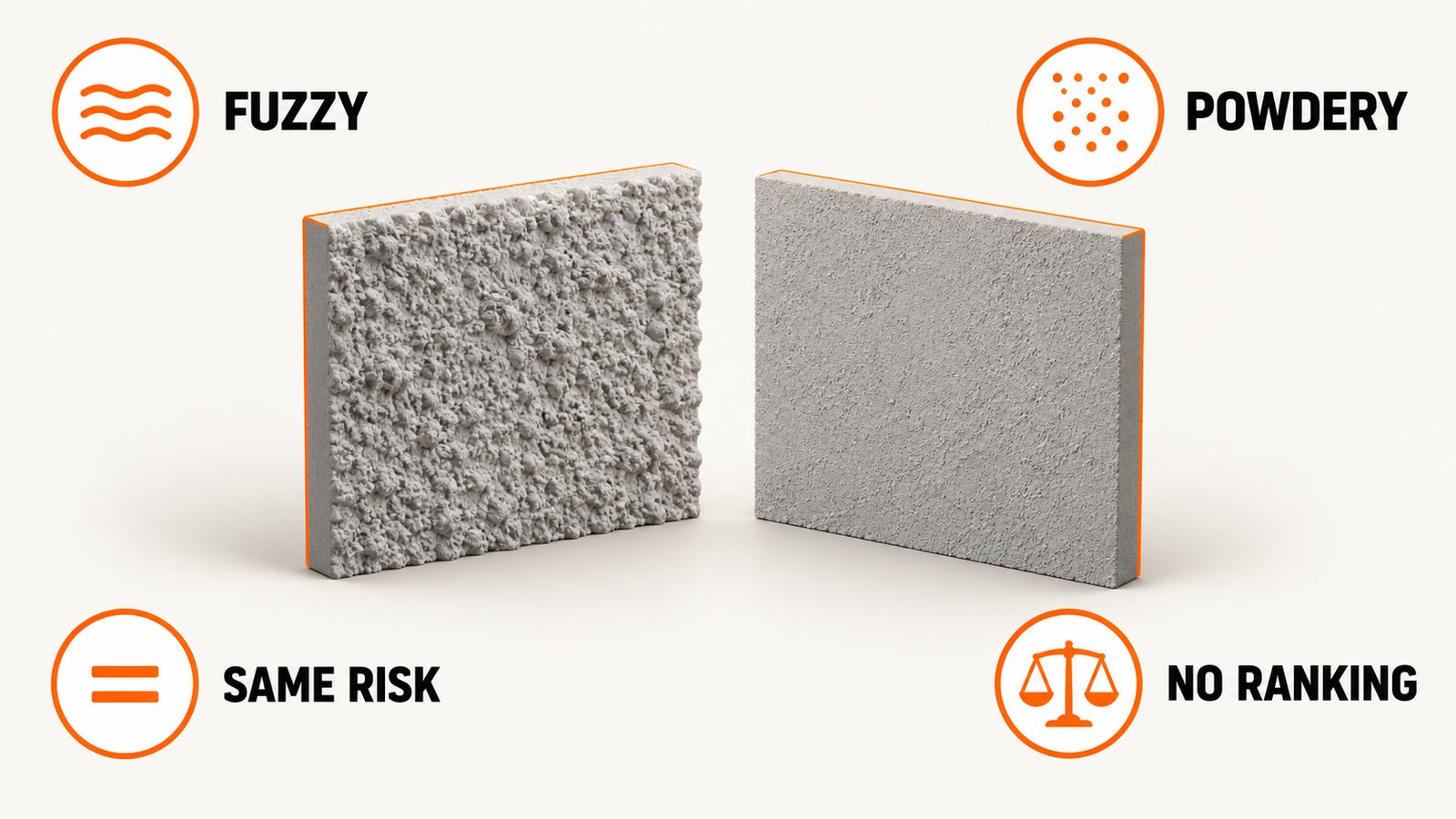
Texture does not change the answer either. Fuzzy white mold and smooth, powdery white mold get treated the same way under CDC and EPA guidance, because texture, like color, describes a surface and is not a hazard classification.
What actually matters is exposure, and the person exposed. CDC states that "exposure to damp and moldy environments may cause a variety of health effects, or none at all." For people who do react, CDC lists a stuffy nose, sore throat, coughing or wheezing, burning eyes, or a skin rash as the common effects, and people with asthma or mold allergies tend to react more strongly. The 2004 Institute of Medicine review that CDC cites found enough evidence to link indoor mold exposure to upper respiratory symptoms and wheeze in otherwise healthy people, worse asthma symptoms in people who already have asthma, and hypersensitivity pneumonitis in people susceptible to that specific immune reaction. CDC/NIOSH separately notes that mold "can also cause irritation of the eyes, nose, throat, skin, or lungs even in people who are not allergic to mold."
None of that depends on the mold being fuzzy, powdery, white, or any other color. A photo, a texture, or a home inspection cannot diagnose a health condition or prove what caused a specific symptom. That's a conversation for a licensed physician, not a color chart. See mold allergy symptoms and what the research says about mold symptoms for more on what the agencies have and have not established.
Could That White Growth Be Efflorescence Instead of Mold?
Before you treat a white patch as mold at all, rule out the most common look-alike. On concrete, brick, and block, a lot of what looks like white mold is efflorescence, and efflorescence is not mold.
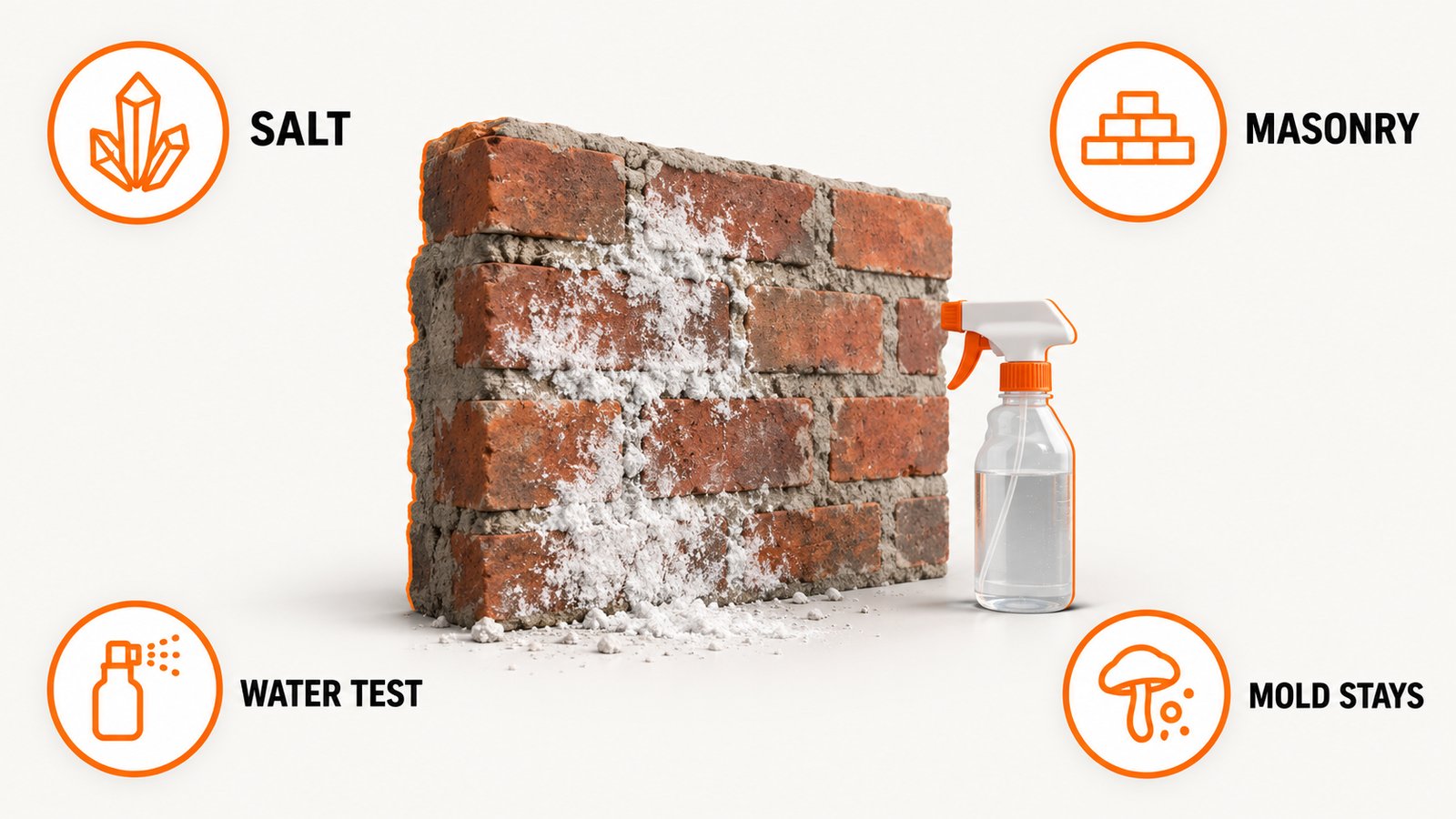
The New York State Department of Health describes efflorescence plainly, as "fluffy salt deposits left behind when water passing through masonry evaporates," and states flatly that it is "not mold." It forms when moisture moves through a porous masonry surface, carries dissolved minerals along with it, and leaves those minerals behind on the surface once the water evaporates.
Because efflorescence is a mineral salt rather than a living organism, it does not behave like mold once it gets wet or disturbed. And because it only forms on masonry, organic surfaces like wood, drywall paper, and fabric don't get efflorescence at all; they only get mold. Material is the fastest clue: a white patch on drywall or wood is not efflorescence, whatever it looks like, and a white patch on bare concrete or brick is worth a second look before you assume mold and reach for a cleaner made for it. See how to tell white mold from efflorescence for the full field comparison, and mold on concrete for that material specifically.
What Causes White Mold In The House
White mold in a house has the same root cause as mold of any other color: moisture on a surface that also has something organic to feed on. EPA is specific about the timeline that decides the outcome: dry a wet or damp area within 24 to 48 hours of a leak or spill, and in most cases mold never gets the chance to grow at all.
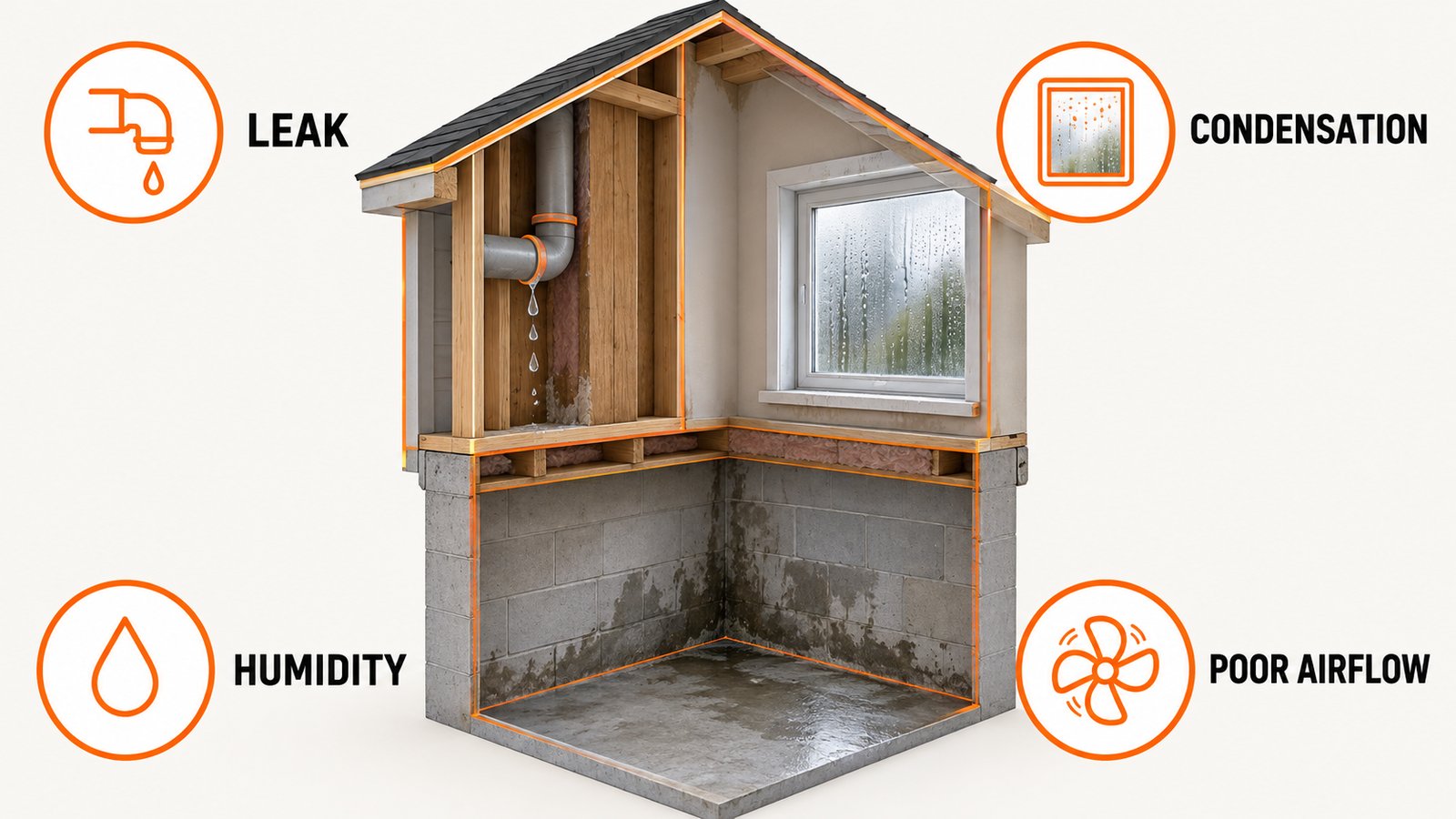
The common indoor sources are plumbing leaks, condensation on cold surfaces like uninsulated pipes and single-pane windows, humidity that runs high for days at a time, and, after a flood, standing water in materials that never fully dried. White mold on walls often traces back to condensation or a slow leak behind the surface. White mold on wood, framing, subfloor, or furniture usually means the wood held moisture longer than it should have.
White mold in a basement is common for a structural reason, not a bad-luck one. Basements sit below grade, ground moisture wicks in through the concrete, humidity often runs higher than the rest of the house, and air movement is usually weakest there. Cardboard boxes, stored fabric, and untreated wood framing all give mold a food source once the moisture shows up. Running a dehumidifier, keeping storage off the floor and away from exterior walls, and fixing leaks quickly are the same moves EPA and NIEHS both point to for keeping it from coming back. See mold in basement, mold on walls, and how to prevent mold for the room-by-room detail.
What the Research Says About White Mold Spores
Color doesn't change what mold does once it's established, and what it does is release spores. NIEHS describes the mechanism directly: "when molds are disturbed, they release tiny cells called spores into the surrounding air." That's exactly as true of white mold spores as it is of any other color.
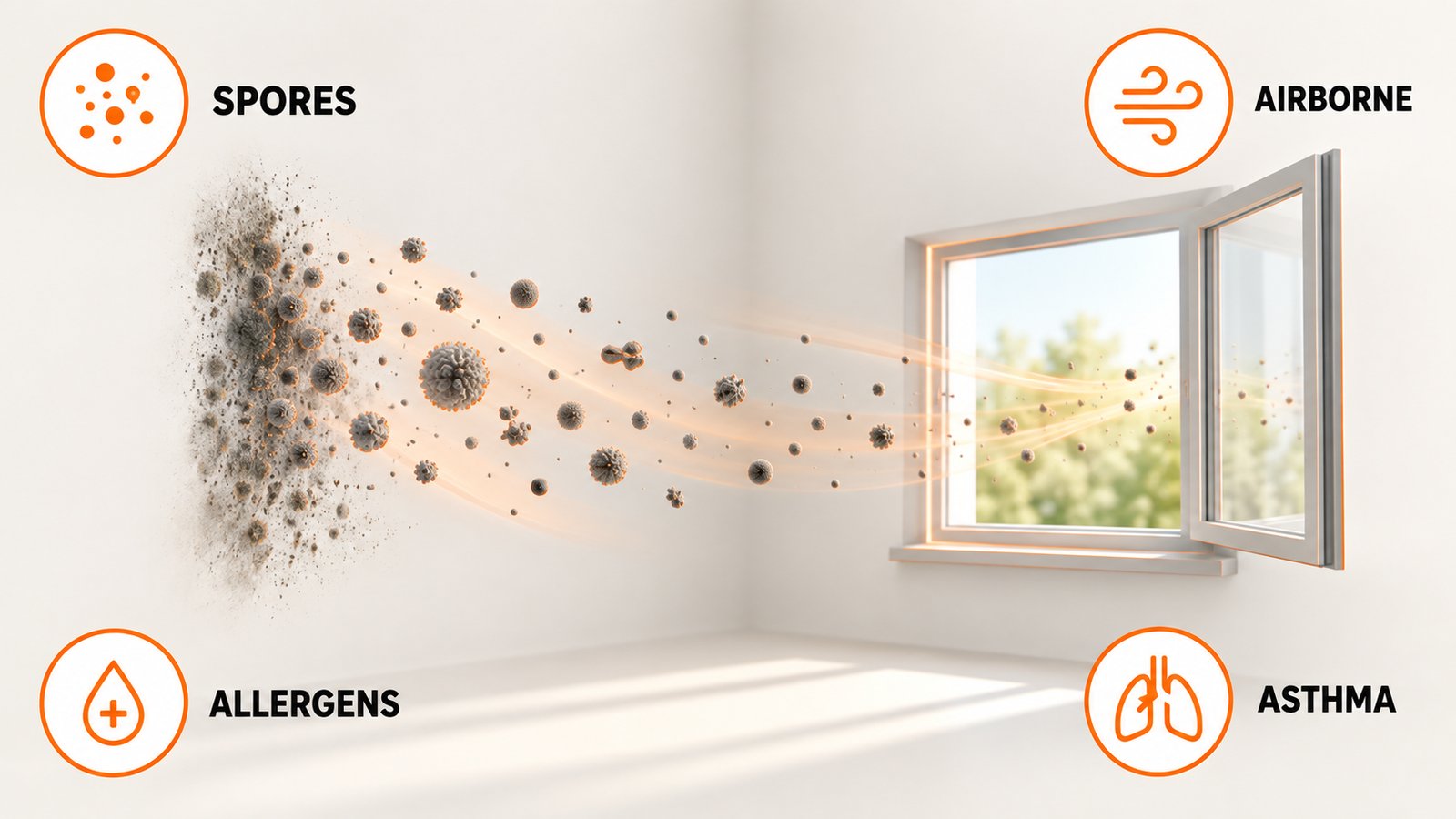
NIEHS states that most molds are not harmful, and some are even used to make food or medicine, but that mold spores "can irritate the nose and lungs and occasionally produce severe reactions." CDC/NIOSH reports that mold exposure "can also cause irritation of the eyes, nose, throat, skin, or lungs even in people who are not allergic to mold," and that exposure to mold "can make pre-existing asthma worse," with workers already sensitized sometimes responding to what the agency calls a trace amount.
None of that is a diagnosis, and none of it is specific to white mold. It's a description of a mechanism, airborne spores reaching the nose, throat, and lungs, that applies across species and colors alike. If you want to know whether a specific spot in your house needs attention, the moisture and the material tell you more than the color does. If you're weighing how serious ongoing exposure could be, can mold kill you and is mold dangerous cover what the research does and doesn't support at the more severe end of that question.
Let Scope and Hazards Guide Your Response
Once you know it's mold and not efflorescence, the decision that matters is scope, not color. EPA draws a specific line: "if the moldy area is less than about 10 square feet, in most cases, you can handle the job yourself." Areas larger than that, or any job involving a lot of water damage, get pointed to EPA's guide for larger-scale remediation instead of a do-it-yourself cleanup.
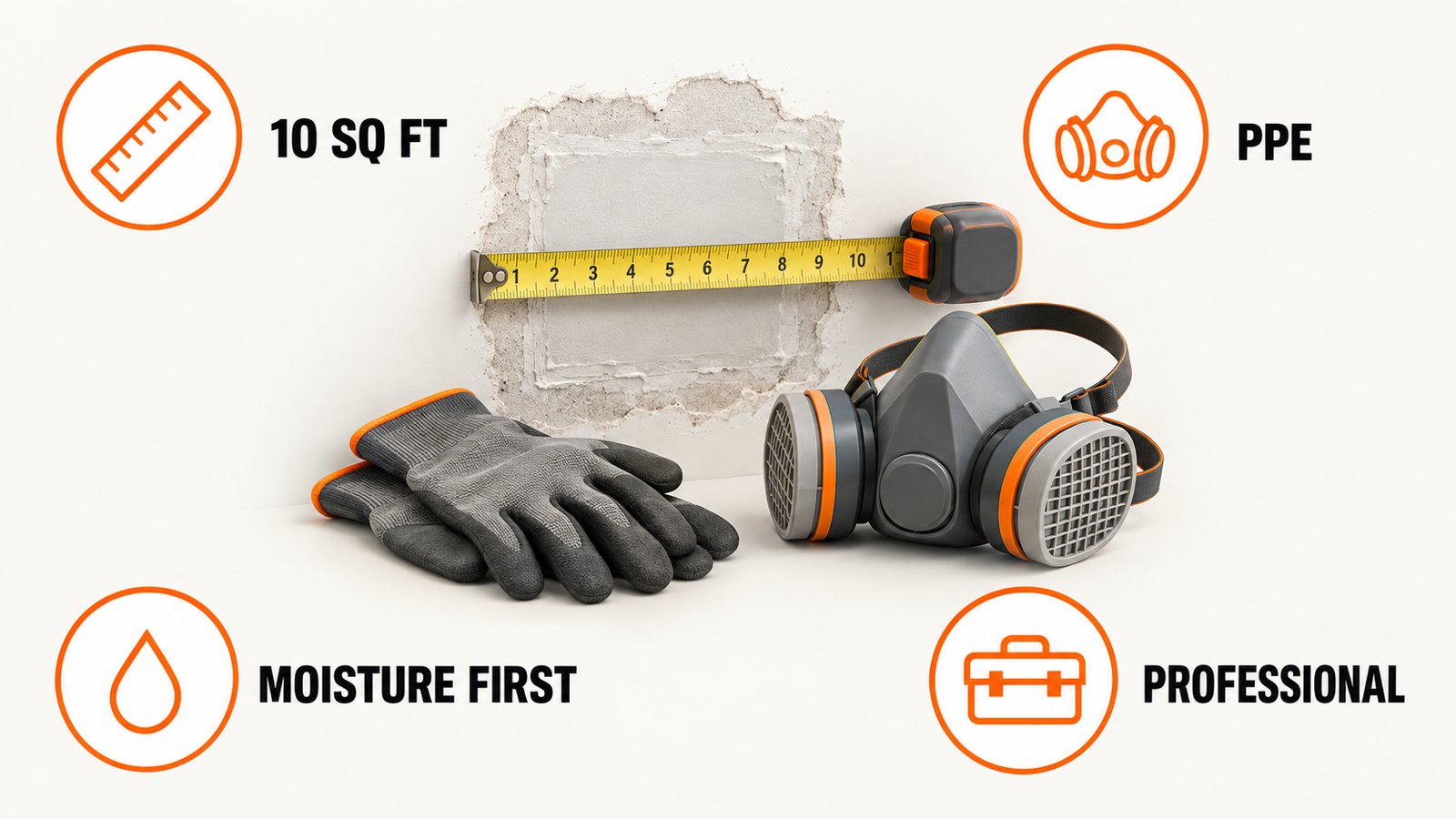
For a small, contained patch, EPA's cleanup instruction is straightforward: scrub mold off hard surfaces with detergent and water, and dry the area completely afterward. Absorbent or porous material, like ceiling tile, carpet, or drywall that's stayed wet, may need to be thrown away instead of cleaned, because mold growing into the material can't be reliably removed from it. Wear basic protective equipment, follow the label on whatever product you use, and never mix bleach with ammonia or another cleaner.
Call in a professional when the area is large, when the water source was contaminated by sewage or flooding, when the growth is inside HVAC equipment or wall cavities, or when the job needs equipment or access you don't have. The ANSI/IICRC S520 standard is the reference professional remediation crews work from. For the cleanup steps themselves, see how to get rid of mold and mold remediation. CDC does not recommend routine home mold testing; when a specific legal, building, or remediation question genuinely requires sampling, a qualified professional should design and interpret it. See mold testing kits for what home tests can and can't tell you, and mold cleaning products for what's actually in the bottle.
Frequently asked questions
Is white mold dangerous?
White mold carries the same potential health risks as mold of any other color. CDC and NIOSH guidance says the color of mold does not indicate whether it is more or less dangerous, and a photo or visual inspection cannot measure an individual's exposure or health risk. Focus on the moisture source, the material affected, and the total area, not the color.
Is white fuzzy mold dangerous?
A fuzzy or powdery texture does not raise the risk on its own. Texture, like color, documents how a surface looks under current conditions, not the species or the hazard. Treat any white fuzzy growth the same way you would treat mold of any other appearance: correct the moisture and clean or remove it following EPA guidance.
Is white mold on wood dangerous?
Wood is a common material for indoor mold growth because it is organic and absorbs moisture, and white mold on wood follows the same guidance as any other color on that material. EPA generally recommends cleaning mold from hard, sealed wood with detergent and water and drying completely, and removing wood that stays damaged or cannot be dried.
Is green and white mold more dangerous than white mold alone?
No. CDC and NIOSH guidance does not rank mold by color or by color combination, so a patch that shows both green and white does not carry a higher hazard rating than either color alone. A mixed-color patch usually means more than one organism, or one organism at different growth stages, is present on the same damp surface.
How dangerous is white mold in a basement?
White mold in a basement carries the same guidance as white mold anywhere else in the house: the risk comes from the moisture and the extent of growth, not the room. Basements stay cool, damp, and poorly ventilated, which is why they support mold longer once it starts, so fixing the humidity and any water entry matters as much as cleaning the surface.
Is white mold the same thing as efflorescence?
No, and the two are commonly confused. Efflorescence is a mineral salt deposit, not a living organism. The New York State Department of Health describes it as fluffy salt left behind when water passing through masonry evaporates, and states plainly that it is not mold. It only forms on masonry such as concrete, brick, and block, while mold grows on organic material like wood, drywall paper, and fabric.
What causes white mold?
The same thing that causes mold of any color: moisture on a surface with organic material to feed on. EPA points to leaks, condensation, humidity, and flooding as the common indoor sources, and says drying an area within 24 to 48 hours after it gets wet usually keeps mold from establishing at all.
Is white mold bad if it's only a small spot?
A small patch is not automatically low risk, and it is not automatically high risk either. EPA's own dividing line is size and material, not color: areas under about 10 square feet on a hard, cleanable surface are generally within reach for a homeowner to clean, following label directions and basic protective equipment, while larger areas, extensive water damage, or growth inside HVAC equipment call for professional help.
Sources
Every claim on this page traces to one of these. Links open the primary document.