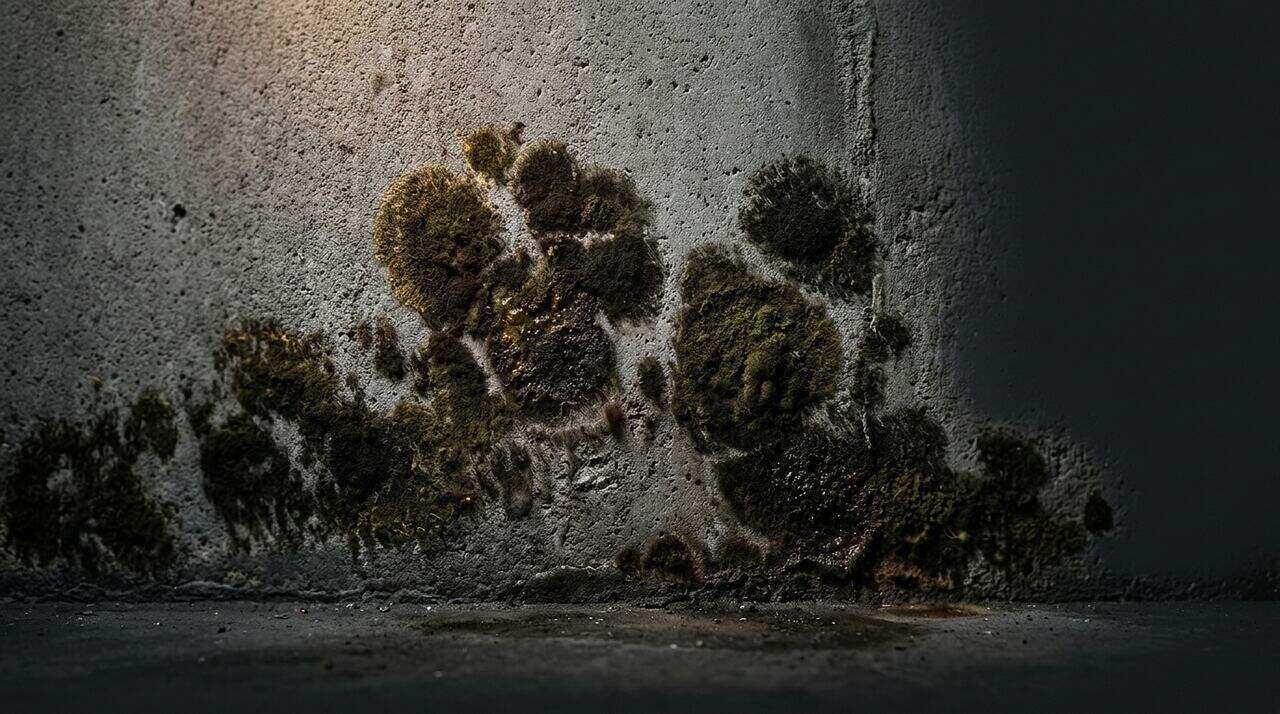
Why Mold Grows on Concrete at All
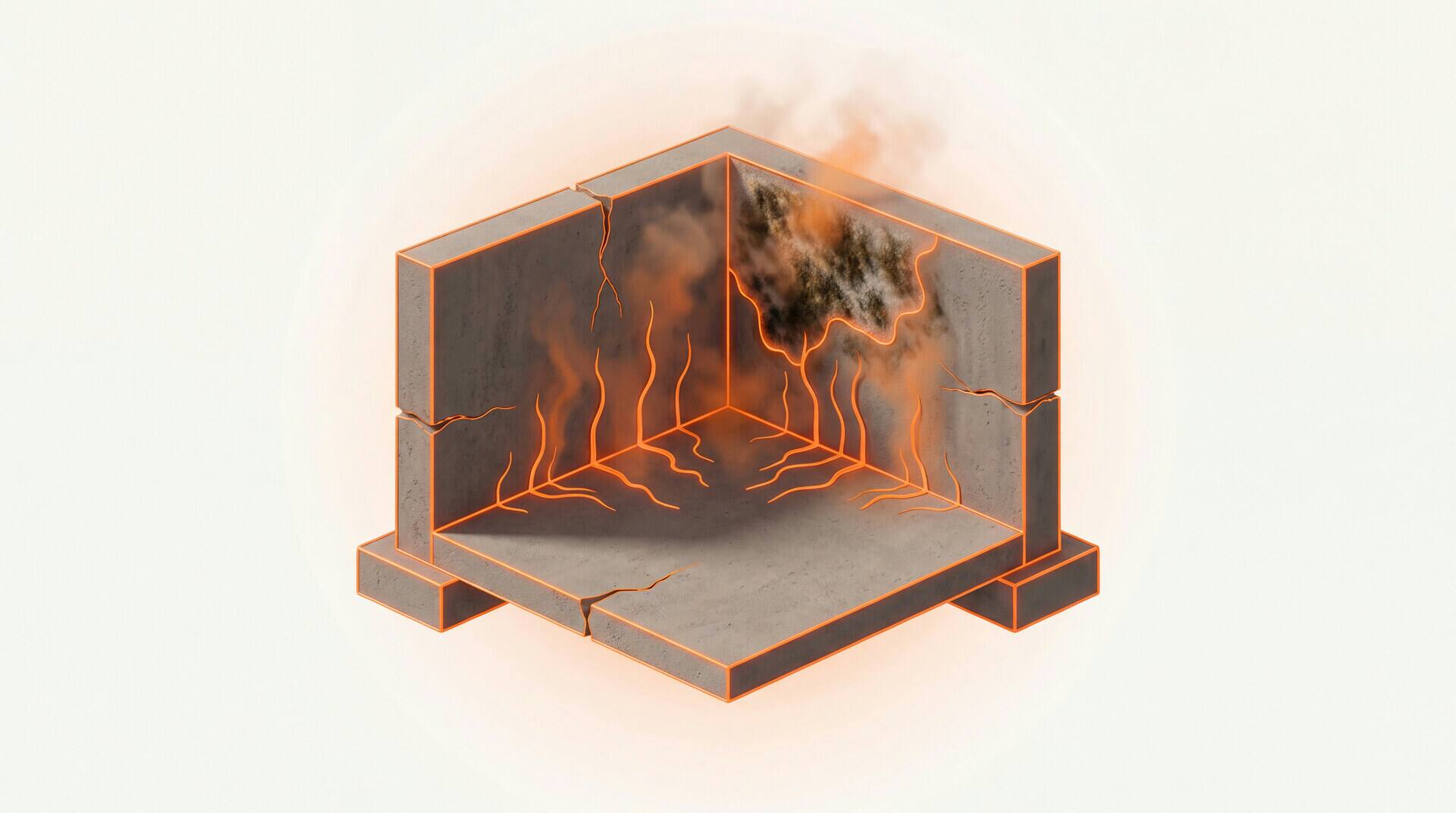
Concrete is rock, sand, and cement. There's nothing in it for mold to eat. Mold needs organic material to digest, and concrete is inorganic, so a clean and dry slab can't feed a colony. That surprises plenty of homeowners staring at a fuzzy patch on the basement floor.
Here's what's really happening. The mold is living on the layer that sits on top of the concrete: dust, dirt, pollen, pet dander, skin flakes, cardboard fibers, and the thin organic film that settles on every indoor surface. Concrete is rough and full of tiny pores, so it holds that film far better than glass or metal would. To a mold spore drifting through your basement, a dusty slab is a stocked pantry.
The second ingredient is moisture, and concrete supplies it from below. A slab works like a hard sponge. Ground moisture wicks up through its pores (the technical term is capillary action), and cool concrete also pulls condensation out of humid air all summer. Give that dusty, damp surface 24 to 48 hours and growth can start.
The usual trouble spots:
- Basement floors under cardboard boxes, area rugs, and furniture that block airflow.
- The bottom edge of basement walls, where wicking and condensation meet.
- Garage slabs near the door, where rain and snowmelt drain off the car.
- Shaded patios and walkways that stay damp for days after rain.
- Crawl space footings and block walls sitting over bare soil.
Mold or Efflorescence? The Spray Test
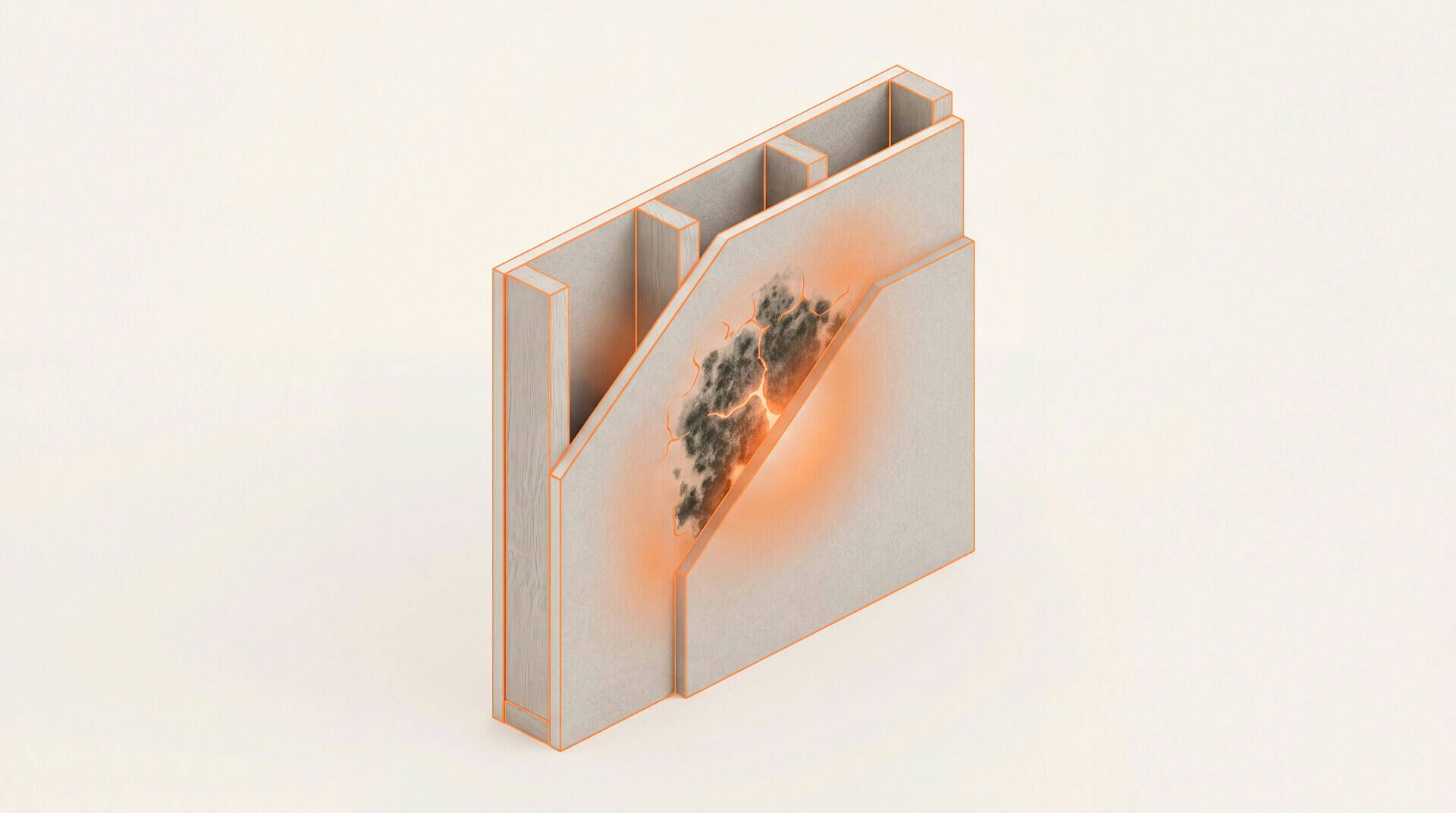
White, crusty, or fluffy growth on concrete often isn't mold at all. It's usually efflorescence: mineral salts that water carries through the slab or block wall and leaves behind when it evaporates. The two get confused constantly, and they call for different fixes.
The spray test settles it in ten seconds. Mist the patch with plain water. Efflorescence is salt, so it dissolves and fades right in front of you. Mold doesn't dissolve. It smears, mats down, or stays fuzzy, and the color holds.
Backup checks if you're still unsure:
- Texture: efflorescence is crystalline and powdery, like dried salt. Mold looks fuzzy, hairy, or slimy.
- Color: efflorescence only shows up white to gray. Mold on concrete can be white, gray, green, brown, or black.
- Location: efflorescence forms only on masonry. Mold also spreads to the baseboard, the cardboard box, and the wood framing nearby.
- Smell: a musty, earthy odor points to mold. Efflorescence has no smell.
True white mold and efflorescence look so similar that we wrote a full guide on telling them apart. One warning either way: efflorescence means water is moving through your concrete. Even if the patch isn't alive, the moisture that created it can feed real mold next.
Cleaning Mold off Concrete Indoors
A patch smaller than 10 square feet is a DIY job. Bigger than that, the EPA says don't tackle it yourself: hire a qualified mold remediation professional. Look for firms that follow the IICRC S520 standard; ACAC or RIA credentials and state licenses count too.
Suit up first. Wear an N95 mask, rubber gloves, and goggles, because scrubbing throws spores into the air. Open a window or run a fan blowing outward if you can. Our how to get rid of mold guide covers every surface in the house; here's the concrete version.
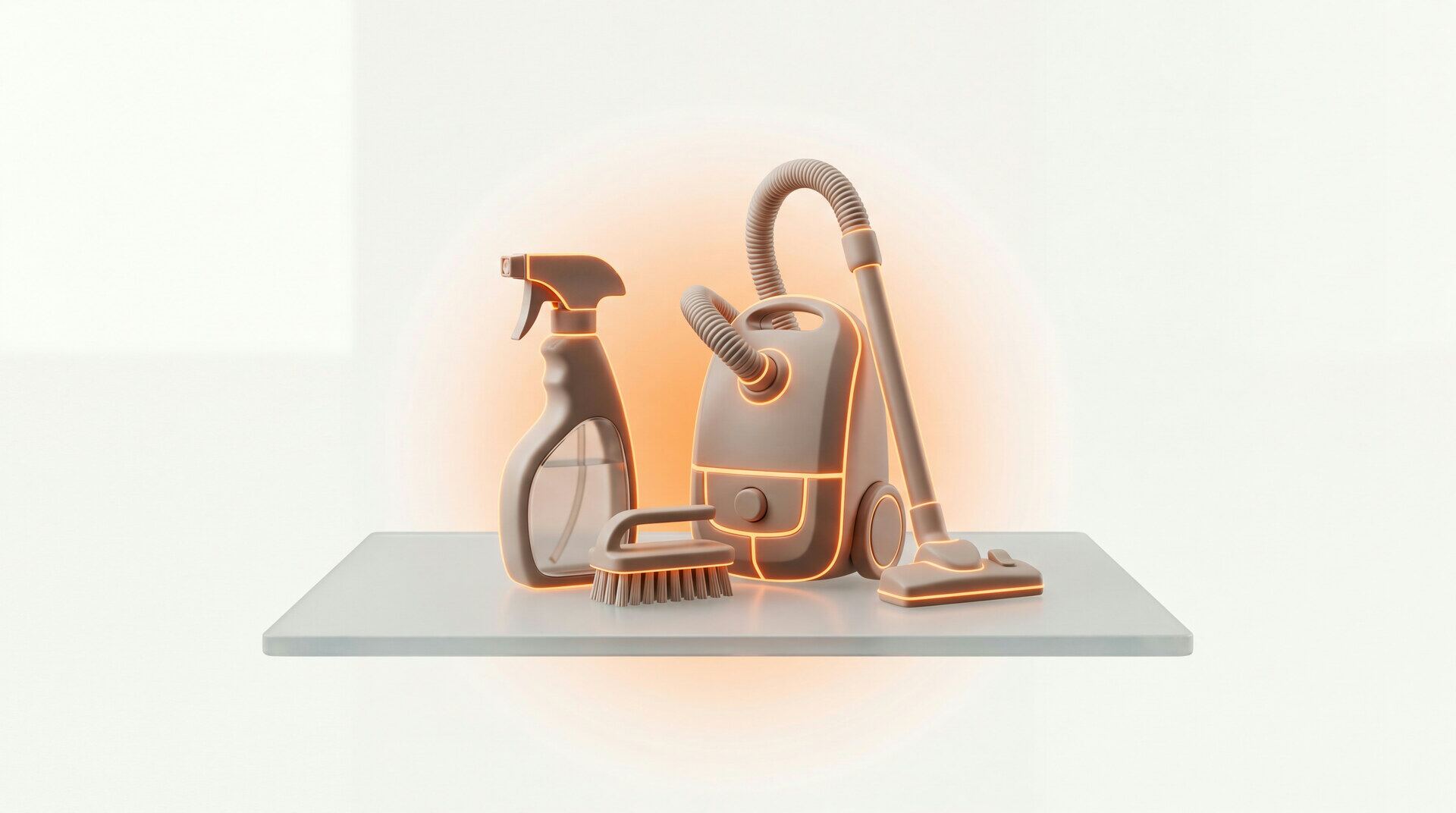
Step 1: Pull off the loose growth dry. Go over the patch and the area around it with a HEPA vacuum. A regular vacuum exhausts spores right back into the room. No HEPA vacuum? Mist the area lightly with water so dust can't go airborne, then sweep gently and bag the sweepings.
Step 2: Scrub with detergent. A squirt of dish soap in warm water plus a stiff nylon brush strips off the organic film mold feeds on. This step does most of the real work.
Step 3: Treat the surface. Spray 3% hydrogen peroxide or undiluted white vinegar over the area. Let it sit 10 to 15 minutes, scrub again, and wipe up the residue.
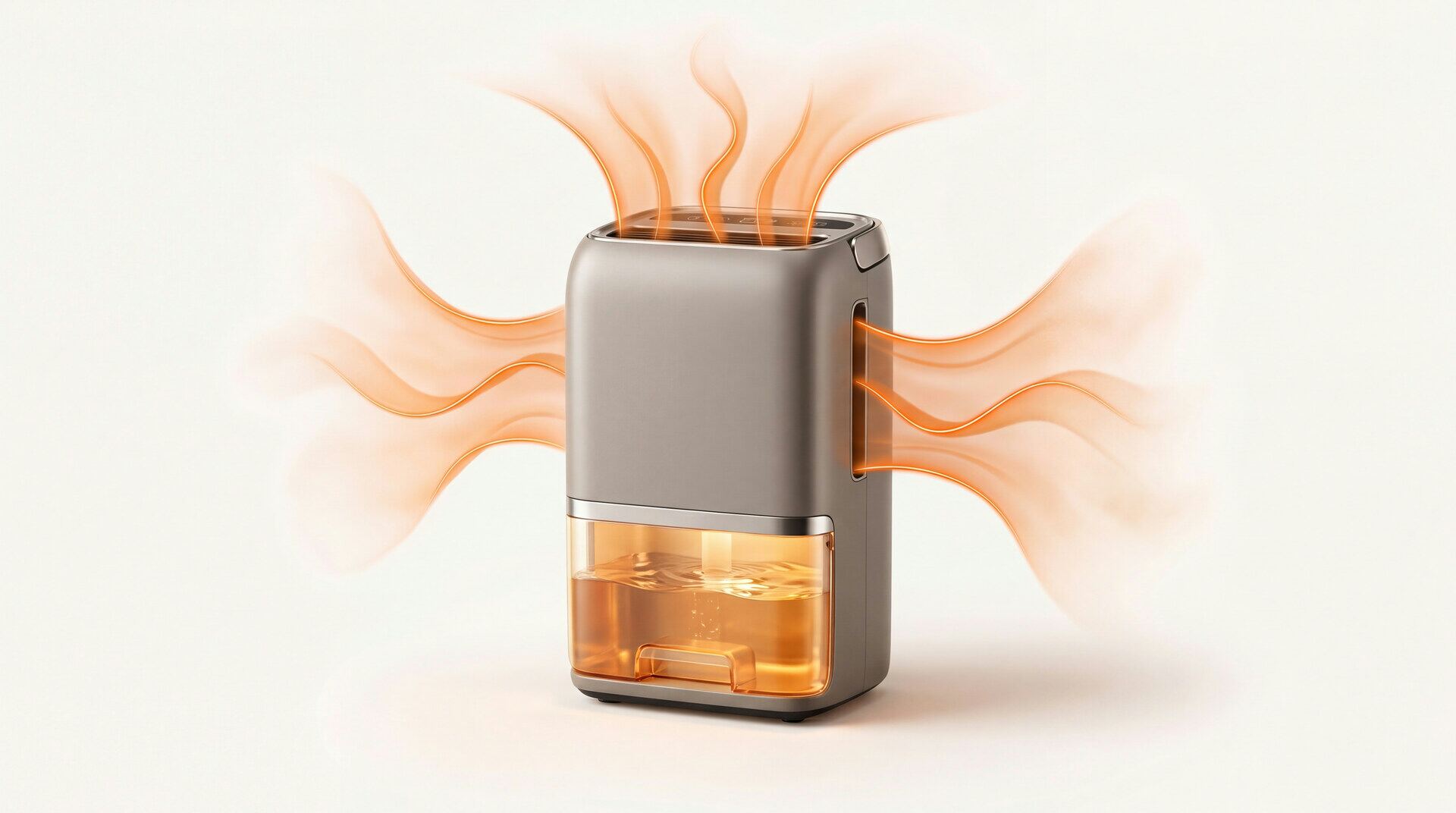
Step 4: Dry the slab fast. Mop up any standing liquid, then run fans and a dehumidifier until the surface is bone dry. A slab that stays damp regrows mold within days.
Skip the bleach. Bleach is mostly water. On a porous surface like concrete, the chlorine stays at the top while the water soaks into the pores, and that trapped moisture feeds the next round of growth. Never mix bleach with ammonia or any other cleaner; the fumes are dangerous in an enclosed space.
And no pressure washing indoors. A pressure washer drives water deep into the slab and the base of the walls, soaks nearby framing, and blasts spores through a closed room. You'd be creating the exact moisture problem you came to fix.
Outdoors: Patios, Driveways, and Garage Aprons
Outside, the rules relax. Sun, wind, and open drainage do half the work for you, and pressure washing is fine on a patio, driveway, or garage apron.
Clear off furniture, planters, and mats, then sweep away loose debris. Pressure-wash the slab while working away from the house, so runoff drains toward the yard instead of the foundation. Hit stubborn dark film in shaded corners with detergent or white vinegar, wait a few minutes, scrub, and rinse. Then let the sun finish the drying.
A lot of the green or black film on outdoor concrete is algae or moss rather than mold, and the cleanup is the same either way. Prevention matters more: trim shrubs and branches so shaded spots get light, lift mats and planters now and then so the slab under them can dry, and keep gutters from dumping water across the surface.
Watch where the water goes. A driveway or patio that slopes toward the house pushes every storm at the foundation, and that moisture ends up in the same basement slab you just cleaned.
Basement Walls and Floors: Stop the Moisture
Cleaning is the easy half. If mold came back after your last scrub-down, the concrete is still wet, and concrete gets wet in two main ways.
Condensation. Concrete stays cool year-round. When humid summer air touches a cool slab or foundation wall, water condenses on the surface the same way a cold glass sweats. If your basement smells musty every July, this is the likely driver.
Wicking from the ground. Soil moisture rises through the slab and block walls by capillary action, then evaporates into the room. The classic test tells you which problem you have: tape a square of plastic sheeting to the concrete, seal all four edges, and check it after a day or two. Droplets under the plastic mean ground moisture is coming up through the concrete. Droplets on top mean condensation from the room air.
The fixes, in order of effort:
- Run a dehumidifier and hold the basement below 50 percent relative humidity. Size it to the room with our free dehumidifier size calculator, and our dehumidifier guide covers placement and settings.
- Document humidity. A reliable hygrometer plus the free Indoor Humidity Context Calculator records measured RH and calculated dew point without producing a mold-risk score.
- Move water away outside. Clean the gutters, extend the downspouts, and regrade soil so it slopes away from the foundation.
- Get storage off the floor. Cardboard on concrete is a mold sandwich: food on one side, moisture on the other. Use plastic bins on shelving instead.
- Skip carpet on below-grade slabs. Carpet traps slab moisture and feeds growth you can't see until it smells.
Basements collect all of these problems at once, which is why they grow mold before any other room. Our mold in basement guide goes deeper on drainage, sump pumps, and finished-basement risks.
Crawl Spaces and Vapor Barriers
Crawl spaces are concrete's worst environment: bare soil releasing water vapor around the clock, almost no airflow, and cool block walls for that vapor to condense on. The footings, piers, and foundation walls down there grow mold for the same reasons a basement slab does, and the wood framing above them catches it next.
The core fix is a vapor barrier: heavy polyethylene sheeting laid over all exposed soil, seams overlapped and taped, edges run up the foundation walls. Full encapsulation uses 20 mil material sealed at every seam, often paired with a small dehumidifier. Once the soil is covered, the moisture supply drops and the concrete can finally dry.
Check the space after heavy rain, and treat a musty smell at the floor registers as a warning. Our mold in crawl space guide walks through vents, encapsulation, and standing water step by step.
Sealing Concrete After Cleaning
Once the concrete is clean and fully dry, a sealer makes prevention easier. Sealing closes the pores that hold dust and moisture, so the surface collects less food, dries faster, and wipes clean with less scrubbing next time.
Two broad families cover most homes. Penetrating sealers (silane or siloxane based) soak in, repel water, and still let the slab breathe, which makes them the usual pick for basement floors and foundation walls. Film-forming sealers, like acrylics and epoxies, leave a coating you can mop, which is why they're common on garage floors. For basement walls, a masonry waterproofing paint adds a moisture-resistant layer over block or poured concrete.
Two cautions before you open the can. Never seal damp or moldy concrete; the coating traps moisture and growth underneath and can peel away later. And a sealer is a finish, never the fix. If ground moisture is pushing through the slab, solve the drainage and humidity first, or the water simply finds the next gap: the wall joint, the floor crack, the seam the roller missed.
Frequently asked questions
What kills mold on concrete?
Scrubbing does more than any spray. Vacuum the loose growth with a HEPA vacuum, scrub with dish detergent and warm water, then apply 3% hydrogen peroxide or undiluted white vinegar. Let it sit 10 to 15 minutes, scrub again, and dry the slab completely with fans or a dehumidifier. If the concrete stays damp, mold returns no matter which cleaner you used.
How do I tell mold from efflorescence on concrete?
Mist the spot with plain water. Efflorescence is a mineral salt deposit, so it dissolves and fades when wet. Mold smears or stays fuzzy and keeps its color. Efflorescence is always white to gray, has no smell, and only forms on masonry. Mold can be white, green, gray, or black, and it often comes with a musty odor.
Can I use bleach on mold on concrete?
It's a poor tool for this job. Bleach is mostly water. The chlorine stays on the surface while the water soaks into the pores and feeds the next round of growth. Detergent scrubbing followed by 3% hydrogen peroxide or white vinegar works better on concrete. Never mix bleach with ammonia or any other cleaner; the fumes are dangerous.
Why does mold keep coming back on my basement floor?
Because the moisture never left. Slabs wick ground moisture upward through tiny pores, and cool concrete condenses water out of humid air. Mold regrows on the dust that settles into that dampness. Tape a square of plastic to the floor for a day or two: droplets underneath mean ground moisture, droplets on top mean room humidity. Fix the one you find, then keep the space below 50 percent humidity.
Should I seal concrete after removing mold?
Yes, once it's clean and completely dry. A concrete sealer closes the pores that trap dust and moisture, which makes new growth less likely and future cleanup easier. Never seal damp or moldy concrete, though. The coating traps the problem underneath and can peel later. Fix the moisture source first, let the slab dry, then seal.
Sources
Every claim on this page traces to one of these. Links open the primary document.