Is It Mold on Your Door Frame?
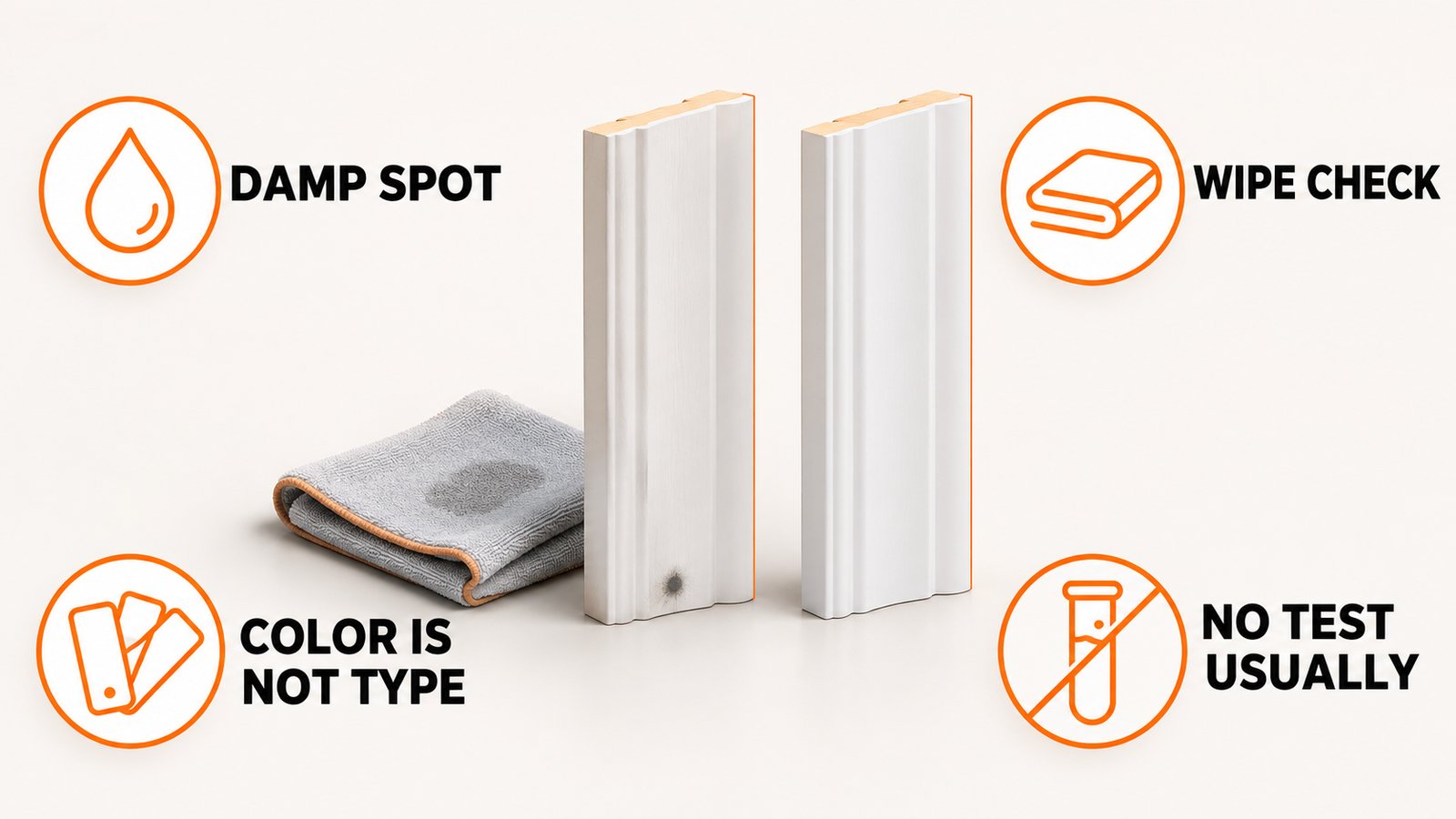
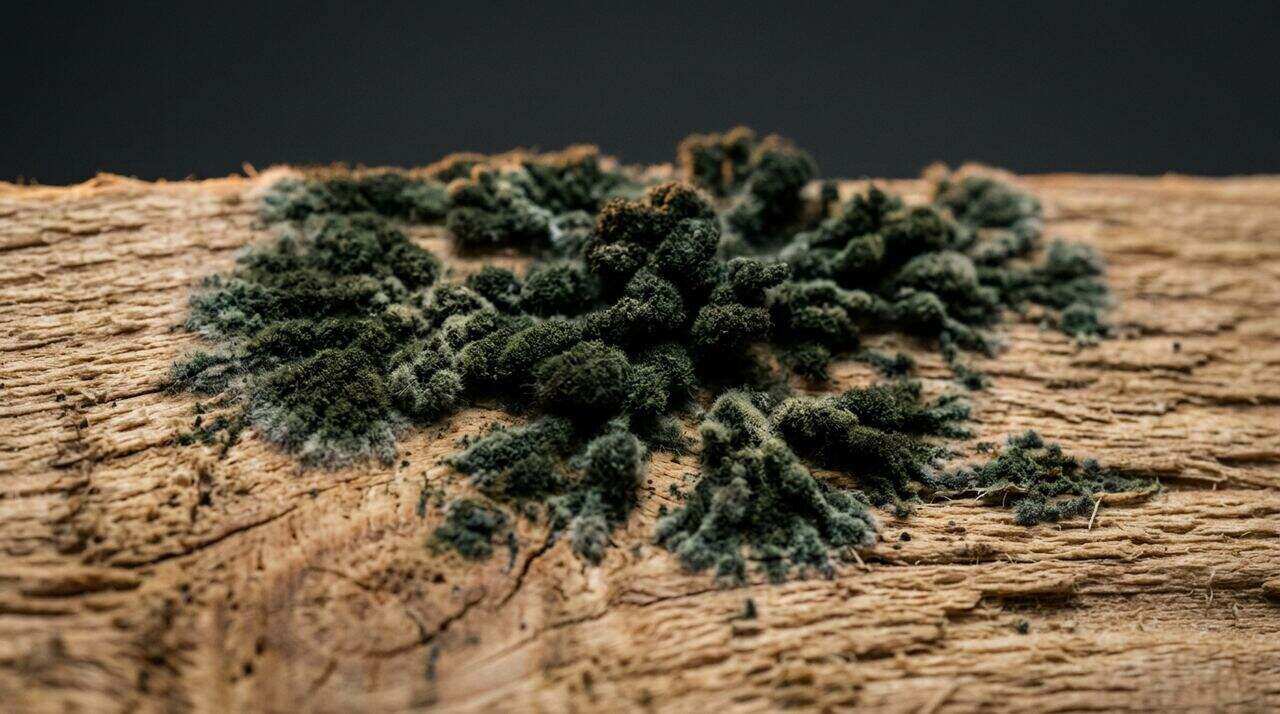
Dark spots on a door frame have more than one cause, and the EPA says plainly that not everything that looks like mold is mold. Paint, stains and dirt can pass for growth. The CDC says mold grows on wood, paint and dust, which covers most of a door frame.
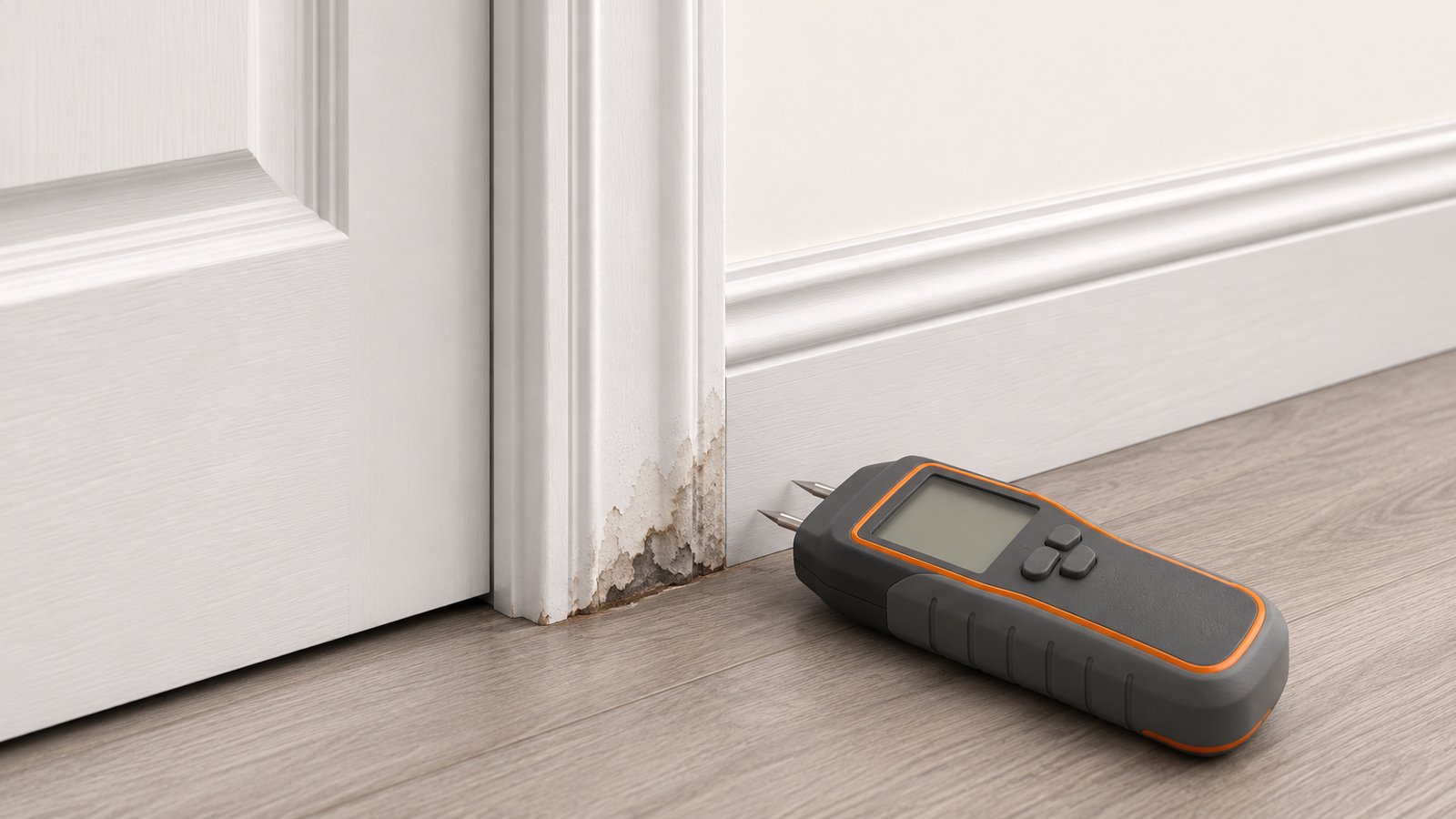
Look at where the spots sit, because mold follows wet. Check the lower frame, the corners, the underside of the door, and any frame beside a shower, a window or an outside wall.
Try a wipe check, which is our own rule of thumb and not an agency test. Wipe one small spot with a damp cloth. If it lifts clean, it may have been dirt. If it smears, returns within days or sits in a damp place, treat it as possible growth. A flat, smooth spot can still be growth, so the damp location matters more than the texture.
Color will not name the type. The EPA says "black mold" is not a species. You do not need the type, and the EPA says sampling is unnecessary in most cases when you can see growth. Our guides on telling if a spot is mold and mold or dirt go deeper, and a photo check can help you pick a next step.
Why Is There Mold on the Baseboard?
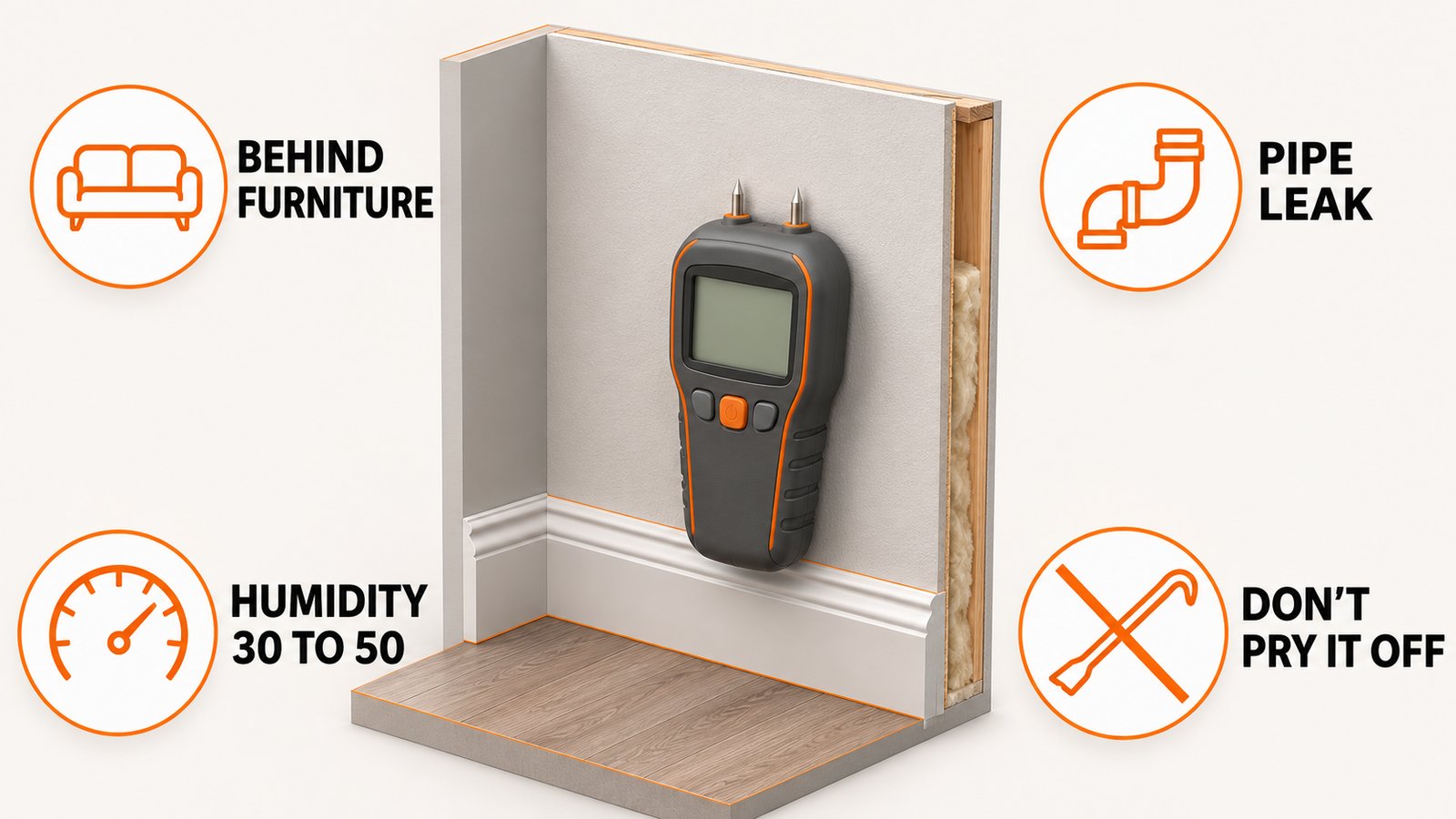
Mold on baseboard trim can be a message from the wall or floor next to it. The baseboard touches both, and both can be damp. The EPA lists the surface of walls behind furniture, where condensation forms, and areas inside walls around leaking or condensing pipes as places mold hides. The EPA mold course shows a basement apartment with mold on painted gypsum board, baseboard and carpet at the same time.
The EPA's water sources include roof leaks, condensation on cold spots and slow plumbing leaks. Its target is indoor humidity below 60 percent, ideally 30 to 50 percent, read with a meter that costs about $10 to $50. Our humidity risk calculator turns a reading into a next step, and the moisture meter guide covers reading the trim itself.
Move furniture off outside walls. Press a moisture meter against the baseboard and the wall a hand's width above it. The EPA says meters work on wood and wallboard.
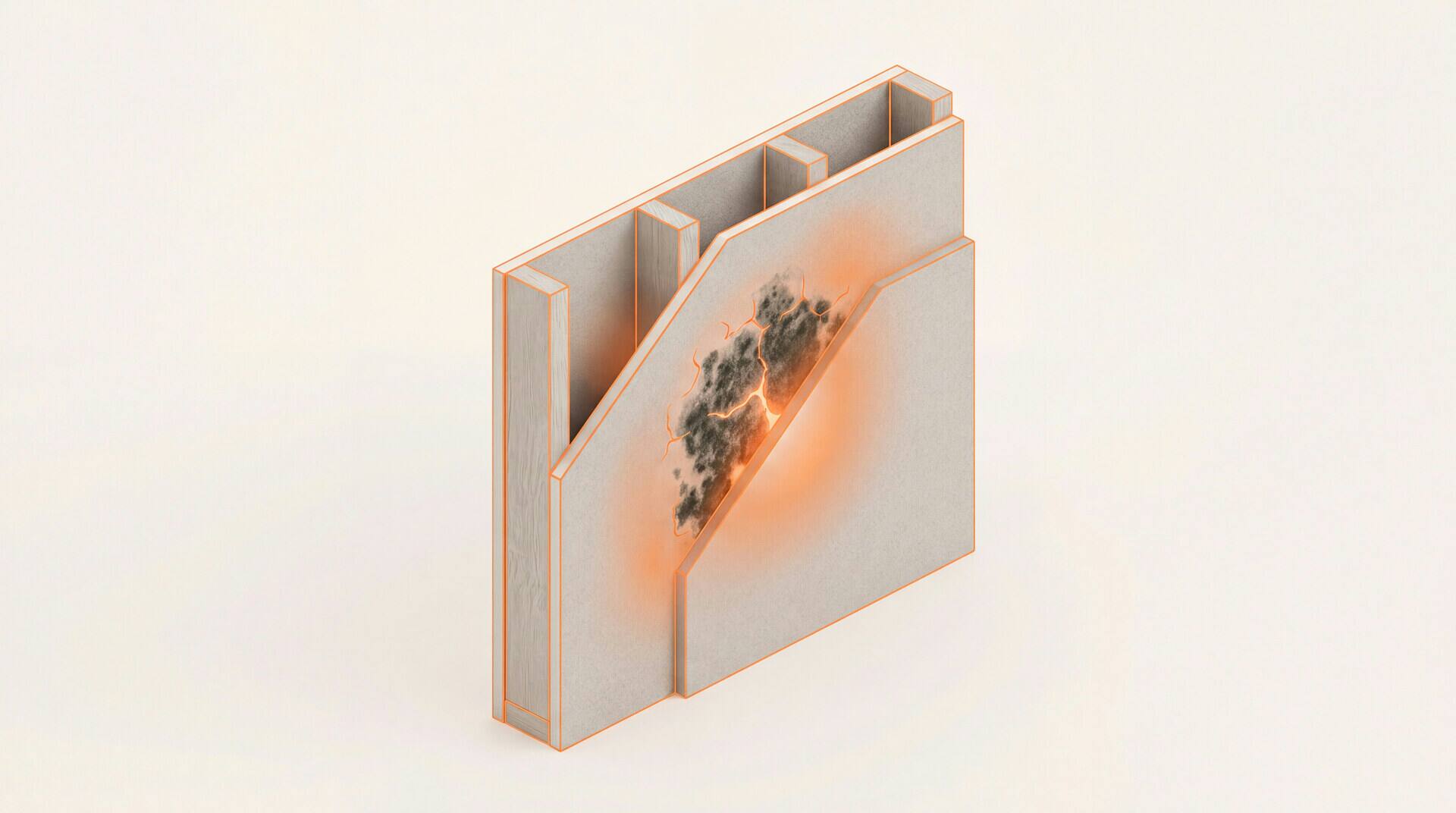
Do not pry the baseboard off to look. The EPA says investigating hidden mold needs caution when it means disturbing possible growth, and says to consider an experienced professional if you suspect hidden mold. See mold on walls, drywall and mold behind walls for the wall side.
What Causes Mold on a Bathroom Door?

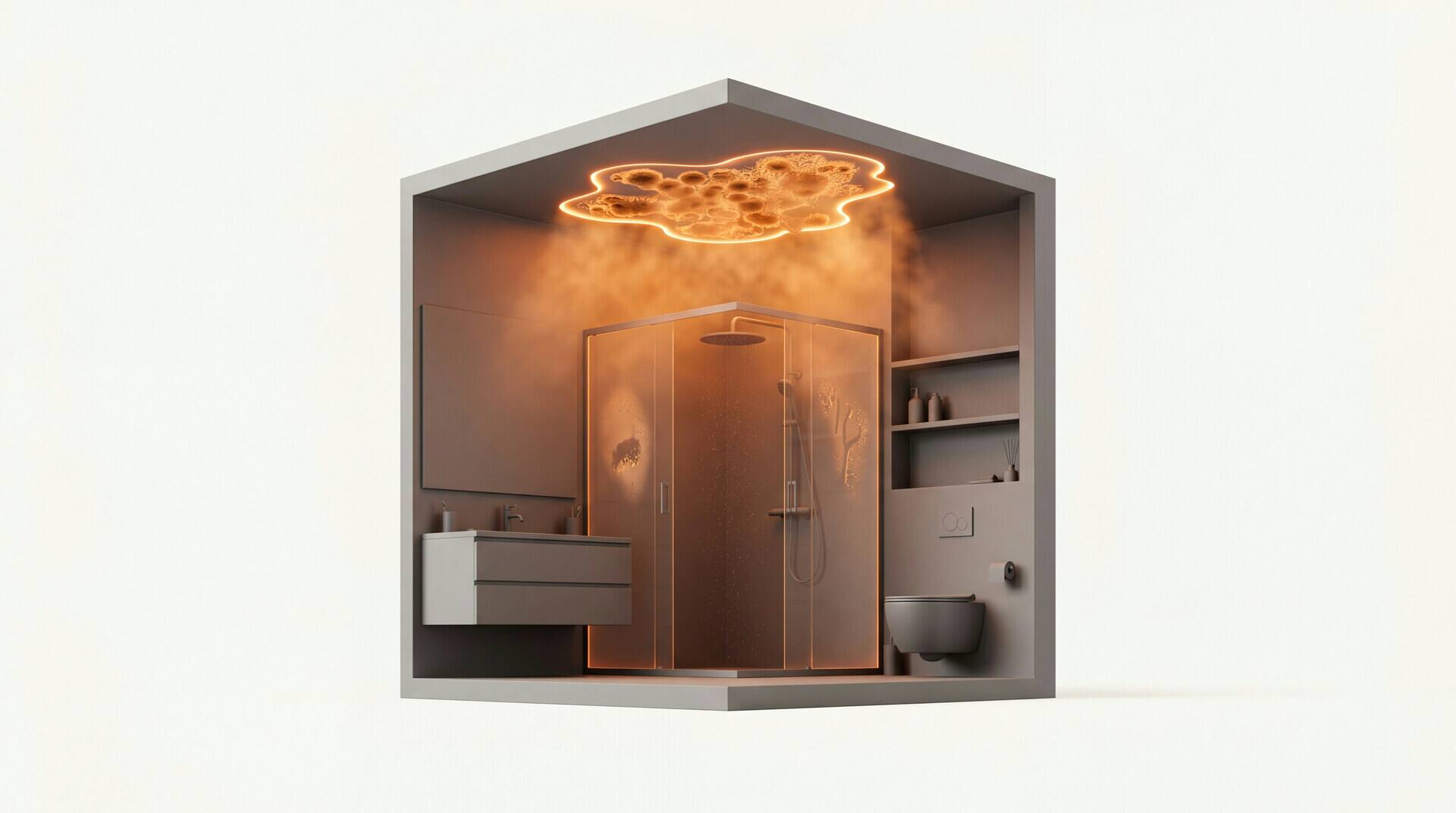
A bathroom door sees steam, splashes and wet towels every day. The EPA says a little condensation in a bathroom can be enough for mold. Its bathroom tip: if mold keeps reappearing, run the fan or open a window when showering and clean more often. The CDC says exhaust fans should vent outside the home.
Water runs down and collects low, so the door's bottom edge, the lower frame and the baseboard stay wet longest. That is our own observation, not an agency finding. Check whether a wet bath mat or damp towels sit against them.
The EPA says that often-damp places are hard to keep completely free of mold, so aim for less moisture and quick cleaning. See mold in the bathroom, mold on caulk and dehumidifiers.
What About Mold on an Exterior Door Frame?
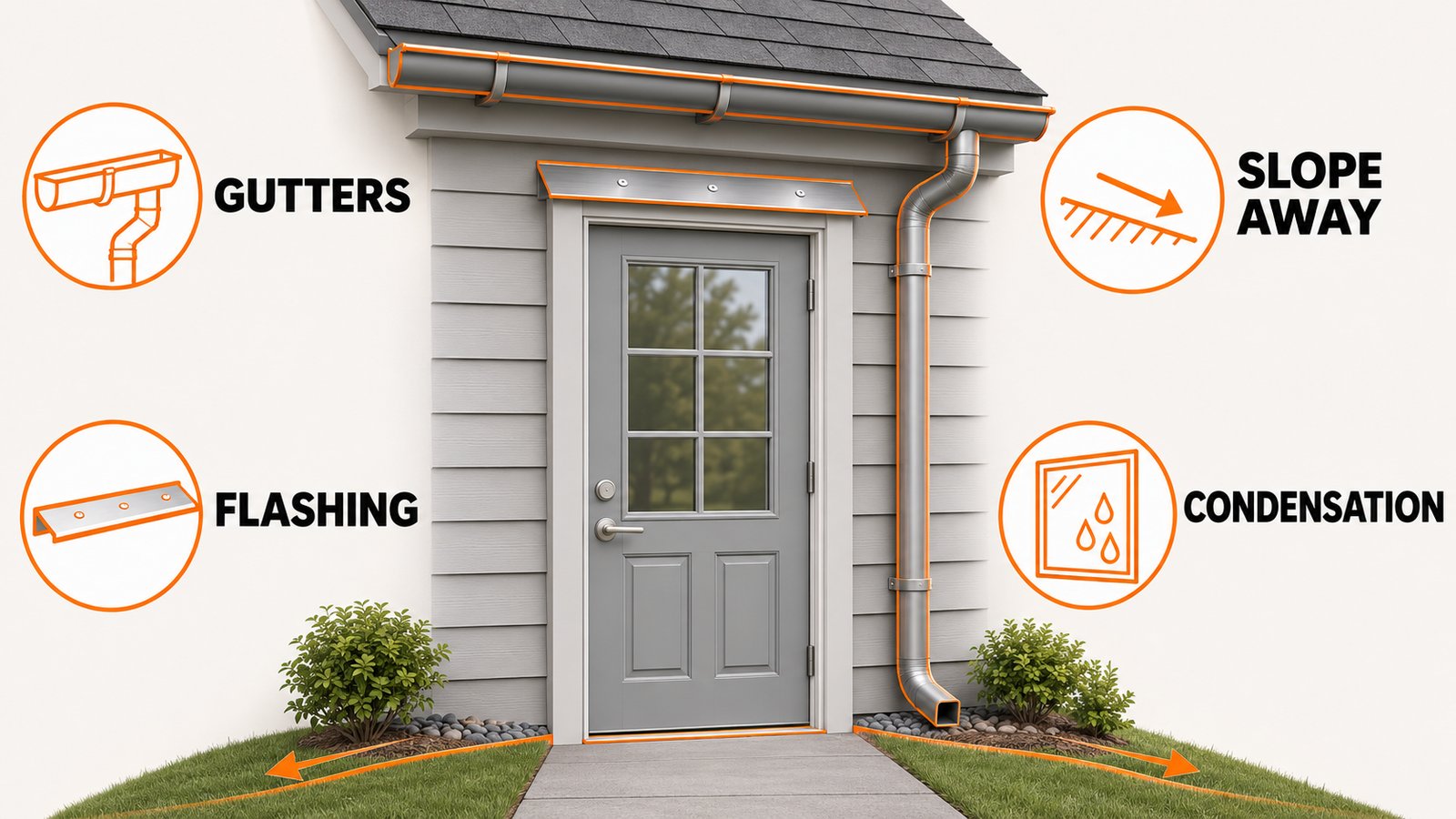
An exterior door frame gets water from outside and condensation from inside. The EPA says to keep gutters clean and repaired, make sure the ground slopes away from the building, and act quickly on condensation on windows or walls.
The USDA Forest Products Laboratory Wood Handbook says to control liquid water first, through grading, gutters and flashing around windows, doors and chimneys. It also says mold and stain fungi can increase the absorbency of wood, which it flags as a concern for siding, trim and other exterior millwork, and can make wood more wettable. A frame that grew mold once may take on water more easily.
Look up before you look down: a dripping gutter or a failed flashing strip can explain the frame. Clean it the way described below, then fix the water path. Mold on window sills is the same wet-wood problem a few feet over.
How to Clean Mold Off a Door Frame

For a patch smaller than about 10 square feet, the EPA says in most cases you can handle the job yourself. Fix the water source first, or the mold will most likely return.
Gear. Fitted N-95, long gloves, goggles without vent holes. Wipe. The EPA mold course says treated or finished wood can be cleaned with mild detergent and clean water, then allowed to dry. Keep the cloth damp, not dripping. Dry. Use a towel and a fan right away. Vacuum. The EPA recommends a HEPA vacuum for final cleanup once materials are dry.
Painted or sealed trim is a finished surface, so the detergent method applies. Bare or stained wood soaks up water. The EPA says absorbent or porous materials may have to be thrown away, because mold can fill their crevices and be hard or impossible to remove. MDF trim is wood fiber, and the Wood Handbook lists MDF for interior door skins, moldings and trim. Our rule of thumb: MDF that swells or crumbles after getting wet will not go back to shape, so replace it.
Do not paint or caulk over mold. The EPA says paint applied over moldy surfaces is likely to peel. Killing mold is not enough either, since dead mold can still cause allergic reactions in some people. The EPA does not recommend biocides such as bleach as a routine step, and cleaning may leave a stain. See our bleach guide and painting over mold page.
Older houses. If the house was built before 1978, the paint may contain lead, and the EPA says worn paint on surfaces that rub, such as doors, can make chips and dust. Use a damp cloth, skip steel wool and abrasive cleaners, and if you must sand, wet the area first.
When the Wood or Wall Behind It Is the Real Problem
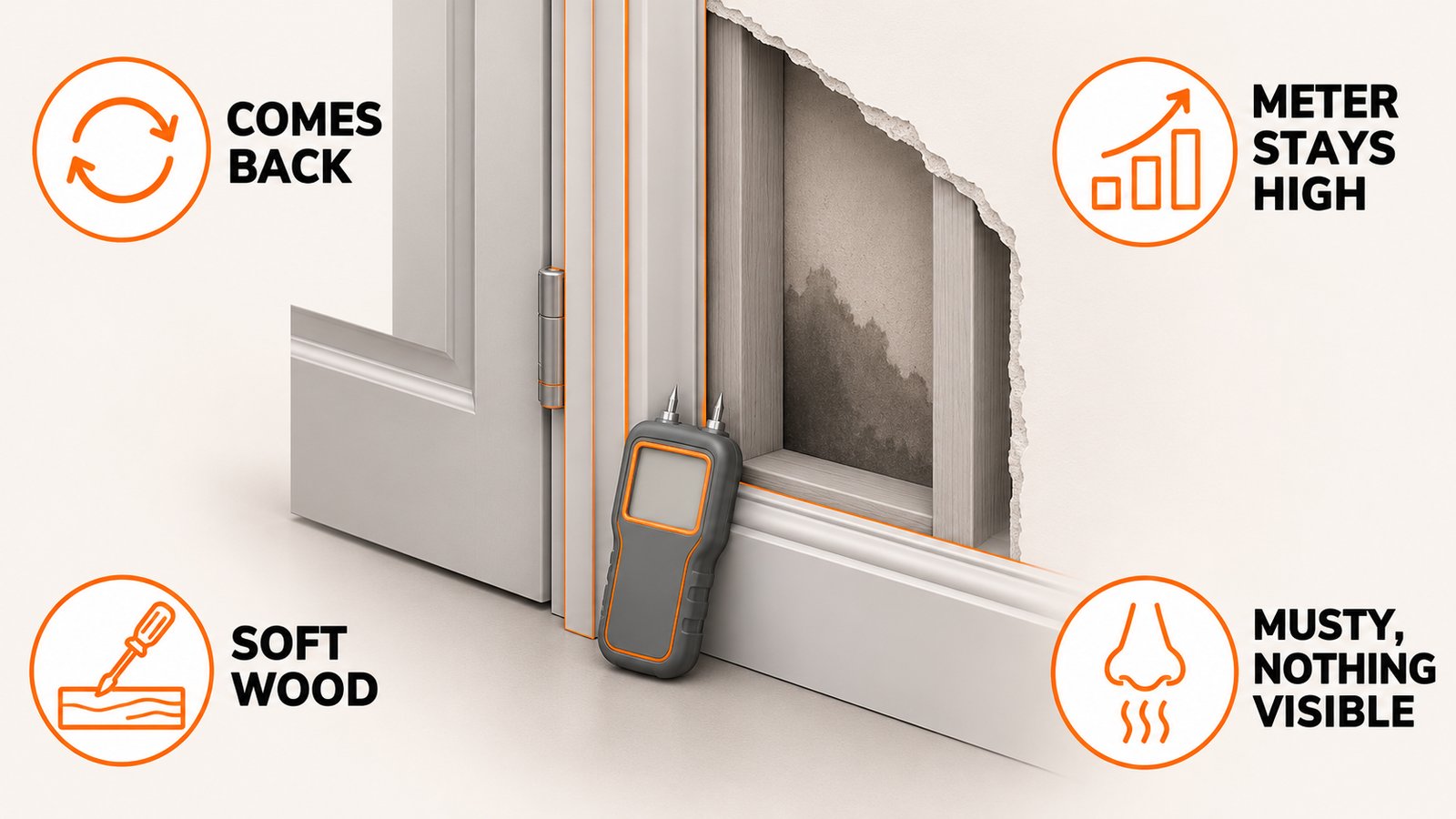
Clean trim should stay clean. If the spots return within weeks, the trim is not the cause. The EPA is blunt about it: if you clean up the mold but do not fix the water problem, then most likely the mold problem will come back.
Compare a moisture meter reading on the suspect trim with dry trim elsewhere in the house. The Wood Handbook recommends interior trim be installed at an average of 8 percent moisture for most of the United States (individual pieces 6 to 10 percent), and 11 percent in damp, warm coastal areas. Those are installation targets, not pass or fail marks. It also says decay generally needs wood at about 30 percent, and that 20 percent is sometimes used as a safety margin in field inspections. Readings vary with the meter and the wood, so treat a high one as a reason to keep looking.
Other signs the problem is deeper: a musty smell with no visible source, which the EPA says can point to hidden mold, soft wood, and trim still wet days after a leak was fixed. The EPA writes that mold can weaken floors and walls by feeding on wet wood, and says to consult a structural engineer or similar expert if you suspect damage to the building. We cannot make that call from a photo.
If the frame sits by an air handler closet, the EPA says not to run an HVAC system you know or suspect is contaminated. Our HVAC moisture maintenance checklist covers the visible parts.
When to Call a Pro
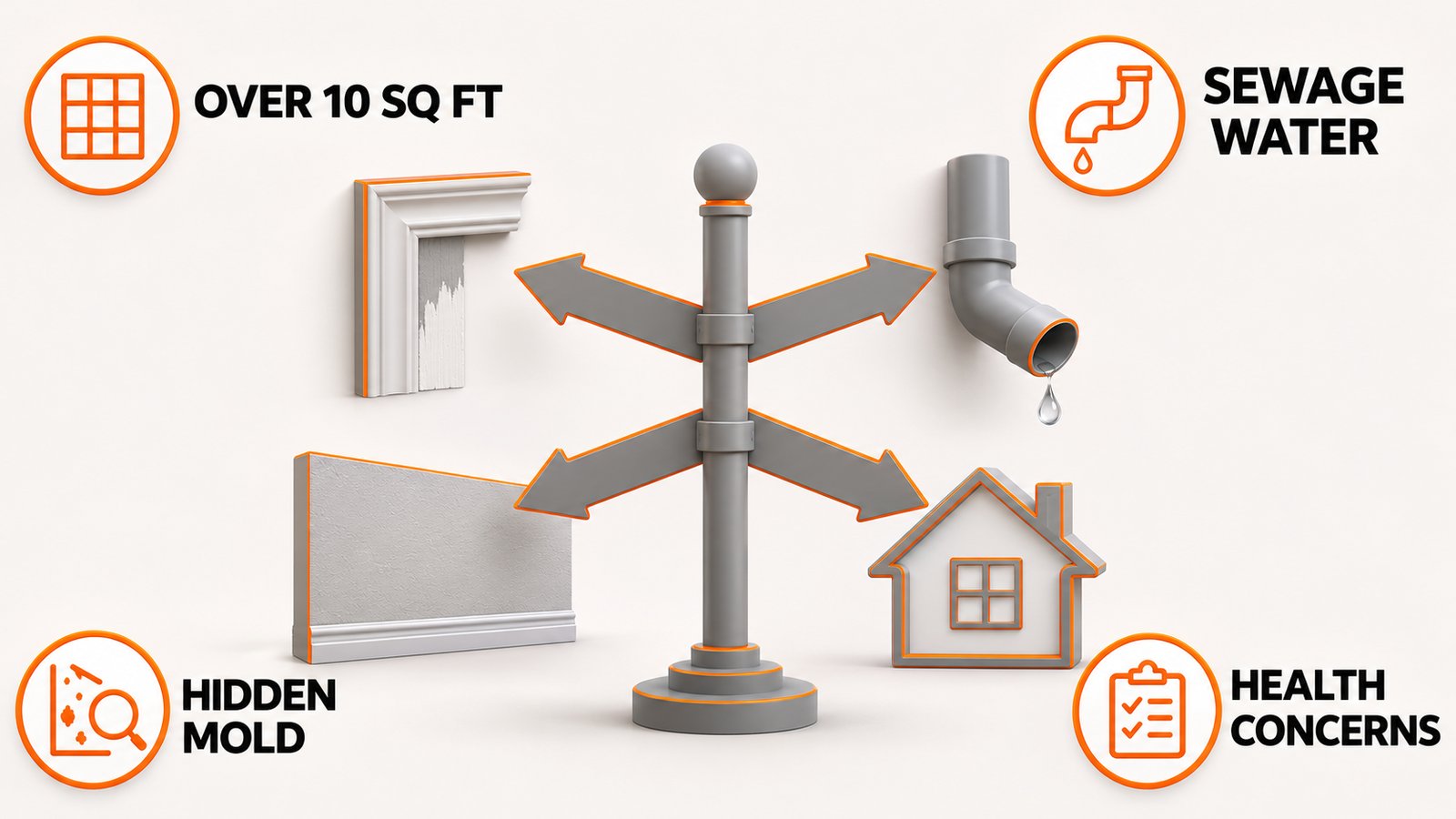
We suggest a professional when the patch covers more than about 10 square feet, when there has been a lot of water damage, or when the water was sewage or other contaminated water. The EPA says to consult a health professional before cleanup if you have health concerns.
You do not need a mold test first. What helps is someone who finds the water. See mold inspection, mold remediation and the signs of mold in a house.
Frequently asked questions
Is mold on a door frame dangerous?
Looks do not tell you. The EPA says molds can cause allergic reactions in sensitive people and irritate the eyes, skin, nose, throat and lungs, and that nobody can tell whether a mold makes mycotoxins by looking. It says you may want to wear an N-95 respirator and recommends long gloves and goggles without vent holes, and if you have health concerns, it says to consult a health professional before cleanup.
How can I tell mold from dirt on a door frame?
The EPA says not everything that looks like mold is mold. Try our own rule of thumb, a damp-cloth wipe on one small spot. Dirt often lifts. Growth tends to smear or return in a damp place. A photo check can help pick a next step, but it does not name a species.
Can I paint over mold on trim?
No. The EPA says not to paint or caulk moldy surfaces, and that paint applied over mold is likely to peel. Clean it, fix the water, dry the trim completely, then repaint.
Why does mold keep coming back on my baseboard?
The moisture is still there. The EPA says that if you clean up mold but do not fix the water problem, most likely the mold will come back. Check for condensation on cold outside walls, leaking pipes, high humidity and furniture pushed tight against the wall.
Do I need a mold test for mold on my baseboards?
Usually not. The EPA says that in most cases, if visible mold growth is present, sampling is unnecessary, and the CDC does not recommend mold testing. Spend the money on finding the water.
Should I replace the trim or clean it?
Clean it if it is painted or sealed, firm and dries fully. The EPA says porous materials may have to be thrown away because mold fills their crevices. Our rule of thumb: replace MDF that swells or crumbles, and have a carpenter look at soft wood.
Does bleach work on a moldy door frame?
The CDC says hard surfaces can be cleaned with household products, soap and water, or no more than 1 cup of household laundry bleach in 1 gallon of water. The EPA does not recommend bleach as a routine step, and says dead mold must still be removed. Never mix bleach with ammonia.
Sources
Every claim on this page traces to one of these. Links open the primary document.