
The New Hampshire humidity profile
Concord is New Hampshire's only long-record NOAA humidity station, reporting a 66 percent annual mean relative humidity, an 80 percent morning mean against a 53 percent afternoon mean, a calculated mean dew point of 36 F, and 42.0 inches of precipitation. That 27-point daily swing is one of the widest in New England, and it is the mechanism: air that reaches near-saturation every night and dries out every afternoon puts water on cold surfaces on a daily cycle without ever producing a visible leak.
The seasonal peak is sharp and late. The morning mean climbs to 88 percent in September and 86 percent in October, the highest pair in New England, landing in the window when air conditioning has stopped and heating has not started. Then the daily mean holds near 70 percent through the winter while the dew point sits at 36 F, which flips the problem indoors: in a sealed, heated New Hampshire house the moisture that matters comes from showers, cooking and laundry, and it condenses on cold glass and inside cold wall cavities.
The state has also gotten measurably wetter. NOAA reports that precipitation since 2005 has averaged 6.8 inches more than the 1895 to 2004 average, that the highest number of extreme precipitation events on record occurred during 2005 to 2014, and that annual precipitation plus the frequency and intensity of extreme events are projected to keep rising with associated increases in flooding. Statewide annual precipitation now normals at 48.8 inches for 1991 to 2020, heavier in the south and along the eastern border. Temperatures have risen more than 3 degrees F since the start of the twentieth century with winter warming outpacing every other season, which shifts snow toward rain and prolongs wet-envelope conditions. NOAA counted 21 billion-dollar disasters affecting New Hampshire from 1980 to 2024: 11 winter storms, 4 tropical cyclones, 3 severe storms, 2 floods and 1 drought.
New Hampshire against the national picture
| Metric | New Hampshire | What it means indoors | Source |
|---|---|---|---|
| Annual mean relative humidity | 66% | Moderate on the annual mean, hiding a 27-point daily swing | NOAA NCEI Comparative Climatic Data |
| Morning mean relative humidity | 80% | Reaches 88 percent in September, the highest in New England | NOAA NCEI Comparative Climatic Data |
| Calculated annual mean dew point | 36 F | Low, so winter moisture is generated indoors rather than imported | Calculated from NOAA 1991 to 2020 normals |
| Annual normal precipitation | 42.0 in | Rising, with 6.8 more inches a year since 2005 than the century before | NOAA NCEI 1991 to 2020 normals |
Relative humidity figures are the mean of the morning and afternoon observations NOAA publishes for each first-order station, rounded to whole percent. Dew point is calculated from the NOAA normal mean temperature and that mean relative humidity using the Magnus formula, so treat it as a derived figure rather than a published one.

New Hampshire stations ranked by measured humidity
Methodology. Ranked by annual mean relative humidity, the one input that traces to a station record rather than an opinion. Relative humidity is the mean of NOAA's published morning and afternoon values. Mean dew point is calculated from the NOAA 1991 to 2020 normal mean temperature and that mean relative humidity. The humidity band names what the column measures and nothing more. Humidity is not the whole story: a burst supply line in the driest metro on this table soaks the same drywall as a humid August, and EPA guidance treats wet porous material as at risk of mold growth after 24 to 48 hours either way.
| # | Station | Mean RH | Morning RH | Mean dew pt | Annual precip | Humidity band | Notes |
|---|---|---|---|---|---|---|---|
| 1 | Concord | 66% | 80% | 36 F | 42.0 in | Moderate | New Hampshire's only long-record NOAA humidity station, 1948 to 2018. Merrimack Valley, so it sits between the wetter southeast and the colder, snowier north. |
Concord
New Hampshire's only long-record NOAA humidity station, 1948 to 2018. Merrimack Valley, so it sits between the wetter southeast and the colder, snowier north.
One station, and the number to read is the swing rather than the mean. Concord's 80 percent morning against a 53 percent afternoon is a 27-point daily range, one of the widest in New England. A range that size means the air reaches near-saturation overnight, every night, and then dries hard by mid-afternoon. Surfaces that stay cool through the morning, a basement wall, a bathroom tile, a north-facing window frame, collect that water daily and never get the benefit of the afternoon.
What Concord will not tell you is the mountains or the seacoast. NOAA puts statewide precipitation at 48.8 inches, heavier in the south and along the eastern border, which is six inches more than Concord's own 42.0. The seacoast runs damper with a narrower swing; the White Mountains carry far more snow and a much longer heating season. Read Concord as the central-valley baseline. Neighboring reports for Vermont, Maine and Massachusetts cover the states next door, and all three regulate this work differently.
Common mold species in New Hampshire homes
EPA and CDC name the same core genera for cold humid climates. In New Hampshire they concentrate wherever a surface stays cool through an 88 percent September morning, and in bathrooms where a 27-point daily swing meets weak ventilation.
Cladosporium
Cladosporium spp.The most commonly found indoor mold nationwide and the standard New Hampshire window-sill and basement find. Olive-green to black, often a fine speckle where overnight condensation collects. EPA lists it among the common allergenic indoor molds.
Aureobasidium
Aureobasidium pullulansPink to black, on caulk, grout and painted window frames. In a state with this daily humidity swing it colonizes bathroom caulk quickly, and it is the growth most often mistaken for dirt because it starts as a pink film before it darkens.
Penicillium
Penicillium spp.Blue-green and powdery, on cardboard, paper, carpet padding and stored fabric. September and October, at 86 to 88 percent morning humidity with nothing mechanical drying the house, are its window in a New Hampshire cellar. EPA lists Penicillium among the most frequently recovered genera in indoor air samples.
Aspergillus
Aspergillus spp.Black, green or brown depending on species. It wants steady moisture and organic dust: bathroom grout in a house with a weak exhaust fan, the back of a closet on an exterior wall, a humidifier reservoir. EPA and CDC flag Aspergillus species as allergens and, in rare cases, as a cause of aspergillosis in people who are immunocompromised.
Stachybotrys chartarum
Stachybotrys chartarumThe species commonly called toxic black mold. It needs sustained wet cellulose, which in New Hampshire means a ceiling that took weeks of ice dam meltwater or drywall soaked in a flood. Visible black slimy growth on water-stained material is the signature. Do not disturb it.
Alternaria
Alternaria alternataDark green to black, on window tracks, shower stalls and condensation-prone surfaces. It is a common allergen panel entry and is often correlated with asthma flare-ups in sensitive individuals per EPA remediation guidance.
Species information is general and informational. Health responses vary. See a licensed physician for symptom evaluation. Species sources: EPA Mold Remediation in Schools and Commercial Buildings, EPA A Brief Guide to Mold Moisture and Your Home, CDC National Center for Environmental Health guidance.
What mold remediation costs in New Hampshire
No New Hampshire agency publishes a mold remediation price schedule, and the state has no mold web page at all. That absence was measured rather than assumed: the DHHS sitemap of 1,874 URLs and the Department of Environmental Services sitemap of 1,801 URLs were both swept and neither contains a mold page.
The New Hampshire cost driver that no other state in this report has is the assessment and remediation split. Because the assessor must hold a national certification and the remediator need not, you will often be buying two things from two firms with very different credential requirements. That is not a bad thing. It happens to enforce the independence that experts recommend everywhere: the party sizing the problem is not the party billing to solve it. Budget for both, and treat the certified assessment as the document that defines the scope.
The second driver is cold-climate access. Ice dam damage sits at the wall-ceiling junction on the top floor, behind blown-in insulation, in an attic with limited working height, so the labor is the cost rather than the material. A finished basement that takes water is a demolition and rebuild.
The third is that the remediation half has no credential to check, so bids will differ in scope. Get an itemized written scope from each. Our national mold remediation cost guide covers what moves a quote in any market, and the cost estimator lets you scope your own job first.
On insurance: a sudden and accidental discharge such as a burst pipe is usually covered, ice dam damage often is, gradual seepage usually is not, and flooding is excluded from a standard homeowners policy entirely. Take coverage questions to the New Hampshire Insurance Department, and read our guide to homeowners insurance and mold.
Mold remediation licensing in New Hampshire: who can legally do the work
New Hampshire regulates mold work, and it regulates exactly half of it. Since January 1, 2016, RSA 310-A:189-b has made it unlawful to perform residential mold assessment services for remuneration without a valid national third-party certification for mold assessment.
The statute defines mold assessment broadly: inspecting, investigating or surveying a dwelling or other structure to inform the owner about the presence, identification or evaluation of mold; writing a mold remediation specification or protocol; or collecting a mold sample for analysis. If someone is charging you to look at your mold, write your protocol or take your sample, they are covered.
Note what the state does not do. New Hampshire issues no license of its own. It requires a credential from a national nonprofit whose program is accredited by ANSI, CESB, NCCA, or an equivalent ISO-compliant body, and the Office of Professional Licensure and Certification's Board of Home Inspectors points the public to the American Council for Accredited Certification. So the thing to ask for is the national certificate, not a New Hampshire number.
And mold remediation is not covered at all. New Hampshire also has no state general contractor license, so the person who tears out the drywall needs no state credential while the person who wrote the protocol does. That is an unusual shape and it has a practical upside: the certified assessment is your leverage. Get the assessment from a certified assessor, use its protocol as the scope of work, and then require the remediator to bid against that protocol and to document daily moisture readings by material. Ask for IICRC certification and ANSI/IICRC S520 compliance on the remediation half, since nothing else requires it.
New Hampshire mold laws and tenant rights
New Hampshire has no mold standard by name. RSA 48-A:14 sets the statewide minimum standards of fitness for rented residential premises in any municipality that has not adopted its own housing code, barring a landlord from maintaining rented premises in eleven listed conditions. The one a mold claim runs through is subsection IV, roof or walls that leak consistently, backed by subsection II on defective internal plumbing or sewage backup and subsection VI on substantial holes in floors, walls or ceilings.
The teeth are in RSA 540:13-d. A landlord cannot win a possession action for nonpayment of rent if the premises substantially violate the RSA 48-A standards or a local code and the violation materially affects habitability, provided the tenant proves by clear and convincing evidence that, while not in arrears, the tenant gave notice to the person who collects rent, and the landlord failed to correct within 14 days of written notice or as promptly as an emergency requires.
Three conditions attach. The violation must not have been caused by the tenant, repairs must not have been blocked by extreme weather or the tenant's refusal of access, and the tenant must not have been in arrears. If the defense is raised, the court can continue the case up to one month for the landlord to fix the problem, requires the withheld rent to be paid into court, and on a failure to remedy enters judgment for the tenant and refunds the deposited money.
The other New Hampshire specific: enforcement runs through a local health officer, not a state mold program. DHHS's Health Officer Liaison Unit processes health officer appointments on behalf of the Commissioner, trains them on topics that expressly include rental housing concerns and mold and moisture issues, provides case-specific technical assistance, and publishes a Health Officer Manual and a find-your-local-health-officer tool. A New Hampshire renter with mold is directed to that local health officer. Send dated written notice first using our landlord letter generator, then contact the health officer. Our guide to mold and apartment rights covers the general playbook.
General information, not legal advice. For your situation, talk to a New Hampshire attorney, a legal aid office, or your local tenant council.
New Hampshire-specific actions
A 27-point daily humidity swing, an 88 percent September, and a long sealed winter. Three moves cover most of it.
A. Fix the bathroom fan before you clean the grout
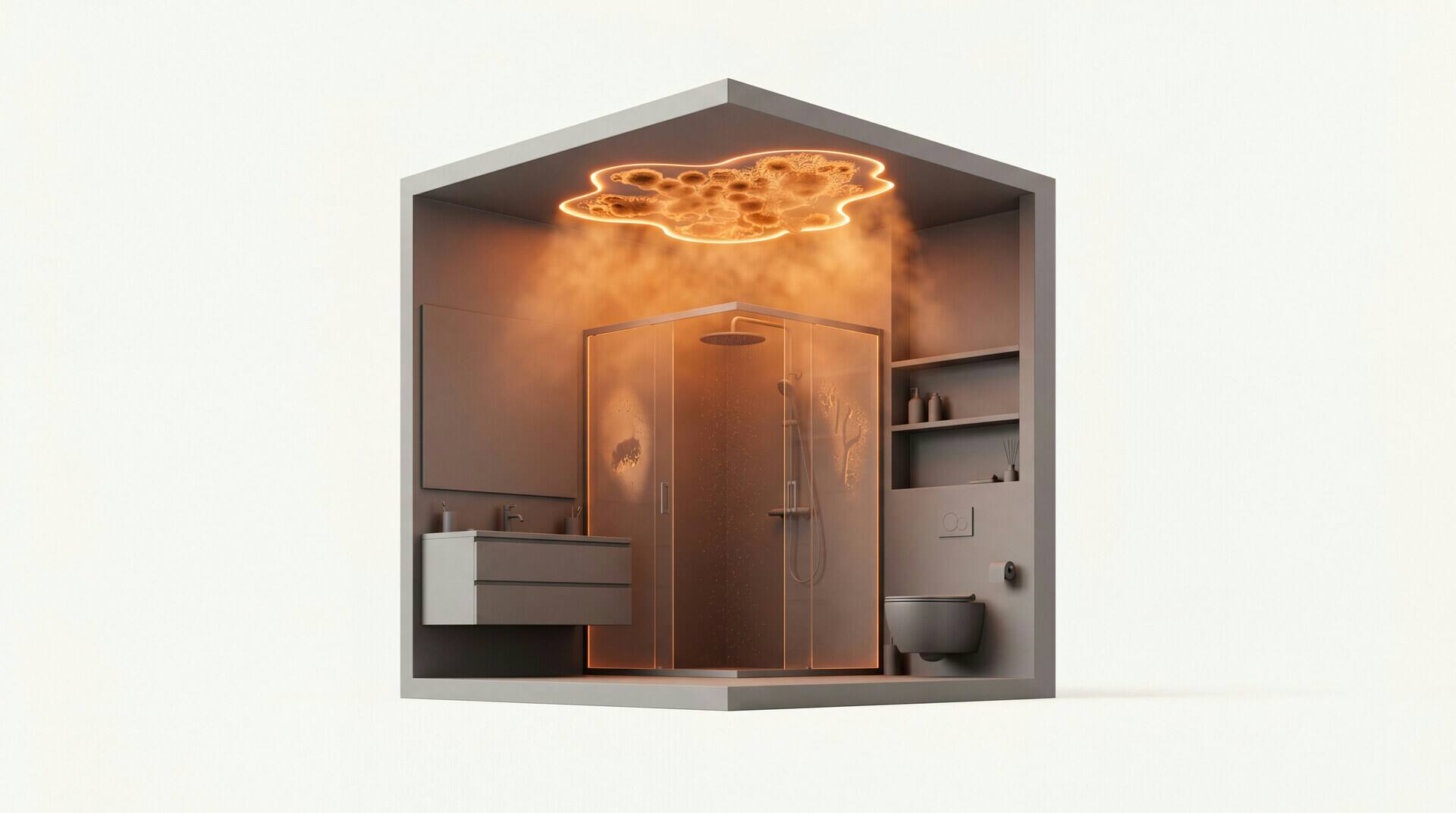
New Hampshire's daily swing puts the air near saturation every morning, so a bathroom that cannot clear its own moisture within an hour of a shower never dries. Confirm the fan actually vents outdoors rather than into the attic, which is a common and damaging shortcut in older New Hampshire houses. Check that it moves enough air by holding a tissue to the grille. Run it on a timer for 20 minutes after the shower rather than switching it off with the light. Cleaning caulk and grout without fixing the fan is a maintenance schedule, not a repair.
B. Own the cellar from August through October
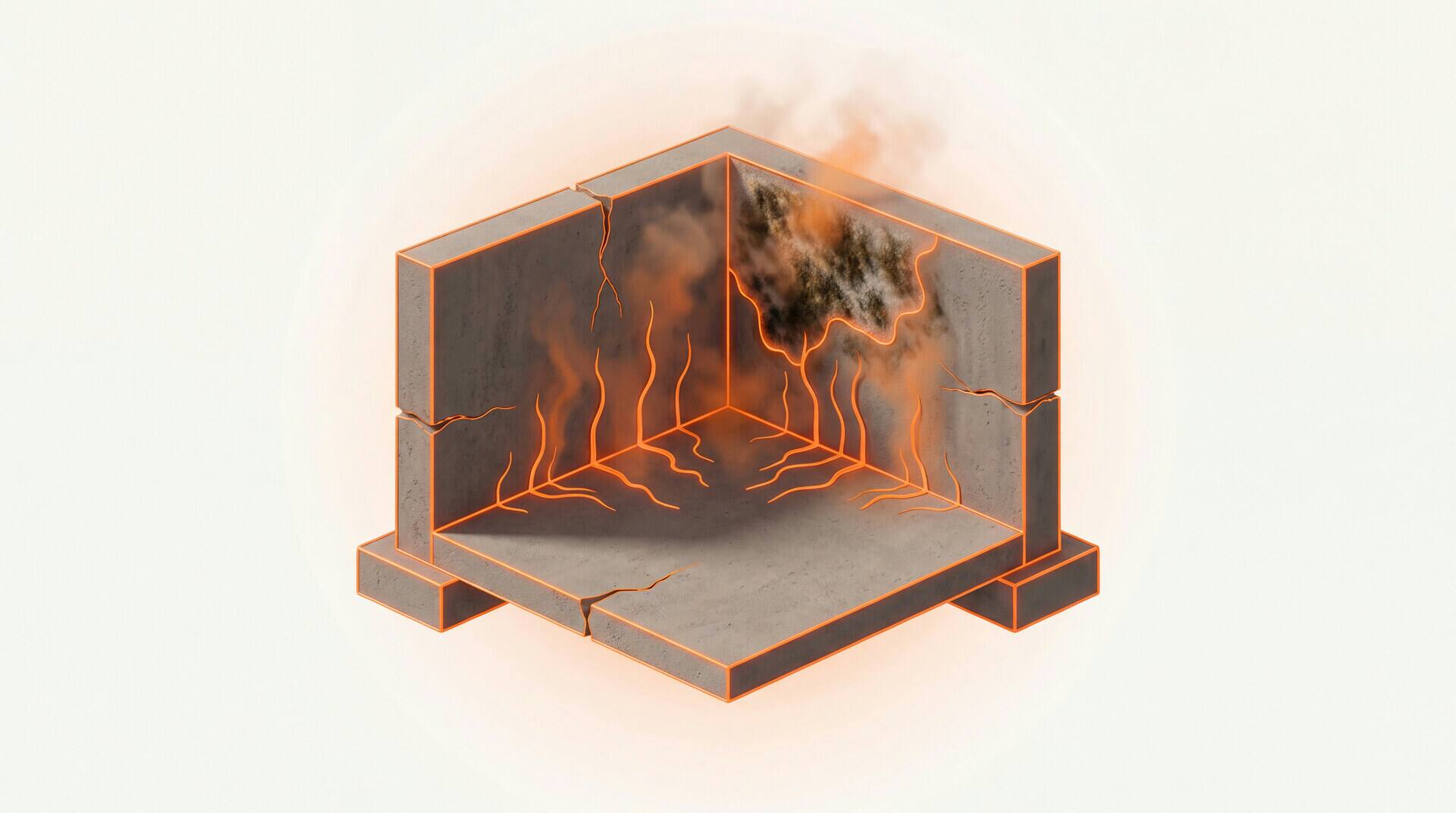
The morning mean reaches 88 percent in September while cellar surfaces are still cool and neither heating nor cooling is running. Opening a cellar window on a humid September morning makes the walls wetter, not drier. Run a dehumidifier with a condensate pump and hold the space below 50 percent. Outside, direct downspouts at least six feet from the foundation and grade soil to slope away. Our indoor humidity calculator reports measured relative humidity plus calculated dew point.
C. Use the certification split to your advantage
New Hampshire is one of the few states where the law itself separates assessment from remediation. Hire a nationally certified mold assessor first, as RSA 310-A:189-b requires anyone charging for that work to be, and use the protocol they write as the scope of work. Then put that protocol out to remediation bidders. You get an independent scope, comparable bids and a document to hold the work against, which is exactly the structure experts recommend and which most states leave you to arrange yourself.
Seasonal risk profile for New Hampshire
Monthly mean relative humidity at Concord. The daily mean is unremarkable and the morning mean is not: it reaches 88 percent in September, the highest reading in New England.
New Hampshire relative humidity peaks in September
The monthly mean runs from 59 percent in April to 71 percent in September, a 12 point swing across the year.
View the data
| Month | Jan | Feb | Mar | Apr | May | Jun | Jul | Aug | Sep | Oct | Nov | Dec |
|---|---|---|---|---|---|---|---|---|---|---|---|---|
| Mean RH | 67% | 65% | 64% | 59% | 60% | 64% | 66% | 68% | 71% | 70% | 70% | 70% |
September and October are the cellar window. The morning mean runs 86 to 88 percent while below-grade surfaces are still cool and nothing mechanical is dehumidifying. This is the Penicillium window on stored cardboard, and it is when most New Hampshire cellars first smell musty.
December through March is the indoor-moisture window. The daily mean holds near 70 percent while the air outside carries almost nothing at a 36 F dew point. In a sealed, heated house the water comes from showers, cooking and laundry and condenses on cold glass and inside cold wall cavities. The fix is ventilation and a lower indoor target of roughly 30 to 35 percent, not a dehumidifier.
April is the driest month at 59 percent and the ice dam reckoning. Staining that appears at the top of an exterior wall in spring is usually February's ice dam showing itself. Check the ceiling under every roof plane after the thaw. The mold risk by ZIP tool gives you the local read.
Where to get help in New Hampshire
New Hampshire has no state mold page, and its mold enforcement runs through locally appointed health officers. The liaison unit below is how you find yours.
Questions on file
Does New Hampshire license mold professionals?
It regulates half the job. Since January 1, 2016, RSA 310-A:189-b has made it unlawful to perform residential mold assessment services for remuneration without a valid national third-party certification for mold assessment. The state issues no license of its own; it requires a credential from a national nonprofit accredited by ANSI, CESB, NCCA or an equivalent ISO-compliant body, and OPLC's Board of Home Inspectors points the public to the American Council for Accredited Certification. Mold remediation is not covered, and New Hampshire has no state general contractor license either.
What counts as mold assessment in New Hampshire?
The statute defines it broadly. Mold assessment means inspecting, investigating or surveying a dwelling or other structure to inform the owner about the presence, identification or evaluation of mold; writing a mold remediation specification or protocol; or collecting a mold sample for analysis. If someone is charging you to look at your mold, write your scope of work, or take a sample, RSA 310-A:189-b covers them and they need a national certification. Ask to see it, and ask which accrediting body stands behind it.
How long does a New Hampshire landlord have to fix mold?
Fourteen days from written notice, in the context of the RSA 540:13-d defense. A landlord cannot win a possession action for nonpayment of rent if the premises substantially violate the RSA 48-A standards or a local code and the violation materially affects habitability, provided the tenant proves by clear and convincing evidence that, while not in arrears, the tenant gave notice to the person who collects rent and the landlord failed to correct within 14 days of written notice or as promptly as an emergency requires. Withheld rent must be paid into court, and the court can continue the case up to a month for repairs.
Who do I call about mold in a New Hampshire rental?
Your local health officer. New Hampshire has no state mold program, and the DHHS sitemap of 1,874 URLs and the DES sitemap of 1,801 URLs were both swept without finding a mold page. What exists instead is the DHHS Health Officer Liaison Unit, which appoints and trains locally appointed health officers on topics that expressly include rental housing concerns and mold and moisture issues, provides case-specific technical assistance and publishes a find-your-local-health-officer tool. Send dated written notice to the landlord first, then contact the health officer.
Source 3, New Hampshire Department of Health and Human ServicesWhy is Concord's humidity so different morning to afternoon?
Because the air cools overnight toward saturation and then warms hard by mid-afternoon. Concord averages 80 percent relative humidity in the morning and 53 percent in the afternoon, a 27-point swing that is one of New England's widest. That daily cycle puts water on cool surfaces every morning without producing anything that looks like a leak. Surfaces that stay cool through the morning, a cellar wall, bathroom tile, a north-facing window frame, collect that moisture daily and never benefit from the afternoon drying.
Should I hire the assessor and remediator separately in New Hampshire?
The law effectively pushes you toward it, and that is a good thing. Because the assessor must hold a national certification and the remediator need not, you will usually be dealing with two different firms with different credential requirements. That enforces the independence experts recommend everywhere: the party sizing the problem is not the party billing to solve it. Hire the certified assessor first, use the protocol they write as the scope of work, and put that protocol out to remediation bidders so the bids are comparable.
Source register
Every source chip on this page points here. Agency and statute pages first, then the federal technical references.
Find the mold in your New Hampshire home
The scanner is open. Get a detailed photo report, next steps, testing options and estimated cleanup costs.
Scan My Photo Get the free mold checklistRelated guides on Mold Scanner AI

All 51 State Reports
Humidity, licensing and tenant law for every state.
Mold in the Bathroom
Ventilation first, cleaning second.
Mold in the Basement
The New England September failure mode.
Professional Testing
What an assessor does and when it is worth it.

What Remediation Costs
The drivers that actually move a quote.

Mold in Your Apartment
Renter rights, notice letters, and landlord duties.