
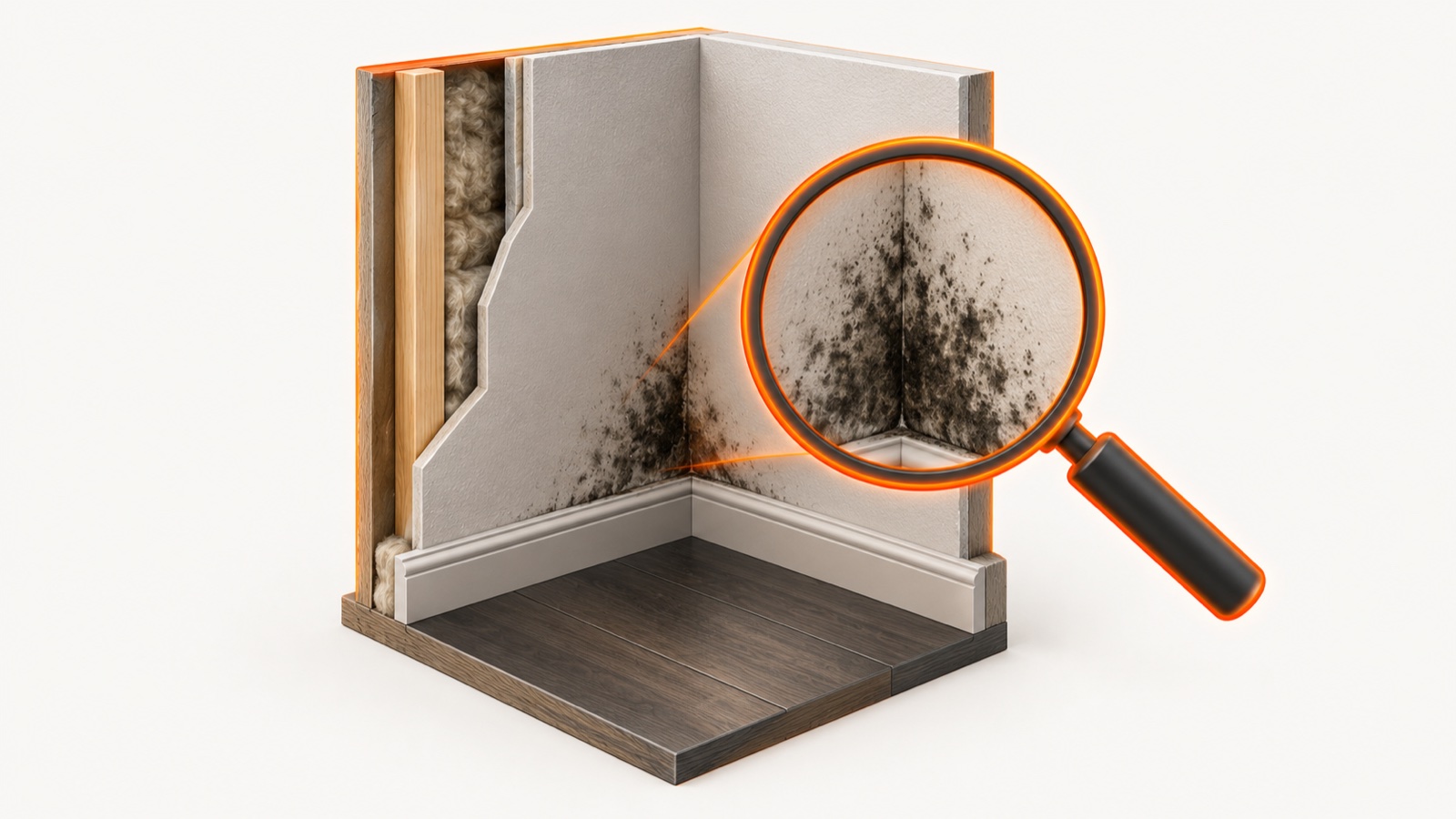
What the Evidence Shows
CDC says damp or moldy environments may cause health effects in some people and none in others. Possible effects include stuffy nose, sore throat, coughing or wheezing, burning or itchy eyes, and skin rash. People with asthma or mold allergy may react more strongly.
These symptoms are nonspecific. A symptom pattern, photo, species name, building sample, or app result cannot diagnose illness or establish that a building caused it.
The Toxic Black Mold Myth
The phrase toxic black mold often refers to Stachybotrys chartarum, but several molds and non-mold materials can look dark. CDC says color does not indicate whether a mold is more or less dangerous.
You do not need a species name before correcting indoor moisture and removing visible growth. A targeted laboratory sample may identify collected material when that answer is necessary, but it does not measure personal exposure or health risk.
Who May Need Added Caution
People with asthma or mold allergy may have stronger reactions. CDC also advises that people with weakened immune systems or chronic lung disease ask a clinician about precautions.
Individual health cannot be reduced to a color, online score, or cleanup-area number. Discuss health concerns with a licensed clinician and investigate building moisture as a separate question.
What to Do About It
Do not wait for a species name to correct moisture and address visible growth. EPA says many people can handle an area under roughly ten square feet, but that is a general cleanup-scope guide, not a health threshold. Major water damage, sewage, HVAC involvement, unsafe access, hazardous materials, or a larger area can justify qualified help.
Fix leaks, dry wet materials, and ventilate damp rooms. For the full picture, including visual limits and cleanup considerations, see our complete guide to black mold. Mold Scanner provides AI-assisted visual screening of a submitted visible-surface photo. It cannot confirm mold, identify species, find hidden growth, measure exposure, or assess health risk.
Frequently asked questions
Is black mold more dangerous than other mold?
Color does not establish species or danger. CDC says mold color does not indicate whether it is more or less dangerous. Correct the moisture problem and remove indoor growth without relying on a color-based risk ranking.
What health effects can occur around damp or moldy environments?
CDC lists possible effects such as stuffy nose, sore throat, coughing or wheezing, burning or itchy eyes, and skin rash, while some people have no symptoms. People with asthma or mold allergy may react more strongly.
Is there a federal safe indoor mold threshold?
No. CDC and NIOSH state that there are no health-based indoor mold standards. EPA's roughly 10-square-foot guidance helps frame cleanup scope; it is not a health or occupancy threshold.
Can mold color or species predict symptoms?
No. A photo, color, species name, building sample, or app result cannot predict an individual's response or diagnose illness. Discuss symptoms with a licensed clinician.
Do I need to leave my house if I find dark mold?
A webpage cannot make an occupancy decision. Consider the area, water source, affected materials, sewage or other hazards, HVAC involvement, and professional guidance. A licensed clinician can advise on individual health precautions.