
What the Evidence Actually Shows
Start with what the federal agencies actually publish, because the gap between that and what circulates online is enormous.
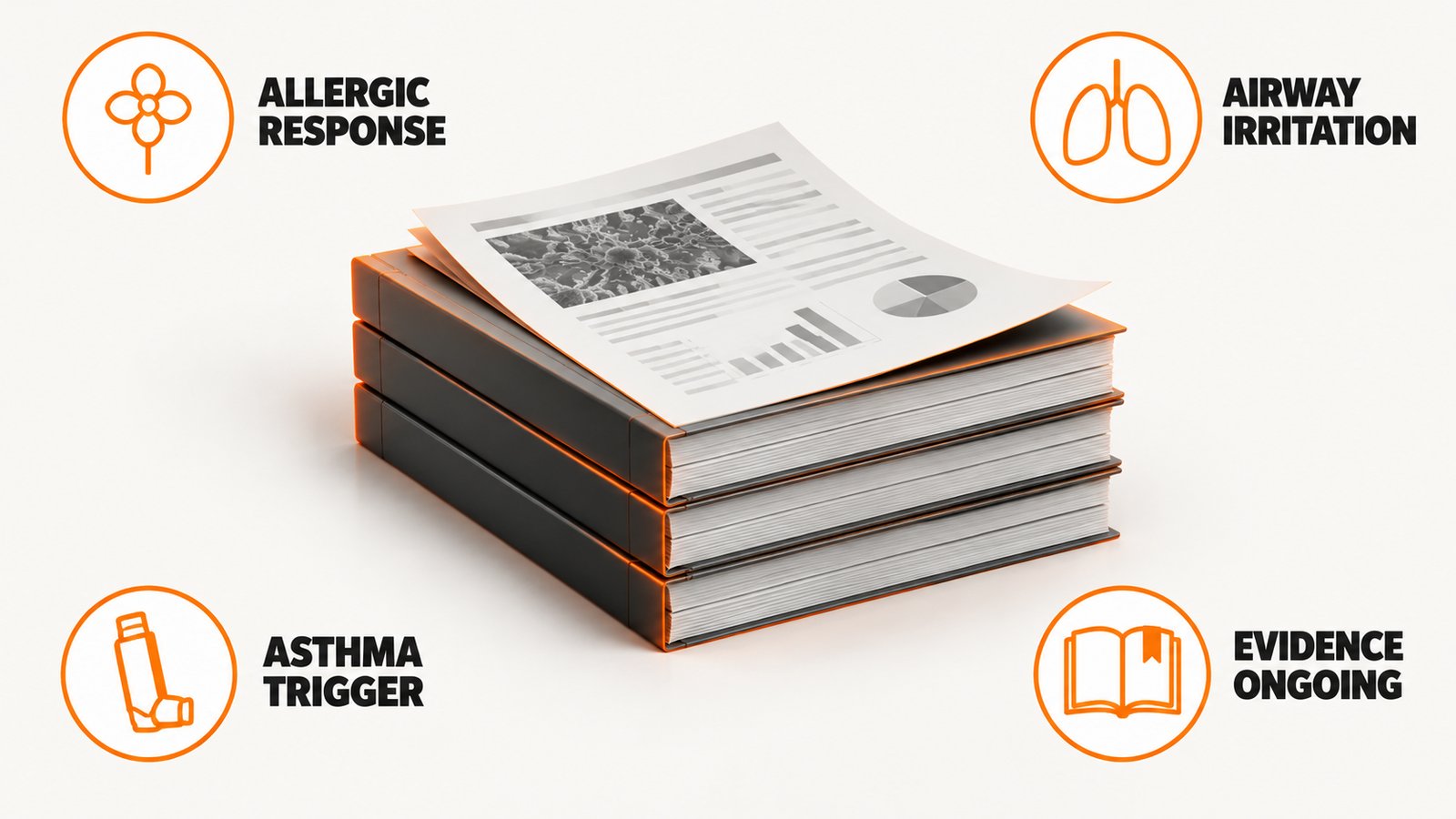
The EPA's position is narrow and specific. Inhaling or touching mold or mold spores may cause allergic reactions in sensitive people, including hay fever-type symptoms such as sneezing, runny nose, red eyes, and skin rash. Molds can trigger asthma attacks in people with asthma who are allergic to mold. Mold exposure can irritate the eyes, skin, nose, throat, and lungs of both mold-allergic and non-allergic people. And then the sentence that most articles leave out: symptoms other than the allergic and irritant types are not commonly reported as a result of inhaling mold, and research on mold and health effects is ongoing.
The CDC frames it the same way. Exposure to damp and moldy environments may cause a variety of health effects, or none at all. It lists stuffy nose, sore throat, coughing or wheezing, burning eyes, and skin rash, and notes that people with asthma or a mold allergy may have more severe reactions.
Neither agency describes household mold as lethal to a healthy adult. Both describe it as an irritant and an allergen that gets worse for people who are already sensitive. That is the honest center of this question, and it is a long way from either extreme you will find in a search result.
Where the evidence firms up is in the reviews. The CDC points to the 2004 Institute of Medicine finding of sufficient evidence linking indoor mold exposure with upper respiratory tract symptoms, cough, and wheeze in otherwise healthy people, with asthma symptoms in people who have asthma, and with hypersensitivity pneumonitis in individuals susceptible to that immune-mediated condition. It also points to the World Health Organization's 2009 indoor air quality guidance on dampness. Those are real findings about real harm. None of them is a death claim. For the broader picture, see is mold dangerous and what the research says about mold and health.
Where the Black Mold Story Came From
The phrase toxic black mold traces back to a cluster of infant illnesses reported in Cleveland in the mid-nineties and widely blamed on Stachybotrys chartarum. The CDC's own current page on that organism answers the question directly, and the answer is not what the headlines said.
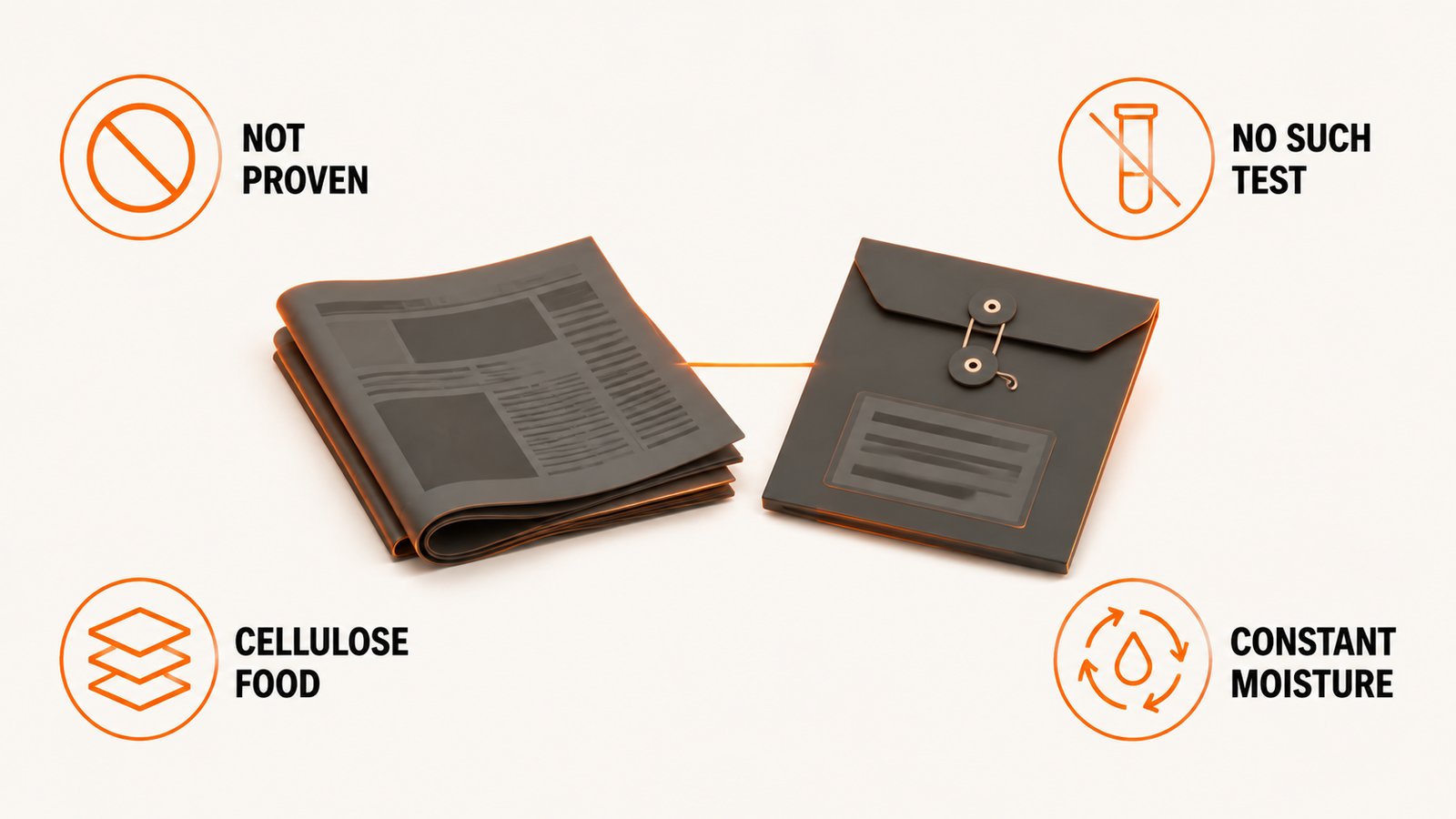
On whether Stachybotrys chartarum causes acute idiopathic pulmonary hemorrhage among infants, the CDC states that to date a possible association has not been proven, and that further studies are needed to determine what causes the condition. On testing, it states that at present no test exists that proves an association between Stachybotrys chartarum and particular health symptoms.
Read those two sentences carefully, because a large industry is built on the space between them and the public story. Nobody has demonstrated the causal link. No laboratory test can demonstrate it in an individual. That is the actual state of the science on the specific organism that made mold famous as a killer.
What the CDC does say about that mold is mundane and useful: it is a greenish-black mold that grows on material with high cellulose content such as fiberboard, gypsum board, and paper, and constant moisture is required for its growth. Which is the same thing it says about every other indoor mold. Our page on Stachybotrys chartarum covers the organism, and is black mold dangerous covers the claim record in more detail.
None of this means a mold problem is fine. It means the reason to remove it is that it damages buildings, irritates airways, and triggers asthma, not that it is a poison waiting to kill a healthy adult.
Who Is Genuinely at Higher Risk
There is one context where fungal exposure is genuinely life-threatening, and it has nothing to do with mycotoxin folklore. It is infection, and it happens in people whose immune systems cannot clear a fungus that a healthy person clears without noticing.
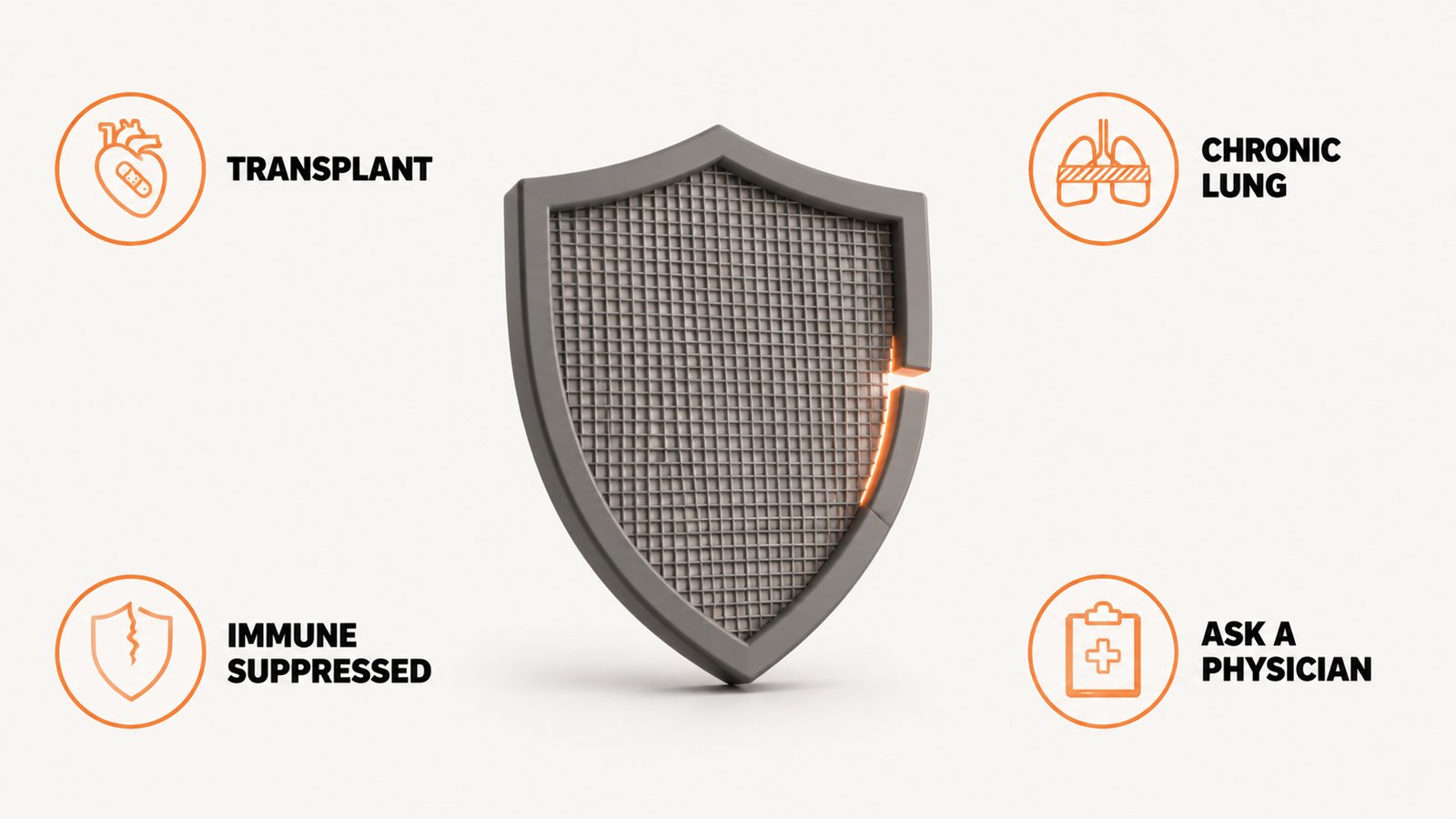
The CDC states that immune-compromised people and people with chronic lung disease may get infections in their lungs from mold. On Aspergillus, one of the most common indoor molds, the CDC is more specific: most people do not get sick from it, but people with weakened immune systems or lung diseases are most at risk, and symptoms range from mild to life-threatening. Invasive aspergillosis is described as the most severe form, occurring when the infection spreads from the lungs to other parts of the body, and the agency notes that people who get invasive aspergillosis typically already had a medical condition, with recent organ or stem cell transplant recipients specifically at risk.
That is the honest answer to the question in the title. Mold does not kill healthy adults in ordinary homes. Fungal infection can be fatal in people who are already immunosuppressed, and that population includes transplant recipients, people on chemotherapy, and people with advanced chronic lung disease.
If someone in the household falls into one of those groups, the decision is not a cleaning decision. It is a conversation with their physician about the environment, made before anyone disturbs the growth. This page is educational content. It does not diagnose, it does not treat, and it is not a substitute for medical care. Our page on Aspergillus covers the organism itself, and mold and pregnancy covers another population that asks this question often.
The Moisture Behind the Mold Is the Real Problem
Here is the part that gets lost in the argument about whether mold can kill you: the mold is a symptom. Water is the disease. Every agency guidance on this subject says the same thing in the same order, and it is not about health at all.
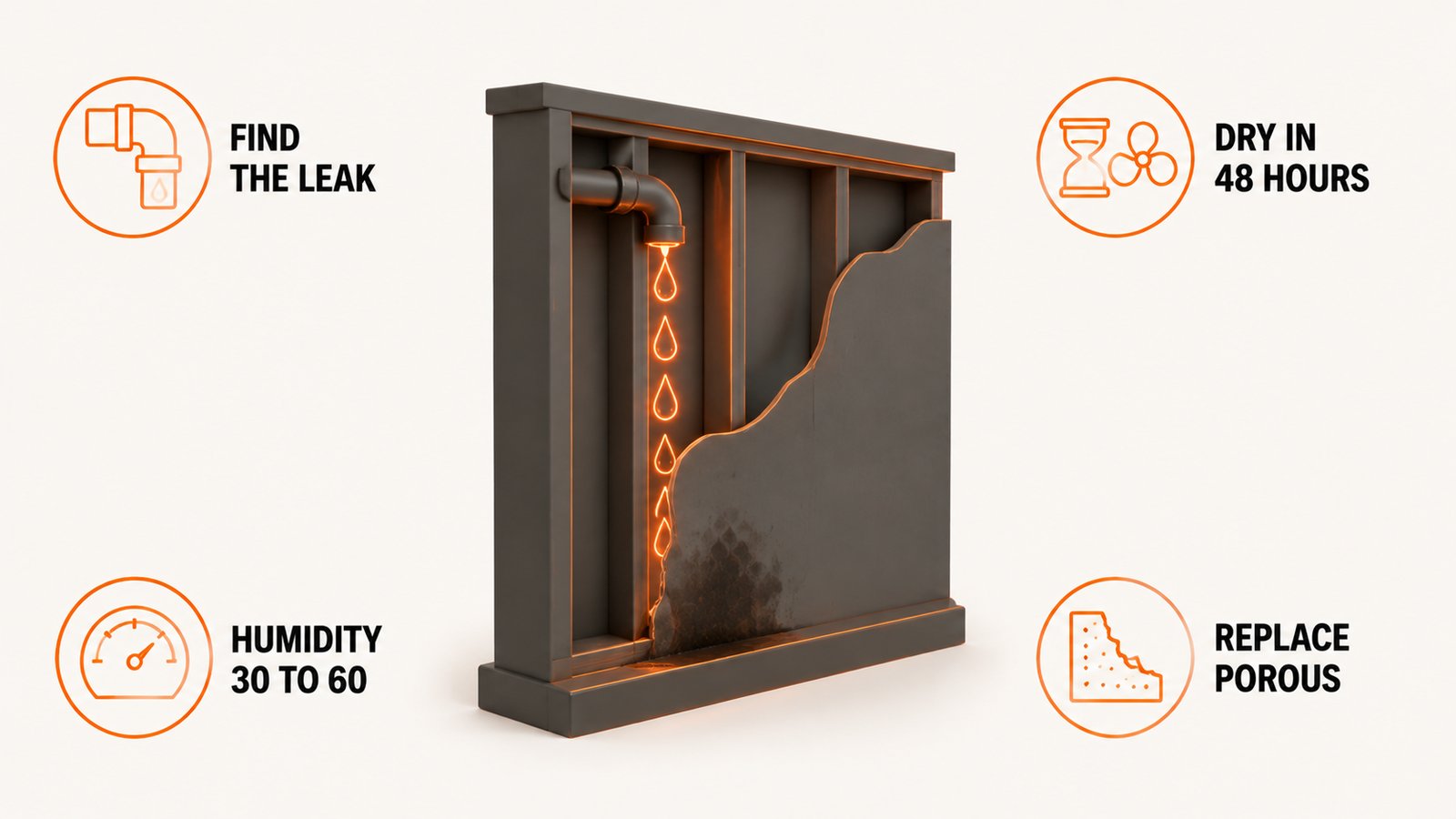
The EPA states there is no practical way to eliminate all mold and mold spores in the indoor environment, and that the way to control indoor mold growth is to control moisture. Fix the source of the water problem or leak. Reduce indoor humidity to between 30 and 60 percent. Clean and dry any damp or wet building materials and furnishings within 24 to 48 hours. Clean mold off hard surfaces with water and detergent and dry completely. Absorbent materials such as ceiling tiles that are moldy may need to be replaced.
Every one of those instructions is about the building. None is about your body. The reason to act is that a wall holding water is losing structure, the finish is failing, the material is being consumed, and the room is producing an allergen load that measurably makes asthma worse. That case is strong enough on its own. It does not need a death claim propped under it.
The practical version, in order:
- Find the water. A leak, a failed seal, condensation on a cold surface, or a room sitting above 60 percent humidity.
- Stop it, then dry the assembly. The 24 to 48 hour window is the one number in this whole subject that changes outcomes.
- Remove the growth, do not just kill it. The EPA notes dead mold may still cause allergic reactions, so it has to come off the surface, not just stop being alive.
- Replace what is porous. Soaked drywall paper, carpet padding, and insulation do not clean.
- Keep humidity down after. Ventilation, exhaust fans, and a dehumidifier where the room needs one.
How to get rid of mold covers the full sequence, and how to prevent mold covers keeping it gone.
When to Hand It to a Professional
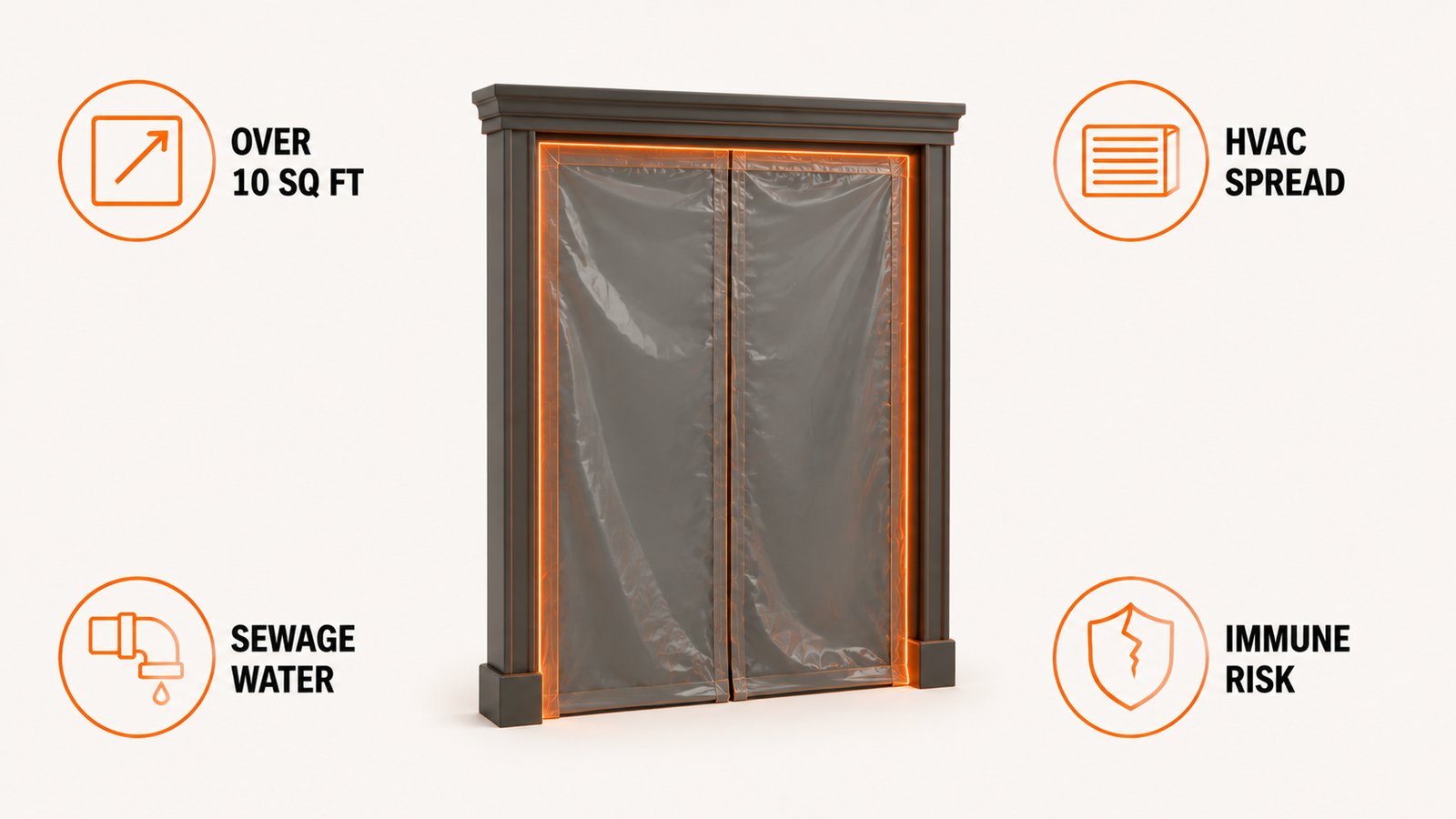
Handle small growth yourself, and hand off the rest. The EPA's dividing line is size: if the moldy area is less than about 10 square feet, roughly a 3 foot by 3 foot patch, in most cases you can handle the job yourself.
Bring in a professional when:
- The area is larger than about 10 square feet, or there has been extensive water damage.
- The water came from sewage or contaminated floodwater. The contamination, not the mold, sets that rule.
- The growth is inside the heating and cooling system, which distributes spores through the whole house.
- It returns in the same place after cleaning, which means the water source is still running.
- Anyone in the home is immune-compromised or has chronic lung disease. Per the CDC, people in those groups may get lung infections from mold, which makes this a physician's question and a professional's job, not a weekend project.
For the cleanup itself, the EPA calls for gloves, goggles without ventilation holes, and an N95 respirator, and notes those respirators cost roughly $12 to $25 at hardware stores. Long gloves that reach mid-forearm, in natural rubber, neoprene, nitrile, polyurethane, or PVC if you are working with bleach or a biocide. Ventilate the area, exhaust the air outdoors, and never mix a chlorine bleach solution with any cleaner containing ammonia, because the combination can produce toxic fumes.
This page covers cleaning, moisture control, and protective equipment only. It offers no medical advice, no diagnosis, and no treatment guidance. Anyone worried about a health effect should raise it with a qualified physician. Mold remediation covers what a professional job includes, and mold inspection covers what an independent assessment involves.
Frequently asked questions
Can mold kill you?
Not in the way the phrase implies for a healthy adult in an ordinary home. The EPA describes mold as causing allergic reactions and irritation, and notes that symptoms other than the allergic and irritant types are not commonly reported from inhaling mold. The genuine mortality risk is fungal infection in people who are already immunosuppressed. The CDC states that immune-compromised people and people with chronic lung disease may get infections in their lungs from mold.
Has toxic black mold been proven to cause infant deaths?
No. The CDC states that to date a possible association between acute idiopathic pulmonary hemorrhage among infants and Stachybotrys chartarum has not been proven, and that further studies are needed to determine what causes the condition. It also states that at present no test exists that proves an association between Stachybotrys chartarum and particular health symptoms.
What does the Institute of Medicine review actually say about mold?
The CDC cites the 2004 Institute of Medicine finding of sufficient evidence linking indoor mold exposure with upper respiratory tract symptoms, cough, and wheeze in otherwise healthy people, with asthma symptoms in people who have asthma, and with hypersensitivity pneumonitis in individuals susceptible to that condition. The World Health Organization issued further guidance on dampness in 2009.
Is invasive aspergillosis common?
No. The CDC states that most people do not get sick from Aspergillus, and that people with weakened immune systems or lung diseases are most at risk. Invasive aspergillosis is described as the most severe form, occurring when infection spreads from the lungs to other parts of the body, and people who develop it typically already had a medical condition, with recent organ or stem cell transplant recipients specifically named as at risk.
If mold is not usually lethal, why remove it at all?
Because it is an allergen, an irritant, an asthma trigger, and a sign that the building is holding water. The EPA is explicit that there is no practical way to eliminate all mold indoors and that the way to control growth is to control moisture. A wall that stays wet loses material and finish regardless of what the mold does to anyone's lungs.
How large a mold problem can I clean up myself?
The EPA sets the line at about 10 square feet, roughly a 3 foot by 3 foot patch. Below that, in most cases you can handle the job yourself with gloves, goggles without ventilation holes, and an N95 respirator. Above it, or after extensive water damage, or when sewage or floodwater is involved, the agency points you toward professional guidance.
Does killing mold make it safe?
Not by itself. The EPA notes dead mold may still cause allergic reactions in some people, so it is not enough to kill it, it must also be physically removed. That is why the agency's own instruction is to clean mold off hard surfaces with water and detergent and dry completely, and to replace absorbent materials that cannot be cleaned.
Sources
Every claim on this page traces to one of these. Links open the primary document.