Does dish soap kill mold?
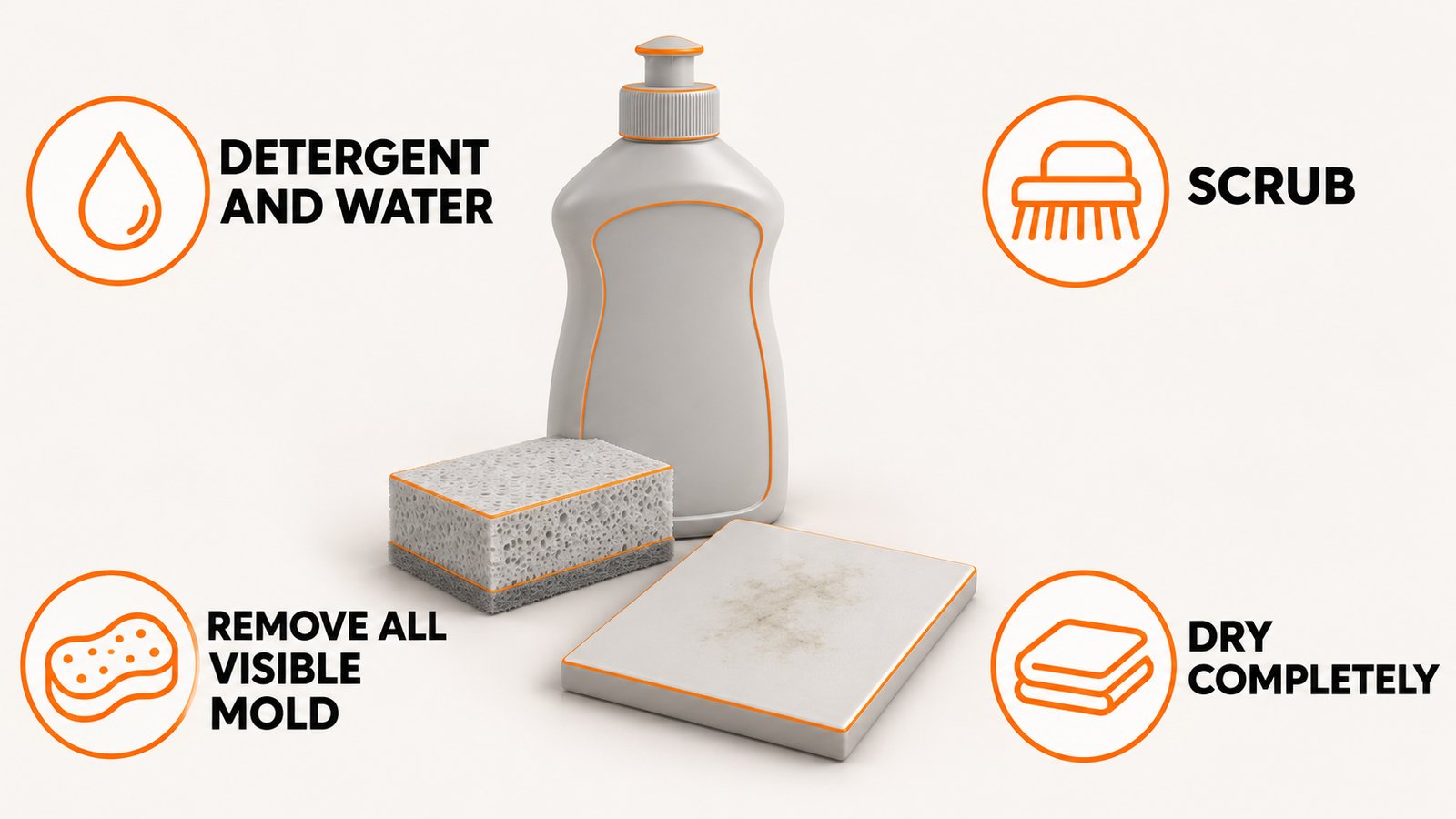
We can't say that it does, because no source we read says so. We read three EPA pages, two CDC cleanup pages and a North Dakota State University Extension publication. Each treats detergent as a cleaning step. None says it kills mold.
The wording matters. CDC's cleanup page says: "Bleach or dish detergent can be used to clean mold in your home." EPA says: "Scrub mold off hard surfaces with detergent and water, and dry completely." Both sentences are about cleaning. A claim that soap kills mold would be ours, not theirs, and we have nothing to back it, so we do not make it.
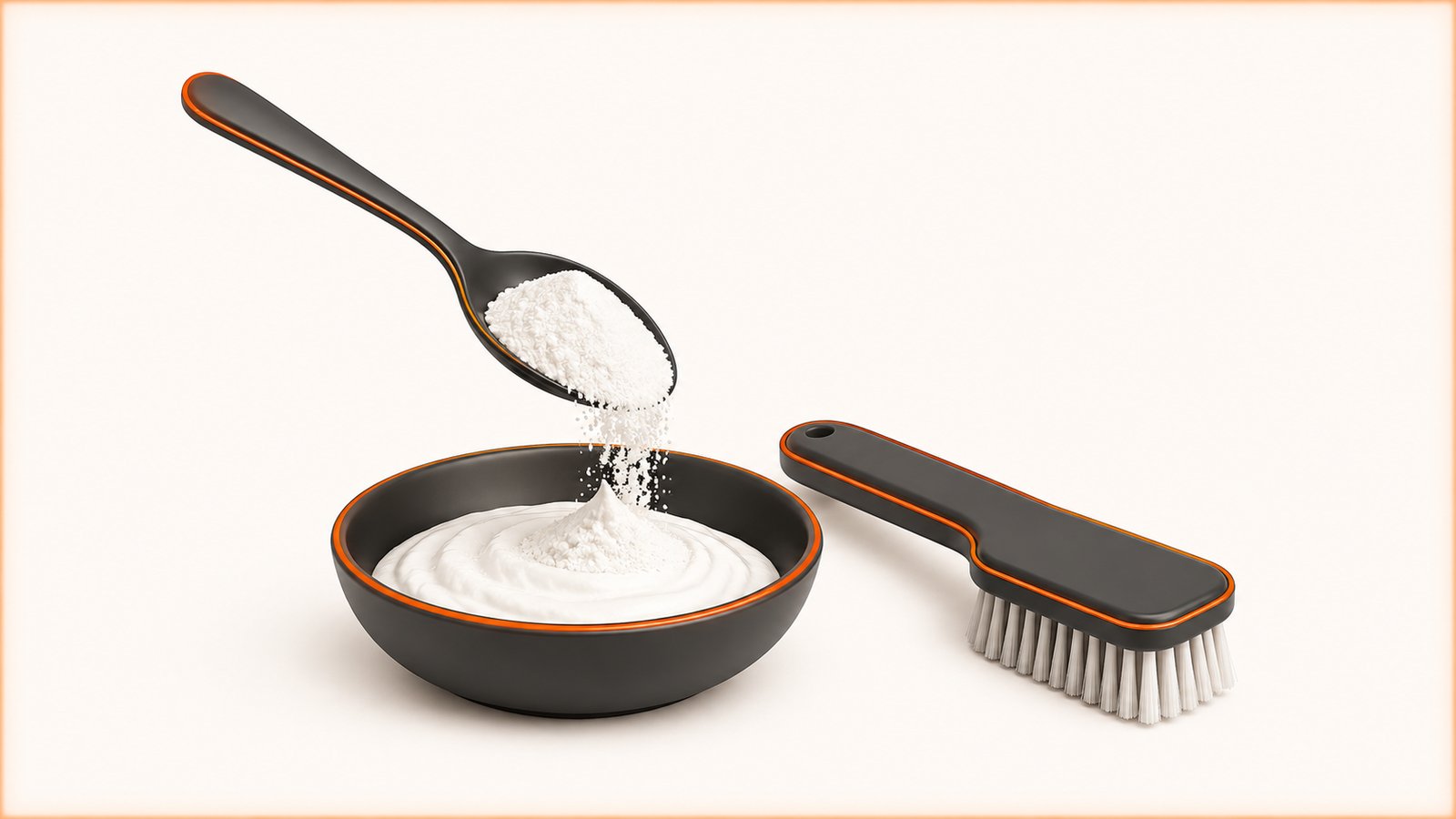
Dish soap is still the right kind of tool for the job the agencies describe: get the mold off the surface, get the surface dry and fix the water. For other products, see vinegar, bleach and what kills mold.
Is removing mold the same as killing it?
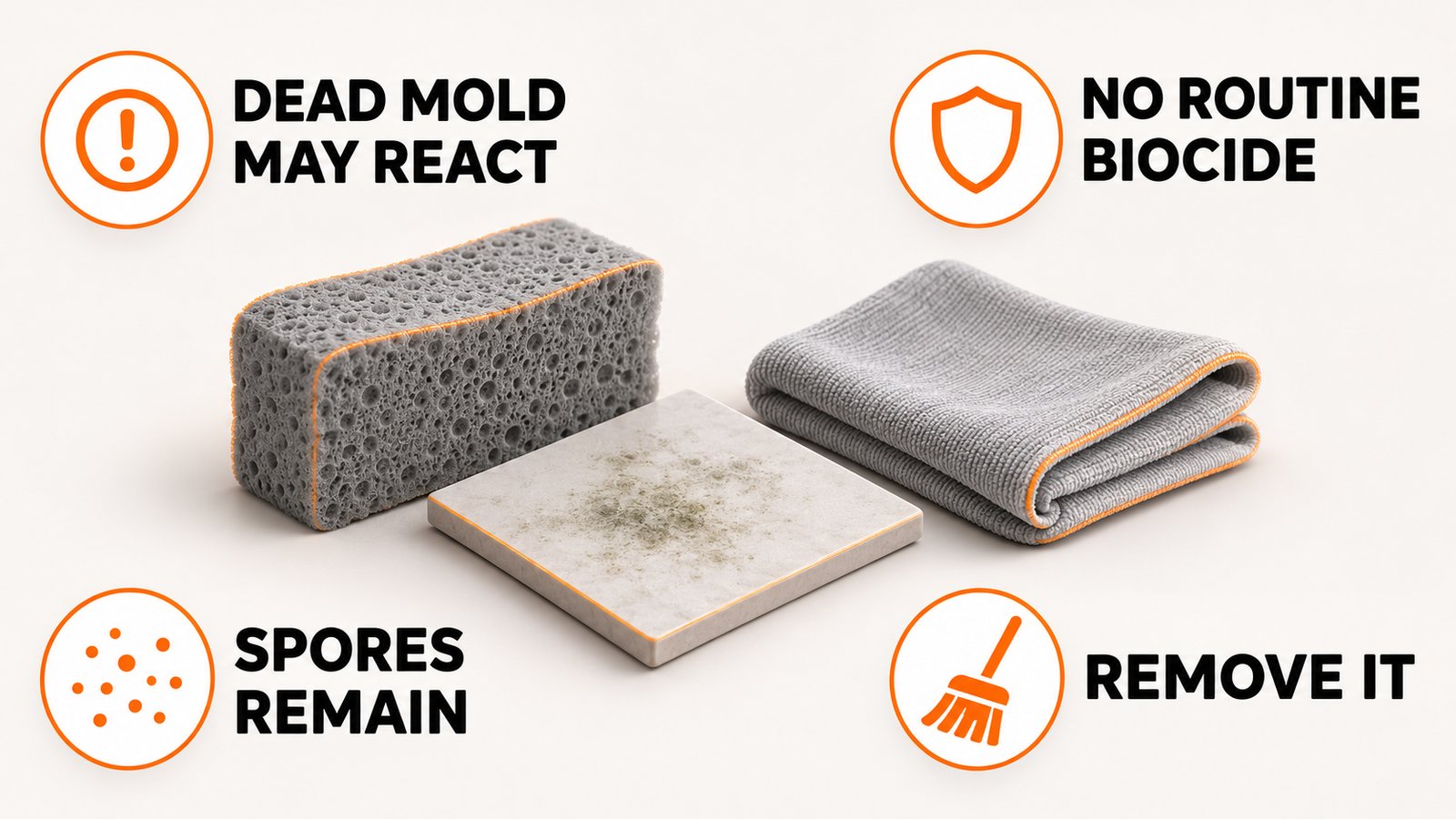
No, and the difference is the center of EPA's advice. EPA's brief guide says: "Dead mold may still cause allergic reactions in some people, so it is not enough to simply kill the mold, it must also be removed." North Dakota State University Extension says the same thing in different words: people can react to mold whether it is living or dead.
EPA also says that using a chemical that kills organisms such as mold, with chlorine bleach as its example, "is not recommended as a routine practice during mold cleanup." It adds that in most cases it is not possible or desirable to sterilize an area, and that a background level of spores will remain.
The sources do not all agree on disinfecting. We list each one under its own name.
| Source | What it says about cleaning | What it says about killing |
|---|---|---|
| EPA | Scrub hard surfaces with detergent and water. Dry completely. | A biocide is not recommended as a routine practice. Dead mold must still be removed. |
| CDC | Bleach or dish detergent can be used. Scrub with water and a detergent, remove all mold you can see, dry right away. | Lists bleach as an option, at no more than 1 cup per gallon of water, and says never to mix it with other cleansers. |
| NDSU Extension | Scrub hard surfaces with a non-ammonia soap or detergent. | Adds a disinfecting step with bleach and water or another disinfectant after the mold is removed. |
Dish soap is the removal tool in all three. For the disinfecting side, see bleach vs vinegar.
Does dish soap kill mold on plastic?
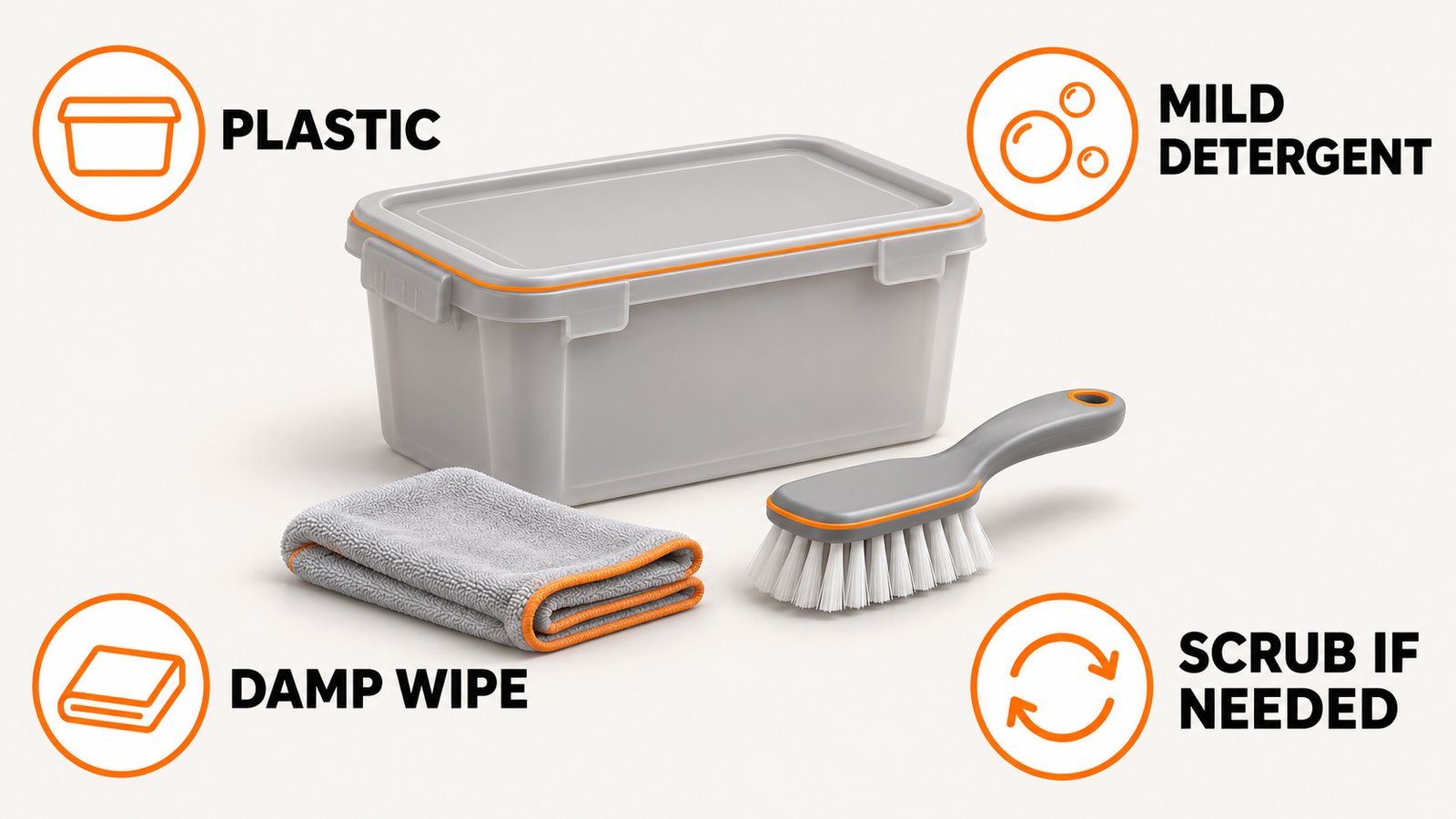
We can't say it kills the mold, but it is the cleaning method the sources describe for plastic. EPA's mold course says non-porous, hard surfaces such as plastics and metals "should be vacuumed or damp wiped with water and mild detergent, then allowed to dry. Scrubbing may be necessary to thoroughly clean the surfaces." That line is in EPA's guidance on drying a building after water damage, not on food containers.
The course also says: "Mold can generally be removed from hard surfaces by wiping or scrubbing with water and detergent. Always follow the cleaning instructions on product labels." North Dakota State University Extension names hard plastic, glass, metal and counter tops, scrubbed with a non-ammonia soap or detergent.
None of these sources covers a moldy food container or a water bottle, so we make no claim about those. Our pages on mold in plastic, mold in a water bottle and mold in a dishwasher cover them. Read the item's care label first.
Is dish soap enough to get rid of mold?
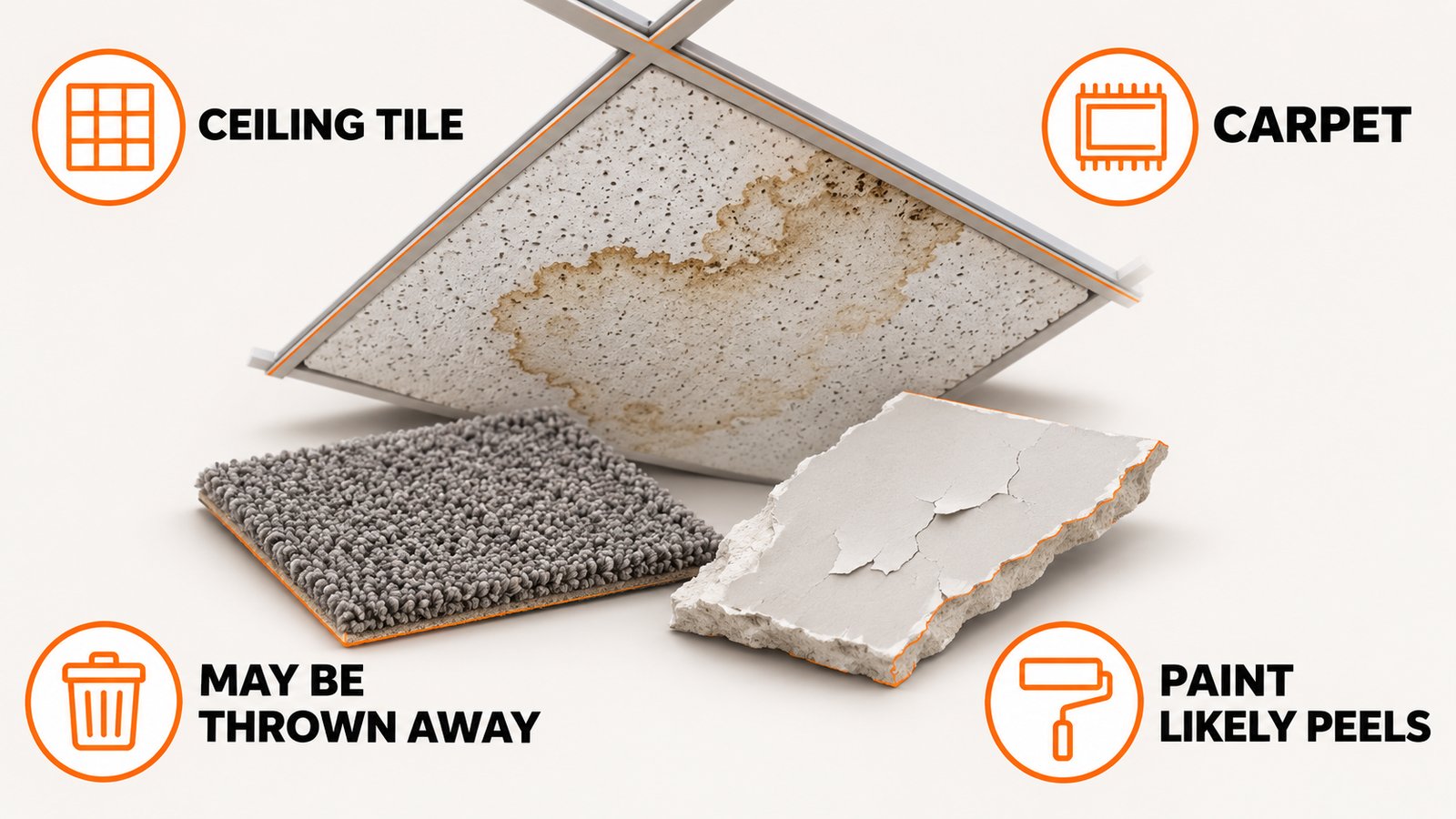
On hard surfaces it can be. On porous ones, no. EPA's cleanup page says: "Absorbent or porous materials, such as ceiling tiles and carpet, may have to be thrown away if they become moldy. Mold can grow on or fill in the empty spaces and crevices of porous materials, so the mold may be difficult or impossible to remove completely."
North Dakota State University Extension says it is impossible to completely remove mold from porous surfaces such as paper, drywall and carpet padding, so those materials should be removed and discarded. See our pages on mold on drywall, mold on wood and mold in carpet for how each material is handled.
Do not paint over mold either. EPA says paint applied over moldy surfaces is likely to peel, and it says not to paint or caulk moldy surfaces. Our page on painting over mold covers what to do instead.
Not sure a stain is mold? The Mold Scanner app offers AI-assisted visual screening of what is visible in a photo. Processing time varies, and it is a screening tool, not a lab test.
How to clean mold with dish soap
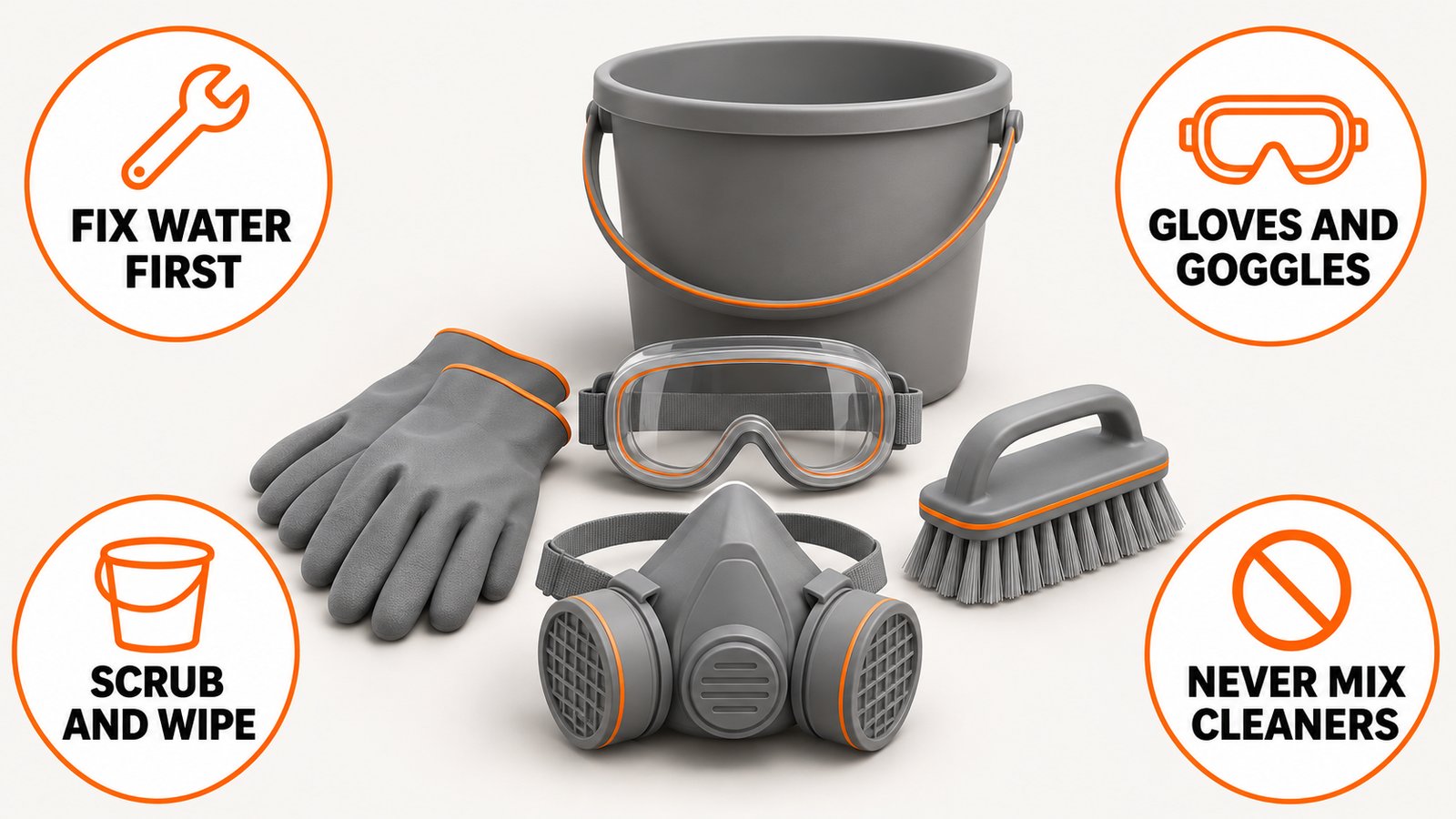
This is for a small hard-surface patch. EPA says that if the moldy area is less than about 10 square feet, roughly a 3 foot by 3 foot patch, "in most cases, you can handle the job yourself." Neither EPA nor CDC gives a soap-to-water ratio, so ours is only a starting point.
- Fix the water problem first. EPA says to fix plumbing leaks and other water problems as soon as possible and to dry all items completely.
- Protect yourself. EPA says you may want to wear an N-95 respirator, and that goggles without ventilation holes are recommended. When you work with water and a mild detergent, it says ordinary household rubber gloves may be used. CDC says to wear at least a NIOSH-approved N95 respirator.
- Open a window or a door. CDC says to let in fresh air when you use any cleaning products.
- Scrub with dish soap and water. A squirt in a bucket of warm water is our starting point. CDC says to remove all the mold you can see.
- Wipe with a cloth and clean water. This step is ours: North Dakota State University Extension lists soap scum among the things mold grows on, so we would not leave a soap film behind.
- Dry completely, with a fan or a dehumidifier. CDC says to dry right away. EPA says water-damaged areas and items should be dried within 24 to 48 hours.
Do not add bleach to the bucket. CDC says never to mix bleach with ammonia or any other cleanser. EPA says never to mix chlorine bleach solution with other cleaning solutions or detergents that contain ammonia. North Dakota State University Extension specifies a non-ammonia soap or detergent. For the full method, see how to get rid of mold.
Will mold come back after dish soap?
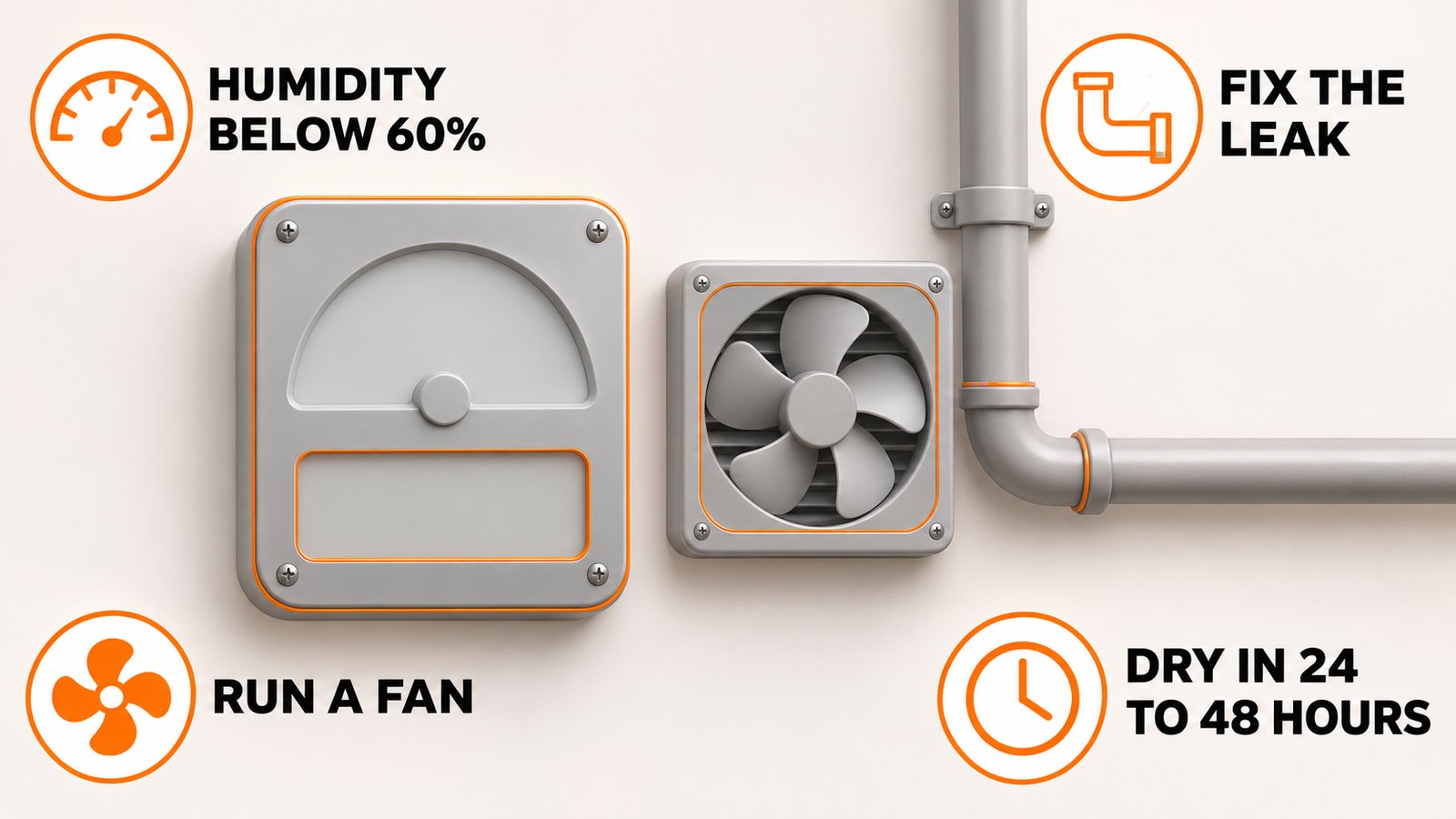
It can, if the moisture stays. EPA's brief guide says: "The key to mold control is moisture control." It also says: "If you clean up the mold, but don't fix the water problem, then, most likely, the mold problem will come back."
EPA's targets are plain. Dry water-damaged areas and items within 24 to 48 hours, because "in most cases mold will not grow" if damp materials are dried in that time. Keep indoor humidity below 60 percent, ideally between 30 and 50 percent, which EPA says a humidity meter costing $10 to $50 can measure. For a bathroom where mold reappears, EPA says more ventilation (a fan or an open window) and more frequent cleaning will usually prevent it from recurring, or at least keep it to a minimum.
Our humidity risk calculator compares a reading from your own hygrometer with EPA's 30 to 50 percent range, and how to prevent mold lists habits that keep a room dry.
When to skip dish soap and call a pro
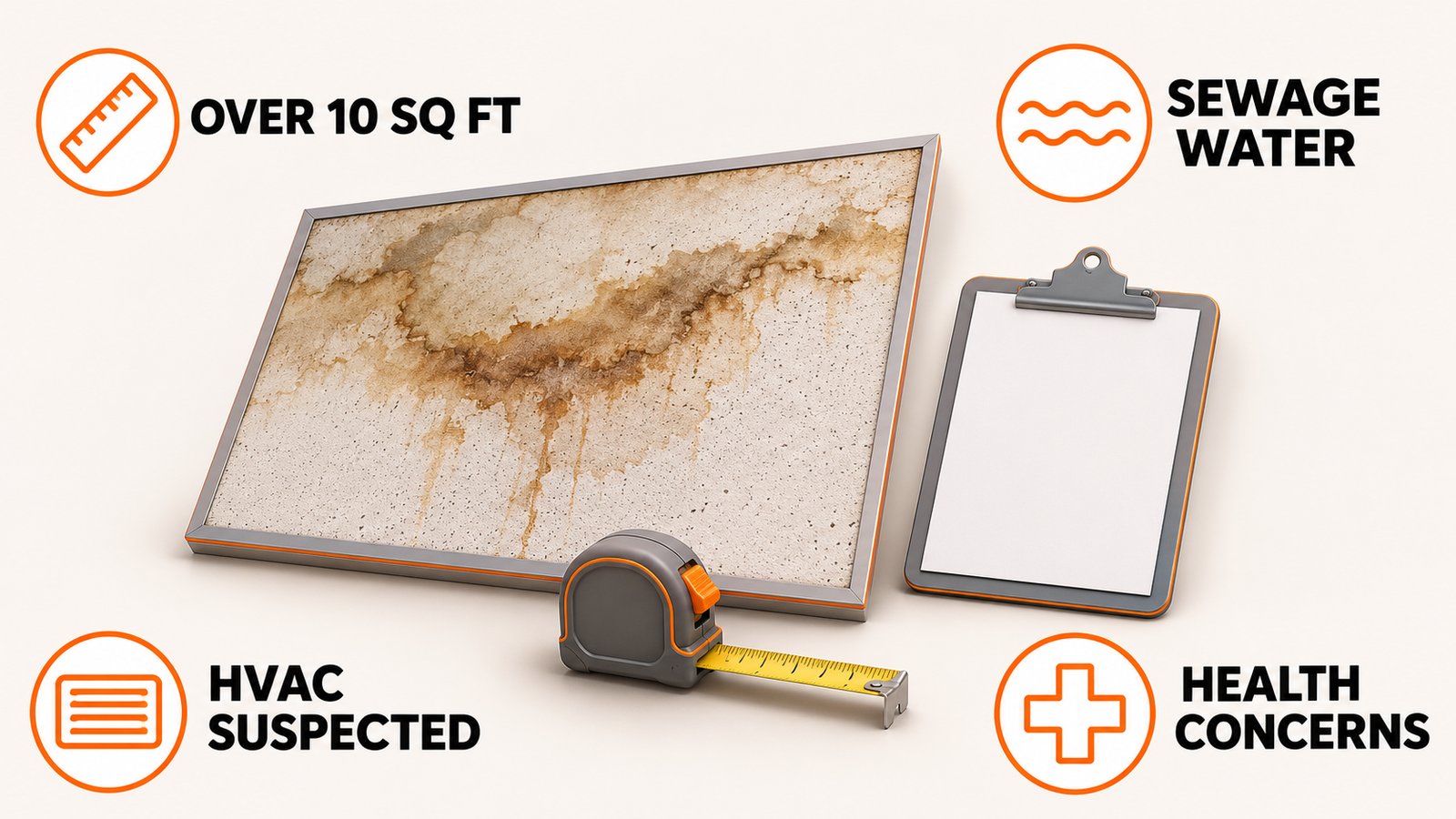
Dish soap is a small-job tool. EPA points elsewhere in these cases:
- The patch covers more than about 10 square feet, or there has been a lot of water damage. EPA points to its guide for larger jobs. Past that size, we suggest a professional.
- The water came from sewage or other contaminated water. EPA says to call in a professional with experience in that kind of damage.
- You suspect mold in the heating and cooling system. EPA says not to run the system if you know or suspect it is contaminated with mold.
- You have health concerns. EPA says to consult a health professional before starting cleanup, and CDC lists people with allergies, immune suppression, or lung disease among those who should not take part in cleaning up.
- You suspect hidden mold: the building smells moldy but you cannot see the source, or there has been water damage and residents are reporting health problems. EPA says to consider hiring an experienced professional.
Our mold remediation process page explains what a professional does, and the free 160-point checklist walks through visible areas room by room.
Frequently asked questions
Does dish soap kill mold?
We found no EPA or CDC page that says it does. CDC says bleach or dish detergent can be used to clean mold, and EPA says to scrub mold off hard surfaces with detergent and water and dry completely. EPA adds that dead mold may still cause allergic reactions in some people, so mold has to be removed, not only killed.
Does dish soap kill mold on plastic?
We can't say it kills it. EPA's mold course says non-porous, hard surfaces such as plastics should be damp wiped with water and mild detergent and allowed to dry, and that scrubbing may be necessary. Read the item's care label, and throw it out if you cannot reach the growth or get it dry.
Does Dawn kill mold?
It is a dish detergent, so the same EPA guidance applies: scrub mold off hard surfaces with detergent and water, and dry completely. We make no claim about that product beyond that.
Is dish soap enough to get rid of mold?
On a small hard surface, EPA's method is detergent and water plus complete drying. On porous materials such as ceiling tiles and carpet, EPA says the material may have to be thrown away. The moisture also has to be fixed.
Can I mix dish soap with bleach?
No. CDC says you should never mix bleach with ammonia or any other cleanser. EPA says never to mix chlorine bleach solution with other cleaning solutions or detergents that contain ammonia. Use one product at a time, and ventilate.
Do I need to rinse off dish soap after cleaning mold?
EPA and CDC say to scrub, then dry. Wiping with clean water is our suggestion, since North Dakota State University Extension lists soap scum among the things mold grows on.
Will mold come back after I clean it with dish soap?
It can. EPA says that if you clean up the mold but do not fix the water problem, then, most likely, the mold problem will come back.
Sources
Every claim on this page traces to one of these. Links open the primary document.