Does baking soda kill mold?
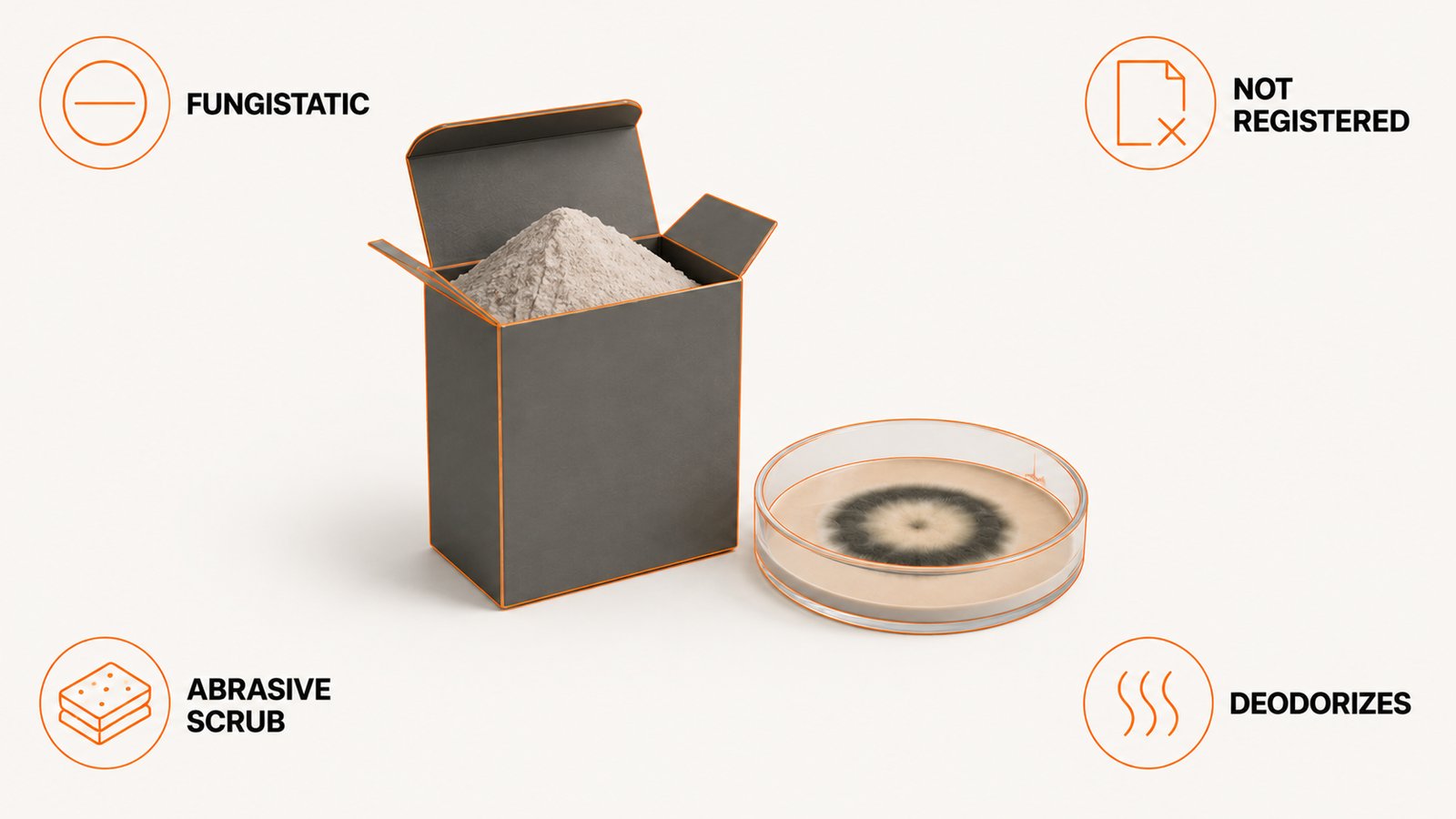
Not in the sense most people mean. In the published work, carbonate and bicarbonate salts are fungistatic, which means they hold growth back rather than kill it outright. Zamani and colleagues tested sodium carbonate, sodium bicarbonate, potassium carbonate and potassium bicarbonate against green mold on oranges in 2007 and reported plainly that all were fungistatic, with sodium carbonate and sodium bicarbonate the strongest of the four at a 3 percent solution.
That is a real effect, and it is why bicarbonate shows up in postharvest produce handling. It is also a much smaller claim than the one on the front of a spray bottle. A fungistatic salt on a damp surface slows the colony. Take the salt away, or leave the water in place, and growth resumes.
The second half of the answer is regulatory. In the United States, a product sold with a claim to destroy or suppress a harmful microorganism is an antimicrobial pesticide and has to be registered with EPA, and more than 4,000 such products are registered and on sale. A box of grocery-store baking soda carries no such registration and makes no such claim, because it is sold as food. That is not a knock on the powder, it is a statement about what has and has not been reviewed.
What baking soda genuinely does well on a moldy surface is physical. It is a soft abrasive that lifts a surface film without scratching glaze or enamel, and it absorbs odor. For a damp bathroom, that is often enough. For anything past a film, read how to get rid of mold before you start scrubbing.
Baking soda and vinegar for mold, and why mixing them cancels both
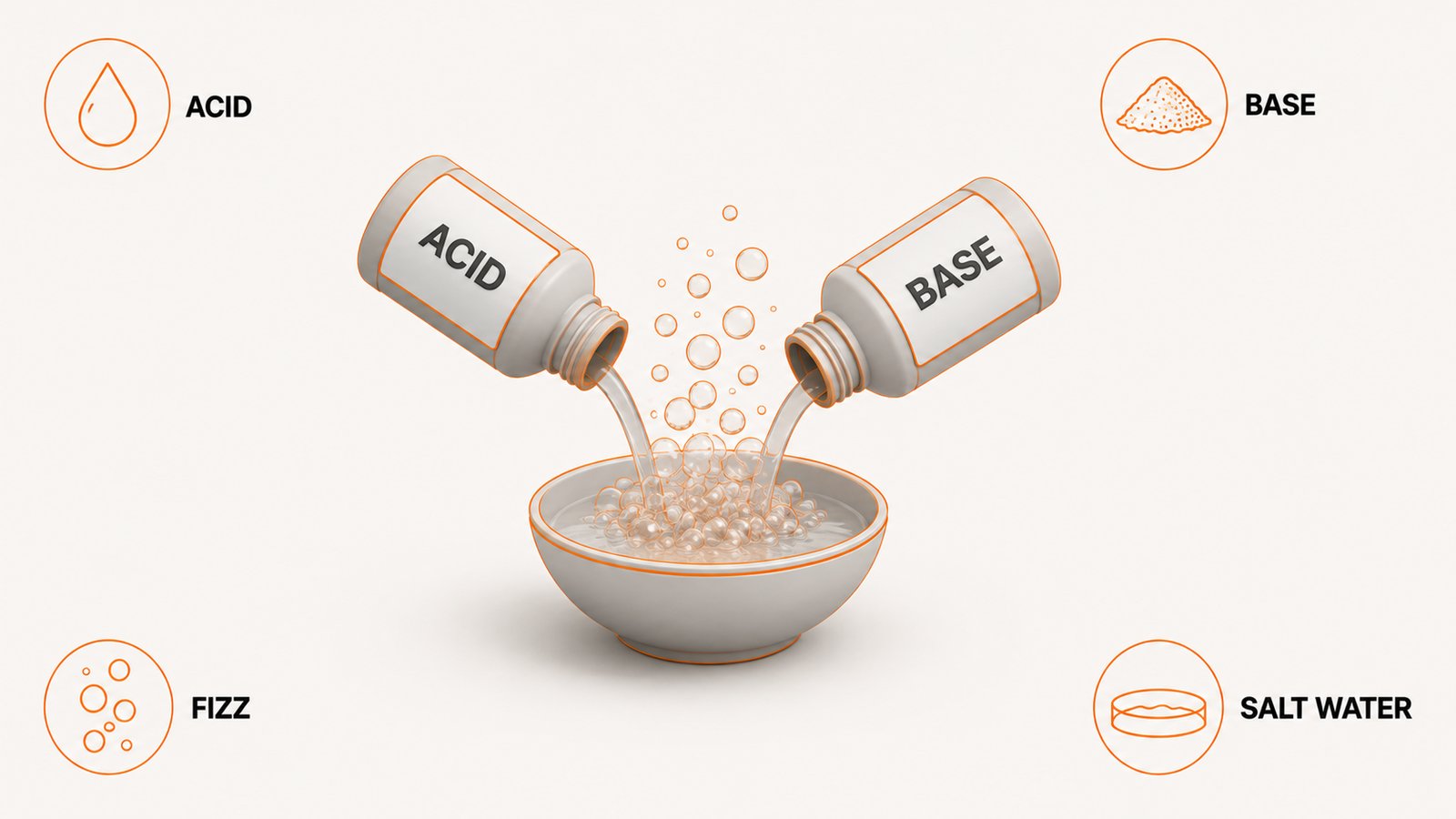
The internet loves this combination and the chemistry does not. Baking soda is sodium hydrogen carbonate, catalogued by PubChem with a role as an antacid, which is a formal way of saying its job is to neutralize acid. Vinegar is dilute acetic acid. Put them in the same bowl and each destroys the property the other was brought in for. The fizz you see is carbon dioxide leaving, and what stays behind is mostly salty water.
So the volcano is not a cleaner. If you want to use both, use them in sequence and rinse in between: acid first on mineral scale, then a bicarbonate paste as an abrasive, or the other way around. Never at the same time in the same container.
Whether vinegar alone earns its reputation is a separate question, and we tested the claims on does vinegar kill mold. The short version is that acetic acid does something on hard, non-porous surfaces and very little through a porous one, which is the same limit baking soda runs into.
One safety rule outranks all of this. CDC is explicit that you must never mix bleach with ammonia or other cleaners, because it produces a poisonous gas. Baking soda plus vinegar is harmless fizz. Bleach plus an ammonia-based glass cleaner is not. Work with one product at a time, with a window open.
How to use baking soda on mold, step by step
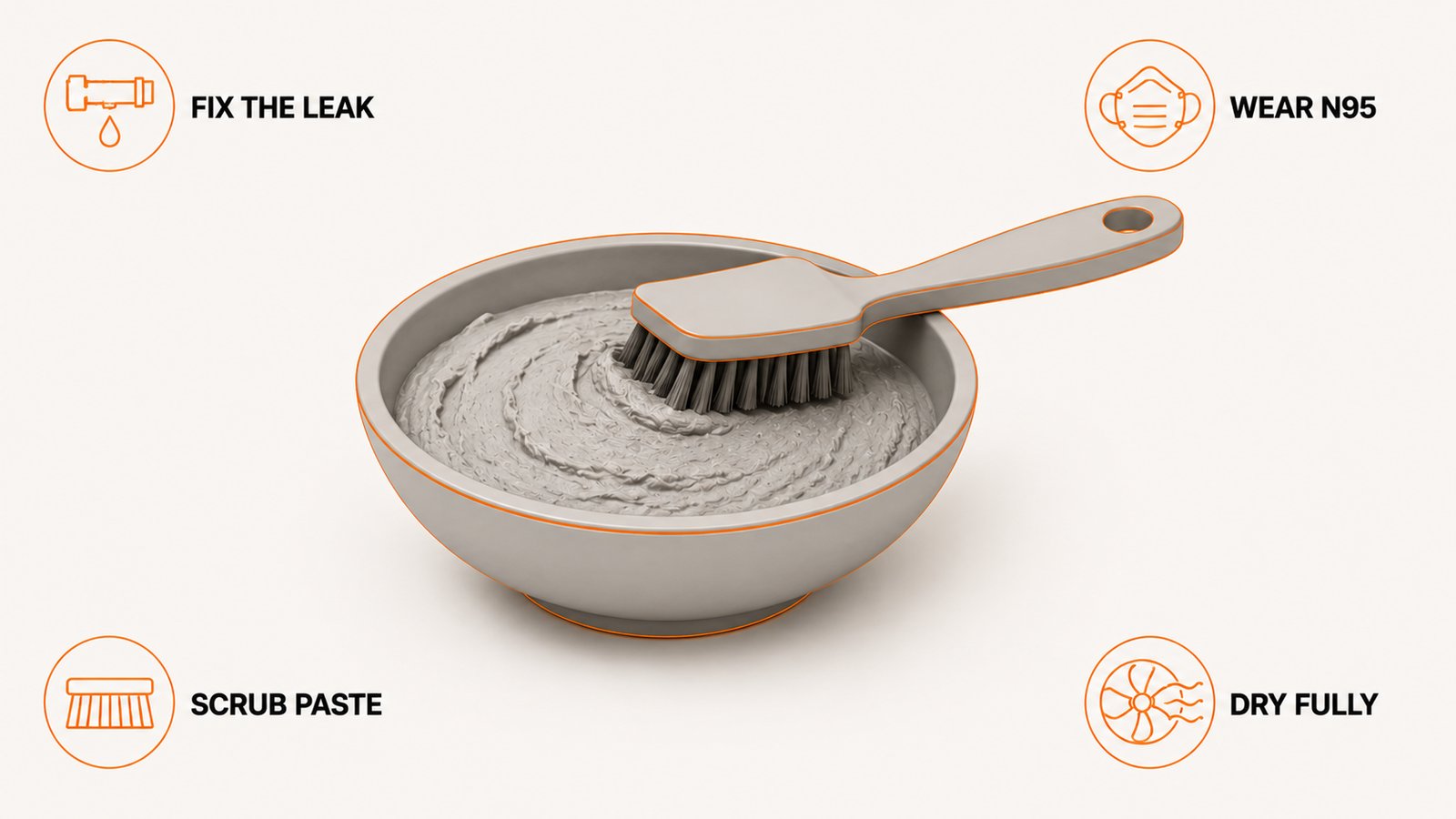
This is for a small area only. EPA draws the do-it-yourself line at less than about 10 square feet, roughly a 3 ft by 3 ft patch, and points anything larger, or anything following significant water damage, to its professional guide.
1. Find the water and stop it. EPA is direct that there is no practical way to eliminate all mold and mold spores indoors, and that the way to control indoor growth is to control moisture. Clean before the leak is fixed and you are scheduling a repeat.
2. Put the gear on. An N95 respirator rather than a dust mask, rubber gloves, and goggles without vent holes. Open a window. Close the door to the rest of the house so what you disturb stays in one room.
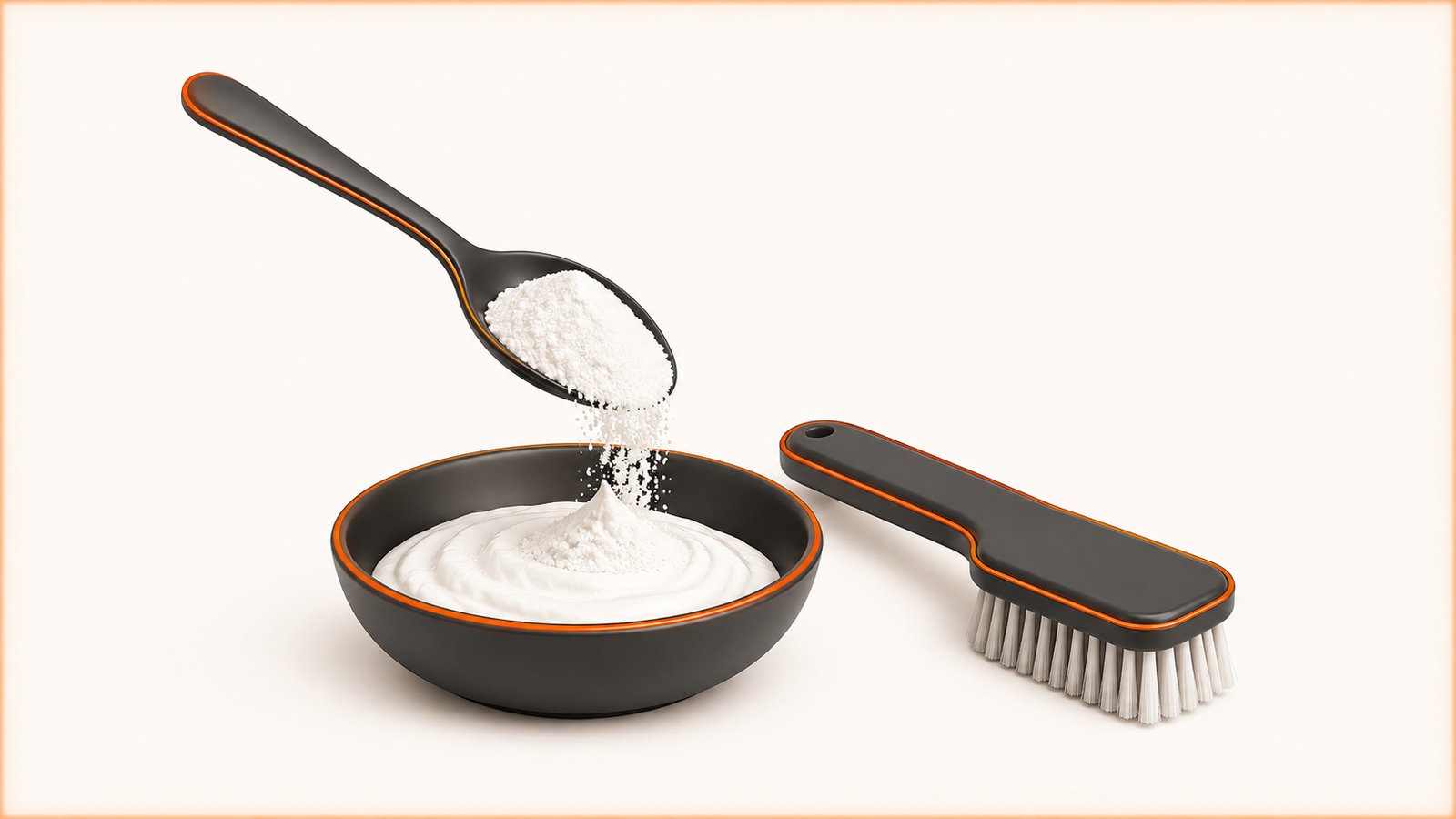
3. Mix a paste, not a spray. Roughly one part baking soda to one part water, thick enough to stay on a vertical surface. A thin solution runs off and does nothing. For a flat horizontal surface a dry sprinkle plus a damp sponge works the same way.
4. Scrub, do not smear. A stiff nylon brush on tile and grout, a soft one on painted drywall so you do not open the paint film. EPA's own instruction for hard surfaces is detergent and water, so a squirt of dish soap in the paste is closer to the guidance than the powder alone.
5. Rinse and dry completely. Both EPA and CDC end their cleaning instruction the same way: dry completely. Residual bicarbonate left on the surface is fine and mildly discourages regrowth, but standing water undoes the whole job. Run a fan, and keep indoor humidity in the 30 to 60 percent band EPA recommends.
6. Throw away what cannot be dried. EPA says absorbent or porous materials such as ceiling tiles and carpet may have to be thrown away, because mold grows into the crevices and cannot be removed.
Where baking soda works and where it fails
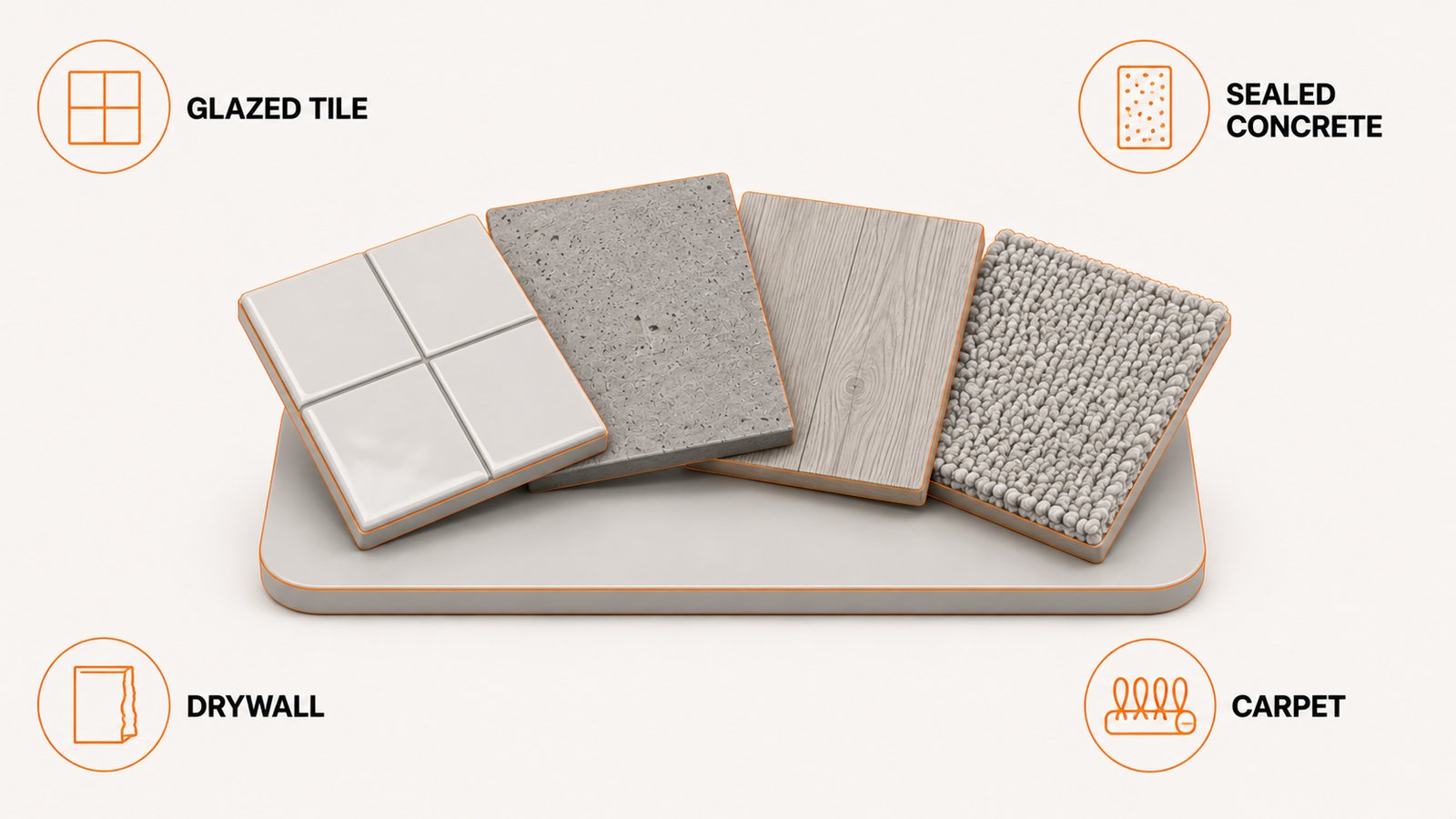
The dividing line is porosity, not the room. If a surface can be scrubbed and then dried through, a bicarbonate paste is a reasonable tool. If growth has moved into the material, no topical product reaches it, and the material comes out instead.
| Surface | Baking soda verdict | What to do instead |
|---|---|---|
| Glazed tile, glass, enamel tub | Works. Mild abrasive lifts the film without scratching | Nothing, this is its best use |
| Grout and silicone caulk | Partly. Cleans the stain, misses growth inside the seam | Replace failed caulk, see mold on grout |
| Sealed concrete, metal, plastic | Works as a scrub, dry it fully afterward | Nothing, then fix the moisture |
| Painted drywall, surface film only | Works if the paint film is intact and the board is dry | Detergent and water is the EPA instruction |
| Drywall with growth through the paper | Fails. Nothing topical reaches the back of the sheet | Cut it out, see mold on drywall |
| Carpet, ceiling tile, insulation, upholstery | Fails. Porous material cannot be cleaned and dried reliably | EPA says these may have to be thrown away |
| Bare wood, framing, subfloor | Partly. Sands and scrubs the surface, not the depth | See mold on wood, then a pro for structure |
| Anything still wet from an active leak | Fails. It regrows on schedule | Fix the water first |
The rooms where this matters most already have their own pages: mold in the bathroom, mold on grout, mold on drywall, and mold on wood. If the growth is dark and you are weighing a bigger response, read what dark growth can and cannot tell you first, because color is not a species and a photo is not a test.
Baking soda vs vinegar, bleach, and registered products
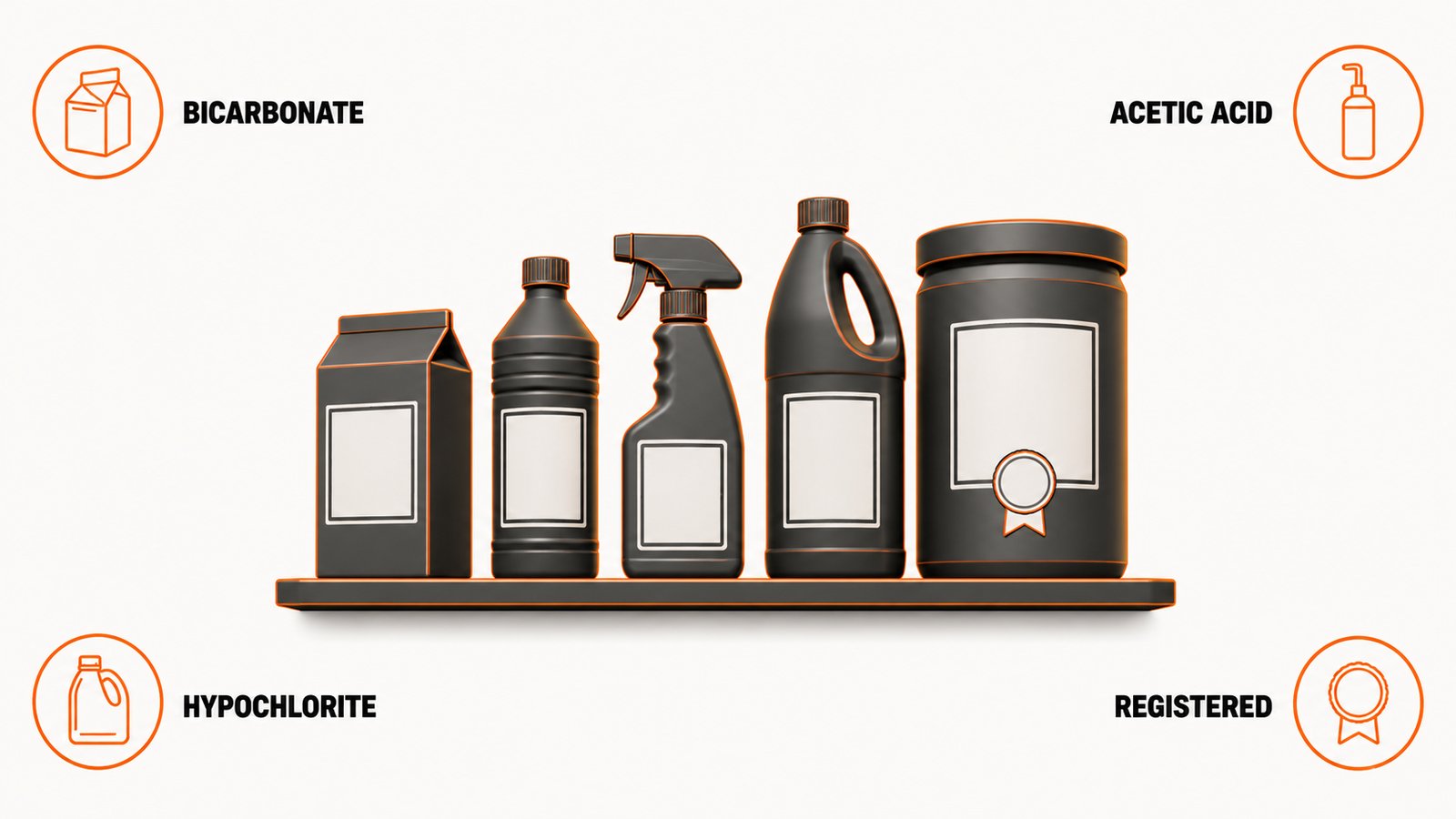
Nothing on this list fixes a leak, and nothing on it makes porous material safe to keep. With that said, here is how the household options actually differ.
| Option | What it is | Registered to kill mold? | Realistic use |
|---|---|---|---|
| Baking soda | Sodium bicarbonate, a food-grade base | No | Mild abrasive scrub, deodorizer, growth inhibitor |
| Detergent and water | Surfactant | No | What EPA actually instructs for hard surfaces |
| Vinegar | Dilute acetic acid | No | Acidic surface cleaner, argued about constantly |
| Hydrogen peroxide, 3 percent | Oxidizer | Some formulations are registered, the drugstore bottle is not | Surface treatment, bleaches some finishes |
| Household bleach | Sodium hypochlorite | Some products are registered | CDC allows up to 1 cup per gallon of water on hard surfaces |
| EPA-registered mold products | Varied actives | Yes, that is what registration means | Follow the label, it is the legal instruction |
Registration status describes whether a product carries an EPA registration for a pesticidal claim. It is not a ranking of how well anything cleans.
We ran each of the household claims down separately: does bleach kill mold, does vinegar kill mold, and hydrogen peroxide for mold. If you would rather buy something with a label to follow, our roundups of mold removal products and mold cleaning products cover what each one is registered to do.
For a shower specifically, the products worth knowing are covered in our roundup of the best mold removers for a shower, and the food-safe interior of an appliance follows different rules again, covered on mold in a fridge. One product worth knowing about if you like the bicarbonate idea: Concrobium Mold Control works on a related principle, drying down into a film that crushes spores mechanically rather than relying on a biocide. It is sold with a label, which is the part the kitchen cupboard cannot offer.
When to stop scrubbing and call a pro
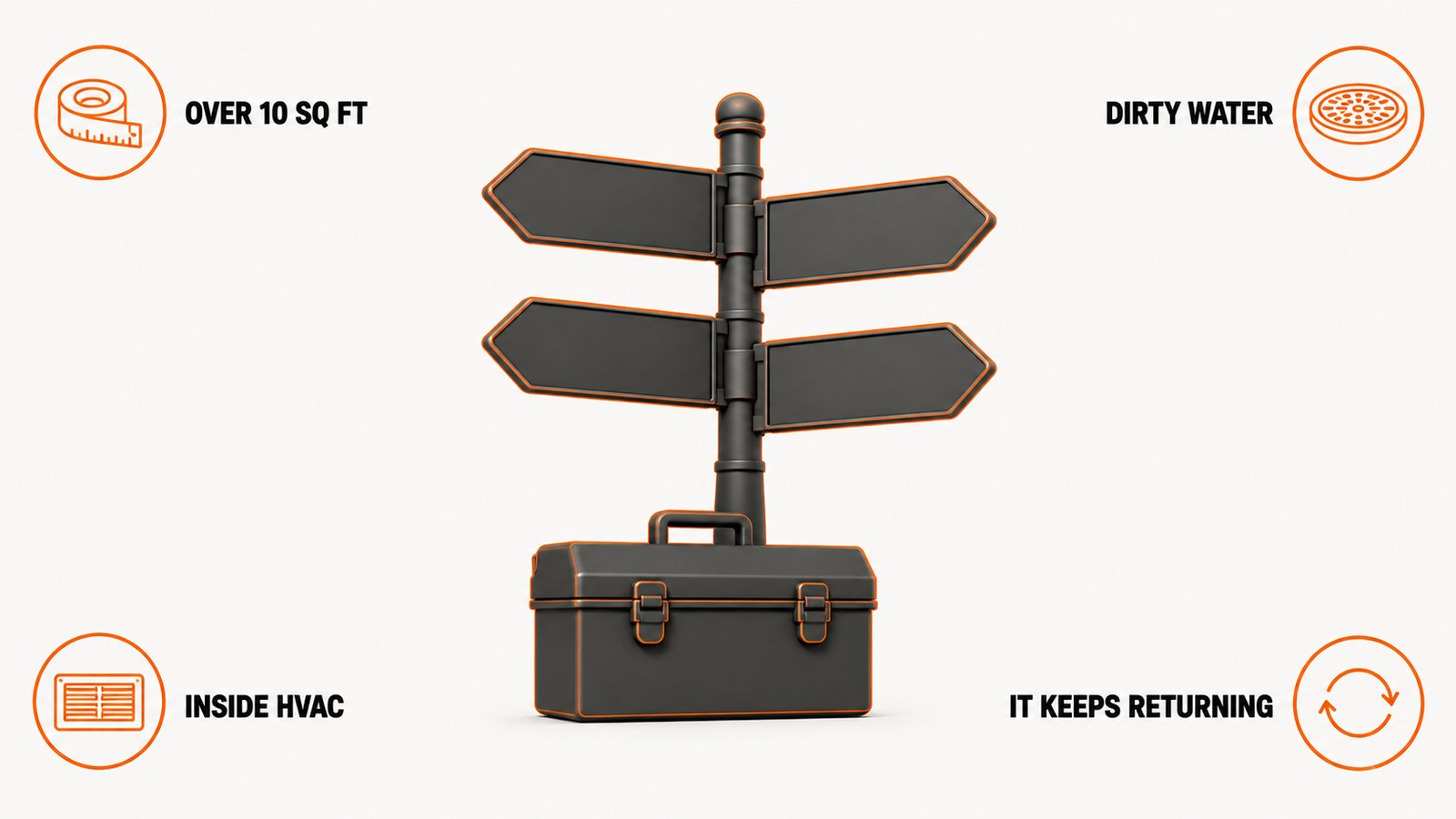
Four situations mean the box of baking soda is the wrong tool, whatever the surface looks like.
The area is bigger than about 10 square feet. That is EPA's line, and above it EPA sends readers to its professional remediation guide rather than to a cleaning method.
The water was contaminated. EPA says that if the water or mold damage was caused by sewage or other contaminated water, call a professional with experience in buildings damaged by contaminated water. No household cleaner changes that.
The heating or cooling system is involved. EPA says not to run an HVAC system you know or suspect is contaminated, because it can spread mold through the building. Turn it off and get it looked at rather than opening it up.
It comes back in the same spot. Regrowth is a moisture verdict, not a cleaning failure. Something is still wet, and no amount of scrubbing outruns it.
If you are weighing what a professional would charge, our page on mold remediation cost has the 2026 price tables by area, room, and severity, and mold remediation cost covers what a proper scope of work includes. EPA also suggests checking that a contractor follows its guide or the guidelines of IICRC or ACGIH.
Frequently asked questions
Does baking soda kill mold or just clean it?
It mostly cleans. Published testing found carbonate and bicarbonate salts to be fungistatic, meaning they hold growth back rather than kill it, with sodium bicarbonate among the strongest of the four salts tested at a 3 percent solution. On a hard surface a paste lifts the film and absorbs odor, which is useful. It is not an EPA-registered mold product and does not carry that claim.
How long should baking soda sit on mold?
Long enough to soften the film, which is usually 10 to 20 minutes for a paste on a vertical surface, then scrub and rinse. Leaving it on for hours does not add much, because the effect is abrasive and fungistatic rather than a chemical kill. The step that matters more is drying the surface completely afterward.
Can I mix baking soda and vinegar to clean mold?
You can, but they cancel. Baking soda is sodium hydrogen carbonate, catalogued as an antacid, and vinegar is dilute acetic acid. Combined they neutralize each other and release carbon dioxide, leaving mostly salty water. Use them one at a time with a rinse in between if you want both.
Is baking soda safe on painted drywall?
On an intact paint film, yes, with a soft brush and a light touch, because heavy abrasion opens the paint and exposes the paper facing. If growth has gone through the paper, no topical cleaner reaches it, and EPA treats porous material that cannot be cleaned and dried as material to remove rather than clean.
What does EPA actually recommend for cleaning mold?
Scrub mold off hard surfaces with detergent and water and dry completely, and expect that absorbent or porous materials such as ceiling tiles and carpet may have to be thrown away. EPA does not name baking soda. Adding a little dish soap to a bicarbonate paste puts you closer to the published instruction.
Will baking soda stop mold from coming back?
Only while the surface stays dry. Regrowth is a moisture problem. EPA states there is no practical way to eliminate all mold and mold spores indoors and that the way to control growth is to control moisture, with indoor humidity held between 30 and 60 percent. Fix the leak, vent the room, and the residue helps at the margin.
Does baking soda remove the musty smell?
It helps, because bicarbonate absorbs odor, which is why an open box works in a refrigerator. A smell that survives cleaning and drying usually means growth you have not found yet, often behind or beneath the surface you cleaned. In that case the odor is data, not a cleaning problem.
Baking soda or bleach for bathroom mold?
For a surface film on tile, grout, or an enamel tub, a bicarbonate paste with a little detergent handles it without fumes. CDC allows a bleach solution of no more than 1 cup of household laundry bleach per gallon of water on hard surfaces, and warns never to mix bleach with ammonia or other cleaners. Neither one reaches growth inside porous material.
Sources
Every claim on this page traces to one of these. Links open the primary document.