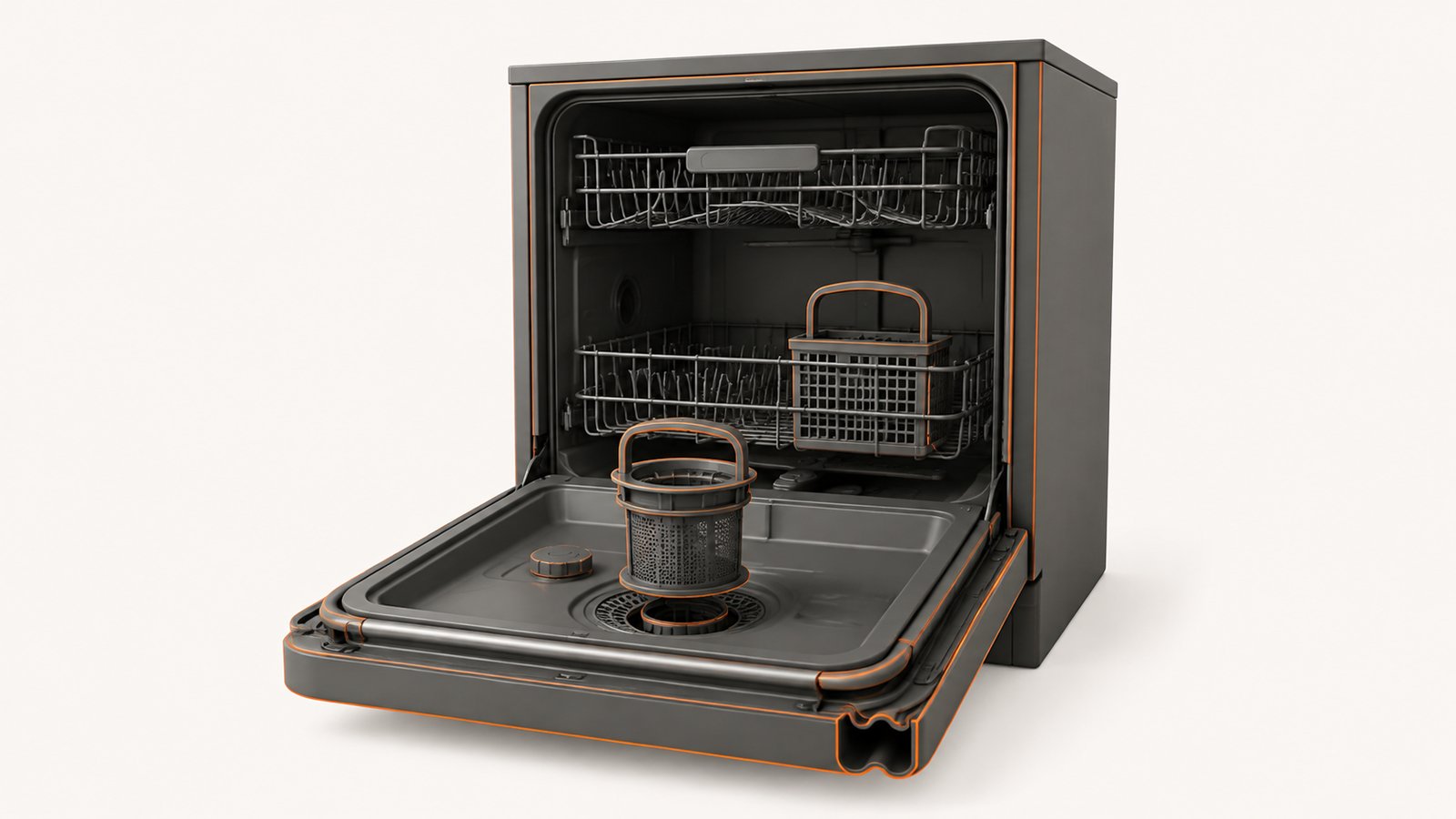
What actually grows in a dishwasher
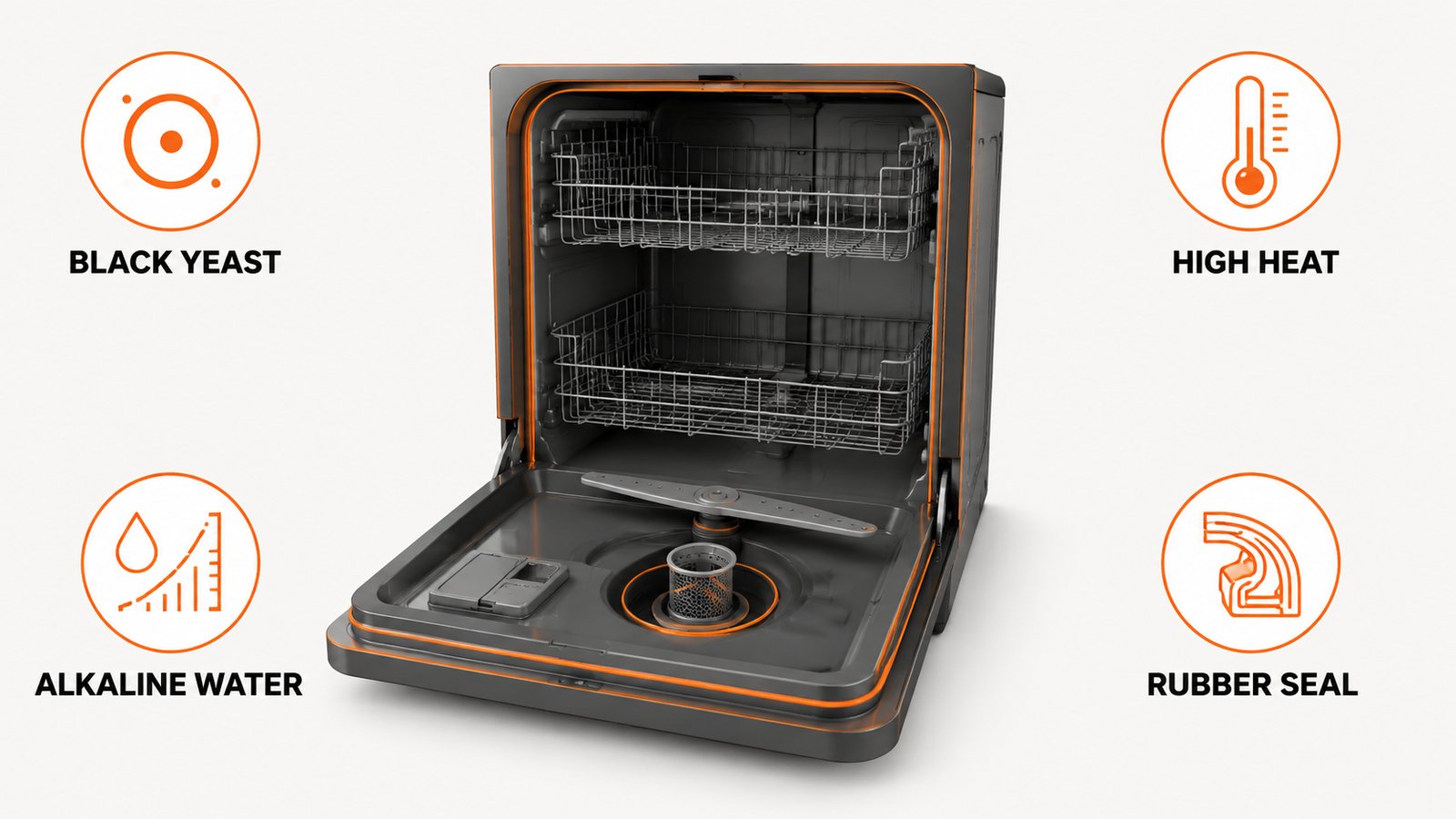
What people call mold in a dishwasher is usually not the fuzzy growth found on a damp wall. Three independent sampling studies point at the same narrow group of organisms, and the reason is the machine itself.
Zalar and colleagues published the first large survey in Fungal Biology in 2011, sampling 189 dishwashers in private homes across 101 towns and communities on six continents. 62 percent were positive for fungi, and 56 percent of those positive machines carried Exophiala, a group of black yeasts. Genera including Aspergillus, Candida, Fusarium, Penicillium and Rhodotorula turned up occasionally, but the black yeasts Exophiala dermatitidis and Exophiala phaeomuriformis were persistently and most frequently isolated.
Their conclusion explains the pattern. High temperature, high moisture and alkaline pH values typically occurring in dishwashers provide an alternative habitat for these species. The machine is not failing to kill them. It is selecting for the ones that tolerate exactly those conditions.
A 2016 follow-up in PLoS ONE sampled nine sites inside 30 residential dishwashers, isolated 503 fungal strains across 10 genera and 84 species, and found 83 percent of machines positive. A 2026 study of 22 machines in Poland reported the same lead organism. The authors of all three describe most of the species isolated as human opportunistic pathogens, and health questions about that belong to a licensed clinician rather than to this page.
If the film you are looking at is pink or orange rather than dark, it is probably not a fungus at all. See pink mold, which is usually a bacterium, and what dark growth can and cannot tell you if it is dark.
Where mold lives inside a dishwasher
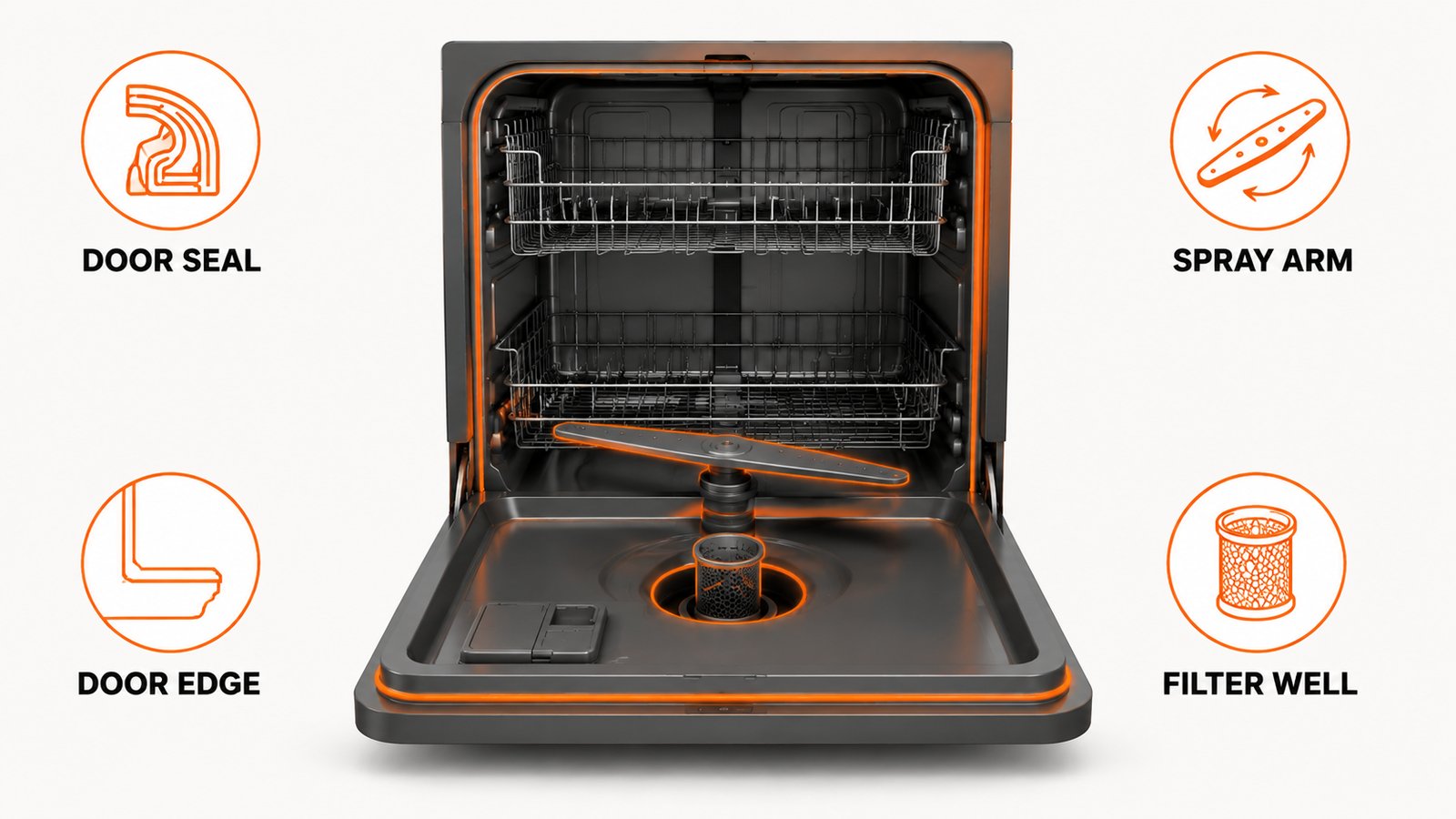
The sampling studies did the hard part here: they took samples from named parts rather than from the machine in general, so there is an actual map.
| Site inside the machine | What the sampling found | How to reach it |
|---|---|---|
| Rubber door seal | The most heavily colonized site in two separate studies, and the primary location of the black yeast in the 2016 sampling | Wipe by hand, into the folds, every time you clean |
| Side nozzles and spray arms | Named among the most heavily contaminated sites in the 2016 study | Unclip and rinse under the tap, clear the jets |
| Door and door edges | Named among the most heavily contaminated sites | Wipe the inside face and the lip below the seal |
| Drain and filter well | Named among the most heavily contaminated sites | Lift the filter out, wash it in the sink, wipe the well |
| Waste water | Contained Exophiala dermatitidis, Exophiala oligosperma and Sarocladium killiense | Nothing to clean directly, it is a drainage question |
| The dishes themselves | Only one species was isolated from washed dishes across the nine sites sampled | This is the reassuring line in the data |
Site findings from Zupancic and colleagues, PLoS ONE 2016, sampling nine sites inside 30 residential dishwashers, and Piecuch and colleagues, Brazilian Journal of Microbiology 2026, sampling 22 machines.
The seal is the headline. In the 2016 study the black yeast Exophiala dermatitidis was detected in 47 percent of the machines, primarily at the dishwasher rubber seals, at densities reaching 1,000,000 colony-forming units per square centimeter, with the other fungi found at lower densities. The 2026 Polish study reported rubber seals as the most frequently colonized site as well.
The 2016 authors also traced the likely route in. Plumbing systems supplying water to household appliances are described as the most probable source, because the fungi forming the core dishwasher community were also detected in the tap water. That is worth knowing, because it means a spotless machine can be recolonized from the supply.
The washing machine has the same weak point for the same reason. See mold in a washing machine for that gasket, and mold in a fridge for the third appliance seal in the same room.
Why hot water and detergent do not clear it
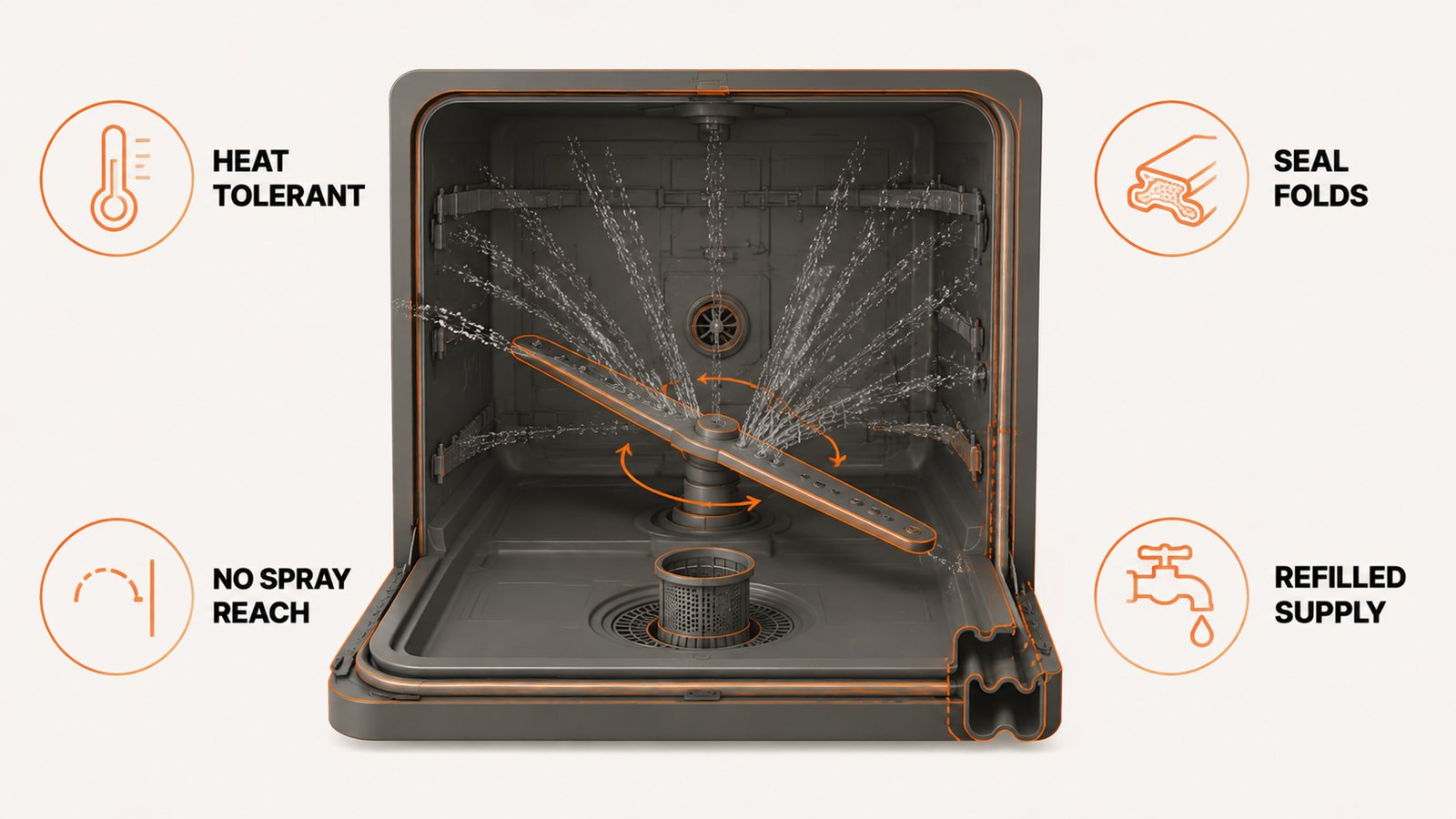
People assume a machine that runs at high temperature with detergent every day should sterilize itself. Three findings say otherwise.
The conditions are the habitat, not the defense. The 2011 authors concluded that the high temperature, high moisture and alkaline pH typical of dishwashers provide an alternative habitat for species also known to be pathogenic to humans. Running it hotter selects harder for the same organisms.
The cycle does not reach the seal. The spray pattern is aimed at the racks. The folds of the door gasket, the underside of the door lip, and the outer edge of the filter well sit outside it, which is exactly where the sampling found the heaviest growth.
Machine settings did not predict contamination. The 2026 Polish study looked for correlations between fungal contamination and the model, usage time, frequency of use or sanitizing, operating temperature, and number of users, and reported no clear correlations with any of them. That is a striking finding, and it points the whole answer at manual cleaning of the parts the water misses.
It also means a sanitize cycle is not the fix on its own. Neither is running the machine empty with something poured in the bottom, because the liquid follows the same path the water does.
How to clean a dishwasher, step by step
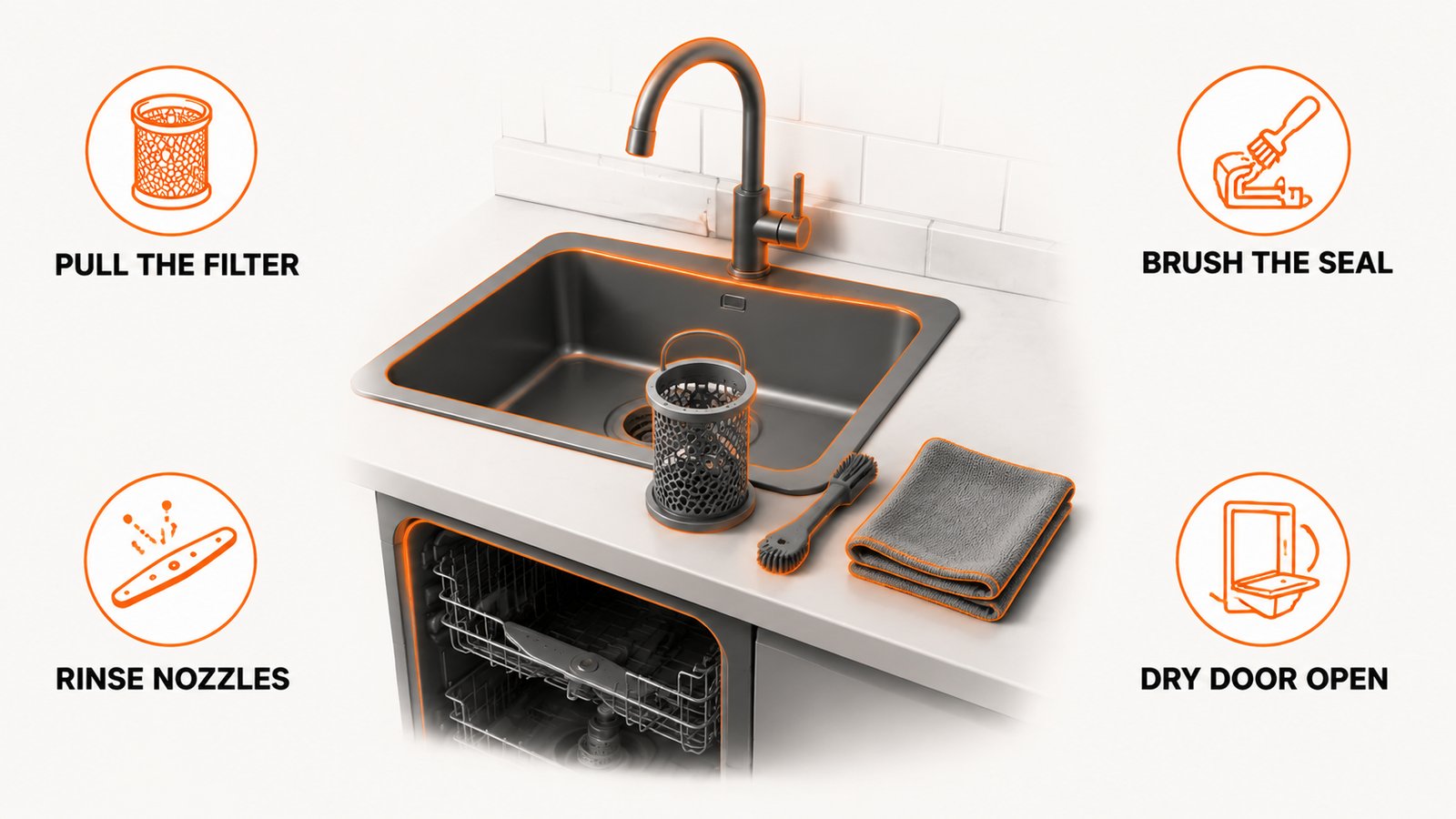
Everything useful happens by hand, at the four sites the studies named. Read your own owner's manual before you use any product inside the machine, because interior materials and warranty terms differ by model.
1. Pull the filter and wash it in the sink. On most machines it twists out of the floor of the tub. Wash it with dish soap and a brush, and wipe the well it sits in while it is out.
2. Do the door seal by hand, into the folds. This is the site with the heaviest growth in the sampling, and it is the one the cycle never touches. USDA's published household instruction for the equivalent part on a refrigerator is to scrub visible mold on rubber casings using 3 teaspoons of bleach in a quart of water. That instruction was written for a refrigerator, so check your dishwasher manual before applying it here, and rinse and dry the seal afterward either way.
3. Unclip the spray arms and clear the jets. Rinse them under the tap and poke any blocked hole clear with a toothpick.
4. Wipe the door edges and the lip under the seal. The strip below the gasket that never gets wet during a cycle collects the most.
5. Wash the detergent dispenser and the racks. Dish soap and a cloth. Nothing exotic.
6. Leave the door ajar between runs. This is the single habit that changes the outcome, because it lets the interior dry. EPA's general moisture guidance is the same principle at house scale: hold indoor humidity between 30 and 60 percent and dry wet material within 24 to 48 hours.
One safety rule outranks the rest. CDC states never to mix bleach with ammonia or other cleaners, because it produces a poisonous gas. Use one product per session, and rinse in between if you change.
Does white vinegar kill mold in a dishwasher?
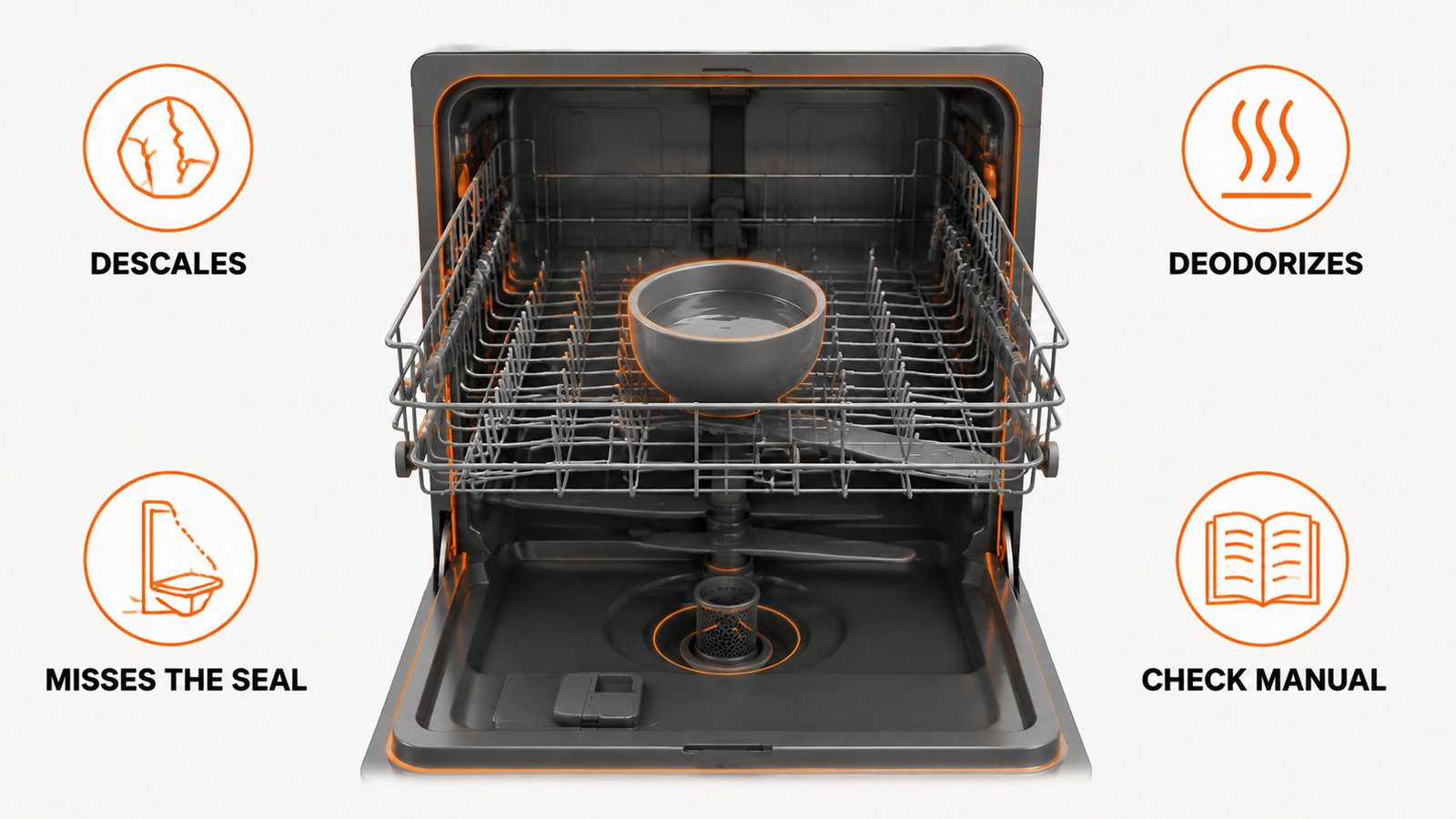
It is the most searched question on this topic, and the honest answer has two halves.
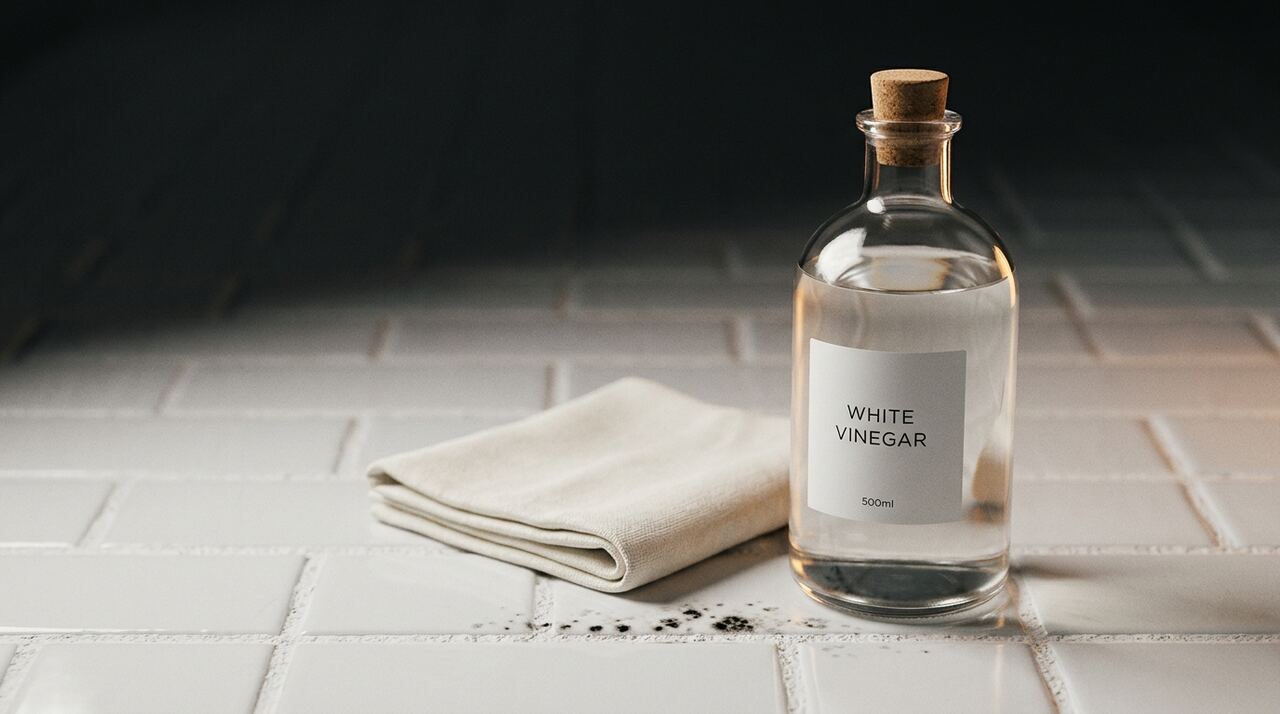
What it does. A bowl of white vinegar run through a hot cycle is a mild acid wash. It loosens mineral scale and it deodorizes, which is why the machine smells better afterward. That is a real result and it is worth doing occasionally.
What it does not do. It follows exactly the same path the wash water follows, which means it does not reach the folds of the door seal, the lip under the door, or the outside of the filter well. Those are the sites the sampling studies found most heavily colonized. A cycle cannot substitute for wiping the seal by hand.
There is also a materials caution. Repeated acid cycles are argued about for rubber seals and some interior components, and manufacturers differ, so your owner's manual is the authority for your machine rather than a web page.
We ran the underlying chemistry question down separately on does vinegar kill mold, and the same for the other two things people pour in: does bleach kill mold and baking soda for mold removal. The short version across all three is that the household products do something on hard surfaces you can reach and very little on anything you cannot.
Whatever you use, never combine two of them, and never put a chlorine product in behind an acid one without rinsing first.
Can a moldy dishwasher be saved, and when to call a pro
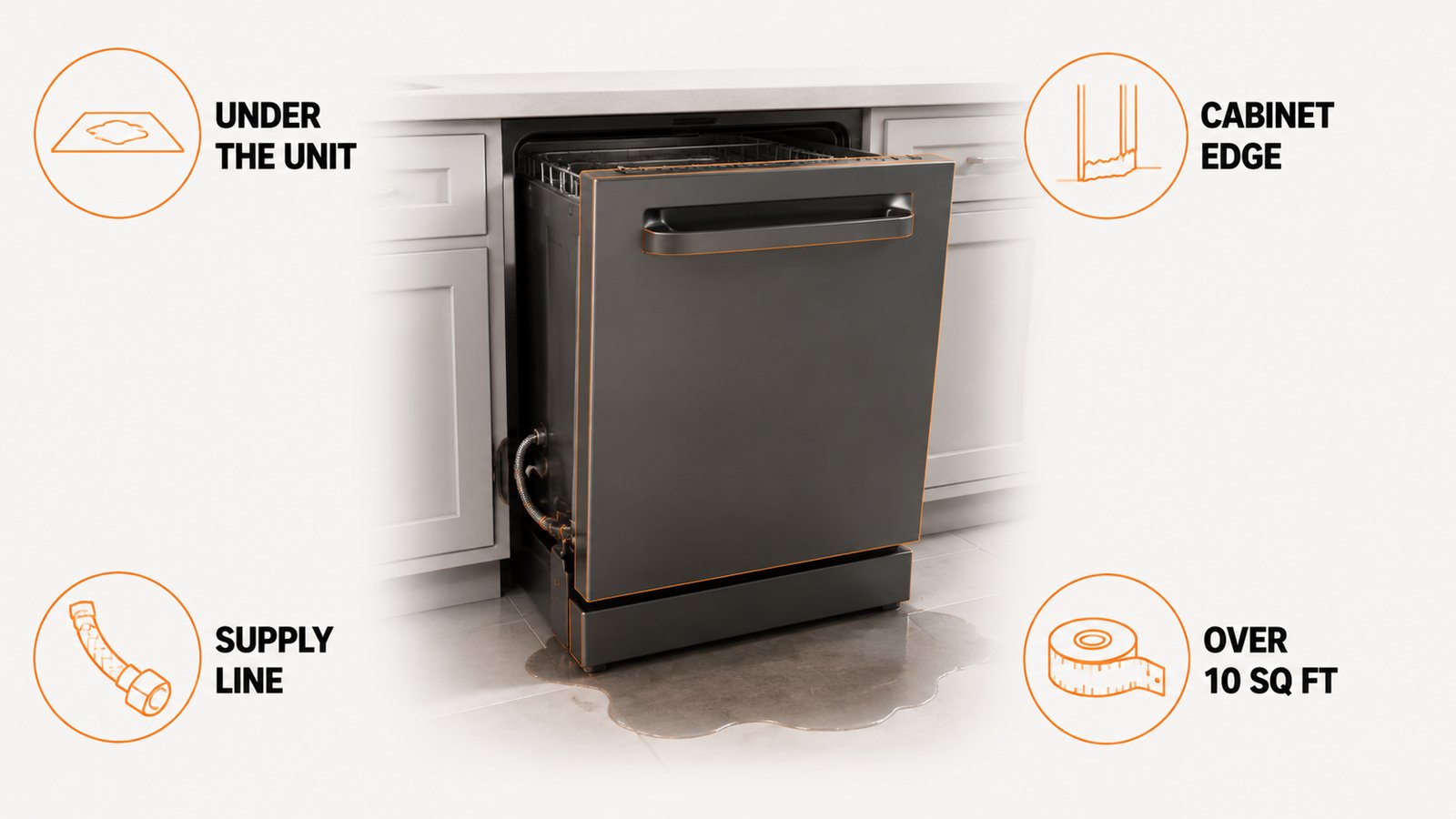
Almost always yes, the machine is fine. Contamination in the sampling studies sat on removable and wipeable parts, and the seal, the filter, the spray arms and the door all clean by hand. A seal that is cracked or permanently discolored is a replaceable part, and replacing it costs a fraction of a machine.
Four situations are not a cleaning job.
Growth on the floor, the cabinet, or the wall around the unit. Dishwashers leak slowly from supply lines and drain hoses, under a cabinet nobody moves. That is a building problem, and by the time it is visible at the edge it is usually larger underneath.
The affected area outside the machine is larger than about 10 square feet. EPA's line for consumer cleanup, above which it points readers to its professional remediation guide.
The cabinet base or the floor is soft. Water has been moving through the structure. Cleaning the surface treats a symptom. Our page on mold in the kitchen covers the under-sink and cabinet cases in the same room.
Someone in the home reacts to it. CDC says exposure to damp and moldy environments may cause a variety of health effects or none at all, that people with asthma or a mold allergy may have severe reactions, and that immune-compromised people and people with chronic lung disease may get lung infections from mold. Health questions go to a licensed clinician.
If it turns out to be a repair rather than a wipe-down, the 2026 price tables are on mold remediation cost. If the smell survives a full clean of the machine and the space around it, the source is probably elsewhere: see what mold smells like and where it hides and how to prevent mold.
Frequently asked questions
What causes black growth in a dishwasher?
Sampling studies point at black yeasts. Zalar and colleagues surveyed 189 dishwashers in private homes and found 62 percent positive for fungi, with Exophiala dermatitidis and Exophiala phaeomuriformis persistently and most frequently isolated. Their explanation is that the high temperature, high moisture and alkaline pH typical of dishwashers provide an alternative habitat for exactly those species.
Is it safe to use a dishwasher with mold in it?
The sampling data is reassuring on the dishes themselves: in the 2016 study, which took samples from nine sites inside 30 machines, only one species was isolated from washed dishes. The heavy growth sat on the rubber seal, side nozzles, doors and drains. That said, the authors describe most species isolated as human opportunistic pathogens, so anyone with a health concern should ask a licensed clinician rather than a website.
Can a moldy dishwasher be saved?
Almost always. The contamination in the published sampling sat on parts that come out or wipe down: the filter, the spray arms, the door and the rubber seal. A cracked or permanently stained seal is a replaceable part. What cannot be cleaned away is a leak under the unit, which is a plumbing and building repair rather than an appliance problem.
Does white vinegar kill mold in a dishwasher?
It descales and deodorizes, and it travels the same path the wash water does, which means it does not reach the folds of the door seal or the lip under the door where the sampling found the heaviest growth. Use it if you like for scale and odor, then wipe the seal by hand, and check your owner's manual first because manufacturers differ on acid cycles.
Where exactly should I clean?
The 2016 study named the rubber seals as the primary site, with side nozzles, doors and drains as the other most heavily contaminated ones, and the 2026 Polish study also found rubber seals most frequently colonized. Pull the filter and wash it in the sink, brush into the seal folds, unclip and rinse the spray arms, and wipe the door edges and the lip below the gasket.
Does running a hotter or a sanitize cycle fix it?
The evidence says no on its own. The 2026 study looked for correlations between fungal contamination and the model, usage time, frequency of use or sanitizing, operating temperature and number of users, and reported no clear correlations with any of them. The organisms tolerate the conditions the machine creates, and the cycle does not reach the seal folds.
Why does it come back after I clean it?
Two reasons. The seal folds are easy to miss and are where the density is highest. And the 2016 authors traced the likely route in to the plumbing supplying the appliance, because the core dishwasher fungi were also detected in the tap water. Leaving the door ajar between runs so the interior dries is the habit that makes the biggest difference.
Can I put bleach in the dishwasher?
Check your owner's manual first, because interior materials and warranty terms differ by model. USDA's published household instruction for the equivalent rubber part on a refrigerator is 3 teaspoons of bleach in a quart of water applied by scrubbing, which is a hand-applied wipe rather than something poured into a machine. CDC warns never to mix bleach with ammonia or other cleaners.
Sources
Every claim on this page traces to one of these. Links open the primary document.