What the evidence says about mold and sinus problems
The phrase covers two different claims, and the evidence treats them very differently.
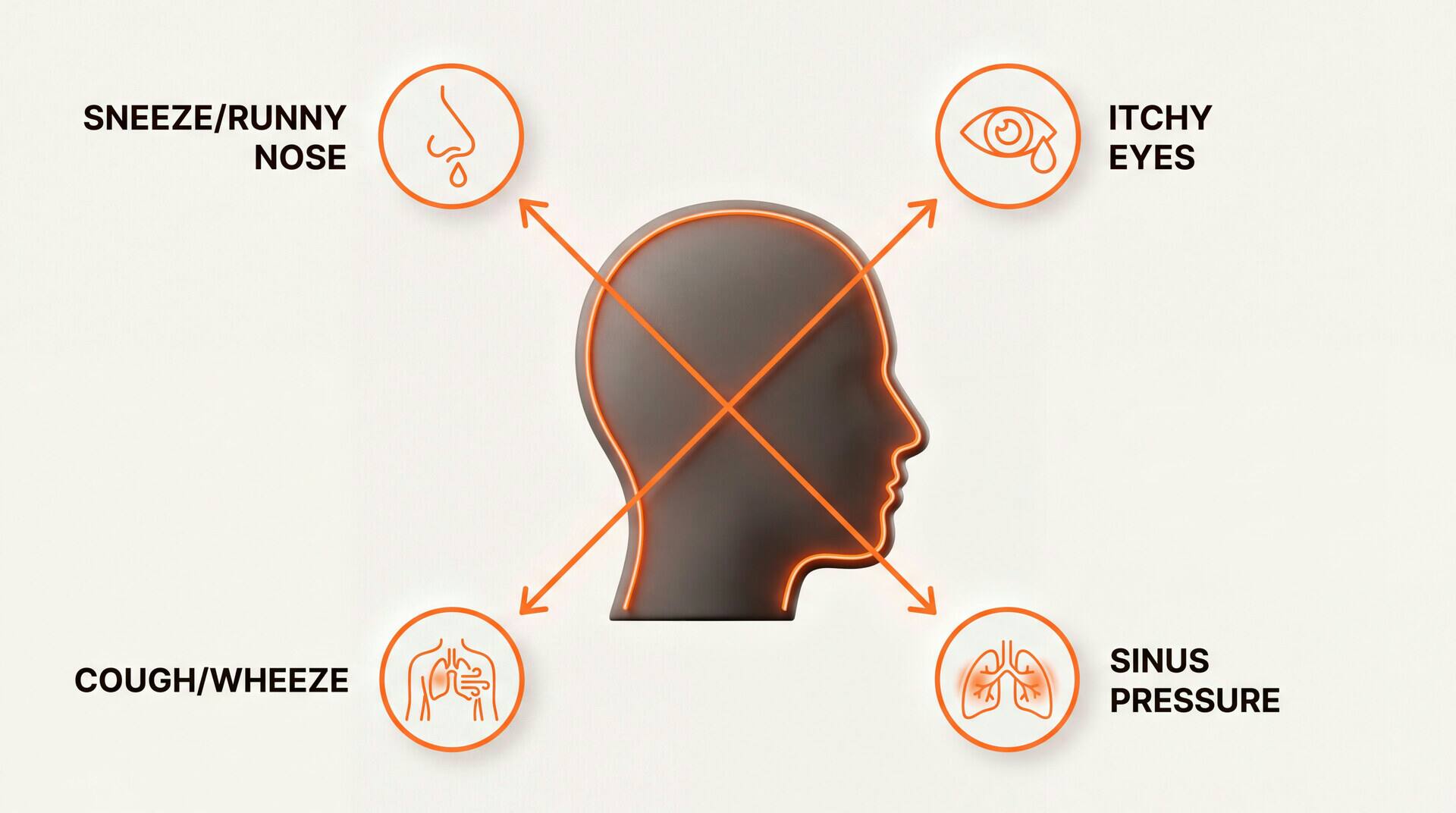
The first is that damp indoor spaces are associated with upper respiratory symptoms. That one is well supported. CDC states that exposure to damp and moldy environments may cause a variety of health effects, or none at all, and names a stuffy nose and sore throat among them, with severe reactions in people who have asthma or a mold allergy. The Institute of Medicine's 2004 review, as summarized by CDC, found sufficient evidence to link indoor mold exposure with upper respiratory tract symptoms, cough and wheeze in otherwise healthy people.
The second claim is that household mold causes sinus infections. That is a much narrower assertion, and none of the three agency reviews makes it.
| Source | What it establishes | What it does not |
|---|---|---|
| CDC, About Mold | Names a stuffy nose and sore throat among possible effects of damp and moldy environments, and severe reactions in people with asthma or a mold allergy | Does not say that damp buildings cause sinus infections |
| Institute of Medicine 2004, as summarized by CDC | Sufficient evidence to link indoor mold exposure with upper respiratory tract symptoms, cough and wheeze in otherwise healthy people | Does not name sinusitis as a separate established outcome |
| WHO 2009 indoor air quality guidelines on dampness and mold | The most important effects are increased prevalences of respiratory symptoms, allergies and asthma, plus perturbation of the immunological system | Does not identify sinus infection as a distinct finding |
| Cochrane systematic review, 2018 | Assessed antifungal therapy for chronic rhinosinusitis against placebo or no treatment | Concluded it is uncertain whether it changes patient outcomes, on very low quality evidence |
| Tyler and colleagues, 2021 review | Describes the pathologic role of bacteria in chronic inflammatory disease as generally accepted | States the understanding of the role of fungi remains controversial |
Each row is quoted or summarized from the named source. Nothing here diagnoses anything or describes a treatment.
What this adds up to is worth stating plainly, because both extremes get sold online. Damp buildings are genuinely associated with upper respiratory symptoms, and treating a chronic sinus problem as a straightforward mold problem is not supported by the reviews. Both things can be true at once, and neither is a diagnosis of you. That conversation belongs to a licensed clinician.
The parallel evidence picture for headache is on mold headache, and the broader one on what the evidence supports about mold and health.
Fungi and chronic sinus disease: a contested question

This is one of the rare cases where a popular theory was tested head on rather than argued about forever, and the result is worth knowing before you spend money on it.
The idea was that fungi in the sinuses drive chronic rhinosinusitis, the long-running inflammation of the nose and paranasal sinuses that a Cochrane review describes as leading to nasal blockage, nasal discharge, facial pressure or pain, and loss of sense of smell. If that were the mechanism, targeting the fungus should help.
Cochrane looked at the randomized trials in 2018. Its authors' conclusion is one sentence and it is unambiguous: due to the very low quality of the evidence, it is uncertain whether or not the use of topical or systemic antifungals has an impact on patient outcomes in adults with chronic rhinosinusitis compared with placebo or no treatment, and studies including specific subgroups are lacking.
Three years later, a review by Tyler and colleagues put the state of play this way: while the pathologic role of bacteria in chronic inflammatory diseases is generally accepted, the understanding of the role of fungi remains controversial. That is where the science still sits.
Two things follow for a homeowner. Treating a long-running sinus problem as a mold problem is not something the trial evidence backs, and equally, a damp building is still a damp building and worth fixing on its own merits. Those are separate decisions made with separate professionals.
Allergic fungal rhinosinusitis is a specific diagnosis

There is a real condition in which fungus is central, and it is the one people reach for when they find the phrase. It is worth understanding precisely what it is, because the precision is the point.
A 2026 review in the Journal of Allergy and Clinical Immunology: In Practice describes allergic fungal rhinosinusitis as a distinct, noninvasive endotype of chronic rhinosinusitis with nasal polyps, characterized by type 2 inflammation, eosinophilic mucin containing fungal elements, and dramatic radiographic findings. The same review notes that patients often report disproportionately mild symptoms relative to how extensive the disease looks on imaging, which contributes to delayed diagnosis.
Read that description again for what it requires. Imaging. Laboratory examination of material taken from the sinuses. A specialist applying published diagnostic criteria. None of that can be inferred from a damp basement, a musty smell, an air sample, or a symptom list on a website.
So the honest position is this. A named fungal sinus condition exists, it is diagnosed by specialists using tests, and its existence is not evidence that an ordinary chronic sinus complaint is caused by household mold. Anyone whose sinus problems are persistent or severe should be talking to a clinician, and the material on this page is not part of that conversation.
If your interest is which genera turn up indoors, our page on Aspergillus covers the most commonly named one, and types of mold in homes covers the rest. Neither identifies anything from a photo.
What to measure in the building
The building side of this is measurable, unlike the health side, which is why it is the part worth acting on.
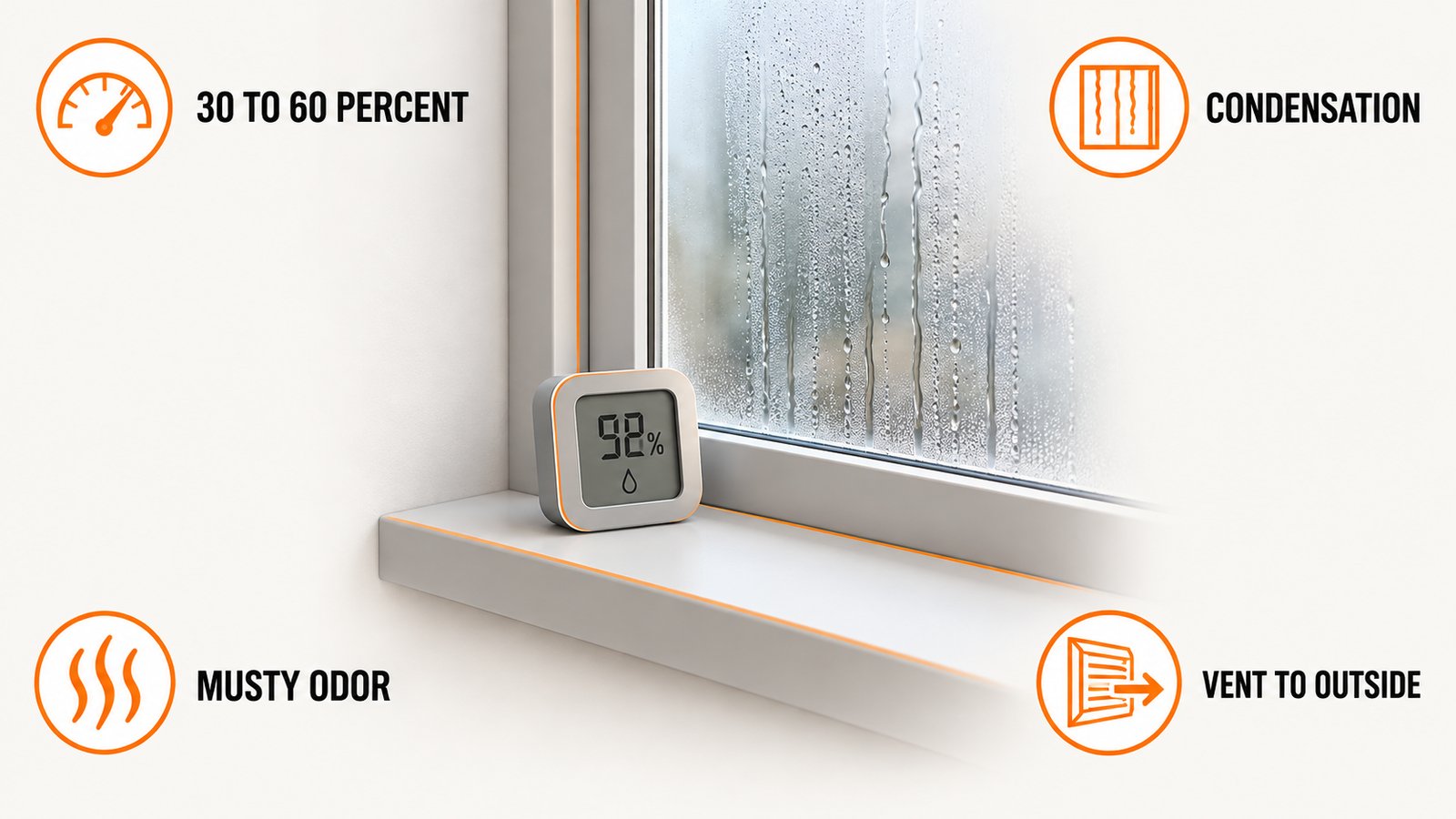
Relative humidity, room by room. EPA's guidance is 30 to 60 percent. USDA's food safety guidance goes lower and advises keeping house humidity below 40 percent as part of minimizing mold. A cheap hygrometer moved around over a week finds the outlier room, and the iPhone humidity check covers taking a reading without buying one.
Condensation on windows and cold surfaces. Water forming indoors means moisture has nowhere to go, and it is the most common visible sign of an over-humid house.
A musty odor and where it strengthens. Walk the house and note where it intensifies rather than trying to describe it. Our page on what mold smells like and where it hides covers the search pattern.
Anything that has been wet in the last two days. EPA's window for drying water-damaged material is 24 to 48 hours, after which growth becomes likely, and absorbent or porous materials such as ceiling tiles and carpet may have to be thrown away.
Run the full walk-through on signs of mold in a house before you buy anything. WHO's 2009 review ends in the same place: the most important means for avoiding adverse health effects is preventing or minimizing persistent dampness and microbial growth on interior surfaces and in building structures.
What a mold test can and cannot answer
People order a building test hoping it will settle a health question. It cannot, and knowing that in advance saves the money.
What a sample can do. Identify material collected from a named spot, compare indoor and outdoor spore counts at a moment in time, or confirm growth on a surface you point it at.
What no sample can do. Establish that a building is causing a symptom, define a safe exposure level for an individual, or substitute for a walk-through that finds the water. There is no laboratory number that certifies a home as safe for a person.
When it earns its cost. When a species answer changes a high-stakes decision, when a dispute needs an independent record, or when you can smell a source you cannot find. Our pages on how to test for mold, mold test kits and professional mold testing cover what each method answers.
EPA's position is that the response to visible indoor growth is the same regardless of species: fix the moisture, then clean or remove the affected material. That is why the practical page for most people is mold remediation cost rather than a test kit.
Air filtration is the other purchase people reach for. It filters particles from the air it moves and it removes no water from a building, so it belongs after the moisture fix rather than instead of it. Our roundup of air purifiers for mold covers what they do and do not change.
When to call a pro, and which one
Keep the two lanes separate and both move faster.
Anything about a person goes to a licensed clinician. Persistent or severe symptoms, anything that changes when you leave the house, and any question about what a condition is. CDC's own framing is that exposure to damp and moldy environments may cause a variety of health effects, or none at all, that people with asthma or a mold allergy may have severe reactions, and that immune-compromised people and people with chronic lung disease may get lung infections from mold. Nothing on this page substitutes for that.
Anything about the building goes to a building professional. Above about 10 square feet of affected area, EPA points readers to its professional remediation guide rather than to a do-it-yourself method. EPA also says not to run an HVAC system you know or suspect is contaminated, because it can spread mold through the building, and to call a professional experienced with contaminated water damage where sewage or other contaminated water was involved.
Ask any contractor for the standard they follow. EPA suggests its own remediation guide or the guidelines of ACGIH or IICRC. Keeping the inspector and the remediator separate removes the conflict of interest in one company both diagnosing and selling.
If the growth is on a surface you can reach and the area is small, how to get rid of mold covers the cleanup, and how to prevent mold covers keeping the humidity where EPA wants it. A dehumidifier sized to the space is usually the difference in a basement.
Frequently asked questions
What does the research say about mold and sinus problems?
Agency reviews support the general link. CDC names a stuffy nose and sore throat among possible effects of damp and moldy environments, and the Institute of Medicine found sufficient evidence linking indoor mold exposure to upper respiratory tract symptoms, cough and wheeze in otherwise healthy people. None of the major reviews names sinus infection as a separate established outcome.
Was the fungal theory of chronic sinus disease ever tested?
Yes. A Cochrane systematic review in 2018 assessed antifungal therapy for chronic rhinosinusitis against placebo or no treatment and concluded that, due to the very low quality of the evidence, it is uncertain whether it has an impact on patient outcomes. A 2021 review summarized the field by saying the understanding of the role of fungi in chronic rhinosinusitis remains controversial.
What is allergic fungal rhinosinusitis?
A 2026 review in the Journal of Allergy and Clinical Immunology: In Practice describes it as a distinct, noninvasive endotype of chronic rhinosinusitis with nasal polyps, characterized by type 2 inflammation, eosinophilic mucin containing fungal elements, and dramatic radiographic findings. It is identified by specialists using imaging and laboratory examination, not from a household observation.
Can a mold test tell me whether my house is affecting my sinuses?
No. A building sample can identify material from a named spot or compare indoor and outdoor spore counts at a moment in time. It cannot establish that a building is causing a symptom or define a safe exposure level for an individual. There is no laboratory number that certifies a home as safe for a person.
What humidity should I hold the house at?
EPA's guidance is 30 to 60 percent to decrease mold growth. USDA goes lower for the same purpose, advising keeping the humidity level in the house below 40 percent. A cheap hygrometer moved from room to room over a week finds the outlier faster than a test kit will.
Will an air purifier help a damp house?
It filters particles from the air it moves and removes no water from the building. WHO's 2009 review concludes that the most important means for avoiding adverse health effects is preventing or minimizing persistent dampness and microbial growth on interior surfaces and in building structures. Fix the water and the ventilation first, then decide whether filtration adds anything.
How fast do I have to dry something that got wet?
EPA's window is 24 to 48 hours. Within it, drying usually prevents growth from starting. Past it, absorbent or porous materials such as ceiling tiles and carpet may have to be thrown away, because mold can grow into the crevices of porous material and be difficult or impossible to remove.
Who do I talk to about symptoms I notice at home?
A licensed clinician. Handle the two questions separately: a clinician for anything about a person, and a qualified inspector or remediator for anything about the building. This page reports published evidence about buildings and makes no clinical claim of any kind.
Sources
Every claim on this page traces to one of these. Links open the primary document.