What the research says about mold and headache

Two different kinds of statement get quoted on this topic, and telling them apart is most of the work.
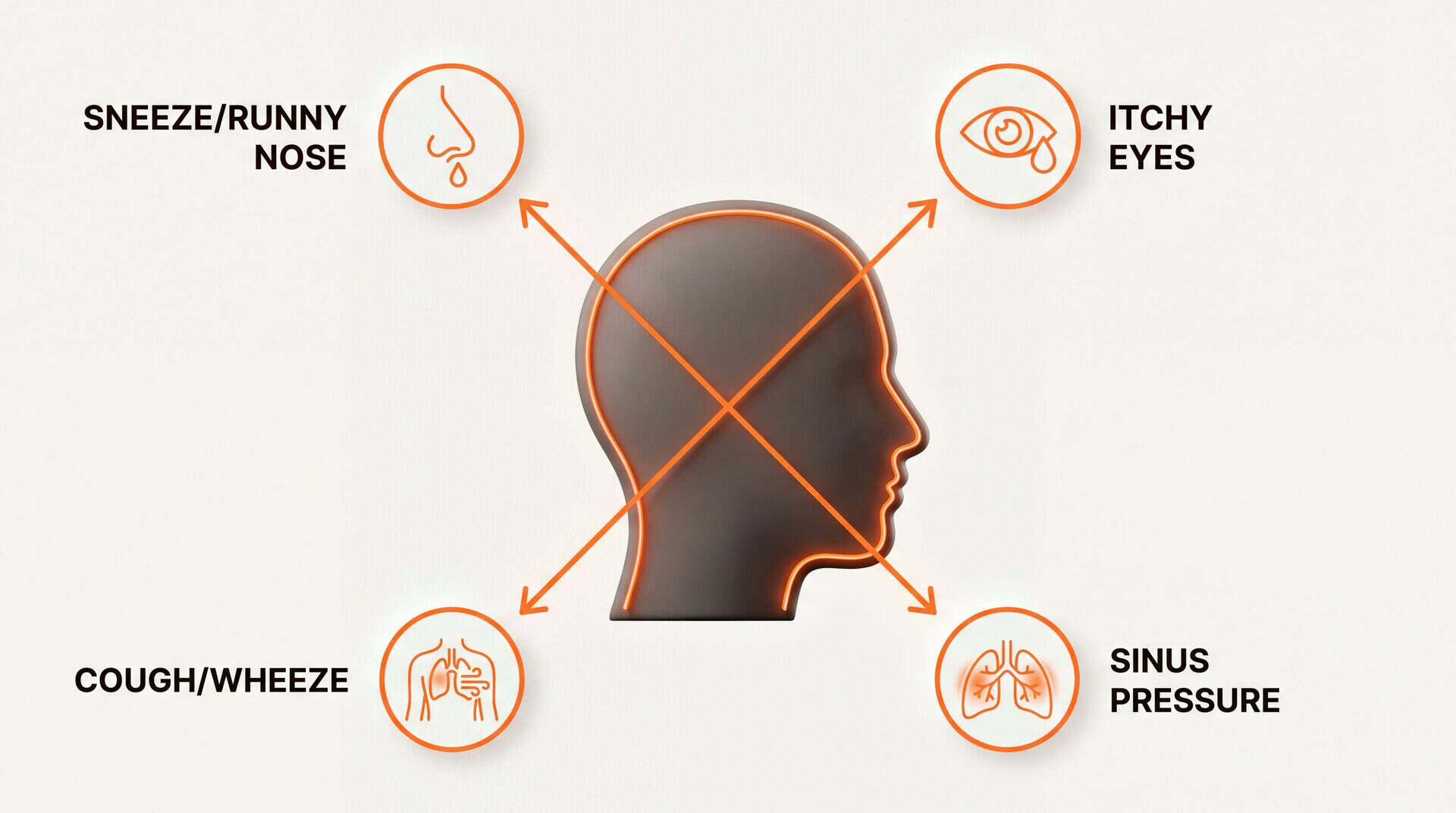
The first kind is an agency review of the whole literature. CDC, the Institute of Medicine and WHO have each done one, and none of the three puts headache on its headline list. What all three name is respiratory: upper respiratory symptoms, cough, wheeze, asthma effects, and allergic responses.
The second kind is a study reporting an association in a population. There is a large one, and it does include headache. Zhang and colleagues surveyed 36,541 randomized parents of young children across six Chinese cities and published the results in Indoor Air in 2019. All seven self-reported signs of dampness were associated with symptoms, with odds ratios from 1.2 to 4.6, and the symptom list they measured included rhinitis, ocular, throat and dermal symptoms, headache and fatigue. Reported weekly headache ran at 3.0 percent of respondents.
| Source | What it names | Is headache on the list? |
|---|---|---|
| CDC, About Mold | Stuffy nose, sore throat, coughing or wheezing, burning eyes, skin rash; severe reactions in people with asthma or a mold allergy; lung infections in immune-compromised people and people with chronic lung disease | No |
| Institute of Medicine 2004, as summarized by CDC | Sufficient evidence to link indoor mold exposure with upper respiratory tract symptoms, cough and wheeze in otherwise healthy people, asthma symptoms in people with asthma, and hypersensitivity pneumonitis in susceptible individuals | No |
| WHO indoor air quality guidelines on dampness and mold, 2009 | The most important effects are increased prevalences of respiratory symptoms, allergies and asthma, plus perturbation of the immunological system | No |
| Zhang and colleagues, Indoor Air 2019, 36,541 adults across six Chinese cities | All seven signs of dampness associated with reported symptoms including rhinitis, ocular, throat and dermal symptoms, headache and fatigue | Yes, as a reported association |
Every entry is quoted or summarized from the source named. The difference between the first three and the last one is the kind of claim being made, which the next section explains.
Neither kind of statement tells you what is causing a headache in your house. What they jointly support is narrower and more useful: damp buildings are associated with more reported symptoms of several kinds, and the fix that all of them point at is the dampness.
If you want the wider evidence picture, our pages on is mold dangerous, mold allergy and what the evidence supports about mold and health go through it in more detail. None of them, and none of this page, is medical advice.
Why an association is not the same as a cause

The Chinese study is a questionnaire study, and its design carries three limits that the headline number does not.
Both sides are self-reported. Residents reported their own dampness signs and their own symptoms. Nobody measured humidity in those homes or examined the reported headaches.
It is a snapshot. Dampness and symptoms were recorded at the same moment, so the data cannot say which came first.
Damp homes differ in other ways. Ventilation, heating, crowding, income and outdoor air quality all travel with building dampness, and any of them can carry a share of a reported effect.
What the study is genuinely good at is showing a dose pattern. The authors report that odds ratios increased with the number of dampness signs present, and that the strongest associations were for two specific signs.
| Dampness sign in the study | How common in the homes surveyed |
|---|---|
| Window pane condensation | 45.4 percent |
| Humid air | 37.5 percent |
| Damp bed clothing | 35.3 percent |
| Water damage | 12.8 percent |
| Damp stains | 11.1 percent |
| Mold odor | 11.1 percent |
| Visible mold | 6.3 percent |
Zhang X and colleagues, Indoor Air 2019. The two signs with the strongest reported associations were mold odor, with odds ratios from 2.3 to 4.6, and humid air, from 2.8 to 4.8.
Read that table as a building diagnostic rather than a health one. Mold odor and humid air are the two things you can act on tomorrow, they are the two with the strongest reported associations, and they are the two that a homeowner can actually change. Our page on what mold smells like and where it hides covers tracking down the first.
Measure the building, not the symptom
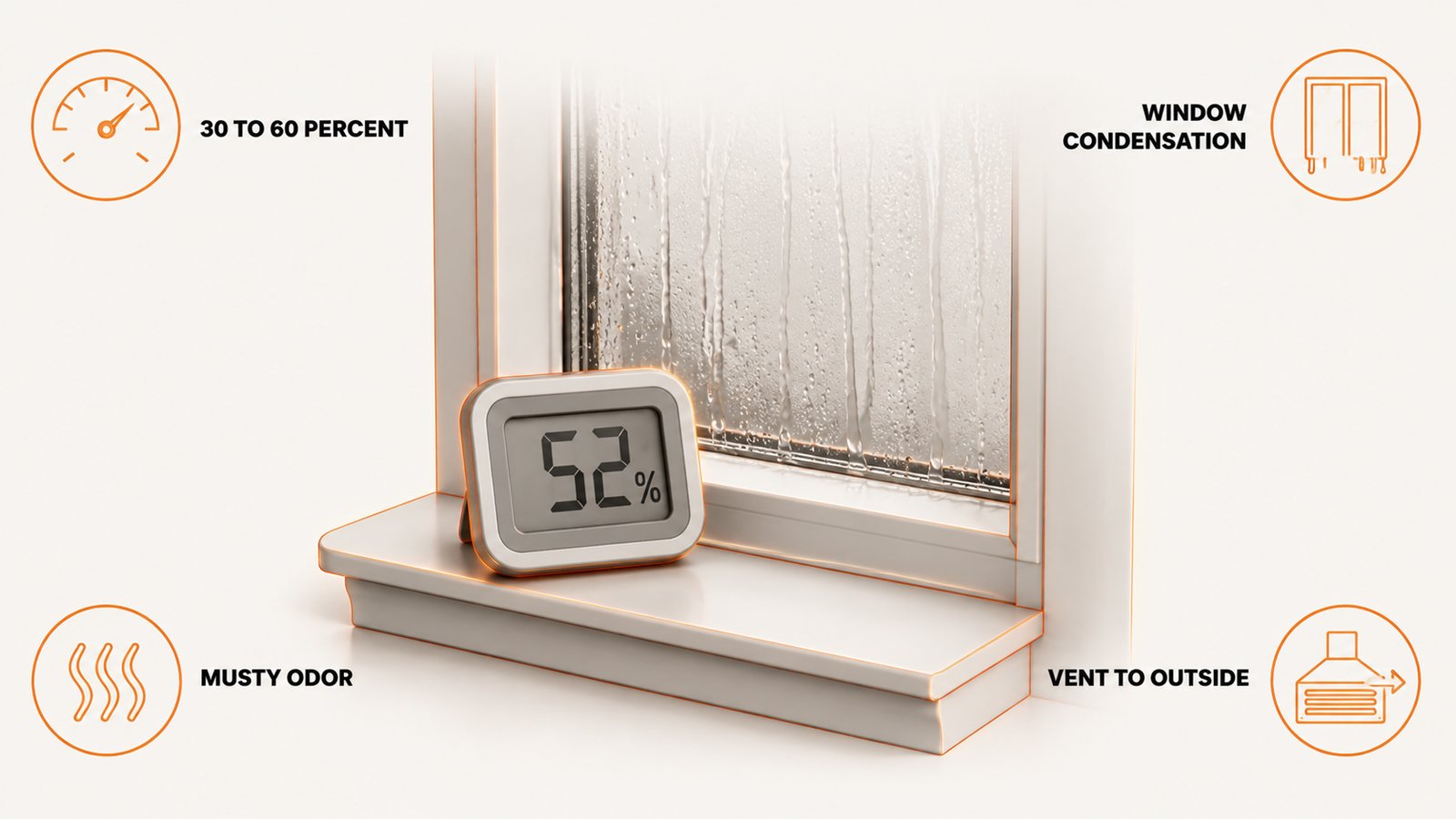
A symptom cannot tell you which room is wet. Four measurements can, and none of them needs a laboratory.
Relative humidity, in each room. EPA's guidance is to reduce indoor humidity to 30 to 60 percent. A cheap hygrometer moved room to room over a week finds the outlier faster than any test kit, and the iPhone humidity check covers taking a reading without buying anything.
Condensation on window panes. The single most common dampness sign in the Chinese survey, present in 45.4 percent of homes. It means indoor moisture has nowhere to go.
A musty odor, and where it gets stronger. The sign with among the strongest reported associations in that study. Walk the house and note where it intensifies rather than trying to describe it.
Anything that has been wet in the last 48 hours. EPA's window for drying water-damaged materials is 24 to 48 hours, after which growth becomes likely. A dishwasher that overflowed last week is a more useful lead than a mold test.
Walk the list on signs of mold in a house before you spend on anything else.
How to fix the dampness
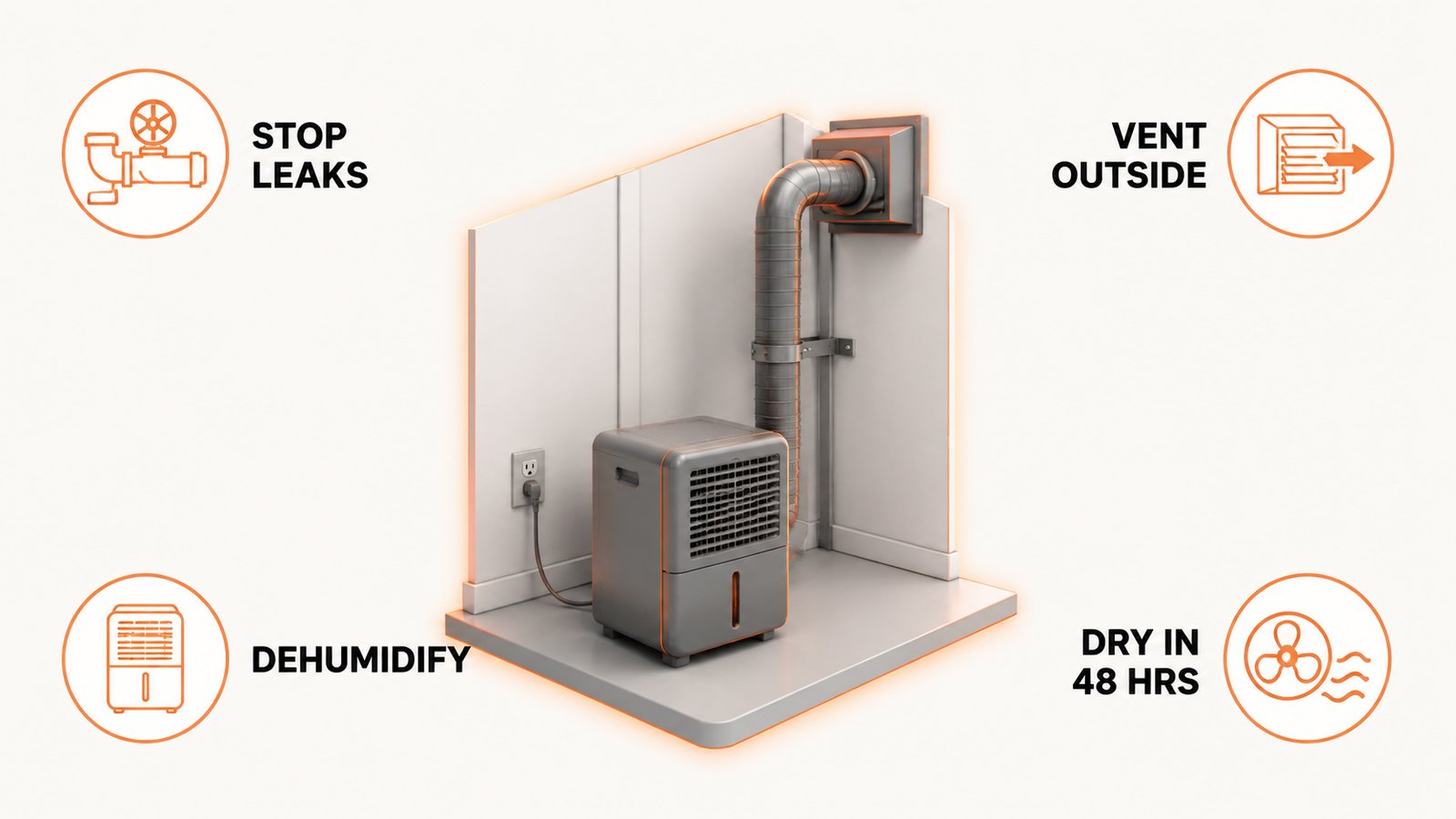
WHO's 2009 review lands on one recommendation, and it is a building recommendation: the most important means for avoiding adverse health effects is preventing or minimizing persistent dampness and microbial growth on interior surfaces and in building structures. EPA says the same thing in fewer words. There is no practical way to eliminate all mold and mold spores indoors, and the way to control indoor growth is to control moisture.
Stop the water at the source. Roof, flashing, gutters, plumbing, foundation drainage, appliance supply lines. Everything else is downstream of this.
Vent moisture to the outside. Bath and kitchen exhaust fans that terminate outdoors, not in the attic. A dryer vented outside. EPA lists venting bathrooms, dryers and other moisture-generating sources to the outside as a humidity control.
Dehumidify what stays damp. Basements and crawl spaces usually need equipment rather than a habit. Our guide to dehumidifiers for mold and the dehumidifier size calculator cover sizing it to the space.
Dry wet material inside the window. EPA's 24 to 48 hour rule is the cheapest control available. Past that, absorbent or porous materials such as ceiling tiles and carpet may have to be thrown away.
Clean what is already growing. EPA's instruction for hard surfaces is detergent and water, scrubbed and dried completely. Our page on how to prevent mold covers holding the gains.
What testing can and cannot answer
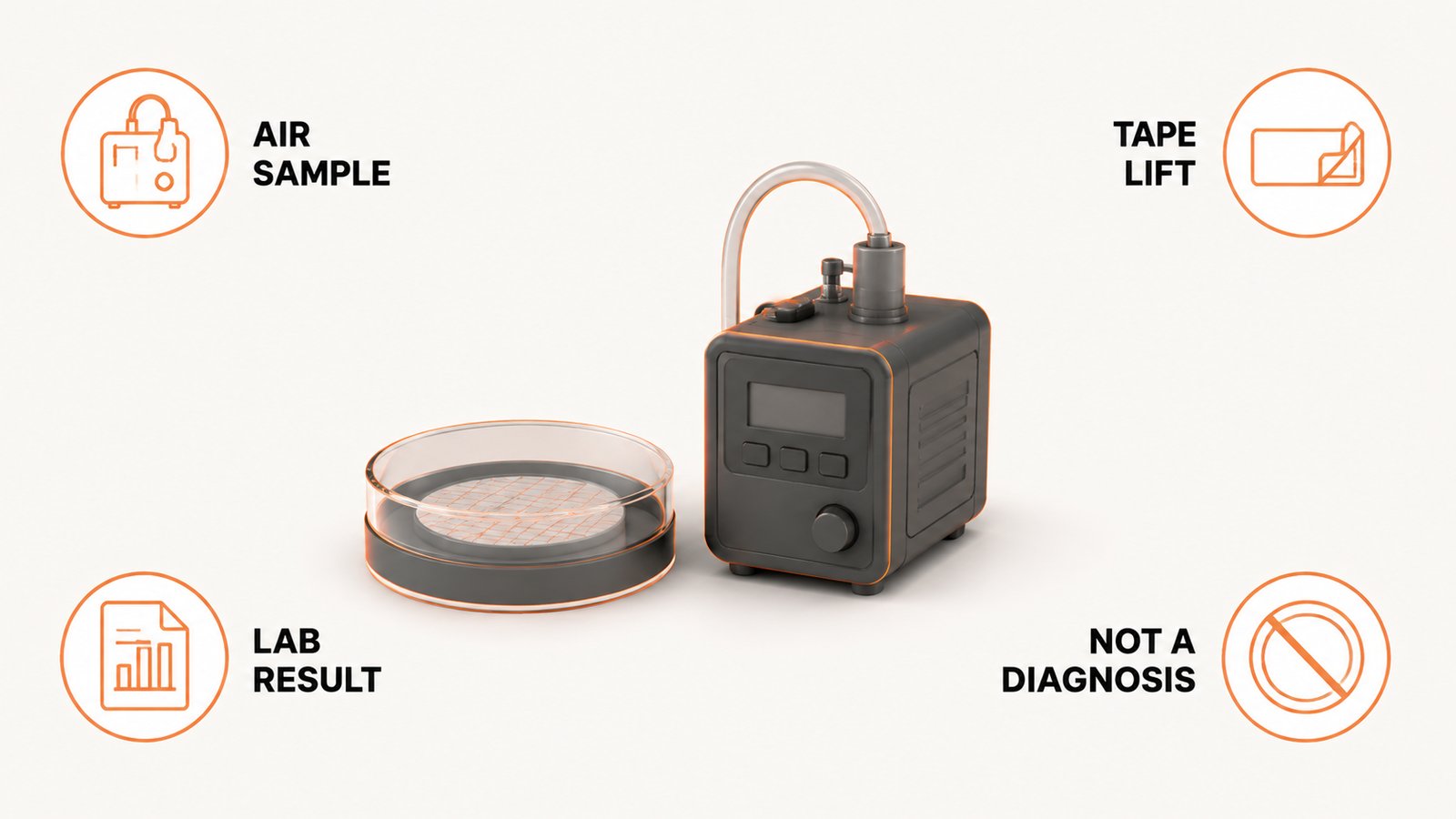
Building tests answer building questions. That sounds obvious and it is the single most common mistake people make when they order one.
What a sample can do. Identify material collected from a specific spot, compare indoor and outdoor spore counts at a moment in time, or confirm growth on a surface you point it at.
What no sample can do. Tell you whether the building is causing anything you are feeling, set a safe exposure level for a person, or replace a walk-through that finds the water. There is no number a laboratory can hand you that means a home is safe for an individual.
When testing earns its cost. When a species answer changes a high-stakes decision, when a dispute needs an independent record, or when you cannot find a source you can smell. Our pages on how to test for mold, mold test kits and professional mold testing go through what each method actually answers.
EPA and CDC both take the position that the response to visible indoor growth is the same regardless of species: fix the moisture, remove or clean the affected material. That is why testing is usually the second call rather than the first, and why our page on mold remediation cost is more likely to be the useful one.
When to call a pro, and which one
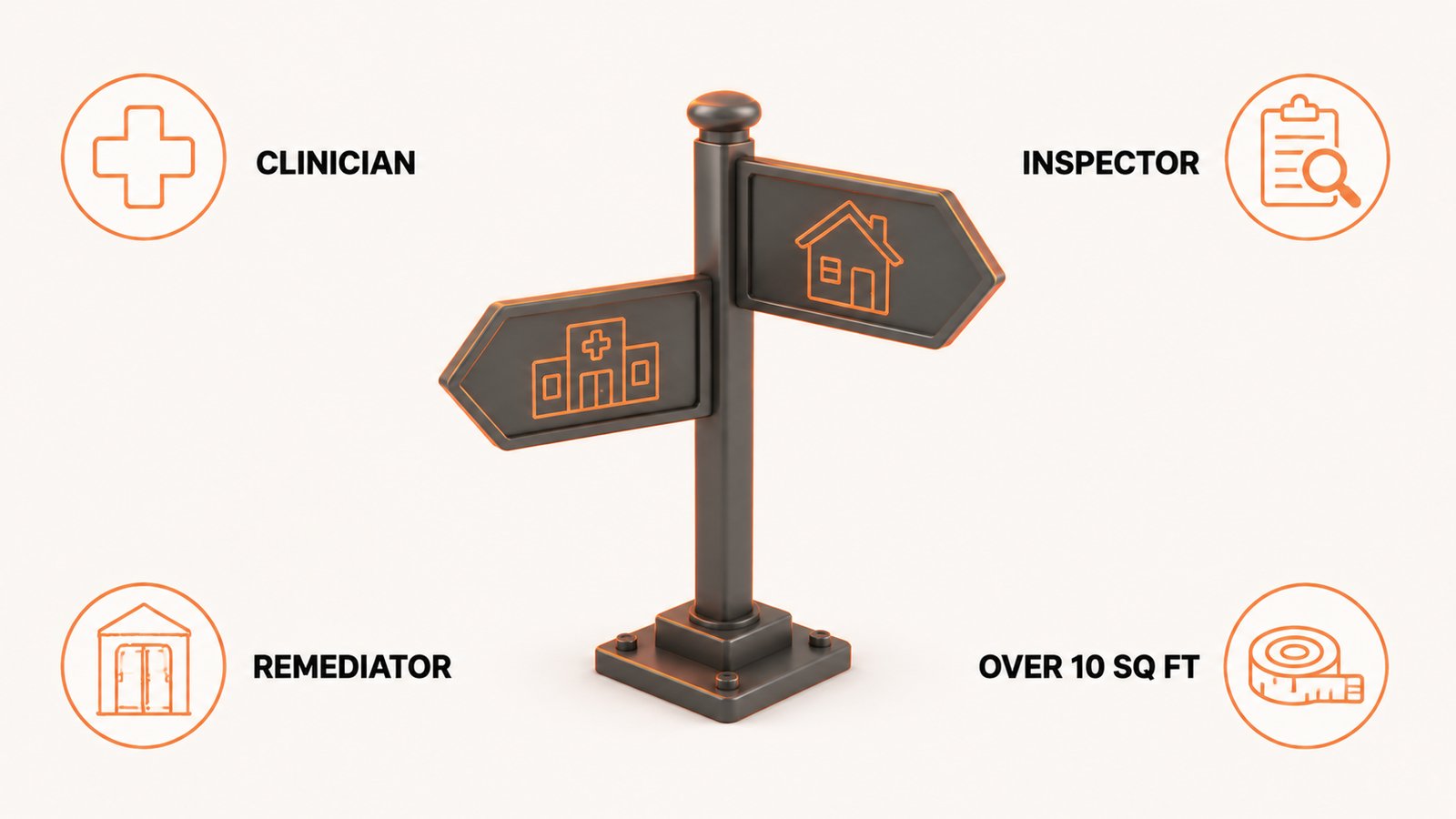
Two lanes, and mixing them is what wastes the most time and money.
Anything about a person goes to a licensed clinician. That includes headaches, and it includes anything that changes when you leave the house. CDC's own framing is that exposure to damp and moldy environments may cause a variety of health effects, or none at all, that people with asthma or a mold allergy may have severe reactions, and that immune-compromised people and people with chronic lung disease may get lung infections from mold. Nothing on this page and nothing in an app is a substitute for that conversation.
Anything about the building goes to a building professional. Above about 10 square feet of affected area, EPA points readers to its professional remediation guide rather than to a do-it-yourself method. EPA also says not to run an HVAC system you know or suspect is contaminated, because it can spread mold through the building, and to call a professional experienced with contaminated water damage if sewage or other contaminated water was involved.
When you hire, ask for the standard. EPA suggests asking the contractor to follow its remediation guide or the guidelines of ACGIH or IICRC. Keeping the inspector and the remediator separate removes the conflict of interest built into a single company diagnosing and selling.
If your interest in this page started with sinus symptoms rather than headache, the evidence picture there is different and worth reading on its own: mold and sinus infection.
Frequently asked questions
What does the research actually say about mold and headache?
Agency reviews from CDC, the Institute of Medicine and WHO name respiratory effects, allergy and asthma, and none of the three puts headache on its headline list. A large 2019 questionnaire study in Indoor Air covering 36,541 adults across six Chinese cities did report headache among the symptoms associated with home dampness. That is an association in a survey, not a demonstration of cause.
What does CDC list as possible effects of damp indoor spaces?
CDC states that exposure to damp and moldy environments may cause a variety of health effects, or none at all, and names a stuffy nose, sore throat, coughing or wheezing, burning eyes, or skin rash. It adds that people with asthma or who are allergic to mold may have severe reactions, and that immune-compromised people and people with chronic lung disease may get lung infections from mold.
What indoor humidity should I aim for?
EPA's guidance is to reduce indoor humidity to between 30 and 60 percent to decrease mold growth. USDA's food safety guidance goes lower, advising keeping the humidity level in the house below 40 percent as part of minimizing mold. A cheap hygrometer moved from room to room over a week will find the outlier room faster than any test kit.
Which dampness signs matter most?
In the 2019 Indoor Air survey, the strongest reported associations were for mold odor, with odds ratios from 2.3 to 4.6, and humid air, from 2.8 to 4.8, and odds ratios increased with the number of dampness signs present. Window pane condensation was the most common sign overall at 45.4 percent of homes surveyed.
Will an air purifier fix a damp room?
It filters particles from the air it moves. It does not remove water from a building, and WHO's 2009 review lands on preventing or minimizing persistent dampness and microbial growth on surfaces and in structures as the most important means of avoiding adverse health effects. Fix the water and the ventilation first, then decide whether filtration adds anything.
Should I test the air before or after fixing the leak?
Fix the leak first. EPA and CDC both take the position that the response to visible indoor growth is the same regardless of species, so a test rarely changes the plan. Testing earns its cost when a species answer changes a high-stakes decision, when a dispute needs an independent record, or when you can smell a source you cannot find.
How quickly do I need to dry something that got wet?
EPA's window is 24 to 48 hours. Within it, drying usually prevents growth from starting. Past it, absorbent or porous materials such as ceiling tiles and carpet may have to be thrown away, because mold can grow into the crevices of porous material and be difficult or impossible to remove.
Who should I talk to about how I am feeling at home?
A licensed clinician. A building test cannot answer a question about a person, and no laboratory number defines a safe level for an individual. Handle the two lanes separately: a clinician for anything about a person, a qualified inspector or remediator for anything about the building.
Sources
Every claim on this page traces to one of these. Links open the primary document.