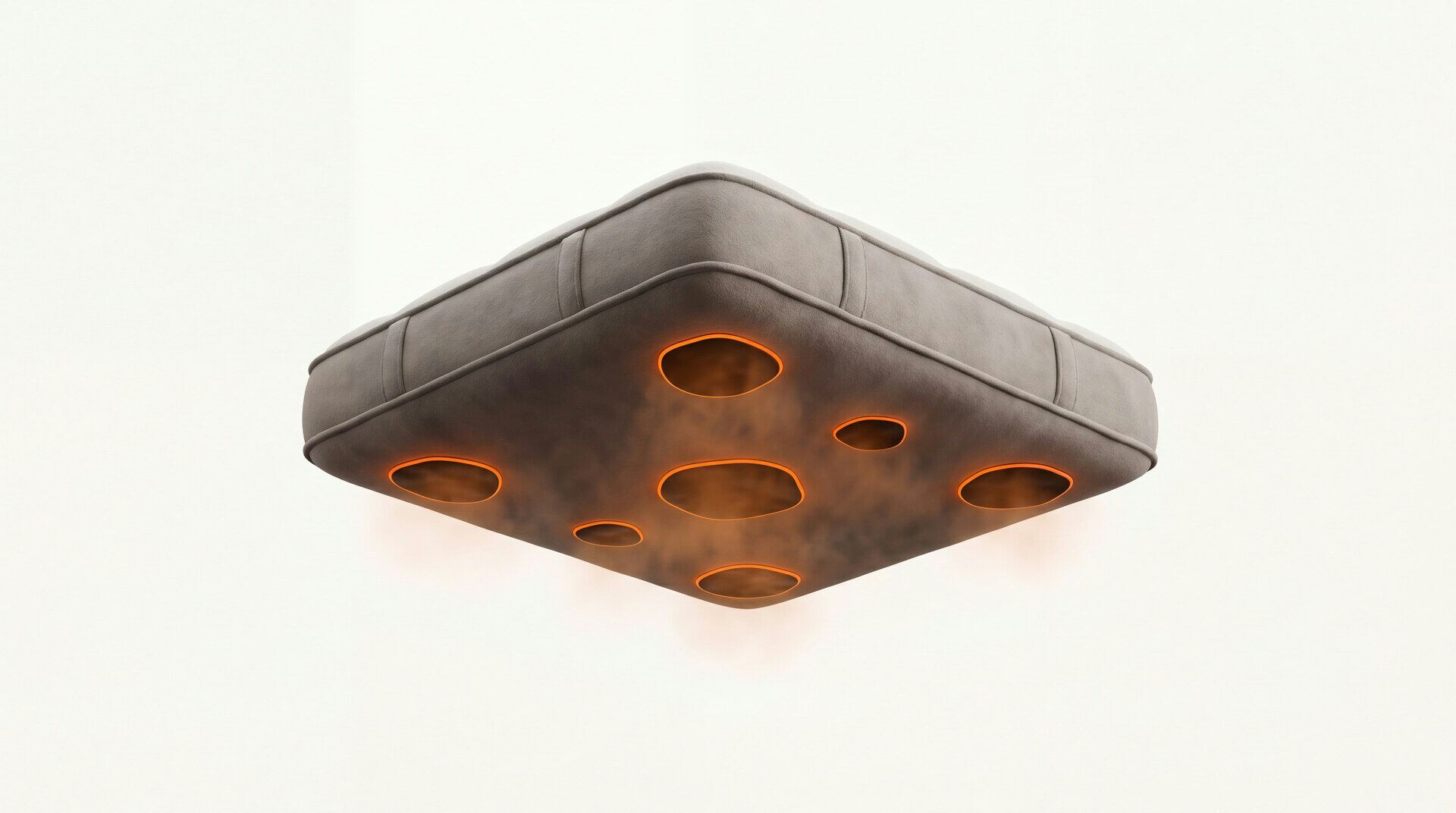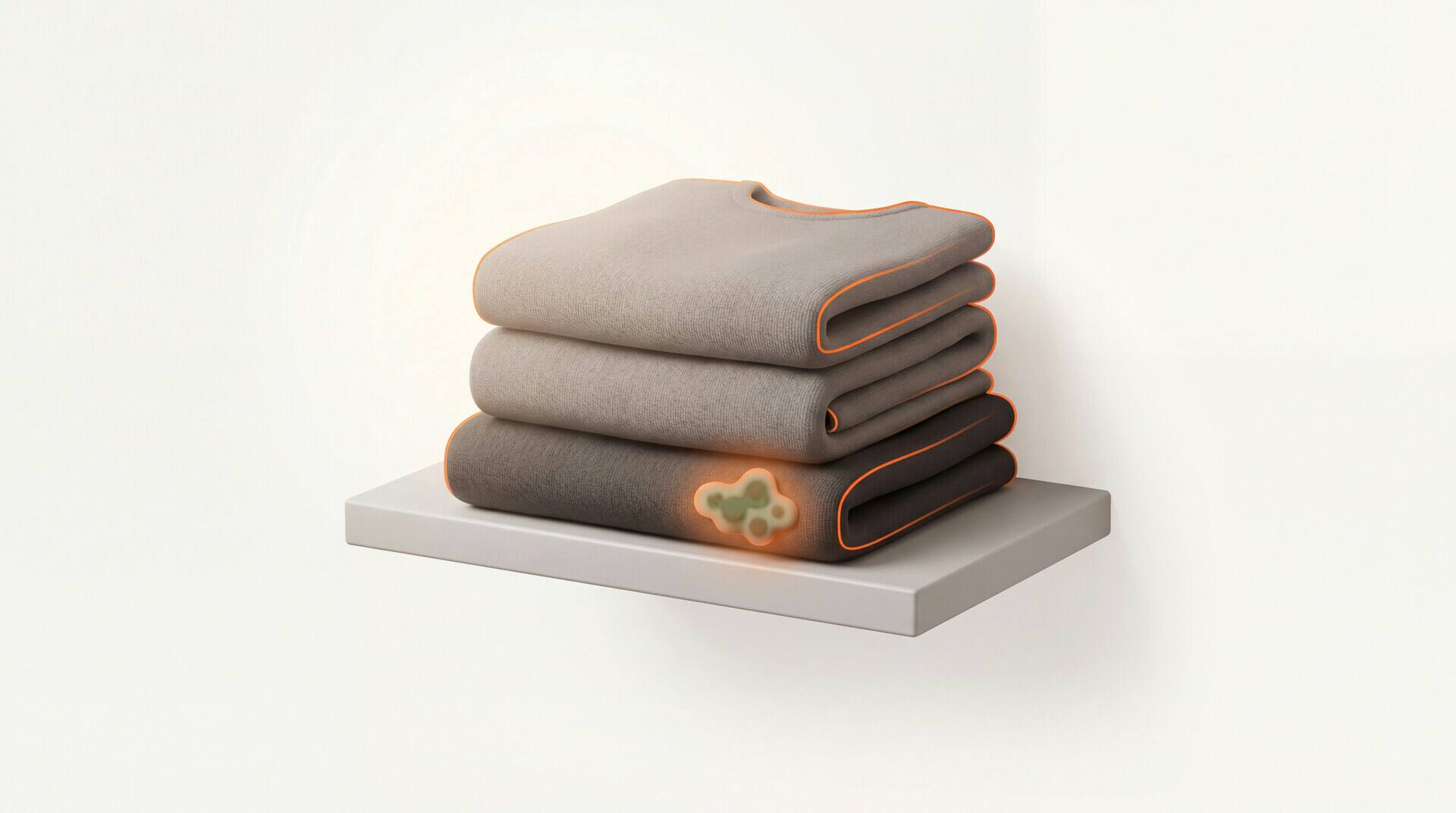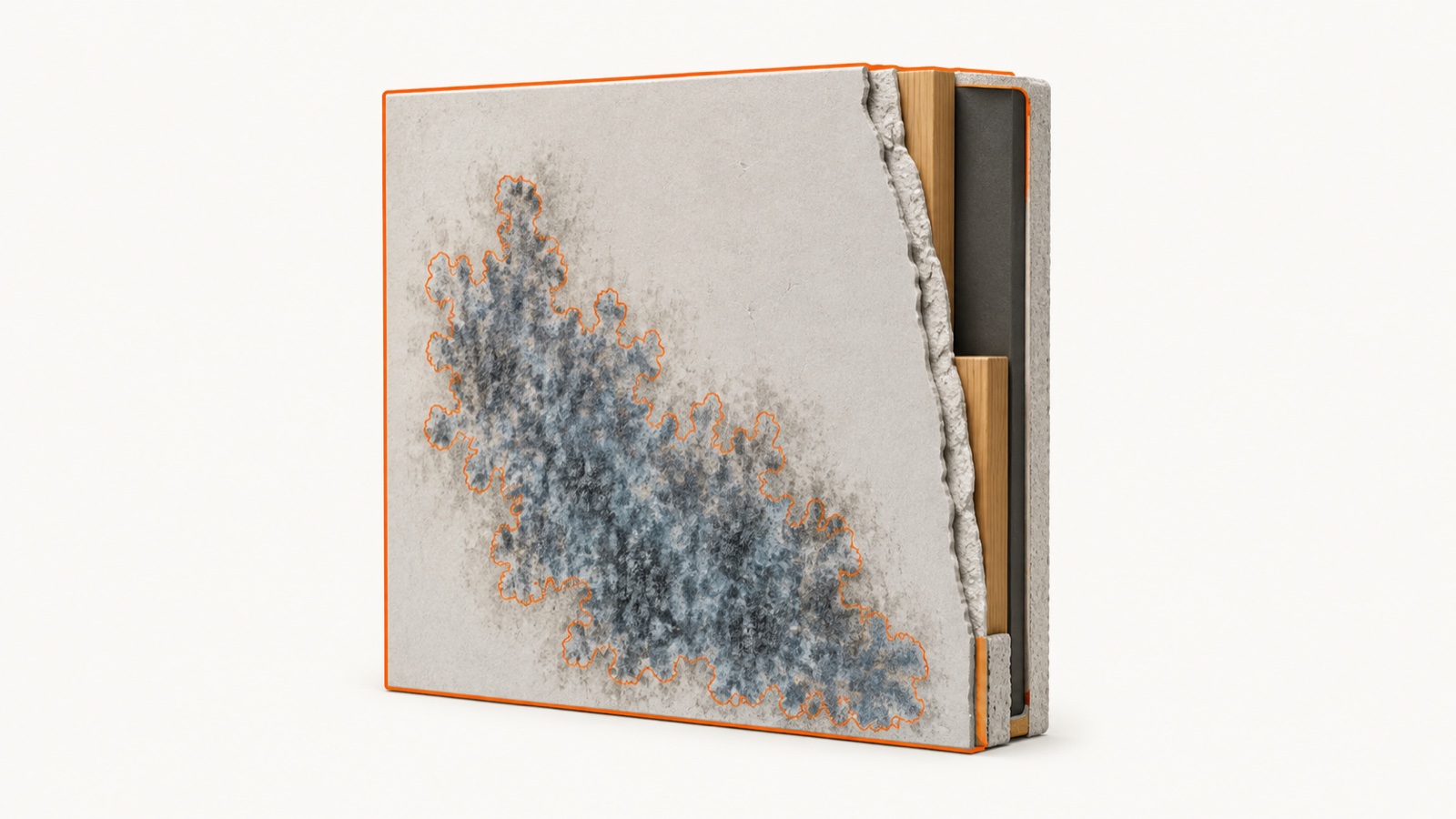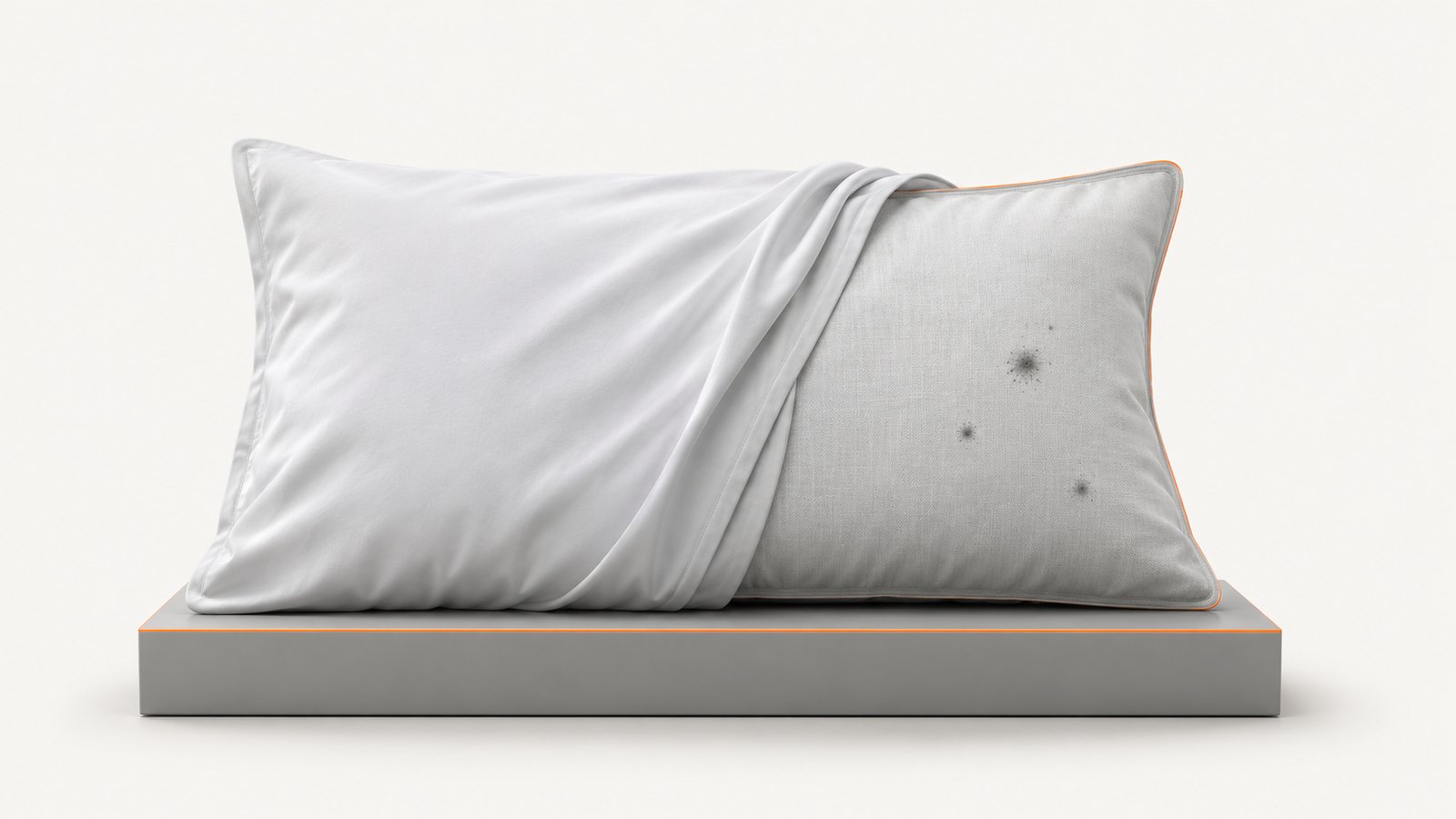
What Does Mold on a Pillow Look Like?
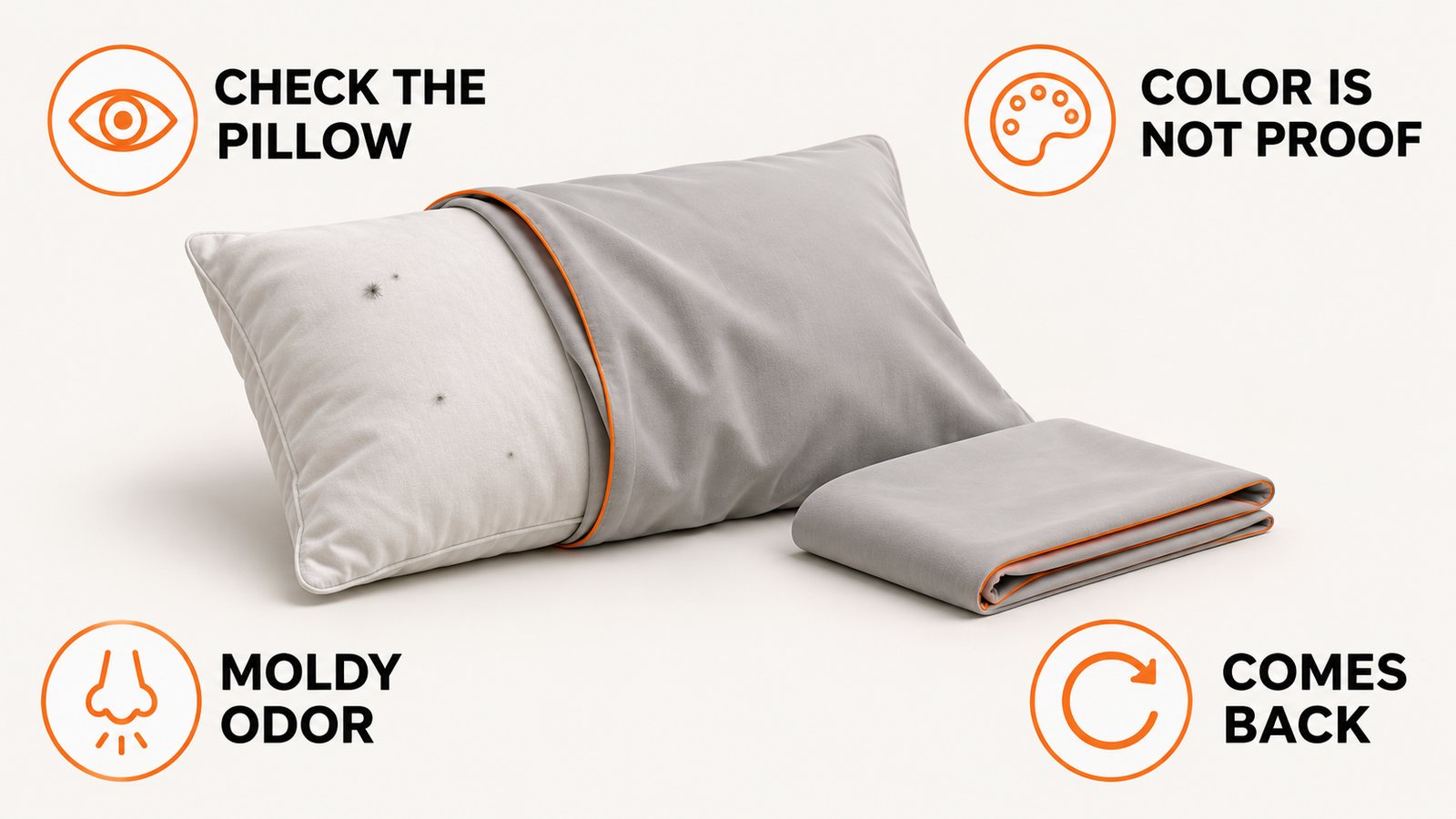
The CDC says mold can grow in dust, paints, wallpaper, insulation, drywall, carpet, fabric, and upholstery. A pillow is fabric around fill, so it is on that list. The EPA mold course adds that molds come in many colors, including white.
It can show as dark specks, gray or green fuzz, or a blue or yellow patch. Our guide on what mold looks like shows the range. Here is a five-minute check.
- Take the case off. Look at the case, the pillow cover, the seams and the side that touches the mattress, in good light.
- Look for texture. Fuzzy, speckled or raised spots behave like growth. A flat spot is not automatically safe to ignore either.
- Smell it. The EPA says a moldy odor suggests mold is growing and should be investigated. Smell alone cannot tell you the type or how risky it is.
- Wash the case and watch. This is the site's own rule of thumb, not an agency test. A mark that returns after a proper wash and full drying is the one to take seriously.
See also mold or dirt and is this mold. The scanner gives an AI-assisted visual screening of a photo. It helps tell whether a spot looks like mold and what to do next. It does not identify a species or measure toxicity. For visible growth, the EPA says sampling is unnecessary in most cases.
Is That Blue Mold on a Pillow?
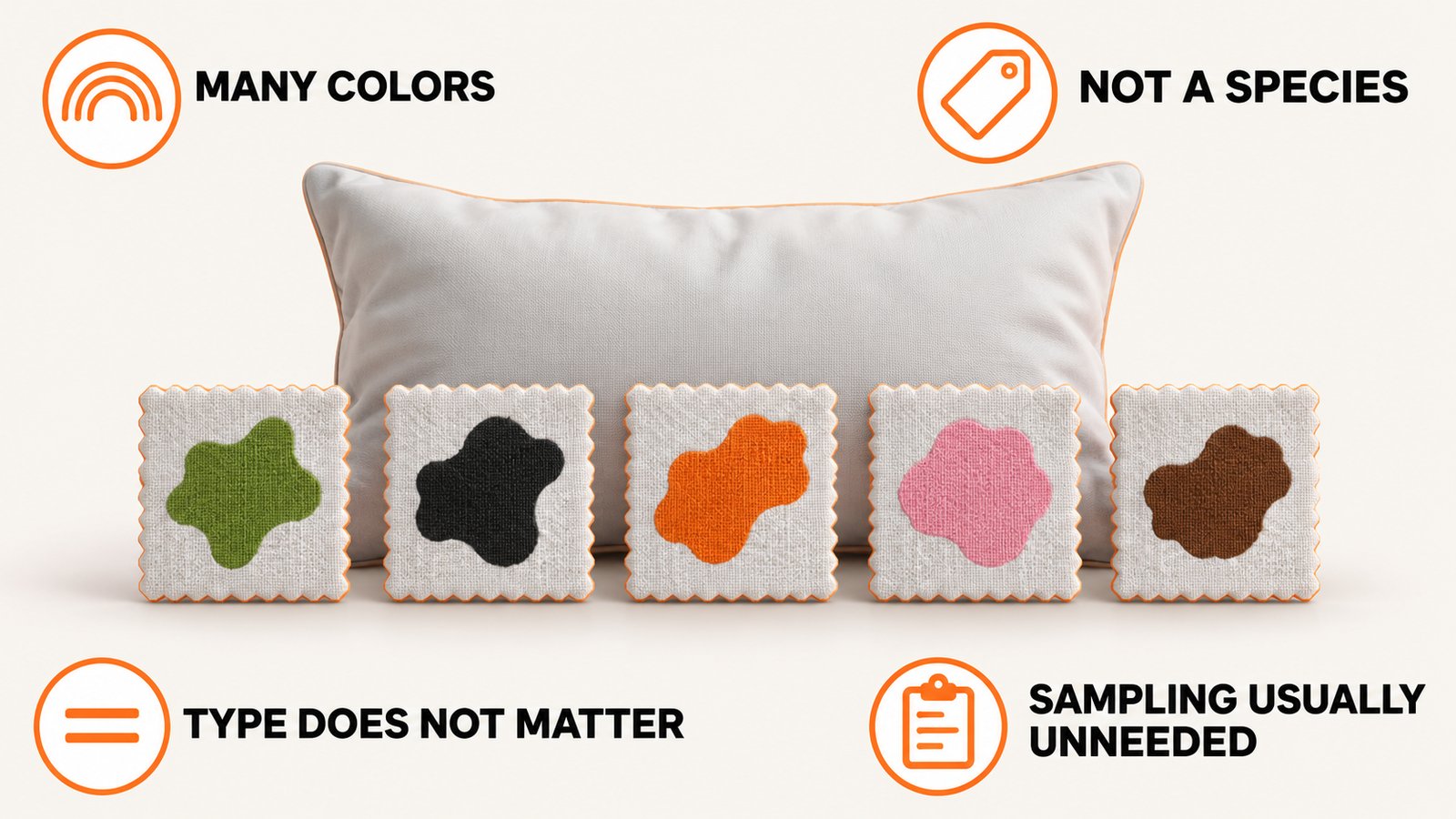
A blue-green patch on white fabric is easy to spot. Our blue mold guide covers that color in full.
The EPA mold course says molds come in many colors including white, and that "black mold" is not a species or a specific kind of mold. The same logic holds for every color name. Blue, green, yellow, gray, black or pink spots mean something may be growing. They do not tell you which mold it is or how risky it is.
You do not need that answer. The CDC says if you see or smell mold, remove it, and you do not need to know the type. It also says health effects differ from person to person, so you cannot rely on sampling and culturing to know whether someone might become sick. The job is the same for every color: deal with the pillow, then fix the moisture.
Not every colored mark is growth. Our yellow mold and green mold guides follow the same rule.
Why Is There Mold on My Pillow?
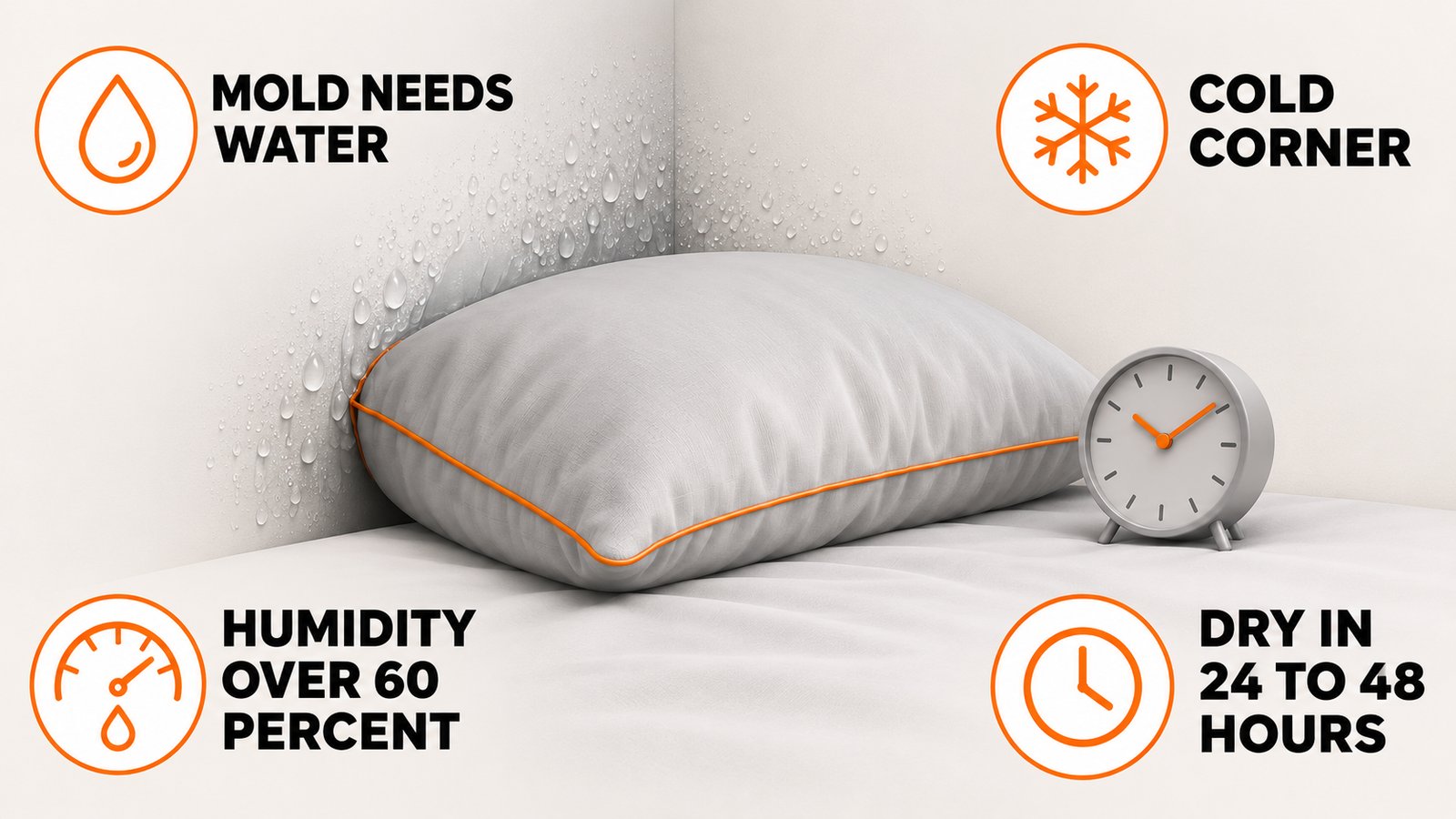
The EPA says none of the many types of mold will grow without water or moisture. So a moldy pillow stayed damp, or sat in damp air, long enough. Ways that can happen:
- Sweat and damp hair. A pillow sits under your head all night, so it is reasonable to expect some moisture. That is the site's reasoning, not an agency measurement.
- Put away damp. The EPA says materials dried within 24 to 48 hours, in most cases, will not grow mold. A pillow washed but not fully dried, or bagged while damp, misses that window. No agency source ranks pillow fills by mold risk.
- High bedroom humidity. The EPA says below 60 percent, ideally 30 to 50. The CDC says no higher than 50. Our humidity risk calculator turns a meter reading into a risk picture.
- A cold wall behind the bed. The EPA mold course says mold is frequently found on walls in cold corners behind furniture where condensation forms.
- Leaks and stored pillows. Roof and pipe leaks are on the EPA's list of common moisture problems. A spare pillow in a damp closet can pick up the same moisture.
A moldy pillow is a reason to check the mattress too: see mold on a mattress. For laundry, see mold on clothes. If the room smells musty, read mold smell in house.
Can You Wash Mold Out of a Pillow?
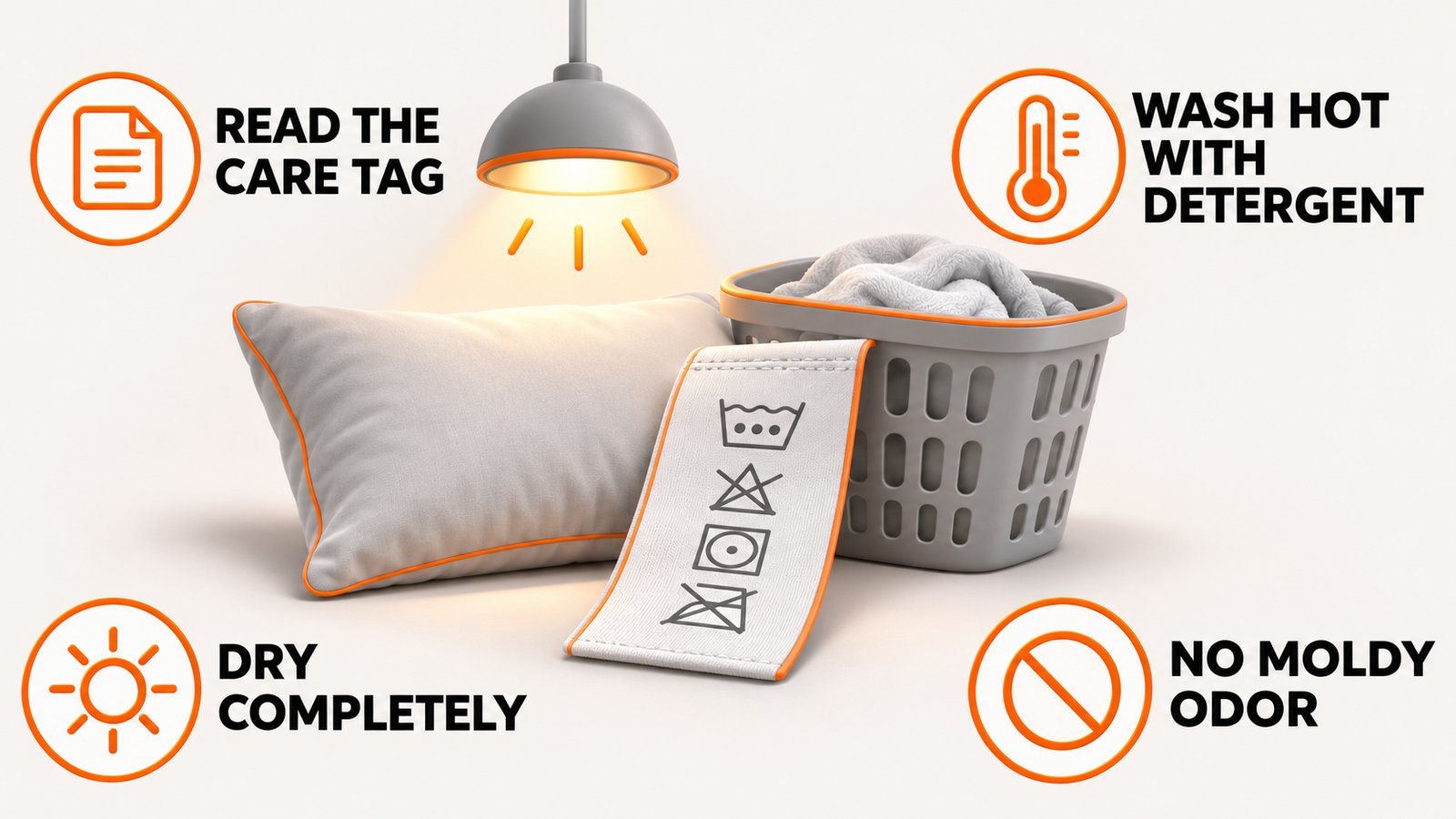
Sometimes. NC State Extension says mold can be removed from most items if you clean and dry them quickly, but can cause permanent damage to some. For washable items it says to pretreat stains with a non-ammonia detergent, read the product label, and wash at the hottest temperature with detergent and appropriate bleach (oxygen based for colors and delicate items; chlorine for bleach-safe colorfast items). The pillow's care tag decides whether it can go in a washer at all. If the tag says do not wash, we cannot give you a safe washing method.
- Protect yourself. The EPA says avoid touching mold with bare hands and avoid breathing spores or getting them in your eyes. It says you may want to wear an N95 respirator, and it recommends long gloves and goggles without vent holes.
- Do not beat or shake it in the room. The EPA says to use caution when disturbing possible mold growth (its example is peeling wallpaper, which can release a massive amount of spores). Carry it straight to the washer or bag it first.
- Wash as NC State describes. Detergent and appropriate bleach at the hottest temperature, if the care tag allows.
- Dry it completely, inside the 24 to 48 hour window the EPA gives.
- Check. The EPA says visible mold and moldy odors should not be present, and to look again shortly after cleanup. Mold can leave staining that never comes out, so a faint stain alone does not prove it is still alive.
About bleach: the EPA takes a different position from NC State's wash step. It says bleach is not recommended as a routine practice during mold cleanup, that dead mold may still cause allergic reactions so it must be removed, and never to mix chlorine bleach with cleaners that contain ammonia. See does bleach kill mold. For a valuable or sentimental pillow, the EPA says consider a specialist.
When to Throw Away a Moldy Pillow
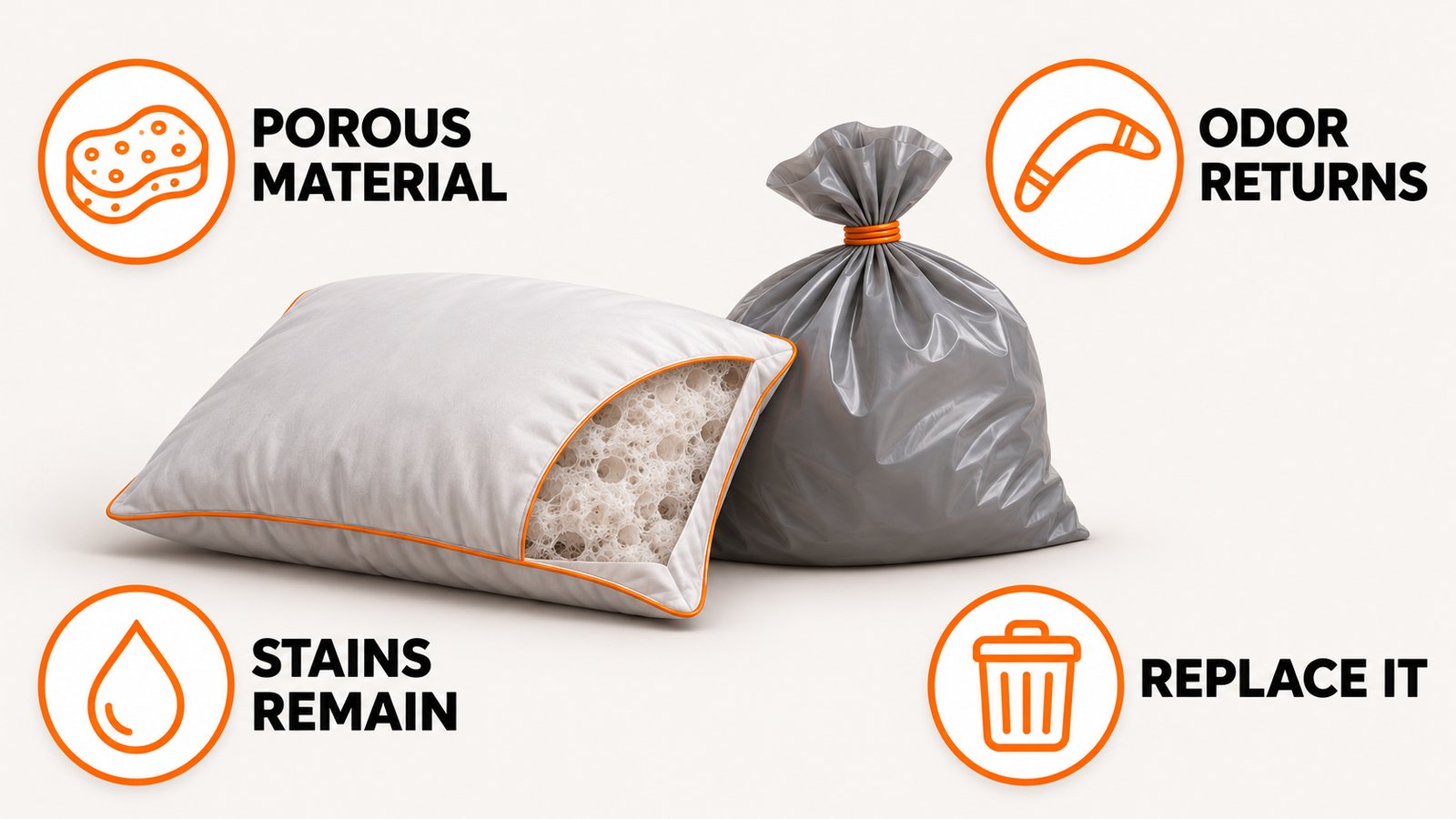
The EPA says porous materials may have to be thrown away if they become moldy, because mold can fill their empty spaces and be difficult or impossible to remove completely. The EPA mold course says the same. A pillow is soft, thick and full of tiny spaces, which is why it is often a replace item.
The site's own rule of thumb: throw it away if any of these is true.
- The growth is on the inner cover or in the fill, not just the pillowcase.
- A moldy smell remains after a proper wash and complete drying.
- The spots came back after one wash.
- The tag says do not wash.
- It stayed wet for days and is still damp in the middle.
Fix the cause before the new pillow goes on the bed. The EPA says if you clean up mold but do not fix the water problem, it will most likely come back. Bag the old pillow before carrying it through the house.
The CDC says people with asthma or mold allergy may have severe reactions, and that immune-compromised people and people with chronic lung disease may get lung infections from mold. If someone at home is in one of those groups, ask their doctor before anyone handles a moldy pillow. See mold allergy symptoms.
How to Stop Mold on a Pillow From Coming Back
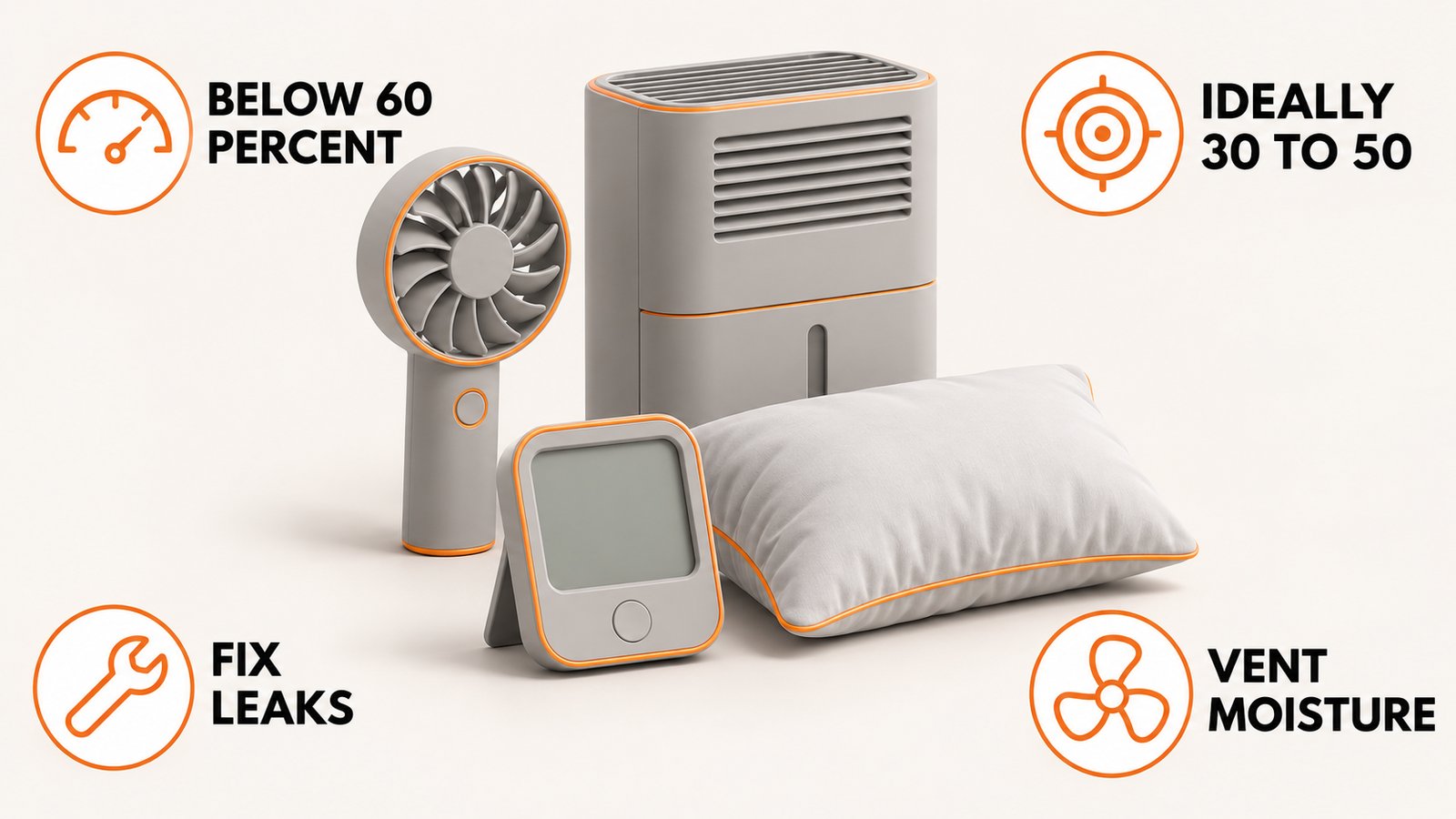
The EPA says moisture control is the key to mold control. For a bedroom:
- Measure the room. The EPA prices a humidity meter at $10 to $50 at many hardware stores. Keep it below 60 percent, ideally 30 to 50. The CDC says an air conditioner or dehumidifier helps. See the dehumidifier guide and dehumidifier size calculator.
- Dry things fully, fast. A washed pillow, a damp towel on the bed, a spill: within 24 to 48 hours.
- Watch the cold wall. If condensation shows on windows, walls or pipes, the EPA says act quickly to dry it and reduce the moisture source. Pulling the bed a few inches from a cold outside wall is the site's own tip.
- Fix leaks and vent moisture. Run the bathroom fan and vent moisture-making appliances outside where possible. Keep air conditioner drip pans clean. Our HVAC moisture maintenance checklist lists what to look at.
- Change pillowcases on a steady schedule. No agency gives a number. Pick a routine; that is the site's suggestion.
For the whole house, read how to prevent mold and how to check for mold in a house. Over about 10 square feet of mold on a wall or ceiling, the EPA points to its guide for larger jobs, and we suggest a professional (mold remediation).
Frequently asked questions
Is blue mold on a pillow dangerous?
Color cannot tell you. The EPA says molds come in many colors and black mold is not a species. The CDC says you do not need to know the type: remove it and fix the moisture. It also says mold can cause a stuffy nose, coughing or wheezing, burning eyes, or skin rash in some people. If you have symptoms, see a doctor.
How do I know if spots on my pillow are mold?
Take the case off and look in good light. Fuzzy, speckled or raised spots, a moldy smell, or a mark that returns after washing and full drying point toward growth. No color or smell proves it, and a flat spot is not proof of harmless. The EPA says sampling is unnecessary in most cases when you can see growth.
Can I wash a moldy pillow?
If the care tag allows washing, maybe. NC State Extension says mold can be removed from most items if cleaned and dried quickly, and advises washing at the hottest temperature with detergent and appropriate bleach. Dry it completely and check that no mold or moldy smell remains. If the tag says do not wash, or the smell returns, replace it.
Should I throw away a moldy pillow?
Often. The EPA says porous materials may have to be thrown away when moldy, because mold can fill their empty spaces and be hard or impossible to remove completely. Replace it if the growth is inside, the smell stays after washing, the spots return, or it cannot be washed.
Why did my pillow get moldy?
Mold needs moisture. The EPA says none of the many types of mold grow without water. A pillow can stay damp from sweat, damp hair, incomplete drying, high humidity, condensation on a cold wall, or a leak. Damp materials dried within 24 to 48 hours, in most cases, do not grow mold.
Does bleach fix mold on a pillow?
The EPA says bleach is not recommended as a routine practice in mold cleanup, and dead mold may still cause allergic reactions, so mold must be removed, not just killed. Never mix chlorine bleach with cleaners that contain ammonia. Follow the pillow's care tag.
What humidity keeps mold off bedding?
The EPA says keep indoor relative humidity below 60 percent, ideally 30 to 50 percent. The CDC says no higher than 50 percent. A humidity meter costs $10 to $50 at many hardware stores, per the EPA.
Sources
Every claim on this page traces to one of these. Links open the primary document.