
The AC evaporator: the most common car mold source
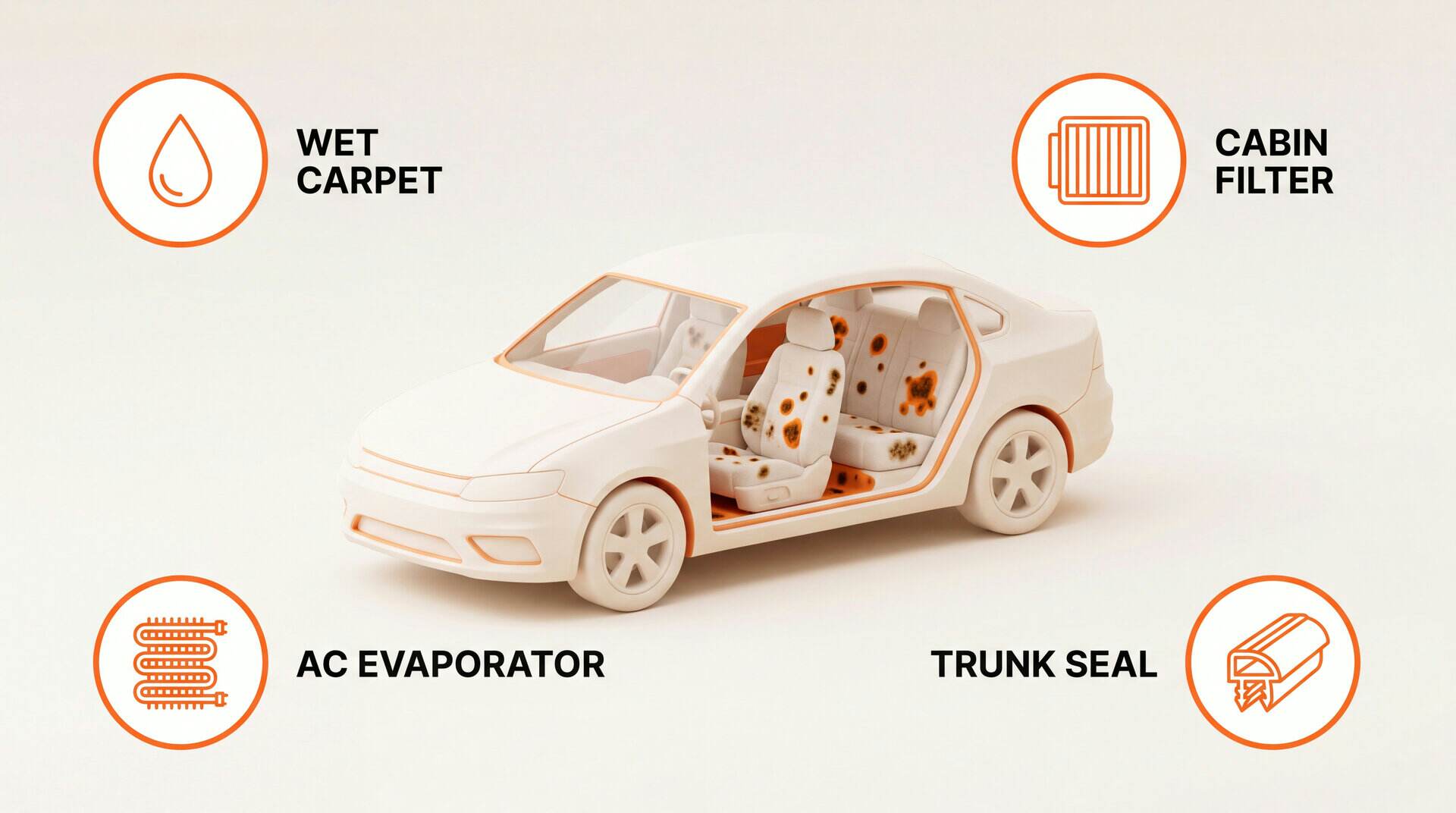
Your car's AC system works by blowing warm cabin air across a cold evaporator coil. Moisture in the air condenses on the coil, just like water droplets on a cold glass. That condensation is supposed to drip into a drain pan and exit through a rubber tube under the car. You have probably seen a puddle of water under your parked car on hot days. That is the AC drain working properly.
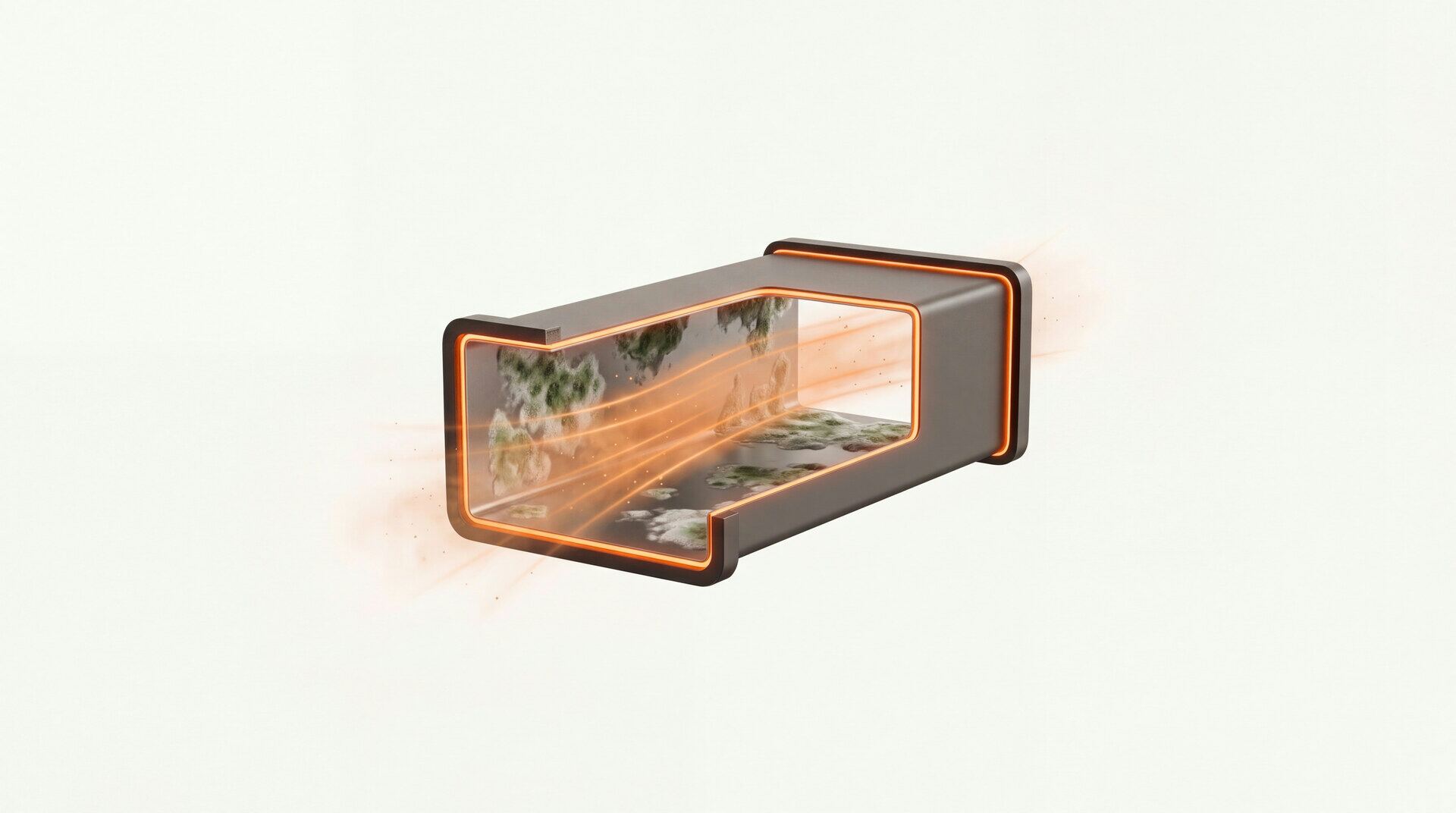
When the drain tube gets clogged with dirt, leaves, or algae, water backs up in the drain pan and sits on the evaporator. Mold grows on the wet coil within days. Every time you turn on the AC or heater, the blower fan pushes air through the moldy evaporator and into the cabin. You are breathing concentrated mold spores in a small enclosed space for your entire commute.
The first sign is a musty or dirty sock smell when the AC kicks on, especially when you first start the car. The smell fades after a few minutes because your nose adjusts, but the spores are still blowing.
How to clean mold from your car AC system
Step 1: Clear the condensate drain. Locate the drain tube under the passenger side of the car. It is a small rubber tube that drips water when the AC runs. Gently push a pipe cleaner or flexible wire into the tube to clear any blockage. You can also use low pressure compressed air. When clear, water should flow freely.
Step 2: Spray evaporator cleaner. Buy an AC evaporator cleaner like Kool It, Klima Cleaner, or Nextzett Klima Cleaner. Turn the AC to maximum cold, set the fan to high, and switch to recirculate mode. With the car running and windows closed, spray the entire can into the air intake at the base of the windshield (exterior) or into the blower vent inside the cabin. The foam coats the evaporator and kills mold. Let the system run for 15 minutes.
Step 3: Replace the cabin air filter. The cabin filter sits behind the glove box on most cars. It traps dust and spores before they enter the cabin. A dirty filter holds moisture and grows its own mold. Replace it every 12 months or every 15,000 miles. Use a filter with activated carbon for extra odor and spore filtration.
Step 4: Run AC dry before parking. Turn off the AC a few minutes before you reach your destination but leave the fan running. This dries the evaporator coil before you park, removing the moisture mold needs. This single habit prevents most car AC mold.
Wet carpet, seats, and trunk mold
Causes: Leaking door seals, a clogged sunroof drain, a leaking trunk seal, or a spilled drink that soaked into the carpet padding. Water that gets under the carpet sits on the metal floor pan and creates a hidden mold environment. You may not see the mold but you smell it.
Removal: Pull up the carpet to expose the padding and floor pan underneath. If the padding is soaked and moldy, replace it. Clean the floor pan with hydrogen peroxide. Dry everything with fans for 24 to 48 hours. A wet/dry shop vacuum removes standing water from carpet quickly.
Seats: Fabric seats absorb spilled liquids and sweat. Mold grows in the foam padding beneath the fabric. HEPA vacuum the seats, then spray with hydrogen peroxide and let them dry in sunlight with the doors open. Leather seats can be wiped with a 1:1 rubbing alcohol and water mix, then conditioned.
Trunk: Check the trunk seal for cracks or gaps. Water entering the trunk soaks into the carpet liner and spare tire well. Remove the liner, clean the trunk floor, dry completely, and replace the seal if damaged.
When to use ozone treatment
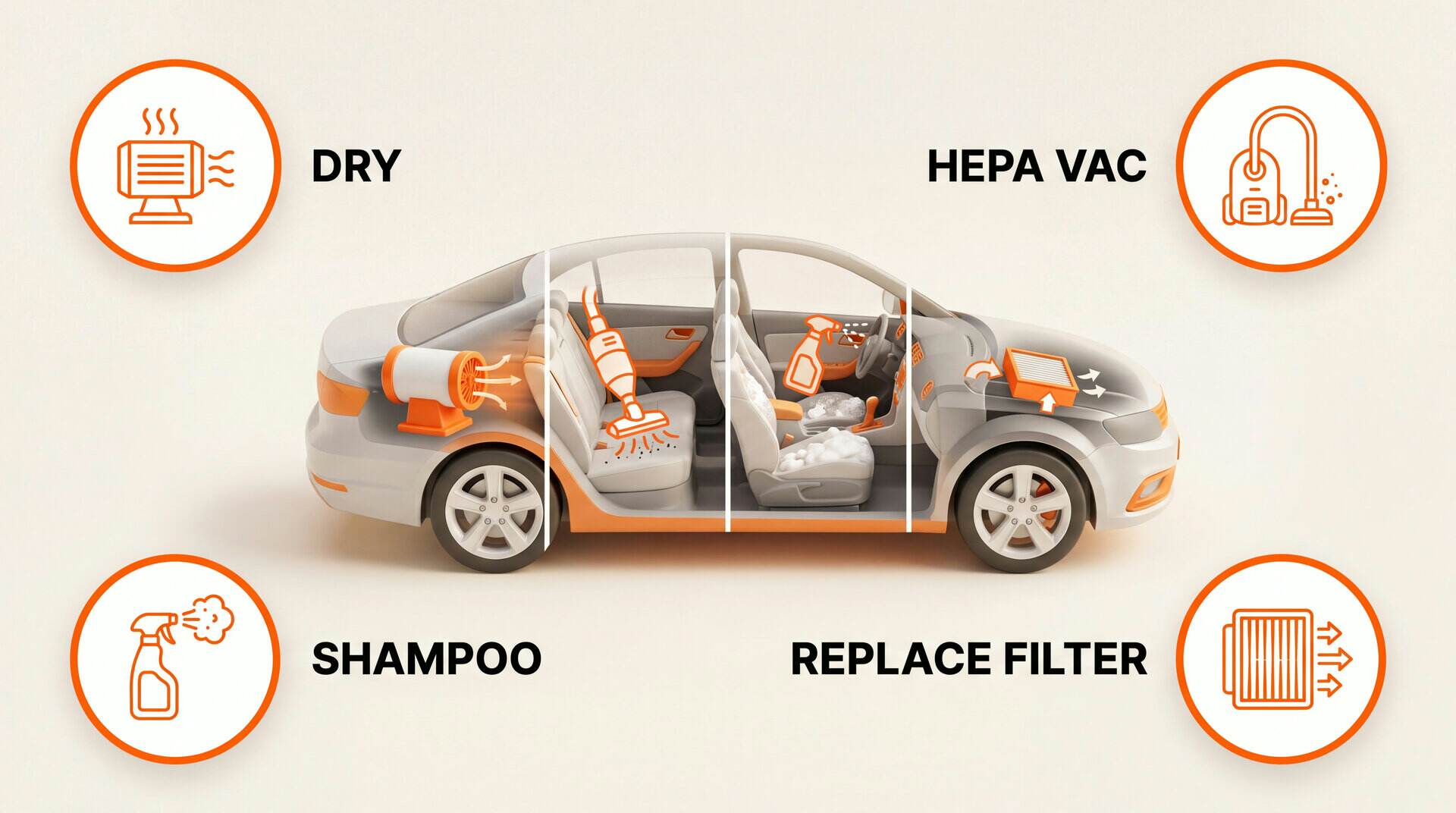
Ozone treatment is the nuclear option for car mold. An ozone generator produces O3, a powerful oxidizer that kills mold, bacteria, and destroys odor molecules. A professional places the generator inside the sealed car and runs it for 30 to 60 minutes. The ozone penetrates fabric, carpet fibers, foam padding, and air ducts that you cannot reach by hand.
When to use it: After flooding. After a car sat unused for months with windows up. When the AC evaporator has been cleaned but the smell persists in the ducts and headliner. When mold has been in the car long enough to contaminate multiple surfaces.
Cost: $100 to $200 at most auto detailers. Some car washes offer it as well.
Safety: Do not enter the car for at least 2 hours after ozone treatment. Ozone is harmful to breathe at high concentrations. Open all doors and windows and let the car air out completely before driving.
Frequently asked questions
Why does my car smell like mold?
The most common cause is mold growing on the AC evaporator. When you run the AC, moisture condenses on the evaporator coil. That moisture is supposed to drain out through a tube under the car. If the drain is clogged or the evaporator stays wet, mold grows on the coil and blows spores into the cabin every time you turn on the air. Other causes include wet carpet from leaking door seals or a clogged sunroof drain.
How do I get rid of mold in my car AC?
Start by clearing the AC condensate drain. It is a small rubber tube under the passenger side of the car. Poke it clear with a pipe cleaner or compressed air. Then spray an AC evaporator cleaner (like Kool It or Klima Cleaner) into the AC intake vent with the system running on recirculate. The foam coats the evaporator and kills mold. For severe cases, a detailer can disassemble the dash and clean the evaporator directly.
Does ozone treatment kill mold in a car?
Yes. Ozone (O3) is a powerful oxidizer that kills mold, bacteria, and eliminates odors. A professional ozone treatment runs an ozone generator inside the sealed car for 30 to 60 minutes. It penetrates fabric seats, carpet fibers, and air ducts that you cannot reach by hand. Cost is typically 100 to 200 dollars. Do not enter the car for at least 2 hours after treatment to let the ozone dissipate.
Can mold in a car make you sick?
Yes. A car is a small enclosed space. When the AC blows mold spores from a contaminated evaporator, you breathe concentrated spores for the entire drive. Symptoms include sneezing, coughing, headaches, watery eyes, and fatigue. People who commute an hour or more each way in a moldy car can develop chronic respiratory problems. If you feel worse driving and better outside the car, mold in the AC system is the likely cause.
Sources
Every claim on this page traces to one of these. Links open the primary document.