What does household ammonia say about mold on its label?
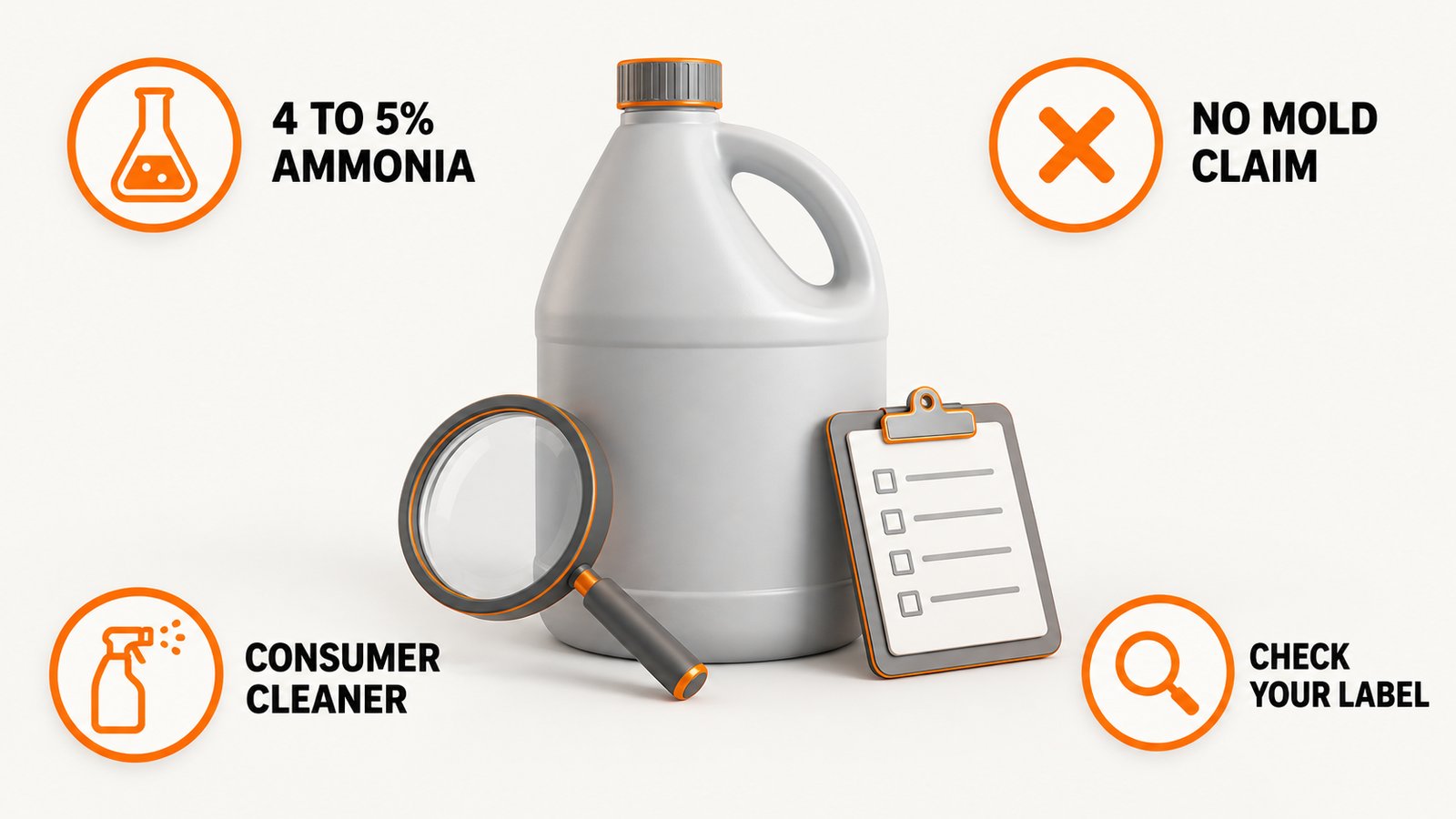
Household ammonia is a cleaning product, and that is how it is sold. We read the safety data sheet for Brillo Parsons All-Purpose Ammonia Cleaner, one of the best-known brands. It lists ammonia at 4 to 5% by weight and its recommended use as "Consumer Household Cleaning." It says the product is labeled under rules from the Consumer Product Safety Commission. The sheet does not mention mold, mildew, fungus or disinfecting anywhere.
That matters because a product sold to kill mold says so on its label. We did not find a mold claim or an EPA pesticide registration for household ammonia. We checked one brand, not every bottle on the shelf, so look at yours. If you don't see a mold claim and an EPA registration number, the maker isn't promising that it kills mold.
Why you should never mix ammonia and bleach
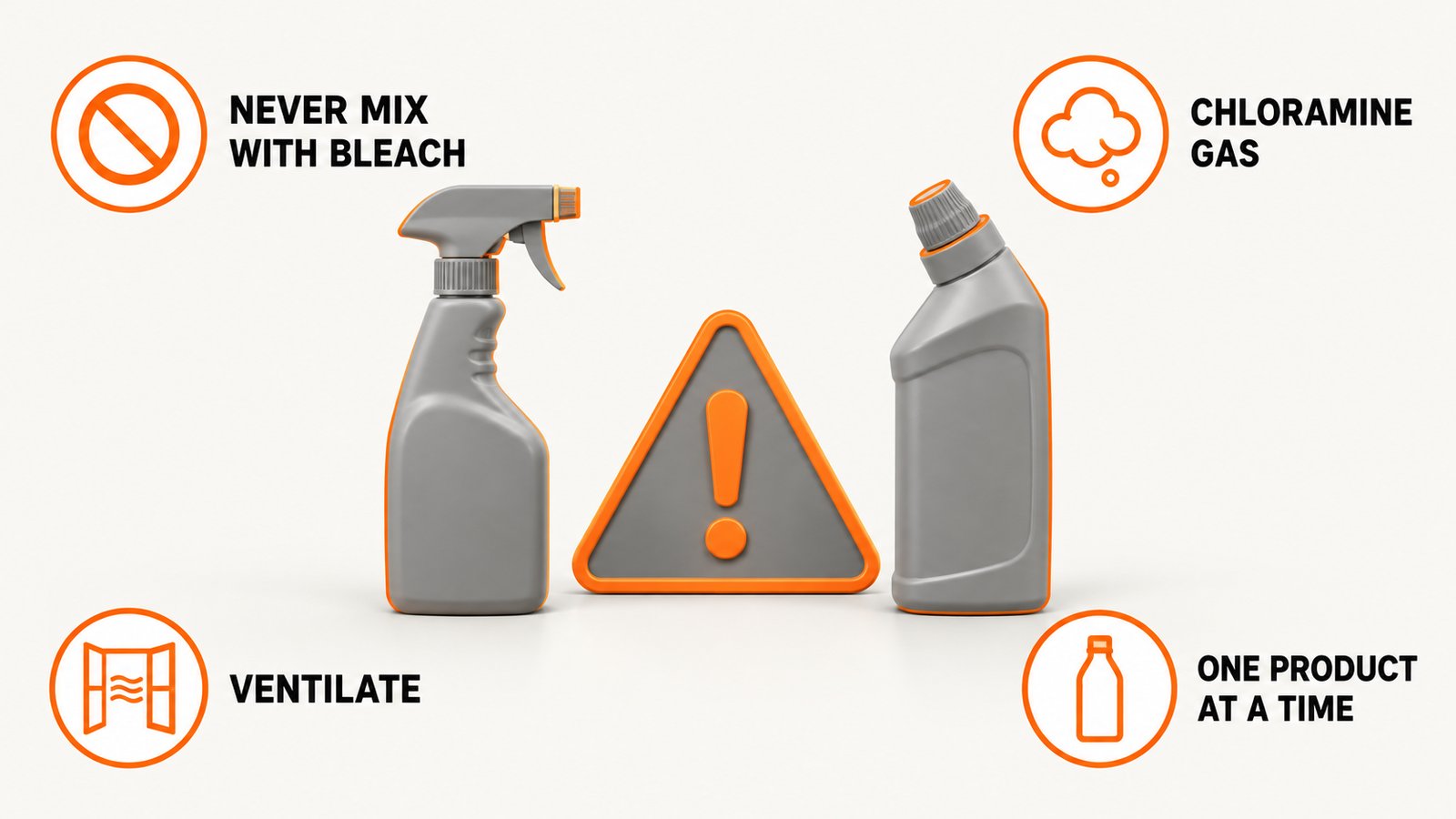
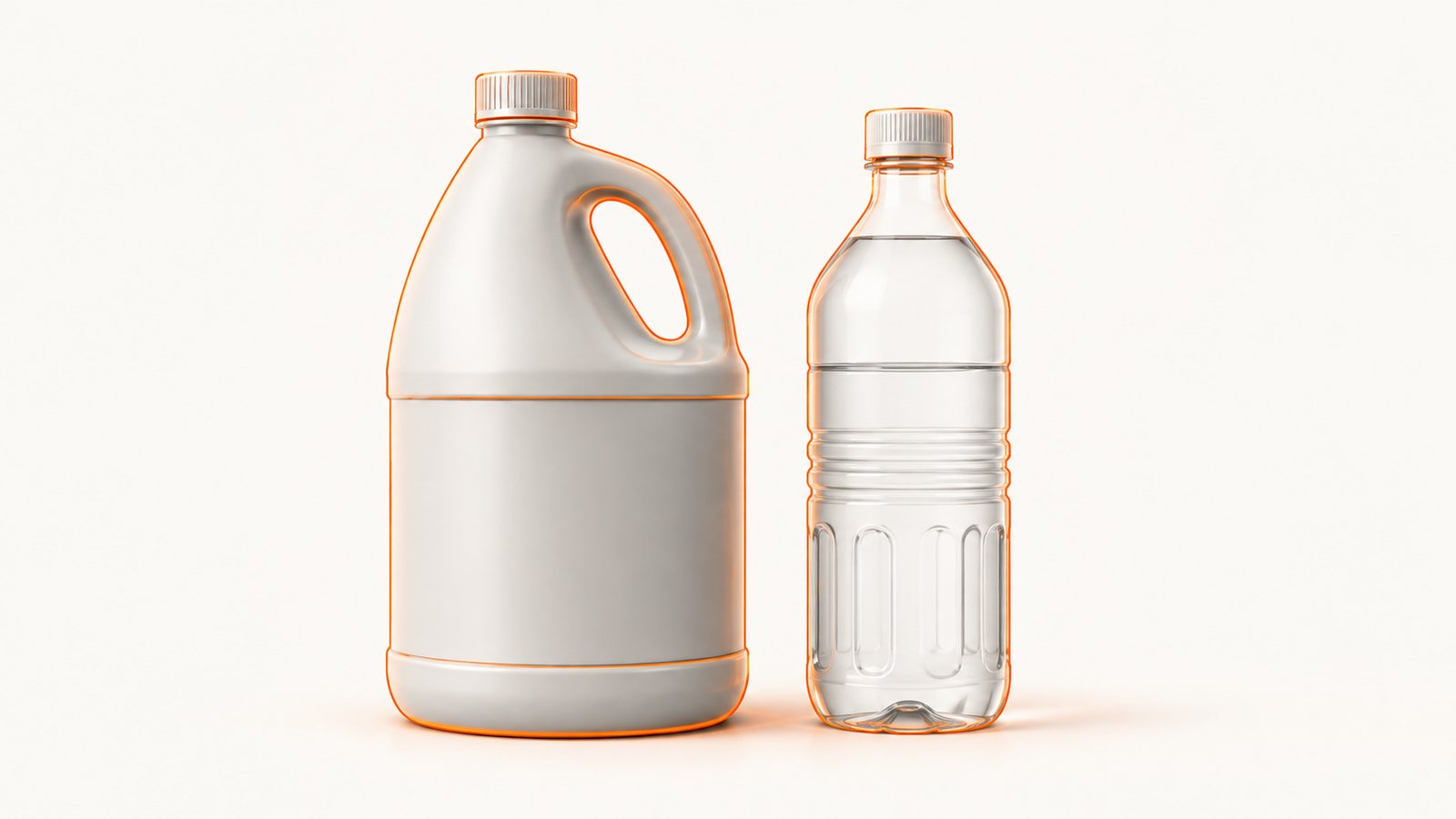
This is the part of the ammonia question that actually matters. Poison Control says to not mix household chemicals such as bleach and ammonia, and that mixing ammonia with a hypochlorite such as bleach makes chloramine gas. The Washington State Department of Health gives the same warning in one line: don't mix bleach with ammonia, acids or other cleaners. EPA's mold guidance says it too: never mix chlorine bleach solution with other cleaning solutions or detergents that contain ammonia, because toxic fumes could be produced.
The Parsons ammonia safety data sheet lists "any chlorine bleach product" as an incompatible material and says mixing with bleach produces toxic vapors.
| Combination | What it makes | Who says so |
|---|---|---|
| Ammonia plus chlorine bleach | Chloramine gas | Poison Control, Washington State Department of Health, EPA |
| Bleach plus an acid, such as vinegar or some toilet bowl cleaners | Chlorine gas | Poison Control, Washington State Department of Health |
| Ammonia plus an unknown cleaner | Unknown, so don't | Washington State Department of Health: read every label |
The Washington State Department of Health notes that ammonia shows up in some glass and window cleaners and in paints, not only in the jug marked ammonia. If you already used bleach on a spot, don't follow it with an ammonia product, and the other way around. Rinse and let the area air out first, and read the label on whatever is in your hand.
If the two ever do get mixed, leave the area and open windows and doors. Poison Control's line is 1-800-222-1222. For the full picture of what bleach does and doesn't do on mold, see does bleach kill mold and our bleach vs vinegar comparison.
Is ammonia for mold on walls and wood a good idea?
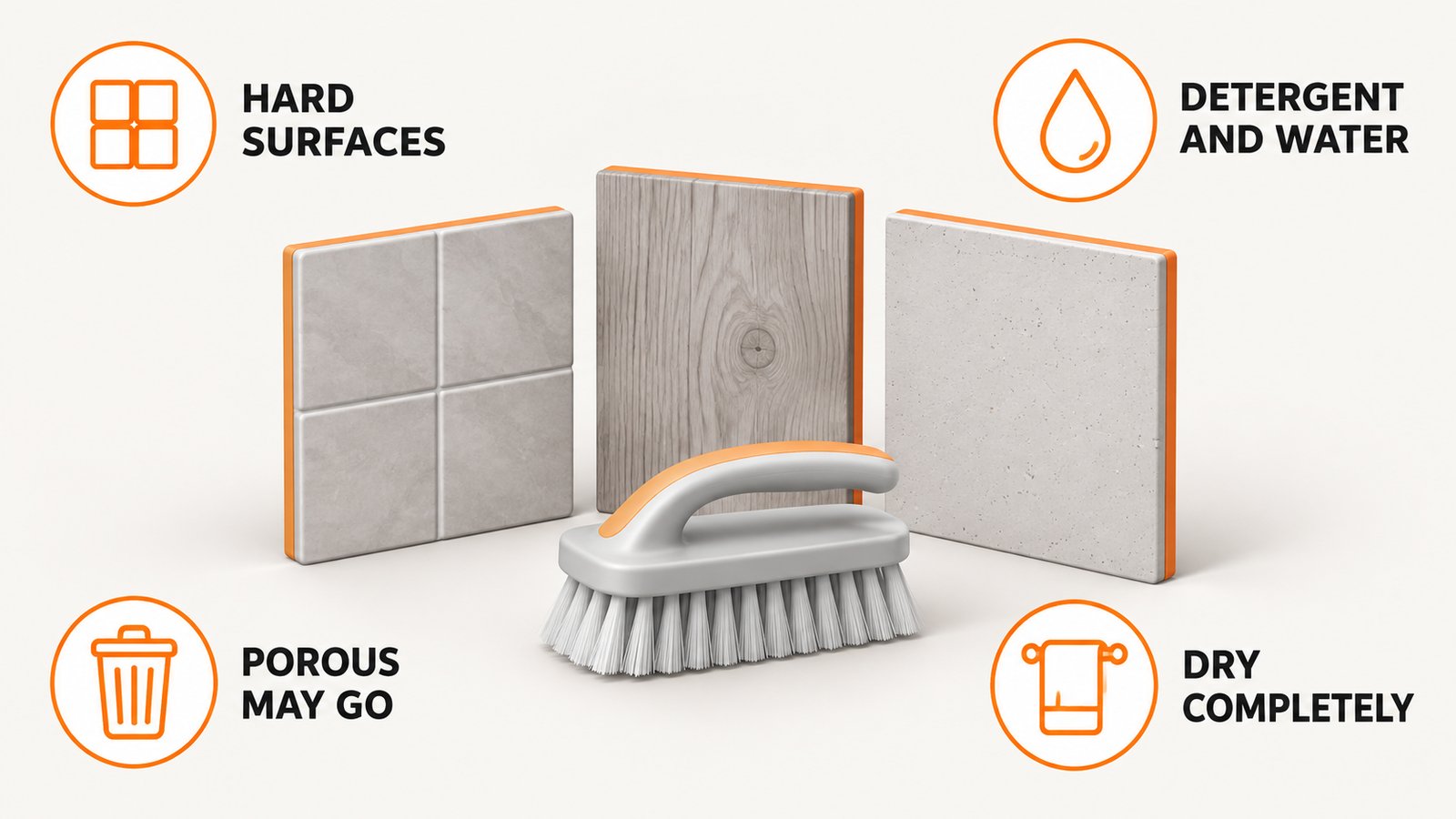
The surface decides more than the cleaner does. EPA's cleanup guidance says to scrub mold off hard surfaces with detergent and water, and dry completely. For absorbent or porous materials, such as ceiling tiles and carpet, EPA says they may have to be thrown away if they become moldy. Its reason is that mold can grow on or fill in the empty spaces and crevices of porous materials, so it may be difficult or impossible to remove completely.
| Surface | What EPA says | Where ammonia fits |
|---|---|---|
| Tile, glass, sealed counters | Scrub with detergent and water, then dry completely | No source we read says ammonia does this job better |
| Drywall, ceiling tile, carpet | May have to be thrown away | A cleaner won't bring the material back |
| Wood and grout | Clean what you can reach, dry it, fix the moisture | No label claim to rely on |
There is no evidence in what we read that ammonia reaches mold inside wood or drywall. Our pages on mold on walls and mold on wood walk through each material, and can you paint over mold covers why a coat of paint on top is the wrong move. EPA's guidance is blunt about it: do not paint or caulk moldy surfaces.
Does ammonia kill mildew?
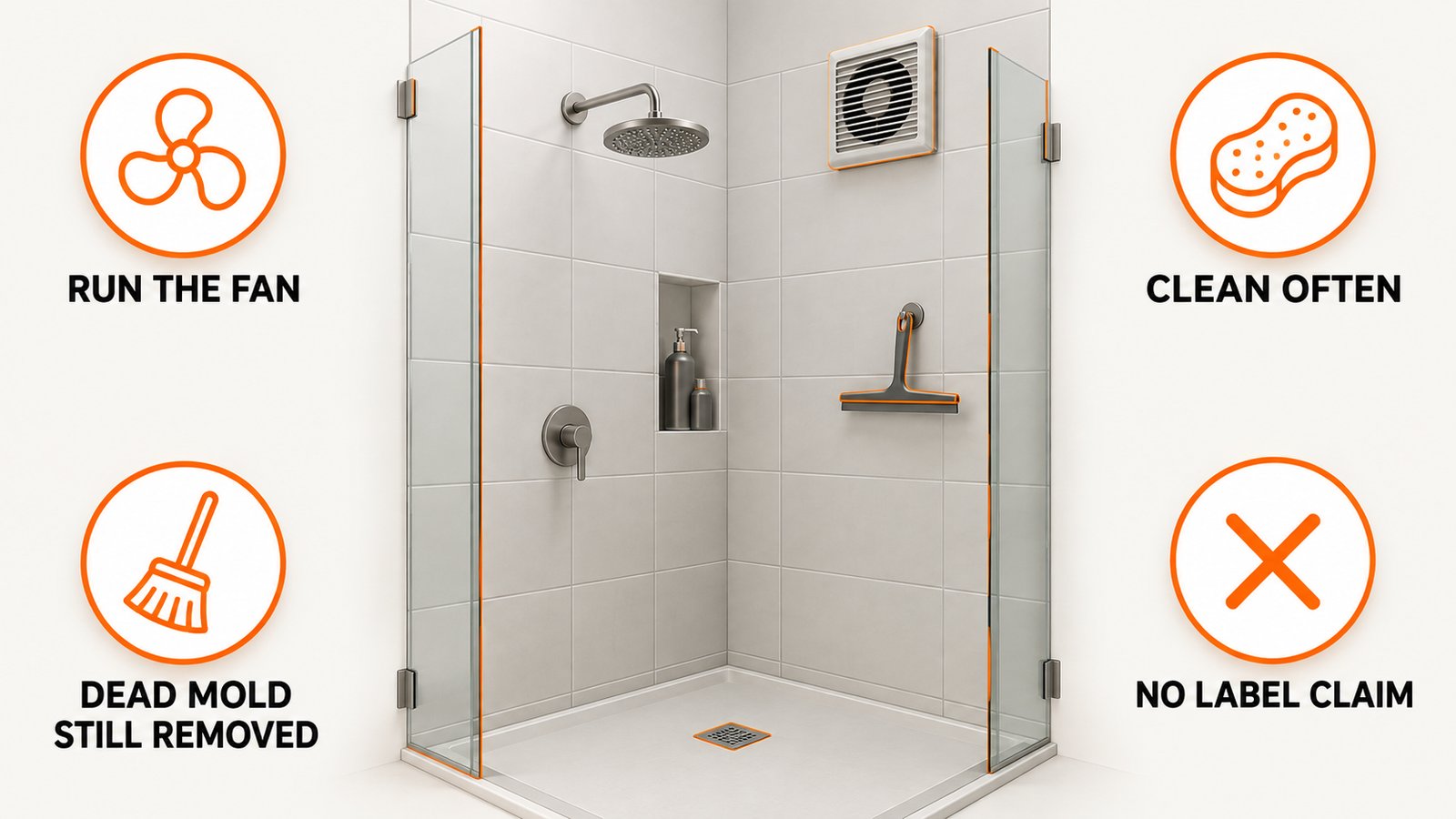
People say mildew for the mold they see in showers, on window sills and along grout. It is the same moisture problem, and the same answer applies: we found no source or label saying household ammonia kills mildew. Our page on mold vs mildew explains how the two words get used, and black mold vs mildew compares how they look.
What EPA does say about a bathroom is useful. Places that are often or always damp can be hard to keep completely free of mold. If mold in the shower or elsewhere keeps coming back, EPA's tip is to increase ventilation by running a fan or opening a window, and to clean more frequently. That will usually prevent mold from recurring, or at least keep it to a minimum.
One more point from EPA is easy to miss. It says dead mold may still cause allergic reactions in some people, so it isn't enough to simply kill mold. It also has to be removed. That is why a wipe-down that makes a spot look clean is not proof of anything. If a spot looks better after an ammonia wipe, the scrubbing and wiping probably did the work, and we can't tell you the ammonia did. See our mold in bathroom guide for the room-by-room version.
What should you do about mold instead of reaching for ammonia?
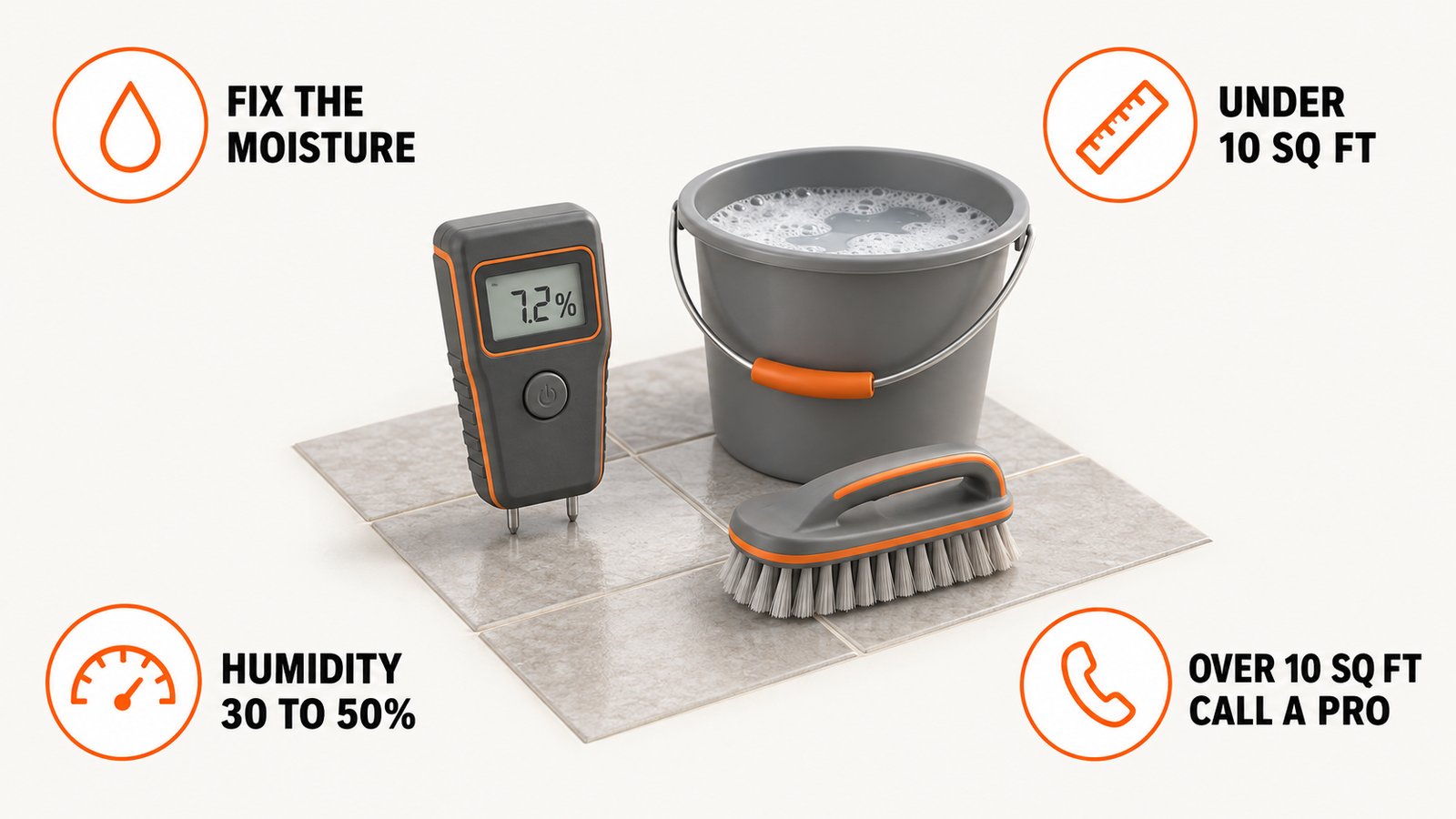
Start with moisture. EPA says the key to mold control is moisture control, and that none of the many types of mold will grow without water or moisture. If you only clean and don't fix the leak or the damp, the mold has a reason to return. Then follow this order:
- Find and fix the water source: a leak, condensation, a wet basement wall. EPA says the cleanup can't be considered finished until the moisture problem is fully fixed.
- Check the size. EPA says that if the moldy area is less than about 10 square feet (roughly a 3 foot by 3 foot patch), you can in most cases handle the job yourself. If there has been a lot of water damage, or mold covers more than 10 square feet, EPA points you to its remediation guidance, and a professional is the usual next step.
- Gear up and ventilate (next section).
- Scrub hard surfaces with detergent and water, and dry them completely.
- Throw away porous materials that stay moldy, such as ceiling tile and carpet.
- Keep indoor humidity below 60%, and ideally between 30% and 50%, per EPA. A small humidity meter is cheap, and a dehumidifier helps in damp rooms.
EPA also notes that biocides, meaning chemicals that kill organisms such as mold (chlorine bleach is its example), are not recommended as a routine practice during mold cleanup. It adds that in most cases it is not possible or desirable to sterilize an area, and that spores which remain will not grow if the moisture problem has been resolved. Detergent, water, a brush and dry air are the baseline. For product comparisons see mold cleaning products, and for the step-by-step version see how to get rid of mold and mold removal.
Not sure the spot is mold at all? You can photograph the surface and get an AI-assisted visual screening of what is visible in the frame. Processing time varies. Our guide on telling if it is mold from a photo shows what to capture.
What gear and ventilation do you need for mold cleanup?
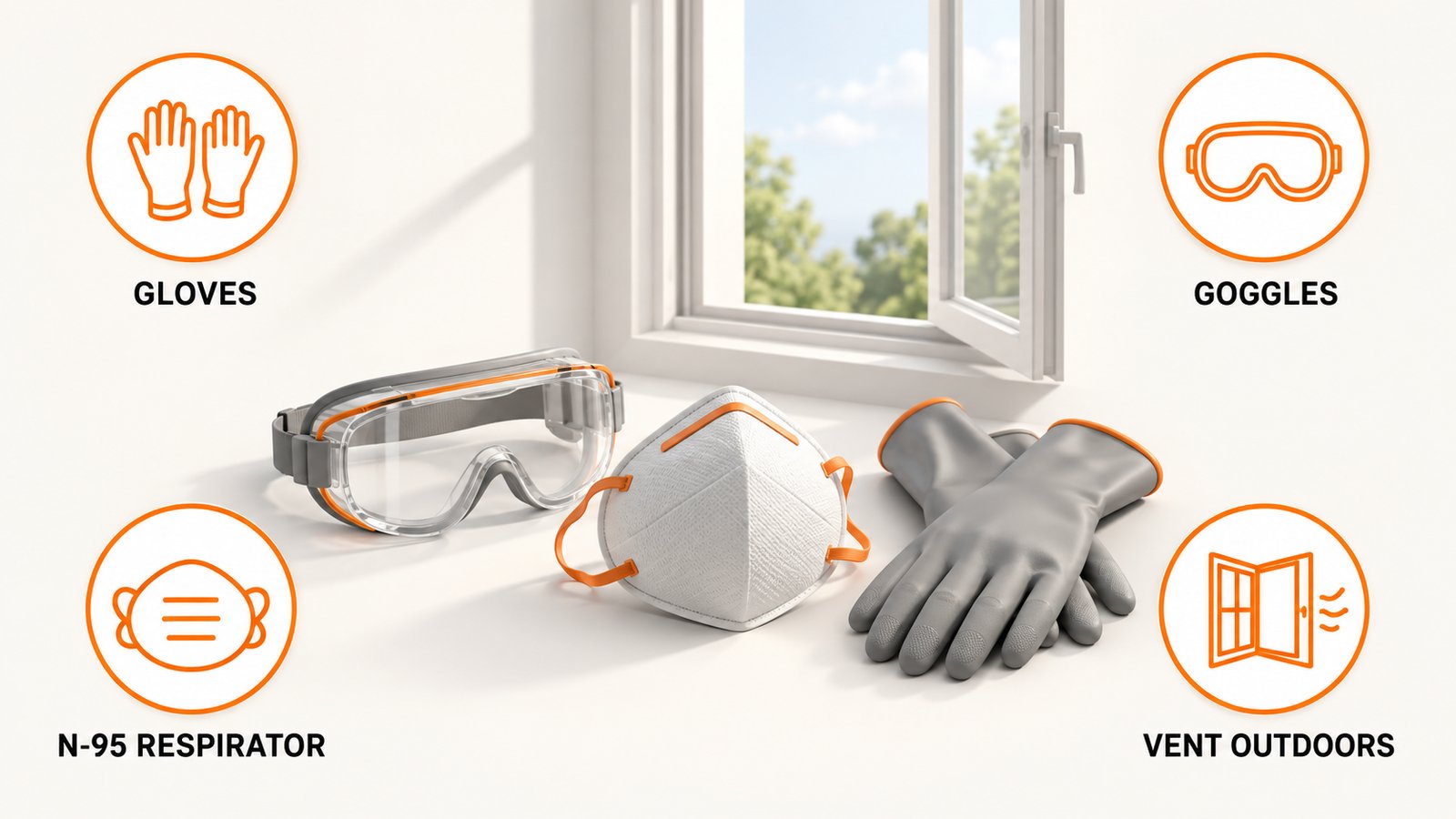
EPA's cleanup guidance lists three basics. Wear gloves: if you use a disinfectant, a biocide such as chlorine bleach or a strong cleaning solution, EPA says to choose gloves made from natural rubber, neoprene, nitrile, polyurethane or PVC. Wear goggles, and EPA recommends goggles without ventilation holes. And to limit exposure to airborne mold, you may want to wear an N-95 respirator, which has to fit properly.
Ventilation is the second half. EPA says that if you choose to use disinfectants or biocides, always ventilate the area and exhaust the air to the outdoors. Poison Control's advice for cleaning products is the same in plain words: work in a well-ventilated area. Open a window, run a fan that vents outside, and read the product label before you start.
- Use one product at a time. Rinse and dry between products.
- Never combine ammonia with bleach, and keep bleach away from acids like vinegar.
This page covers cleaning products and protective gear only. If you have questions about your health, ask a licensed clinician. For the broader safety picture, see our how to prevent mold guide, and for the peroxide option see hydrogen peroxide for mold.
Frequently asked questions
Does ammonia kill mold?
We couldn't find a reliable source that says so. The ammonia cleaner safety data sheet we read has no mold or mildew claim, and EPA's advice for mold on hard surfaces is detergent and water, then complete drying. Check your own bottle for an EPA registration number and a mold claim.
Does ammonia kill mold and mildew?
No source or label we read says household ammonia kills either one. People use mildew for mold in damp rooms like showers. EPA says the fix there is more ventilation and more frequent cleaning, along with fixing the moisture source.
Is it safe to mix ammonia and bleach to clean mold?
No. Poison Control says mixing ammonia with bleach makes chloramine gas, and the Washington State Department of Health and EPA both warn against it. Use one product at a time, rinse between products, and ventilate.
Can I use ammonia on mold on drywall or wood?
We found no evidence that ammonia reaches mold inside porous materials. EPA says porous materials such as ceiling tile and carpet may have to be thrown away if they become moldy, and that mold can fill the empty spaces in them.
What does EPA recommend instead of ammonia for mold?
Fix the moisture problem first. Then scrub mold off hard surfaces with detergent and water and dry them completely. EPA says biocides, including chlorine bleach, are not recommended as a routine practice during cleanup.
What should I wear when cleaning mold?
EPA lists gloves, goggles and, to limit exposure to airborne mold, an N-95 respirator that fits properly. It also says to ventilate the area and exhaust the air to the outdoors when you use disinfectants or biocides.
How big a mold patch can I clean myself?
EPA says that if the moldy area is less than about 10 square feet, roughly a 3 foot by 3 foot patch, you can in most cases handle it yourself. If there has been a lot of water damage or the mold covers more than 10 square feet, EPA points to its remediation guidance.
Sources
Every claim on this page traces to one of these. Links open the primary document.