Does alcohol kill mold?
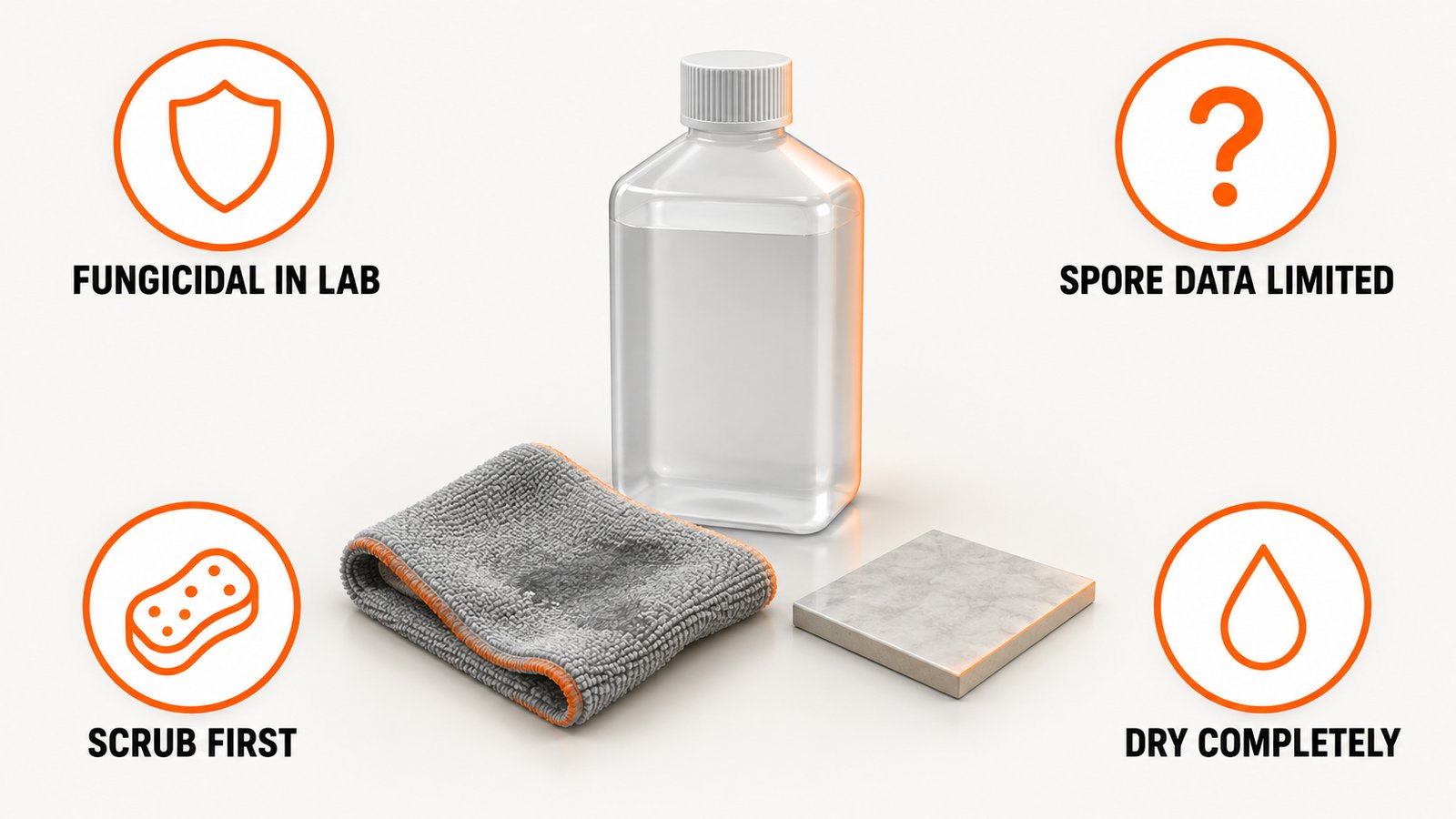
Alcohol can kill mold it touches, but it is not a good way to clean up mold in a home. CDC's disinfection guideline lists alcohols as fungicidal, which means they can kill fungi. That finding comes from lab testing of disinfectants. It is not a test of mold growing in drywall, wood or grout.
EPA's mold guidance sets a different goal. It tells you to fix the water problem, scrub mold off hard surfaces with detergent and water, and dry them completely. EPA also says killing mold with a chemical is not recommended as a routine part of cleanup, because dead mold can still cause allergic reactions and has to be removed anyway. So the question to ask is not only whether alcohol kills mold. It is whether alcohol gets the mold off and keeps it from coming back. Alone, it does neither.
This page sticks to cleaning and protective gear. It does not cover health effects or treatment. If you want the same question answered for other products, see our guides on vinegar, bleach, hydrogen peroxide and tea tree oil.
How alcohol works on microbes
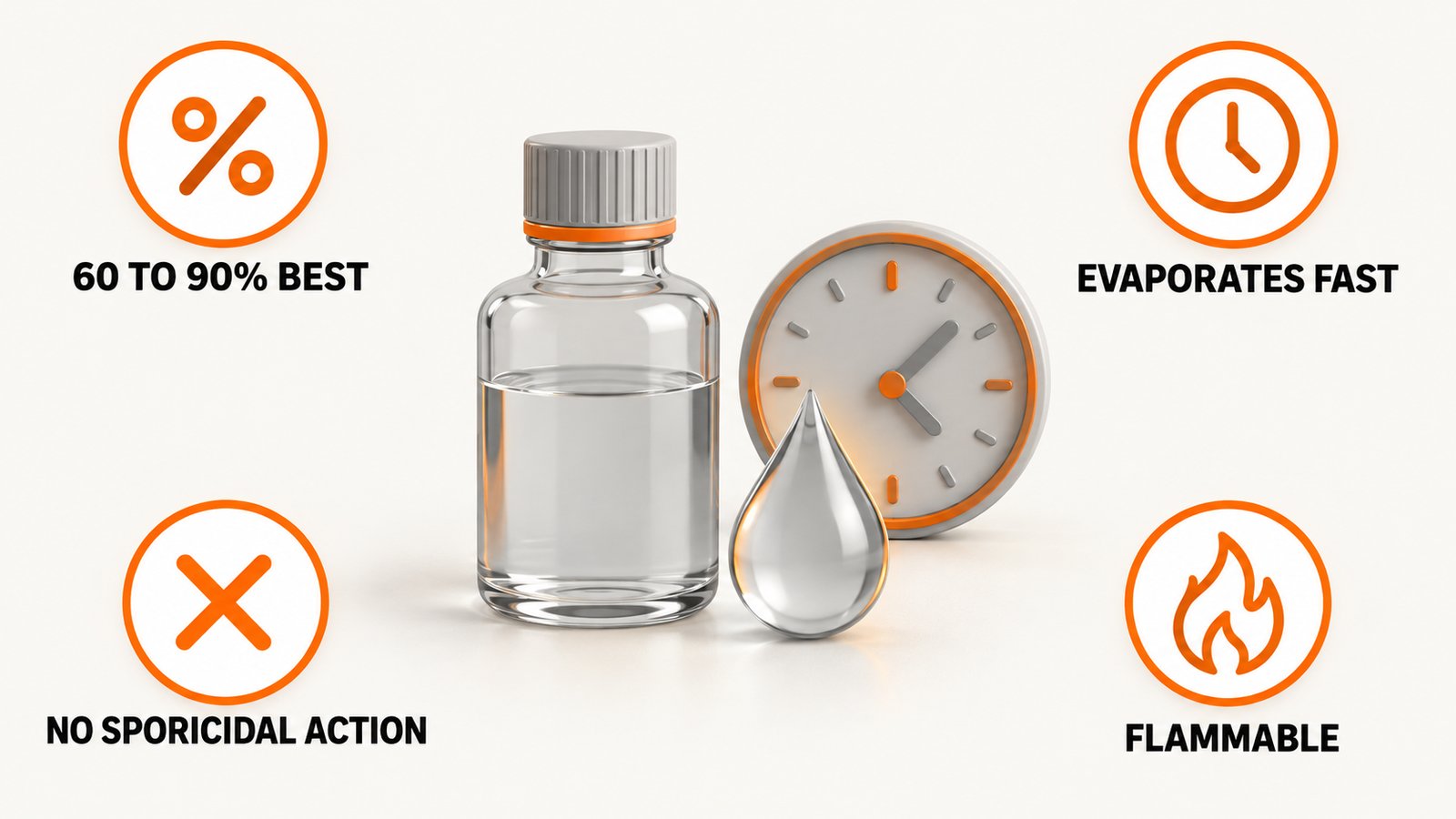
CDC's guideline says the best killing concentration for alcohols is 60 to 90% in water. CDC also says absolute ethyl alcohol, which has almost no water in it, is less bactericidal than mixtures of alcohol and water. Alcohols work by damaging proteins, and that damage happens faster when water is present.
Two limits matter at home. First, CDC notes that alcohols evaporate quickly, which makes a long contact time hard to get on anything you are not soaking. Second, CDC says alcohols lack sporicidal action. That statement is about bacterial spores, and mold spores are a different thing. We could not find a CDC or EPA source that tests alcohol on mold spores, so we are not going to guess. The honest answer is that the evidence is limited.
| What CDC says | What it means for a moldy surface |
|---|---|
| Best at 60 to 90% in water | A 70% bottle is in range. Stronger is not better. |
| Evaporates quickly | Little contact time on a vertical wall. |
| Fungicidal, no sporicidal action | Kills fungi on contact in a lab. Spore results are unproven for building surfaces. |
| Flammable | Ventilate and keep away from ignition sources. |
Does 91 alcohol kill mold?
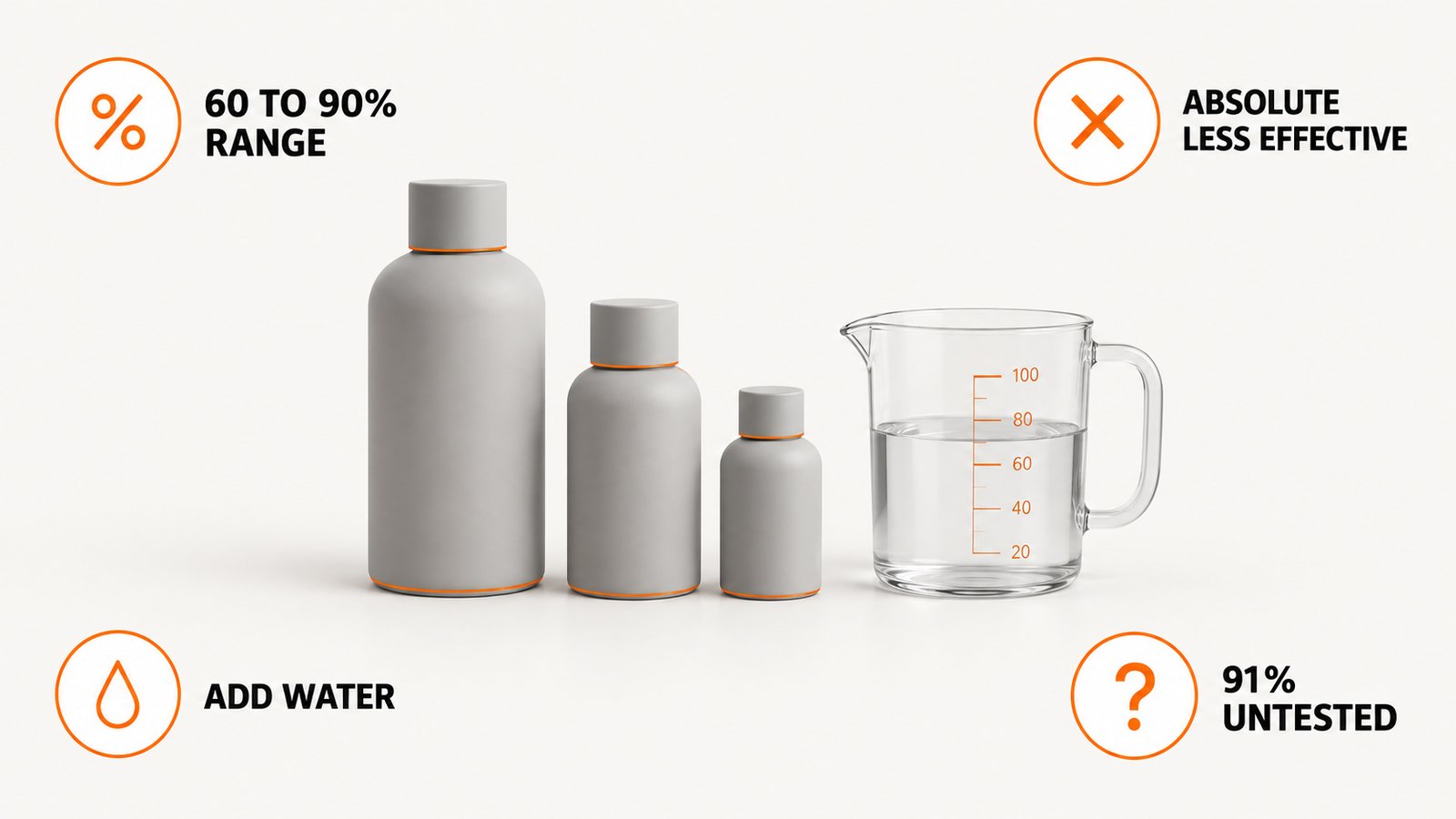
Probably, if the mold is wet and the alcohol sits on it, but 91% is not the strength CDC points to. CDC's best range is 60 to 90%, and 91% isopropyl alcohol sits just above it. The CDC page does not test 91% isopropyl alcohol on mold, so any claim that it beats a 70% bottle is not backed by the sources we read.
If you already own 91%, you do not need to run out and buy 70%. You can add water to bring it into the range. A common mix is about two parts 91% alcohol to one part water, which lands near 60%, but that ratio is our arithmetic, not a CDC instruction. For a surface you want to wipe down after cleaning, 70% is the simpler bottle. In both cases the cleaning work is done by the scrubbing and drying, not by the alcohol strength.
Does rubbing alcohol kill mold on wood and drywall?
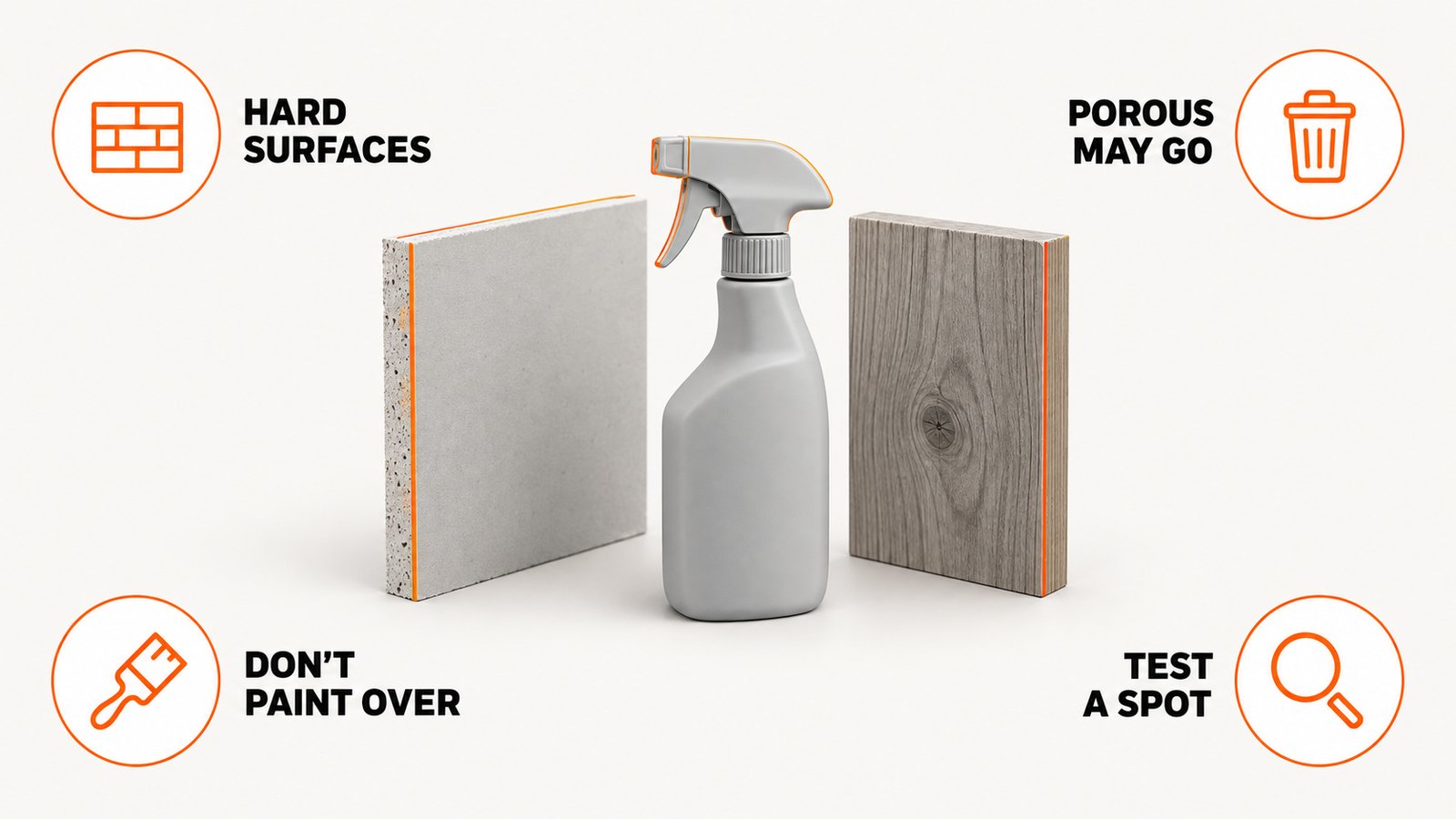
Rubbing alcohol is a poor match for wood and drywall. EPA says absorbent or porous materials, like ceiling tiles and carpet, may have to be thrown away if they get moldy, because mold can be impossible to remove from them completely.
On hard, sealed surfaces like glass, metal, glazed tile and a sealed tub, the plan is simple. Scrub with detergent and water, rinse, dry completely, and then wipe with alcohol if you want a finishing step. Pull any alcohol use out of the plan for these materials:
- Unsealed wood and drywall: the mold is not only on the face. See mold on wood and mold on drywall.
- Carpet and ceiling tile: EPA says these may have to be thrown away.
Do not paint over mold either. EPA says the paint is likely to peel, and our page on painting over mold covers what to do instead.
Will rubbing alcohol kill black mold?
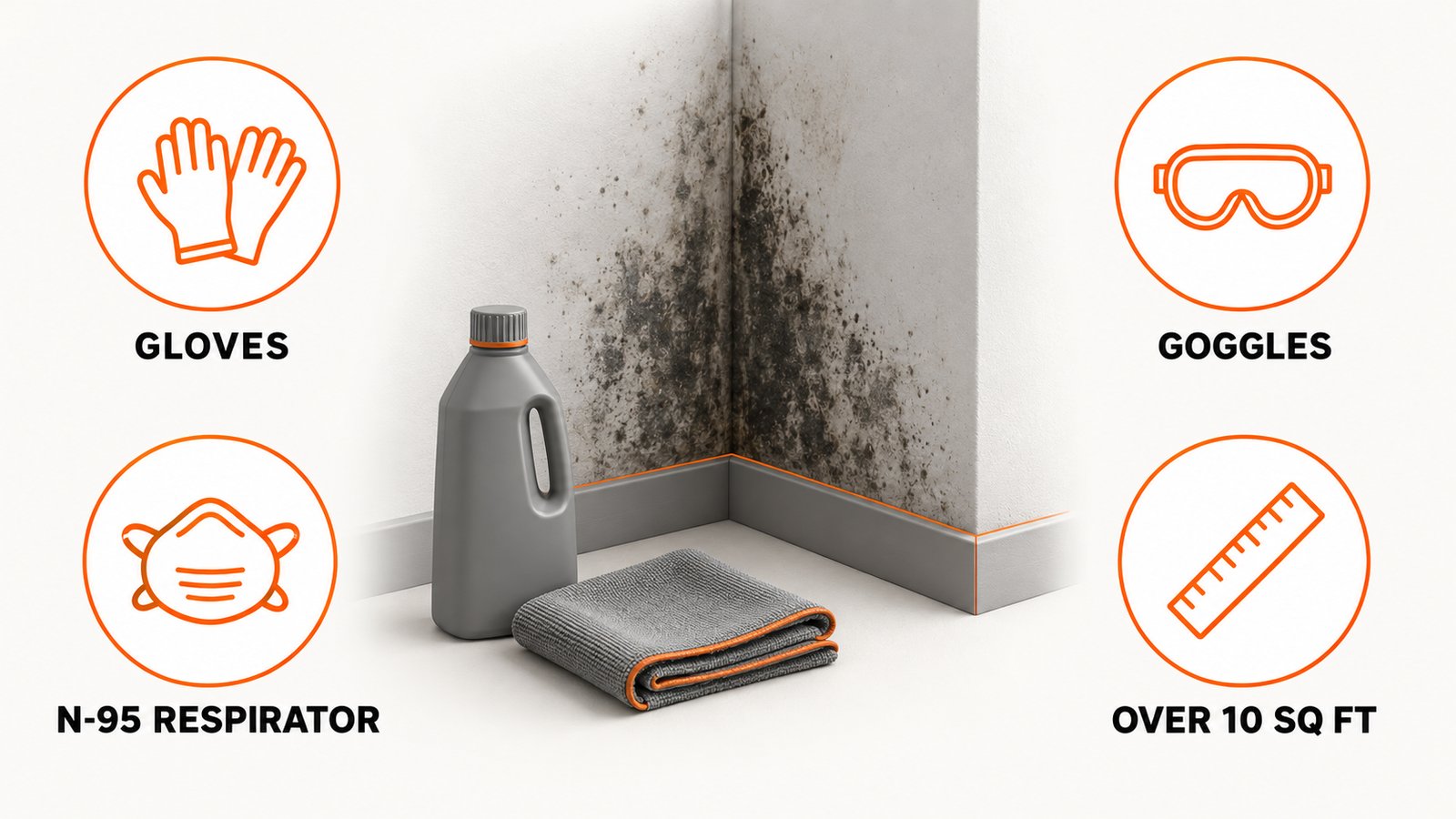
We can't say that it will. We found no EPA or CDC source that tests rubbing alcohol on black mold growing on building materials. The lab finding that alcohols are fungicidal is general, and it does not name any one mold. Our guides to black mold and black mold on a wall explain why color alone does not tell you the species.
Treat it like any other mold. Wear gloves, goggles and a properly fitted N-95 respirator, which are the items EPA's guide lists. Scrub hard surfaces with detergent and water and dry completely. If the patch is bigger than about 10 square feet, EPA points you to its guide for larger jobs, and our mold remediation cost page shows what a professional job usually involves.
If you are not sure the stain is mold at all, the Mold Scanner app offers AI-assisted visual screening of what is visible in a photo. Processing time varies. It is a screening tool, not a lab test, and it will not tell you the exact species.
Can rubbing alcohol be mixed with vinegar?
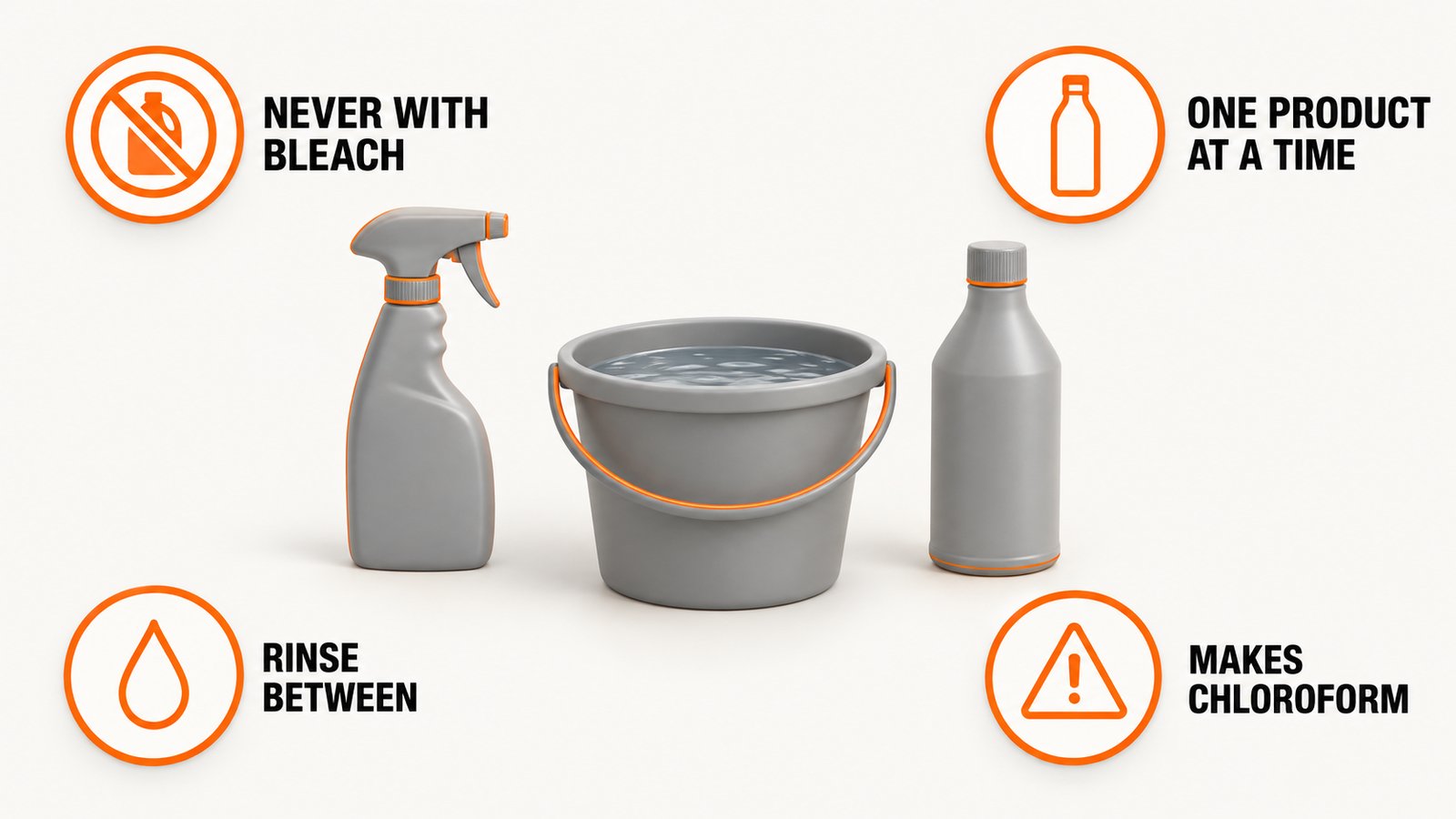
Neither CDC's disinfectant guideline nor the New Jersey Department of Health hazard alert we read lists rubbing alcohol and vinegar as a dangerous pair. That is different from saying the mix helps. We found no source showing it cleans mold better than either product alone, and mixing them just waters both down.
A simple routine avoids the question. Clean with one product, rinse the surface with plain water, let it dry, then use the next if you want to. Our vinegar guide covers vinegar on its own.
Never mix alcohol with bleach
This one is dangerous. The New Jersey Department of Health alert says mixing bleach with isopropyl alcohol forms chloroform. The same alert says bleach with vinegar produces chlorine and chloramine vapors, and bleach with ammonia creates toxic gases. EPA's mold guide says the same thing in its own words: never mix chlorine bleach solution with other cleaning solutions or detergents that contain ammonia.
The rule that covers all of it is the one the alert gives: never mix cleaning products. If you used bleach earlier, rinse well and ventilate before you use anything else. For more on bleach and what EPA says about it, see does bleach kill mold and bleach vs vinegar.
How to clean mold with rubbing alcohol safely
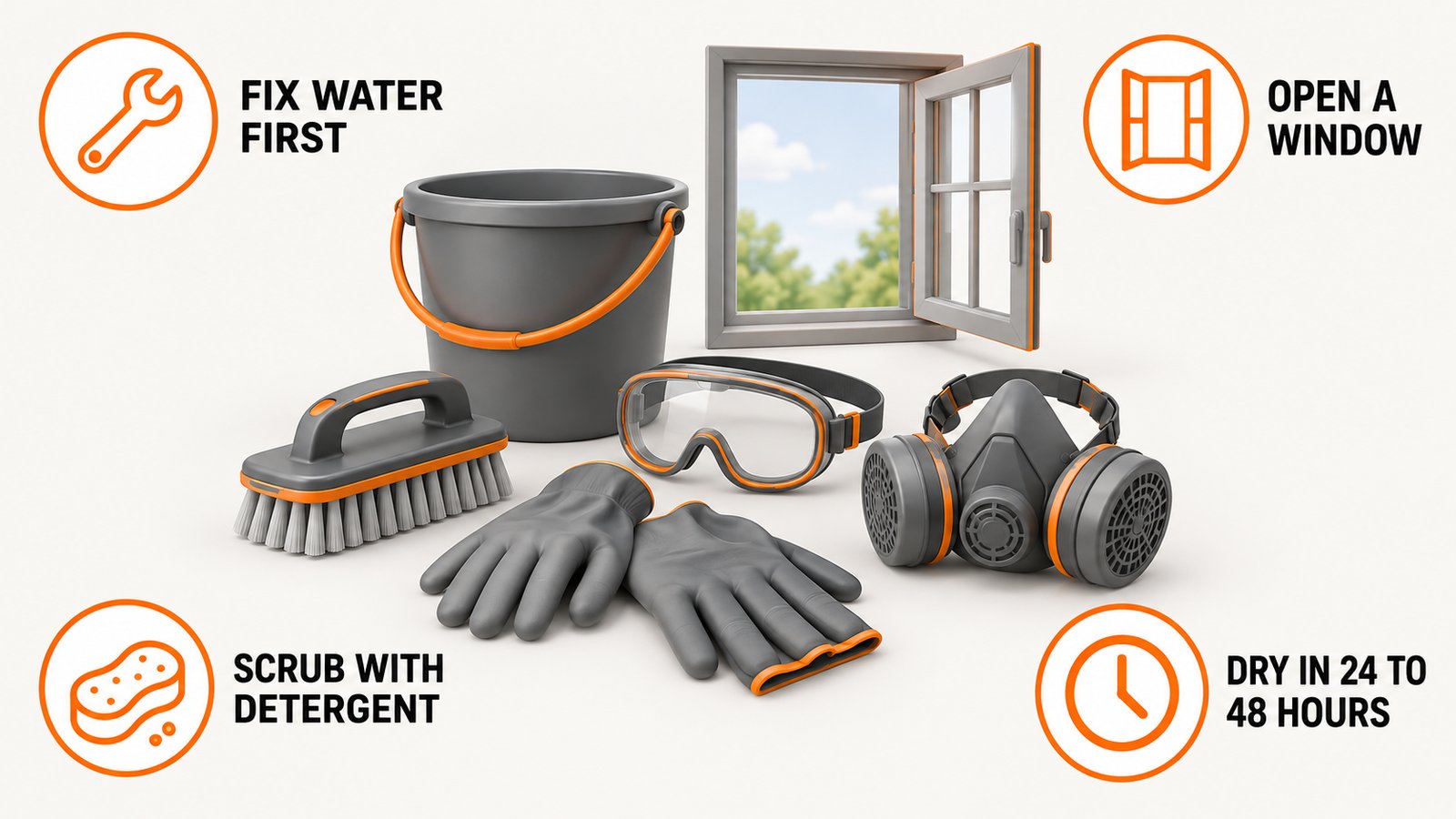
If you decide to use alcohol on a small, hard, nonporous spot, treat it as the last step, not the first. This is how to do it without creating a new problem.
- Fix the water first. EPA says to fix plumbing leaks and other water problems as soon as possible and to dry all items completely. Without that, the mold returns. See how to prevent mold.
- Suit up. Gloves, goggles without ventilation holes and a properly fitted N-95 respirator, per EPA.
- Open a window and run a fan. CDC calls alcohols flammable and says to keep them in a cool, well-ventilated area. No flames, pilot lights, cigarettes or sparks nearby.
- Scrub with detergent and water. This removes the mold. Rinse and dry completely.
- Wipe with 60 to 90% alcohol if you want to. Let it air dry. Use a cloth you can throw away.
- Dry the room. A fan or a dehumidifier helps. EPA says water damaged areas should be dried within 24 to 48 hours.
For a full method, see how to get rid of mold, and for a product comparison see mold cleaning products.
When to skip alcohol and call a pro
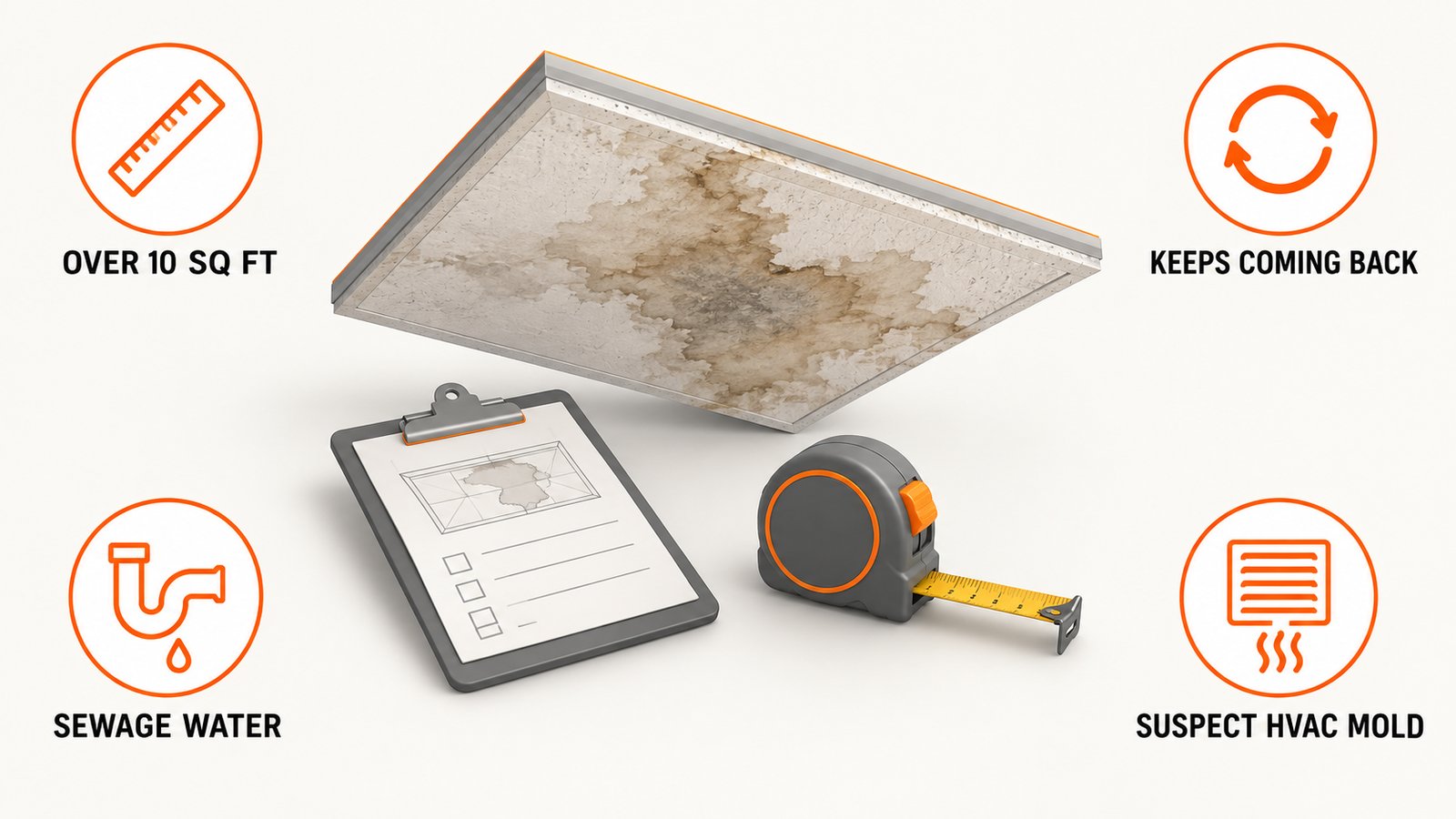
Skip the spray bottle and get help when any of these apply:
- The moldy area is larger than about 10 square feet. EPA points to a different guide for larger growth.
- The mold keeps coming back after cleaning, which usually means the moisture is still there.
- The damage came from sewage or contaminated water. EPA says to call a professional experienced with that kind of damage.
- You suspect mold inside walls, ceilings or an HVAC system. EPA says not to run the HVAC system if you know or suspect it is contaminated.
- The material is porous and soaked, like carpet or ceiling tile.
Our pages on the mold remediation process and mold removal explain what a professional does and what to ask before you hire one. If you want to look at your own space first, the free 160-point checklist walks you through the visible areas room by room.
Frequently asked questions
Does alcohol kill mold?
In a lab, CDC lists alcohols as fungicidal, so they can kill fungi on contact. On a real wall the picture is weaker. Alcohol evaporates fast, it does not soak into porous material, and EPA says the goal of cleanup is to remove mold and fix moisture, not to kill it with chemicals.
Does rubbing alcohol kill mold?
It can kill mold it actually touches, and 70% isopropyl alcohol sits inside CDC's 60 to 90% range. But it will not reach mold growing inside drywall or wood, and dead mold still has to be removed. Scrub hard surfaces with detergent and water, dry them fully, and fix the moisture source.
Can rubbing alcohol kill mold?
On a small, hard, nonporous surface like glass or sealed tile, yes, it can help as a wipe after you scrub with detergent and water. On porous materials like drywall, ceiling tile or carpet, EPA says mold can be impossible to fully remove, so alcohol is not the fix.
Does 91 alcohol kill mold?
Probably, on contact, but 91% is not the best strength. CDC gives 60 to 90% in water as the optimum range for killing microbes, and says absolute ethyl alcohol is less bactericidal than alcohol and water mixtures. The CDC page does not test 91% isopropyl on mold, so the evidence for that exact strength is limited.
Will rubbing alcohol kill black mold?
We found no EPA or CDC test of rubbing alcohol on black mold growing on building materials, so we can't promise it will. Black mold is a color, not one species, and the cleanup steps are the same: wear protection, scrub, dry, and fix the water problem. Large or recurring patches need a professional.
Can rubbing alcohol be mixed with vinegar?
Neither CDC nor the New Jersey hazard alert we read lists that pair as a dangerous mix, but there is no reason to do it. Mixing dilutes both and no source shows it works better. Use one product at a time and rinse with water between them. Never add bleach to either one.
Is it safe to mix rubbing alcohol and bleach?
No. A New Jersey Department of Health hazard alert says bleach and isopropyl alcohol form chloroform, a toxic gas. Never mix bleach with any other cleaner. EPA also says to never mix chlorine bleach solution with other cleaning solutions or detergents that contain ammonia.
Is rubbing alcohol flammable on a wall?
Yes. CDC says alcohols are flammable and must be stored in a cool, well-ventilated area. Open a window, keep it away from flames, pilot lights and anything that sparks, and let the surface air dry before you turn anything back on.
Sources
Every claim on this page traces to one of these. Links open the primary document.