Does tea tree oil kill mold?
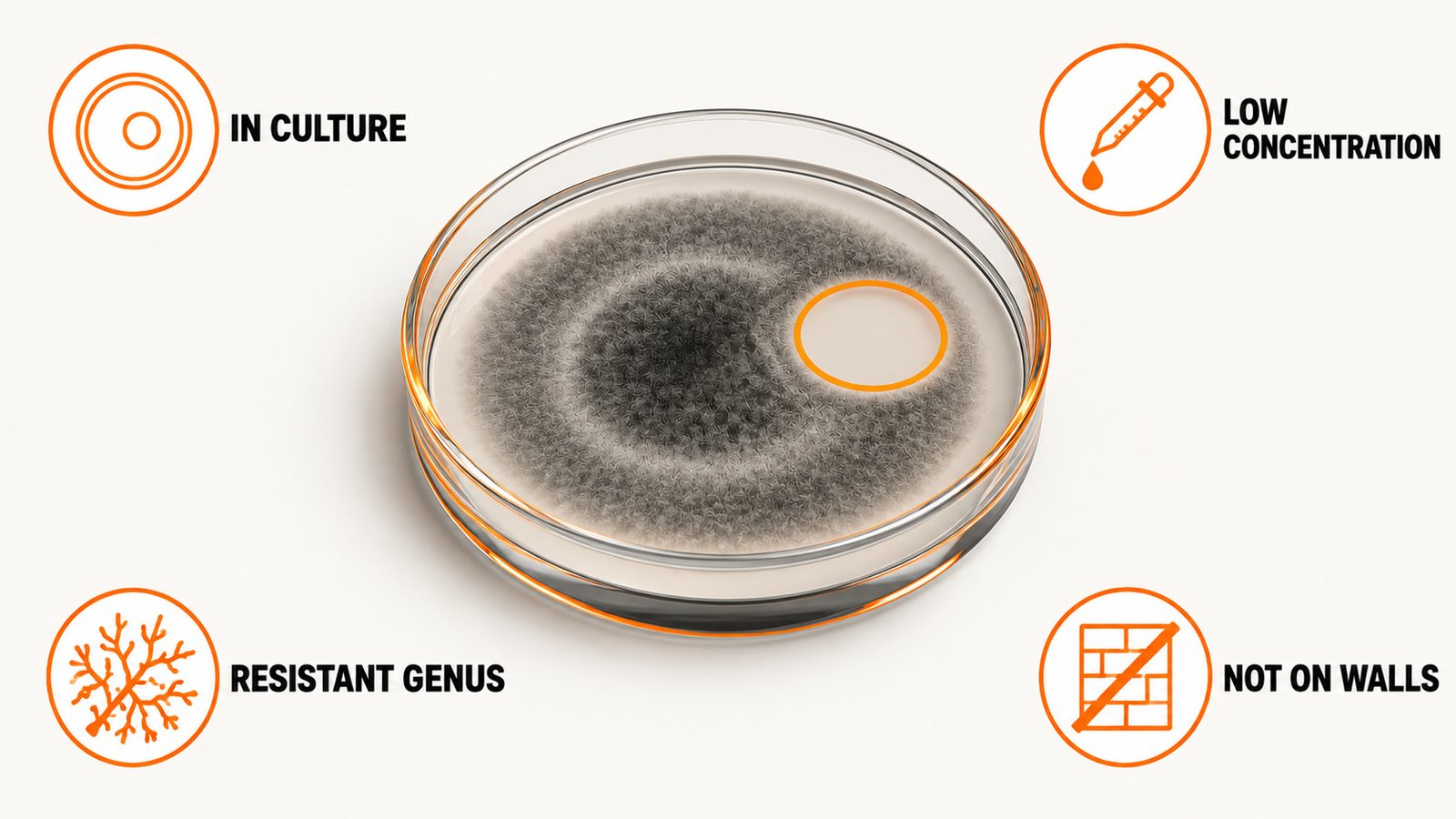
In a laboratory, against fungi grown in culture, yes. The peer-reviewed review of tea tree oil's antimicrobial properties published in Clinical Microbiology Reviews reports that a range of yeasts, dermatophytes, and other filamentous fungi are susceptible to the oil. Minimum inhibitory concentrations generally range between 0.03 and 0.5 percent, and fungicidal concentrations generally range from 0.12 to 2 percent.
Two genera that matter for indoor mold are in that data. Alternaria species show minimum inhibitory concentrations of 0.016 to 0.12 percent, Aspergillus flavus shows 0.31 to 0.7 percent, and Aspergillus fumigatus shows 0.06 percent to above 2 percent, already a wide spread.
Then there is the exception the review names. For Aspergillus niger, minimum fungicidal concentrations as high as 8 percent have been reported, and the review notes those assays used fungal conidia, the spore stage, which is more resistant than growing filaments. Spores are exactly what a household cleaner has to deal with.
So the activity is real and measured, it varies a great deal between species, and every number comes from a controlled plate rather than a wall. Background on the genus most often involved is on the Aspergillus page, and the wider question of which cleaners do what is on mold cleaning products.
Why lab results do not transfer to a wall
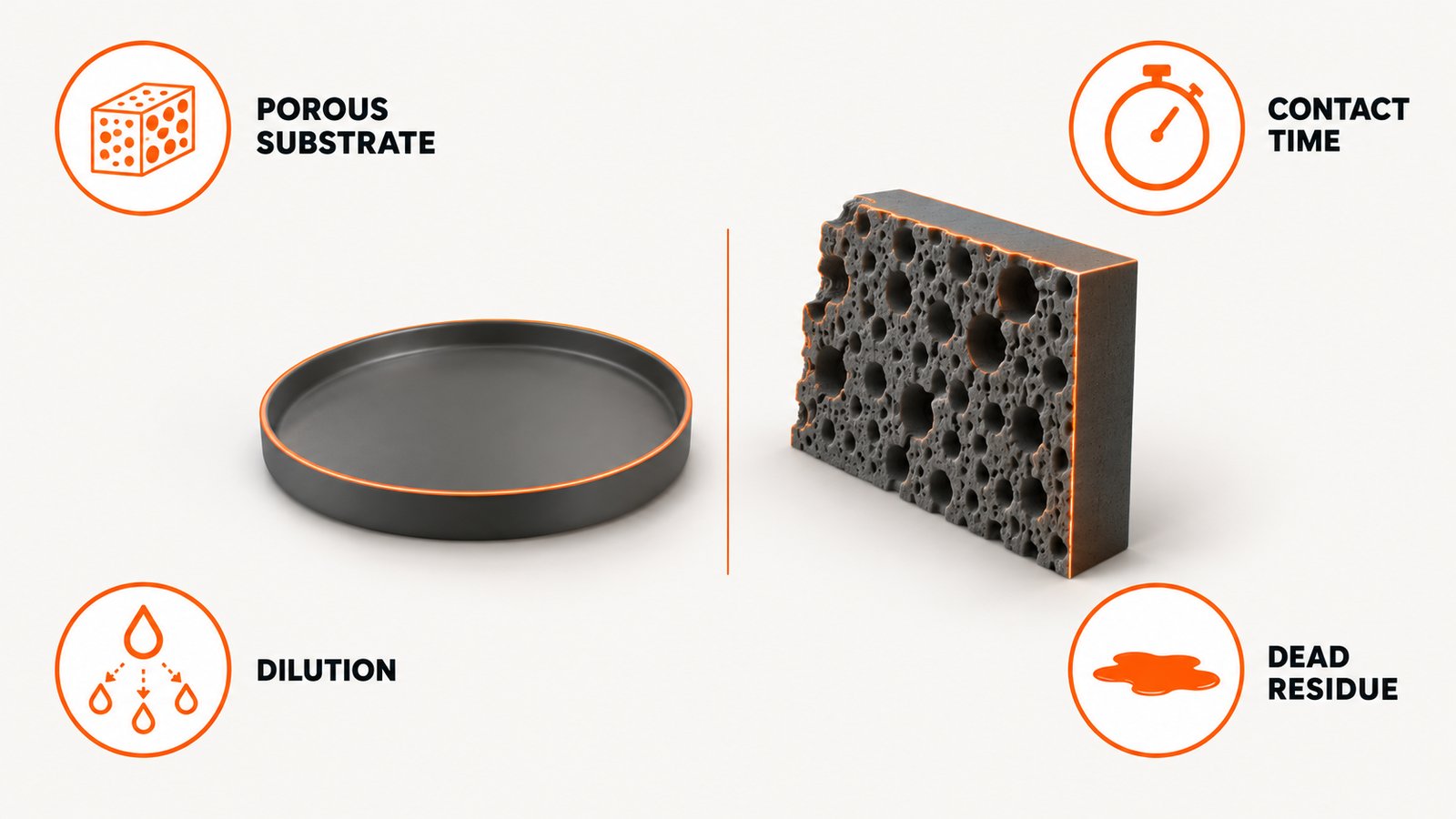
A culture plate and a bathroom wall are different problems, and four differences do most of the damage to the transfer.
The substrate is porous. On a plate the organism sits on a flat surface with the test compound in direct contact. In a building, growth pushes filaments into gypsum board, wood, and paint film. EPA notes that mold can grow on or fill in the empty spaces and crevices of porous material, which is why absorbent materials such as ceiling tile and carpet may have to be thrown away rather than cleaned.
Contact time and concentration are not controlled. A plate assay holds a known concentration against the organism for a known period. A spray on a vertical surface runs, evaporates, and separates, because the oil is not water soluble and a shaken bottle stops being a mixture in minutes.
The dilution people use is far below the tested range in places. Household recipes typically land near one to two percent oil in water. That sits inside the tested inhibitory range for some species and well below the fungicidal figures for others, and nowhere near the 8 percent reported for Aspergillus niger conidia.
Killing is not removing. EPA is explicit that dead mold may still cause allergic reactions in some people, so it is not enough to simply kill the mold, it must also be removed. A treatment that leaves the material in place has not finished the job whatever it did to the organism.
None of this makes the oil useless. It makes it a cleaning aid on a hard, already-scrubbed surface rather than a treatment. The same reasoning applies to vinegar and to hydrogen peroxide.
What tea tree oil actually is
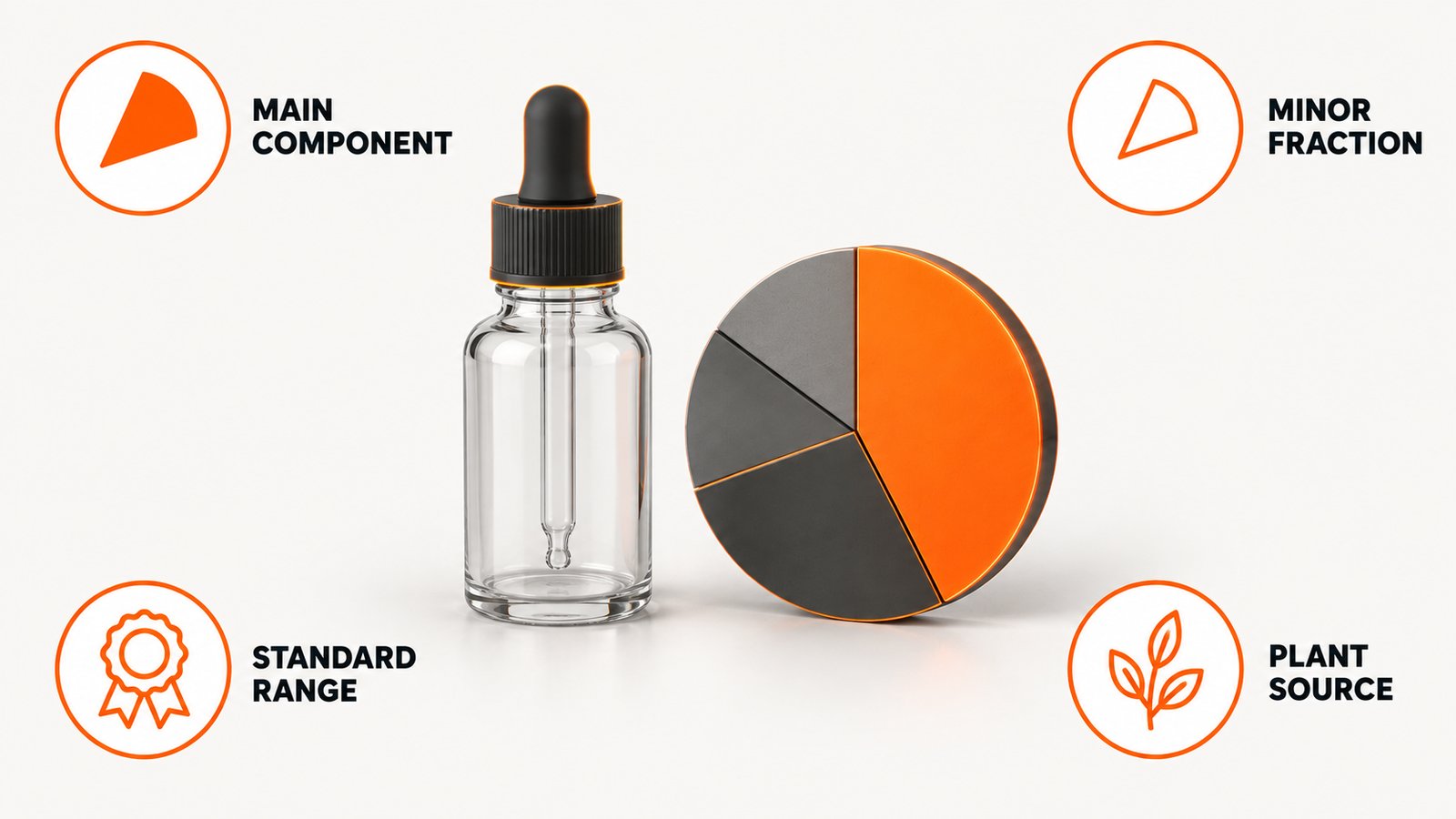
Tea tree oil is the steam-distilled essential oil of Melaleuca alternifolia, an Australian plant. The review in Clinical Microbiology Reviews notes that the composition of oil sold as tea tree oil is regulated by an international standard for oil of Melaleuca of the terpinen-4-ol type, which sets maxima and minima for 14 components.
The dominant component is terpinen-4-ol, which the standard requires at 30 percent or more and which the review gives as around 40 percent in a typical composition. Gamma-terpinene comes next at a standard range of 10 to 28 percent, alpha-terpinene at 5 to 13 percent, and 1,8-cineole is capped at 15 percent or less.
Two consequences for a buyer. Oils vary: a bottle at the low end of the terpinen-4-ol range and the high end of the cineole range is a different product from one at the opposite corners, and both are sold as tea tree oil. And an old or badly stored bottle changes as the terpenes oxidize.
The regulatory position in the United States is worth knowing before you buy anything marketed for mold. EPA defines antimicrobial pesticides as substances used to destroy or suppress the growth of harmful microorganisms such as bacteria, viruses, or fungi on inanimate objects and surfaces, and notes that more than 4,000 antimicrobial products are currently registered with EPA. Tea tree oil is not on the list of active ingredients permitted in exempted minimum risk pesticide products at 40 CFR 152.25, which includes cedarwood, clove, rosemary and thyme oils but not tea tree. A plain bottle of essential oil is not a registered antimicrobial, and it should not be treated as one.
How to use tea tree oil on a hard surface
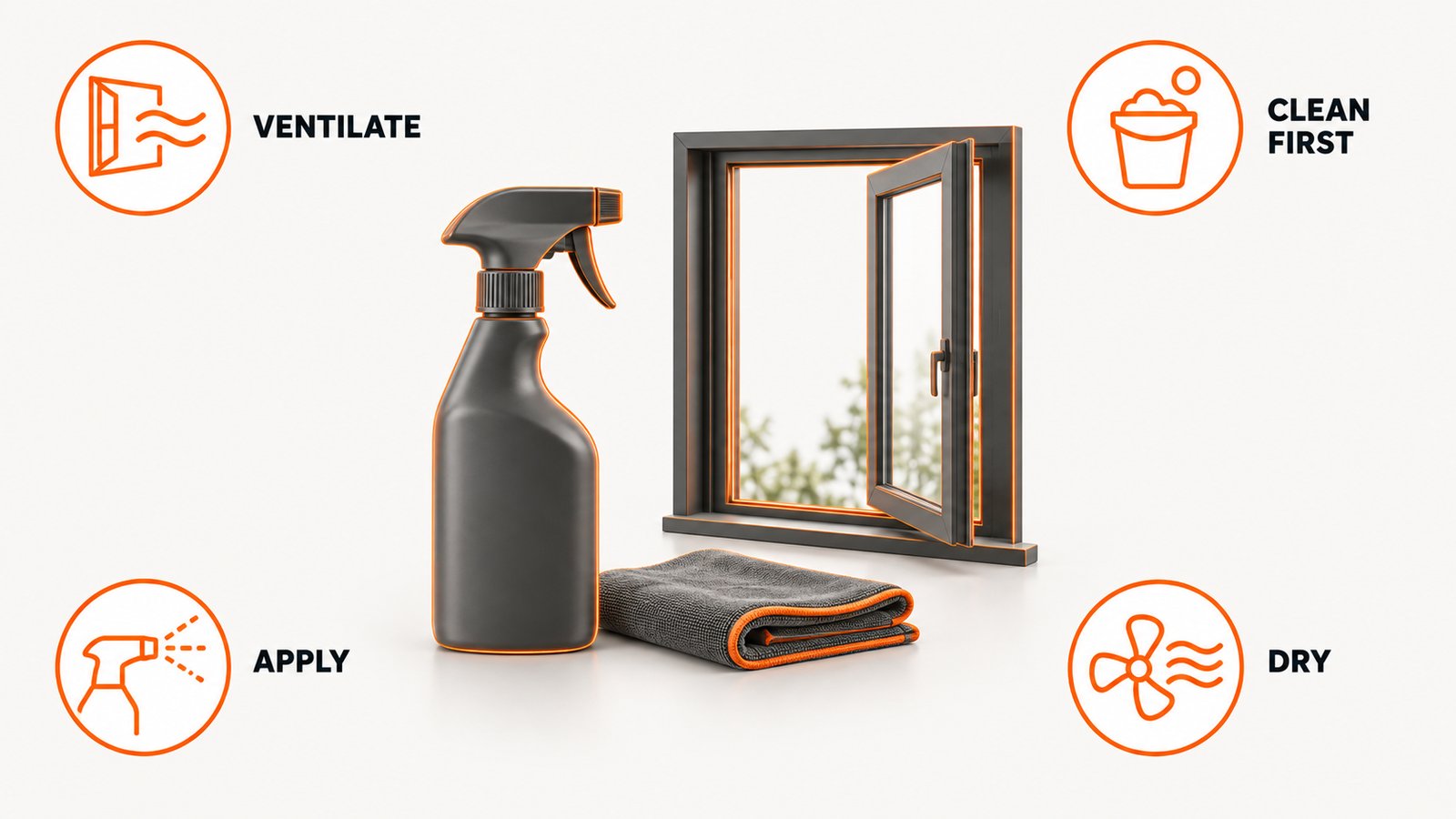
If you want to use it on a small hard surface, the sensible way to do it is as a finishing step after a proper clean, not instead of one.
1. Ventilate and put on the gear. EPA lists gloves, goggles, and an N-95 respirator for mold cleanup. Open a window and keep the door to the rest of the house closed. Concentrated essential oil is a skin and eye irritant in its own right.
2. Fix the water first. EPA's position is that the way to control indoor mold growth is to control moisture, and that no mold grows without water or moisture. Anything applied to a surface that stays wet is a delaying action.
3. Clean the surface properly. EPA's instruction is to clean mold off hard surfaces with water and detergent and dry completely. That is the step that physically removes material, and it is the step that actually matters.
4. Then apply the solution. The common household ratio is roughly one to two teaspoons of oil per cup of water in a spray bottle, shaken before each use because oil and water separate. Be clear-eyed that no ratio has been validated on building materials. The published concentrations come from culture assays, not from walls, so treat any recipe as a household convention rather than a tested dose.
5. Leave it, then dry the area. Most household use leaves it in place rather than rinsing. Finish by drying the surface completely, because a damp surface is the original problem.
Never mix it with another cleaner. EPA warns never to mix chlorine bleach with cleaning solutions or detergents containing ammonia, because toxic fumes could be produced.
The smell is strong and lasts for days in a small room. Test an inconspicuous patch first on painted or finished surfaces. The full order of operations for a room is on how to get rid of mold.
Where tea tree oil fails
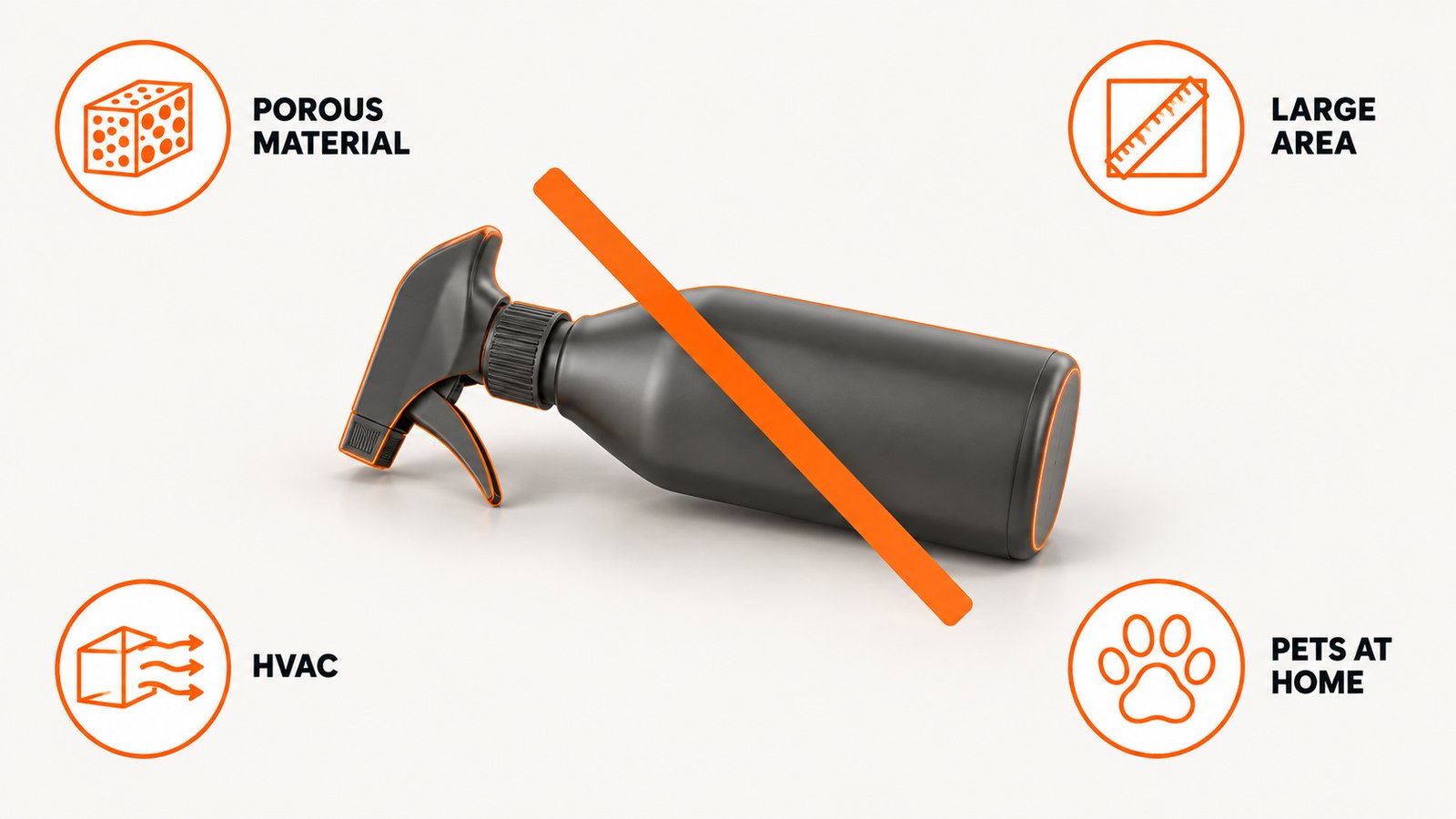
Four situations where a spray bottle of anything is the wrong answer, and one household safety issue that is specific to this oil.
- Porous material. Gypsum board, ceiling tile, carpet, insulation, and untreated wood hold growth in their structure. EPA notes that absorbent or porous materials may have to be thrown away if they become moldy. Surface treatment of a saturated board is theater.
- Anything past about 10 square feet. EPA's guide is that under roughly a three-foot by three-foot patch is usually a do-it-yourself job. Above that it points to professional remediation guidance.
- Air-handling equipment. Do not spray anything into ducts or onto a coil. See mold in air ducts.
- Concealed growth. A treatment you cannot reach is not a treatment. See mold behind walls.
Households with cats or dogs need to take this seriously. A retrospective case series in the Journal of the American Veterinary Medical Association reviewed 443 cases of concentrated tea tree oil toxicosis in dogs and cats reported to the ASPCA Animal Poison Control Center between January 2002 and December 2012, covering 337 dogs and 106 cats exposed to 100 percent tea tree oil. Exposure was cutaneous in half the cases and oral or both in most of the rest. Signs developed within 2 to 12 hours and lasted up to 72 hours, most commonly increased salivation, lethargy or central nervous system depression, paresis, ataxia, and tremors. Younger cats and cats with lighter body weight were at greater risk of major illness.
That study is about concentrated oil rather than a dilute spray, but the rule is simple. Store the bottle where an animal cannot reach it, keep pets out of the room until the surface is dry, and call a veterinarian if an animal contacts the concentrate. The Clinical Microbiology Reviews review also states plainly that tea tree oil can be toxic if ingested.
Tea tree oil compared to the alternatives
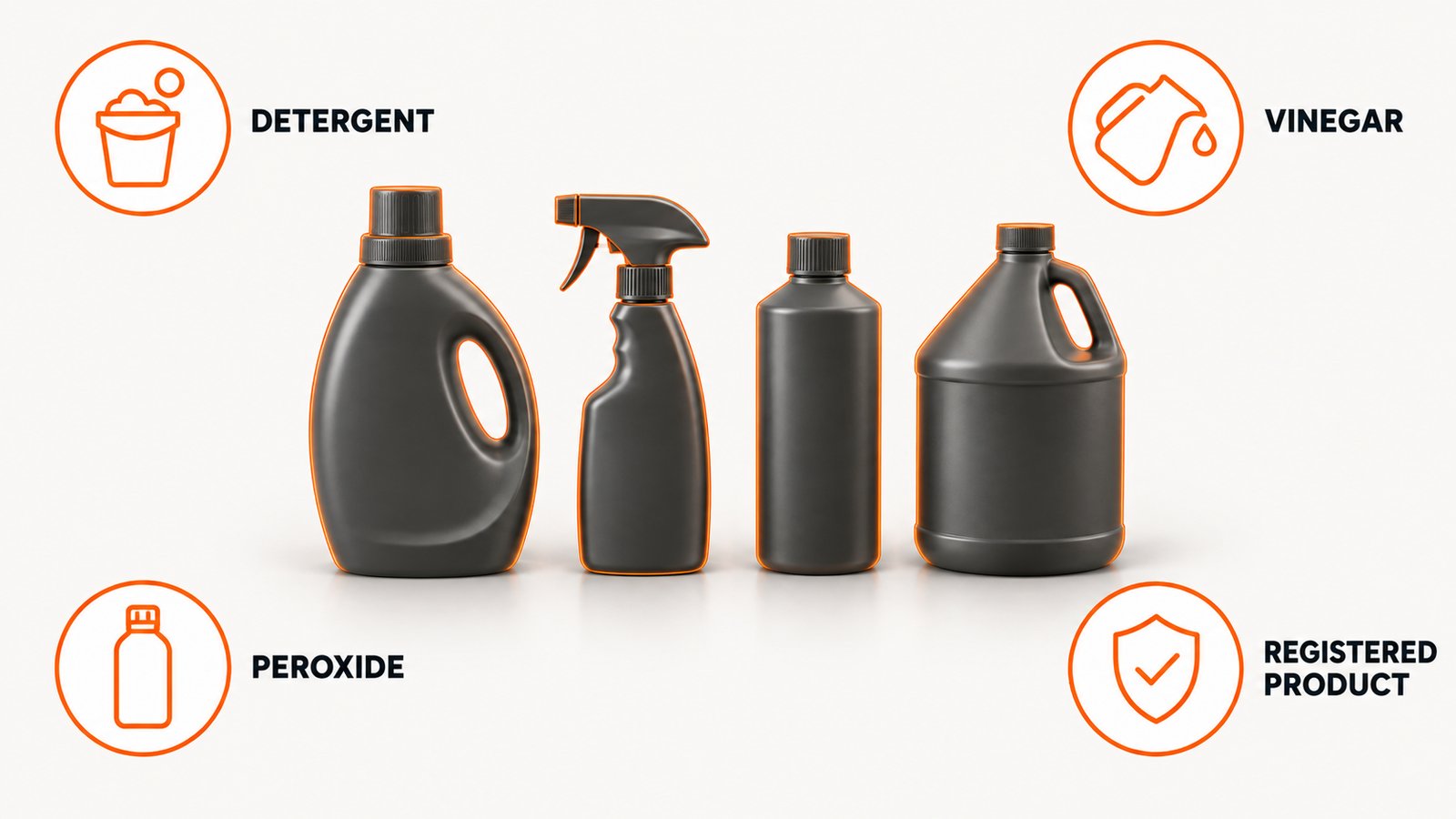
Five options people weigh for a small hard surface, ranked by how much actual backing each one has.
| Option | Backing | Honest limits |
|---|---|---|
| Detergent and water | The method EPA names for hard surfaces | Requires scrubbing. Does not lift a set-in stain |
| EPA-registered mold product | Registered and label-tested for the claim it makes | Costs more. Follow the label exactly and ventilate |
| White vinegar | Cheap, mild acid, soaks into lightly porous film | Not a registered disinfectant. Etches stone and dulls waxed wood |
| 3 percent hydrogen peroxide | Foams into surfaces and lifts the dark stain | Can lighten fabric and some finishes. Test first |
| Tea tree oil solution | Measured antifungal activity in culture assays | No building-material data. Expensive per use. Strong lasting smell. Pet exposure risk |
Read that table honestly and tea tree oil comes last for a wall and first for nothing. It is the most expensive option and has the least evidence on the surface you actually have, while the plainest option on the list is the one federal guidance names. Where it earns a place is as a finishing wipe on a small hard surface.
Chlorine bleach is deliberately not in the table as a recommendation. It strips the dark color so a surface looks clean while growth in a porous film is untouched, the failure mode set out on does bleach kill mold. Product-by-product comparisons are on best mold removal products.
When to call a professional
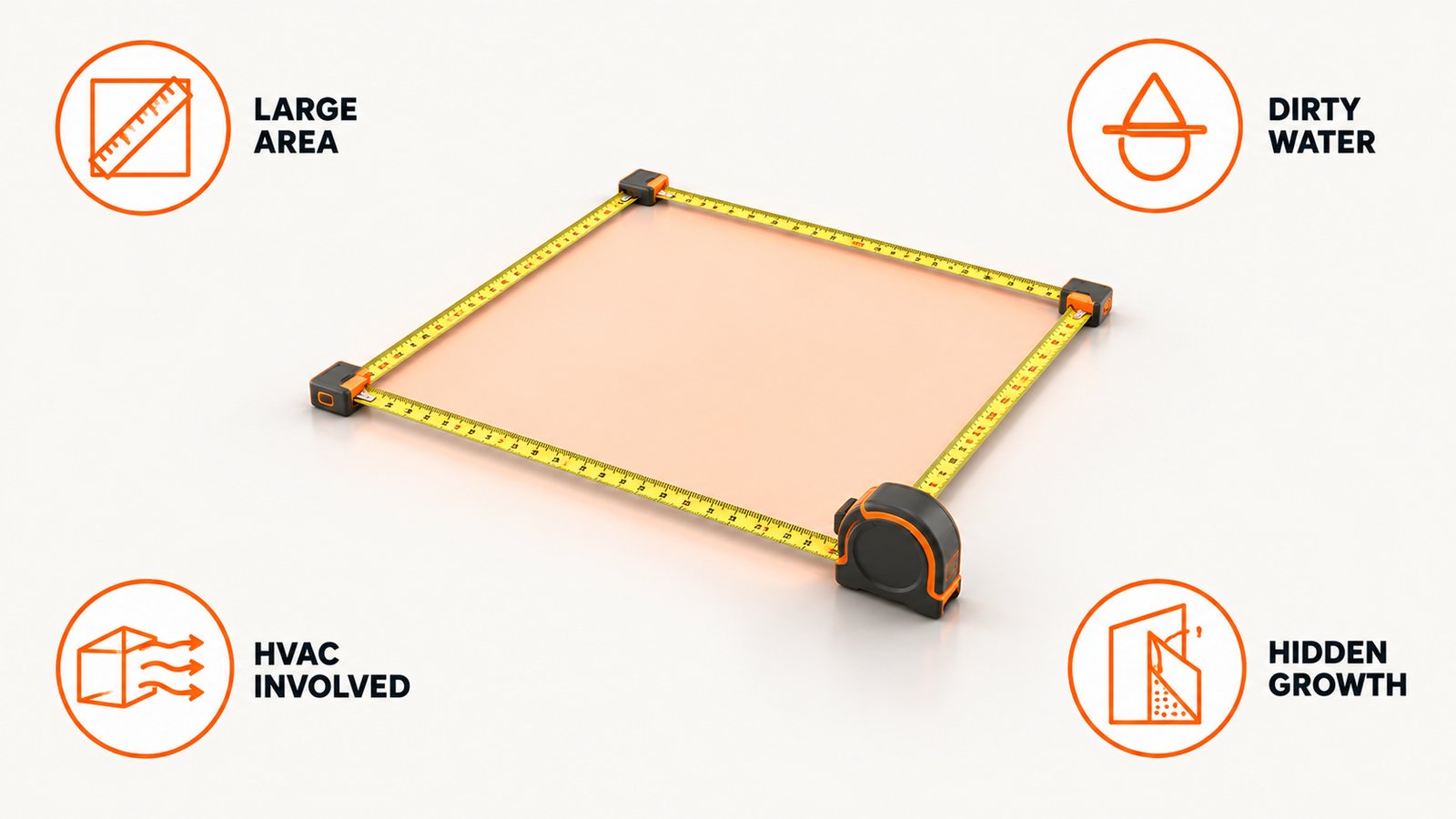
EPA gives a size guide rather than a health threshold. If the moldy area is less than about 10 square feet, roughly a three-foot by three-foot patch, in most cases you can handle the job yourself. Above that, EPA points to its remediation guidance written for professional scope, containment, and verification.
Call a qualified professional when any of these is true:
- The affected area is larger than about 10 square feet, or it keeps spreading past where you cleaned.
- The water was contaminated by a sewage backup or floodwater, which is a different job with different handling.
- An air-handling system is involved. Do not open ducts or disturb duct lining yourself.
- The growth is concealed behind finishes, under flooring, or in a wall cavity, so opening it releases material into the room.
- Material is saturated. Soft, bulging, or crumbling board is a replacement, not a cleaning job.
- Someone in the home is in a higher-susceptibility group and cannot be kept out of the work area.
Look for firms that follow the ANSI and IICRC S520 standard, and get a written scope covering the moisture repair, removal, drying, and verification before anyone starts. What a scope contains is on mold remediation and pricing is on mold remediation cost.
On the health side, keep the lanes separate. A cleaning product is a building decision. Ongoing or worsening symptoms are a conversation with a licensed clinician, and what agencies actually report is summarized on mold exposure symptoms.
Frequently asked questions
Does tea tree oil actually kill mold?
In culture, published data says yes for many fungi. A review in Clinical Microbiology Reviews reports minimum inhibitory concentrations generally between 0.03 and 0.5 percent and fungicidal concentrations from 0.12 to 2 percent, with Aspergillus niger as the notable exception at minimum fungicidal concentrations reported as high as 8 percent against spores. Those figures come from controlled plate assays, not from walls, and no equivalent building-material data exists.
What ratio of tea tree oil to water do people use?
The common household convention is roughly one to two teaspoons of oil per cup of water in a spray bottle, shaken before each use because oil and water separate. Be clear that no ratio has been validated on building materials. Published concentrations come from culture assays, so any recipe you find online is a convention rather than a tested dose.
Is tea tree oil an EPA-registered mold product?
No. EPA defines antimicrobial pesticides as substances used to destroy or suppress the growth of harmful microorganisms including fungi on inanimate objects and surfaces, and notes that more than 4,000 antimicrobial products are currently registered. Tea tree oil is also absent from the active ingredients permitted in exempted minimum-risk pesticide products at 40 CFR 152.25, a list that does include cedarwood, clove, rosemary and thyme oils.
Does tea tree oil work on drywall or carpet?
It should not be relied on there. EPA notes that mold can grow on or fill in the empty spaces and crevices of porous material, and that absorbent or porous materials such as ceiling tiles and carpet may have to be thrown away if they become moldy. Surface treatment of a material that is affected all the way through does not restore it.
Is tea tree oil safe around cats and dogs?
Concentrated oil is a documented hazard. A case series in the Journal of the American Veterinary Medical Association reviewed 443 reports of concentrated tea tree oil toxicosis in dogs and cats between 2002 and 2012, covering 337 dogs and 106 cats exposed to 100 percent oil, with signs appearing within 2 to 12 hours and lasting up to 72 hours. Store the concentrate out of reach, keep pets out of the room until surfaces are dry, and call a veterinarian if an animal contacts it.
Is tea tree oil better than vinegar or hydrogen peroxide for mold?
Not on the evidence available. All three lack building-material performance data, but vinegar and hydrogen peroxide are cheaper, have no lasting smell issue, and carry no pet-exposure concern of the same kind. The option with actual federal backing for a hard surface is plain detergent and water, which is what EPA names.
Does killing mold with any product finish the job?
No. EPA states that dead mold may still cause allergic reactions in some people, so it is not enough to simply kill the mold, it must also be removed. Every method ends the same way: physically remove the material, dry the surface completely, and fix whatever was keeping it wet.
Sources
Every claim on this page traces to one of these. Links open the primary document.