
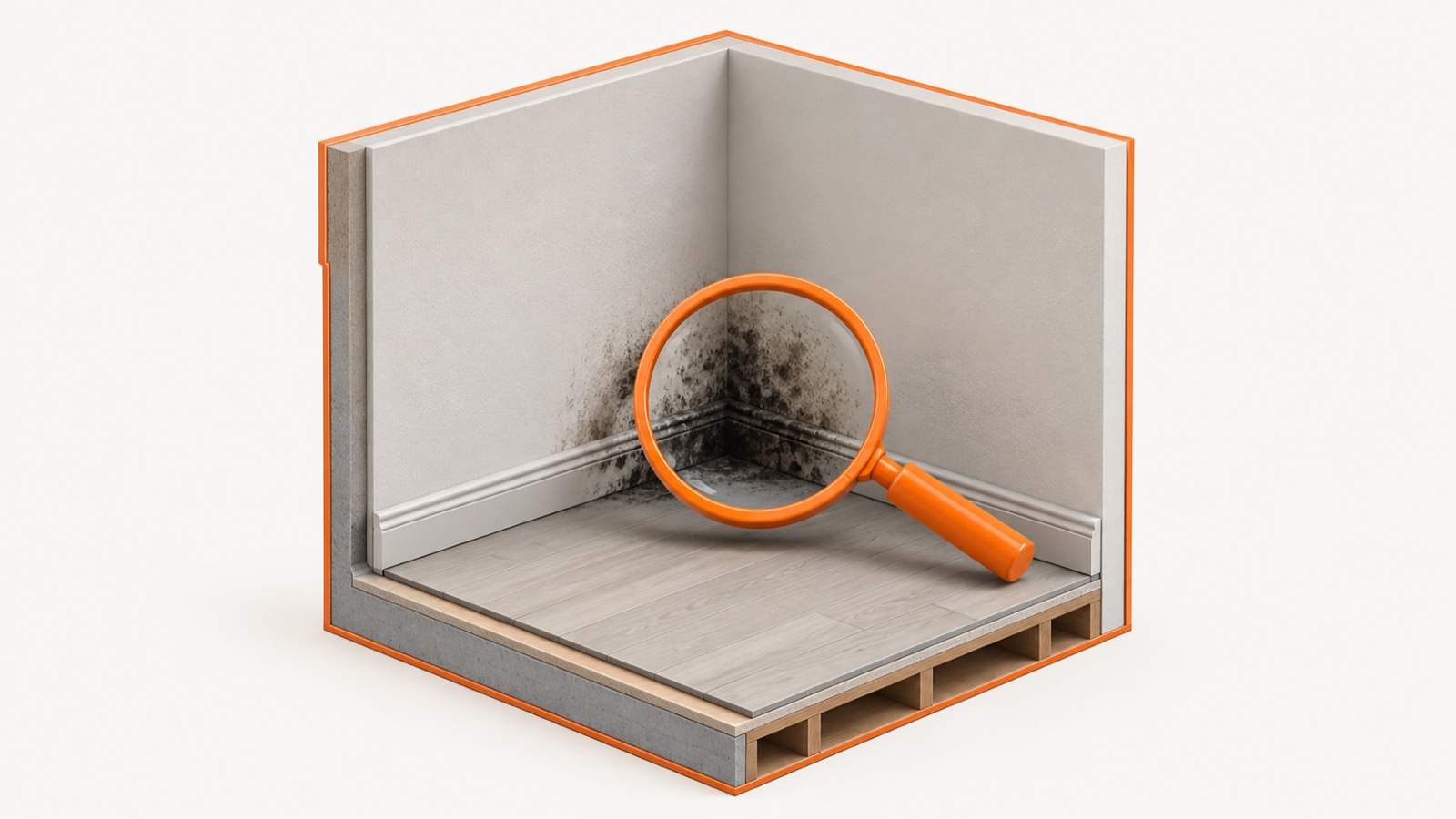
Why Mold Grows on Walls
Walls collect moisture in three common ways, and EPA notes mold can start on a damp surface within 24 to 48 hours of any of them. A leak from a pipe, roof, or window runs down inside the cavity. Warm, humid indoor air hits a cold exterior wall and condenses. Or ground moisture wicks up through a basement or ground-floor wall. Add the paper facing on drywall, which mold eats, and you have everything a colony needs.
The EPA notes mold can start on a damp surface within 24 to 48 hours. That is why a small, ignored leak can seed a visible patch within days, and why the stain on the wall is usually a symptom of a wetness problem behind it.
Surface Mold vs Mold Behind the Wall
Press gently near the patch. A firm wall with growth only on the paint or paper often has surface mold you can clean. A wall that feels soft, spongy, or crumbles, or shows bubbling paint and spreading stains, usually has mold growing inside the drywall where you cannot reach it.
A musty smell with little visible growth is a warning sign that mold is active inside the cavity. When the board itself is colonized, cleaning the surface does not solve it. That section of drywall has to come out.
How to Remove It Safely
For a small patch on a hard, non-porous wall, the EPA says most people can clean it with detergent and water. Wear an N95 mask, gloves, and goggles. Scrub the area, wipe it clean, and let it dry completely. A no-bleach mold-control spray such as Concrobium Mold Control is another option for the visible surface, and it will not soak in and feed regrowth the way bleach can. Skip bleach on porous walls: the water in it soaks in and can feed regrowth while the surface looks clean.
Do not just paint over mold. It grows back through fresh paint, and painting traps the moisture problem instead of fixing it. Clean first, dry fully, solve the moisture, then repaint if needed, using a mildew-resistant primer like KILZ Mold and Mildew Primer as the first coat.
Fix the Moisture or It Returns
Cleaning the wall is half the job. If the leak, condensation, or damp source is still there, the mold comes back in the same spot. Track down the cause: check plumbing and the roofline above, improve ventilation in humid rooms, run a dehumidifier in damp basements, and keep furniture off cold exterior walls so air can move.
Aim to keep indoor humidity below about 50 percent. Mold needs sustained moisture to survive, so a dry wall is a mold-free wall.
When to Call a Pro
Call a licensed remediation professional for mold larger than about ten square feet, growth inside drywall, mold from sewage or flooding, or anything in your HVAC system. These jobs need containment so spores do not spread to clean rooms during removal.
If anyone in the home has asthma, allergies, or breathing symptoms, talk to a physician. To gauge the risk of a patch quickly, the Mold Scanner app provides AI-assisted visual screening for the visible surface. Processing time varies.
Frequently asked questions
Is black mold on a wall dangerous?
The CDC links damp, moldy indoor spaces to stuffy nose, coughing, wheezing, and itchy eyes or skin, with stronger reactions for people who have asthma or a mold allergy. You cannot tell a hazardous mold from a harmless one by sight, so treat any wall mold the same: remove it and fix the moisture feeding it.
How do I get black mold off a painted wall?
For a small patch on a hard wall, scrub with detergent and water while wearing an N95 mask, gloves, and goggles, then dry it fully. Do not paint over it, since mold grows back through paint. If the drywall underneath is soft or stained, the board likely needs replacing.
Why does black mold keep coming back on the same wall?
Because the moisture source is still there. Mold regrows wherever a surface stays damp. Find and fix the leak, condensation, or rising damp, improve ventilation, and keep humidity below about 50 percent. Cleaning without fixing the moisture only buys a few weeks.
Can mold grow inside the wall where I cannot see it?
Yes. Leaks and condensation can feed mold inside the wall cavity and on the back of drywall. A musty smell with little visible growth, soft or bubbling wall sections, and spreading stains all point to hidden mold. That usually means opening up and replacing the affected board.
Do I need to replace drywall with black mold?
If the mold is only on the paint and the board is firm, cleaning may be enough. If the drywall is soft, crumbling, stained through, or the mold has grown into the paper facing, that section should be cut out and replaced. Porous, colonized drywall cannot be fully cleaned.