What the Black Gunk in Your Drain Usually Is
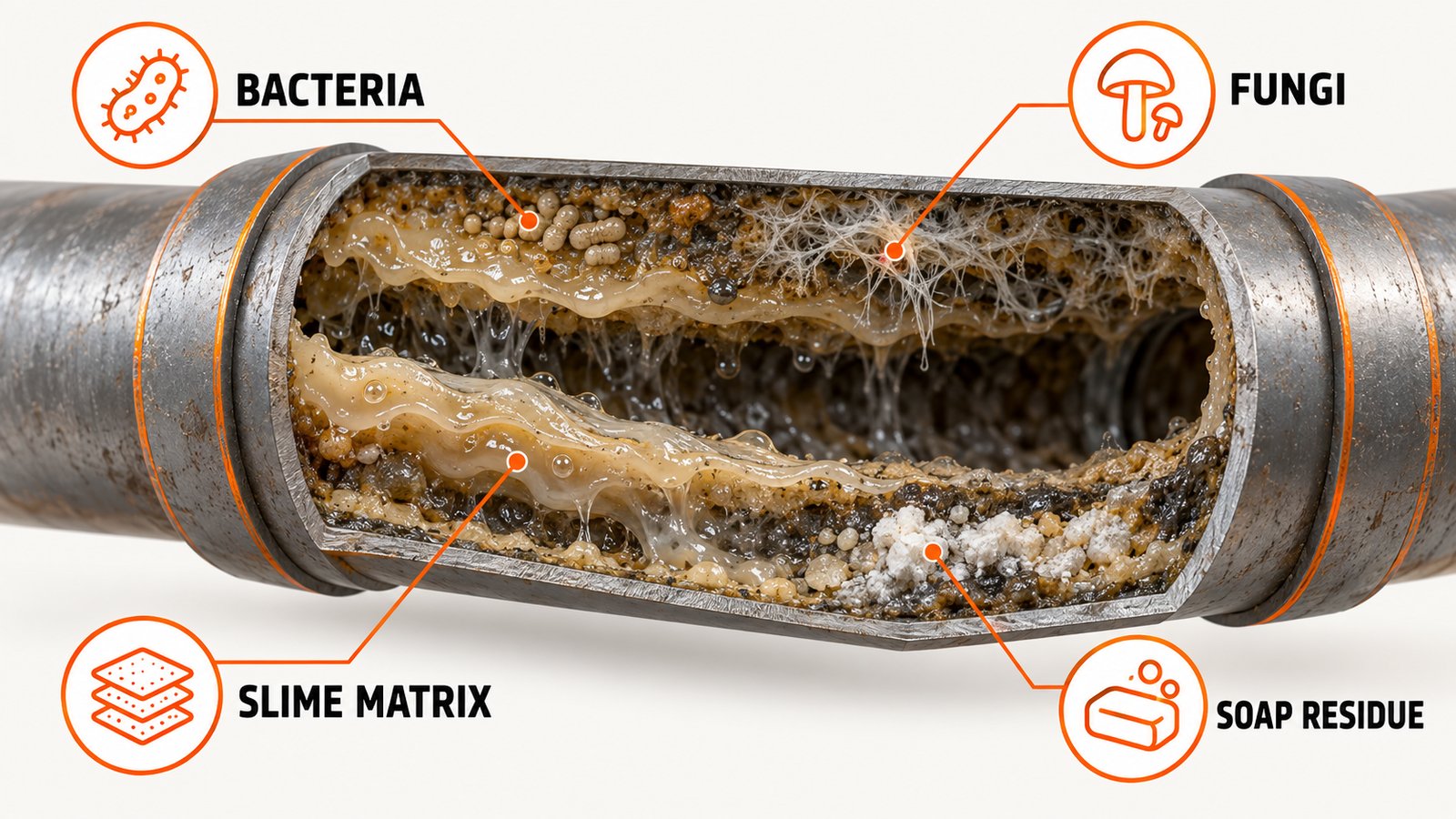
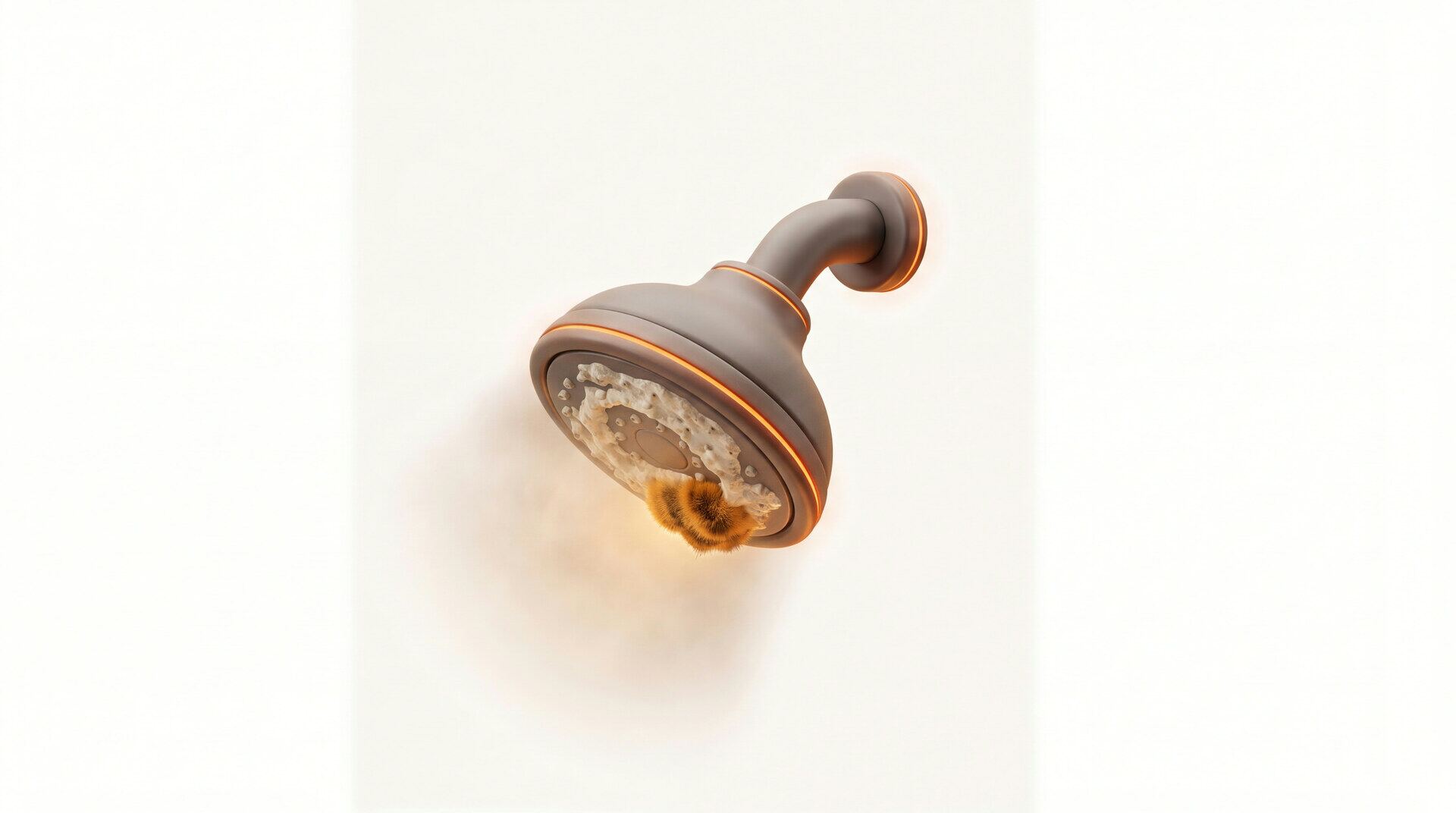
The dark, slick film you see around a drain and just below the opening is usually biofilm. Biofilm is the plain word for a community of microbes stuck to a surface and wrapped in a slime they make themselves. The National Library of Medicine's subject vocabulary defines biofilms as encrustations formed from microbes (bacteria, algae, fungi, plankton or protozoa) embedded in a matrix secreted by the microbes, and says they form on inanimate objects as well as on teeth and in bodies of water.
That is a mix, and drains are a good place to find it. A peer-reviewed study of domestic sink drain outlets (McBain and colleagues, Applied and Environmental Microbiology, 2003) found biofilms holding 9.8 to 11.3 log10 viable cells of enteric bacteria and pseudomonads per gram. That works out to roughly 6 billion to 200 billion living cells in a single gram of slime. The communities were dominated by a small number of bacterial genera, and one sample also held a protozoan, nematodes and rotifers. In plain words, a drain wall is a small, crowded ecosystem.
Fungi live in it too. Penn State researchers sampled nearly 500 sink drains in 131 buildings across eight states and found at least one Fusarium isolate in 66 percent of the drains and 82 percent of the buildings. The lead researcher described biofilms on plumbing surfaces as holding a diverse spectrum of fungi and other microbes. So when a searcher types "black mold in sink drain," the honest answer is that the black film can include fungi, but it is rarely one mold growing alone.
Two limits matter here. First, color does not identify what something is. A dark film can be bacteria, fungi, trapped hair, soap residue, mineral scale or a mix, and a phone photo cannot sort that out. Our black mold in the bathroom guide covers the same point for dark spots on walls and grout: CDC and NIOSH guidance says color does not tell you whether a mold is more or less dangerous. Second, you do not need a name to act. The cleanup is the same for any of these films, and it starts with removing the film and drying the surface, not with guessing the species.
What Causes Orange Slime Buildup in a Shower Drain
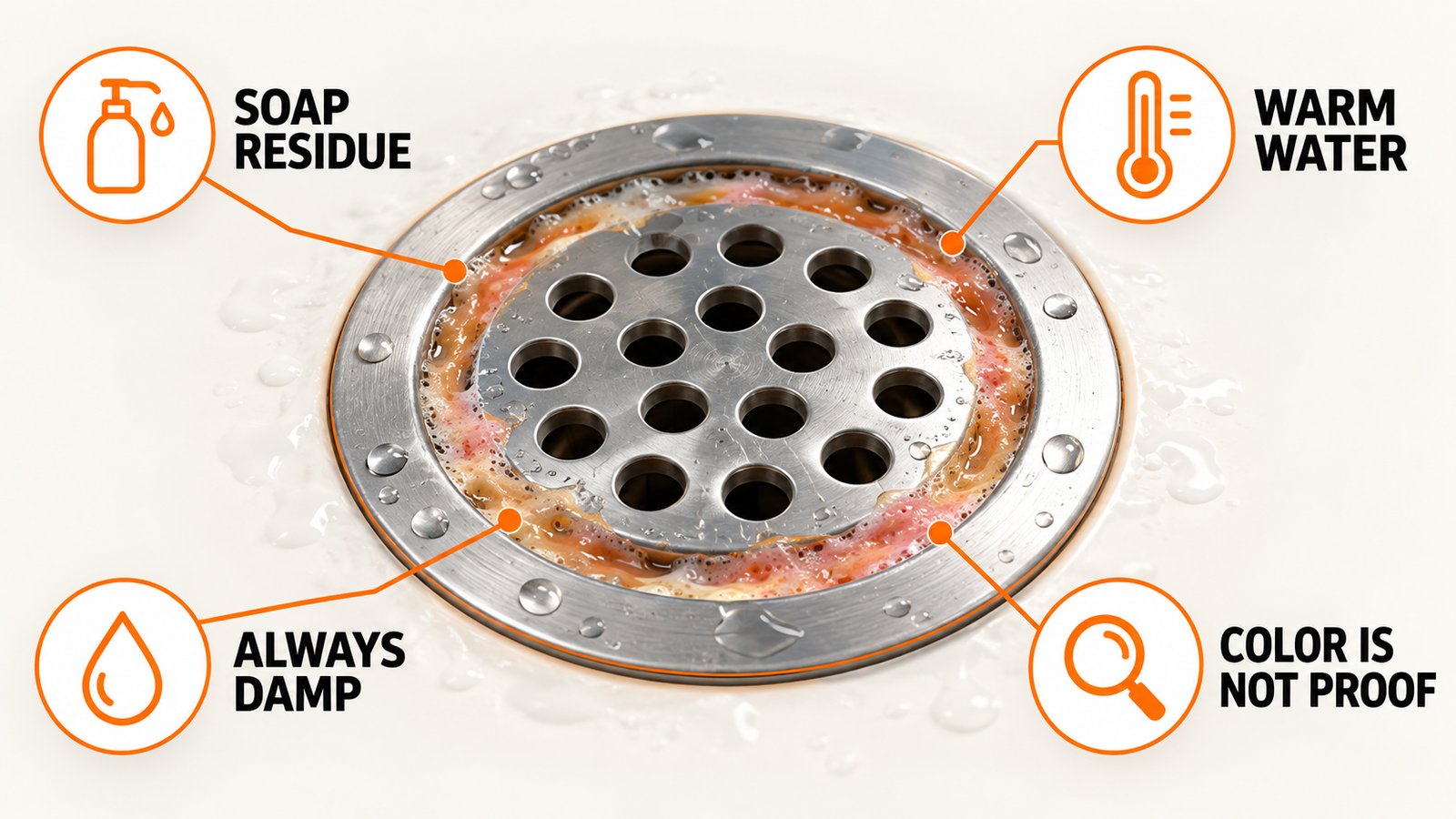
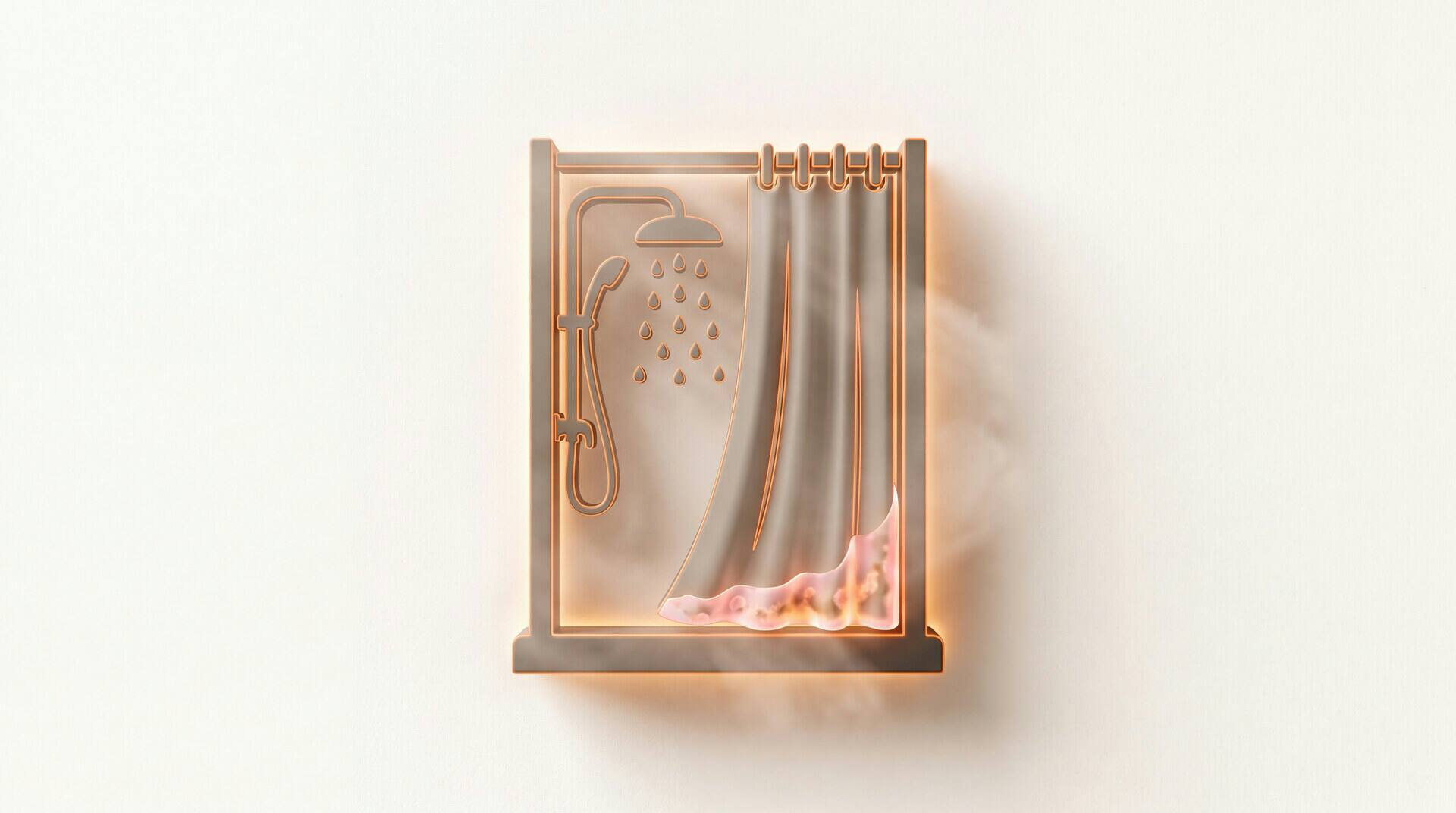
Orange and pink films around a shower drain are the other half of the question. People often attribute them to Serratia marcescens, a bacterium that makes a pink to orange pigment and is commonly linked to soap residue and body oils. Our orange mold guide covers that organism in detail, and our pink mold in the shower page is the more careful read: pink or orange discoloration can have several biological and non-biological causes, and appearance cannot confirm bacteria, mold, Serratia or anything else.
What can be said without guessing is why the film shows up at a drain. Four ingredients meet there:
- Constant moisture. The drain stays wet or damp between uses, and the film never fully dries.
- Food. Soap scum, shampoo, conditioner, skin oils, toothpaste and food scraps wash down and stick to the pipe wall and the underside of the strainer.
- A rough, hidden surface. Scale, scratches and the threads under the drain flange give microbes something to hold. Slime that sits below the strainer is out of reach of a quick wipe.
- Warmth. Shower and sink water is lukewarm for a good part of the day, and the pipe holds that warmth.
The McBain study above is the reason this film returns. Drain biofilm is an established community, and a surface wipe takes the top off it. If you leave the base of the film behind and the drain stays damp, the rest regrows from what is left. EPA's own bathroom tip says the same thing about places that are always damp: mold that reappears usually calls for more ventilation and more frequent cleaning.
A pink or orange ring that returns within days does not tell you the organism or the risk. It tells you the drain is a steady supply of moisture and food. That is a maintenance problem, and the fixes are in the cleaning and prevention sections below.
Mold in Shower Drain or on the Surfaces Around It
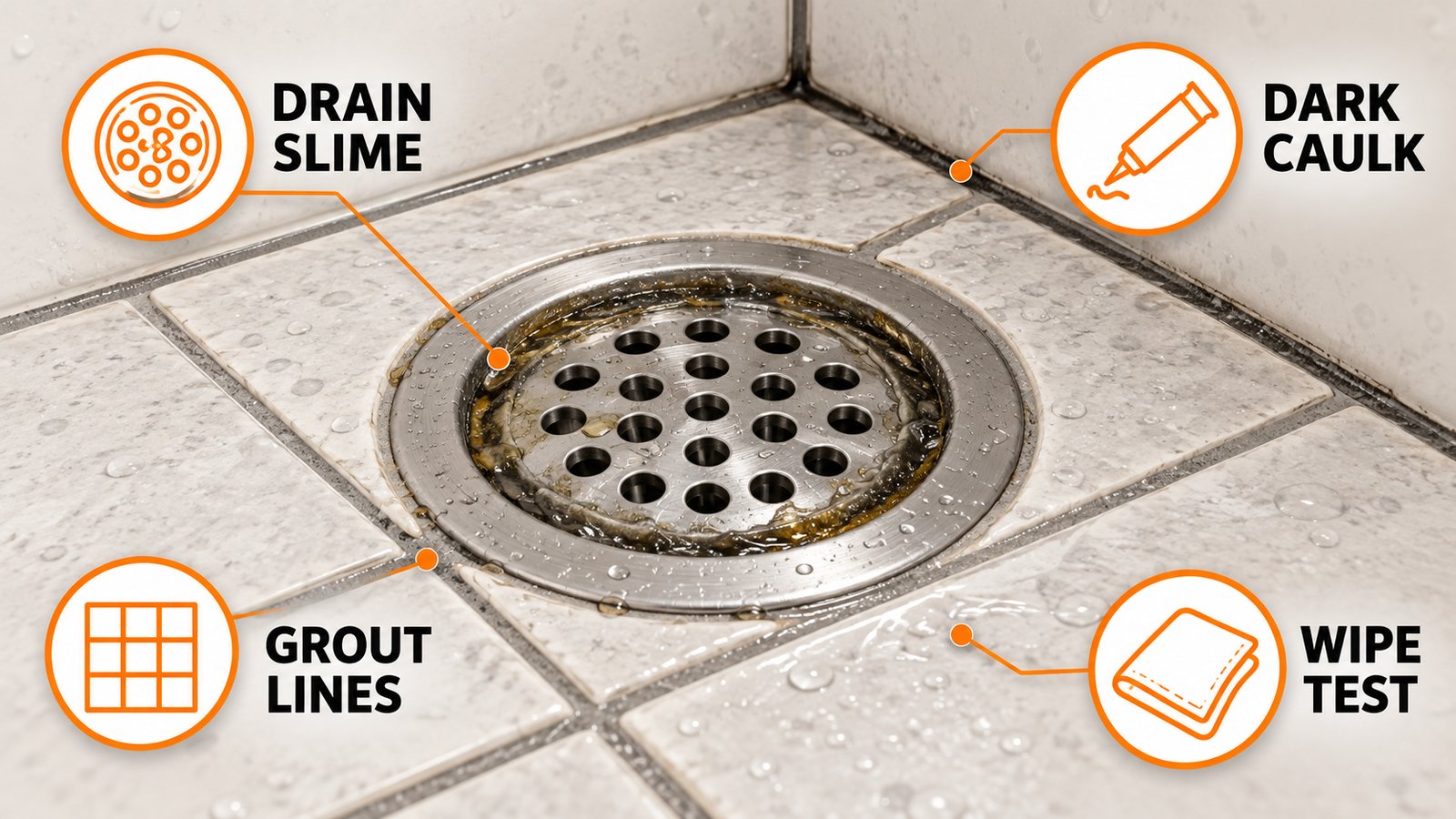
A dark ring around a shower drain can be slime in the pipe, growth on the surfaces next to it, or both. It helps to separate them, because the fix is not the same. Our full mold in the shower guide walks through ceiling corners, grout, caulk and curtains. Here is the drain-side version.
| What you see | Where it sits | What it points to | First move |
|---|---|---|---|
| Slick, smearing film under the strainer or on the pipe wall | Inside the drain, within reach of a brush | Drain biofilm fed by soap and body oils | Pull the strainer, scrub with detergent and water, rinse |
| Dark spots in the caulk bead where the shower pan meets the wall | Outside the drain, on sealant | Moisture trapped behind the caulk | See mold on caulk; sealant that stays stained often has to be replaced |
| Dark grout lines near the drain that return after cleaning | Tile surround | Porous grout holding water | See mold on grout |
| Dark growth on the floor or wall outside the shower, or a soft spot | Building material | A leak or wet material, not just surface slime | Find the water source first; see the plumber section below |
Two quick checks help. First, look at where the dark material starts. If it begins at the inner lip of the drain and fades as you move away, you are probably looking at drain film. If it starts at a seam, a corner or a cut edge and spreads outward, suspect the surface and the water behind it. Second, wipe it with a damp cloth and detergent. Soap scum and loose film lift easily. Staining that stays put on caulk or grout may be growth in the material or simple discoloration, and a photo or a wipe cannot settle that.
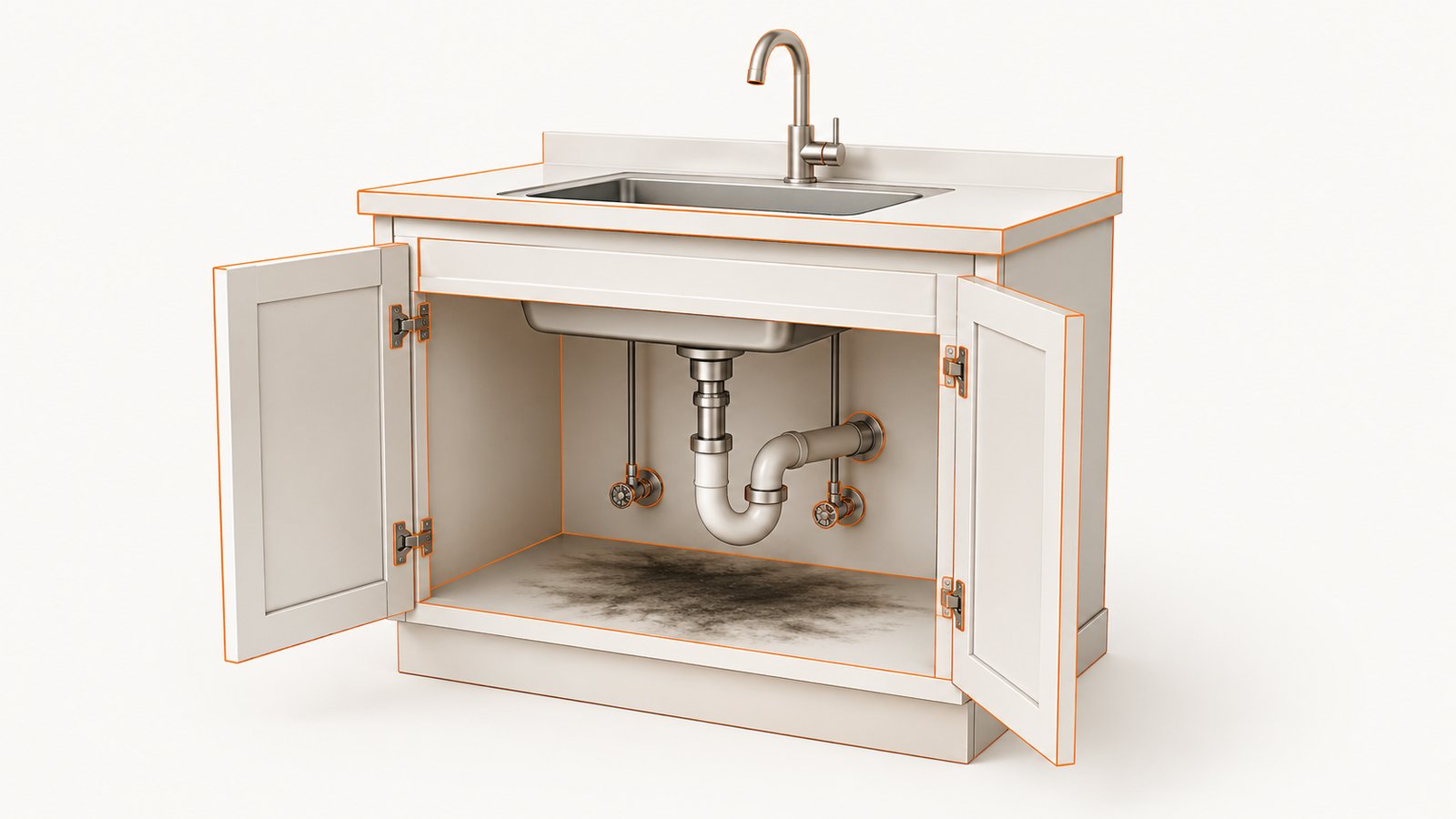
If the dark area is on a wall, ceiling, floor or cabinet instead of inside the drain, treat it as a surface question, not a drain question. Our mold under the kitchen sink page covers the cabinet-floor case, and the mold in the bathroom page covers the rest of the room. If you want a visual read on a spot you cannot name, the Mold Scanner AI app offers AI-assisted visual screening of a photo. Processing time varies, and it screens what is visible in the frame. It does not tell you what is inside a pipe or behind a wall.
How to Get Rid of Mold in a Sink Drain
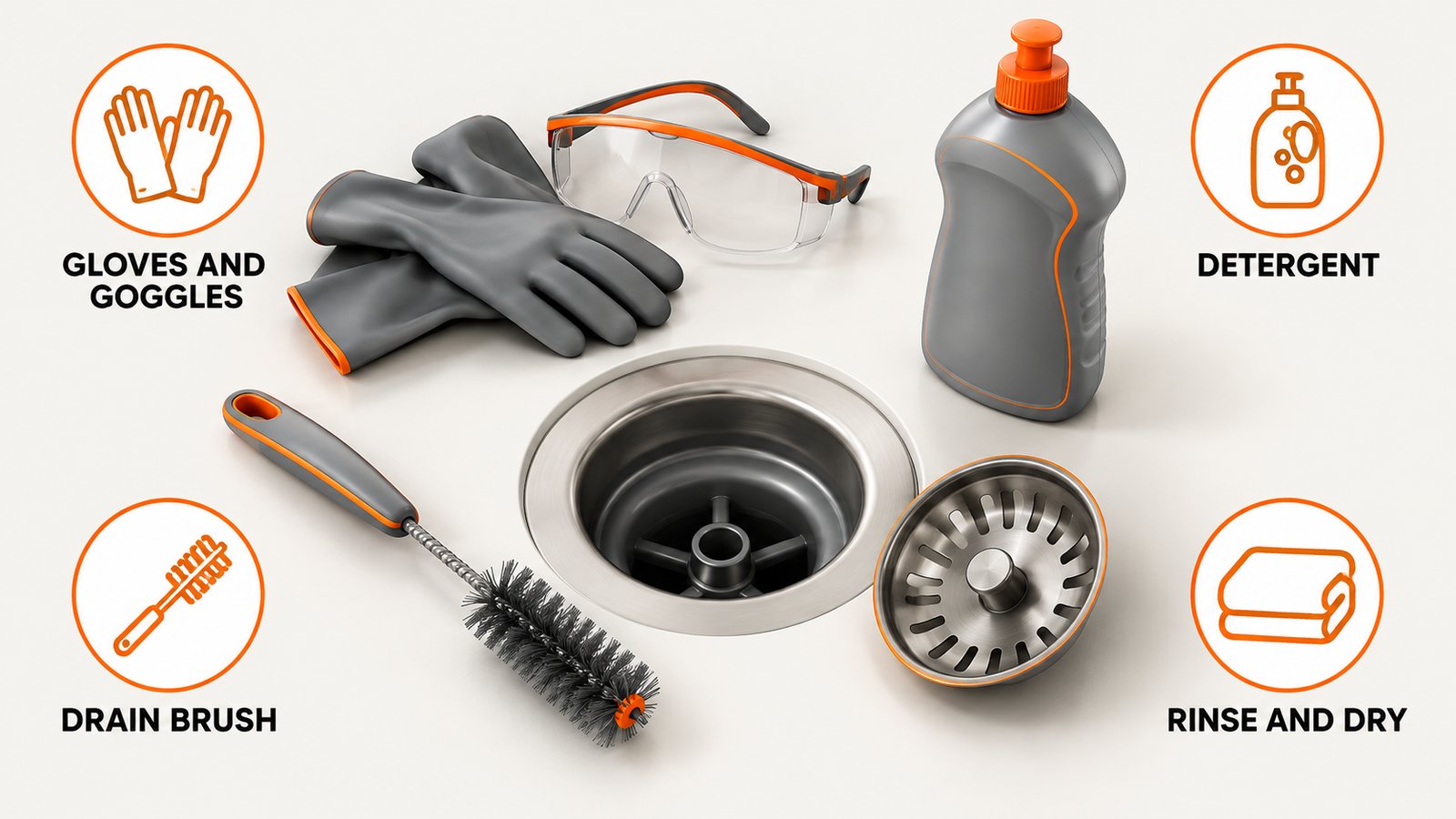
The method EPA gives for mold on hard surfaces is plain: scrub it off with detergent and water, then dry completely. EPA also says mold and its residue can cause reactions even when it is dead, which is why scrubbing the film off matters more than soaking it with a stronger chemical. A drain follows the same logic. Here is a safe order for a sink, tub or shower drain that stays within what the agencies publish.
- Protect yourself. EPA's guide to mold suggests gloves, goggles without ventilation holes and an N-95 respirator when you work around mold. For a drain job with water and mild detergent, ordinary household rubber gloves are enough for your hands. Open a window or run the fan.
- Remove what you can lift out. Take out the stopper, strainer or cover. Pull hair and debris with a gloved hand or a plastic drain tool and put it in a bag.
- Wash the removable parts. Scrub the strainer, stopper and cover in a bucket of warm water with dish detergent until the film is gone. Rinse and let them dry.
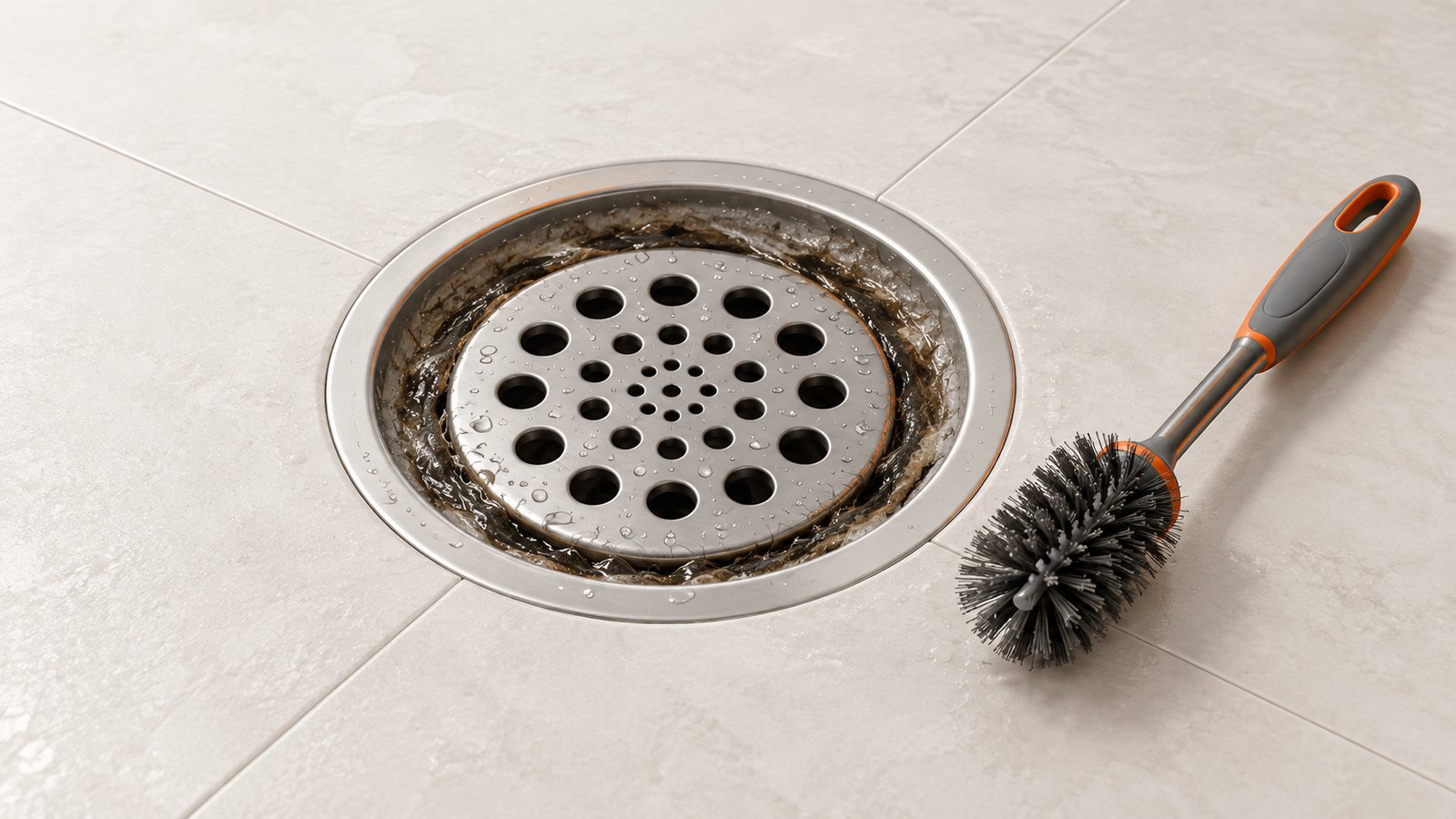
- Scrub the opening and the first few inches of pipe. Use a bottle brush or a drain brush with detergent and water. Work around the underside of the flange, where film collects. Wipe out loosened material with paper towels instead of rinsing it back down.
- Rinse with plenty of clean water. Run the faucet or shower until the water runs clear and the slime is gone from view.
- Dry the parts you can reach. Wipe the rim and reassemble once everything is dry. A drain will not stay dry, but the strainer and surrounding rim can.
If you want a disinfectant or a store-bought drain product after scrubbing, follow its label exactly: surface compatibility, dilution, contact time, rinse and ventilation all come from the label, not from an article. Our does bleach kill mold page explains why bleach is a poor routine choice on porous materials and why EPA does not recommend it as a routine step in mold cleanup. Skip the long list of mix-it-yourself recipes you will see online, and read the next section before combining anything.
What not to do: do not paint or caulk over a surface that still has growth, which EPA warns against, and do not pour product into a drain you have just treated with something else. The odor of a drain that still smells after a thorough scrub often has a different cause, covered in the plumber section below.
Never Mix Bleach With Ammonia or Acidic Drain Products
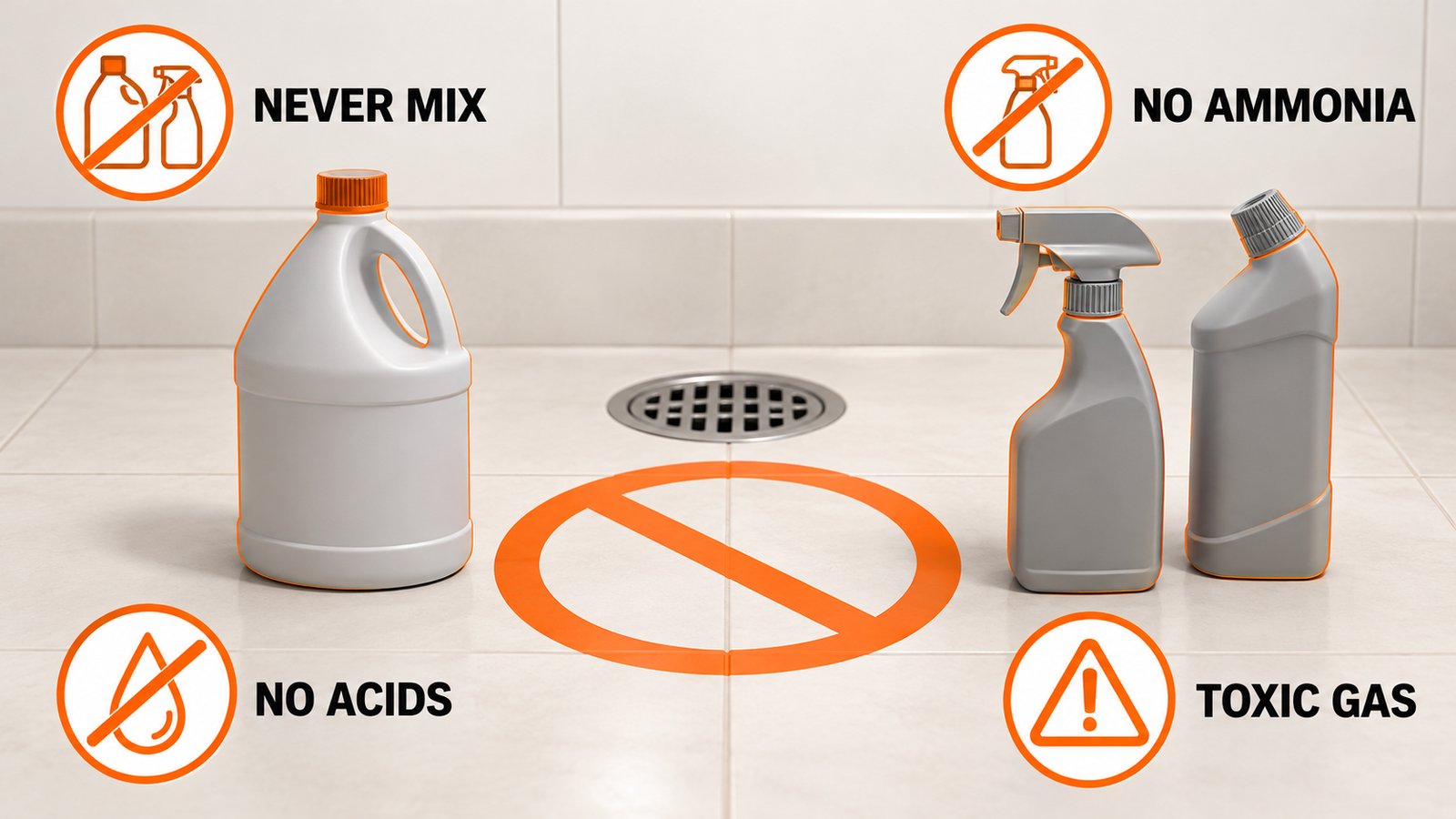
Most bad cleaning outcomes in a bathroom come from combining products, not from a single product. A CDC report in Morbidity and Mortality Weekly Report described five episodes of chlorine gas exposure that hurt at least 14 people in two California hospitals after bleach (sodium hypochlorite) was mixed with a phosphoric acid cleaner. The mixture produced chlorine gas. The same CDC report notes that when bleach is mixed with ammonia-containing compounds, it forms monochloramine and dichloramine, which may cause tearing, respiratory tract irritation and nausea. Reported effects of chlorine included irritation of the eyes, nose and throat, dizziness, cough and chest pain, and severe exposure can do much worse.
That matters at a drain because drains are where people stack products. The pipe holds leftover cleaner from last week, someone adds bleach, someone else adds a gel drain opener with acid in it. Follow these rules every time:
- Never mix bleach with ammonia. EPA's brief guide gives the same warning: never mix chlorine bleach solution with other cleaning solutions or detergents that contain ammonia, because toxic fumes could be produced. Check labels, since some glass and multipurpose cleaners contain ammonia.
- Never mix bleach with an acidic product. Acid drain openers, some toilet bowl and tile cleaners, and vinegar are acidic. Our bleach and mold page repeats the vinegar warning.
- Do not stack products back to back. Rinse the drain thoroughly with water between one product and the next, or better, use one product per job.
- Read the label before you pour. Labels list what the product must not touch, what surfaces it is safe on, and what protective gear to wear.
- Ventilate and keep your face out of it. Open a window, run the fan and do not lean over the drain while product is going in.
If you smell a sharp, chlorine-like odor or your eyes and throat start to burn, leave the room, get fresh air and call Poison Control at 1-800-222-1222 in the US. The CDC report's own recommendation was clear labeling and education about not mixing, which is the same advice a label gives in one line: use one product, as directed, and never combine.
Is Black Mold in a Sink Drain Dangerous
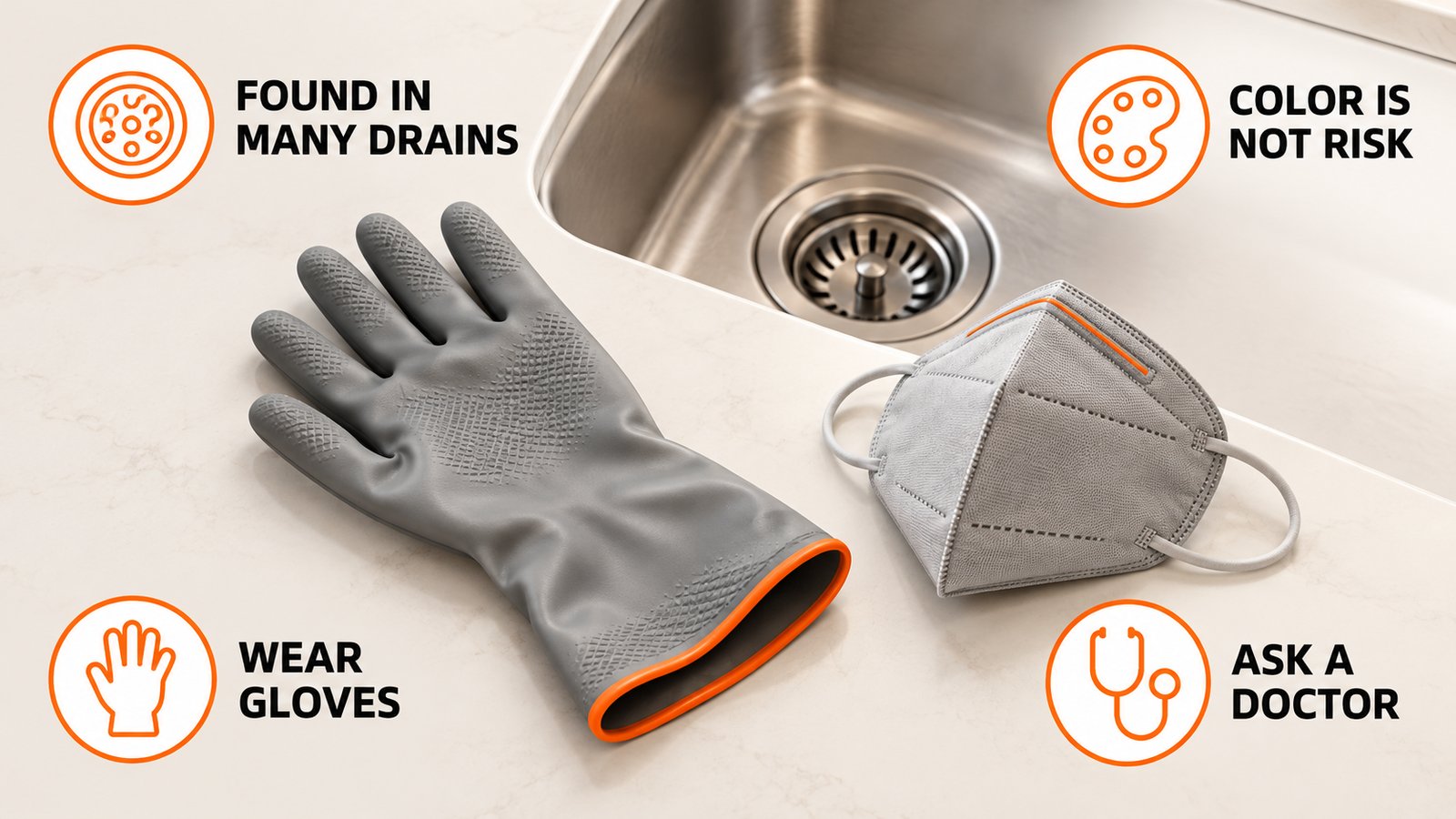
This page cannot tell you whether anything in your drain is a risk to you or anyone in your home. It also cannot name what is growing there from a color. What the published sources do say is limited, and it is worth reading carefully.
The Penn State drain survey found Fusarium, a fungus that can cause infections in people, in about two-thirds of sampled drains. Those infections are described as relatively uncommon, usually enter through wounds, catheters or contact lenses, and mostly affect people with weak or compromised immune systems. One of the researchers said the fungi may even play positive roles in plumbing systems. The study shows the fungus is present in drains. It does not show that a given drain is making anyone sick.
The CDC's mold page is also plain about mold in general: exposure to damp and moldy environments may cause a variety of health effects, or none at all, and for some people it can cause a stuffy nose, sore throat, coughing or wheezing, burning eyes or a skin rash. People with asthma or mold allergy may have severe reactions, and immune-compromised people and people with chronic lung disease may get lung infections from mold. Our is mold dangerous and black mold pages cover that evidence without the scare copy.
The practical reading for a drain is modest:
- Do not touch the film with bare hands. Wear gloves, especially if you have a cut on your hand.
- Do not splash drain water at your face or eyes, and keep it away from contact lenses and their cases.
- Clean the drain on a regular schedule so the film never gets thick.
- If someone in the home has a weakened immune system, chronic lung disease, asthma or a mold allergy, hand the cleaning to someone else or ask their physician about what to avoid.
Health questions, including any symptom you connect to a drain, belong with a licensed physician. A building page, a photo or a home sample cannot diagnose a condition or prove its cause.
Mold Smell in Sink Drains and When to Call a Plumber

A musty or rotten smell from a sink is not proof of mold, and a scrubbed drain that still stinks points somewhere else. Our mold smell in the house page makes the general case: smell is an observation, not a test, and EPA and CDC both point to finding and correcting the moisture behind it. Three plumbing causes show up most often.
A dry or damaged P-trap
The curved pipe under a sink, shower or floor drain is a P-trap. It holds a little water that acts as a barrier against sewer gas. A South Davis Sewer District guide explains that when a drain goes unused, the water in the trap can evaporate, and sewer gases then escape into the room. This is common in guest bathrooms, basement and garage floor drains, laundry drains, and in homes that have been vacant. The fix is simple: run water in every drain at least once a month, and pour a cup or two into seldom-used drains. The same district says a little mineral oil on top of the water slows evaporation. If the smell goes away after you refill the trap, that was the cause.
A leak or a blocked vent
The same district's guidance says that if odors persist after refilling drains, there may be another issue such as a damaged trap, a blocked vent or a plumbing leak, and a licensed plumber can find it. A slow leak is also the way water reaches the cabinet floor and wall behind the pipe. CDC says mold grows where moisture is, such as around leaks in roofs, windows or pipes, and EPA says fix plumbing leaks as soon as possible and dry water-damaged material within 24 to 48 hours. To check for a leak you cannot see, EPA's Fix a Leak Week guidance suggests reading your water meter before and after a two-hour period when no water is being used. If the meter changes at all, you probably have a leak. Inspect pipe fittings for water on the outside of the pipe. Our under-sink mold guide covers the six common failure points in a kitchen cabinet.
Condensation on a cold pipe
EPA's mold guidance also shows that a cold drain or water line can sweat. Rust on a drainpipe is an indicator that condensation occurs, and the EPA's advice is to insulate the pipe. Wet insulation or a stained cabinet below a cold pipe can look like a leak when it is not.
Call a plumber or a remediation professional when
- The smell returns after you have refilled traps and scrubbed the drain.
- You see water, staining, swelling or soft material around the pipe, under the cabinet or on the wall or ceiling below.
- Several drains smell at once or water backs up. EPA treats water damage from sewage or other contaminated water as a job for a professional with experience in contaminated water.
- Dark growth covers more than about 10 square feet of surface. EPA's line is that areas under about 10 square feet can often be handled yourself, and larger areas call for a professional.
- You suspect a gas smell that is not just sewer odor. A gas utility or fire department is the right call for that, not a web page.
When you do hire for mold, look for a firm that follows the ANSI/IICRC S520 standard. Our mold remediation certification page covers who is licensed where.
Keeping Drain Slime From Coming Back
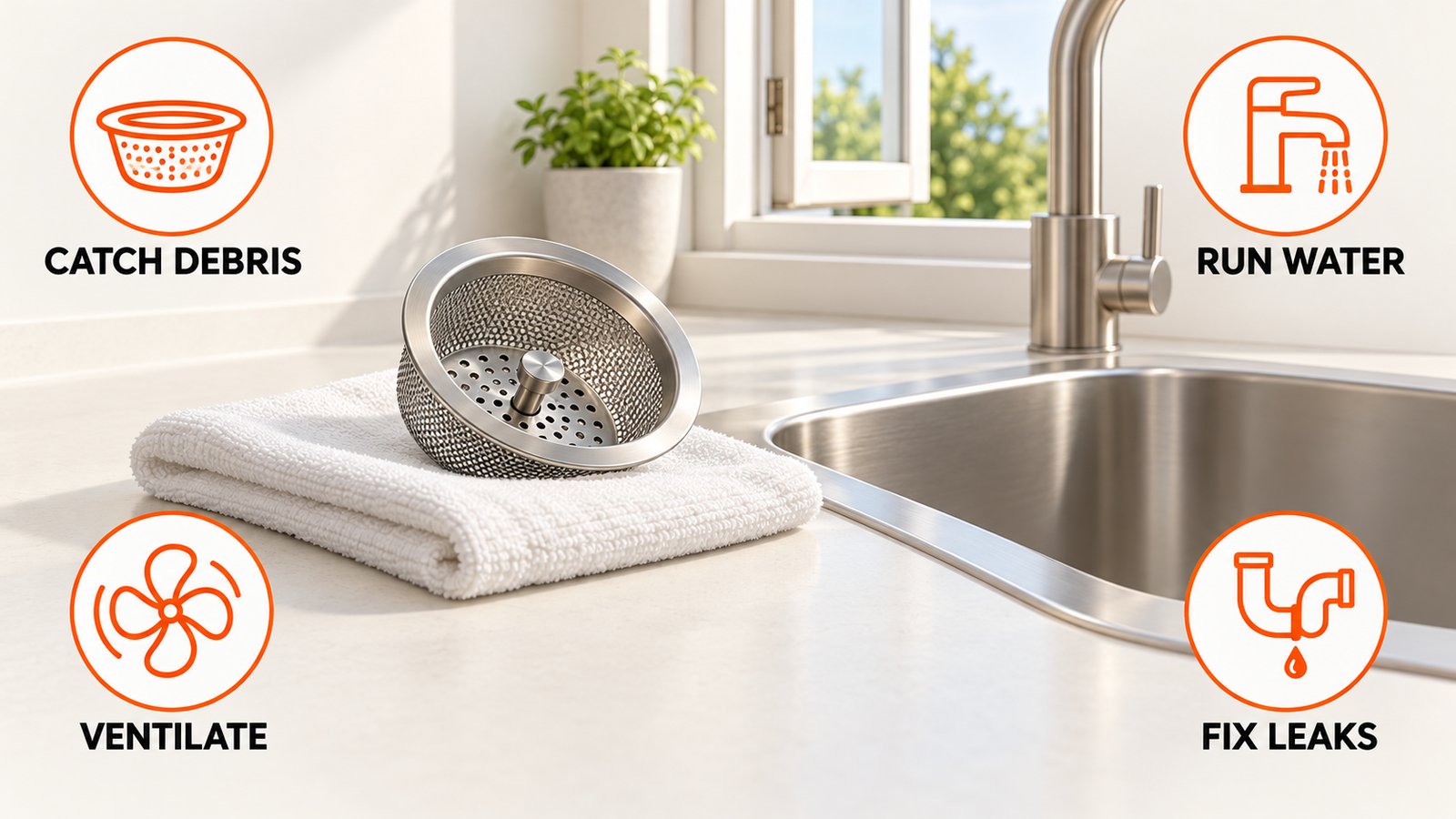
You will not make a drain sterile, and a drain will not be dry. EPA's own line on bathrooms is that places which are always damp can be hard to keep completely free of mold, and that more ventilation and more frequent cleaning will usually keep it from recurring or at least keep it to a minimum. That is a realistic goal for a drain too. Work the food supply, the moisture and the schedule.
- Catch what goes down. A fine mesh strainer in the shower and sink keeps hair and food scraps out of the pipe, where they feed the film. Empty it after each use.
- Wash the strainer and stopper on a schedule. A monthly detergent scrub is a sensible habit. If the film comes back in a week, move to every two weeks.
- Use less product. Soap, shampoo and toothpaste are food. Rinse the shower floor and sink basin with clear water so less residue ends up in the drain.
- Ventilate. Run the bathroom fan or open a window when showering, as EPA advises, and use exhaust fans or open windows when cooking and dishwashing. Humidity control is the same strategy that works for mold anywhere. Our how to prevent mold page has the humidity targets, and the humidity risk calculator turns a meter reading into a plain risk picture.
- Keep seldom-used traps wet. Run water in guest baths, basement and garage floor drains and utility sinks at least once a month.
- Fix drips fast. A faucet or supply line that drips into a cabinet keeps the whole area wet. EPA says to fix plumbing leaks and other water problems as soon as possible.
- Check the other drains. Dishwasher and washing machine drain lines are common sources of odor and film. See mold in a dishwasher and mold in a washing machine.
Write down the date you clean each drain. If a drain needs attention every few days, treat that as a clue that something is wrong with the plumbing, the venting or the moisture around it, not as a reason to scrub harder.
Frequently asked questions
Is the black stuff in my drain mold?
Sometimes it includes fungi, but it is usually biofilm, a community of bacteria, fungi and other microbes held in a slime they produce. Color cannot tell you which organisms are present. Remove it by scrubbing with detergent and water, and dry what you can reach.
Is black mold in a sink drain dangerous?
The published evidence is limited. A Penn State survey found Fusarium, a fungus that can cause uncommon infections in people with weak immune systems, in about two-thirds of sampled drains, which shows it is present but not that any drain is causing illness. Wear gloves, avoid splashing, and take any health question to a physician.
Why does my shower drain have orange or pink slime?
A drain stays wet and receives soap, shampoo and body oils, which feed microbial films. Pink and orange films are often attributed to the bacterium Serratia marcescens, but appearance cannot confirm that. The cleanup is the same: scrub it off, rinse, and dry the rim and strainer.
Does bleach kill mold in a drain?
EPA does not recommend bleach as a routine step in mold cleanup, and it advises scrubbing mold off hard surfaces with detergent and water. If you use any product, follow its label. Never mix bleach with ammonia or an acidic product, because the mixtures release toxic gas.
Why does my drain smell musty or like a sewer?
A dry P-trap is a common cause: when water evaporates from the trap, sewer gas can come into the room. Run water in the drain and refill the trap. If the smell persists, a damaged trap, a blocked vent or a leak may be the cause, and a licensed plumber can check.
How do I tell drain slime from mold on the caulk or grout nearby?
Look at where it starts. A smearing film that begins at the inner lip of the drain is likely drain biofilm. Dark spots that begin at a seam, a corner or inside the caulk bead point to moisture in the surface. Neither can be confirmed by color or a photo.
How often should I clean a drain?
A monthly scrub of the strainer, stopper and drain opening is a sensible starting point. If the film returns within days, look for a leak, a venting problem or constant moisture instead of increasing the scrubbing.
When should I call a plumber for a moldy-smelling drain?
Call when the smell returns after you refill traps and scrub the drain, when several drains smell or back up, or when you see water, staining or soft material around the pipe. Sewage or contaminated water is a job for a professional.
Sources
Every claim on this page traces to one of these. Links open the primary document.