Is It Mold on Hardwood Floors?
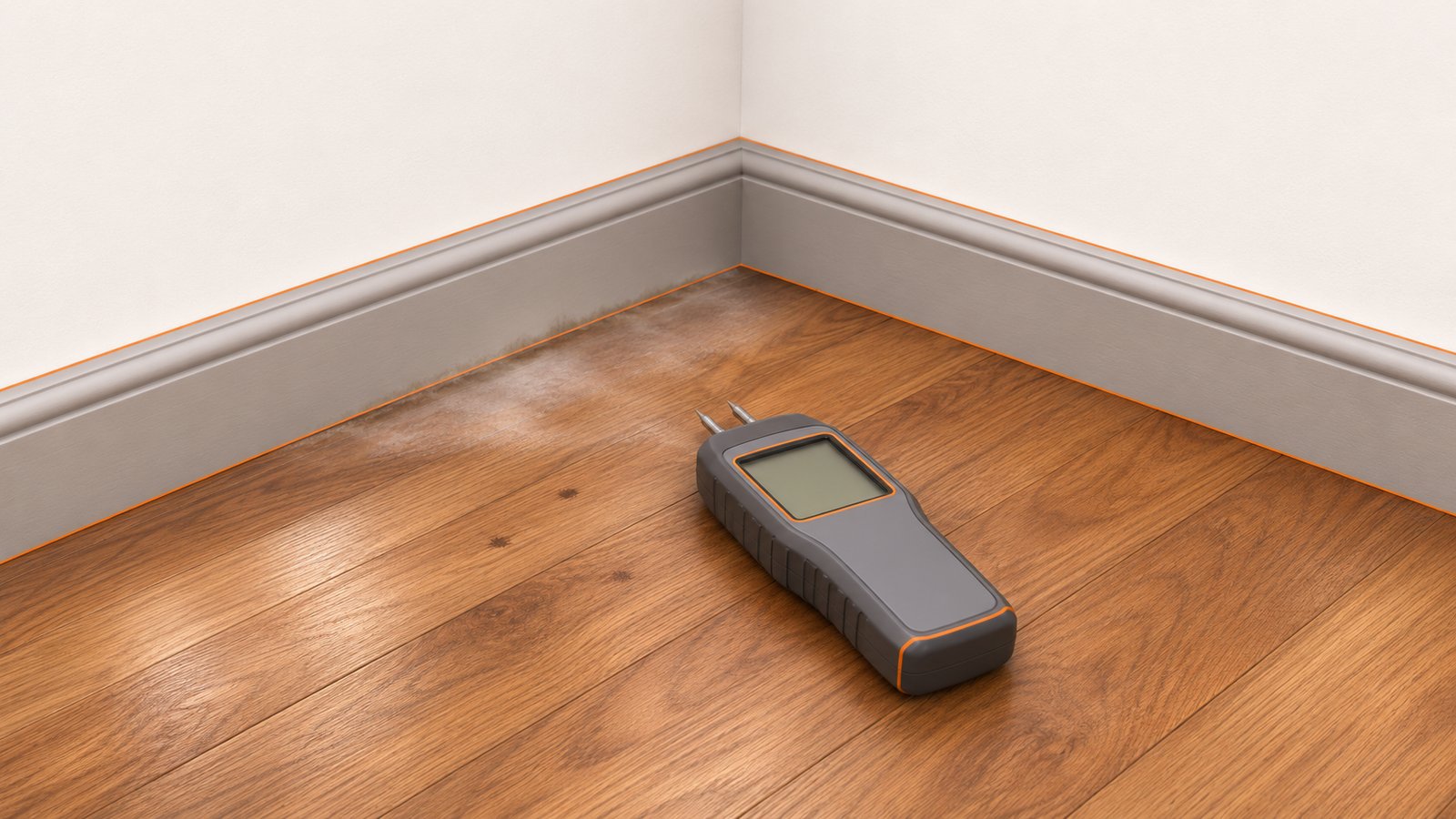
Spots, haze or dark boards on a finished floor could be mold, but the EPA says plainly that not everything that looks like mold is mold. Paint, stains and dirt can pass for growth. The CDC says mold grows on wood, paint and dust.
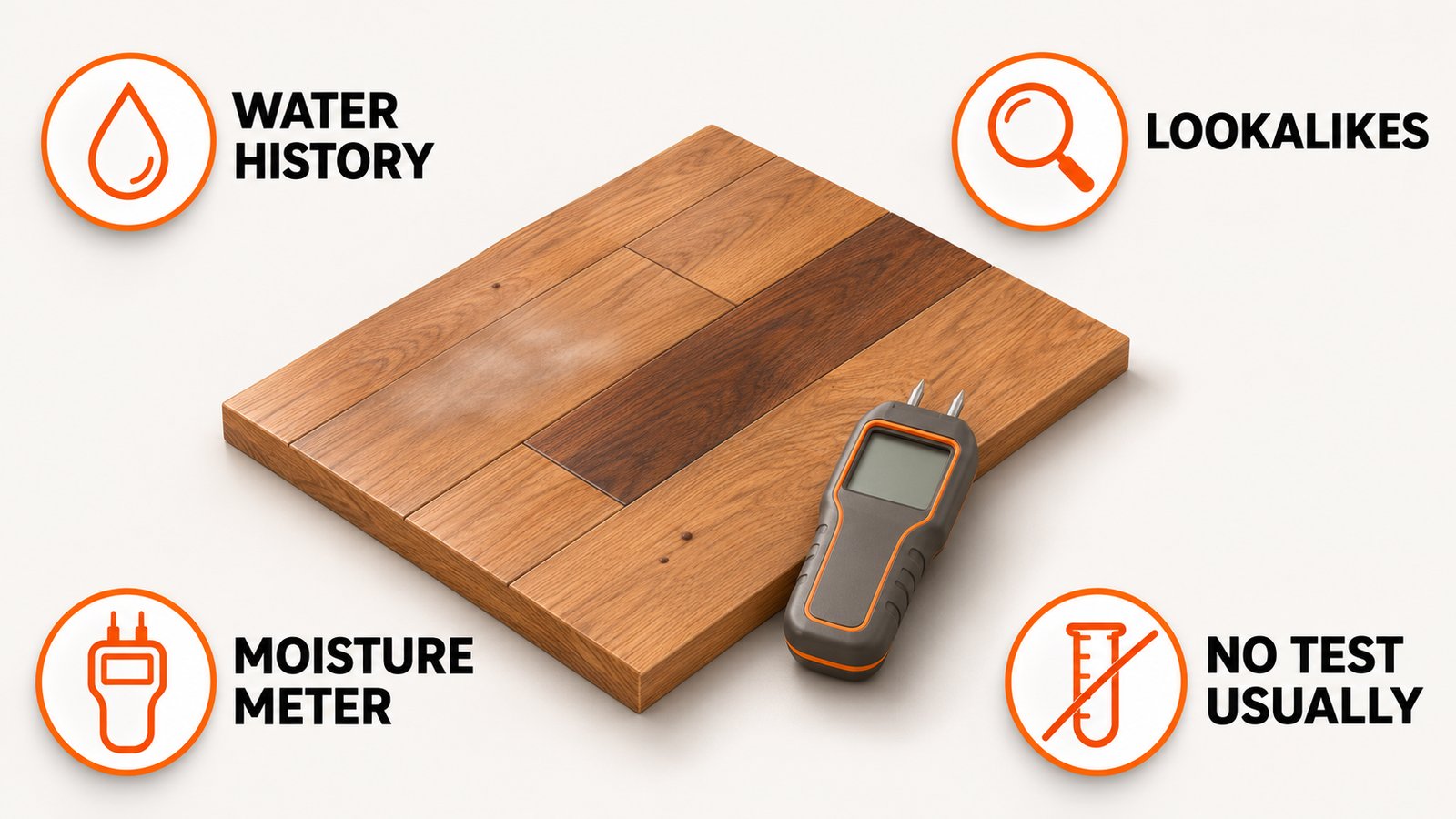
Start with the floor's water history: a leak, a wet entry, a spill that sat, a window that lets rain in. The EPA says that in most cases mold will not grow if wet materials are dried within 24 to 48 hours. Press a moisture meter against the boards (the EPA says meters work on wood) and compare with a dry spot in the same room.
The Wood Handbook recommends flooring be installed at an average of 8 percent moisture for most of the United States (individual pieces 6 to 10 percent), and 11 percent in damp, warm coastal areas. Those are installation targets, not pass or fail marks, but a reading far above a dry reading is worth chasing.
Our own rule of thumb: wipe one small spot with a damp cloth. If it lifts, it may have been dirt. If it smears, returns or sits where the floor was wet, treat it as possible growth. A flat spot can still be growth. The EPA says sampling is unnecessary in most cases when growth is visible. Our is this mold and mold or dirt pages help with lookalikes.
What Does Black Mold on Hardwood Floors Look Like?
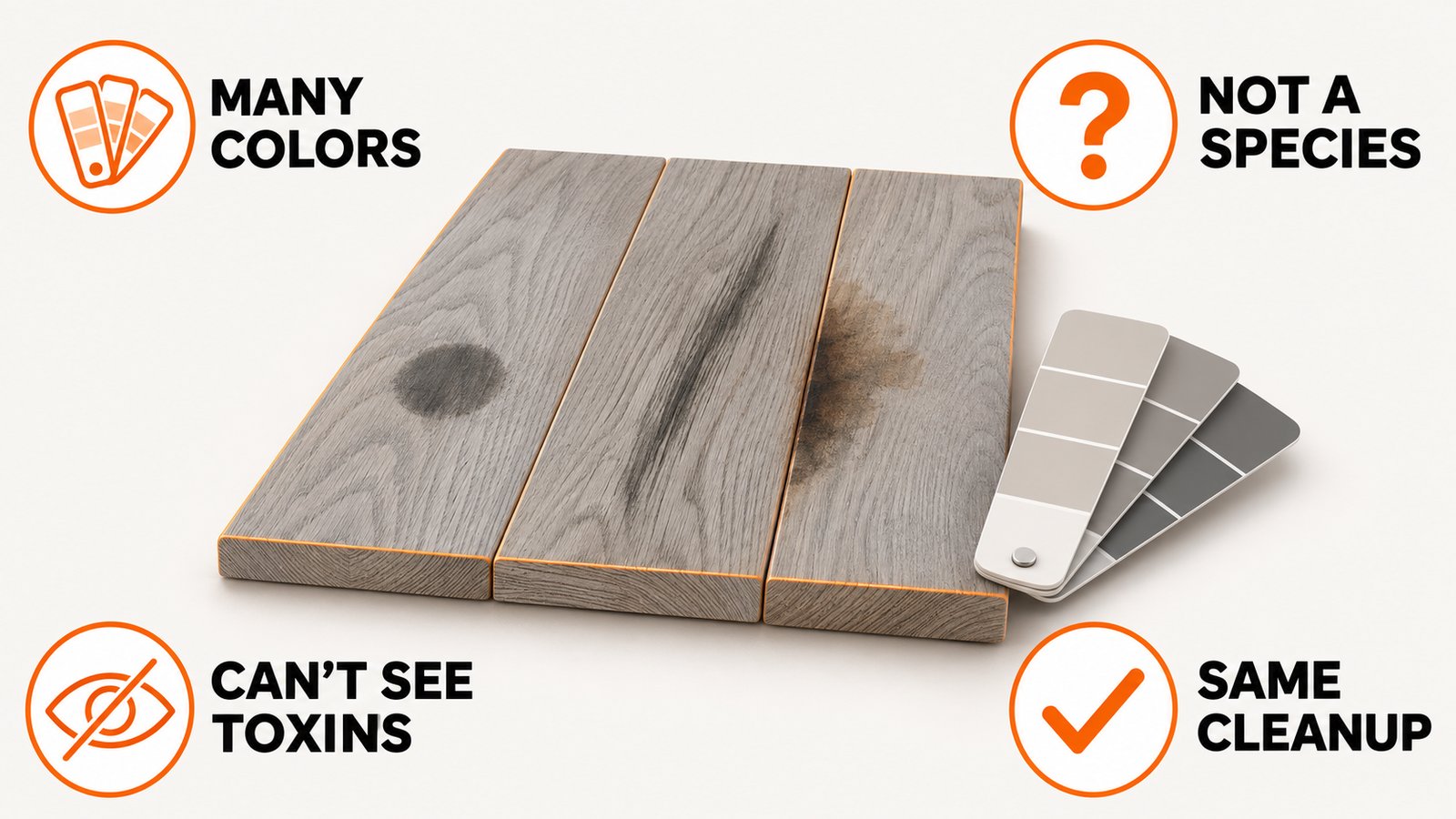
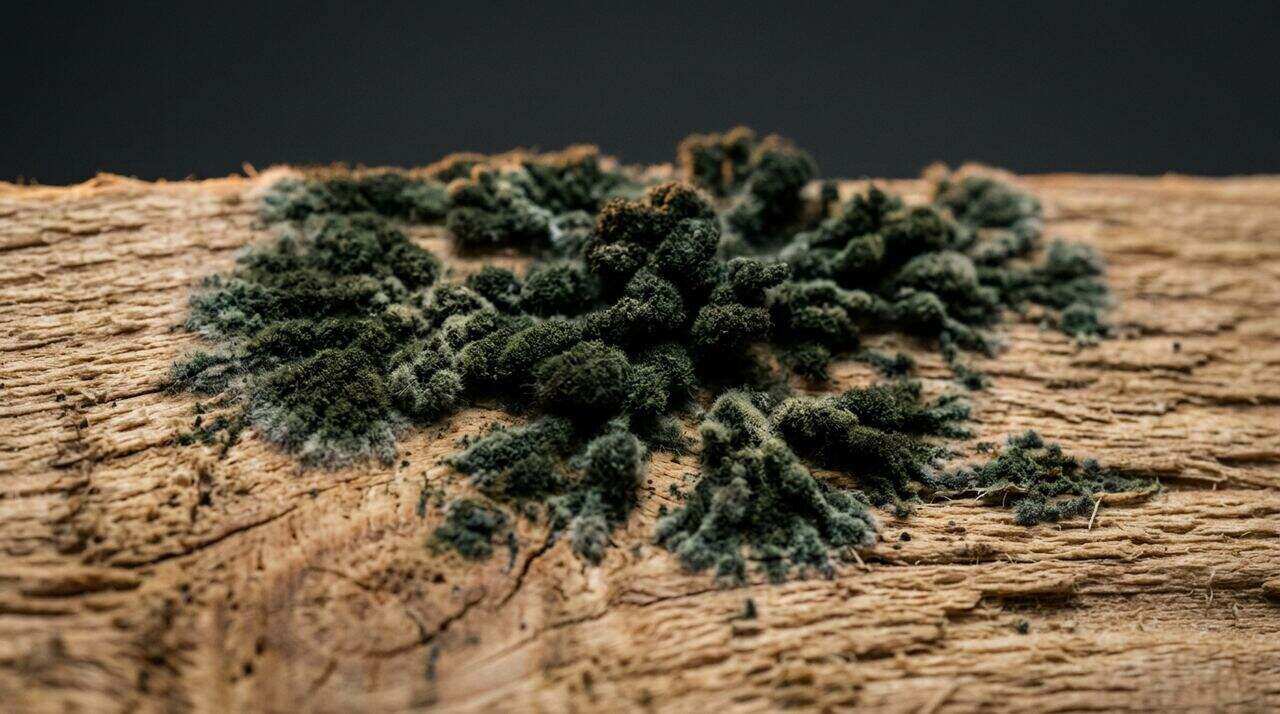
If you searched for pictures of black mold on hardwood floors, know that a photo cannot name a mold. The EPA mold course says molds come in many colors, including white, and that "black mold" is not a species or a specific kind of mold. It also says no one can tell whether a mold is producing mycotoxins just by looking at it.
Dark growth on a floor tends to follow wet: along a wall, near a door, around a plumbing line. A dark streak along the grain or at a board seam can be a water mark or stain instead. A dark mark, a damp location and a musty smell together point toward growth. Any one alone does not.
In lumber, the Wood Handbook says the line between molding and staining is mostly the depth of discoloration. A dark mark that survives a good cleaning may be deeper than the surface. See what mold looks like and black mold.
You do not need the type to act. The CDC says to clean it up and fix the moisture problem either way. A photo scan from Mold Scanner AI can help tell whether a spot looks like mold and what to do next. It does not identify a species.
Is It White Mold on Hardwood Floors?
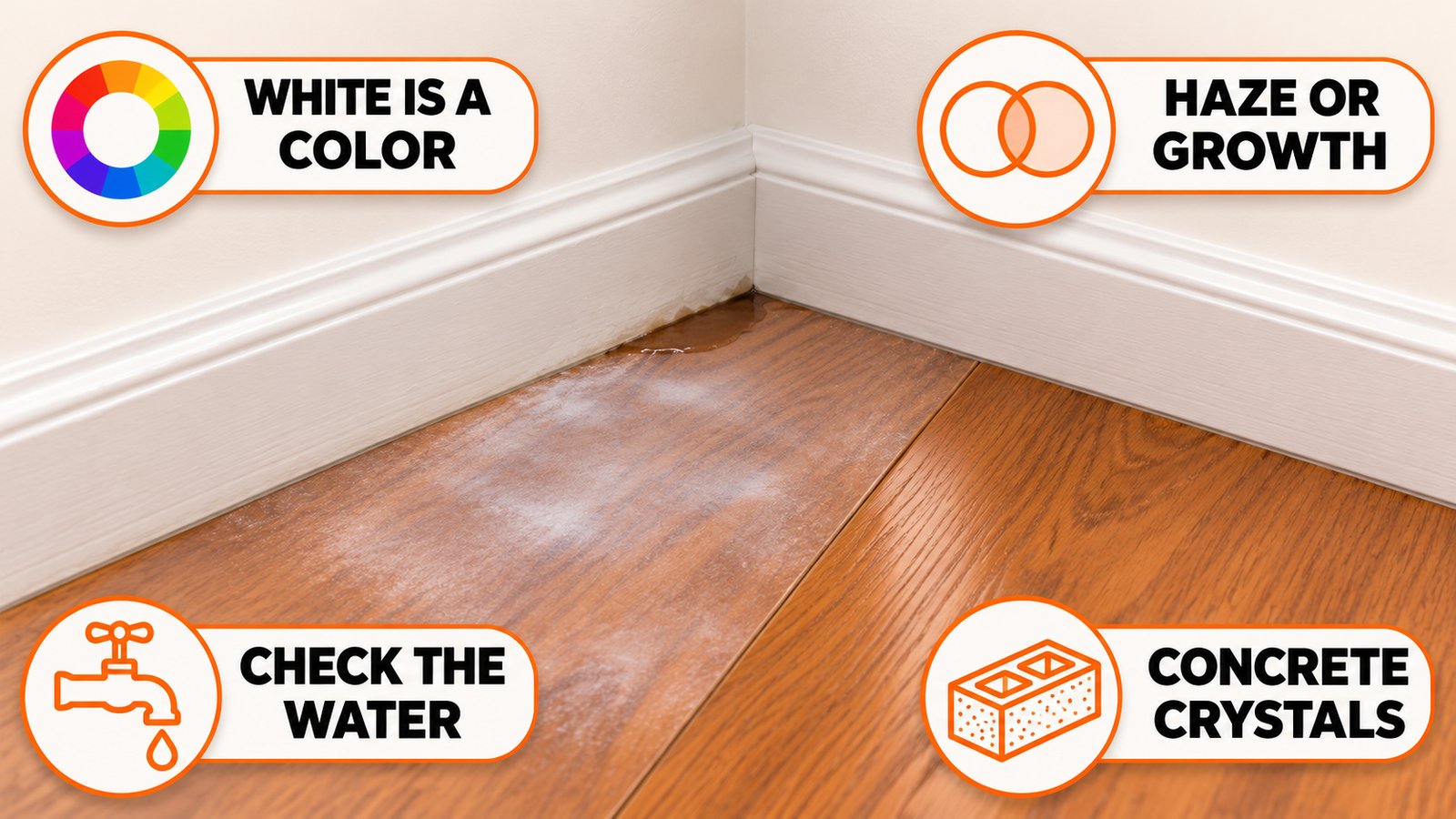
If you searched for white mold on hardwood floors, the EPA confirms molds come in many colors including white. Color does not tell you how risky a mold is, so treat white growth like any other. Our white mold and is white mold dangerous pages cover the type question.
A white haze can also be something other than growth. We have no agency source that tells haze from growth by eye, so use the water history. If the haze sits where the floor was wet, stays damp or comes with a musty smell, treat it as possible growth. If the floor has been dry and the haze wipes off easily, it was likely a surface film. That is our own rule of thumb.
The EPA notes that alkaline crystals on soil or concrete walls can look like mold but are usually water-soluble. If your floor sits over a basement, white powder at the wall edge may be that. Our efflorescence versus mold page covers it. Either way, the fix starts with the moisture.
How to Clean Mold Off Hardwood Floors
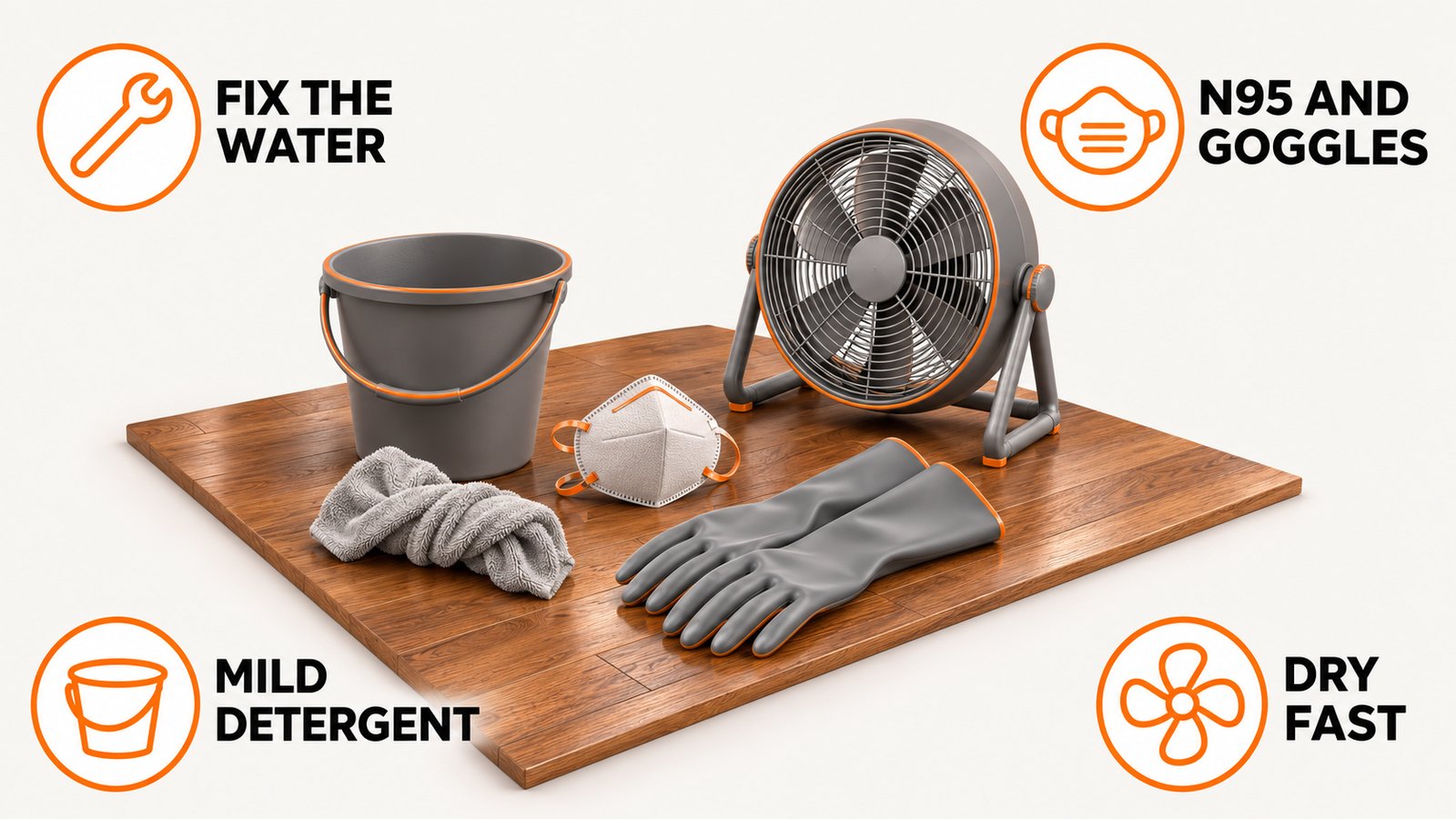
For finished hardwood, the EPA mold course says treated or finished wood surfaces can be cleaned with mild detergent and clean water, then allowed to dry. For a patch under about 10 square feet, the EPA says you can in most cases handle it yourself. Fix the water source first, or the mold will most likely return.
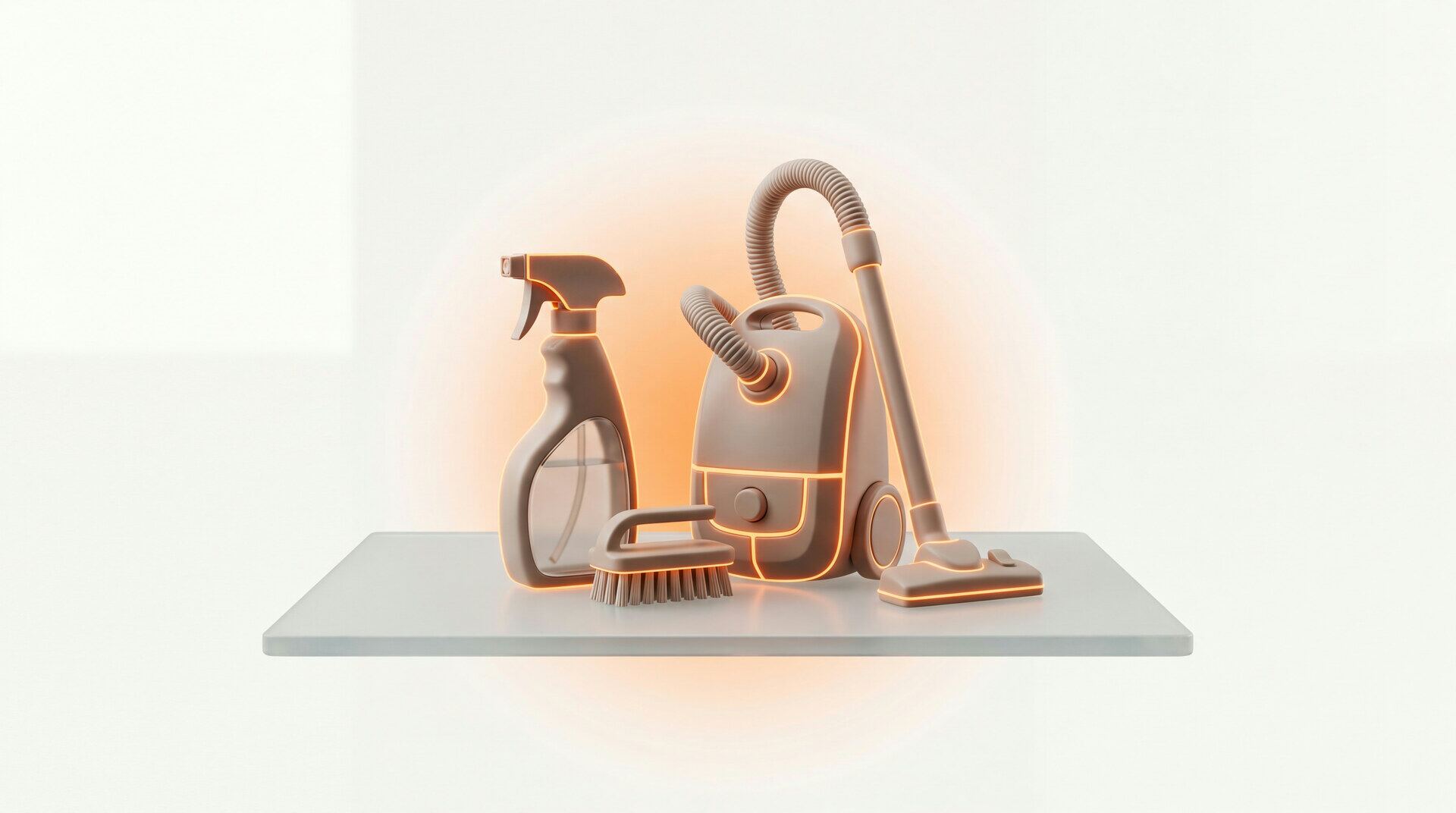
Gear. The EPA says you may want to wear an N-95 respirator, and it recommends long gloves and goggles without vent holes. Wipe. Keep the cloth damp, not wet, and work in small sections. Water that sits in seams is the water you are trying to remove. Label. The EPA says to follow cleaning instructions on product labels, so check your floor maker's care instructions. We do not recommend a product here.
Dry. Towel each section dry, then run fans and a dehumidifier. The EPA says to be very careful applying heat to hardwood floors. Vacuum. Once dry, the EPA recommends a HEPA vacuum for final cleanup.
Bleach. The EPA does not recommend biocides such as bleach as a routine step, and says dead mold can still cause allergic reactions, so it must be removed. Never mix bleach with ammonia. Stains. The EPA says cleaning may not restore the original appearance. Bare or worn wood is covered in mold on wood.
How to Get Mold Out of Hardwood Floors
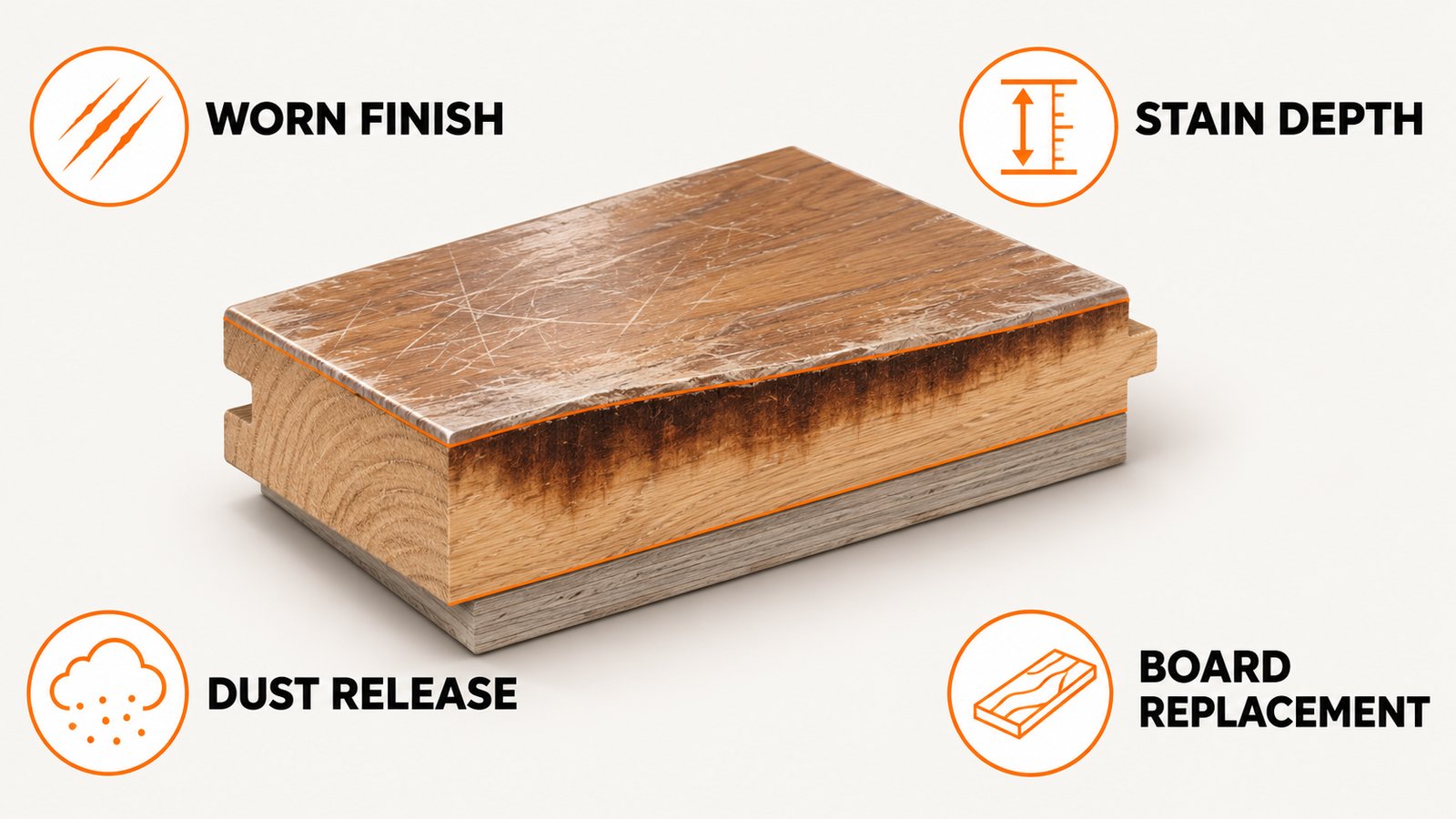
Cleaning works on the finish. It may not work when the finish is worn through and growth sits in the wood. The EPA explains why: porous materials may have to be thrown away, because mold can fill their crevices and be difficult or impossible to remove completely.
The Wood Handbook says mold and stain fungi can increase the absorbency of wood, and that typical blue stain in lumber penetrates the sapwood and cannot be removed by surfacing. A board that stays dark after cleaning may be in that deeper category. That is an inference from lumber, so ask a flooring professional.
Sanding stirs up dust. The EPA says to use caution when work means disturbing possible mold growth. Let a pro decide between sanding, replacing boards and refinishing, after the floor is dry. Do not refinish over growth: the EPA says paint over moldy surfaces is likely to peel, and the same logic is why a refinisher needs a clean, dry floor. That second point is our reasoning.
See can you paint over mold for why coatings go on last.
Can Mold Grow Under Hardwood Floors?
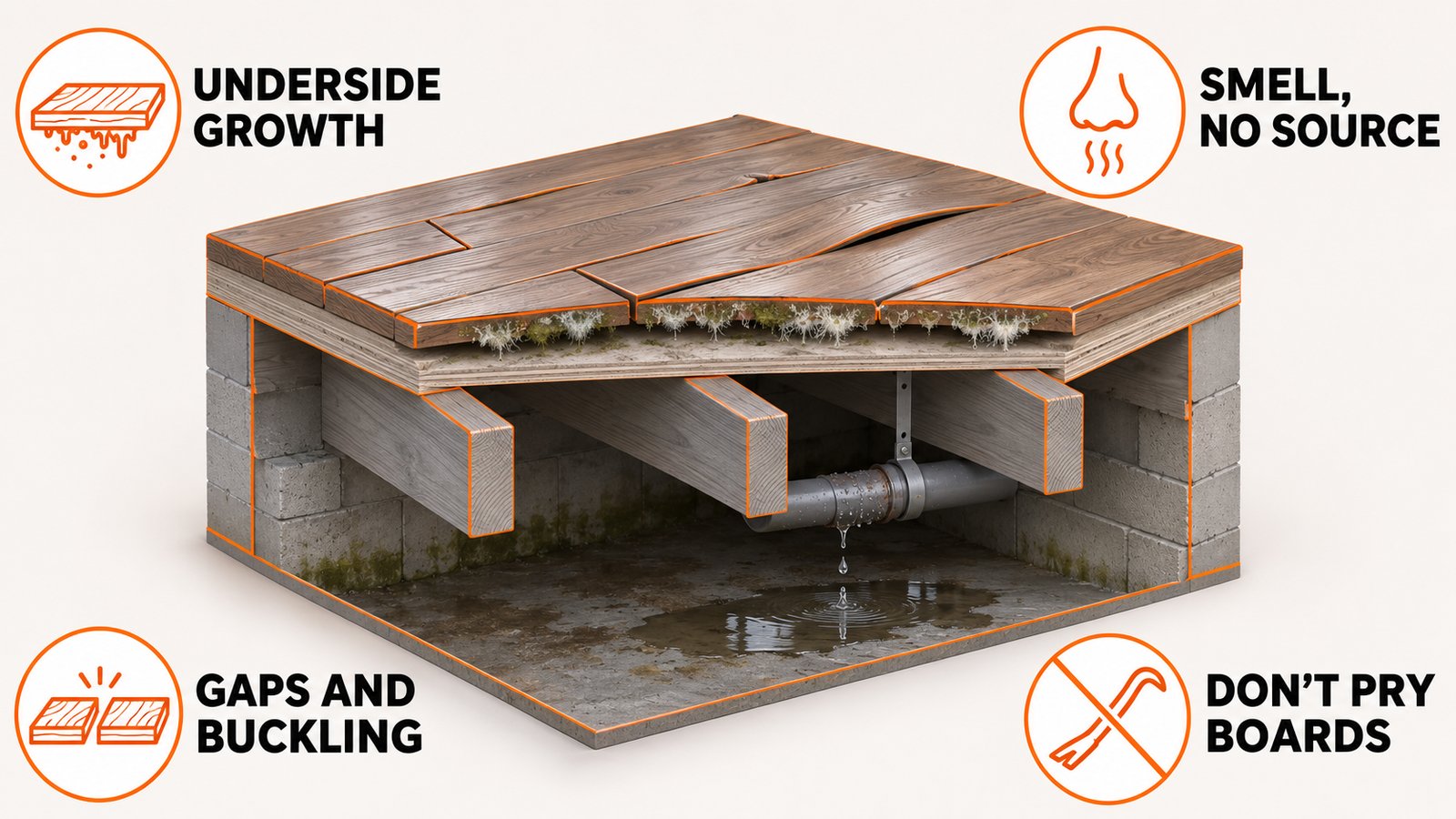
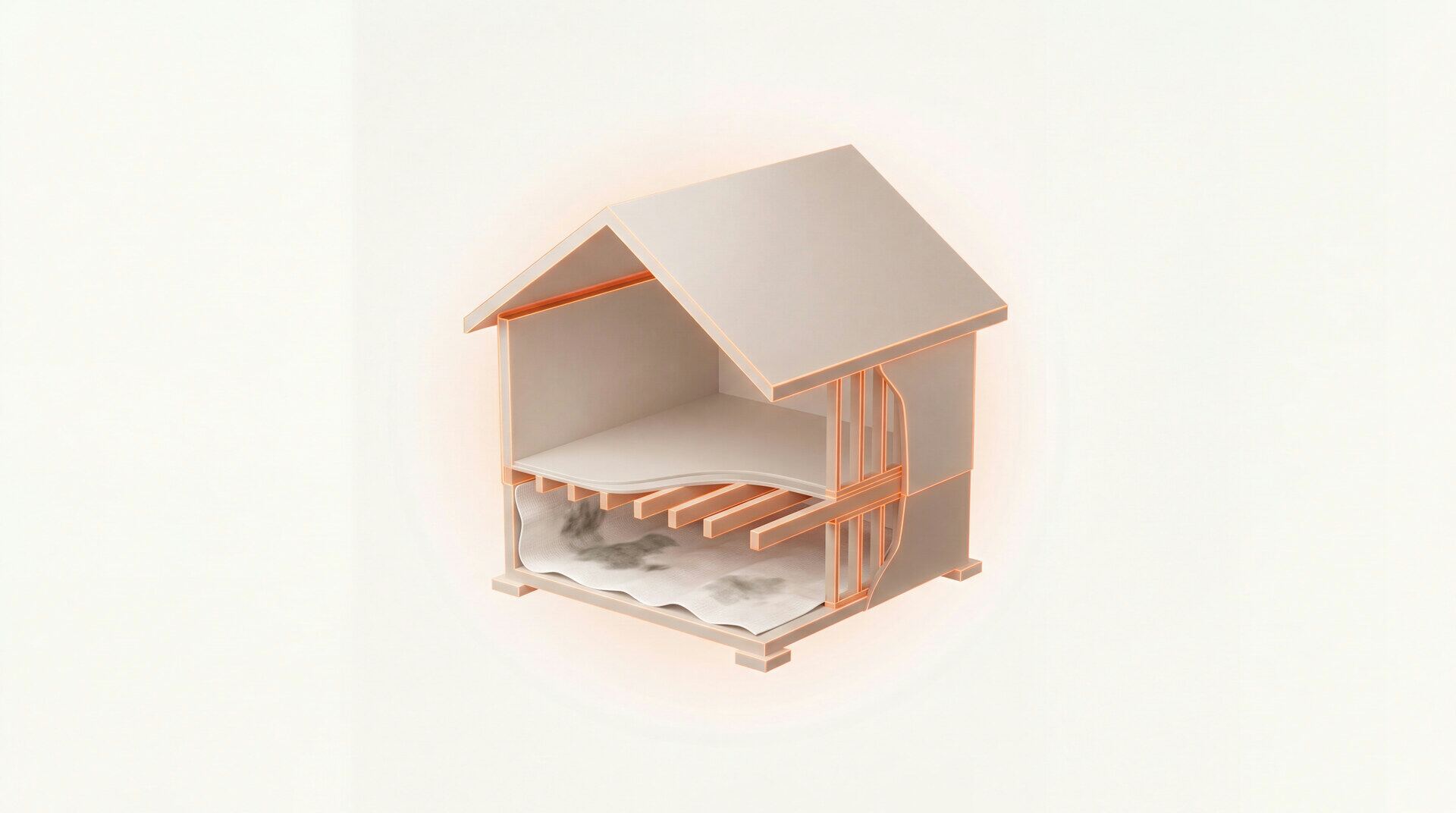
Yes. The EPA's school and commercial building guide includes a photo of heavy mold growth on the underside of spruce floorboards, and says mold can weaken floors by feeding on wet wood. The EPA says you may suspect hidden mold if a building smells moldy but you cannot see the source, or if you know there has been water damage and residents are reporting health problems.
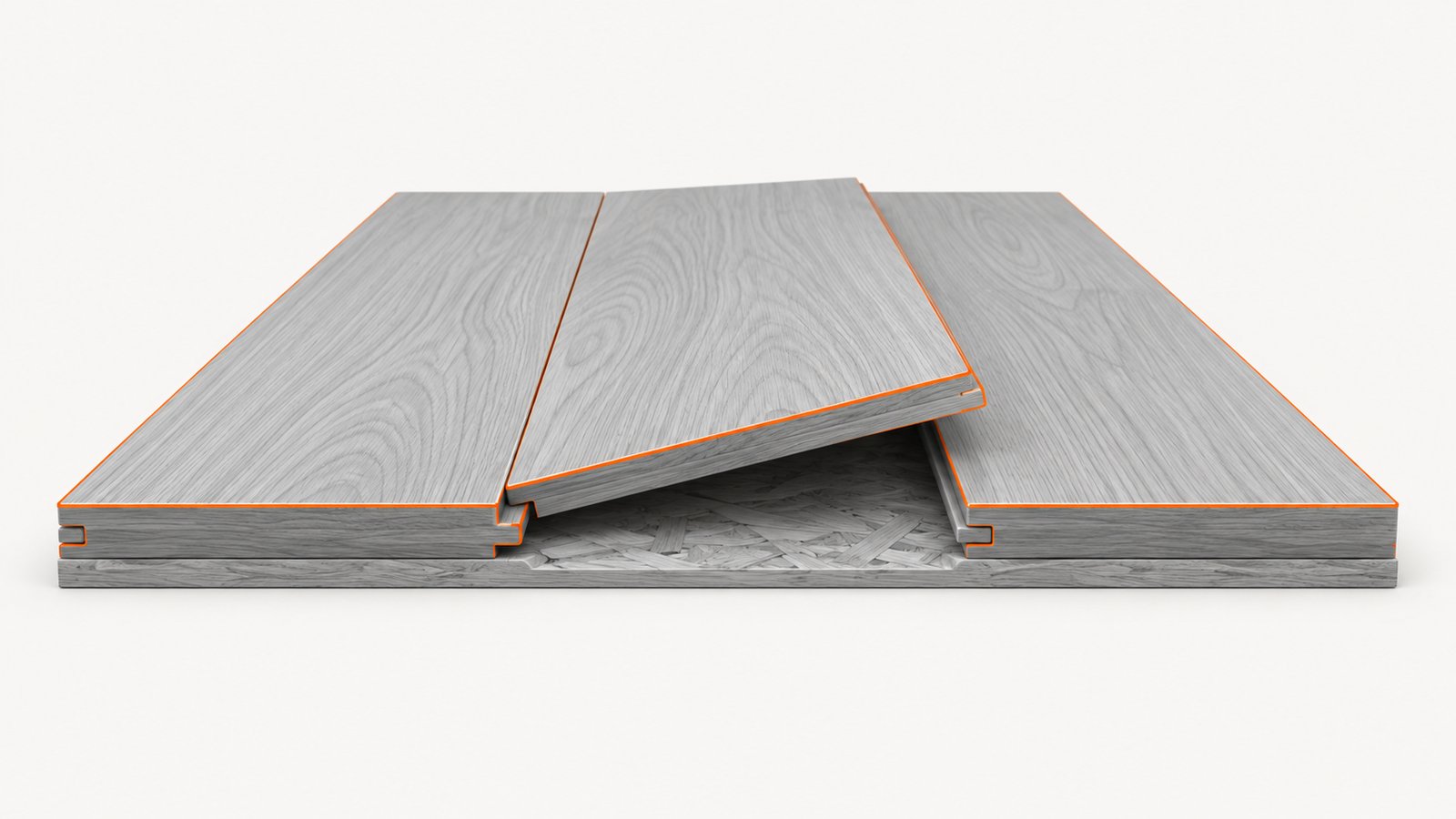
The Wood Handbook explains why moving boards matter: below fiber saturation, wood swells as it gains moisture and shrinks as it loses it, which can leave gaps in flooring, and it says to install wood at the moisture content it will see in service to avoid floor buckling. Boards that move a lot are telling you about water.
Check from below when you can: the ceiling under the room, the crawl space or the basement. The Handbook says decay generally needs wood at about 30 percent moisture, and that 20 percent is sometimes used as a safety margin in field inspections. Do not pry boards up to look. The EPA says to use caution when an investigation means disturbing possible mold growth.
Our mold under flooring page covers what is below a floor, how cupping works and what has to come out. See also mold in the crawl space, mold in the basement and the humidity risk calculator.
When to Call a Pro
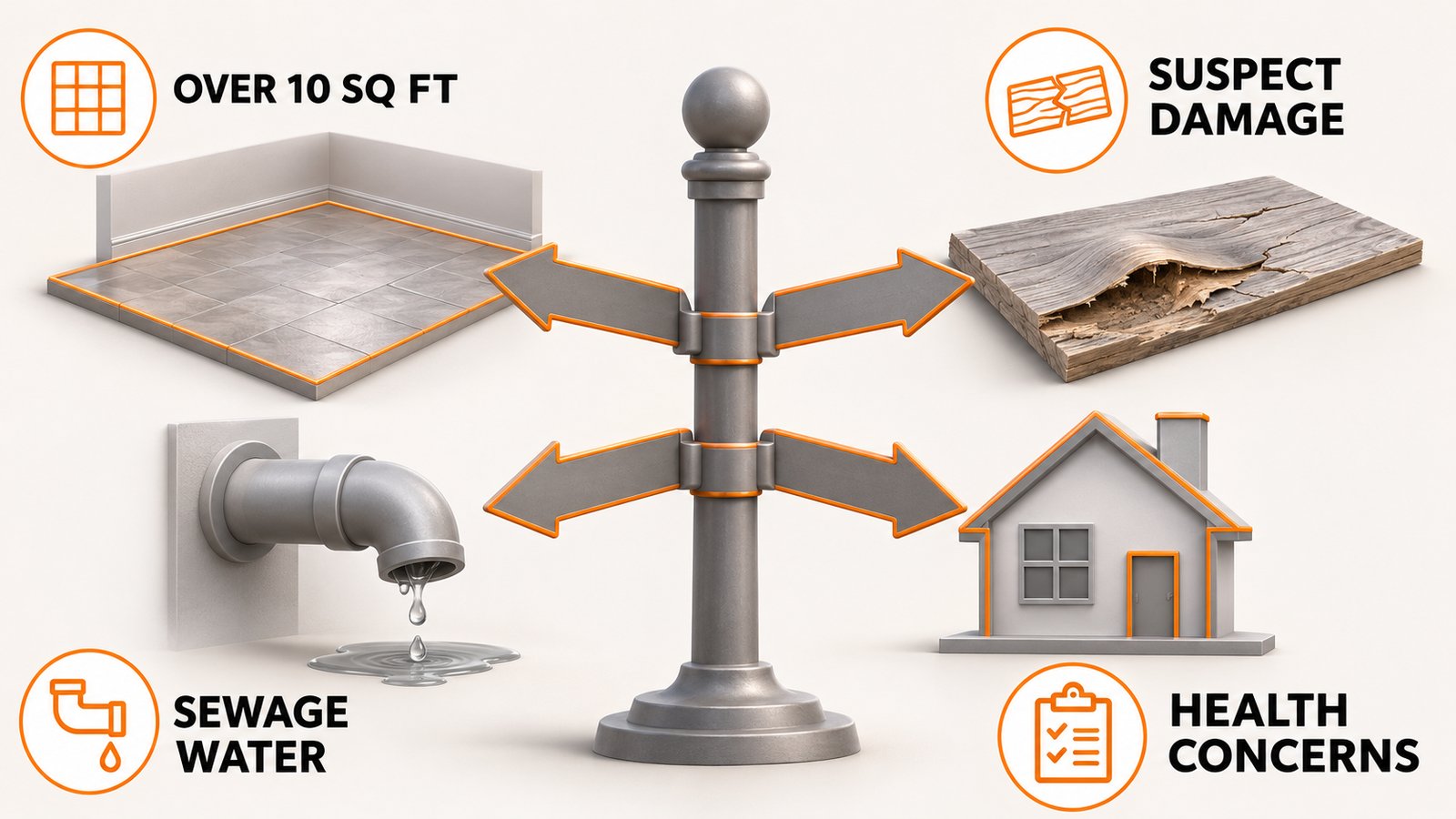
Call a professional when mold covers more than about 10 square feet, when there has been a lot of water damage, or when the water was sewage or other contaminated water. Past that size or after a lot of water damage, the EPA points to its guide for larger jobs, and we suggest a professional. Consult a health professional before cleanup if you have health concerns.
If you suspect mold has damaged the structure, the EPA guide says to consult a structural engineer or similar expert. We cannot judge that from a photo. See mold inspection, mold remediation and how to get rid of mold.
To keep it from returning, the EPA says to keep indoor humidity below 60 percent, ideally 30 to 50 percent, and to dry leaks within 24 to 48 hours.
Frequently asked questions
Is white mold on hardwood floors dangerous?
Color does not tell you. The EPA says molds come in many colors, including white, and that no one can tell whether a mold makes mycotoxins just by looking. Treat any growth the same way, and if you have health concerns, the EPA says to consult a health professional before cleanup.
How do I clean mold off hardwood floors?
For a finished floor, the EPA mold course says to use mild detergent and clean water, then let it dry. It also says you may want to wear an N-95 respirator, and it recommends long gloves and goggles without vent holes. Keep the cloth damp, work in small sections and dry each one right away. Follow your floor maker's care instructions.
Can I use bleach on hardwood floors?
The CDC says hard surfaces can be cleaned with soap and water or no more than 1 cup of household laundry bleach in 1 gallon of water. The EPA does not recommend bleach as a routine step. Check your floor maker's instructions first, and never mix bleach with ammonia.
Will the dark stain come out of the wood?
Maybe not. The EPA says mold may cause staining and cosmetic damage, and cleaning may not restore the original look. A flooring professional should judge whether sanding will help.
Can mold grow under hardwood floors?
Yes. The EPA's guide shows heavy mold growth on the underside of spruce floorboards. Suspect it with a moldy smell and no visible source, or known water damage and people in the home reporting health problems. Do not pry boards up. The EPA says to use caution when an investigation means disturbing possible mold growth.
Do I need a mold test for my hardwood floors?
Usually not. The EPA says that in most cases, if visible mold growth is present, sampling is unnecessary, and the CDC does not recommend mold testing. Finding and fixing the water matters more.
How do I keep mold from coming back on a hardwood floor?
Control moisture. The EPA says to keep indoor humidity below 60 percent, ideally 30 to 50 percent, and to dry wet materials within 24 to 48 hours. The CDC says to fix leaks in roofs, walls and plumbing.
Sources
Every claim on this page traces to one of these. Links open the primary document.