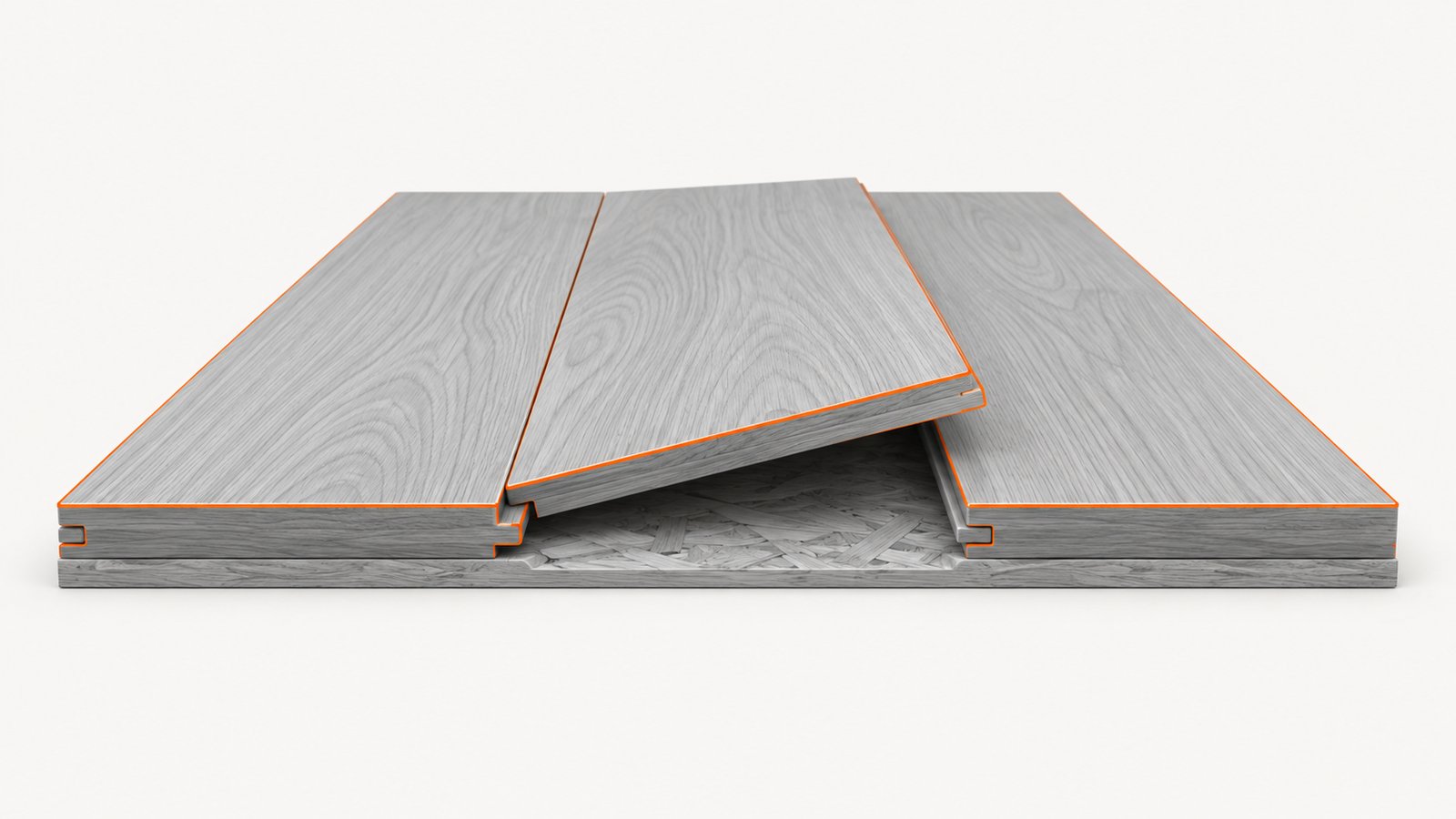
How to Tell if You Have Mold on Hardwood Floors
Wood tells you it is wet long before it tells you it is moldy, and the shape of the board is the first signal.
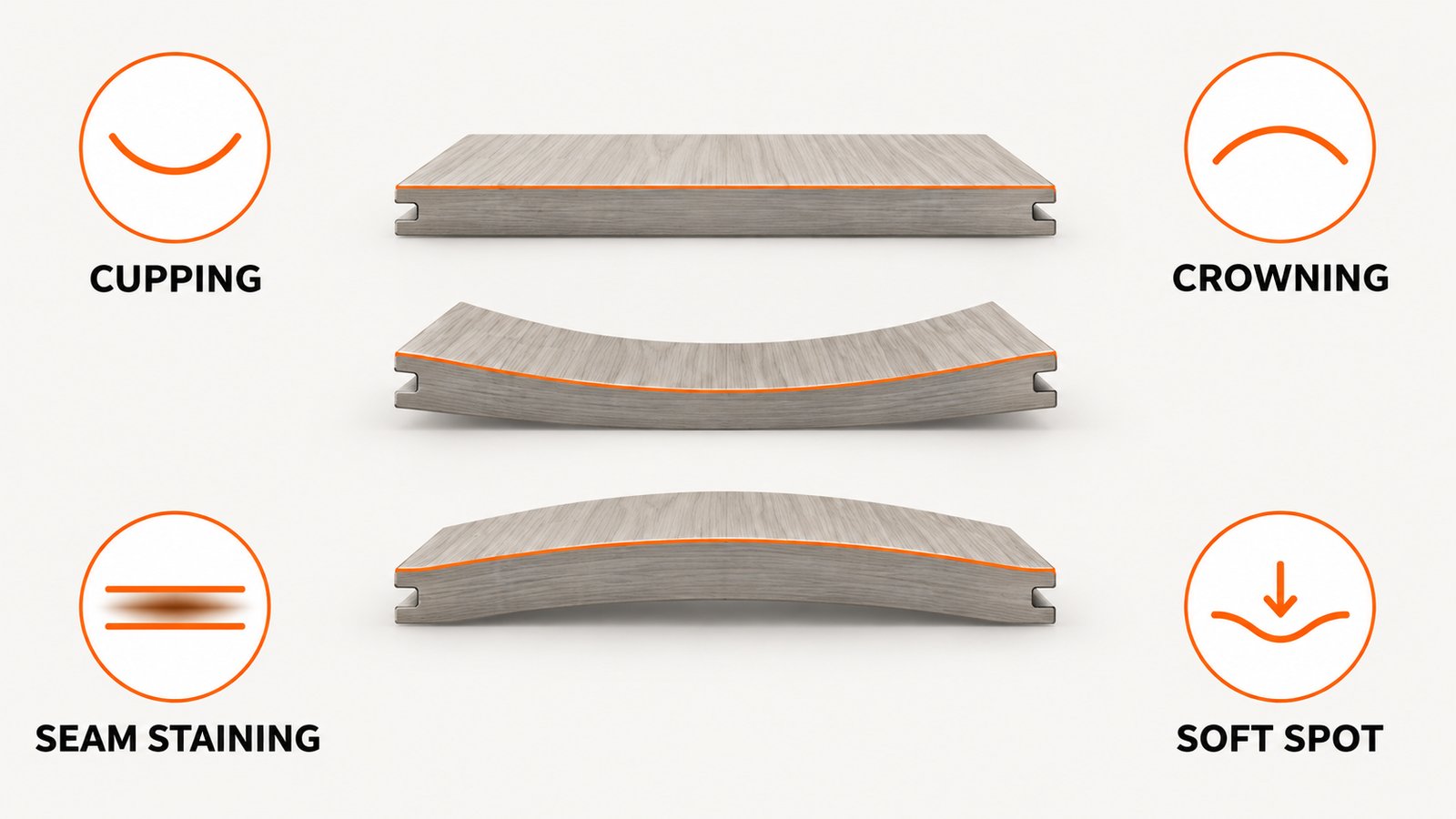
- Cupping. The edges of each board sit higher than its center, so the floor feels like a series of shallow troughs underfoot. That happens when the underside of the board is wetter than the top, which means the water is coming from below: a slab, a crawl space, a subfloor leak.
- Crowning. The reverse, with the center higher than the edges. It usually means a floor that cupped, then got sanded flat while still wet, and then dried.
- Dark staining that follows the grain or the seams. Water tracks along the joints first. A stain shaped like the plank layout is a moisture map.
- Springy or soft spots. The board has lost stiffness, or the subfloor under it has. Either way something has been wet for a long time.
- A musty smell with nothing visible. The EPA states you may suspect hidden mold if a building smells moldy but you cannot see the source, or if you know there has been water damage.
- Gaps that open and close with the seasons more than they used to. Wood that keeps taking on and giving up water moves more than wood that is stable.
What you usually cannot see is the growth itself, because on a finished floor the surface is sealed and the mold is on the raw underside of the plank or on the subfloor beneath it. The EPA's list of places hidden mold turns up includes the underside of carpets and pads, and the same logic applies to any floor covering with a porous layer under it.
One important distinction before you panic: black staining on hardwood is often not mold at all. Water reacting with tannins in oak leaves dark marks that look identical to growth in a photo, and pet urine leaves its own distinctive black halo. Neither responds to a fungicide. Photograph the surface first and confirm what you are looking at, then start metering.
What Is Under There: The Four Floor Systems
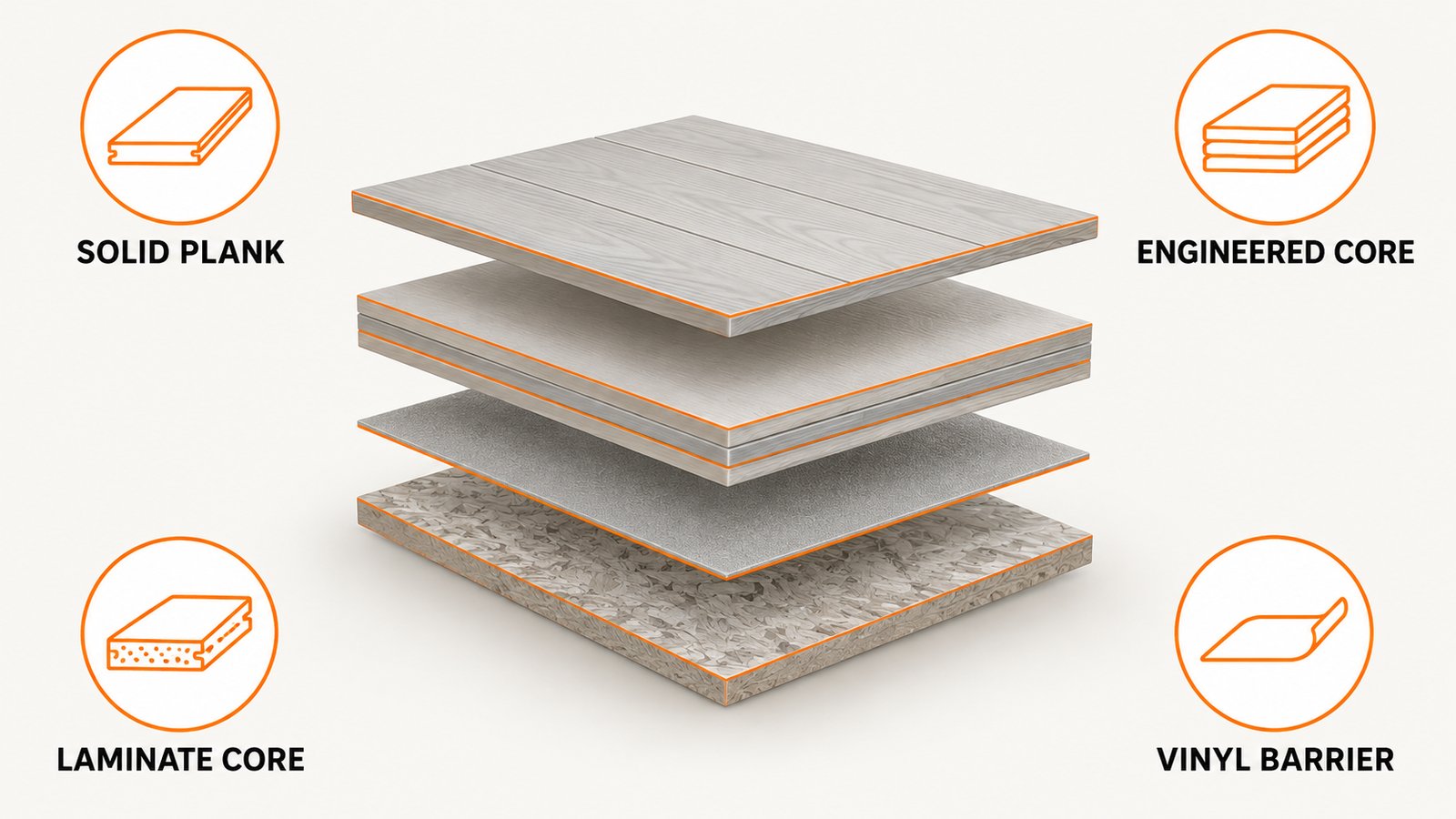
What you can do about it depends entirely on how the floor is built, because the problem is almost never in the wear layer you can see.
| Floor type | Where mold grows | Can it be saved? |
|---|---|---|
| Solid hardwood | Raw underside of the plank and the subfloor | Often yes if caught early, since it can be lifted, dried, and refinished |
| Engineered wood | The plywood core and the adhesive layers | Sometimes, but a delaminated core is replacement |
| Laminate | The fiberboard core, which swells irreversibly | Rarely, once the core has taken water |
| Vinyl plank and sheet vinyl | Between the vinyl and the subfloor, trapped by the vapor barrier | The vinyl usually cleans, the subfloor decides the job |
| Carpet over subfloor | The pad, which the EPA names as a hidden mold site | Pad no, carpet sometimes, subfloor depends |
Vinyl is the counterintuitive one. A waterproof plank sounds like protection, and it is, right up until water gets underneath it from a slab or a pipe. Then the same vapor barrier that kept spills out keeps moisture in, and the subfloor stays wet for months with nothing visible on the surface. That is the pattern behind most under-flooring problems in newer homes.
The EPA's material rule applies to everything in that table. Scrub mold off hard surfaces with detergent and water and dry completely, but absorbent or porous materials may have to be thrown away, because mold can fill the crevices of porous material and be difficult or impossible to remove completely. A finished hardwood face is a hard surface. A laminate core and a carpet pad are not. Mold on carpet covers that side.
How to Find It Without Ripping the Floor Up
You can learn most of what you need without pulling a single board, and it takes about twenty minutes.
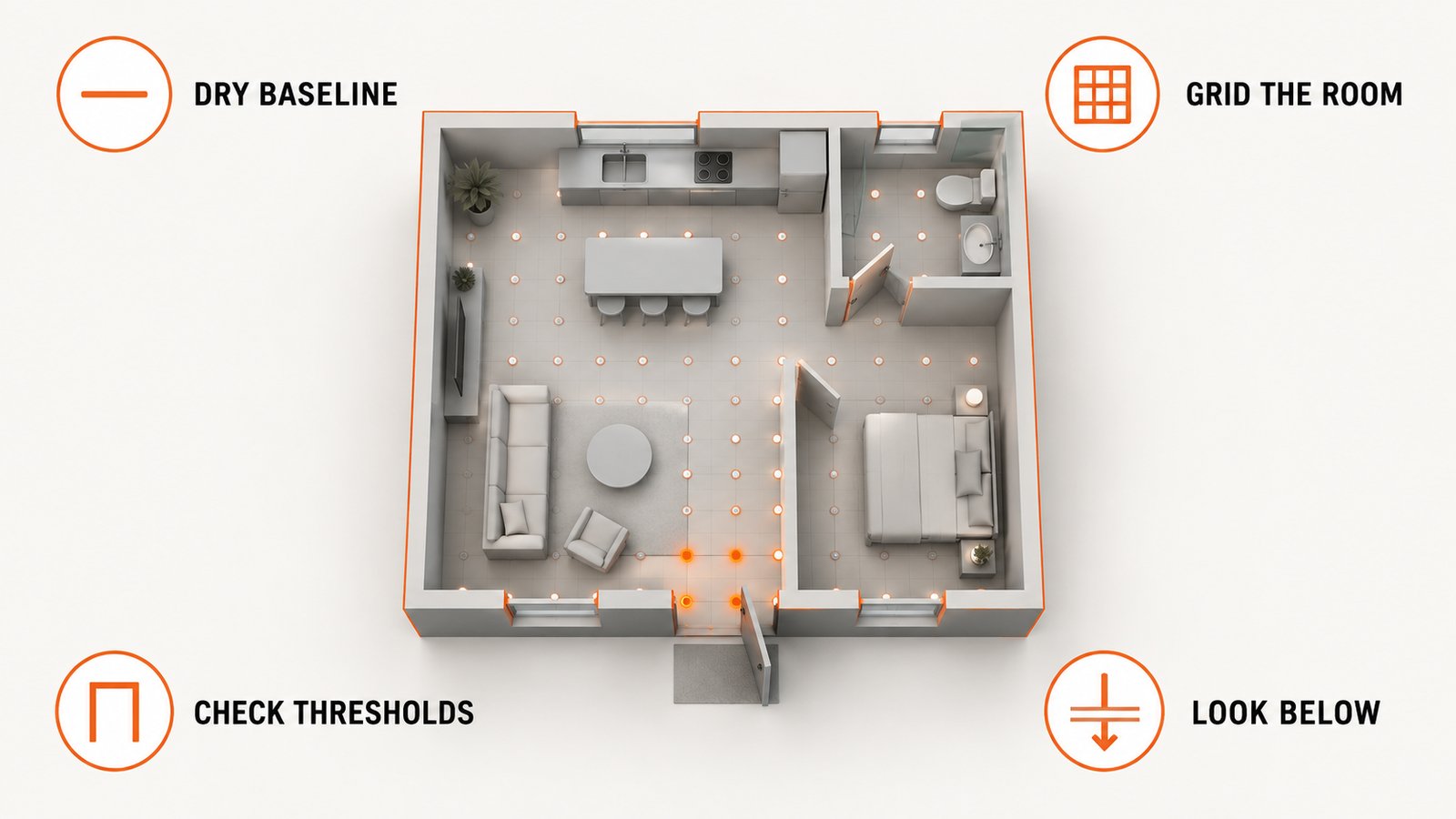
- Take a dry baseline reading. Use a moisture meter on flooring in a room that has never had a problem, ideally the same species and finish. Write the number down. Everything else is a comparison against it.
- Grid the suspect area. Read every 12 inches in both directions. Water spreads along the plank direction faster than across it, so an oval reading pattern usually points along the boards toward the source.
- Read the perimeter and the transitions. Along baseboards, at doorway thresholds, around floor registers, and at the tile-to-wood transitions where a bathroom meets a hallway. These are where water enters and where it collects.
- Read the room below, if there is one. The ceiling under a wet floor tells you the story from the other side, and the joists are usually visible in a basement.
- Look at an edge you can lift without damage. A floor register, a threshold strip, or the gap behind a removed baseboard shows you the subfloor without committing to a demolition.
- Read the same points again in three days. Falling numbers mean it is drying. Flat or rising means the source is still active, and that is what justifies opening the floor.
A pinless meter is the right tool for the sweep, because it reads to about three quarters of an inch below the surface without leaving a mark on a finished floor. A pin meter is what you use at an exposed edge where two small holes do not matter. Our moisture meter comparison covers both.
The EPA's caution about hidden mold applies before you start prying: investigating hidden mold problems may be difficult and requires caution, because disturbing a site of growth can release a large amount of spores at once. It gives the example of pulling wallpaper off a wall that is growing mold on the back of it. Lifting a plank over a colonized subfloor does exactly the same thing. If you believe you have a hidden mold problem, the agency's own advice is to consider hiring an experienced professional. Mold behind walls covers the equivalent problem in a vertical assembly.
What Cleans, and What Has to Come Out
Split the job into three questions: is the surface salvageable, is the plank salvageable, and is the subfloor salvageable. They have different answers.
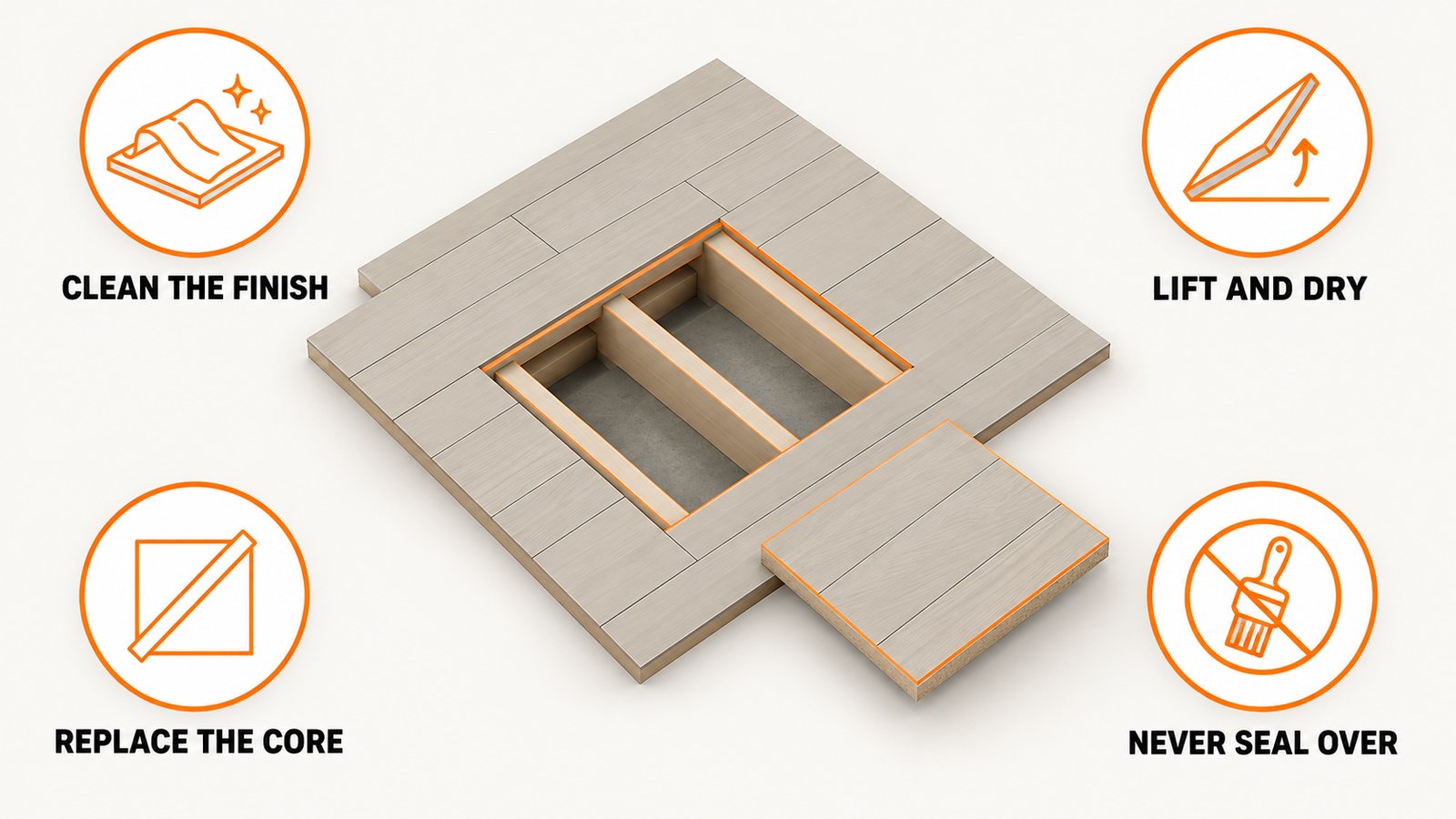
Surface growth on a sealed finish. This is the easy case and the least common one. The EPA's instruction is to scrub mold off hard surfaces with detergent and water and dry completely. A sealed hardwood finish qualifies. Do not soak the floor while you do it, because the water you add is the same water you are trying to remove. Wring the cloth out until it is barely damp, work in small sections, and dry each one before moving on.
Growth that has gone through the finish into the wood. Once the finish has failed and the raw wood is holding the growth, cleaning the top does not reach it. The plank has to come up so both faces and the subfloor can dry, or it has to be replaced. The EPA notes plainly that mold may cause staining and cosmetic damage and that it may not be possible to clean an item so its original appearance is restored. A dark stain that survives sanding is usually tannin reaction or deep growth, and both mean the board loses.
The subfloor. This is where the decision actually gets made. Plywood and oriented strand board are porous, and OSB in particular swells and loses strength when it stays wet. If a section reads wet after several days of drying, or if it is soft underfoot, it comes out. That is a saw-and-replace job, not a cleaning job.
Two more agency lines that change what people do:
- Do not refinish over it. The EPA says not to paint or caulk moldy surfaces, to clean up the mold and dry the surface first, and that paint applied over moldy surfaces is likely to peel. Polyurethane over a damp, colonized board fails the same way, and now the growth is sealed under a film.
- Bleach is not the default. The EPA states that using a chemical or biocide that kills organisms such as mold, chlorine bleach for example, is not recommended as a routine practice during mold cleanup, and that in most cases it is neither possible nor desirable to sterilize an area. Detergent, water, and thorough drying is the baseline. Vinegar is a reasonable alternative on wood because it soaks in rather than sitting on top.
Then dry the assembly and keep it dry. Fans moving air across the surface, a dehumidifier holding the room down, and the source repair done first. Mold on wood covers the material in more depth.
When to Call a Pro
Flooring problems cross the DIY line faster than wall problems do, because the affected area is usually much larger than it looks and the assembly is structural.
Hire a professional when:
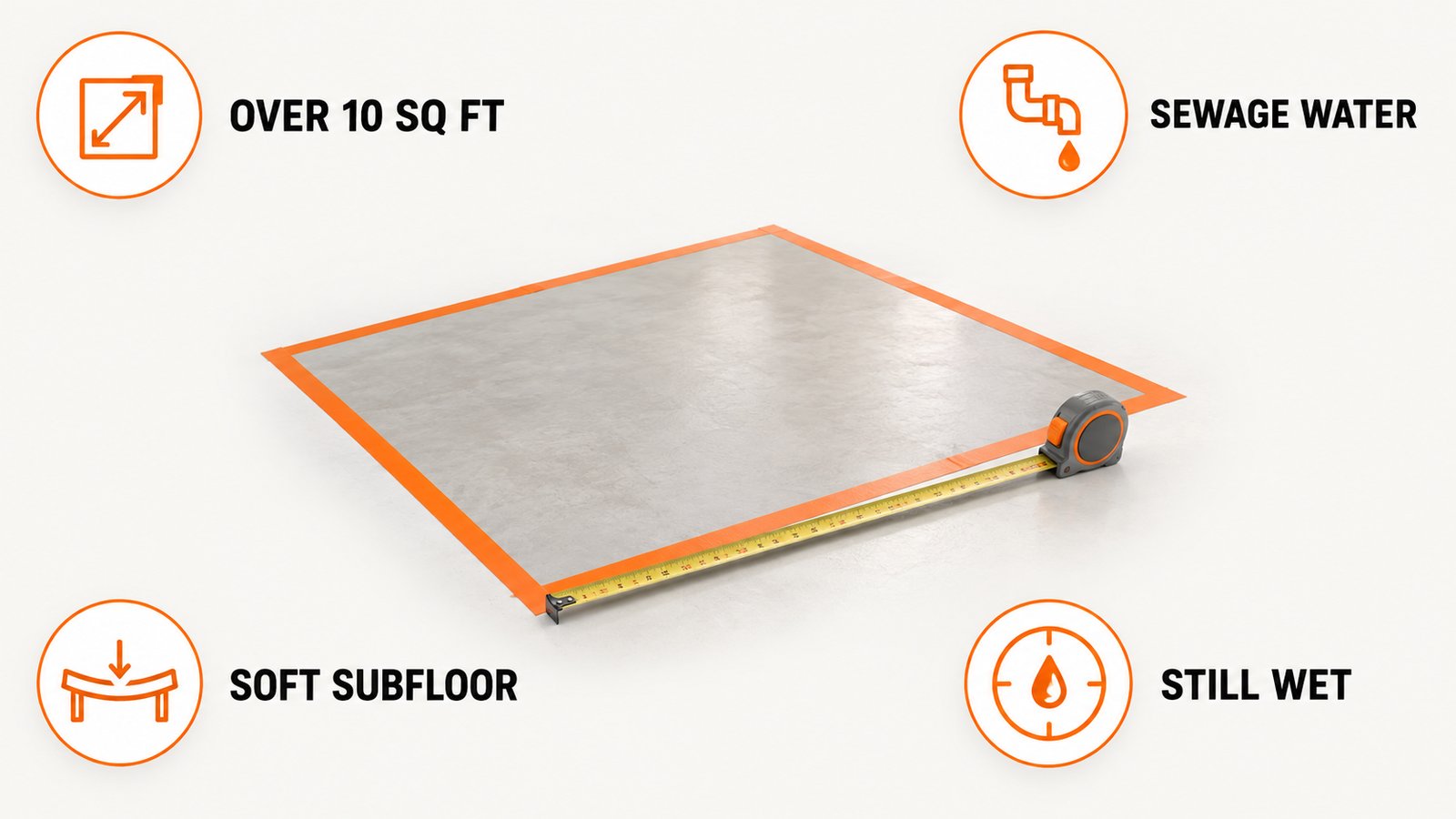
- The affected area is larger than about 10 square feet, roughly a 3 foot by 3 foot patch, which is the EPA's dividing line for handling cleanup yourself. On a floor, one wet doorway usually exceeds it.
- The water came from a sewage backup or floodwater. Contamination, not mold, sets that rule, and flooring absorbs the worst of it.
- You would have to lift a large area of covering to investigate. The EPA warns that disturbing a hidden growth site can release a large volume of spores and advises considering an experienced professional.
- The subfloor is soft or the joists are involved. That is structural repair, not remediation.
- Readings stay flat after several days of drying. Something is still feeding water into the assembly, and finding it under a floor usually needs a camera or a moisture map.
- Anyone in the home is immune-compromised or has chronic lung disease. The CDC notes people in those groups may get infections in their lungs from mold, which makes it a physician's question and a professional's job.
While you wait, keep the room ventilated, keep humidity down, and wear an N95 respirator, gloves, and goggles without ventilation holes near any disturbed growth, per EPA cleanup guidance. This page covers cleaning, drying, and protective equipment only, and gives no medical advice.
One process note worth the money: keep the inspection and the repair in separate hands where you can. A contractor who both diagnoses and sells the replacement has an obvious reason to find more of it. Mold inspection covers what an independent visit includes, and mold remediation covers the cleanup standard.
Frequently asked questions
How do I know if there is mold under my hardwood floors?
Look at the shape of the boards before you look for growth. Cupping, where the edges sit higher than the center, means the underside is wetter than the top, which means water from below. Add dark staining along seams, soft or springy spots, and a musty smell. The EPA states you may suspect hidden mold if a building smells moldy but you cannot see the source, or if you know there has been water damage.
Can mold on hardwood floors be cleaned, or does the wood have to come out?
It depends how deep it went. Surface growth on an intact sealed finish is a hard surface, and the EPA's instruction for hard surfaces is to scrub with detergent and water and dry completely. Once the finish has failed and the raw wood is holding growth, cleaning the top does not reach it, and the board has to come up to dry both faces or be replaced.
Why does mold grow under vinyl plank flooring?
Because the same waterproof layer that keeps spills out keeps moisture in. If water reaches the subfloor from a slab, a pipe, or a poorly sealed perimeter, the vinyl traps it, and the subfloor can stay wet for months with nothing visible on the surface. Waterproof flooring protects the covering, not the assembly underneath it.
Should I use bleach on mold on a wood floor?
It is not the default. The EPA states that using a chemical or biocide that kills organisms such as mold, chlorine bleach for example, is not recommended as a routine practice during mold cleanup, and that in most cases it is neither possible nor desirable to sterilize an area. Detergent, water, and thorough drying is the baseline, and bleach can also damage a wood finish.
Can I sand and refinish over mold on a hardwood floor?
Not before the growth is gone and the wood is dry. The EPA says not to paint or caulk moldy surfaces, to clean up the mold and dry the surface first, and notes that paint applied over moldy surfaces is likely to peel. A polyurethane coat over damp, colonized wood fails the same way and seals the problem underneath.
What is the difference between cupping and crowning?
Cupping is edges higher than the center, and it means the underside of the board is wetter than the top, so the water is coming from below. Crowning is the center higher than the edges, and it usually means a floor that cupped, was sanded flat while still wet, and then dried. Both are moisture readings you can take with your eyes.
How large a flooring mold problem can I handle myself?
The EPA sets the line at about 10 square feet, roughly a 3 foot by 3 foot patch. Flooring crosses that quickly, because one wet doorway or one failed supply line usually affects more area than it appears to. Above that line, after extensive water damage, or when sewage or floodwater is involved, the agency points you to professional guidance.
Sources
Every claim on this page traces to one of these. Links open the primary document.