Is mold in compost normal?
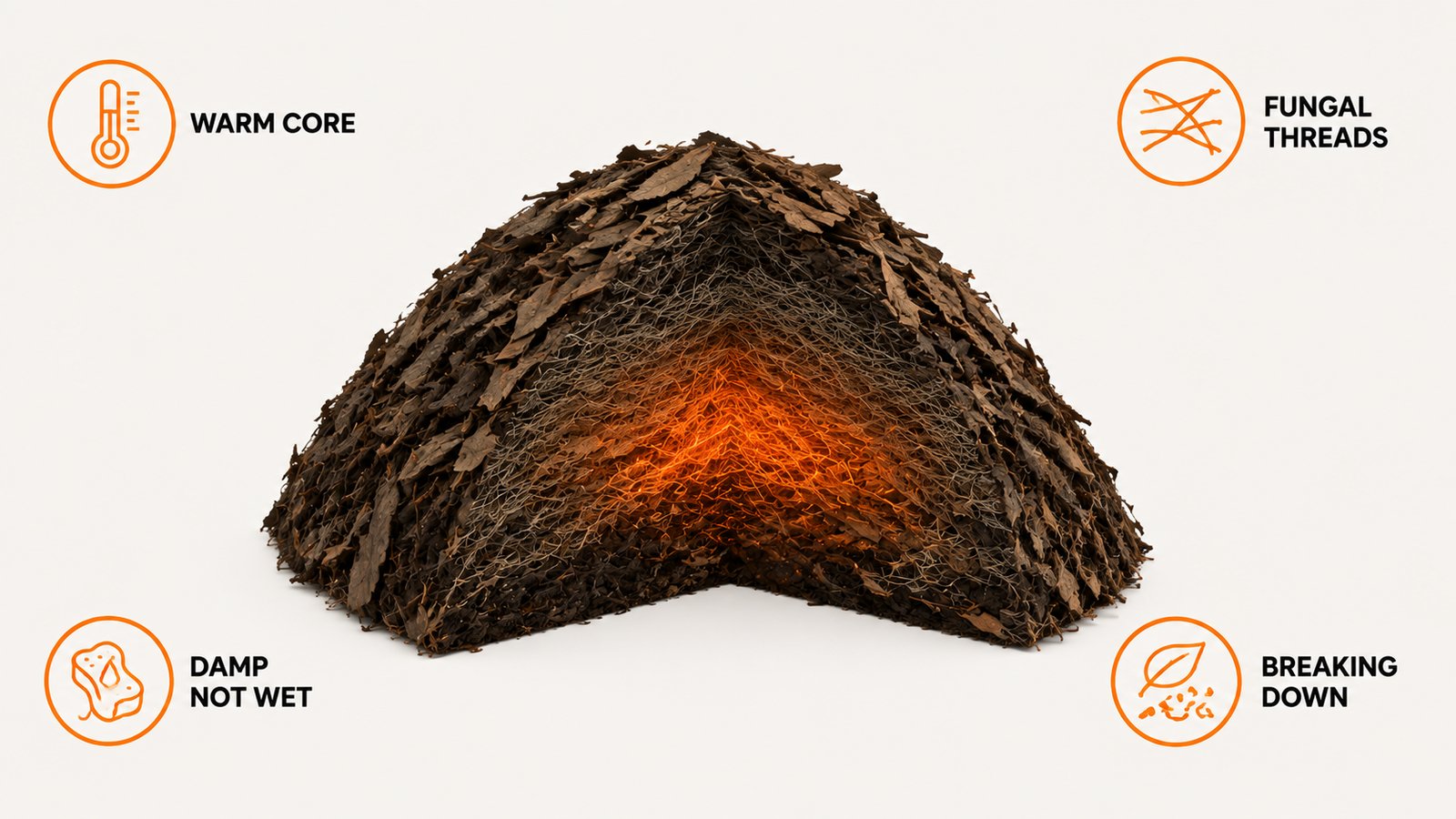
Yes, and a pile without it is a pile that is not working. Composting is decomposition, and decomposition of woody, leafy material is largely a fungal job. USDA notes that outdoors, molds can be found in shady, damp areas or places where leaves or other vegetation are decomposing. That is a description of a compost bin.
What the fungi are doing is what makes the material break down. The Canadian Conservation Institute describes the vegetative hyphae of a fungus as searching for nutrients and digesting the substrate. In a museum that is damage. In a compost bin it is the product.
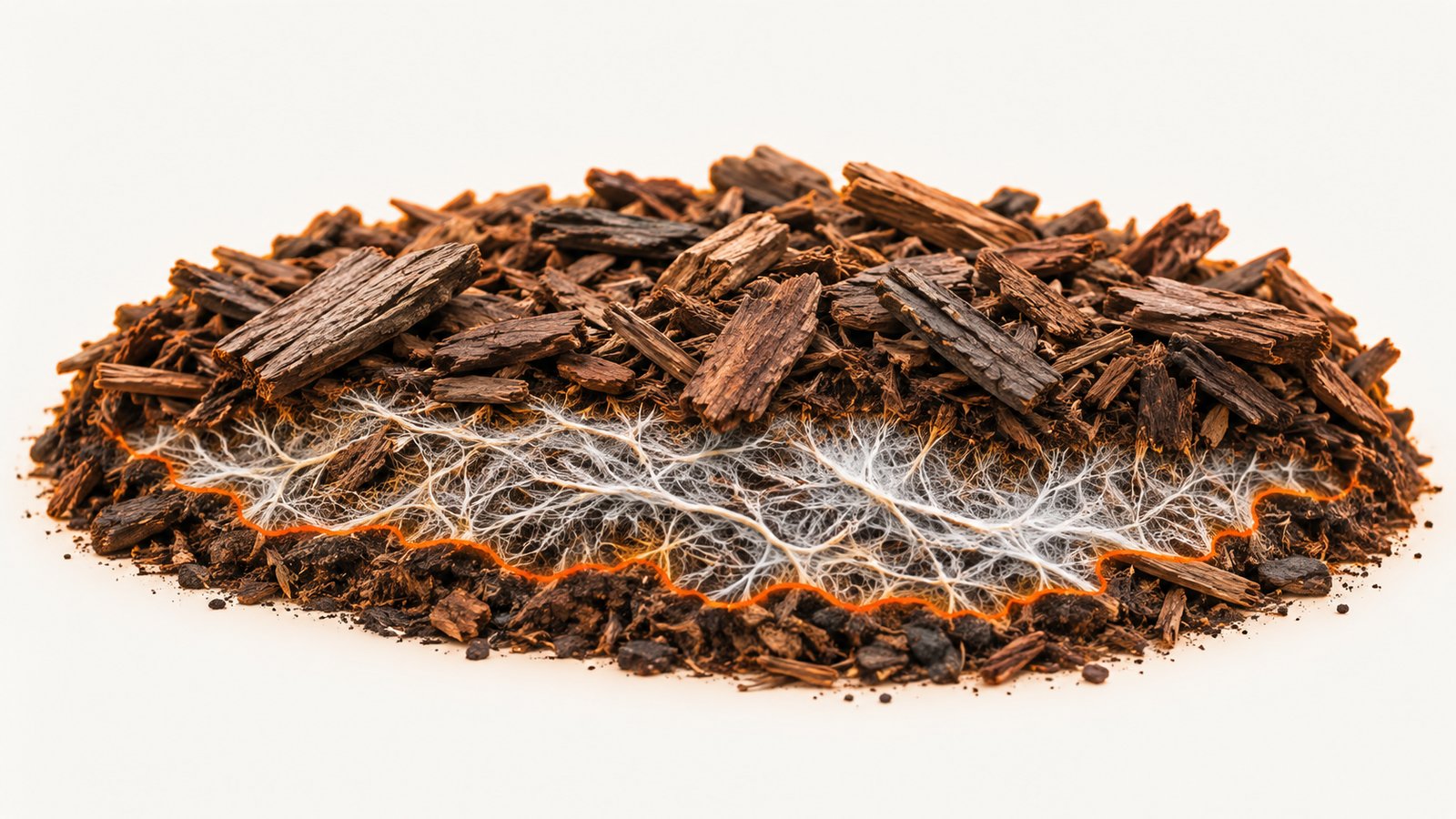
So a white thread mat through a layer of leaves, a warm core, and a woodland smell are all signs of a healthy pile rather than a fault. EPA notes that a well maintained backyard pile can reach temperatures of 130 to 160 degrees Fahrenheit, and that heat is generated by the organisms doing the work.
The picture changes in three situations. Growth can signal a pile too wet or too dense to work. It can be a nuisance organism that stains a wall. And it can mean a mulch bed is holding water against a building, which is the one that costs money. The indoor version is on mold on concrete and mold in a crawl space.
What the white stuff in mulch and compost is
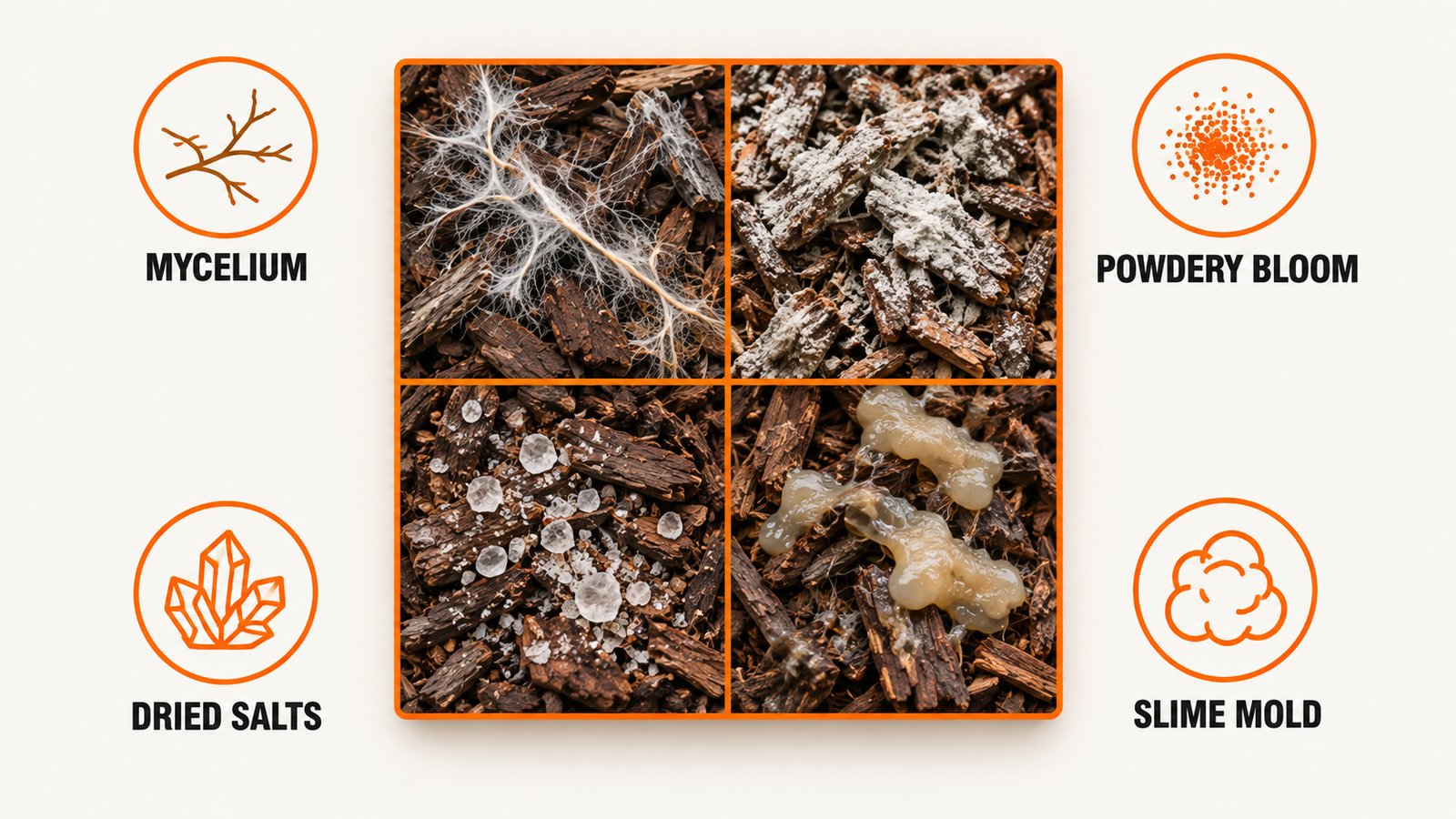
The white layer that alarms people is the most ordinary thing in the bin. Four pale things turn up.
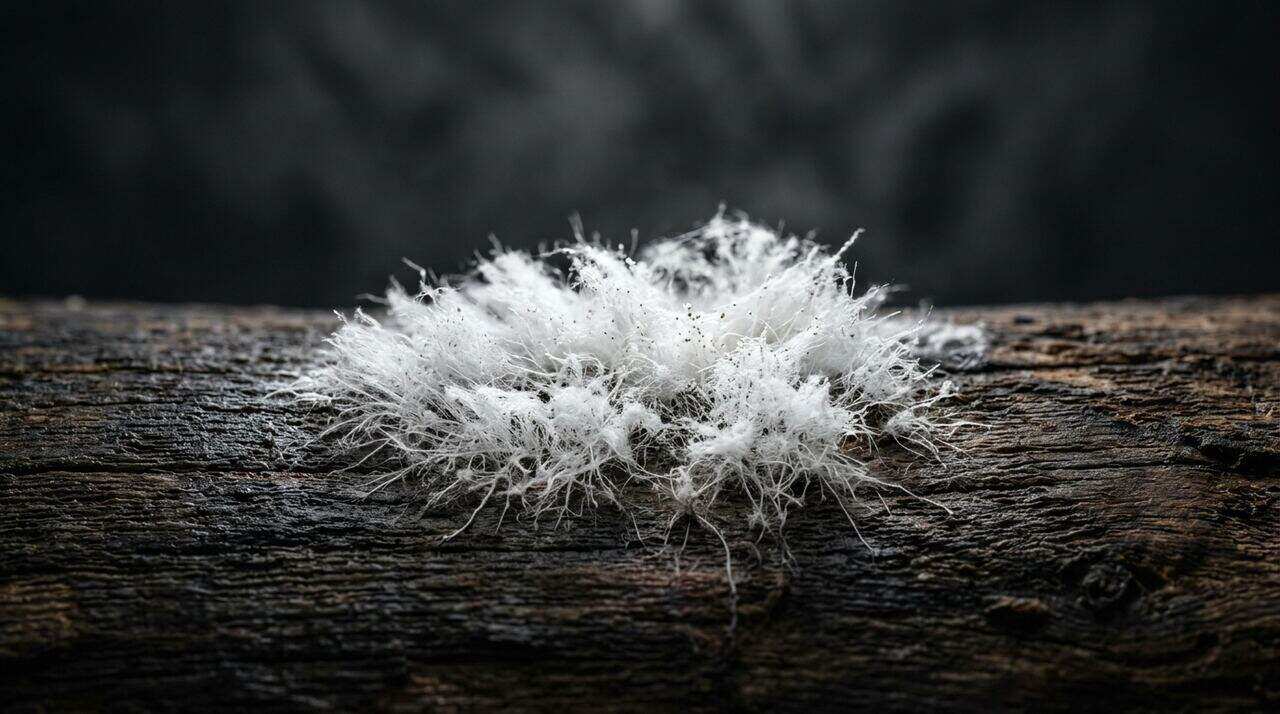
- Fungal mycelium. Fine white or cream threads that web the material together and pull apart like cotton. This is the body of a fungus running through the pile, and it is the sign of active decomposition. The indoor look-alike is covered on white mold.
- A dusty gray-white bloom that puffs when disturbed and smells strongly earthy. Usually actinomycetes, the filamentous bacteria that give soil and fresh compost their characteristic smell. Also normal.
- A crusty white deposit on a container or on dry bark, which is mineral salt left as water evaporates. Not alive at all.
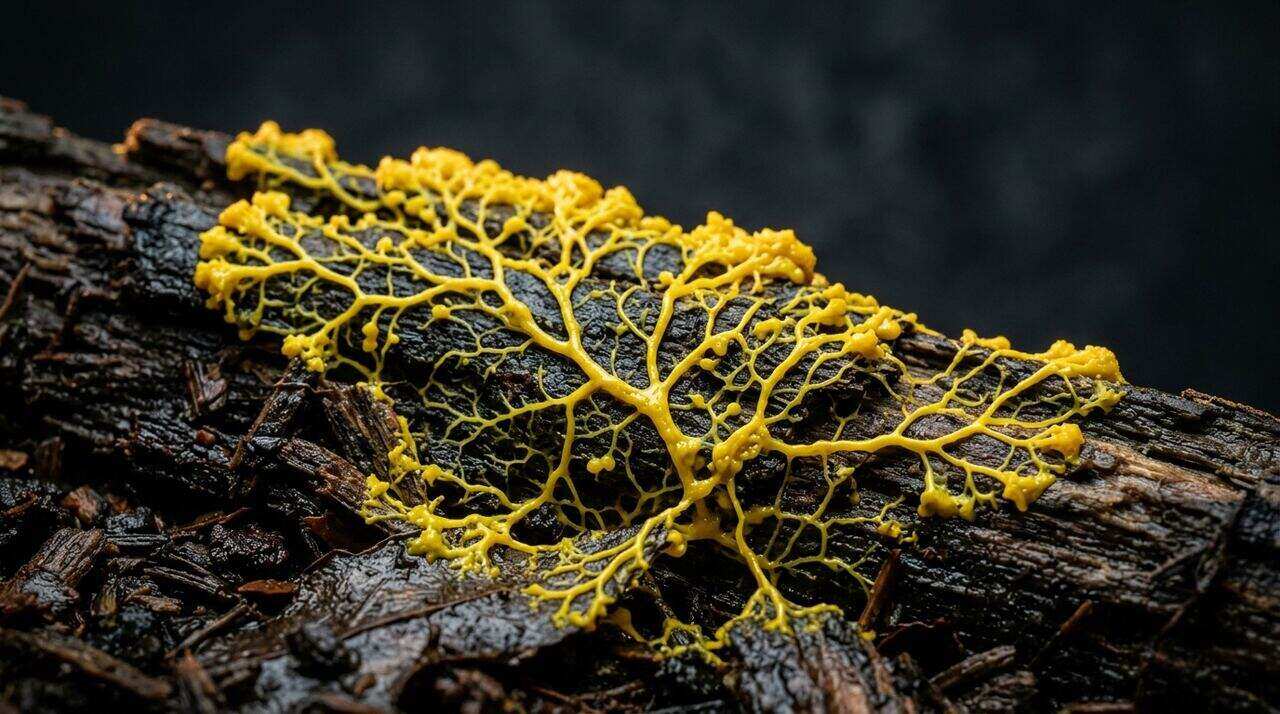
- Something bright and lumpy. This is not white and it is not a mold in the usual sense. See the next section.
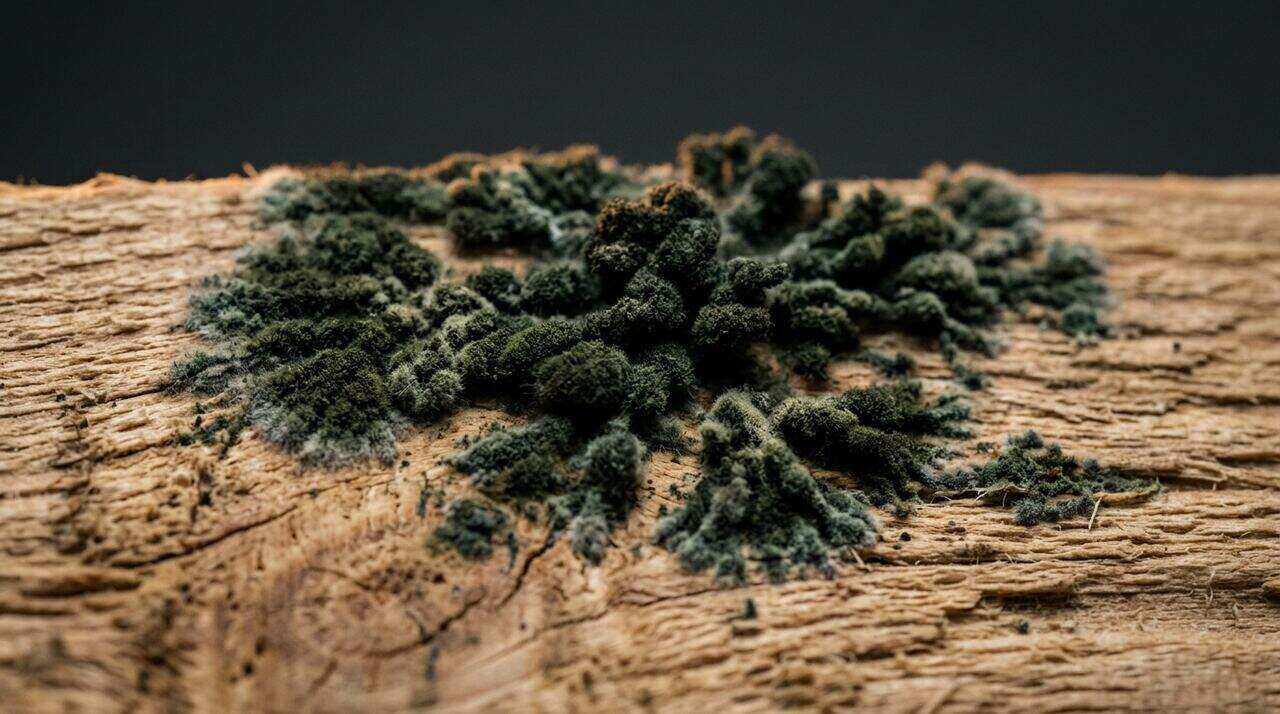
None of these needs identifying to a species, and you cannot do it by eye anyway. CDC's guidance for indoor growth is that you do not need to know the type of mold and that all molds should be treated the same with respect to potential health risks and removal. The reasons color is a weak identifier are on types of mold, and the colors people report most are on yellow mold and orange mold.
The one real problem signal is a slimy, sour, ammonia-smelling mass rather than a threaded, earthy one. That is anaerobic breakdown from a pile too wet and too tightly packed, and the fix is mechanical rather than chemical.
The four things people find growing in mulch
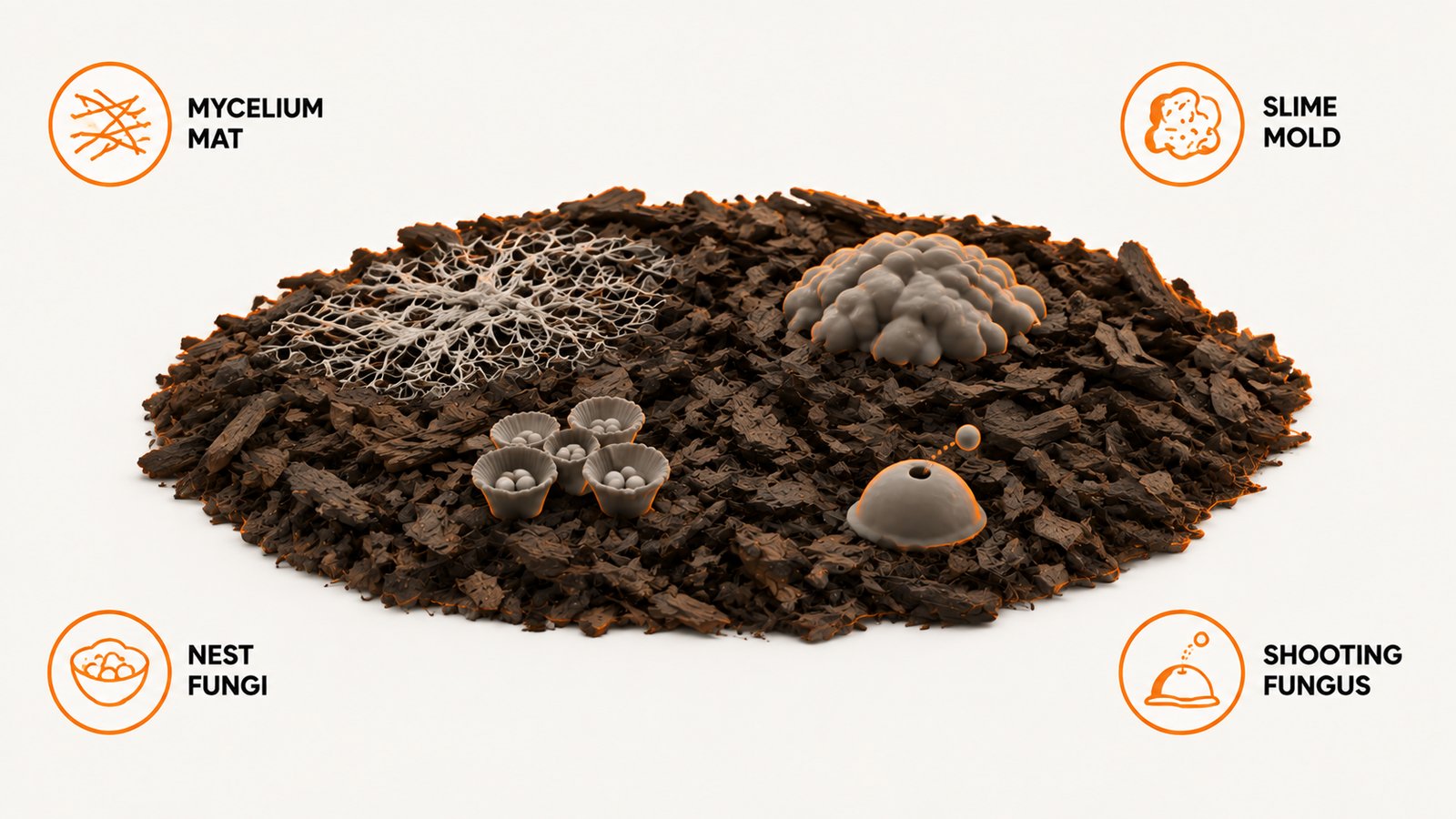
Garden mulch supports a small cast of organisms that show up again and again, and only one of them causes damage you will have to pay for.
| What you see | What it is | What to do |
|---|---|---|
| White threaded mat under the top layer | Fungal mycelium breaking the wood down | Nothing. Rake it in if the look bothers you |
| A bright yellow foamy mass, often overnight | A slime mold. Fuligo septica is the common one, colloquially called dog vomit fungus, and published work describes it forming vibrant yellow fruiting bodies on wood chips during warm and humid conditions in spring | Scoop it out or break it up and let it dry. It is not attacking the plants |
| Tiny cups holding small discs | Bird's nest fungi, wood decomposers with an unusual splash-dispersal shape | Nothing. A curiosity rather than a problem |
| Tar-like black specks stuck hard to siding or a parked car | Artillery fungus. The genus Sphaerobolus, named in the literature for its unusual spore-dispersal mechanism that fires a sticky spore mass away from the fruiting body | This one matters. See the section on mulch against the house |
Three of those four are cosmetic. The fourth is why it matters where mulch sits, because the specks it throws bond to paint and usually will not come off without taking the finish with them.
When growth means the pile is set up wrong
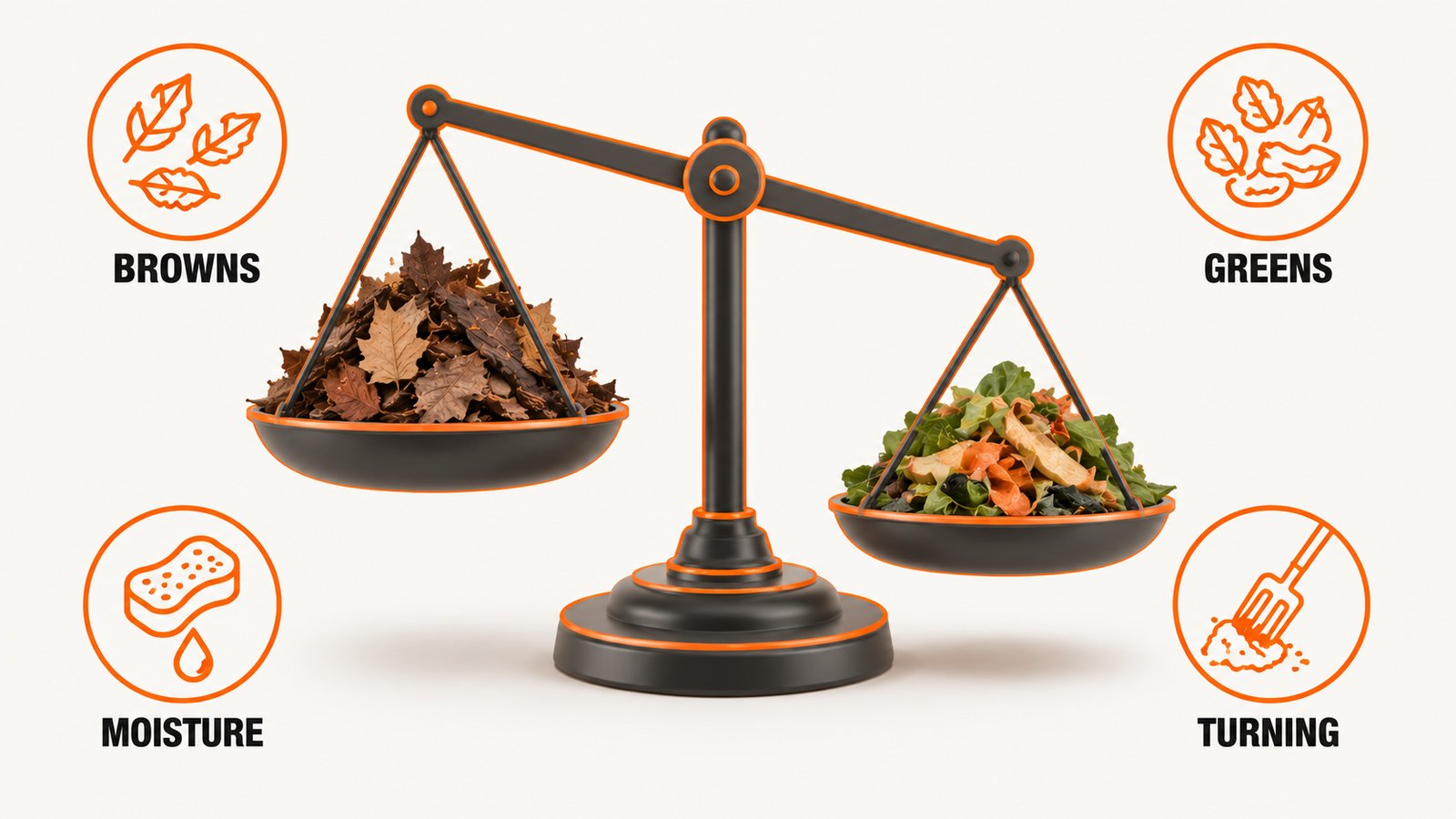
A pile that has gone slimy, sour, or cold is telling you something about its inputs. EPA's home composting guidance gives the settings.
Ratio. EPA advises adding at least two to three times the volume of browns, such as dry leaves, to the volume of greens, such as food scraps. Piles that go slimy are usually green-heavy, which means wet and nitrogen-rich with nothing dry and carbon-rich to open the structure.
Moisture. EPA's test is that the combined materials should have the consistency of a wrung-out sponge. Wetter than that and air cannot move through the pile, which is what produces the sour, ammonia smell instead of an earthy one.
Turning. EPA notes that turning and mixing the pile from time to time helps speed up decomposition. Turning is also what breaks up a matted layer and re-introduces air.
Temperature. A well maintained backyard pile can reach 130 to 160 degrees Fahrenheit. A cold pile is not necessarily broken, it is just slow, and it usually means the pile is too small, too dry, or too compacted.
What goes in. EPA's exclusion list for a backyard pile includes meat, fish and bones, cheese and dairy, fats, oils and grease, large amounts of cooked food, herbicide-treated plants and grass, aggressive weeds, diseased and pest-infested plants, and pet waste and cat litter.
Fix those five and the growth changes character on its own. You are not trying to sterilize a pile, you are trying to keep it aerobic. The same water-and-growth relationship applies indoors, where EPA's line is that the way to control indoor mold growth is to control moisture, covered on how to prevent mold.
Safety when turning a compost pile
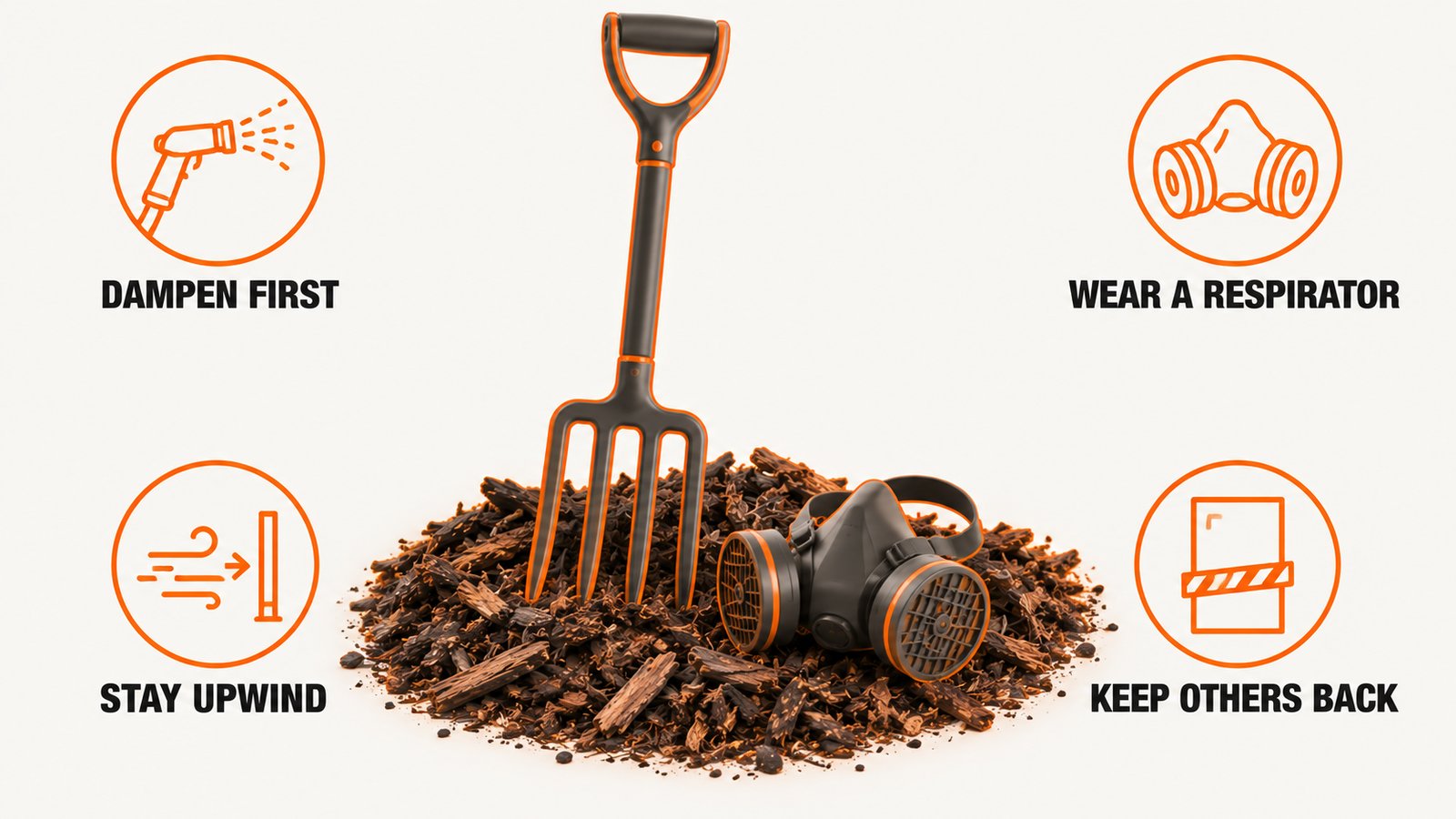
Turning a pile or spreading a fresh load of mulch puts a lot of fungal material into the air at once, and this is the part of the topic where a real precaution exists.
The evidence comes from the occupational side rather than the garden. A study in Occupational Medicine described two cases of allergic bronchopulmonary aspergillosis in a team of 28 garden waste compost collectors, and noted that a few cases of extrinsic allergic alveolitis due to Aspergillus fumigatus had previously been reported in compost workers. The authors recommended screening new starters in that job for asthma and Aspergillus sensitivity, cystic fibrosis, bronchiectasis, and immunodeficiency when high exposure could not be avoided.
That is industrial-scale daily exposure, not a weekend gardener turning a bin. It is quoted here because it is the published basis for the standard advice rather than a scare. What that advice comes down to:
- Dampen the surface before you disturb it. A light spray with a hose keeps material out of the air. This is the same principle as wetting a surface before scrubbing indoors.
- Wear a respirator. EPA lists gloves, goggles, and an N-95 respirator for mold cleanup, and the same gear is sensible for a dusty pile.
- Stand upwind and work outdoors. Free advice that works.
- Keep vulnerable people away from the work. CDC's prevention advice for people with weakened immune systems is to avoid activities involving close contact with soil or dust, to avoid dusty areas and wear an N95 respirator where they cannot be avoided, and to wear shoes, long pants and long sleeves for outdoor activities. CDC adds that although these actions are recommended, they have not been proven to prevent aspergillosis.
None of this is a diagnosis or a prediction about any individual. What agencies report about damp environments is on mold exposure symptoms, and the specific fungal lung conditions they name are on mold in lungs. If someone has ongoing symptoms, that is a conversation with a licensed clinician.
Mulch against the house is the real risk
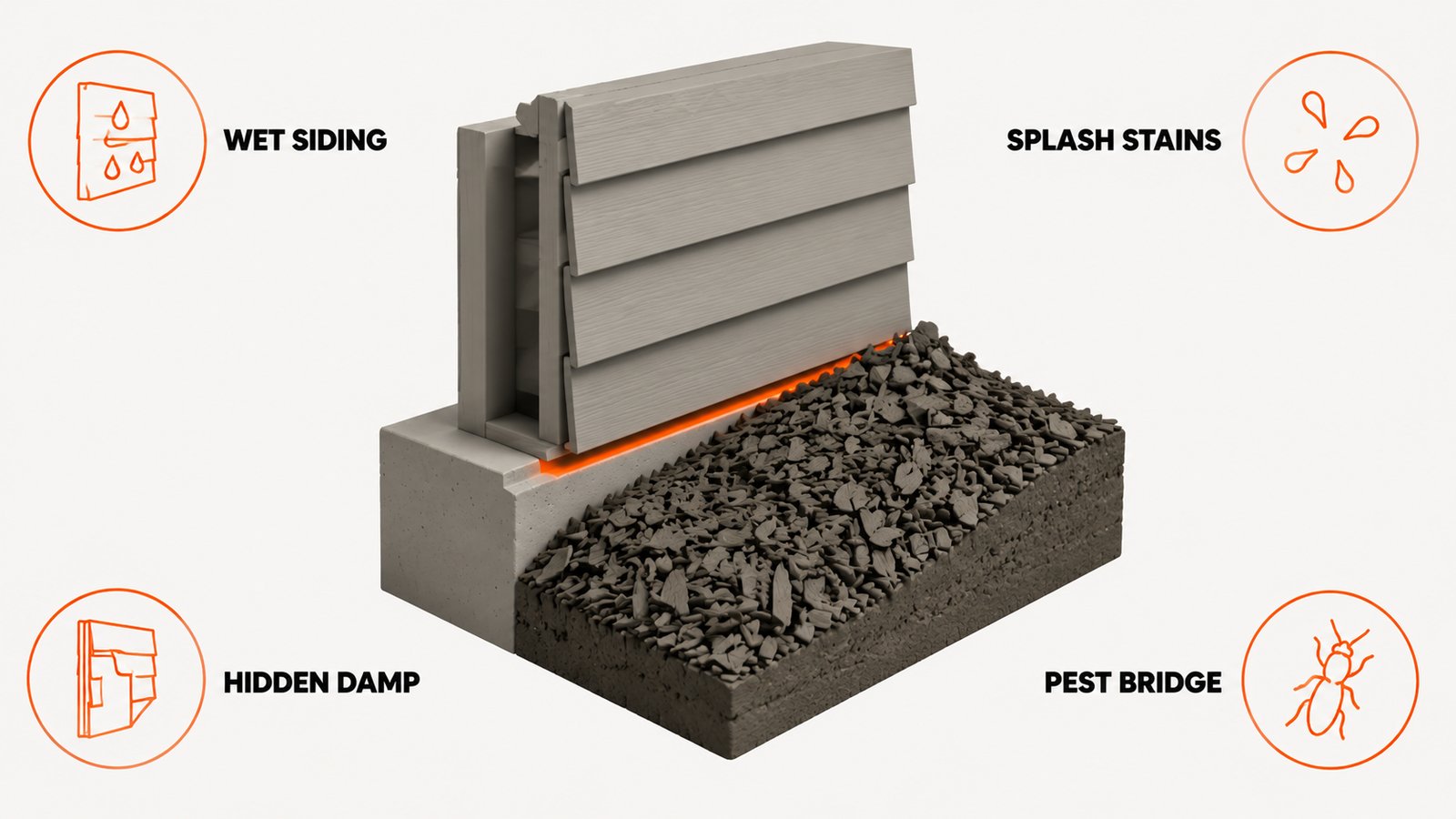
Here is the part that is worth real money, and it has almost nothing to do with what is growing in the bin.
Mulch heaped against siding holds water against the wall. Organic mulch is designed to retain moisture at the root zone, which is the property you least want in contact with a building. A bed piled over the foundation line keeps the bottom courses of siding damp through every wet season.
Four things follow from it:
- Wet siding and trim. Wood or fiber-cement in permanent contact with damp mulch will fail at the bottom edge first. The interior version is on mold on wood.
- Artillery fungus staining. The sticky spore masses land on siding and cars parked nearby and set hard. Removal usually damages the finish, which makes prevention the only real answer.
- Concealed damp. Moisture wicking into a sill plate or a foundation wall shows up indoors long before anybody looks at the flower bed. See mold behind walls and mold in a basement.
- A bridge for pests. Damp mulch touching wood is a route into the structure for insects, which is a separate problem with the same cause.
The fixes are simple. Pull mulch back from the siding so the foundation line is visible and air reaches the wall. Keep the layer shallow, because a thick bed stays saturated and mats. Rake the surface to break up the crust. Where artillery fungus has been a problem, a non-organic surface such as stone next to a painted wall removes the substrate entirely. Growth on the wall itself is on mold on walls.
When to call a professional
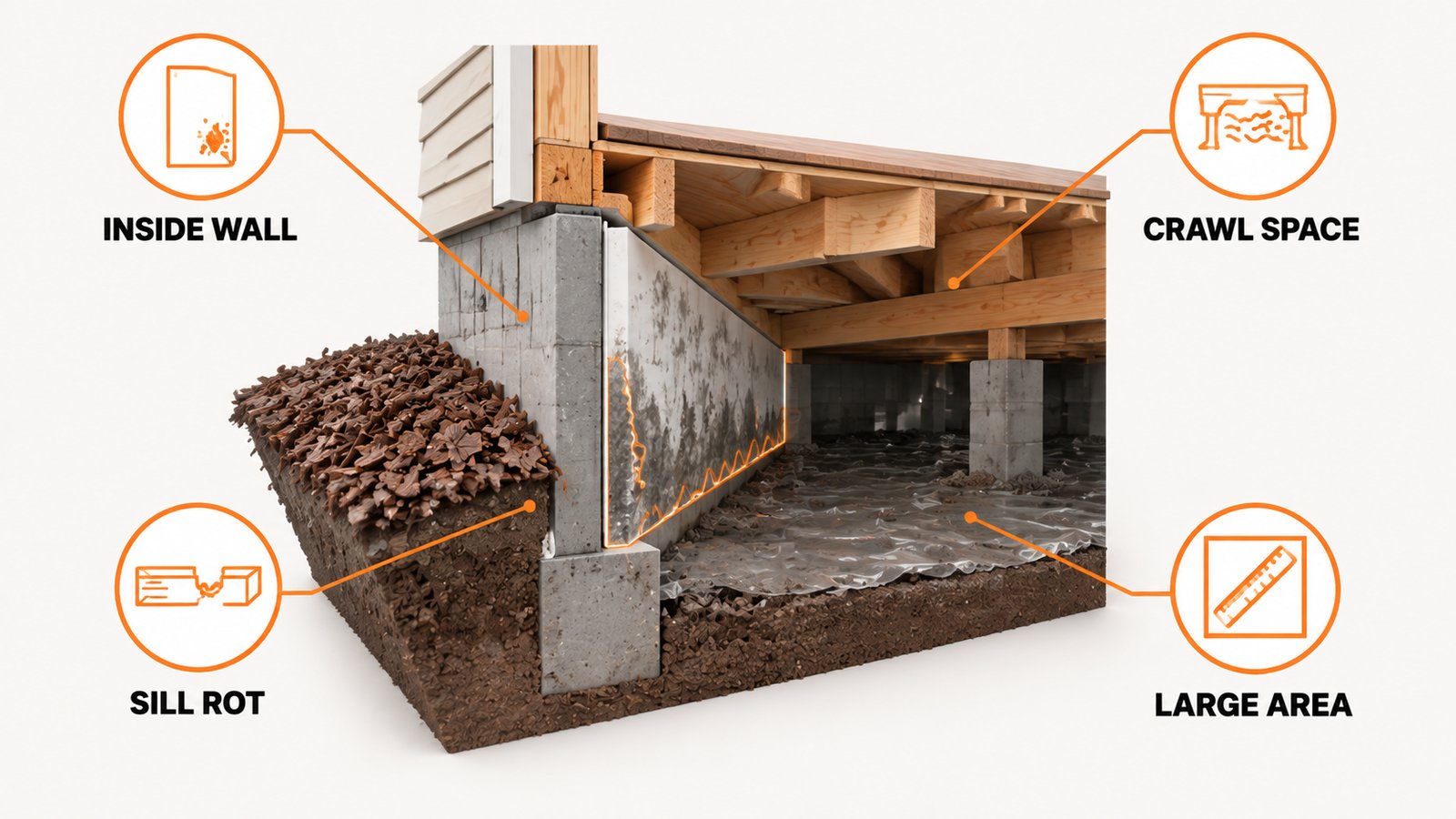
A compost pile is never a remediation job. The building it sits next to can be. Call a qualified professional when the garden problem has crossed into the structure:
- Visible growth on an interior wall, a floor, or a ceiling on the side of the house where the mulch bed sits, especially at the bottom of the wall.
- A musty smell in a crawl space or a basement that appears in the wet season. See why a house smells musty.
- Soft, spongy, or discolored wood at the sill plate or the bottom of the siding. That is decay, and it is a repair before it is a cleaning job.
- Any affected area larger than about 10 square feet. EPA's guide is that below roughly a three-foot by three-foot patch is usually a do-it-yourself job, and above it points to professional remediation guidance.
- Water that reached the inside. EPA advises drying water-damaged areas and items within 24 to 48 hours to prevent growth, and anything wet past that window is already a repair.
You usually want two trades. A drainage contractor fixes the grade, the bed depth, and where water goes. A remediator handles what is already growing indoors. Doing the second without the first guarantees a repeat.
Look for firms that follow the ANSI and IICRC S520 standard, and get a written scope covering the moisture repair, removal, drying, and verification before anyone starts. Pricing is on mold remediation cost, and the general cleanup order is on how to get rid of mold.
Frequently asked questions
Is white mold in compost a problem?
No. Fine white or cream threads that web the material together are fungal mycelium, the body of a fungus running through the pile, and they are the sign of active decomposition. A dusty gray-white bloom with a strong earthy smell is usually actinomycetes, filamentous bacteria that give fresh compost its characteristic smell. Both are normal in a working pile.
What is the yellow foamy blob in my mulch?
Almost certainly a slime mold. Fuligo septica is the common one, colloquially called dog vomit fungus, and published work describes it forming vibrant yellow fruiting bodies on wood chips during warm and humid conditions in spring. It appears overnight, it is not attacking the plants, and scooping it out or breaking it up so it dries is enough.
What is the black tar that will not come off my siding?
That is usually artillery fungus, the genus Sphaerobolus, which is known in the literature for an unusual spore-dispersal mechanism that fires a sticky spore mass away from the fruiting body. The specks bond hard to painted surfaces and to cars parked nearby, and removal often damages the finish, which makes keeping mulch away from painted walls the only reliable answer.
Why does my compost smell sour instead of earthy?
The pile is too wet and too dense for air to move through it. EPA's moisture test is that the combined materials should have the consistency of a wrung-out sponge, and its ratio guidance is at least two to three times the volume of browns, such as dry leaves, to the volume of greens, such as food scraps. Add browns, turn the pile, and the smell changes within days.
Should you wear a mask when turning compost?
It is a sensible precaution, and the reason is occupational rather than domestic. A study in Occupational Medicine reported two cases of allergic bronchopulmonary aspergillosis among a team of 28 garden waste compost collectors, alongside earlier reports of extrinsic allergic alveolitis in compost workers. EPA lists gloves, goggles, and an N-95 respirator for mold cleanup, and dampening the surface first keeps material out of the air.
How far should mulch be kept from the house?
Far enough that the foundation line stays visible and air can reach the bottom of the wall. Organic mulch is designed to hold moisture at the root zone, which is the last property you want in contact with siding, and a bed piled over the foundation keeps the bottom courses damp through every wet season. Keep the layer shallow rather than deep, since a thick bed stays saturated and mats.
Does compost need to be sterilized if it has mold in it?
No, and doing so would defeat the purpose. Fungi are the workforce that breaks the material down, and the Canadian Conservation Institute describes fungal hyphae as searching for nutrients and digesting the substrate, which in a compost bin is the product rather than the damage. The goal is to keep the pile aerobic, not sterile.
Sources
Every claim on this page traces to one of these. Links open the primary document.