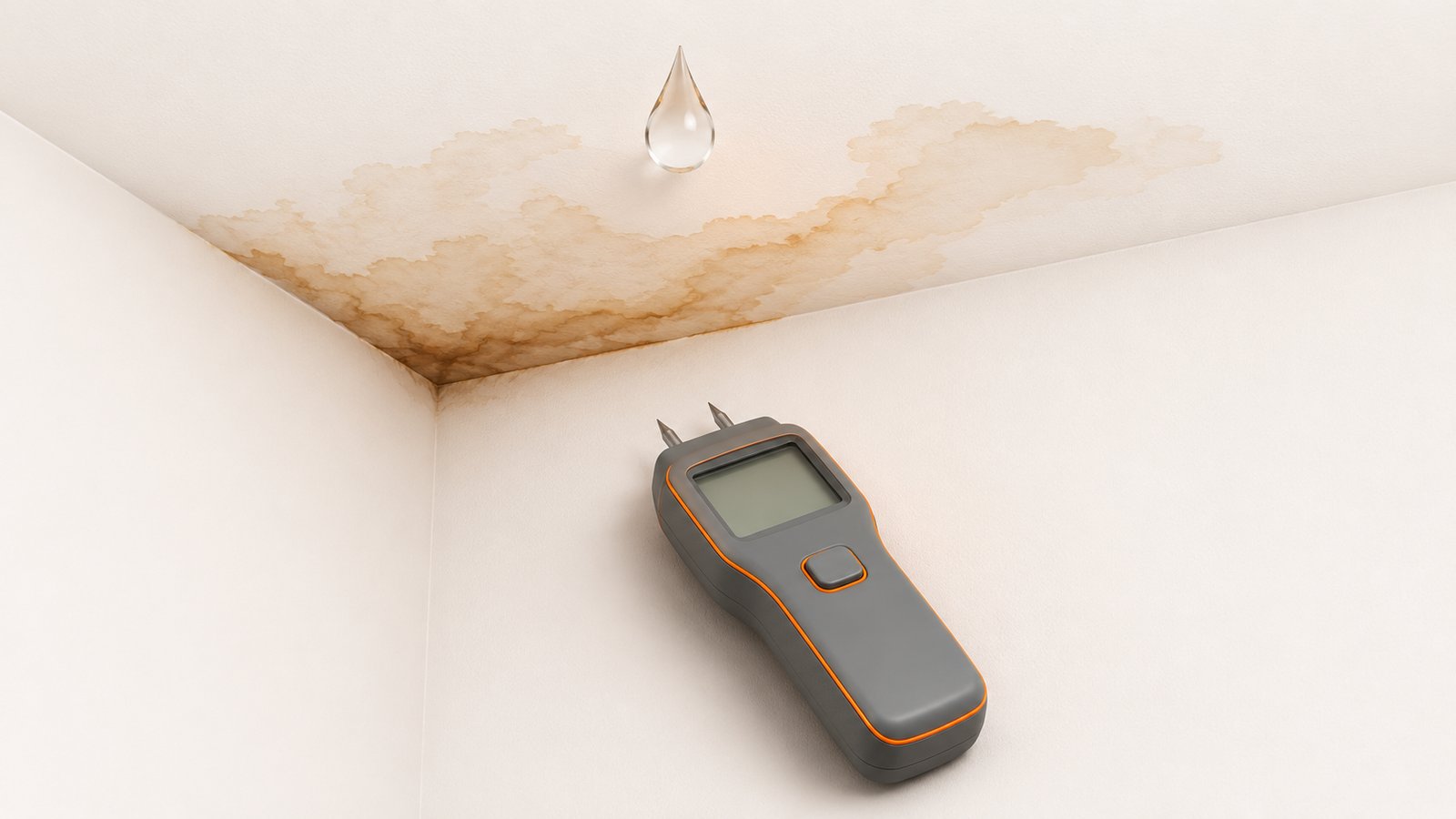
Brown Spots on Ceiling: What They Usually Point To
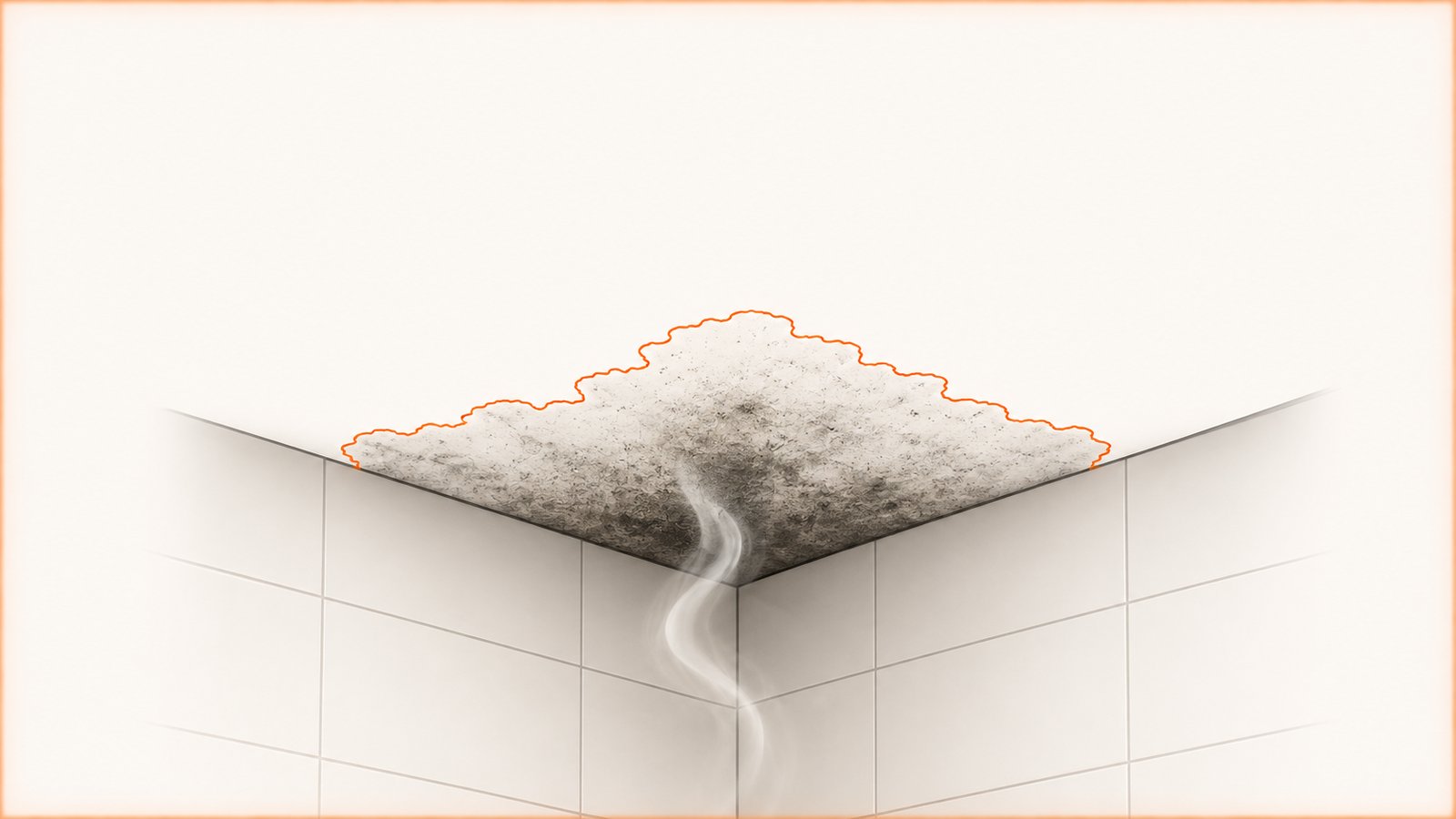
A brown spot on a ceiling is a sign that something went wrong with water, a growth problem, or both.
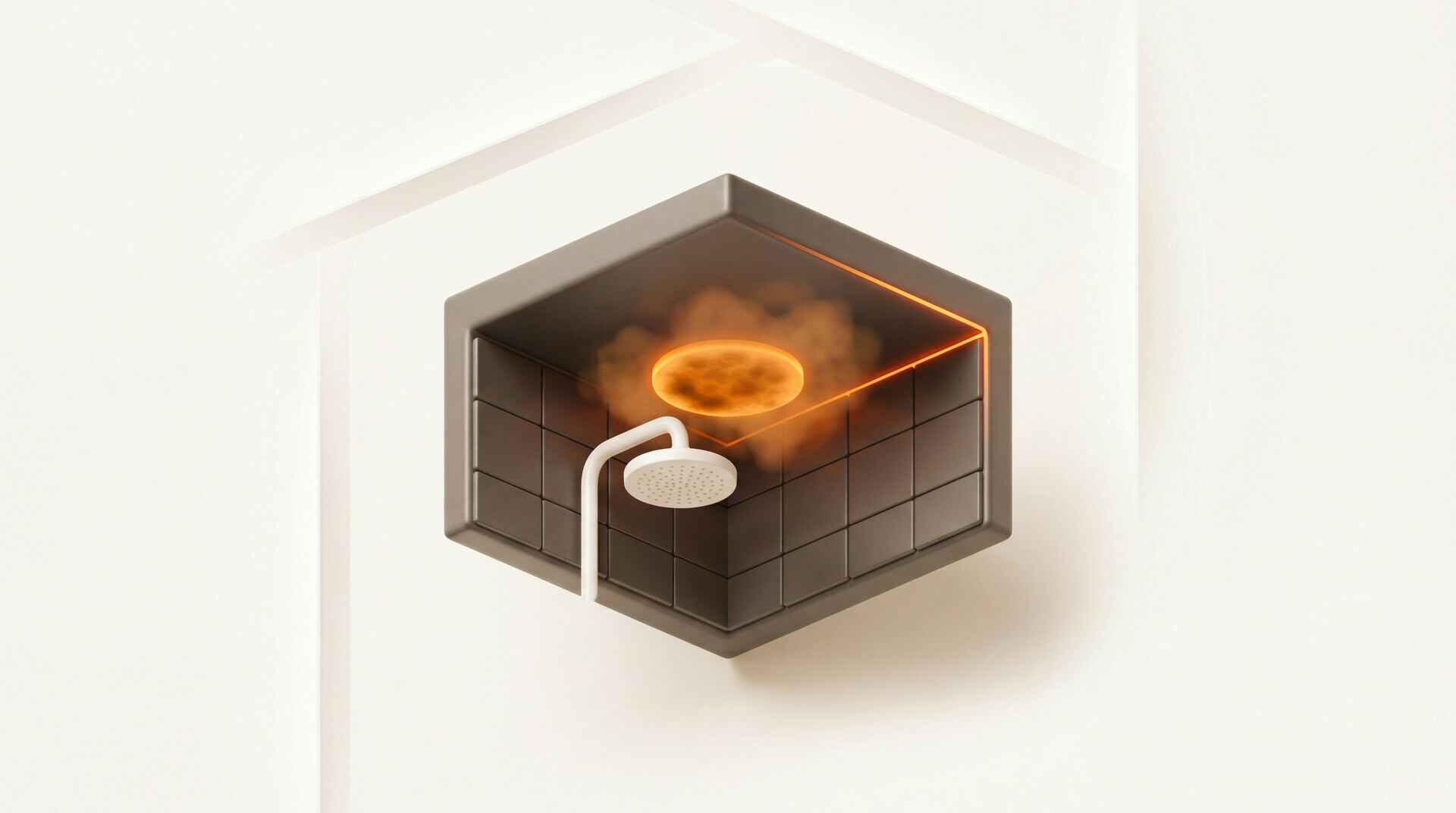
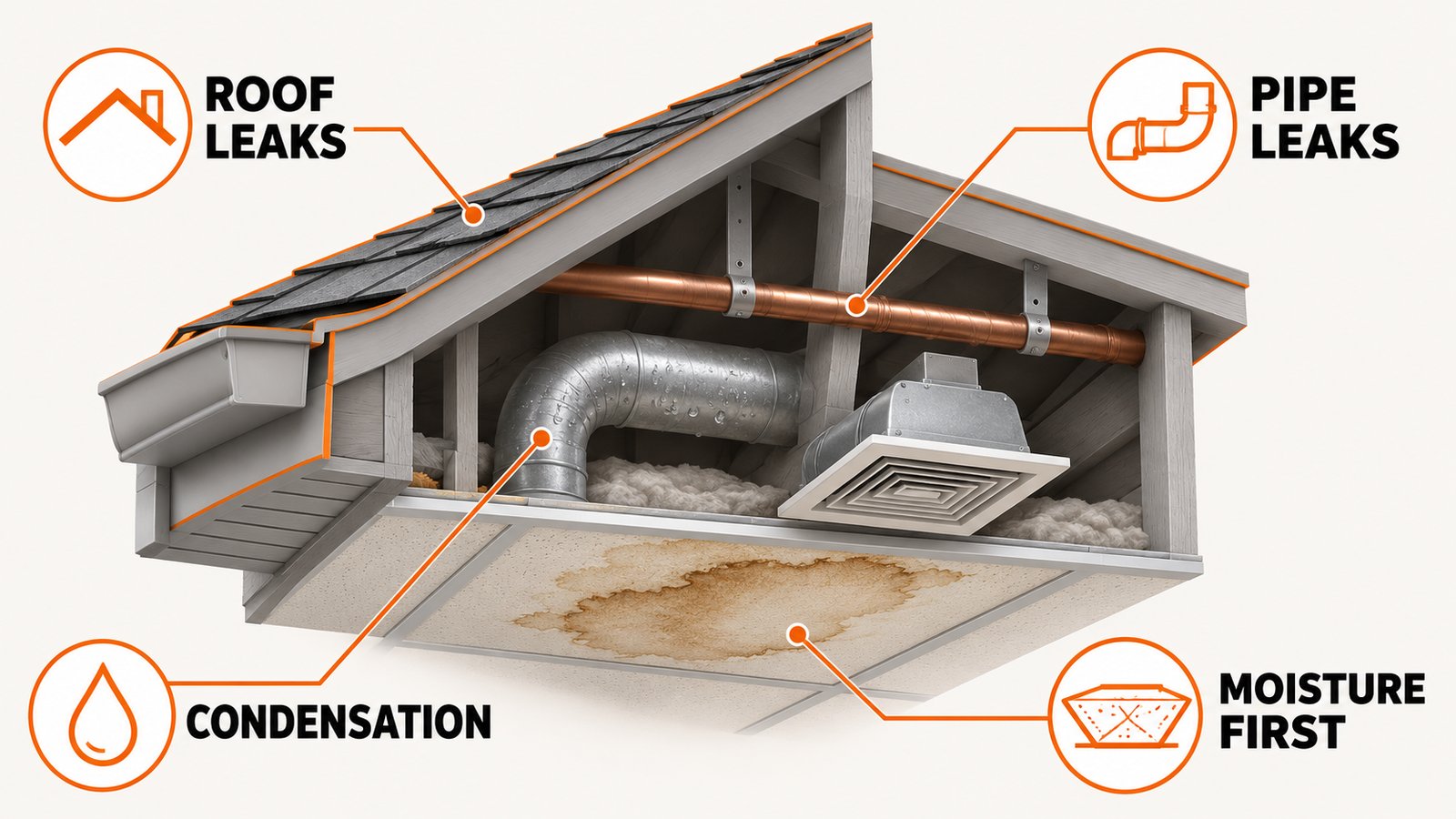
The EPA mold course says mold needs two things to grow indoors, moisture and food, and that moisture is the most important factor. It names the usual sources: roof leaks, condensation from high humidity or cold spots, and slow leaks in plumbing fixtures. It also says mold does not need much water. A little condensation can be enough.
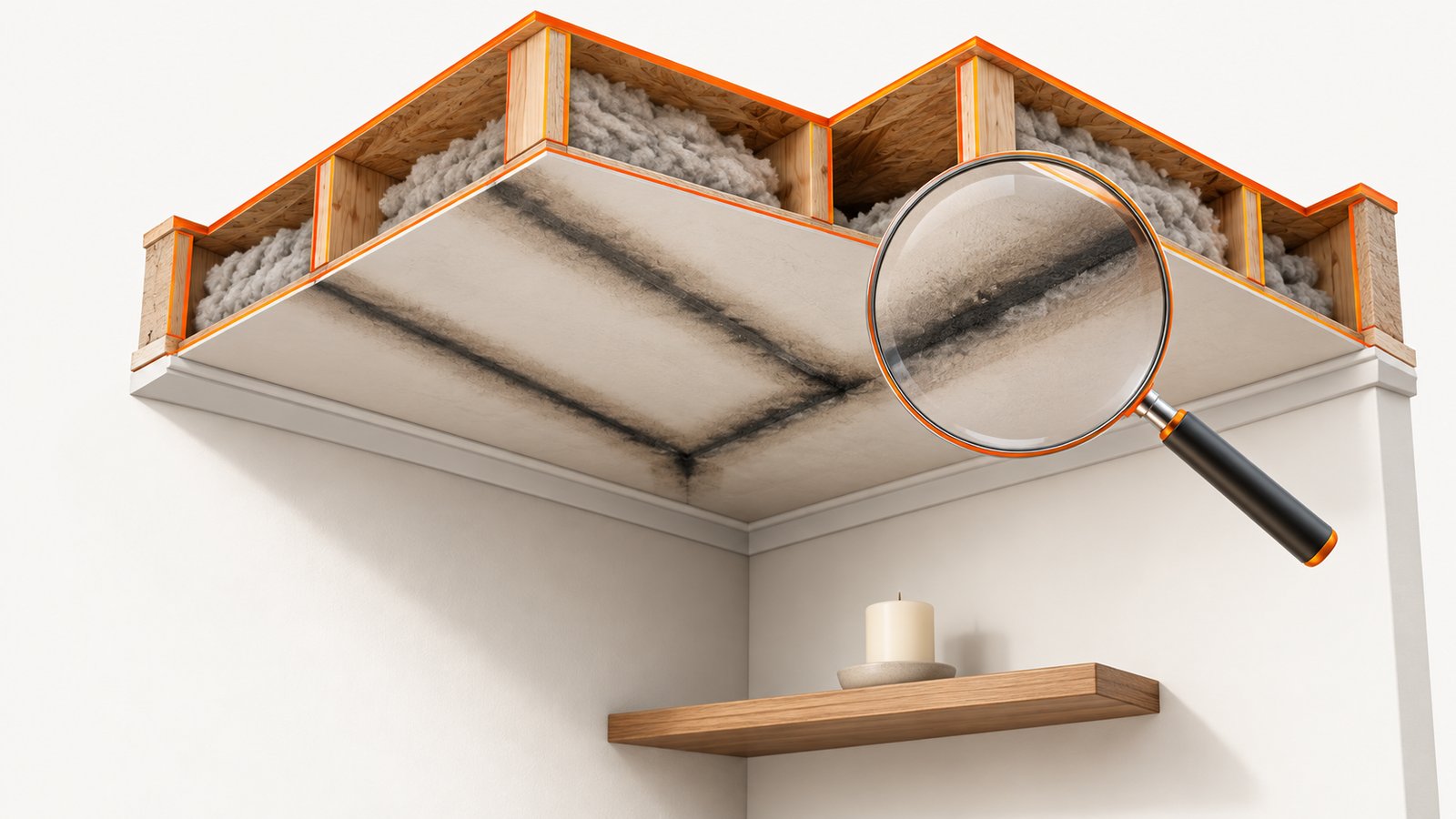
The CDC adds that mold grows where there are leaks in roofs, windows or pipes, and that it grows on paper, cardboard, ceiling tiles, wood, drywall, paint and insulation.
That gives you three realistic readings of a brown spot:
- A stain from water that came through. The ceiling got wet at some point. It may be dry now, or it may still be damp.
- Mold growing on a damp ceiling. Something kept the surface wet long enough for growth to start.
- Both at once. A leak left a stain, and mold took hold on the same spot.
The mark may also not be water or mold at all. Soot and dust can leave dark marks on a ceiling too, and our guide to soot vs mold covers how those differ. For the broader picture of why mold shows up overhead, start with mold on ceiling.
Yellow Stains on Ceiling: Does the Color Matter?
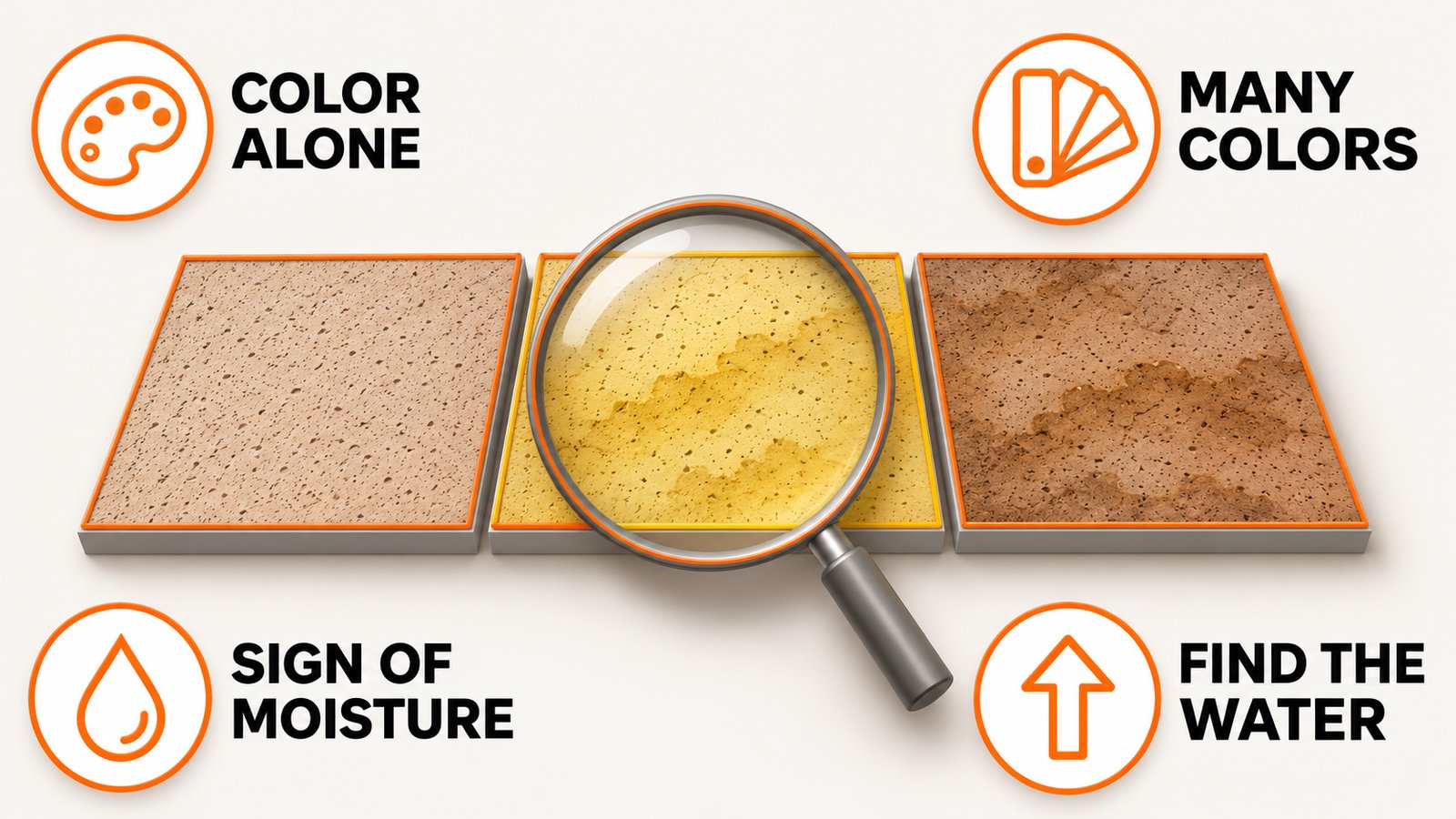
People also search for yellow stains on ceiling surfaces, and want a rule. Yellow means one thing, brown means another. We looked for that rule in the EPA and CDC pages and did not find one.
What the agencies do say is about mold color in general. The CDC writes that mold can look like spots of many different colors. The EPA says molds come in many colors, forms and textures, and that the same species of mold can change in color and appearance over time. The EPA mold course also says "black mold" is not a species or a specific kind of mold. The same logic applies to any color word: yellow, brown or tan does not name a kind of mold.
On the water side, the EPA tells homeowners to learn the signs of moisture and moisture damage so they can fix the cause before any growth starts. A stain is one of those signs. We did not find an EPA or CDC page that links a stain's shade to its cause or age, so this page offers no color chart.
If you want to see how color comes up for specific molds, our pages on yellow mold and orange mold cover it, with the same limit: a photo can suggest, a color cannot confirm. Our guide to what mold looks like has the wider picture.
Mold vs Water Stain: Checks You Can Do Yourself
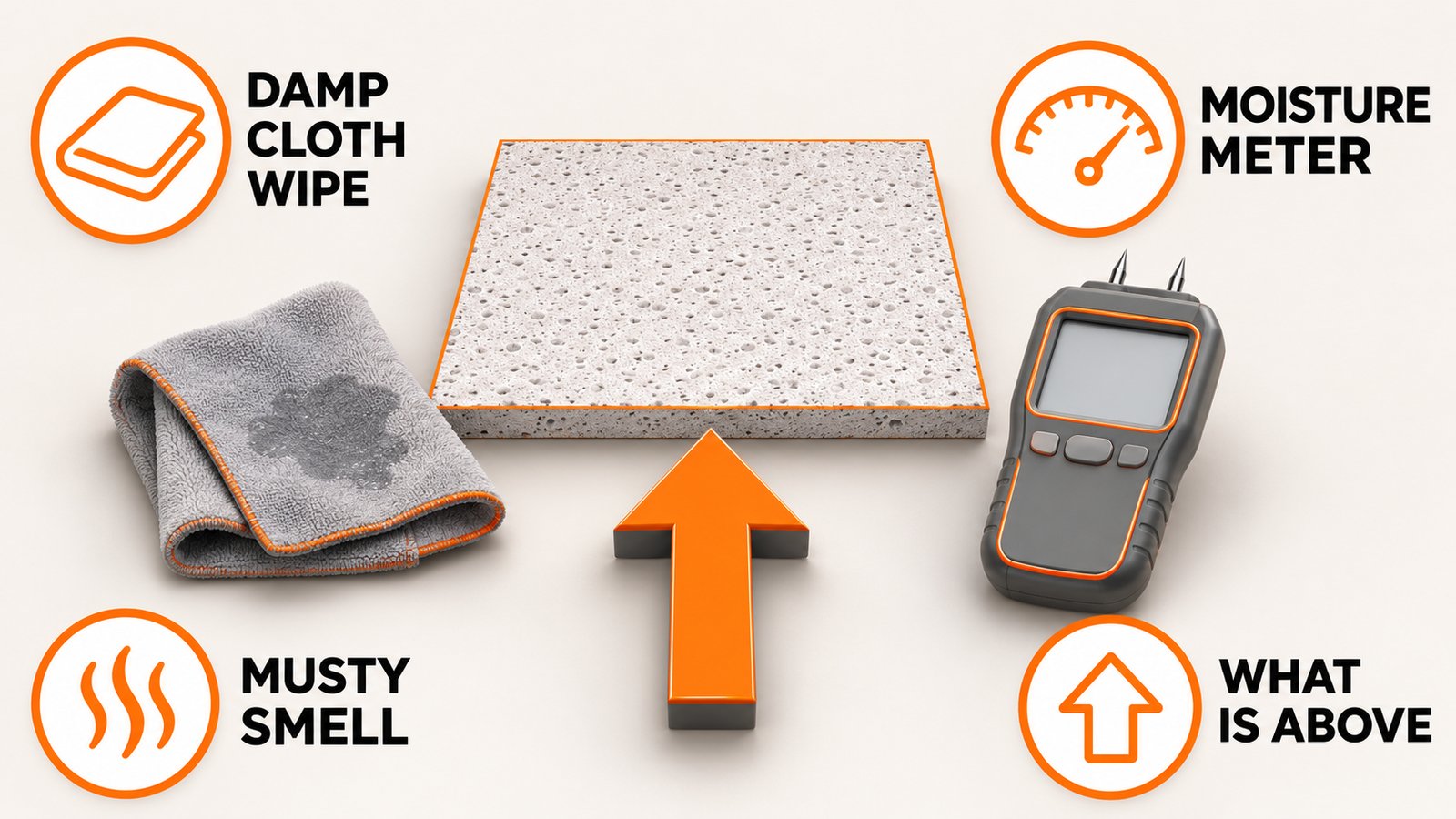
Neither the EPA nor the CDC publishes a method for telling mold from a water stain by looking. What follows are rules of thumb from us, with their limits spelled out. They help you decide what to look into next. They do not name a substance.
| Check | Leans toward mold | Leans toward an old water stain |
|---|---|---|
| Smell | A musty smell near the spot | No smell |
| Damp cloth wipe | Some of the mark lifts or smears onto the cloth | Nothing comes off |
| Is it wet now? | Damp, soft or still spreading | Dry and unchanged over weeks |
| Moisture meter | High reading at or near the spot | Normal reading |
| What is above it | Bathroom, roof, pipes or an air handler | Nothing wet is nearby |
Each check has a limit:
- Smell. The EPA says a moldy odor suggests mold is growing and should be investigated. No smell does not clear it.
- Damp cloth wipe. A stain can sit in or behind the paint.
- Is it wet now? A dry stain only says water got there once. It does not say the leak is fixed.
- Moisture meter. The EPA says a moisture meter can flag areas of concern even before mold is visible. A normal reading only covers the day you took it.
- What is above it. The stain is not always directly under the source, as our mold on ceiling guide notes.
The EPA says that in most cases, if visible mold growth is present, sampling is unnecessary, and no federal limits exist for mold or mold spores. A photo can help you decide whether a spot looks like mold and what to do next, but it cannot prove what the spot is.
If you are not sure, read how to tell if it's mold from a photo and mold vs mildew.
Water Damage vs Mold: Which One to Deal With First
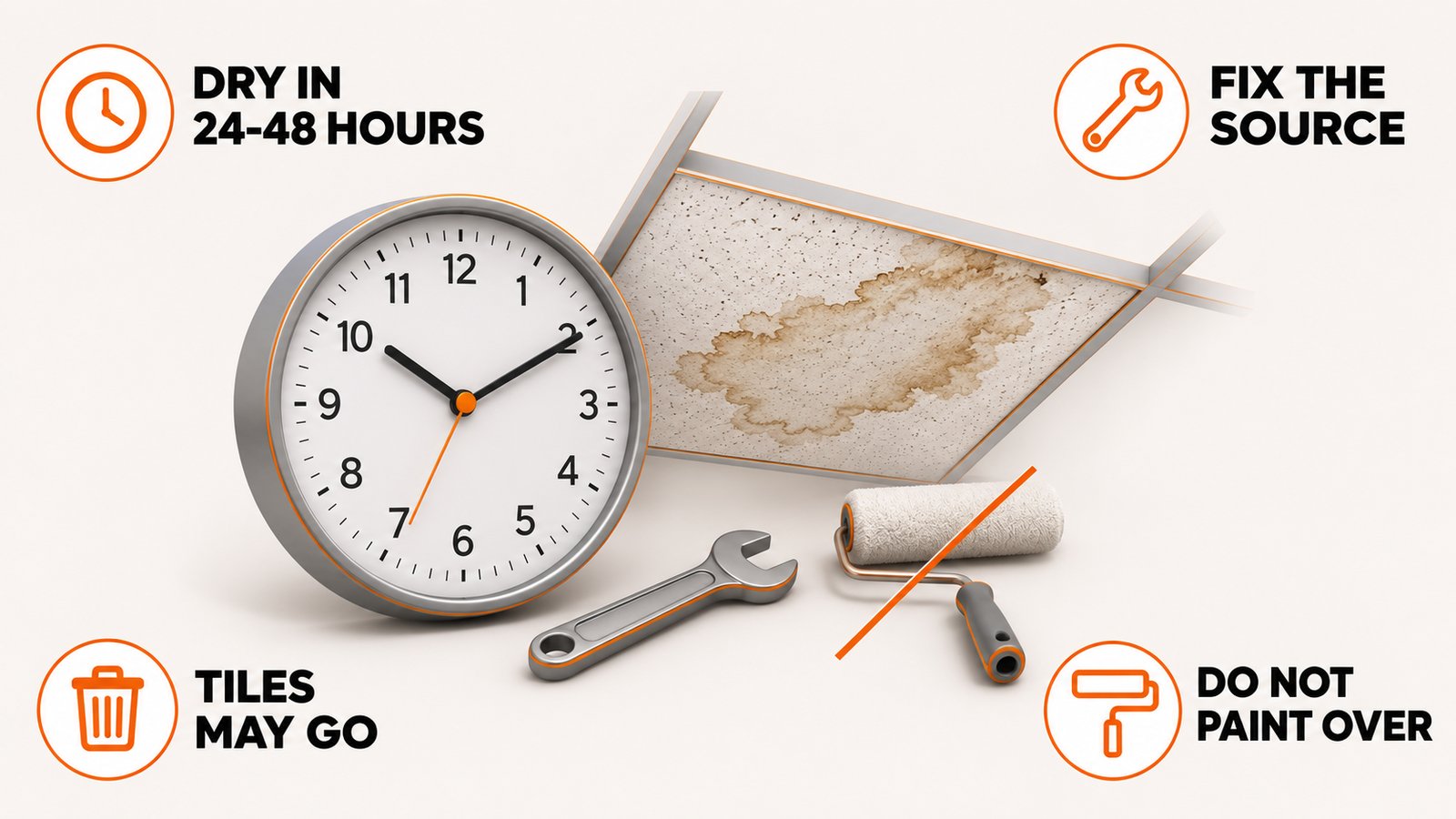
Water damage vs mold sounds like a contest, but the answer is the same for both: deal with the water first. The EPA says the key to mold control is moisture control, and that if you clean up mold without fixing the water problem, the mold will most likely come back.
Timing is the useful part. The EPA says that if wet or damp materials are dried within 24 to 48 hours after a leak or spill, in most cases mold will not grow. So if a ceiling got wet recently, your best move is to find the source and dry the area now. If the stain is old and the ceiling is dry, there is nothing to dry, but you still need to know whether the leak is gone.
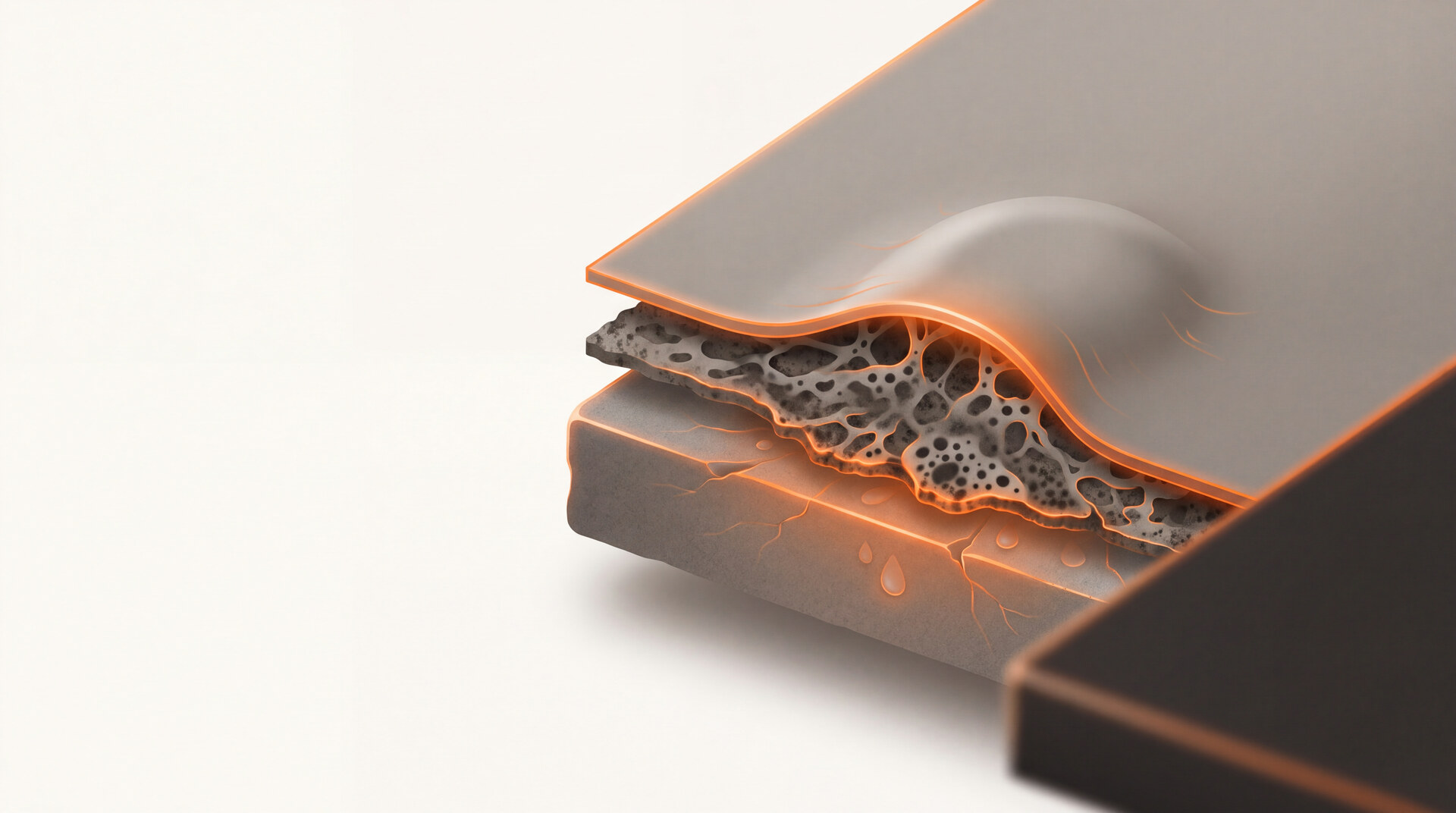
Material matters too. The EPA says absorbent or porous materials, such as ceiling tiles and carpet, may have to be thrown away if they become moldy, because mold can grow into their gaps and be hard or impossible to remove completely. It also notes that mold may cause staining and cosmetic damage.
Do not reach for paint first. The EPA says not to paint or caulk moldy surfaces. Clean up the mold and dry the surface first, because paint applied over a moldy surface is likely to peel. Our page on painting over mold goes deeper.
For a bathroom ceiling see bathroom ceiling mold, and for one under a roof see mold in attic.
What to Do About Brown Spots on a Ceiling
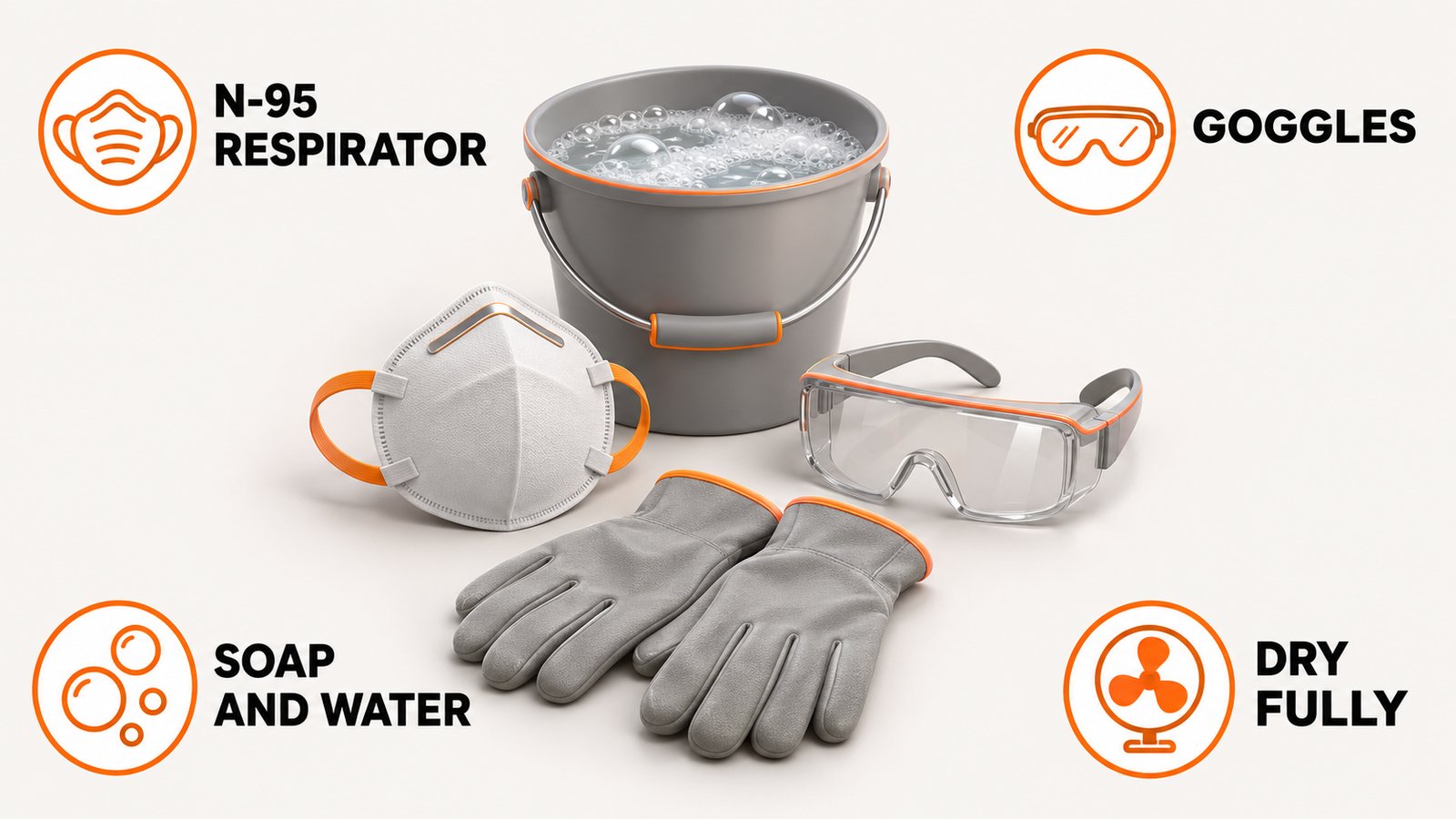
Here is a sensible order, built from EPA guidance.
- Look before you touch. If the ceiling is wet, soft or sagging, stay clear and arrange an inspection, as our mold on ceiling guide advises.
- Find the water. Check the roof, plumbing above the room, the bathroom fan and any condensation on cold surfaces. The EPA says mold may also hide on the top side of ceiling tiles and behind drywall.
- Check humidity. The EPA says to keep indoor humidity below 60 percent, ideally between 30 and 50 percent, and describes a humidity meter as a small instrument that costs about $10 to $50. Our humidity risk calculator helps read the number.
- Fix the source and dry the area. Cleaning first is wasted effort.
- Clean small, hard, non-porous areas only. The EPA says to scrub mold off hard surfaces with detergent and water, and dry completely. It says you may want to wear an N-95 respirator and recommends long gloves and goggles without vent holes, and it prices a respirator at about $12 to $25.
- Skip routine bleach. The EPA says using a biocide such as chlorine bleach is not recommended as a routine practice during mold cleanup. See bleach and getting rid of mold.
- Watch the spot. The EPA says a cleanup is not finished until the moisture problem is fixed, visible mold and moldy odors are gone, and a later visit shows no signs of water damage or mold growth. If the stain comes back, water is still getting in.
When to Call a Pro
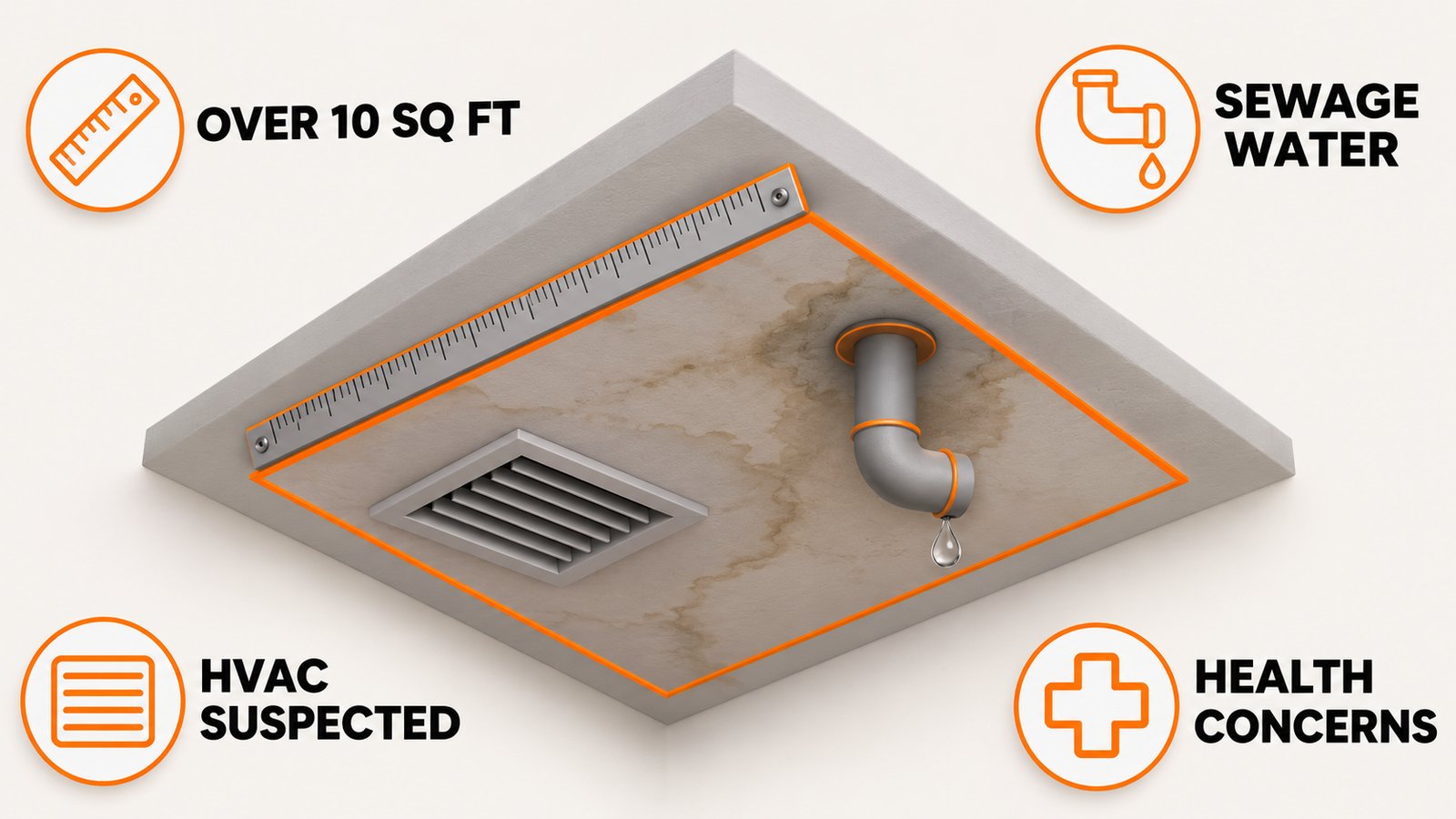
The EPA says that if the moldy area is less than about 10 square feet, roughly a 3 foot by 3 foot patch, in most cases you can handle the job yourself. Call a professional when:
- there has been a lot of water damage, or growth covers more than about 10 square feet. The EPA points to its guide for schools and commercial buildings, which it says applies to other buildings too;
- the water came from sewage or other contaminated water. The EPA says to call a professional with experience in that kind of damage;
- you suspect the HVAC system is involved. The EPA says not to run it if you know or suspect it is contaminated, because it could spread mold through the building;
- you have health concerns. The EPA says to consult a health professional before starting cleanup;
- you cannot find the water source. A stain that keeps returning after you dried and cleaned it needs someone to look inside the ceiling.
The last item is our advice, the rest are the EPA's. For costs and what an inspection includes, see mold inspection and mold remediation cost.
Frequently asked questions
Are brown spots on a ceiling always mold?
No. They can be a water stain, mold, or both. The CDC says mold can look like spots of many different colors, and the EPA says the same species can change color over time, so color alone does not settle it. Either way, the ceiling got wet or is still wet, so look for the water source.
Are yellow stains on a ceiling mold?
Not necessarily. We found no EPA or CDC page that links a yellow stain to mold or to any one cause. Treat it as a sign of moisture damage until you have found where the water came from and checked whether the spot is growing.
Can I tell mold from a water stain by color?
No. Agencies describe mold in many colors, and the EPA says a species can change in color and appearance over time. Smell, whether the area is damp, what is above it, and a moisture meter reading give you better clues than color.
Do I need a mold test for a ceiling stain?
Usually not. The EPA says that in most cases, if visible mold growth is present, sampling is unnecessary. It also says no federal limits exist for mold or mold spores, so a test cannot check compliance with a standard.
Is an old, dry stain a problem?
It tells you water reached the ceiling at some point. The open question is whether the leak is fixed. If the stain grows, changes or the ceiling feels damp, find the source. The EPA says to dry wet materials within 24 to 48 hours to prevent mold growth.
Can I just paint over a brown spot on a ceiling?
The EPA says not to paint or caulk moldy surfaces. Clean and dry the surface first, because paint over a moldy surface is likely to peel. Paint also hides the spot before you know what caused it.
How big can a ceiling spot be before I hire someone?
The EPA says a patch under about 10 square feet, roughly 3 feet by 3 feet, is in most cases a job you can handle yourself. Past that, or after a lot of water damage, it points to its guide for larger jobs, and that is where we suggest a professional. Sewage, a suspected HVAC link or health concerns are separate reasons to get help at any size.
Sources
Every claim on this page traces to one of these. Links open the primary document.