What the Test Actually Measures
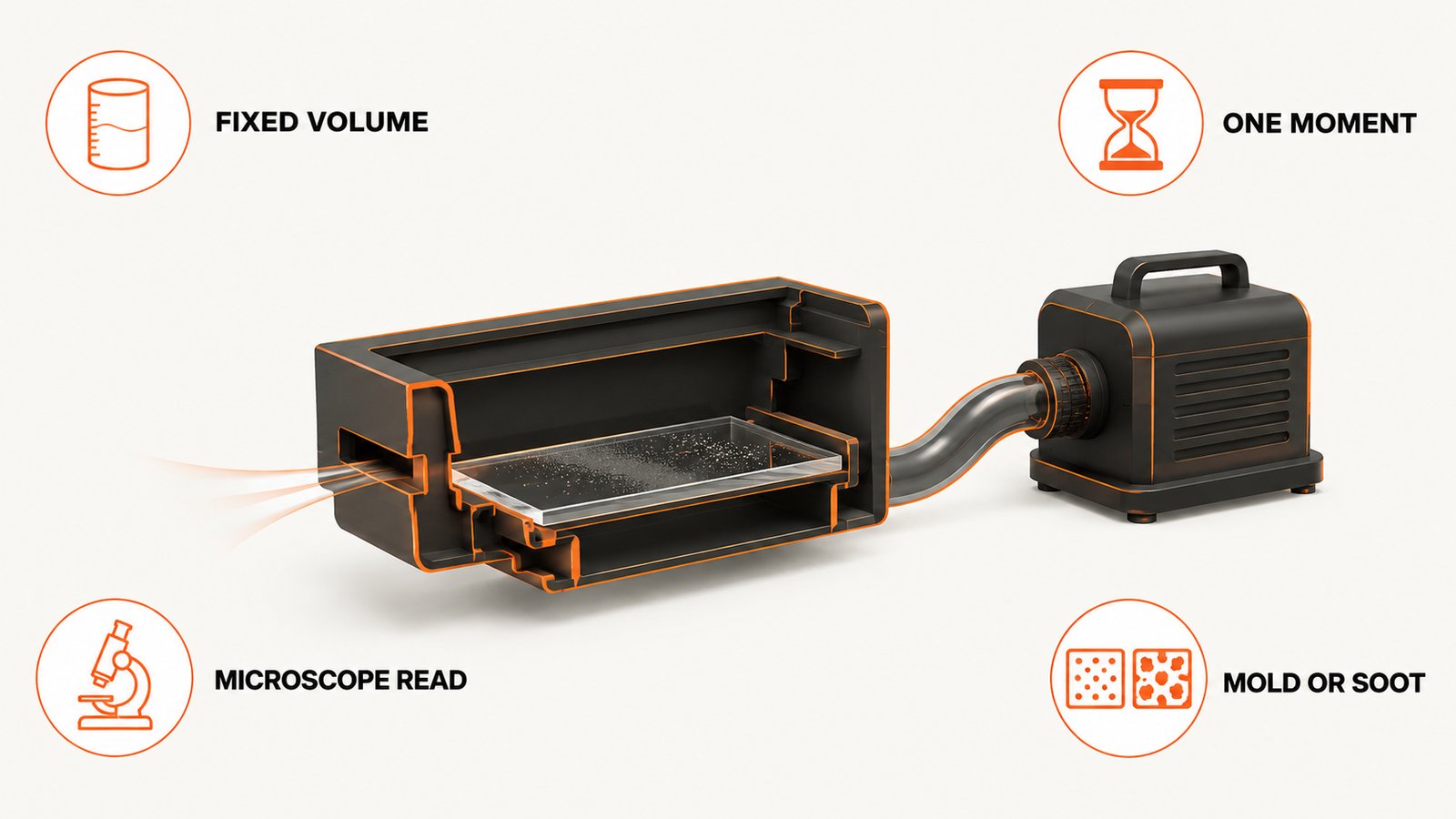
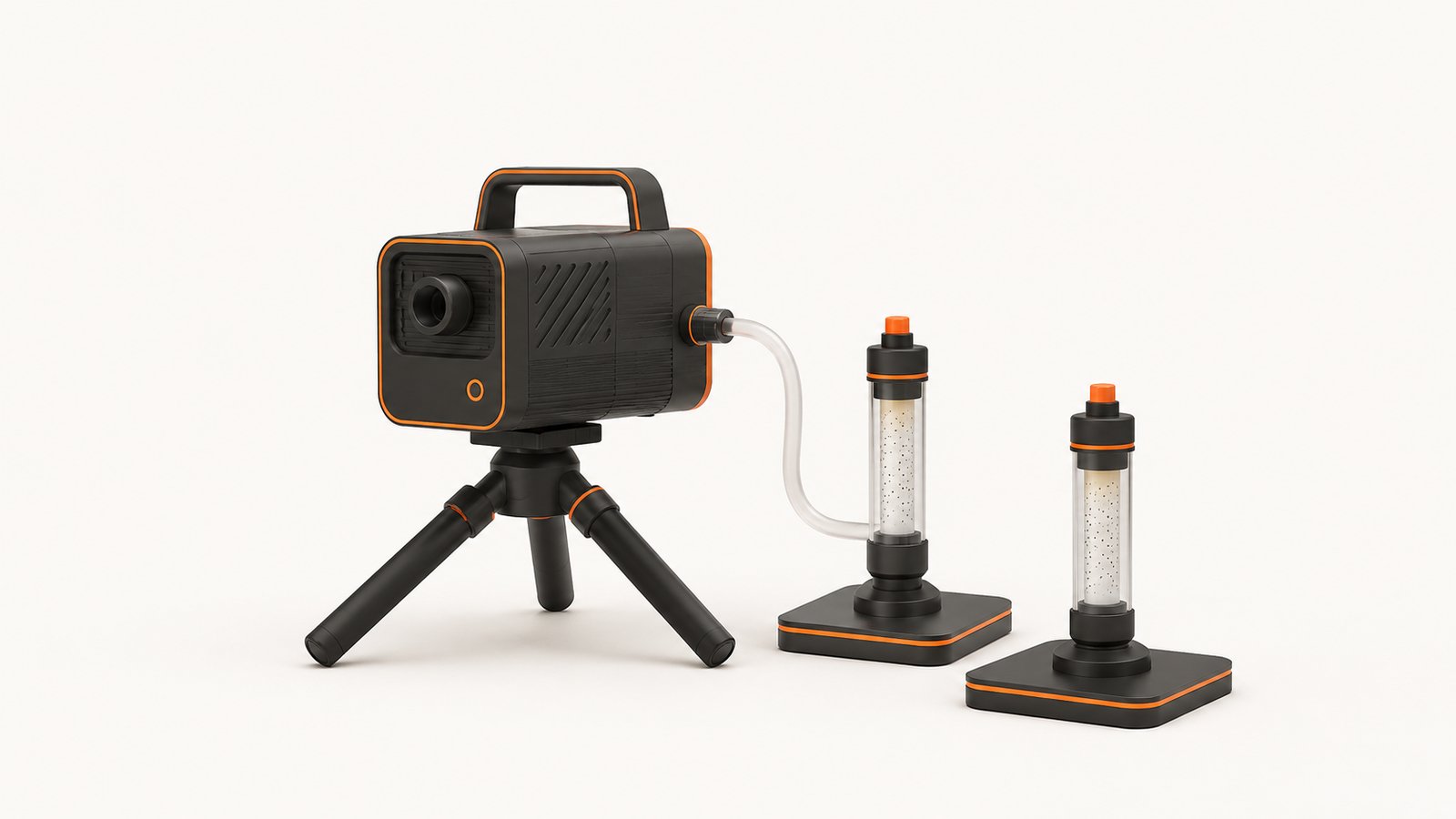
A calibrated pump draws a known volume of air through a cassette. Particles impact a sticky slide inside it. A laboratory reads that slide under a microscope, identifies the spore types it can recognize, and reports counts per cubic meter of air.
Two limits are built into that method and neither is a defect. The first is time. The EPA states that air sampling for mold provides information only for the moment when the sampling took place. A five-minute sample is a five-minute answer, and spore counts move with the weather, the season, the time of day, whether the HVAC is running, and whether somebody just walked across the carpet.
The second is resolution. A spore trap counts and classifies what it can see morphologically, which usually means groupings rather than exact species. Some spores are distinctive under a microscope. Many are not, and get reported in combined categories. If a report hands you a confident species list off a single air cassette, ask how that identification was made.
What the method is good at, in the EPA's own words, is a short list: sampling may help locate the source of mold contamination, identify some of the mold species present, and differentiate between mold and soot or dirt. That third one is more useful than it sounds. Dark staining on a duct boot is often soot, and telling the two apart changes what you hire.
If you have visible growth and just want to know what you are looking at, an air test is the wrong instrument. A tape lift off the surface answers that far more directly, and our comparison of every home mold testing method lays the options side by side.
The Only Benchmark: Your Outdoor Air
People expect a lab report to say pass or fail. It cannot. The EPA states that there are no EPA or other federal standards for airborne mold or mold spores, so sampling cannot be used to check a building's compliance with federal mold standards because there are none. New York State's health department says the same about homes: there is no state or federal standard for mold in homes.
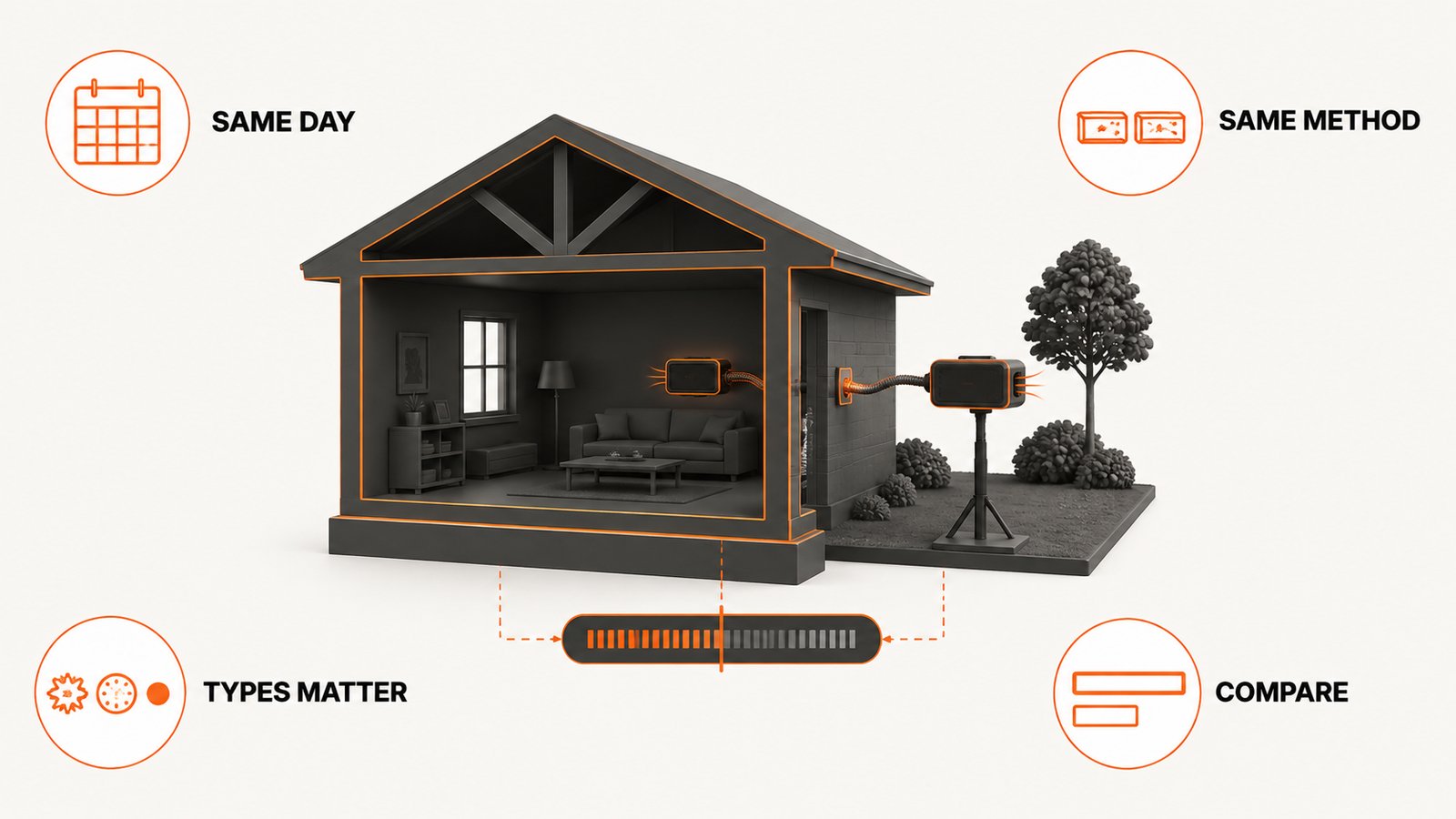
So what is a count of 1,400 spores per cubic meter? On its own, nothing. It becomes meaningful only against a reference, and the EPA names the reference directly: after remediation, the types and concentrations of mold in indoor air samples should be similar to those in the local outdoor air.
That single sentence carries most of the practical value on this page. It tells you three things:
- The outdoor sample is mandatory, not optional. The EPA lists omitted outdoor control samples among the specific problems that occur when sampling is done badly. An indoor-only report is not a cheaper version of the test. It is an unreadable one.
- Types matter as much as counts. The comparison is on types and concentrations. A moderate indoor count made up of species that barely appear outdoors is a more interesting finding than a high count that mirrors what is outside your door.
- Same day, same conditions. Outdoor spore levels swing with weather and season. A control taken a week later against different weather is not a control.
This is also why a single mail-in kit with one cassette is a weak product. Ask any lab or inspector how many samples they will take and whether an outdoor control is included before you pay, because that answer decides whether the report is readable.
When a Mold Air Quality Test Is Worth It
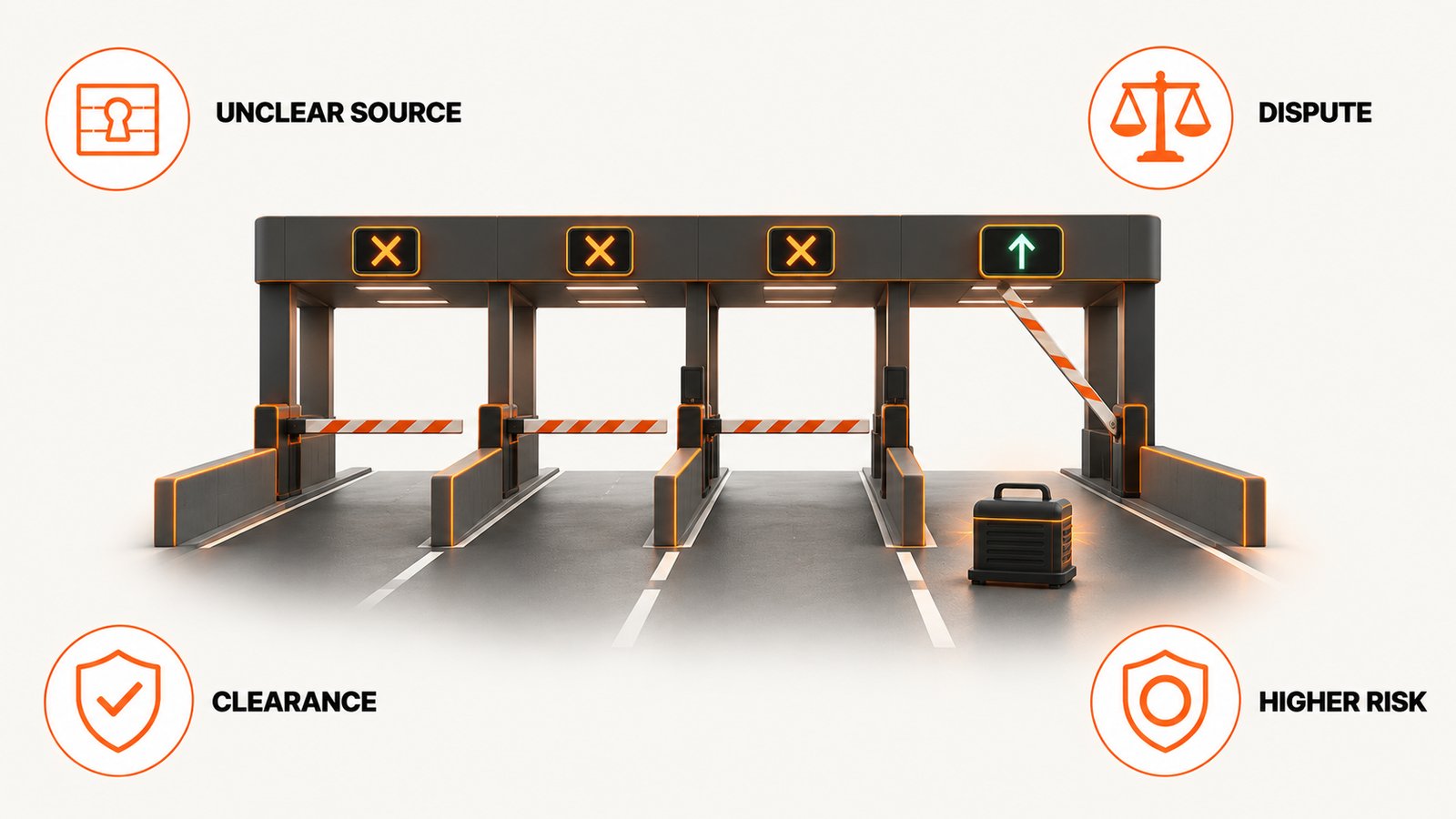
The EPA gives a clean decision rule: unless the results would or could make a change in your plans, you do not need to sample. Apply that before anything else. If you already know you are going to fix the leak and clean the wall, a lab report changes nothing and the money is better spent on the repair.
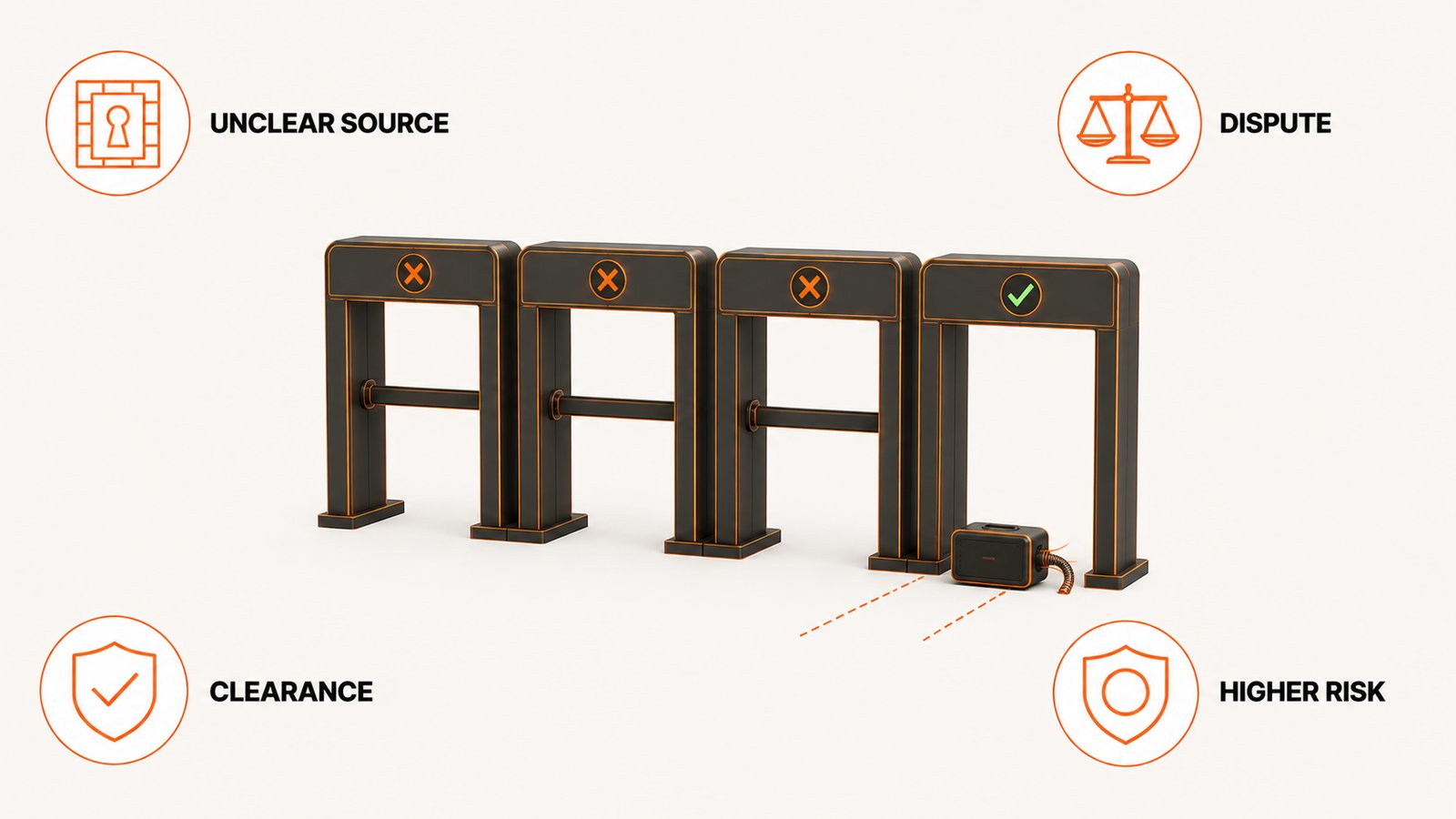
The agency then names the circumstances where sampling is worth considering as part of a site evaluation: when litigation is involved, when the source of the mold is unclear, or when health concerns are a problem. In practice that shakes out into four cases.
1. You smell it and cannot find it. A persistent musty odor with no visible growth is the classic reason to sample, because the EPA notes that sampling may help locate the source of mold contamination. Pair it with a moisture survey rather than running it alone, because a moisture meter finds wet material faster than a spore count finds a wall cavity.
2. There is a dispute. Landlord, insurer, seller, contractor. A third-party sample set with a documented protocol carries weight that a homeowner's account does not. Have it collected by someone independent of whoever will do the remediation.
3. Clearance after remediation. This is the strongest use, because the EPA gives you the acceptance criterion: indoor types and concentrations similar to local outdoor air. New York State requires a post-remediation assessment as part of its minimum work standards for licensed mold work, so in some states this is not optional.
4. Someone in the home is at higher risk. The EPA lists health concerns as one of its named circumstances. The CDC notes that people with asthma or who are allergic to mold may have severe reactions, and that immune-compromised people and people with chronic lung disease may get infections in their lungs from mold. That said, a building test measures a building. Any health question goes to a licensed physician.
When to Skip It
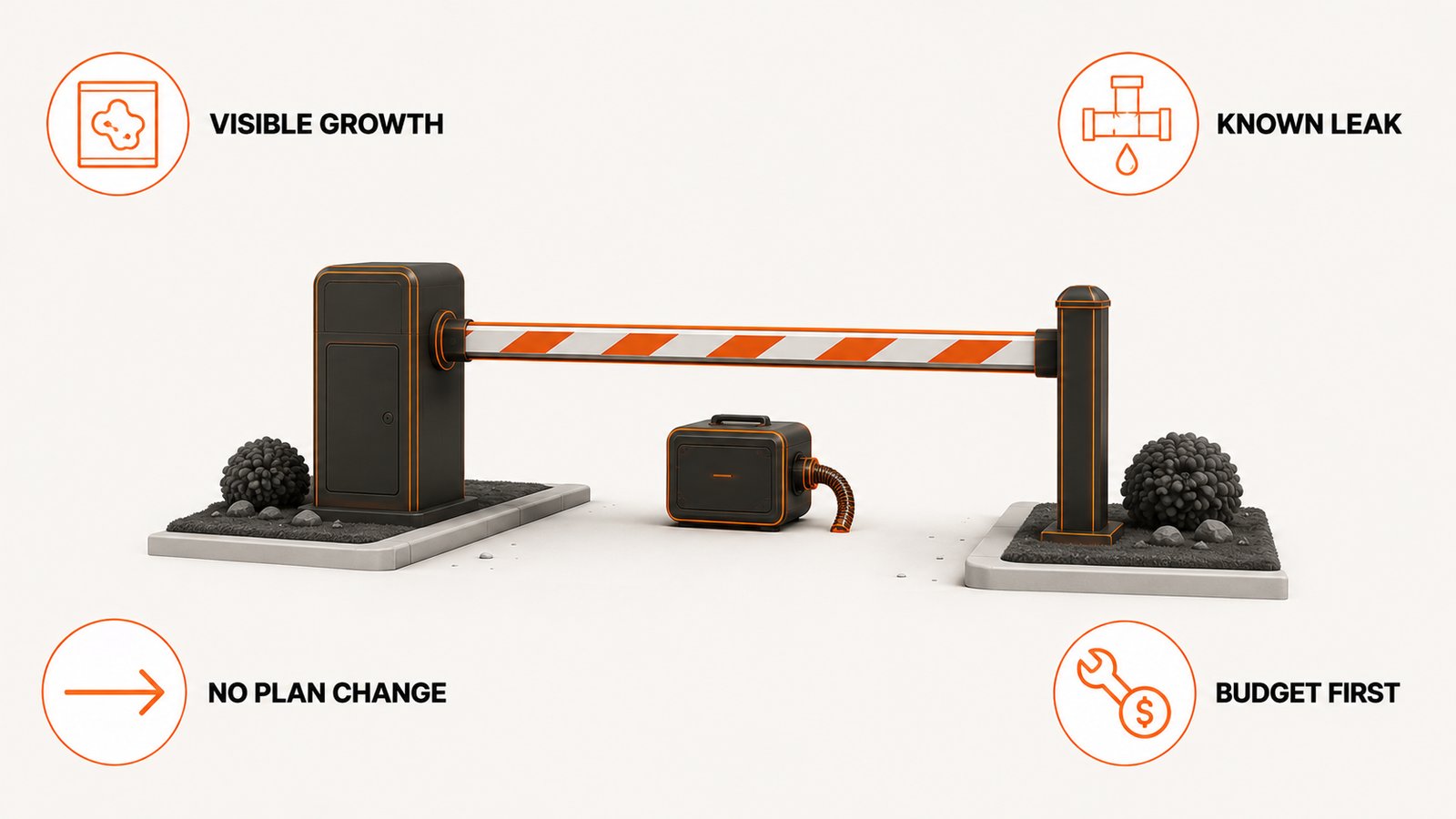
The EPA's default is unambiguous: routine sampling for mold is not recommended, and in most cases, if visible mold is present, sampling is unnecessary. The CDC states that it does not recommend mold testing. New York State says mold testing is not recommended, nor is it required by any regulatory agency.
Skip the test when:
- You can see the growth. The finding is made. The EPA's next step is to determine the size and extent of the moldy area and to evaluate the water or moisture problem that allowed it to grow, not to count spores.
- You already know where the water came from. A burst supply line and a wet wall is a repair job. The lab adds a delay and a bill.
- You will not change your plan either way. This is the EPA's own test, and it kills most sampling proposals on the spot.
- You want to know the species before cleaning. The CDC states that you do not need to know the type of mold, and New York State adds that knowing the kinds of mold present does not change this advice.
- The budget cannot cover both the sampling and the repair. The EPA flags this as a real failure mode, noting that since sampling can be expensive, sufficient funds may not be available both to sample and to fix the water and mold problem. New York State makes the same point: sampling and testing can be more expensive than simply cleaning and repairing the water problems.
There is a harder version of that last point in the EPA's guidance and it is worth quoting because it is unusual for an agency to say it this plainly. If sampling cannot be done properly, and enough samples to answer the questions posed cannot be taken, then it is preferable not to sample at all. Inadequate sample plans may generate misleading, confusing and useless results. A bad sample is worse than no sample, because you will act on it.
How the Sample Is Taken, and How It Goes Wrong
The EPA states that sampling for mold should be conducted by professionals who have specific experience in designing mold sampling protocols, sampling methods and interpreting the results, then lists the specific problems that occur when it is not. All five are worth knowing, because you can check for every one of them before you pay.
- Too few samples. One cassette in one room does not characterize a house. The EPA notes that professional advice may be necessary to determine whether the project budget will allow enough samples to be taken to characterize a problem.
- Protocols not followed consistently. Same pump calibration, same run time, same volume, same conditions across every sample in the set. Vary any of those and the samples are not comparable to each other.
- Contaminated samples. Cassettes handled with bare hands, left open, stored warm, or shipped slowly. Chain of custody exists for a reason.
- Outdoor control samples omitted. Covered above and the most common failure in consumer kits.
- No money left to fix the problem. Sampling that consumes the remediation budget is the worst outcome available, because you end up documented and still wet.
The conditions during the sample matter as much as the equipment. Windows and exterior doors closed for a period beforehand, HVAC in whatever state you want characterized and noted on the paperwork, no vacuuming or sweeping in the hours before, and nobody moving stored boxes. Disturbing a space sends particles up. The EPA warns that opening and closing air handlers, for example, can send high levels of dust and mold into the air, which is a good illustration of how easily a reading gets moved.
Ask for the analytical method too. The EPA states that samples should be analyzed according to the analytical methods recommended by the American Industrial Hygiene Association, the American Conference of Governmental Industrial Hygienists, or other professional guidelines. A laboratory that cannot name its method is not one to use.
Reading the Lab Report
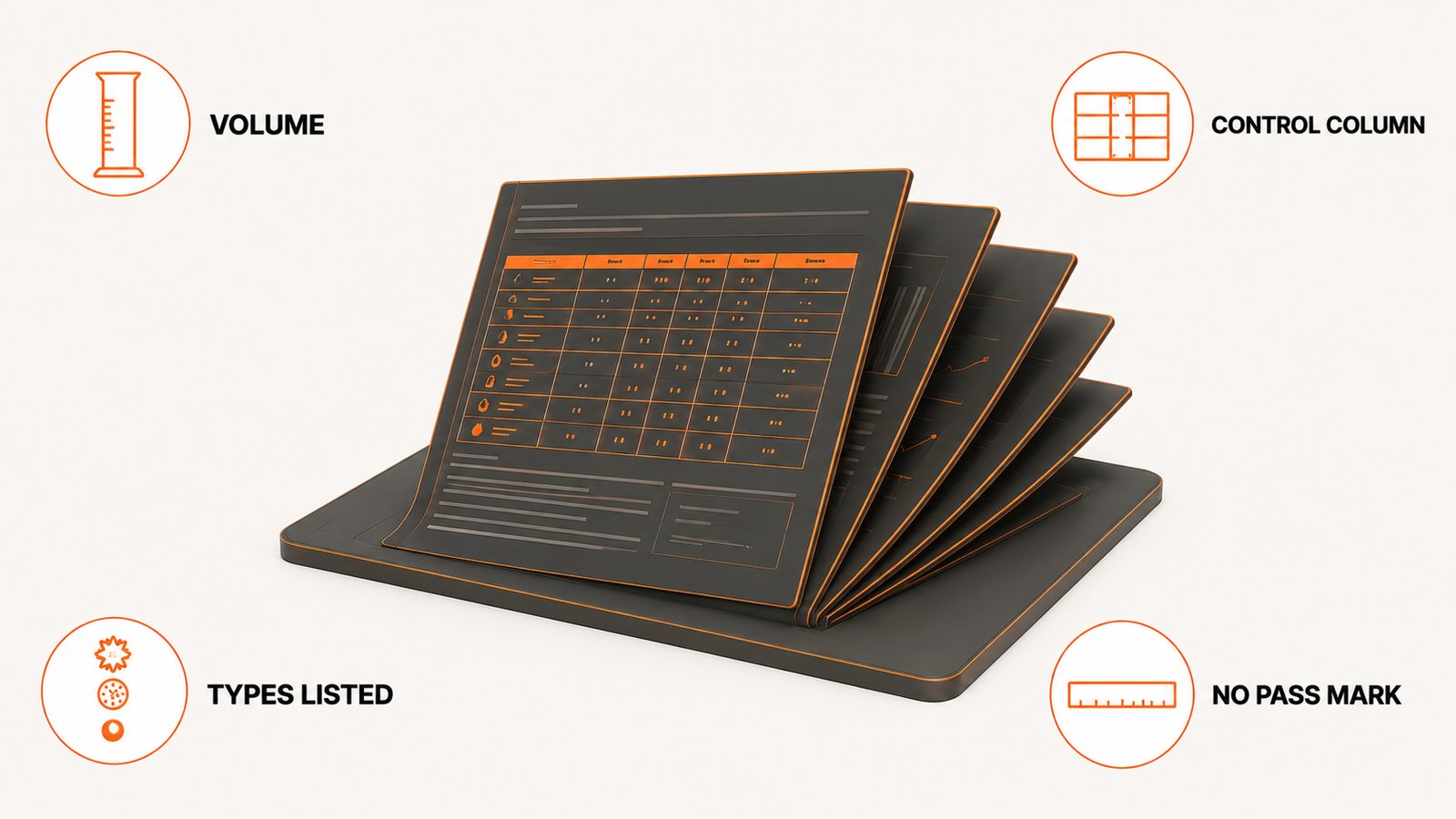
Reports vary in layout and are uniformly confusing on first read. Four things carry the information.
Sample volume and duration. Listed per sample, usually in liters. If the indoor and outdoor samples ran different volumes, the counts are still comparable per cubic meter, but the detection sensitivity is not. Short samples miss low-level findings.
The outdoor control column. Find it first. If it is not there, stop reading and ask why. Everything in the indoor columns is interpreted against it.
The types present, not just the totals. The EPA frames the post-remediation criterion as types and concentrations similar to the local outdoor air. A type that is abundant indoors and near-absent outdoors is the finding worth chasing. Our species pages on Aspergillus, Cladosporium, Penicillium and Stachybotrys chartarum cover what each grouping is usually associated with in a building.
Categories, not species. Many reports combine spores that look alike under a microscope into a single category. That is a limit of the method, not a shortcut by the lab. Treat a combined category as a group, not a name.
What you will not find anywhere on the report is a threshold, a pass mark, or a legal limit, because none exist. The EPA is explicit that no federal standards for airborne mold or mold spores have been set. Any inspector who tells you a number failed a standard is describing their own opinion, which may be a reasonable professional opinion, but it is not a regulation. Ask them what they are comparing against and why.
One more thing to ask before the sampling happens rather than after. Texas's licensing agency puts it well in its consumer guidance: ask a licensed consultant to establish criteria for interpreting the test results before the work starts, and have them tell you in advance what they will do or recommend based on the results.
Air Sampling Against the Alternatives
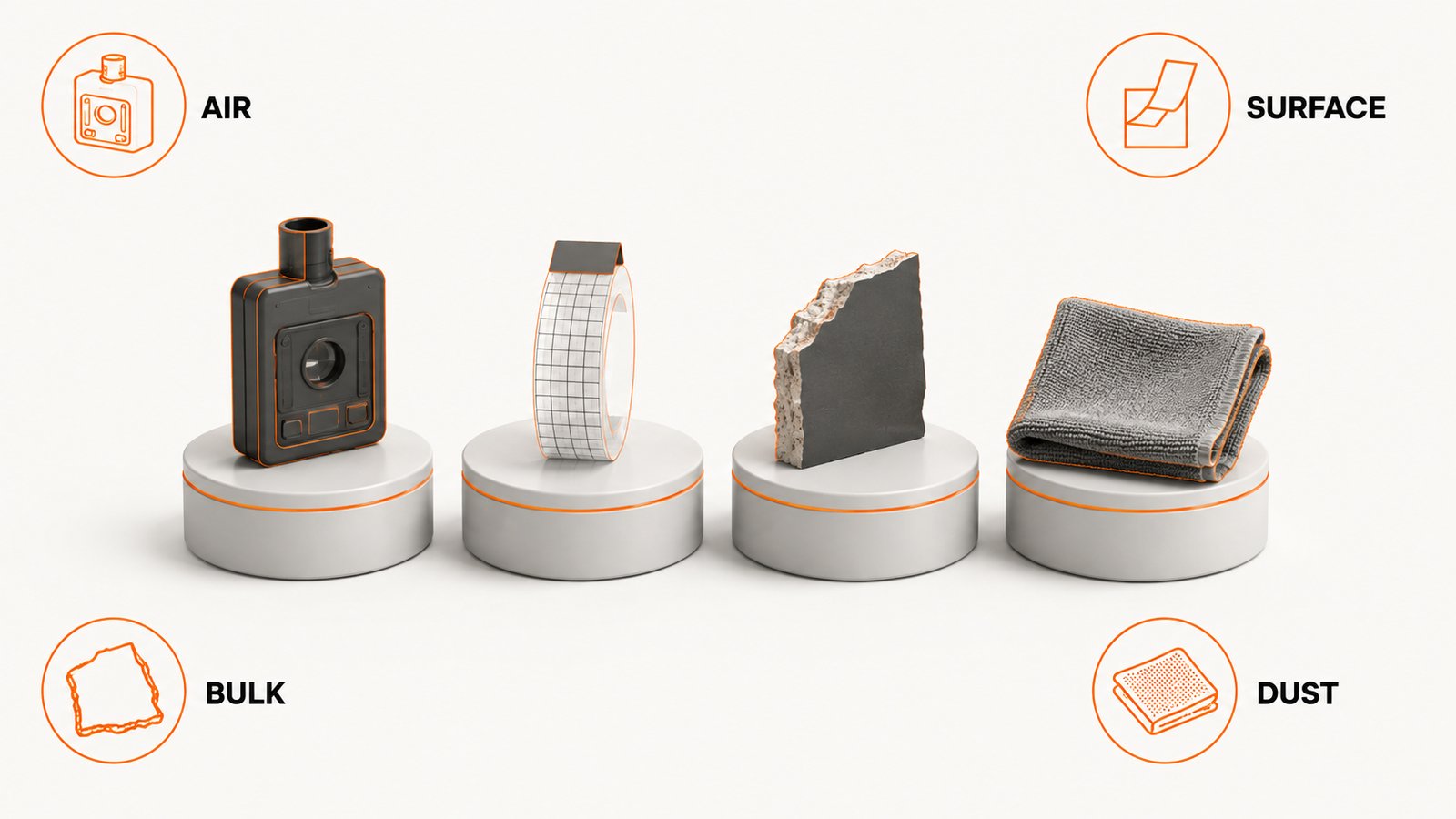
The EPA lists four sample types: air samples, surface samples, bulk samples such as chunks of carpet, insulation or wall board, and water samples from condensate drain pans or cooling towers. Each answers a different question.
| Sample type | Question it answers | Needs an outdoor control? | Best use |
|---|---|---|---|
| Air, spore trap | What is airborne here, at this moment | Yes, same day | Unclear source, disputes, clearance after remediation |
| Surface, tape lift or swab | What is growing on this one spot | No | Confirming a stain is growth, and checking whether cleaning worked |
| Bulk material | What is inside this piece of carpet, insulation or wallboard | No | Deciding whether a material is salvageable |
| Dust index, such as ERMI | What DNA has accumulated in settled dust over time | No | Research use. The EPA says ERMI has not been validated for non-research purposes |
The EPA singles out surface sampling for one job specifically: it may be useful in determining if an area has been adequately cleaned or remediated. If your question is did the cleanup work on this wall, a surface sample is the cheaper and more direct instrument.
On the dust index, the caution is the EPA's own. It developed the Environmental Relative Moldiness Index, describes it as a research tool for estimating mold contamination, and states that it has been peer reviewed for research purposes but has not been validated for non-research purposes. Our ERMI explainer and kit comparison cover it in full.
Whatever you sample, the EPA's framing holds: the goal of mold remediation is to find the source of the water problem, fix it and clean up the mold. Sampling is a supporting instrument, never the objective.
When to Call a Pro
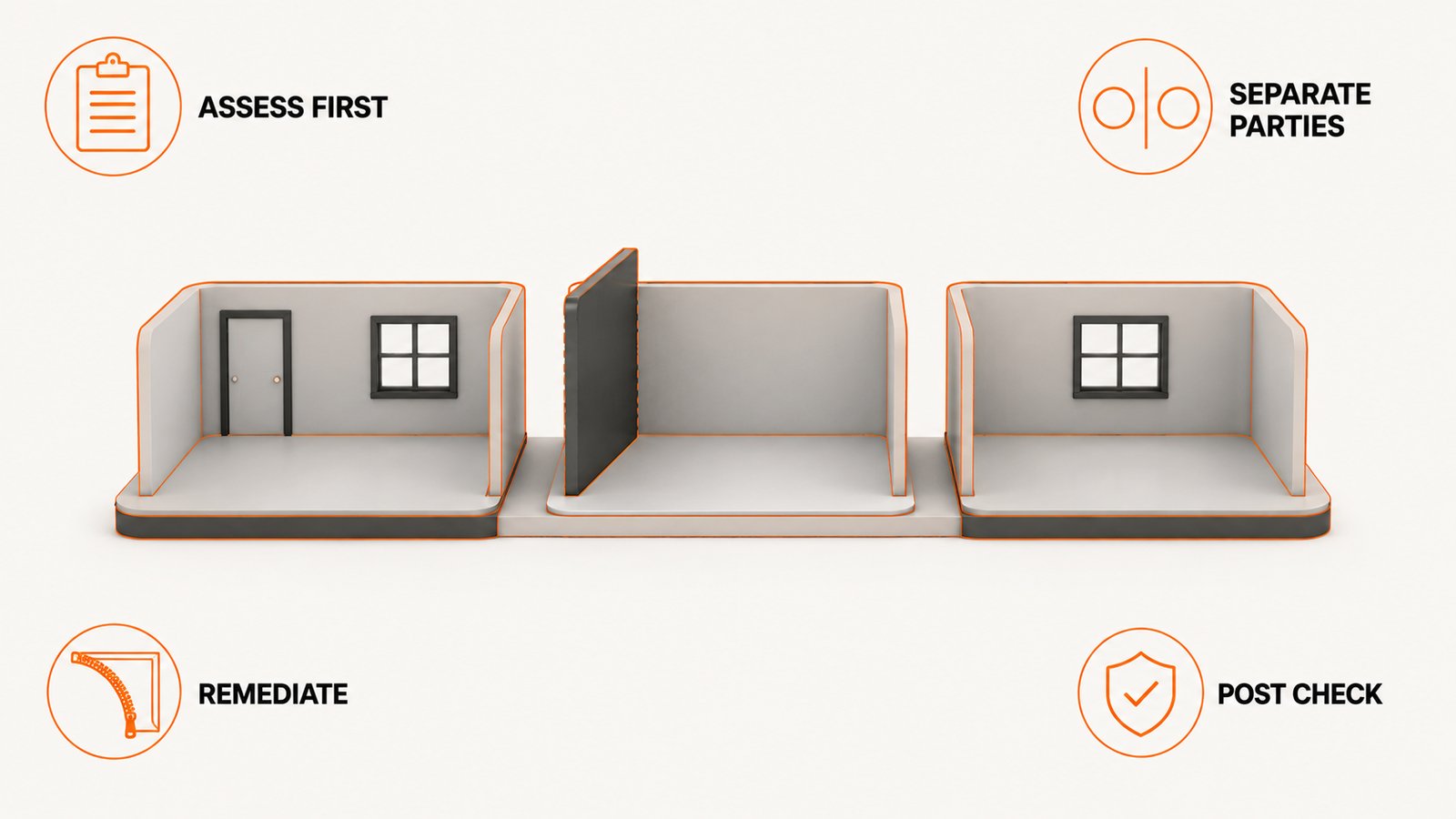
Hire rather than sample yourself when any of these apply:
- Growth covers more than about 10 square feet, roughly a 3-foot by 3-foot patch. That is the EPA's threshold for handing off a cleanup, and New York State uses the same figure for calling a licensed contractor.
- You are chasing hidden mold. The EPA notes that investigating hidden mold can be difficult and may require a professional with experience investigating water-damaged and mold-damaged buildings, using specialized equipment such as borescopes and moisture meters. It also warns that disturbing moldy areas may spread mold throughout the building. Our page on mold behind walls covers the signs first.
- Sewage or other contaminated water was involved. The EPA says to call a professional experienced with buildings damaged by contaminated water.
- You suspect the HVAC system. The EPA advises consulting its duct guidance and warns not to run a system you suspect is contaminated. Our air ducts guide covers what sampling a supply register does and does not tell you.
Structure the hire so nobody is grading their own work. New York's Article 32 builds this in: an independent mold assessment defines the scope of the remediation, the same individual cannot perform both the assessment and the remediation on one property, and a post-remediation assessment closes the job. Texas licenses seven categories of mold professional and requires licensed assessors and remediators to give clients a Consumer Mold Information Sheet before any mold-related activity begins.
Look for a contractor working to the ANSI/IICRC S520 standard for professional mold remediation, and check your state's license lookup before signing anything. Our mold remediation certification page maps who is licensed where and what each credential covers.
Frequently asked questions
Is there a safe level of mold spores in indoor air?
No published limit exists. The EPA states that there are no EPA or other federal standards for airborne mold or mold spores, so sampling cannot be used to check a building's compliance with federal mold standards. New York State's health department says there is no state or federal standard for mold in homes. The only benchmark in agency guidance is comparative: after remediation, indoor types and concentrations should be similar to the local outdoor air.
Do I need an outdoor sample as well as an indoor one?
Yes. The EPA lists omitted outdoor control samples among the specific problems that occur when mold sampling is done poorly, and its post-remediation criterion is a comparison against the local outdoor air. Take the control the same day and in the same weather, because outdoor spore levels move with season, weather and time of day.
Does the EPA recommend air testing for mold?
Not routinely. The EPA states that routine sampling for mold is not recommended, and that in most cases, if visible mold is present, sampling is unnecessary. It names three circumstances where sampling may be worth considering as part of a site evaluation: when litigation is involved, when the source of the mold is unclear, or when health concerns are a problem.
Can a single mail-in air test tell me if my house has a mold problem?
One cassette taken once, with no outdoor control, cannot. The EPA notes that air sampling provides information only for the moment when the sampling took place, and warns that if enough samples to answer the question cannot be taken, it is preferable not to sample at all, because inadequate sample plans may generate misleading, confusing and useless results.
What should I ask before paying for mold sampling?
Ask how many samples will be taken, whether an outdoor control is included, what analytical method the lab uses, and what criteria will be used to interpret the results. Texas's licensing agency advises asking a licensed consultant to establish criteria for interpreting the results before the work starts, and to say in advance what they will do or recommend based on those results.
Is a surface sample better than an air sample?
For some questions, yes. The EPA states that surface sampling may be useful in determining if an area has been adequately cleaned or remediated, which makes it the direct instrument for checking a specific cleanup. Air sampling is the better tool when the source is unclear, when a dispute needs documenting, or when clearing a whole space after remediation.
How long does an air quality test for mold take?
The sampling itself runs for minutes per cassette, and the answer covers only that window. Results depend on shipping plus the laboratory's turnaround, so plan on days rather than hours. The EPA is explicit that air sampling provides information only for the moment when the sampling took place, which is why conditions during the sample get recorded on the paperwork.
What does an ERMI score add over air sampling?
It measures something different: DNA in settled dust rather than spores in air at one moment. The trade is validation. The EPA developed the Environmental Relative Moldiness Index and states that it has been peer reviewed for research purposes but has not been validated for non-research purposes, so a score is a reason to inspect a building more carefully rather than a verdict about it.
Sources
Every claim on this page traces to one of these. Links open the primary document.