What Agencies Say About Mold and Skin
Start with the primary sources rather than a summary of them, because the wording is careful and the careful wording is the point.
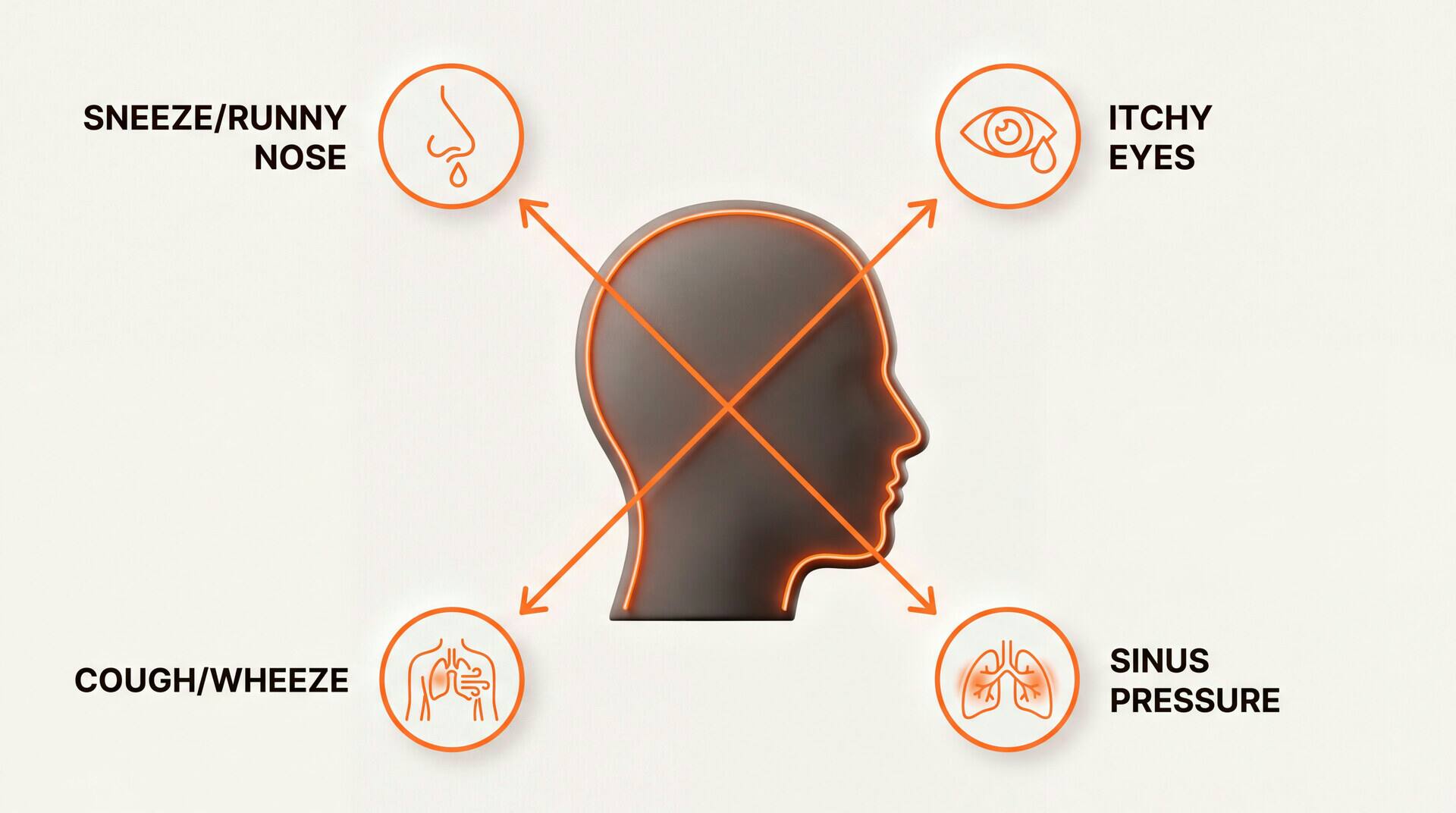
The EPA writes that molds produce allergens, irritants, and in some cases potentially toxic substances, and that inhaling or touching mold or mold spores may cause allergic reactions in sensitive individuals. It then lists what those reactions look like: allergic responses include hay fever-type symptoms, such as sneezing, runny nose, red eyes, and skin rash, which it labels dermatitis. Separately it notes that mold exposure can irritate the eyes, skin, nose, throat, and lungs of both mold-allergic and non-allergic people.
The CDC is shorter and says the same thing: for some people, mold can cause a stuffy nose, sore throat, coughing or wheezing, burning eyes, or skin rash. It adds that people with asthma or who are allergic to mold may have severe reactions, and that immune-compromised people and people with chronic lung disease may get infections in their lungs from mold.
New York State's health department puts skin irritation, such as a rash, in its list of the most common symptoms seen in people exposed to mold indoors, alongside nasal and sinus congestion, eye irritation, wheezing, cough, throat irritation, and headache. It also frames the whole question honestly: allergy and irritation are the most common effects of mold exposure, less common effects include infections and illness, and serious infections from molds are relatively rare and occur mainly in people with severely suppressed immune systems.
Three things follow from those three documents. Skin is on every agency list. The framing is always conditional, in sensitive people or for some people, never universal. And not one of them describes a rash pattern that identifies mold as the cause. That last point is the one the internet gets wrong most often.
What the Research Does and Does Not Establish
The most-cited review of this literature is the Institute of Medicine's Damp Indoor Spaces and Health, published in 2004 and still the reference point for what the evidence supports. Its literature review found sufficient evidence of an association between damp indoor environments and some upper respiratory tract symptoms, coughing, wheezing, and asthma symptoms in sensitized persons.
Read that list again and notice what is in it. Upper respiratory symptoms, cough, wheeze, asthma symptoms in people already sensitized. The strongest tier of evidence is respiratory. Skin outcomes did not make that tier. That does not mean skin reactions are imaginary, and the EPA and CDC both list them. It means the published evidence for skin is weaker than the published evidence for airways, and anyone telling you otherwise is going beyond the record.
The World Health Organization reached a similar place in its 2009 Guidelines for Indoor Air Quality: Dampness and Mould, which concluded that occupants of damp or moldy buildings are at increased risk of respiratory symptoms, respiratory infections and exacerbation of asthma, and recommended preventing or minimizing persistent dampness on building surfaces as the practical response.
| Claim you will see online | What the published guidance supports |
|---|---|
| Mold causes a distinctive rash you can recognize | No agency describes a rash pattern specific to mold. The EPA lists skin rash among general allergic responses. |
| A rash proves your house has a mold problem | Nothing in EPA, CDC or state guidance treats a skin finding as evidence about a building. |
| A mold test on the house will confirm the cause of a rash | New York State advises discussing health concerns with a doctor, because the symptoms of mold exposure could be caused by other exposures and illnesses. |
| Only black mold causes skin reactions | The CDC states you do not need to know the type of mold. Guidance is written around dampness, not around one species. |
| Dampness is linked to respiratory effects | Supported. This is the tier with sufficient evidence in the 2004 Institute of Medicine review. |
The practical takeaway is unglamorous and correct. The skin question is a clinical question and belongs with a physician who can examine you. The building question is an environmental one, it has clear published answers, and you can act on it today.
Three Ways Mold and Skin Interact
Agency documents describe three distinct mechanisms. They get blended together in most articles, which is why the advice online contradicts itself.
Allergic response. The EPA describes molds as producing allergens, substances that can cause allergic reactions, and notes that allergic reactions to mold are common and can be immediate or delayed. Skin rash sits inside that allergic list as dermatitis. Allergy requires prior sensitization, which is why two people in the same room react differently.
Irritation. This one does not require allergy at all. The EPA states that mold exposure can irritate the eyes, skin, nose, throat, and lungs of both mold-allergic and non-allergic people. Irritation is dose-related and situational, which is why people notice it most while cleaning, moving stored boxes, or pulling up wet carpet, and it is the reason personal protective equipment matters during cleanup.
Infection. Rare, and concentrated in a specific group. The CDC notes that immune-compromised people and people with chronic lung disease may get infections in their lungs from mold. New York State adds that serious infections from molds are relatively rare and occur mainly in people with severely suppressed immune systems. If someone in the household is immune-compromised, on chemotherapy, or a transplant recipient, that changes the risk calculation and it is a conversation for their care team before anyone starts a cleanup.
Notice that the EPA closes the health section with a boundary: symptoms other than the allergic and irritant types are not commonly reported as a result of inhaling mold, and research on mold and health effects is ongoing. That sentence is the agency drawing a line around what it will and will not claim, and it is a good line for a homeowner to hold too. For the wider symptom picture people search for, our page on mold allergy symptoms stays inside the same boundary.
Why Skin Is Not a Mold Test
People reason backwards from a rash to a conclusion about their house, and that chain does not hold at any link. Here is why, in the order the reasoning usually goes.
- A rash has many causes. New York State says it directly: discuss health concerns with your doctor, because the symptoms of mold exposure could be caused by other exposures and illnesses. Detergents, new fabrics, plants, pets, dry air, and dozens of dermatological conditions produce skin changes. Only a clinician who can examine you can sort that out.
- Nothing about skin names a species. The CDC states that you do not need to know the type of mold, and New York State adds that knowing the kinds of mold present does not change the advice. Species is not the variable that decides your response. Moisture is.
- Nothing about skin locates growth. Finding the source is a moisture problem, solved with your eyes, your nose, and a meter. The EPA describes looking behind drywall, wallpaper, paneling, above ceiling tiles, under carpets and pads, and around pipes inside walls.
- There is no number to compare against. The EPA states that standards or Threshold Limit Values for airborne concentrations of mold, or mold spores, have not been set, and that there are no EPA regulations or standards for airborne mold contaminants. Even a lab report has no legal threshold to be measured against.
Run the two investigations in parallel and keep them separate. A physician handles the skin. You handle the building. Neither one answers the other's question, and mixing them is how people spend money on tests that change nothing. If you want to understand the building side properly, start with the signs worth acting on and our comparison of every home mold testing method.
Find the Moisture, Then Fix It
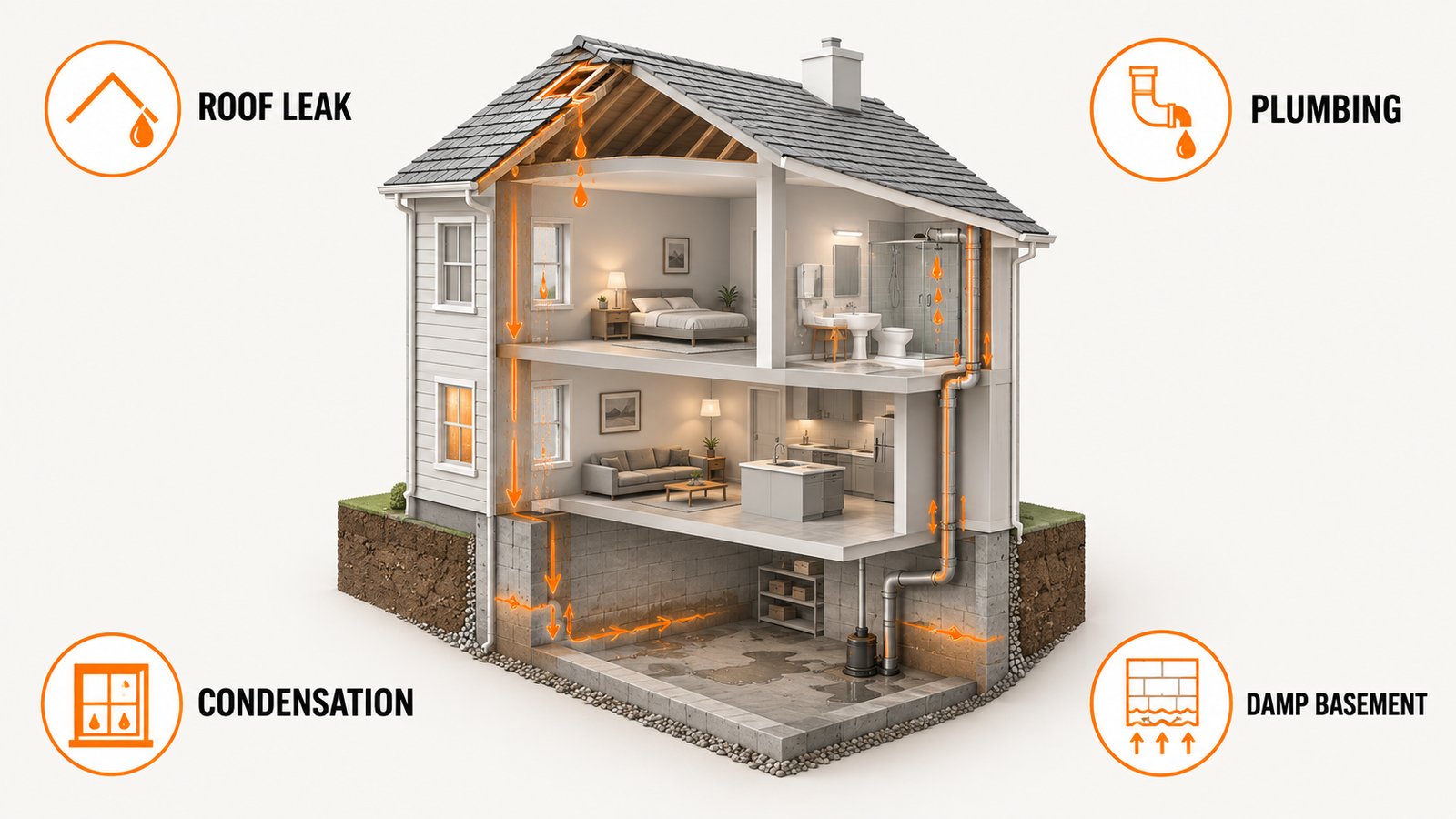
The EPA states the whole strategy in one line: the key to mold control is moisture control. Everything below follows from that.
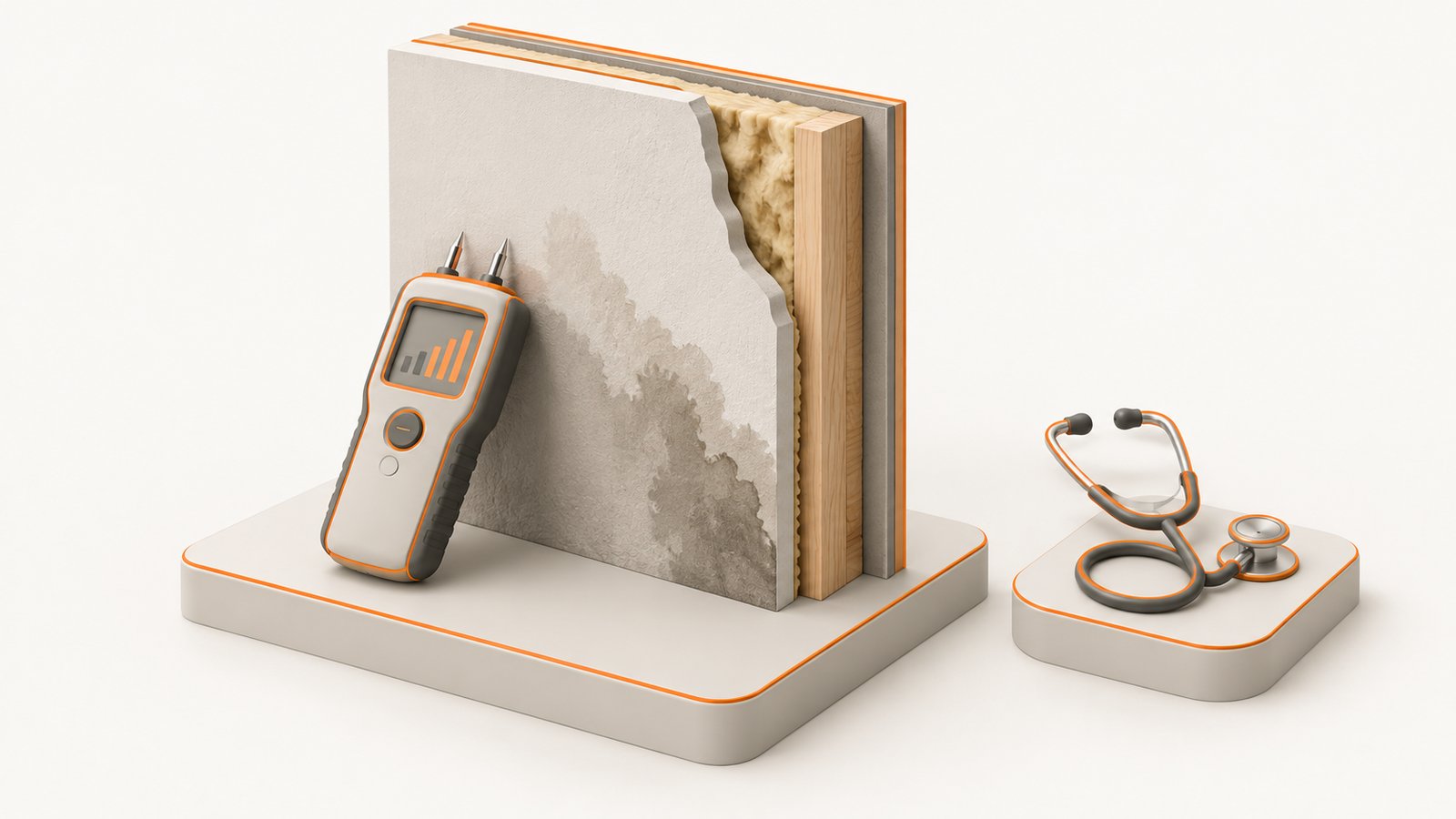
Measure the humidity. Keep indoor relative humidity below 60 percent, ideally between 30 and 50 percent, per EPA guidance. The CDC says to keep humidity levels as low as you can, no higher than 50 percent, all day long. A moisture or humidity meter is a small instrument the EPA prices at $10 to $50 at many hardware stores. Buy one before you buy a test kit. It measures the thing that actually drives growth.
Act inside 24 to 48 hours. The EPA is specific: if wet or damp materials or areas are dried 24 to 48 hours after a leak or spill happens, in most cases mold will not grow. That window is the single most useful number in this whole subject.
Check the usual sources. New York State's health department lists roof leaks, indoor plumbing leaks, outdoor drainage problems, damp basements and crawl spaces, steam from the bathroom or kitchen, condensation on cool surfaces, humidifiers, wet clothes drying inside the home, a clothes dryer venting indoors, and poor ventilation of heating and cooking appliances. That list covers most of what we see.
Look where the agencies say to look. New York State names bathrooms, especially shower stalls, bathroom tiles and shower curtains, plus window moldings, the seal on the refrigerator door, and surfaces on and around air conditioners as areas that are always susceptible and should be part of routine cleaning. Our guides on mold on shower curtains, window sills and window air conditioners each cover one of those spots in detail.
Then clean or discard. The CDC says mold can be removed from hard surfaces with household products, soap and water, or a bleach solution of no more than 1 cup of household laundry bleach in 1 gallon of water. New York State advises that porous materials with extensive mold growth should be discarded, naming drywall, carpeting, paper and ceiling tiles, and that all wet materials that cannot be cleaned and dried thoroughly should be discarded.
PPE, Because Cleaning Is When Exposure Spikes
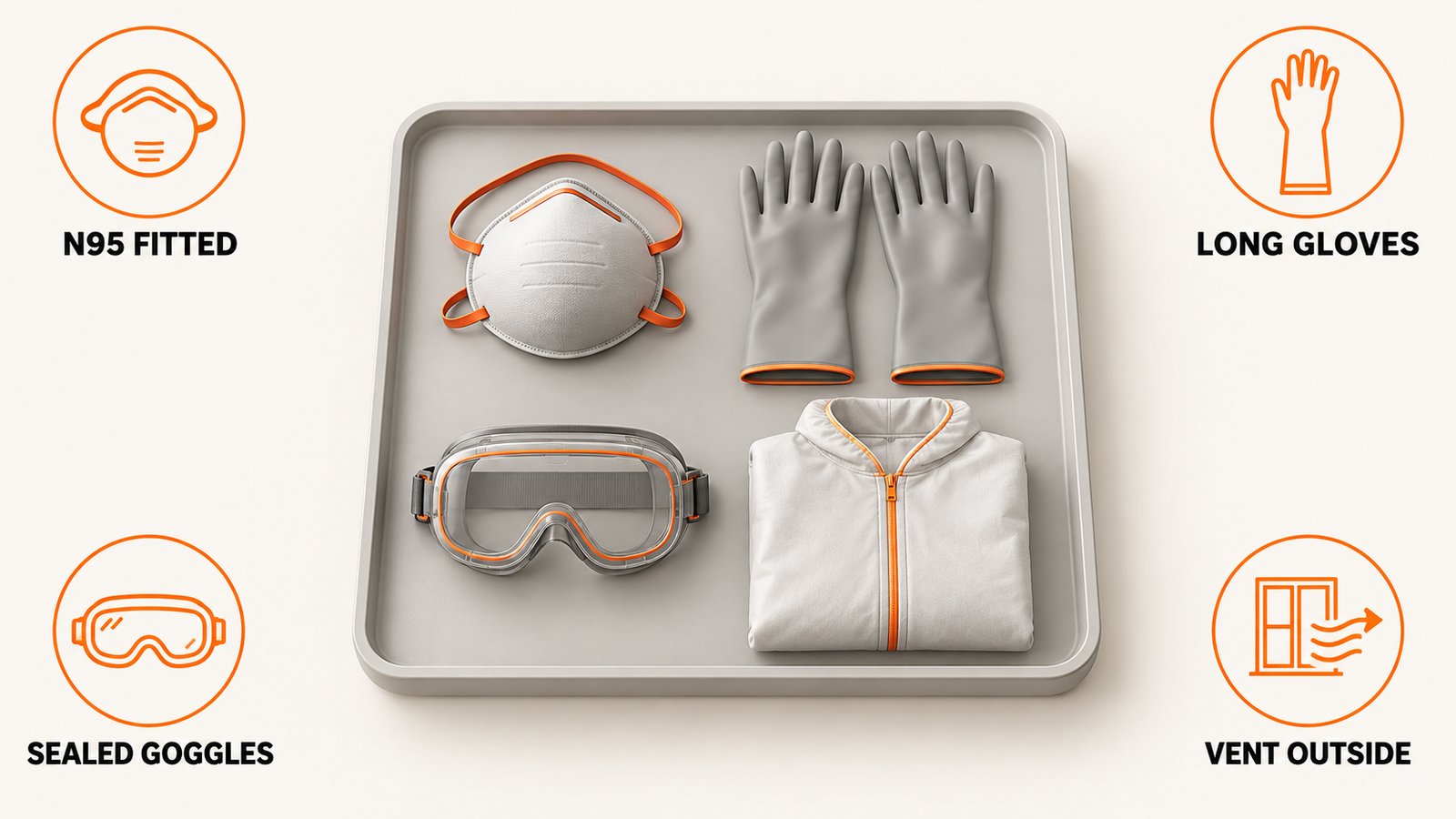
If skin contact is the concern, cleanup is the moment that matters most, because disturbing growth releases far more spores than leaving it alone does. The EPA warns that removal of wallpaper can lead to a massive release of spores if mold is growing on the underside of the paper, which is a good illustration of how quickly a quiet surface becomes an airborne one.
New York State's health department recommends rubber gloves and an N95 mask for jobs other than routine cleaning. The EPA advises limiting your exposure to mold and mold spores and gives the same basic direction. Practically, that means:
- Gloves that cover past the wrist. Long rubber or nitrile gloves keep the cleaning solution and the debris off your forearms, which is where contact usually happens when you reach up to a ceiling or into a cabinet.
- An N95 respirator, fitted. A loose surgical mask is not the same thing. If facial hair breaks the seal, the respirator is decorative.
- Eye protection without vents. Goggles rather than safety glasses, because debris comes down from overhead work.
- Long sleeves you can wash immediately. Change and launder as soon as you finish rather than sitting down in the clothes you cleaned in.
- Ventilation while you work. The EPA advises that if you use disinfectants or biocides you should always ventilate the area and exhaust the air to the outdoors.
Two chemistry rules that are not optional. Never mix chlorine bleach solution with other cleaning solutions or detergents that contain ammonia, because toxic fumes could be produced. And the EPA notes that the use of a chemical or biocide that kills organisms such as mold, chlorine bleach for example, is not recommended as a routine practice during mold cleanup. Soap, water, scrubbing and thorough drying do the job on hard surfaces. Our guides to vinegar and bleach cover where each one genuinely helps and where it does not.
One more thing worth knowing before you decide killing is enough. The EPA states that dead mold may still cause allergic reactions in some people, so it is not enough to simply kill the mold, it must also be removed. Spraying and walking away leaves the residue in place.
Keeping the Building Dry
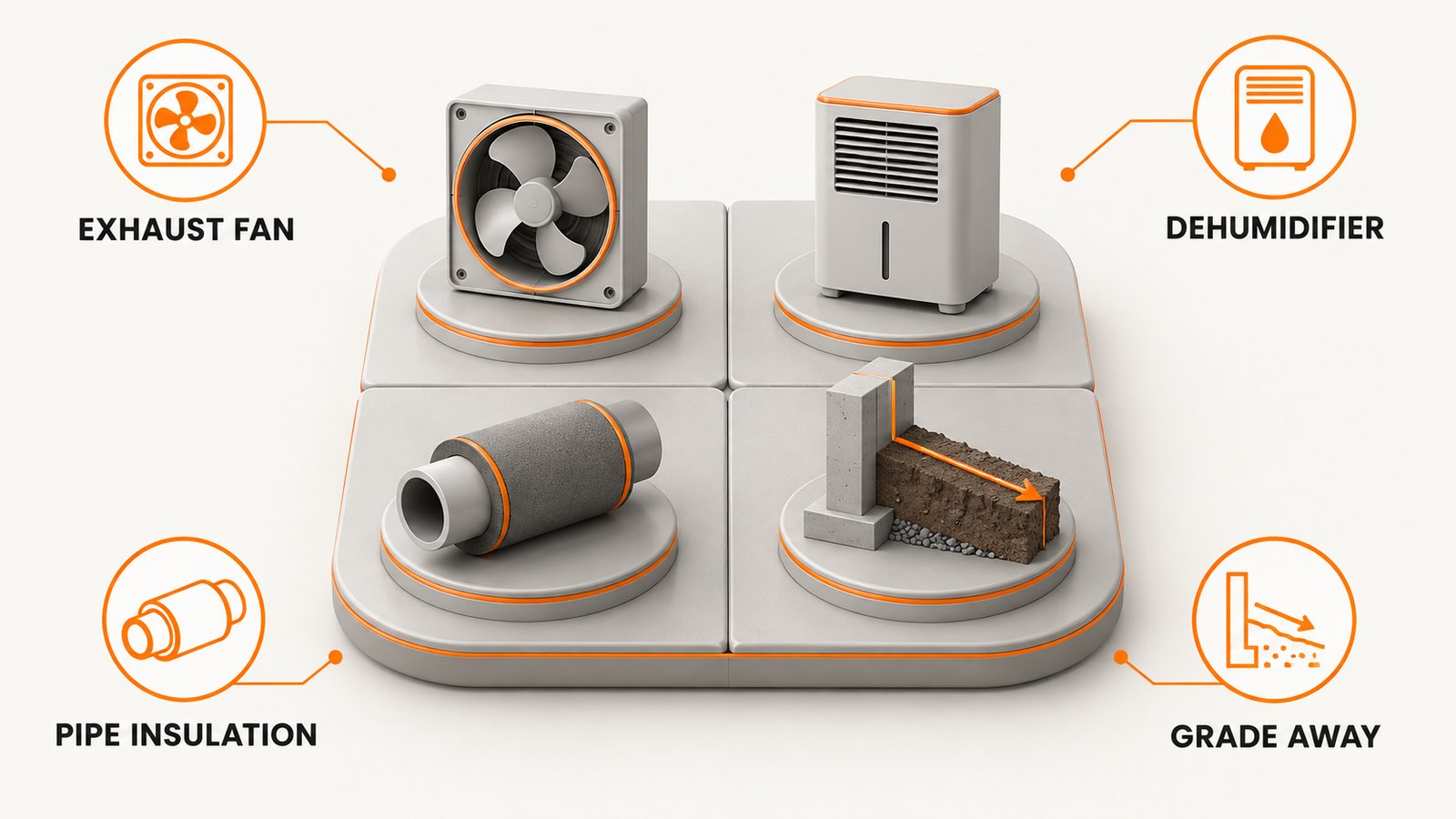
Cleaning without fixing the moisture buys you weeks. The EPA is blunt about it: if you clean up the mold but do not fix the water problem, then most likely the mold problem will come back.
Vent the moisture producers. The EPA advises venting appliances that produce moisture, such as clothes dryers, stoves and kerosene heaters, to the outside where possible, running the bathroom fan or opening the window when showering, and using exhaust fans or opening windows when cooking or running the dishwasher. A bathroom fan that terminates in the attic rather than outside is a very common defect and it moves the problem rather than solving it.
Dehumidify what ventilation cannot reach. Basements and crawl spaces usually need a dehumidifier rather than a fan. Our dehumidifier guide and the sizing calculator match capacity to the space so the unit actually holds the setpoint.
Kill the condensation. The EPA recommends covering cold surfaces such as cold water pipes with insulation, increasing air movement, and raising air temperature to stop condensation forming. Condensation on windows, walls or pipes is a signal to act, and the EPA treats it as a sign of high humidity.
Move water away from the building. Clean and repair roof gutters regularly, and make sure the ground slopes away from the foundation so water does not enter or collect around it. Keep air conditioning drip pans clean and drain lines flowing.
If you want the full room-by-room version, how to prevent mold covers each space, and the humidity risk calculator turns your meter reading into a plain risk picture.
When to Call a Pro
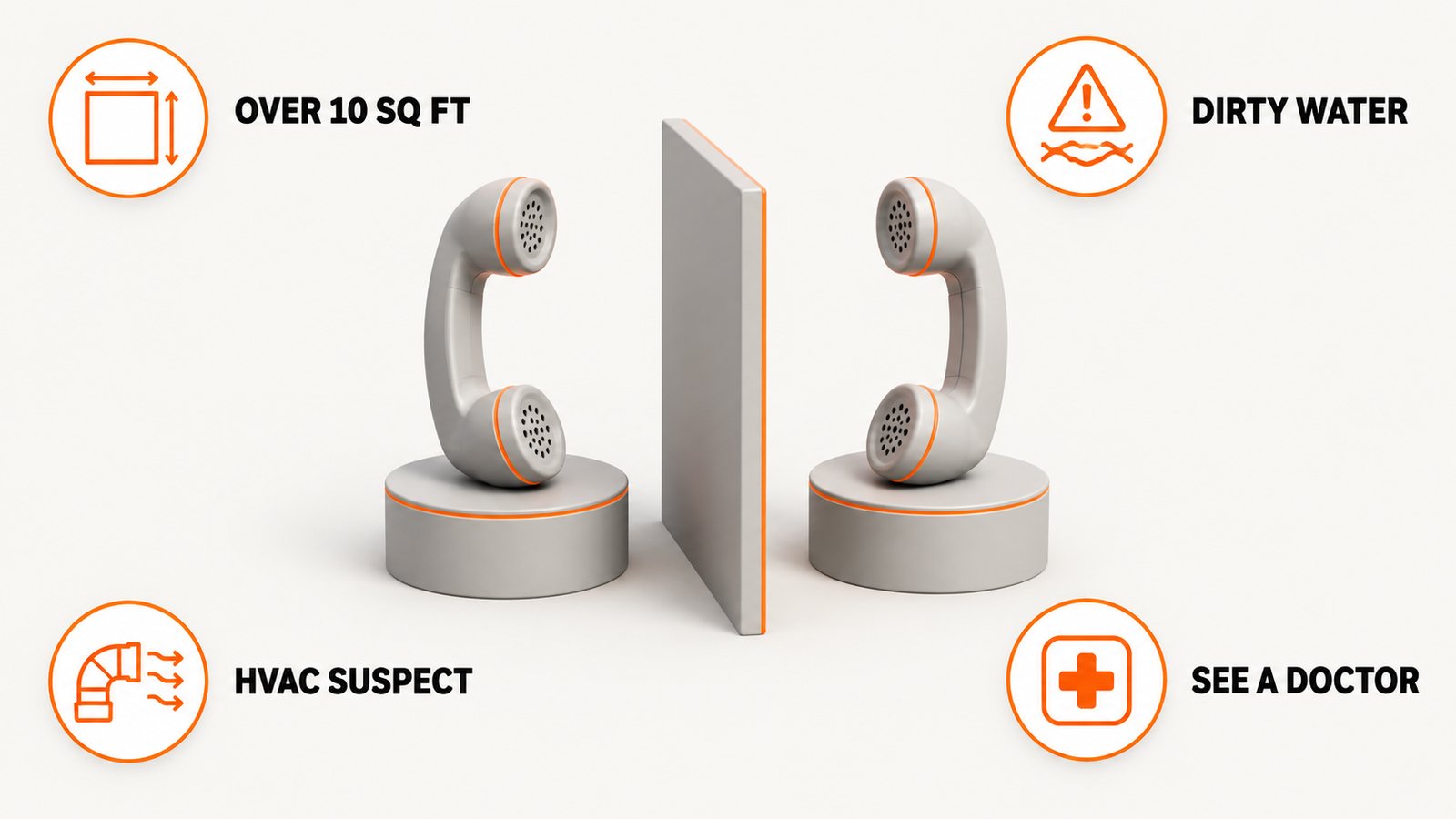
Call a physician about any rash, breathing change, or symptom that concerns you. That is not a hedge, it is the only correct route: no article, no app and no lab report can examine skin. New York State's guidance says to always discuss health concerns with your doctor. The EPA adds that if you have health concerns, consult a health professional before starting cleanup, which matters if you were planning to do the work yourself.
Call a remediation professional when any of these are true:
- The growth covers more than about 10 square feet, roughly a 3-foot by 3-foot patch. That is the EPA's line for handing the job off, and New York State uses the same 10-square-foot threshold for hiring a licensed contractor.
- Sewage or other contaminated water was involved. The EPA says to call in a professional who has experience cleaning and fixing buildings damaged by contaminated water.
- You suspect the HVAC system. The EPA advises consulting its duct guidance first, and warns not to run the HVAC system if you know or suspect it is contaminated, because that could spread mold throughout the building.
- Someone in the home is at higher risk. Where a household member is immune-compromised or has chronic lung disease, hand the work off rather than doing it yourself.
- You are highly sensitive to mold. New York State names this as its own reason to use a licensed contractor, separate from the size of the job.
Hire someone who follows the ANSI/IICRC S520 standard for professional mold remediation, and check whether your state licenses this work. New York and Texas both do, and in a licensed state the license lookup takes two minutes. Our mold remediation certification page covers who is licensed where and what each credential means.
Frequently asked questions
Does the EPA list skin rash as a reaction to mold?
Yes. The EPA writes that allergic responses to mold include hay fever-type symptoms such as sneezing, runny nose, red eyes, and skin rash, which it labels dermatitis. It also states that mold exposure can irritate the eyes, skin, nose, throat, and lungs of both mold-allergic and non-allergic people. The framing is conditional throughout, describing what may happen in sensitive people rather than what happens to everyone.
Can a mold test on my house tell me anything about a skin reaction?
No. A building test measures a building. New York State's health department advises discussing health concerns with your doctor, because the symptoms of mold exposure could be caused by other exposures and illnesses. Use testing to make decisions about the property and take any health question to a licensed physician who can actually examine you.
What humidity level stops mold from growing indoors?
The EPA advises keeping indoor relative humidity below 60 percent, ideally between 30 and 50 percent. The CDC's guidance is to keep humidity levels as low as you can, no higher than 50 percent, all day long. A moisture or humidity meter costs $10 to $50 at many hardware stores according to the EPA, which makes it the cheapest useful instrument in this whole subject.
What protective equipment is recommended for cleaning mold at home?
New York State's health department recommends rubber gloves and an N95 mask for jobs other than routine cleaning. Add sealed goggles for overhead work, long sleeves you launder immediately, and ventilation while you work. The EPA advises ventilating the area and exhausting air outdoors if you use disinfectants or biocides, and warns that removing wallpaper can release a large quantity of spores at once.
How big does a mold patch have to be before I hire someone?
About 10 square feet, roughly a 3-foot by 3-foot patch. That is the EPA's threshold for handing off a cleanup rather than doing it yourself, and New York State uses the same 10-square-foot figure for calling a licensed contractor. Contaminated water, suspected HVAC contamination, and a household member at higher risk are separate reasons to hire out regardless of size.
Do I need to know what type of mold is in my house?
No. The CDC states that you do not need to know the type of mold, and New York State's health department adds that knowing the kinds of mold present does not change the advice. The response to visible growth is the same in every case: find and fix the moisture, clean or discard the material, and dry the area completely.
If I kill the mold, is the problem finished?
No. The EPA states that dead mold may still cause allergic reactions in some people, so it is not enough to simply kill the mold, it must also be removed. The agency also advises that using a biocide such as chlorine bleach is not recommended as a routine practice during mold cleanup. Scrub the growth off hard surfaces, remove the residue, and dry the surface completely.
What does the research say about mold and skin?
The published evidence is strongest on the respiratory side. The 2004 Institute of Medicine review found sufficient evidence of an association between damp indoor environments and some upper respiratory tract symptoms, coughing, wheezing, and asthma symptoms in sensitized persons. Skin outcomes are listed by the EPA, CDC and state health departments among possible reactions, but they do not sit in that strongest evidence tier. Individual questions belong with a physician.
Sources
Every claim on this page traces to one of these. Links open the primary document.