
Leaving the house empty? Set the right thermostat. Stop mold.
Leaving the house empty means setting the right thermostat to stop mold, and this returns the AC and humidity setpoints for your climate, duration and home type, from ENERGY STAR, ASHRAE 55 and EPA indoor-air guidance. No more guessing.
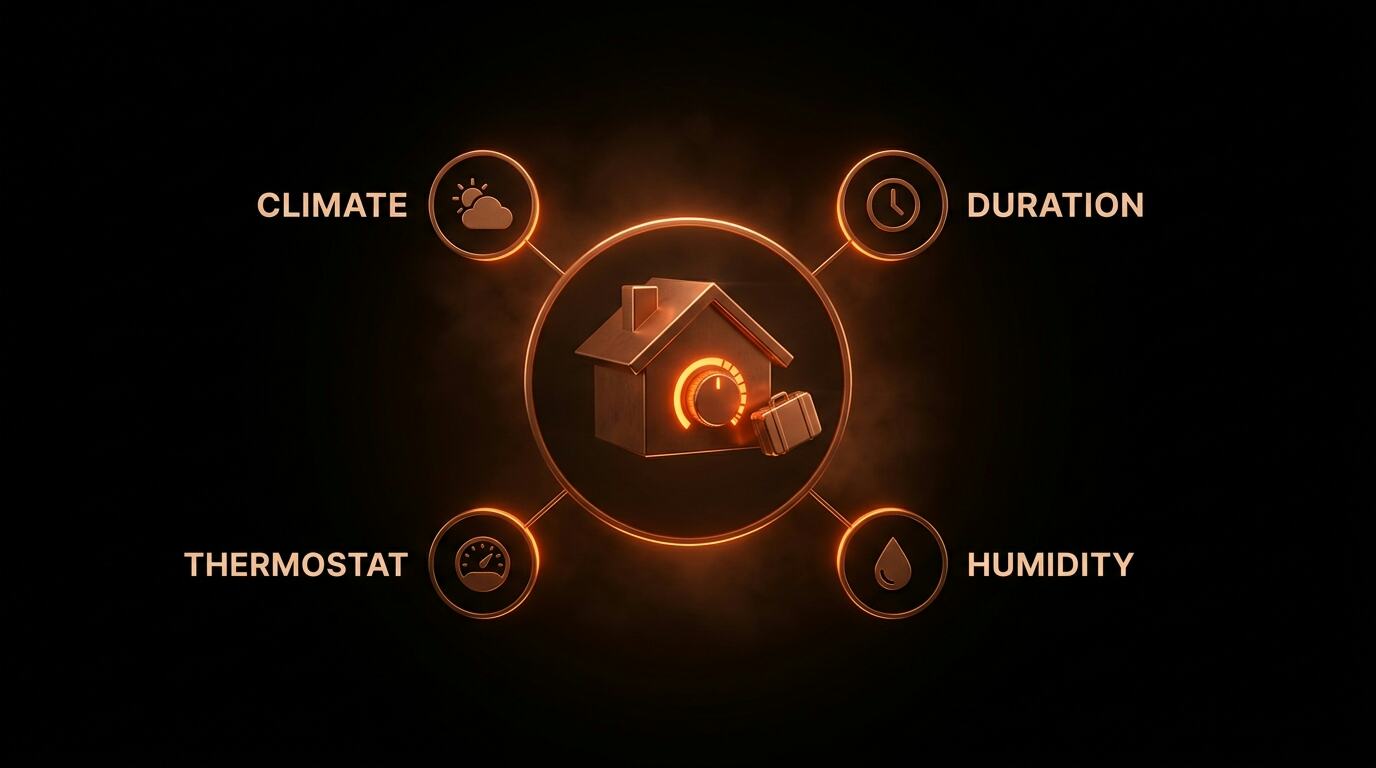
How it works
Tell us about the trip.
FAQ
Can I turn the AC off completely while I'm gone?
Only in very specific climates. In hot-humid regions (Florida, Louisiana, Texas gulf coast, Hawaii), turning off cooling entirely during summer will push indoor relative humidity past 70 percent within days, and mold will colonize porous surfaces within 48 to 72 hours. In cold-dry winter climates, turning off heat below freezing risks pipe burst and secondary water damage. The safest move is to raise the setpoint, not eliminate conditioning.
What thermostat setting prevents mold in an empty house?
The tool calculates your specific setpoint, but the core principle is: hold indoor relative humidity below 60 percent at all times. In hot-humid climates, that usually means 78 to 82 F with AC running. In cold-winter climates, 55 to 60 F with heat on prevents freezing and condensation. A dehumidifier or smart-home humidity sensor is the second line of defense.
Should I run a dehumidifier instead of AC?
For long vacancies in hot-humid climates, many pros recommend a dehumidifier set to 55 percent RH as a more energy-efficient alternative to AC. The dehumidifier removes moisture directly without over-cooling the space. Size the dehumidifier to the square footage (see our dehumidifier size calculator). This also helps if your HVAC is old or inefficient.
Do smart thermostats change the math?
Yes. Nest, ecobee, and Honeywell T-series can hold a higher setpoint when unoccupied and drop it for scheduled check-ins. Pair with a smart humidity sensor (about $30) and you can get phone alerts when indoor RH crosses 60 percent, rather than finding a surprise when you come back.
What else matters for a long vacancy?
Ventilation, drains, and appliances. Run all sink and shower drains for 30 seconds weekly (via a neighbor if long trip) to keep P-traps full. Leave interior doors open so HVAC conditioning reaches every room. Empty and prop open the dishwasher and washing machine. Turn off the water main if you'll be gone more than a week. Your plan above includes the full checklist.