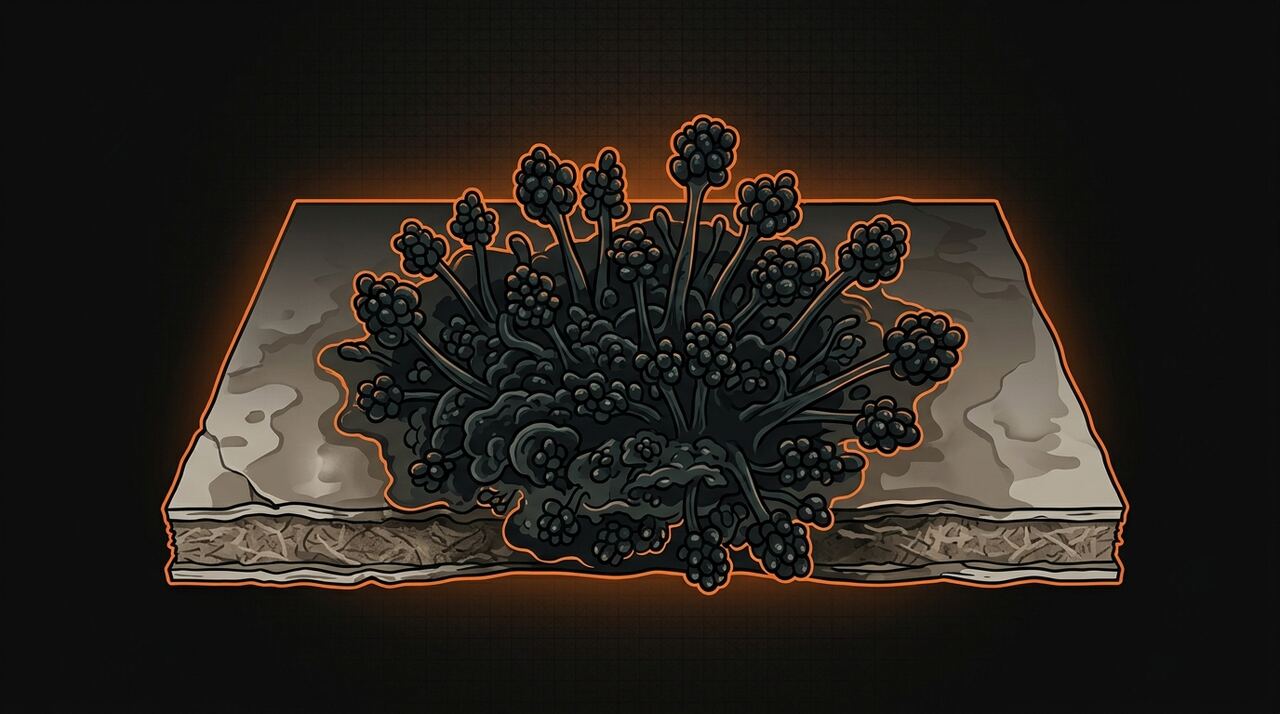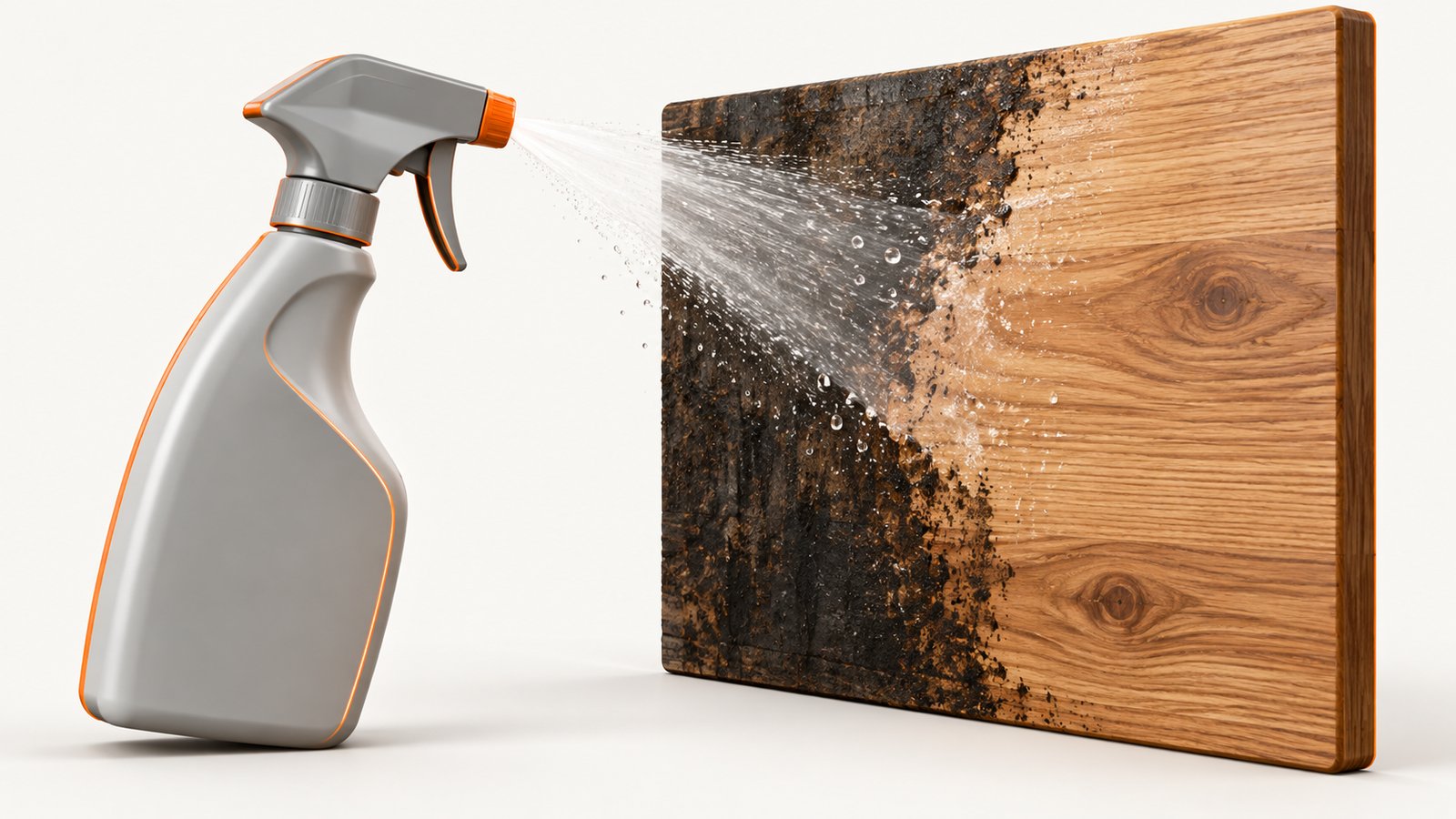
It strips the dark pigment out of a mold stain in seconds, usually with no scrubbing, but the growth underneath a porous surface like wood or drywall survives. If you need the mold dead, not just invisible, RMR Brands sells a separate EPA-registered product, RMR-141, for that job, and we compare both to a bleach-free option below. Read our full RMR-86 review for the complete rundown, including the 3.5 out of 5 rating and where the product earns it.
What is RMR-86 made of
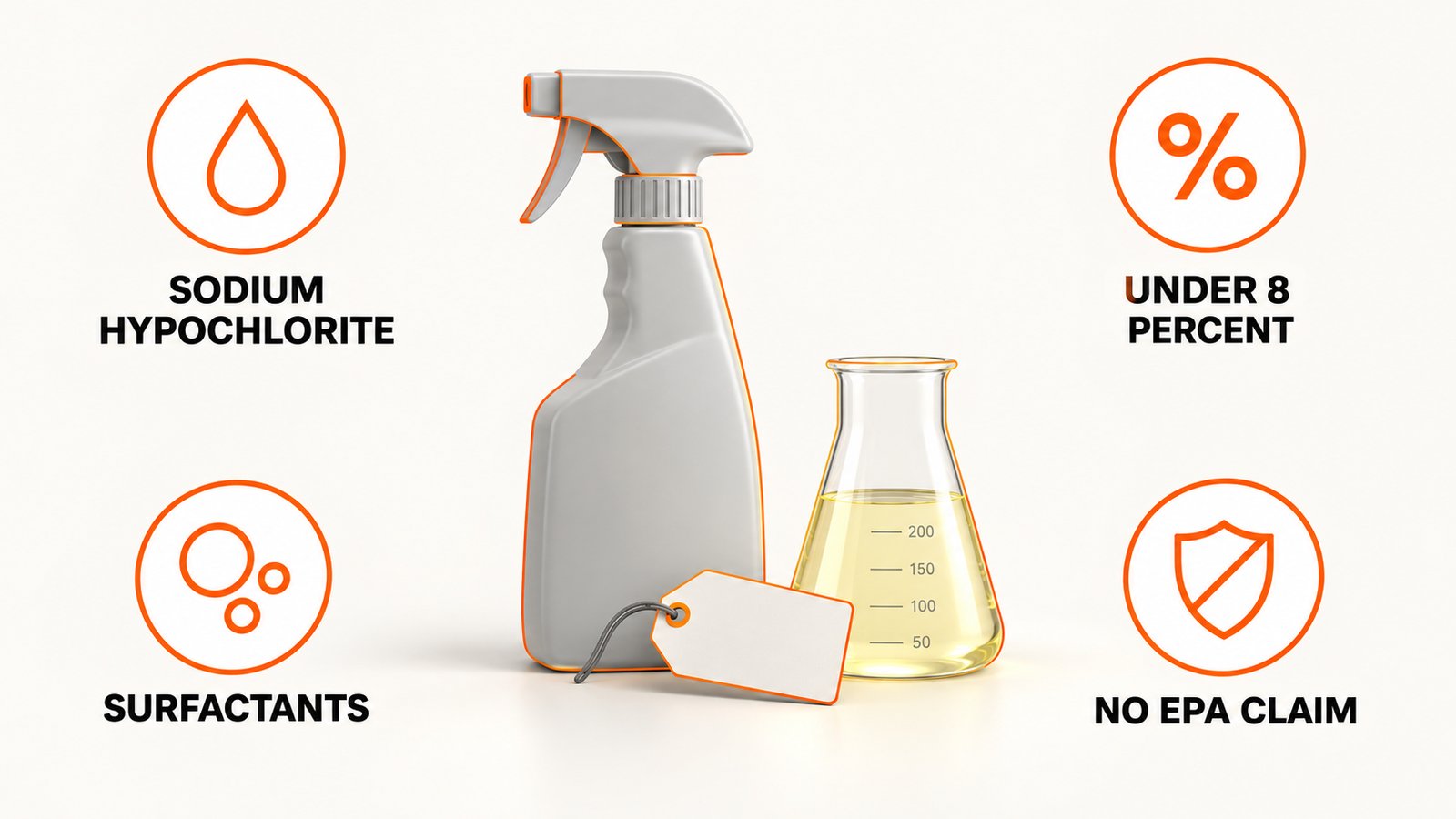
RMR-86 Instant Mold and Mildew Stain Remover lists one active ingredient on its safety data sheet: sodium hypochlorite, the same compound that powers household laundry bleach, at under 8 percent concentration. The SDS files it under the chemical family Sodium Hypochlorite and gives the CAS number 7681-52-9. The rest of the formula is surfactants and inert ingredients, both listed as trade secrets, added to help the spray spread across a surface and cling to it instead of running straight off.
What is in RMR-86, in plain terms: bleach, plus wetting agents. That single fact explains everything the bottle does and does not do. Sodium hypochlorite is an oxidizer. It breaks apart the dark pigment molecules mold leaves behind, which is why a black stain fades to nothing in seconds. It has no documented ability to travel into porous material and reach a colony's roots, and RMR's own label makes no claim that it does. RMR-86's own product page states it plainly when asked whether the product kills mold: it does not, it only removes the stains mold and mildew leave behind.
Does RMR-86 have bleach?
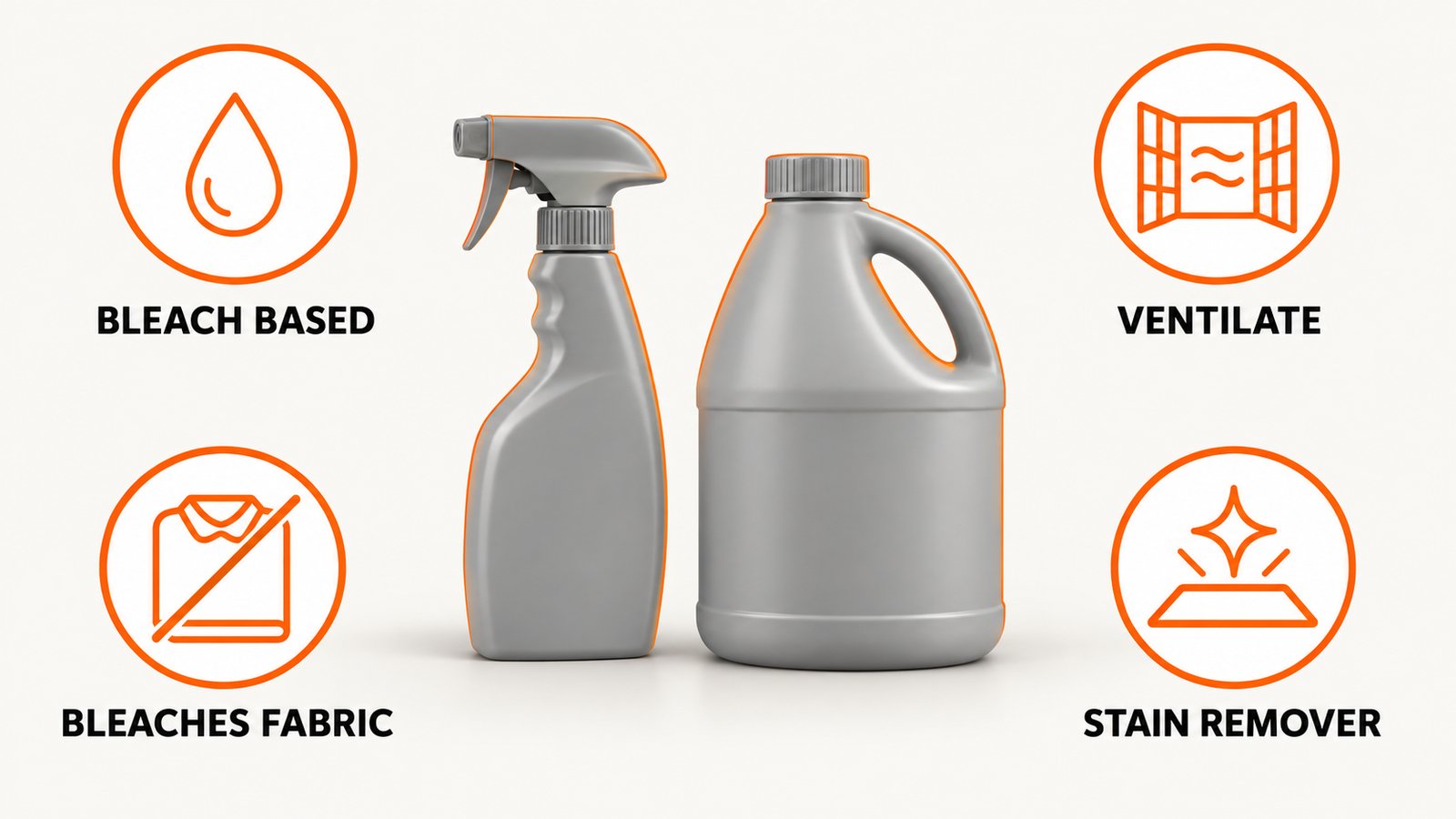
Yes. RMR-86 has bleach chemistry. Its active ingredient, sodium hypochlorite, is the identical chemical that does the work in household bleach, confirmed on the product's own safety data sheet. RMR-86 is not diluted bleach in a fancier bottle. Surfactants are blended in so the spray clings to a vertical surface instead of running off, which is why it can work on a joist or a wall the way a wipe of bleach on a paper towel cannot.
Treat it exactly like bleach, because chemically it is bleach. That means ventilation, gloves, eye protection, and one hard rule: never mix it with ammonia, which hides in many glass cleaners, or an acid like vinegar or some toilet bowl cleaners. Ammonia produces chloramine gas. Acids produce chlorine gas. Both are dangerous to breathe indoors, and both reactions happen fast in a closed bathroom or crawl space.
Does RMR-86 kill black mold?
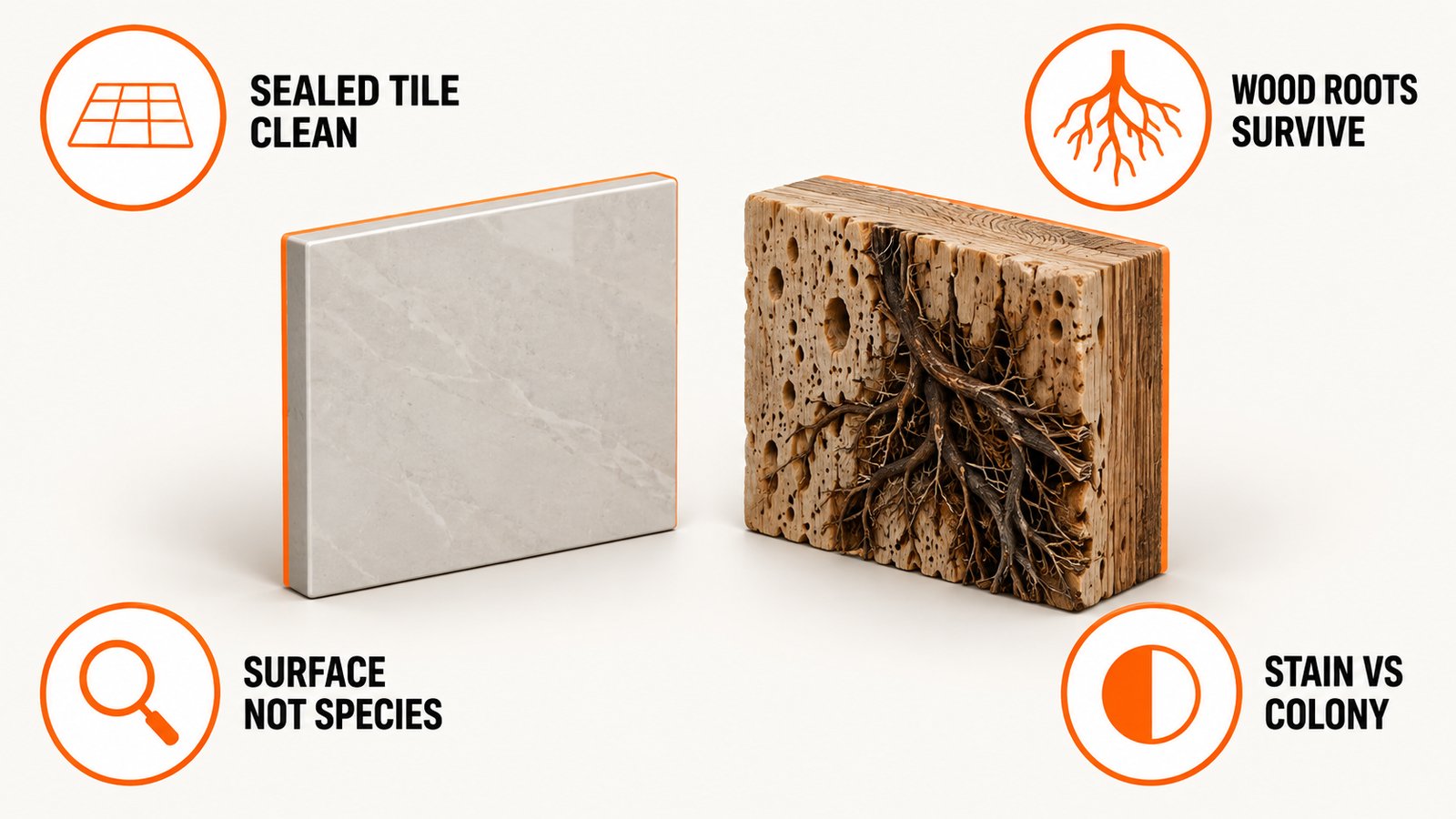
RMR-86 destroys the surface staining that black mold leaves on a hard, sealed material like tile, glass, or sealed concrete, because sodium hypochlorite kills mold cells it directly contacts. What it does not do is reach mold rooted inside a porous material like bare wood or drywall. The chlorine reacts with the surface layer and is used up there, while the water carrying it keeps soaking inward, toward roots the chlorine never touches.
Does RMR-86 kill black mold any differently than other colors of mold? No. The deciding factor for any bleach-based product is the surface, not the species. Black mold, green mold, and white mold all behave the same way against sodium hypochlorite: dead on contact where the material is sealed and exposed, alive underneath where the material is porous. For a full breakdown of what different colors of mold usually mean, see our guide to what black mold looks like, and our guide on whether black mold is dangerous covers when the color matters and when it does not.
Can RMR-86 be used indoors?
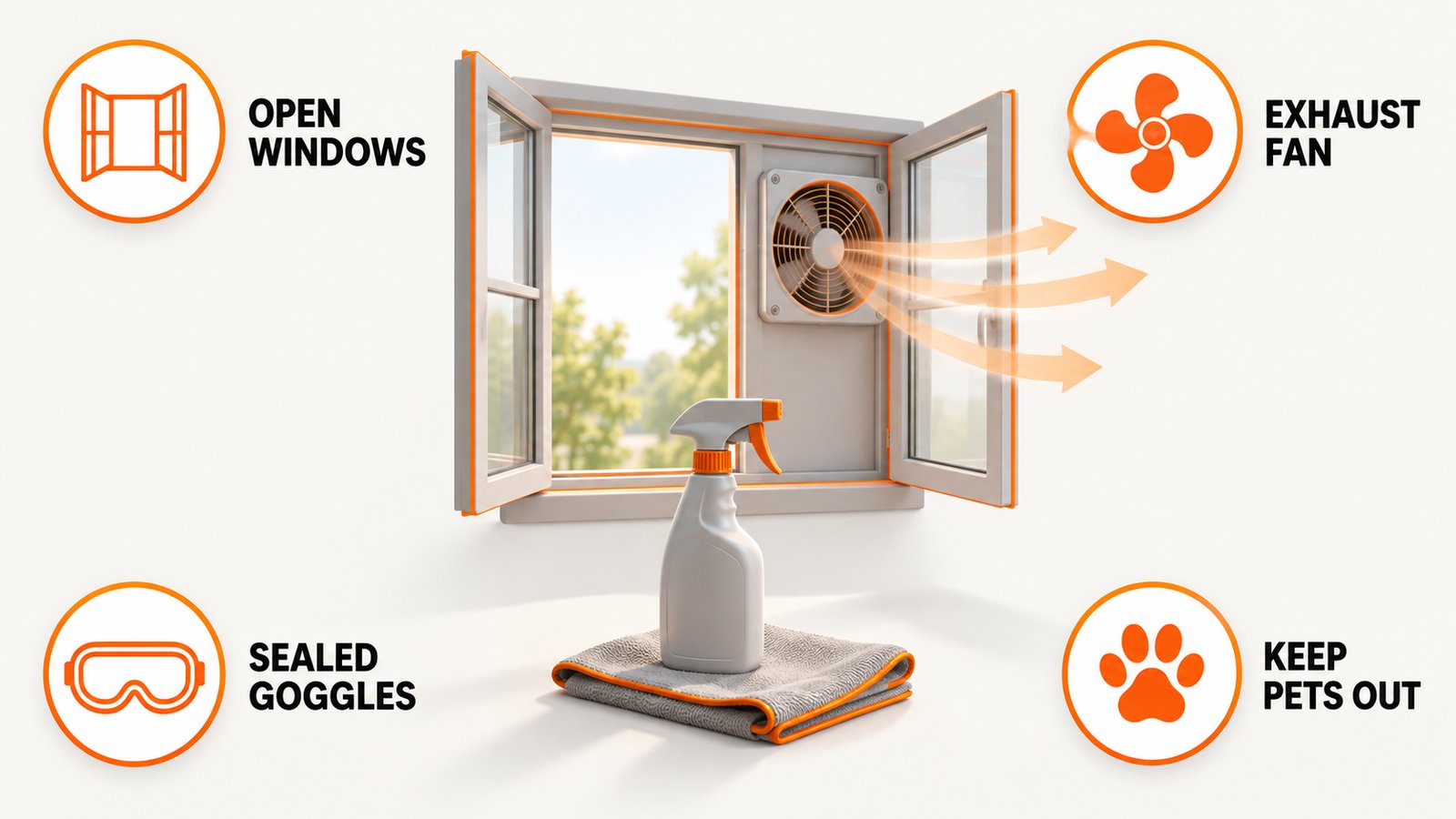
Can RMR-86 be used indoors? Yes, with real ventilation and protective gear, and with the understanding that it is only handling appearance. Open every window you can, run a fan that exhausts outside rather than recirculating, and wear chemical-resistant gloves and sealed goggles rather than glasses. Is RMR-86 safe to use indoors without that setup? No. Bleach fumes in a closed room are a genuine respiratory irritant, and RMR-86's own hazard statements list skin irritation and serious eye damage.
Keep kids and pets out of the room until the surface is fully dry and the space is aired out. Never spray or fog it into HVAC ducts or near return vents, since the blower will spread corrosive mist through the whole house. Never load it into a sprayer that has held any other cleaning product, and rinse the surface before applying anything else to it.
Can you use RMR-86 on drywall?
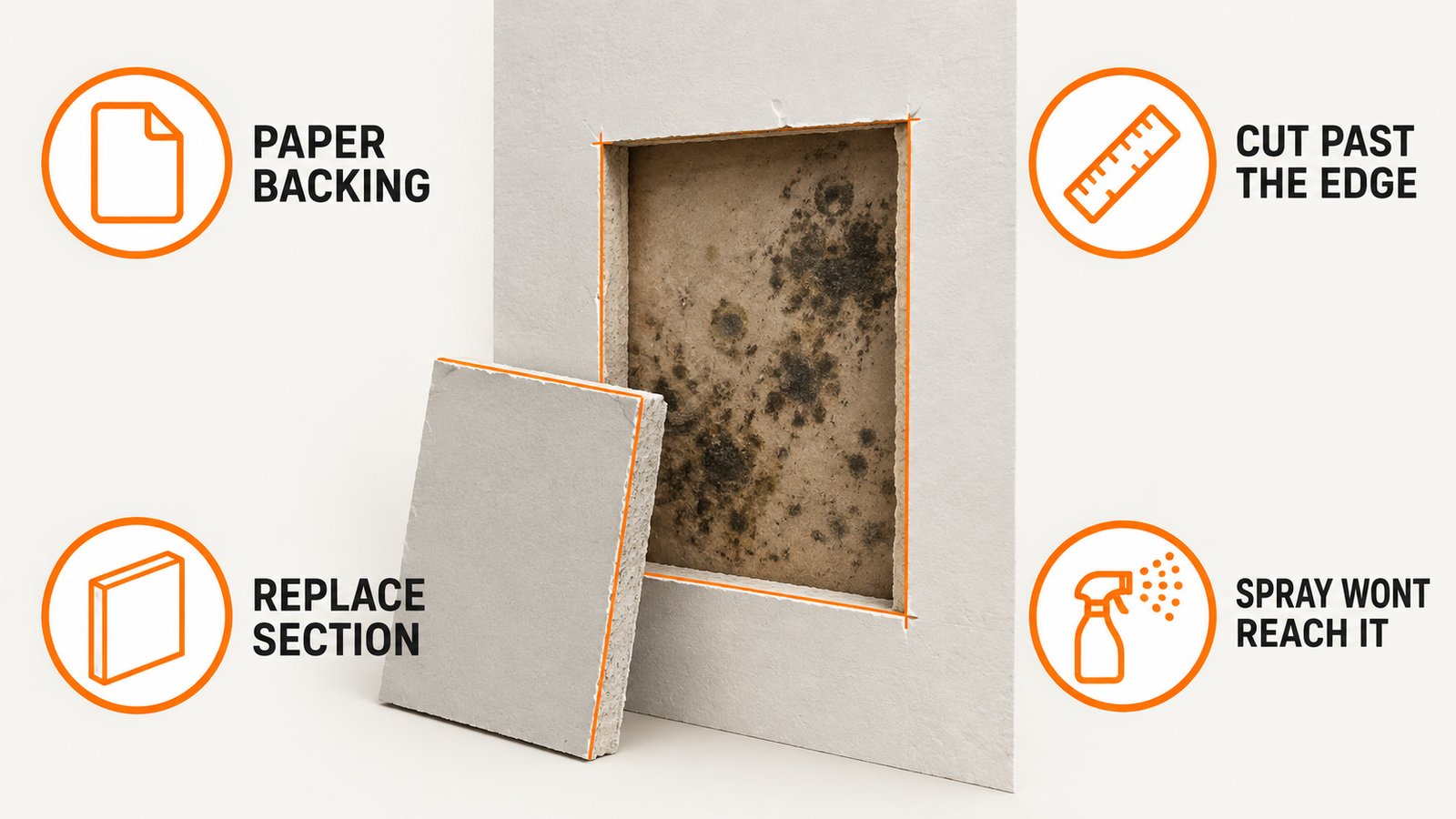
Can you use RMR-86 on drywall? Almost never, once mold has actually rooted in it. RMR's own product page lists drywall among the surfaces the spray works on, but that instruction covers cosmetic staining, not colonized material. If mold has pushed through the paper face of drywall, the gypsum core underneath is colonized, and no spray reaches it there. Spraying stain remover on colonized paper-backed drywall lightens the color while leaving the growth intact behind it.
The reliable fix for drywall mold that has gone past the surface is physical removal: cut out the affected section plus roughly 12 inches beyond the visible edge, and replace it. Save RMR-86 for what is left on adjacent trim or framing once the mold itself is gone. Our guide to mold on drywall walks through where to make the cut.
RMR-86 vs RMR-86 Pro
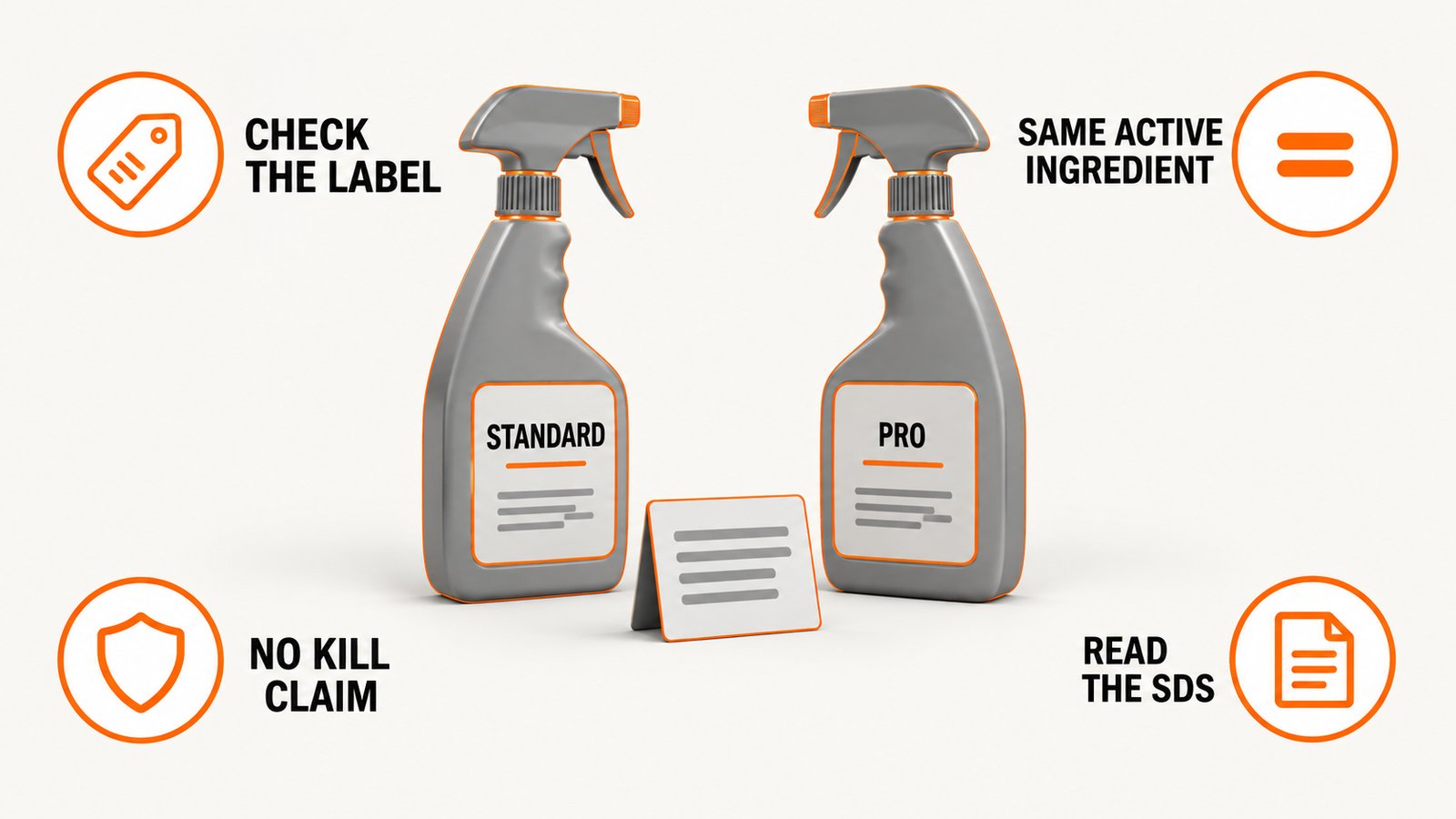
RMR-86 vs RMR-86 Pro comes down to reading the same two things on each label: the active ingredient, and whether the product claims to kill or disinfect. We have reviewed the standard RMR-86, and its label lists sodium hypochlorite with no kill claim. We have not independently tested RMR-86 Pro Instant Mold Stain Remover, so we will not guess at its formula here. If the Pro label lists the same active ingredient, and RMR's own marketing for it uses the same stain-remover framing, expect the same limits: fast stain removal, no root kill in porous material.
The name on either bottle promises speed and stain removal. It does not promise a kill claim, and a product that does not say it kills mold on its label has not made that claim, regardless of what "instant" or "pro" implies.
What actually kills mold, if RMR-86 doesn't
RMR Brands sells a separate product for the killing step: RMR-141, a quaternary-ammonium disinfectant that the company's own product page describes as EPA-registered with fungicidal kill claims against more than 140 microorganisms, mold included. That is a different bottle, a different active ingredient, and a different job than RMR-86.
If you would rather avoid bleach chemistry entirely, Concrobium Mold Control is a no-bleach alternative that dries into a film that crushes mold at the root on surfaces it can fully coat, then leaves a barrier against regrowth. We compare it to RMR-86 surface by surface in Concrobium vs RMR-86, and our companion page on whether Concrobium kills mold covers that product's own mechanism. The bleach question more broadly, including where sodium hypochlorite works and where it fails, is in does bleach kill mold.
| Product | Active ingredient | Claims to kill mold | Works on porous surfaces | Best for |
|---|---|---|---|---|
| RMR-86 | Sodium hypochlorite, under 8% | No, per RMR's own product page | Cosmetic staining only, not the growth | Erasing stains after the real cleanup is done |
| RMR-141 | Quaternary ammonium compounds | Yes, EPA-registered per RMR's product page | Disinfects sealed and semi-porous surfaces | Killing and disinfecting mold, bacteria, and viruses |
| Concrobium Mold Control | Inorganic salts, no bleach | Yes, EPA-registered | Crushes growth on surfaces it can fully coat | Killing mold and blocking regrowth without bleach |
Most real jobs run in order: fix the moisture, kill the mold with a registered product, then use RMR-86 if a stain is still visible once everything else is done. Our complete mold removal guide and mold cleaning products roundup cover the full sequence, and our page on bleach vs vinegar for mold covers the two most common household substitutes people reach for instead.
When to call a mold remediation pro
RMR-86 is a one-person, one-bottle tool, and it is the wrong tool for a job bigger than that. The EPA's own cleanup guidance draws the line at about 10 square feet of contiguous mold. Past that size, or if the colony is inside HVAC ductwork, hire a mold remediation professional who follows the ANSI/IICRC S520 standard. Look for ACAC or RIA credentials and a state license where your state requires one.
A professional brings containment, HEPA filtration, and moisture readings that confirm the job actually worked, none of which a spray bottle can do. If you are not sure whether what you are looking at is mold worth calling someone about, our mold detection app guide and a quick photo through the Mold Scanner app are a faster first read than guessing from a stain. Our guide to how to identify black mold covers the look-alikes worth ruling out before you spend money either way.
Frequently asked questions
Does RMR-86 kill mold?
No. RMR Brands says so directly on its own RMR-86 product page: the product removes the stains mold and mildew leave behind, it does not kill the mold. Its active ingredient, sodium hypochlorite, does destroy mold cells it directly touches on a hard, sealed surface, but the label carries no EPA registration and no kill claim, and it does nothing for mold rooted inside a porous surface like wood or drywall.
Does RMR-86 kill black mold?
Only on the surface, and only where the surface is sealed. Sodium hypochlorite destroys black mold cells on contact on tile, glass, and sealed concrete. On bare wood or drywall, the chlorine is used up at the surface while the roots survive underneath, so the black stain disappears while the colony that made it can still be alive.
What is RMR-86's active ingredient?
Sodium hypochlorite, listed on the safety data sheet at under 8 percent concentration, CAS number 7681-52-9. That's the same active ingredient as household laundry bleach. The rest of the RMR-86 formula is surfactants and inert ingredients, both withheld as trade secrets, added to help the spray spread across a surface and cling to it.
Does RMR-86 have bleach?
Yes. Its safety data sheet lists the chemical family as sodium hypochlorite, identical to the active ingredient in household bleach. Handle it the same way: ventilate the room, wear gloves and eye protection, and never mix it with ammonia or an acid like vinegar.
Is RMR-86 safe to use indoors?
Yes, with ventilation and protective gear. Open windows, run a fan that exhausts outside, wear chemical-resistant gloves and sealed goggles, and keep kids and pets out until the surface is dry and the room is aired out. Never spray it into HVAC ducts or near return vents.
What is the difference between RMR-86 and RMR-86 Pro?
We've reviewed the standard RMR-86, whose label lists sodium hypochlorite and makes no kill claim. We haven't independently tested RMR-86 Pro Instant Mold Stain Remover, so we won't guess at its formula. Compare the active ingredient and any kill or disinfect claim on each label before assuming they perform the same.
Are RMR-86 reviews good?
Reviews are strong for what the product actually does: fast, usually scrub-free stain removal. Read them with the job in mind. Praise almost always describes a stain disappearing. Complaints almost always describe mold coming back, which happens when RMR-86 was used as the only mold treatment instead of the cosmetic step at the end. Our full RMR-86 review rates it 3.5 out of 5 on that basis.
What is RMR-86 Instant Mold and Mildew Stain Remover?
It's the full product name for the bottle sold as RMR-86: a ready-to-use sodium hypochlorite spray built to remove mold and mildew staining from surfaces like wood, drywall, concrete, brick, and siding, usually with no scrubbing. RMR's own listing avoids metals and fabrics. It's a stain remover by name and by label, not a registered mold killer.
Sources
Every claim on this page traces to one of these. Links open the primary document.